
lovethailand home >Eastern Travel Attractions >Trat Travel Attractions >Laem Ngop >Laem Ngop > Nurul Karim Mosque
TL;DR: Nurul Karim Mosque is located at Village No. 1, Laem Ngop Subdistrict, Laem Ngop District, Trat Province, open Daily, hours 08.00 – 17.00.
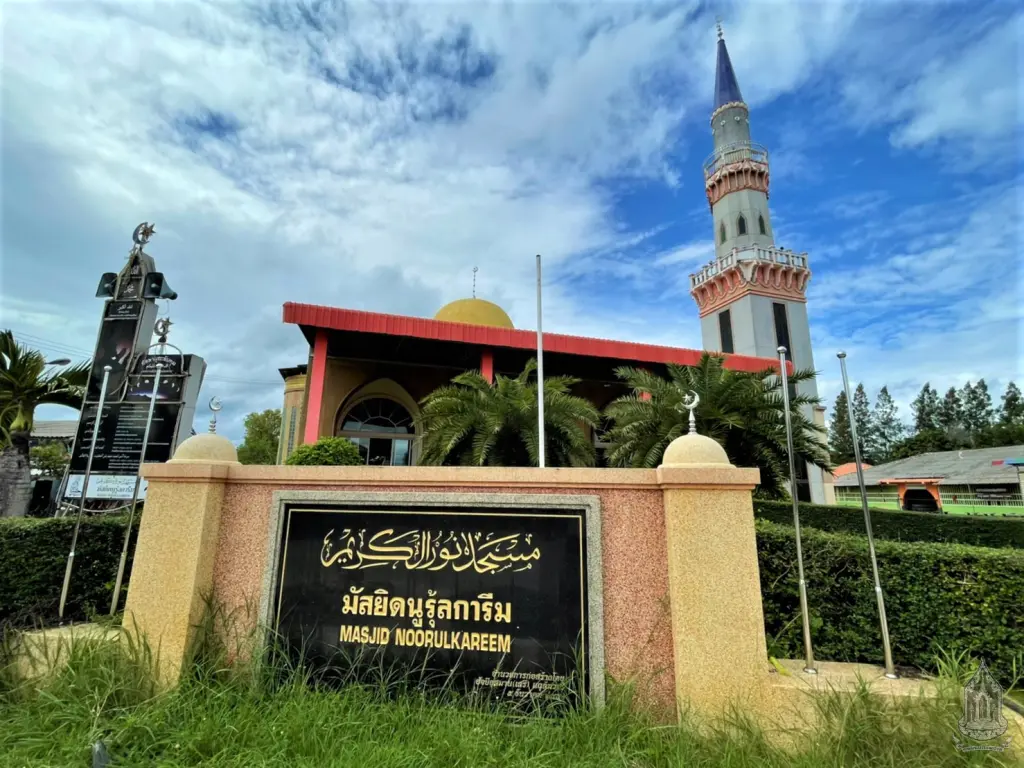
Nurul Karim Mosque
Open Days: Daily
Opening Hours: 08.00 – 17.00
Nurul Karim Mosque is located at No. 3, Village No. 1, Laem Ngop Subdistrict, Laem Ngop District, Trat Province 23120. It is an important Muslim place of worship for the Ban Yai Mom community and the wider Laem Ngop area. For foreign travelers, this mosque offers a meaningful cultural window into the Muslim heritage of coastal Trat. It is not only a place for prayer, but also a community center connected with education, local identity, environmental conservation, and the protection of traditional coastal fisheries.
Nurul Karim Mosque was first established more than 60 years ago. In its early period, the Muslim community in the Laem Ngop area was very small, with fewer than 10 Muslim households in Ban Yai Mom. The worshippers separated from Al Kubra Mosque in Ban Nam Chiao and Nurul Mubin Mosque in Ban Laem Thong Lang in order to create a closer religious center for Muslims living in Laem Ngop. Having their own mosque made daily prayer, religious learning, community meetings, and social cooperation much more practical for local families.
The mosque was pioneered by Imam Yusuf Mancha Huna, who became its first imam. He played a crucial role in establishing both the mosque and the early Muslim community in this part of Laem Ngop. After his passing, Imam Yusuf Salam was appointed as the next imam. Originally from Satun Province, Imam Yusuf Salam moved to Laem Ngop and became both a teacher and a religious leader. His role helped shape the mosque into a space of learning as well as worship, especially for younger generations growing up in the community.
The original location of Nurul Karim Mosque was on the opposite side of the canal. It was a small wooden mosque built very close to the sea, only about 3 to 4 wa from the shoreline. This setting reflected the coastal Muslim way of life, where religion, fishing, canals, and the sea were closely connected. However, the old location was difficult to access because people had to cross the canal, and the land itself was affected by coastal erosion. As the shoreline weakened, the community decided to move the mosque to a safer and more convenient location.
In 1969, during the leadership of Imam Surin Yiwasol, the third imam of Nurul Karim Mosque, the mosque was relocated and rebuilt at its new site. At first, the community built a wooden prayer hall, locally known as a balae, and used it for about 6 years. Later, the building was improved into a two-storey structure, with the lower level made of concrete and the upper level made of wood. This reflected the community’s gradual development and its effort to create a more stable place of worship with the resources available at that time.
However, the wooden parts of the building were repeatedly damaged by termites for more than a decade. The community eventually had to dismantle the affected structure and build another prayer hall to replace it. This cycle of rebuilding shows the persistence of local Muslims in maintaining their religious center despite environmental and structural challenges. Nurul Karim Mosque has therefore developed through several stages: a small wooden mosque near the sea, a relocated wooden prayer hall, a two-storey building, and eventually the permanent mosque seen today.
The construction of the current mosque began to take clear shape in 2001, when donations were made to support a new mosque building. Many donors came from well-known families in Bangkok, including the Nana, Boonmalert, Chalaemwaree, Daeng Bunga, Mannana families, and other supporters of the Muslim community. Fundraising continued for several years until the mosque was completed in 2008. The present mosque is therefore the result of shared faith, community effort, and support from both local and outside networks.
The current imam of Nurul Karim Mosque is Imam Abdullah, also known as Narong Chesen. He continues the role of religious leadership in Ban Yai Mom and Laem Ngop. The mosque remains an active place for prayer and community life, while also preserving the memory of earlier imams who helped build the foundation of the Muslim community here: Imam Yusuf Mancha Huna, Imam Yusuf Salam, and Imam Surin Yiwasol. Their combined legacy gives the mosque a strong sense of continuity and belonging.
One of the mosque’s important social roles has been the campaign supporting Muslim schoolgirls’ right to wear the hijab in general public schools. In earlier years, many teachers and schools did not fully understand or accept hijab as part of Muslim religious practice. Nurul Karim Mosque and the Ban Yai Mom community became an important local force in pushing for understanding and acceptance. As a result, Muslim girls in general schools gained permission to wear the hijab, and Ban Yai Mom became a leading example that later influenced other communities such as Ban Nam Chiao.
Nurul Karim Mosque has also played a role in mangrove conservation. The mosque and local villagers have worked together to plant mangroves in areas affected by environmental damage and to encourage visitors to understand the importance of mangrove forests. In Laem Ngop, mangroves are not simply trees along the shore. They protect the coastline from erosion, serve as nurseries for marine life, support small-scale fishing, and help maintain the ecological balance of coastal communities. The mosque’s involvement in mangrove conservation shows how religious and environmental responsibilities can work together in daily community life.
Several organizations have also joined mangrove planting activities in Ban Yai Mom. These activities have turned the area around the community into an outdoor learning space for visitors interested in coastal ecology, local fisheries, and community-based conservation. For travelers, a visit to Nurul Karim Mosque can therefore be combined with learning about mangrove forests and the relationship between Islam, community ethics, and environmental stewardship in coastal Trat.
Another important role of the mosque is connected with the protection of traditional coastal fisheries. Local fishermen in Ban Yai Mom depend on nearshore marine resources, and the community has a shared understanding that large commercial fishing boats should not enter local fishing areas. When large boats enter and threaten the livelihood of small-scale fishermen, the mosque and villagers work together to raise the issue with government authorities and relevant ministries. This reflects the mosque’s role as a center of community solidarity and local resource protection.
Laem Ngop District is one of the most important coastal areas of Trat Province. It is a gateway to islands such as Koh Chang and is home to several notable attractions, including Laem Ngop Viewpoint, Laem Ngop Lighthouse, the Koh Chang Naval Battle Memorial, the Black Sand Beach, Ban Nam Chiao community, and nearby piers connecting mainland Trat with surrounding islands. Travelers interested in cultural heritage can easily combine Nurul Karim Mosque with these nearby sites to create a deeper itinerary that goes beyond beaches and island tourism.
The atmosphere of Nurul Karim Mosque is calm, modest, and closely connected with real community life. Visitors should remember that this is an active religious site, not a purely decorative tourist attraction. Modest clothing is important. Men should avoid sleeveless shirts and very short pants, while women should dress respectfully and cover their shoulders and knees. Visitors should avoid entering prayer areas without permission and should not disturb worshippers during prayer times. Photography should be done only with discretion and respect, especially when people are praying or when families and children are present.
For travelers interested in cultural history, Nurul Karim Mosque tells a layered story of Muslim migration into Laem Ngop. Muslims moved into the area from several provinces, including Chachoengsao, Ayutthaya, Bangkok, Satun, and other places. Over time, these families created a small but resilient Muslim community in Ban Yai Mom. The mosque’s history shows how a community can grow from fewer than 10 households into a stable religious and social network with a permanent mosque, local leadership, and public roles in education and conservation.
Getting There is easiest by private car or hired local transport. From Trat town, travel toward Laem Ngop District and continue to Village No. 1, Ban Yai Mom, in Laem Ngop Subdistrict. The mosque is located at No. 3, Village No. 1. The distance from Trat town is about 15 to 18 km depending on the route. Travelers heading to Koh Chang, Koh Mak, or the piers in Laem Ngop can include the mosque as a cultural stop before or after their island transfer.
Travelers without a private car can first reach Trat town by bus or van from Bangkok, then continue to Laem Ngop by local transport, taxi, or hired vehicle. This option is suitable for those planning a half-day cultural route in Laem Ngop. A recommended itinerary can include Nurul Karim Mosque, Laem Ngop Viewpoint, Laem Ngop Lighthouse, Black Sand Beach, and Ban Nam Chiao community. Educational groups should coordinate with local community leaders in advance if they wish to visit the mosque and nearby conservation areas respectfully.
The significance of Nurul Karim Mosque is not based on monumental architecture, but on the story of a small Muslim community that has preserved faith, education, identity, and coastal resources over several generations. From Imam Yusuf Mancha Huna, the mosque’s pioneer, to Imam Yusuf Salam, who was both a teacher and imam, to Imam Surin Yiwasol, who led the relocation period, and to Imam Abdullah Chesen today, the mosque represents continuity, leadership, and community service.
For a meaningful visit, travelers can begin at Nurul Karim Mosque in the morning, then continue to the Black Sand Beach to learn about coastal ecology, visit Laem Ngop Viewpoint and the lighthouse in the late afternoon, or continue to Ban Nam Chiao to experience the multicultural identity of Trat. This route is ideal for visitors who prefer slow travel, cultural learning, local food, coastal landscapes, and community heritage rather than a rushed sightseeing trip.
As a mosque of Ban Yai Mom’s Muslim community, Nurul Karim Mosque is a living testimony to faith and resilience. It grew from a small group of Muslim households into a community institution that supports religious life, education, hijab rights for Muslim schoolgirls, mangrove conservation, and the protection of traditional coastal fisheries. Visitors who come with respect will understand that Nurul Karim Mosque is not simply a mosque in Laem Ngop; it is a cultural landmark that reveals the deeper social and environmental identity of coastal Trat.
| Name | Nurul Karim Mosque |
| Location | Village No. 1, Laem Ngop Subdistrict, Laem Ngop District, Trat Province |
| Address | No. 3, Village No. 1, Laem Ngop Subdistrict, Laem Ngop District, Trat Province 23120, Thailand |
| Highlights | A historic mosque of Ban Yai Mom’s Muslim community with more than 60 years of history and important roles in religion, education, mangrove conservation, and coastal fisheries protection |
| History | Founded by Imam Yusuf Mancha Huna; worshippers originally separated from Al Kubra Mosque in Ban Nam Chiao and Nurul Mubin Mosque in Ban Laem Thong Lang. The mosque was relocated in 1969 and the current building was completed in 2008 |
| Name Origin | Nurul Karim is the mosque name used by the Muslim community of Ban Yai Mom in Laem Ngop and serves as the main religious center for local worshippers |
| Distinctive Features | A mosque that developed from a small wooden coastal prayer hall into a permanent religious and community center supporting faith, education, cultural rights, and environmental conservation |
| Travel Information | From Trat town, travel toward Laem Ngop District and continue to Village No. 1, Ban Yai Mom. The mosque is about 15 to 18 km from Trat town depending on the route |
| Current Status | An active mosque serving the Muslim community of Ban Yai Mom and Laem Ngop |
| Open Days | Daily |
| Opening Hours | 08.00 – 17.00 for general visits; visitors should avoid disturbing worship activities |
| Facilities | Prayer area, surrounding community space, access to Laem Ngop attractions, and nearby coastal learning areas |
| Main Areas / Zones | Mosque building, prayer area, Ban Yai Mom community area, nearby coastal zone, and mangrove-related learning areas |
| Caretaker / Current Imam | Imam Abdullah, also known as Narong Chesen |
| Nearby Tourist Attractions | 1. Laem Ngop Viewpoint / Laem Ngop Lighthouse, about 3 km 2. Koh Chang Naval Battle Memorial, about 3 km 3. Black Sand Beach, Laem Ngop, about 5 km 4. Ao Thammachat Pier, about 8 km 5. Ban Nam Chiao Community, about 10 km 6. Laem Ngop Pier, about 3 km 7. Trat Town, about 15 km |
| Nearby Restaurants | 1. Jantra Seafood Noodles, about 3 km, Tel. 039-597041 2. Rimlay Seafood & Resort, about 4 km, Tel. 039-597678, 061-9899536 3. Thio Thara, about 5 km, Tel. 063-047-1204 4. Anareen Halal Food, about 4 km 5. Sud Tawan Ok Seafood Kru Chart, about 4 km 6. Baan Ya Coffee, about 4 km 7. Kuai Tiao Moo Boran Boran, about 4 km |
| Nearby Accommodations | 1. Suchanari At Laem Ngop, about 5 km, Tel. 083-605-2413 2. Baan Hotelier Resort, about 15 km, Tel. 085-045-7807 3. Rimlay Seafood & Resort, about 4 km, Tel. 039-597678, 061-9899536 4. Big House Resort, Trat, about 12 km 5. Bann Lookjan Trat, about 13 km 6. Toscana Trat Hotel, about 15 km 7. Trat 101 Hotel, about 16 km |
Frequently Asked Questions (FAQ)
Q: Where is Nurul Karim Mosque located?
A: Nurul Karim Mosque is located at No. 3, Village No. 1, Laem Ngop Subdistrict, Laem Ngop District, Trat Province 23120.
Q: What is the history of Nurul Karim Mosque?
A: The mosque was founded more than 60 years ago by Imam Yusuf Mancha Huna. It was relocated in 1969, and the current mosque building was completed in 2008.
Q: Who is the current imam of Nurul Karim Mosque?
A: The current imam is Imam Abdullah, also known as Narong Chesen.
Q: What role does Nurul Karim Mosque play in the community?
A: The mosque serves as a center for worship, education, hijab rights advocacy for Muslim schoolgirls, mangrove conservation, and traditional coastal fisheries protection.
Q: Can travelers visit Nurul Karim Mosque?
A: Yes. Travelers may visit respectfully by dressing modestly, respecting the religious space, and avoiding disturbance during prayer times.
Q: How do travelers get to Nurul Karim Mosque from Trat town?
A: From Trat town, travel toward Laem Ngop District and continue to Village No. 1, Ban Yai Mom. The distance is about 15 to 18 km depending on the route.
Q: What nearby attractions can be visited with Nurul Karim Mosque?
A: Nearby attractions include Laem Ngop Viewpoint, Laem Ngop Lighthouse, the Koh Chang Naval Battle Memorial, Black Sand Beach, and Ban Nam Chiao Community.
Q: Who is Nurul Karim Mosque suitable for?
A: It is suitable for travelers interested in Islamic religious sites, coastal community history, Muslim culture, mangrove conservation, and cultural routes in Laem Ngop District.
 Category: ●Places of Worship
 Group: ●Mosque
Last Update : 4 MonthAgo
 Last Update : 4 MonthAgo
 Click to Access the Navigation Map GPS
 Art, Culture and Heritage
 Historical Sites and Monuments(1)
 Landmarks and Memorials(1)
 Art, Craft Centres, Tradition(3)
 Museums(2)
 Educational Places
 Museum for Study(1)
 Educational Gardens, Farm(2)
 Temple(11)
Mosque(2)
Temple(11)
Mosque(2)
 Other Sacred Sites(2)
 Suburban Living
 Village, Community(6)
 Local Market(2)
 Nature and Wildlife
 National Parks and Marine Reserves(2)
 Mountain (Doi)(1)
 Dam, Reservoir, Lake(3)
 Waterfalls(15)
 River, Canal(1)
 Bays and Beaches(21)
 Islands(19)
 Other natural attractions(12)
 Entertainment and Agricultural
 Outdoor and Adventure Activities(1)
 Shopping
 Shopping and Night Market(1)


