
lovethailand home >Eastern Travel Attractions >Trat Travel Attractions >Laem Ngop >Nam Chieow > Wat Nam Chiao
TL;DR: Wat Nam Chiao is located at Nam Chiao Subdistrict, Laem Ngop District, Trat Province, open Daily, hours Daytime.
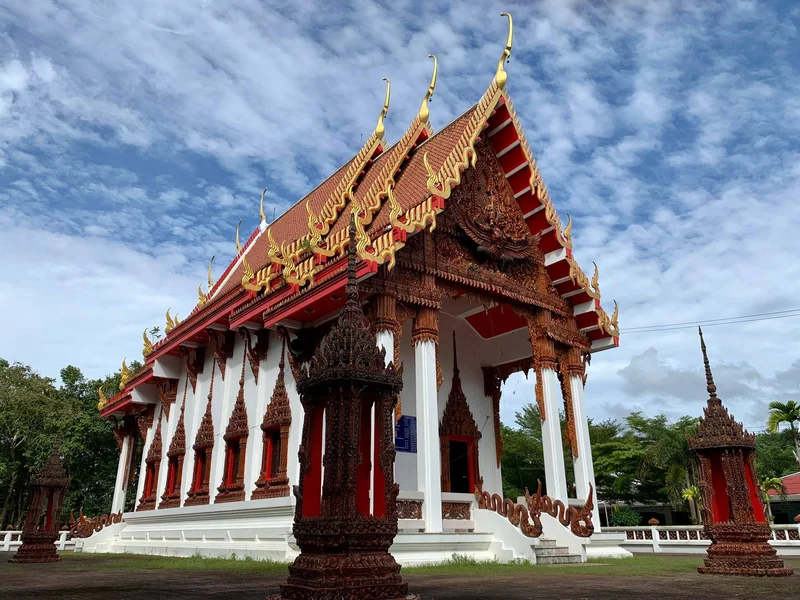
Wat Nam Chiao
Open Days: Daily
Opening Hours: Daytime
Wat Nam Chiao, formerly known as Wat Intharam, is an old Buddhist temple in Nam Chiao Subdistrict, Laem Ngop District, Trat Province. It is one of the most meaningful religious and cultural landmarks in Ban Nam Chiao, a canal-side community known for Buddhist-Muslim harmony, mangrove ecology, fishing traditions, local crafts, and community-based tourism. The temple is especially important because King Rama V once stayed here overnight in Rattanakosin Era 130, an event associated with a record in the Royal Gazette, Volume 28, Page 1207, dated 3 September R.E. 130.
Wat Nam Chiao is more than a local Buddhist temple. It is part of a living multicultural community where Thai Buddhists, Thai Muslims, and people of Chinese heritage have lived together for generations. Around the temple, visitors can experience canal-side houses, a mosque, mangrove forests, local fishing life, traditional crafts, and community tourism activities. This makes Wat Nam Chiao an excellent starting point for travelers who want to understand the deeper cultural side of Trat Province beyond islands, beaches, and ferry routes.
The temple was formerly called Wat Intharam, a name that reflects its older Buddhist identity. Over time, it became widely known as Wat Nam Chiao after the local community and canal. The name Nam Chiao refers to the strong flow of water in the canal during certain seasons. This connection between temple, canal, and community gives the site a strong sense of place. The temple has grown together with the waterway, the fishing community, and the local way of life along the eastern coast of Thailand.
Historical information records that Wat Nam Chiao was established in 1767 and later received its consecrated boundary on 27 May 1983. This long history places the temple among the old Buddhist sites of Trat Province. It has remained closely tied to Ban Nam Chiao, a community shaped by waterways, coastal resources, fishing, local trade, and religious coexistence.
The most important historical story of Wat Nam Chiao is its connection with King Rama V. Local records and travel information state that King Chulalongkorn stayed at the temple for 1 night in R.E. 130. This gives the temple a significant historical dimension. For Thai visitors, the story strengthens local pride and memory. For international travelers, it helps explain why a small canal-side temple in Trat has a place in the broader history of royal travel and regional administration in eastern Siam.
The royal connection also shows that Ban Nam Chiao and Laem Ngop were part of important coastal routes in the past. Small communities along the eastern coast were not isolated places. They were connected to travel, administration, trade, and maritime movement. Wat Nam Chiao therefore links local history with national history in a quiet but meaningful way.
In 2005, Wat Nam Chiao was selected by the National Office of Buddhism as a model developed temple. This recognition reflects the temple’s continuing role in religious practice, community development, and temple management. The temple is valuable not only because it is old or historically connected with King Rama V, but also because it continues to serve the local community in the present.
Inside the temple, visitors can pay respect to Buddha relics and Buddha images for different birth days. The presence of Buddha relics gives the temple strong spiritual significance for Buddhist visitors. The birth-day Buddha images allow visitors to worship according to their day of birth, a common and meaningful practice in Thai Buddhist culture. These sacred objects make the temple an important place for worship, reflection, and merit-making.
Wat Nam Chiao is also home to Trat Provincial Meditation Practice Center No. 13. This adds another important dimension to the temple. It is not only a place for short visits, but also a place associated with mindfulness, Dhamma study, and Buddhist practice. Travelers interested in Thai temple life can understand Wat Nam Chiao as a living religious site where worship, meditation, and community activities continue side by side.
The abbot of Wat Nam Chiao is Phra Khru Sophon Sutthawat Sukhesako. He plays an important role in the Buddhist community of Laem Ngop and in the religious life of the local area. Under the care of the temple’s monastic community, Wat Nam Chiao remains an active place for merit-making, ceremonies, meditation, and community gatherings.
The atmosphere of Wat Nam Chiao reflects the character of a canal-side community temple. It is not separated from village life. It stands close to local homes, the canal, and community routes. Local residents use the temple for worship, merit-making, Buddhist ceremonies, and communal activities. This close relationship between temple and community is one of the reasons Wat Nam Chiao feels authentic and meaningful for visitors.
Ban Nam Chiao is widely known as a community of 2 religions and 3 cultures. Thai Buddhists and Thai Muslims live together peacefully, while Chinese cultural influence is also part of the local identity. Visitors can see this harmony through the presence of Wat Nam Chiao, Al-Kubro Mosque, local shrines, canal-side houses, and shared community tourism activities. The temple is therefore part of a wider cultural landscape rather than a standalone attraction.
After visiting Wat Nam Chiao, travelers can continue into Ban Nam Chiao community. Popular local experiences include walking across Saphan Wat Jai, learning about the traditional Nam Chiao palm-leaf hat, tasting local food such as khao kriap ya na, taking a small boat trip through the mangrove area, and observing fishing life along the canal. Combining the temple with these activities gives visitors a complete picture of the community.
Saphan Wat Jai is one of the most recognizable landmarks in Ban Nam Chiao. It is a steep pedestrian bridge and a popular photo spot for visitors. Walking from the temple toward the bridge and the canal area allows travelers to experience the village atmosphere at a human pace. They can see houses, boats, local shops, and the canal that has shaped the community for generations.
Another important local identity is the Nam Chiao palm-leaf hat, made from nipa palm leaves. This traditional craft reflects the community’s relationship with coastal plants, fishing life, and local wisdom. Visitors who come to Wat Nam Chiao can extend their trip by learning about this craft in the village. This helps them understand that Ban Nam Chiao is not only a religious community, but also a place of local knowledge and traditional skills.
Food is another highlight of Ban Nam Chiao. Local dishes such as khao kriap ya na and seafood-based community meals reflect the flavors of Trat and the coastal way of life. A visit that begins with worship at Wat Nam Chiao and continues with local food and community activities creates a richer and more memorable travel experience.
For nature lovers, the mangrove area around Ban Nam Chiao is an important part of the visit. Boat trips along the canal and mangroves allow visitors to see the ecological side of the community. Mangrove forests support fish, crabs, birds, and coastal life, and they are closely linked to the livelihood of local people. This connection between temple, canal, mangrove, and fishing culture is what makes Nam Chiao different from many ordinary travel stops.
Wat Nam Chiao is suitable for many types of visitors. Elderly travelers can come for worship and merit-making. Families can use the visit as a cultural learning experience. Students can study the relationship between religion, community, ecology, and local history. International travelers can see how Thai Buddhist practice exists within a multicultural village where different religious and cultural traditions coexist peacefully.
The temple’s real value lies in its setting. Some temples are famous for large buildings or impressive murals. Wat Nam Chiao is meaningful because it connects faith, royal history, local harmony, canal life, mangrove ecology, and community-based tourism. This makes the temple an ideal place for travelers who want more than a quick sightseeing stop.
Getting There is convenient from Trat town. Travelers can take the Trat-Laem Ngop route toward Nam Chiao Subdistrict. The temple is located inside Ban Nam Chiao community and can be reached by private car, rental car, local hired vehicle, or public transport along the Trat-Laem Ngop route. When using navigation, set the destination as Wat Nam Chiao, Nam Chiao Subdistrict, Laem Ngop District, Trat Province, or Wat Intharam Nam Chiao.
Visitors without a private car can use local transport from Trat town toward Laem Ngop and continue into Ban Nam Chiao. Timing should be planned carefully, especially for those who want to continue to Laem Ngop pier or Ko Chang routes. Visitors who want to join community activities such as boat trips, local meals, or craft learning should contact the Ban Nam Chiao community tourism group in advance.
There is no listed admission fee for visiting Wat Nam Chiao. Visitors may make donations according to their faith. Proper dress and respectful behavior are expected, especially around the Buddha relics, ordination hall, birth-day Buddha images, and meditation areas. Photography should be done politely and should not disturb monks or worshippers.
The best time to visit is in the morning or afternoon. Morning is suitable for worship and walking around the temple and community, while afternoon light is pleasant for canal-side photography and boat trips. Visitors who plan to explore the community should allow at least half a day in order to experience both the temple and the surrounding village at a comfortable pace.
Accommodation options are available in Ban Nam Chiao, Laem Ngop, and Trat town. Travelers who want an immersive experience may choose a community homestay. Those who prefer more hotel facilities can stay in Trat town or near Laem Ngop. Food options include local community meals, seafood restaurants, and restaurants in Trat town.
In summary, Wat Nam Chiao, formerly Wat Intharam, is one of the most meaningful temples in Laem Ngop District, Trat Province. Established in 1767, associated with King Rama V’s overnight stay in R.E. 130, recognized as a model developed temple in 2005, and home to Buddha relics and birth-day Buddha images, the temple offers history, faith, meditation, and multicultural community life in one visit. It is highly recommended for travelers who want a deeper cultural understanding of Trat Province.
| Name | Wat Nam Chiao, Formerly Wat Intharam |
| Location | Nam Chiao Subdistrict, Laem Ngop District, Trat Province |
| Address | 121/1 Moo 1, Ban Nam Chiao, Nam Chiao Subdistrict, Laem Ngop District, Trat 23120, Thailand |
| Highlights | Old temple formerly known as Wat Intharam, associated with King Rama V’s overnight stay in R.E. 130, recognized as a model developed temple in 2005, with Buddha relics, birth-day Buddha images, and Trat Provincial Meditation Practice Center No. 13 |
| History | Established in 1767 and received its consecrated boundary on 27 May 1983. The temple is associated with a Royal Gazette record, Volume 28, Page 1207, dated 3 September R.E. 130, mentioning King Rama V’s stay |
| Name Origin | The temple was formerly called Wat Intharam and later became widely known as Wat Nam Chiao after the local community and canal, where water flows strongly during certain seasons |
| Distinctive Features | Old Buddhist temple in a multicultural community of 2 religions and 3 cultures, with Buddha relics, birth-day Buddha images, ordination hall, and meditation practice area |
| Travel Information | From Trat town, take the Trat-Laem Ngop route toward Nam Chiao Subdistrict. The temple can be reached by private car, rental car, local hired vehicle, or public transport toward Laem Ngop |
| Current Status | Active local Buddhist temple under the Mahanikaya order and home to Trat Provincial Meditation Practice Center No. 13 |
| Open Days | Daily |
| Opening Hours | Daytime |
| Facilities | Worship Area, Ordination Hall, Buddha Relic Area, Birth-Day Buddha Image Area, Meditation Practice Area, Community Parking Area |
| Main Areas / Zones | Ordination Hall, Buddha Relics, Birth-Day Buddha Images, Trat Provincial Meditation Practice Center No. 13, Worship And Merit-Making Area |
| Abbot / Caretaker | Phra Khru Sophon Sutthawat Sukhesako |
| Main Contact Number | Ban Nam Chiao Community Tourism Group, Tel. 061-660-0955, 089-244-6702 / Nam Chiao Subdistrict Municipality, Tel. 063-221-3055, 039-593-198 |
| Official Website / Official Page | Nam Chiao Subdistrict Municipality, Ban Nam Chiao Community Tourism Group |
| Nearby Tourist Attractions | 1. Ban Nam Chiao Community, About 0.5 km 2. Saphan Wat Jai, Ban Nam Chiao, About 1 km 3. Al-Kubro Mosque, About 1 km 4. Ban Nam Chiao Mangrove Learning Area, About 2 km 5. Laem Ngop, About 8 km 6. Trat Town, About 9 km |
| Nearby Restaurants | 1. Ban Nam Chiao Community Food, About 0.5 km, Tel. 061-660-0955, 089-244-6702 2. Thiw Thara, About 3 km 3. Kuay Tiew Pu, About 9 km 4. Khon Phlat Thin, About 9 km 5. Krua Ruam Rot 2564, About 9 km 6. Tao Tueng King Phet, About 10 km |
| Neary Accommodations | 1. Ban Nam Chiao Homestay, About 0.5 km, Tel. 061-660-0955, 089-244-6702 2. Baan Hotelier Resort, About 4 km 3. Suchanari At Laem Ngop, About 8 km 4. Trattara Boutique Hotel, About 9 km 5. Trat 101 Hotel, About 9 km 6. Trat Center Hotel, About 9 km |
Frequently Asked Questions (FAQ)
Q: Where is Wat Nam Chiao located?
A: Wat Nam Chiao is located in Nam Chiao Subdistrict, Laem Ngop District, Trat Province, within Ban Nam Chiao community on the Trat-Laem Ngop route.
Q: What was the former name of Wat Nam Chiao?
A: Wat Nam Chiao was formerly known as Wat Intharam. It is an old Buddhist temple with historical roots dating back to 1767.
Q: How is Wat Nam Chiao connected with King Rama V?
A: King Rama V once stayed at Wat Nam Chiao for 1 night in R.E. 130, and the event is associated with a Royal Gazette record, Volume 28, Page 1207.
Q: What can visitors worship inside Wat Nam Chiao?
A: Visitors can pay respect to Buddha relics, birth-day Buddha images, the ordination hall, and the temple’s worship and meditation areas.
Q: When was Wat Nam Chiao selected as a model developed temple?
A: Wat Nam Chiao was selected by the National Office of Buddhism as a model developed temple in 2005.
Q: Who is the abbot of Wat Nam Chiao?
A: The abbot of Wat Nam Chiao is Phra Khru Sophon Sutthawat Sukhesako.
Q: What nearby places can be visited with Wat Nam Chiao?
A: Nearby places include Ban Nam Chiao community, Saphan Wat Jai, Al-Kubro Mosque, the mangrove learning area, Laem Ngop, and Trat town.
Q: Is Wat Nam Chiao suitable for foreign travelers?
A: Yes. It is ideal for foreign travelers interested in an old Buddhist temple, King Rama V history, Buddha relics, and a multicultural Thai community with mangroves, fishing life, and community-based tourism.
 Category: ●Places of Worship
 Group: ●Temple
Last Update : 6 MonthAgo
 Last Update : 6 MonthAgo
 Click to Access the Navigation Map GPS

 Art, Culture and Heritage
 Historical Sites and Monuments(1)
 Landmarks and Memorials(1)
 Art, Craft Centres, Tradition(3)
 Museums(2)
 Educational Places
 Museum for Study(1)
 Educational Gardens, Farm(2)
Temple(11)
 Mosque(2)
 Other Sacred Sites(2)
 Suburban Living
 Village, Community(6)
 Local Market(2)
 Nature and Wildlife
 National Parks and Marine Reserves(2)
 Mountain (Doi)(1)
 Dam, Reservoir, Lake(3)
 Waterfalls(15)
 River, Canal(1)
 Bays and Beaches(21)
 Islands(19)
 Other natural attractions(12)
 Entertainment and Agricultural
 Outdoor and Adventure Activities(1)
 Shopping
 Shopping and Night Market(1)
 Department Store(1)
 Travel Articles, Recipes
 Travel Review, Food Review(3)


