
lovethailand home >Eastern Travel Attractions >Chanthaburi Travel Attractions >Muang Chanthaburi >Tha Chang > Rambhai Barni Rajabhat University
TL;DR: Rambhai Barni Rajabhat University is located at Tha Chang Subdistrict, Mueang Chanthaburi District, Chanthaburi Province, Thailand.

Rambhai Barni Rajabhat University
Open Days (Office of Academic Services): Monday – Friday, except government and public holidays
Opening Hours (Office of Academic Services): 08:30 – 16:30
Suan Ban Kaew Palace Museum Open Days: Daily
Suan Ban Kaew Palace Museum Opening Hours: 09:00 – 16:00
Rambhai Barni Rajabhat University (RBRU), known in Thai as มหาวิทยาลัยราชภัฏรำไพพรรณี, is a public university in Chanthaburi Province, eastern Thailand. It is located at 41 Moo 5, Tha Chang Subdistrict, Mueang Chanthaburi District, Chanthaburi 22000. Its history began on 15 June 1972 with the establishment of Chanthaburi Teachers College on the grounds of Suan Ban Kaew Palace, the former private royal residence of Queen Rambhai Barni, consort of King Prajadhipok (King Rama VII). In 1985, the college received royal permission to adopt the Queen's name, becoming Rambhai Barni College. It later developed into Rambhai Barni Rajabhat Institute in 1995 and gained university status on 15 June 2004. In 2026, the institution marked its 54th anniversary. Associate Professor Porphan Sutthiwatthana was formally appointed University President in October 2026. RBRU has 10 principal faculties covering education, science and technology, humanities and social sciences, management, agriculture, engineering, law, computer science, communication arts, and nursing. Its distinctive identity combines professional higher education, local development, and the preservation of the historic Suan Ban Kaew Palace, Queen Rambhai Barni Museum, and the Queen's memorial monument within the university grounds.
Rambhai Barni Rajabhat University is unlike many other universities in Thailand because it occupies a former royal residence with considerable historical significance. Suan Ban Kaew Palace preserves the memory of Queen Rambhai Barni, her personal way of life, royal activities, and relationship with the people of Chanthaburi. When the estate was transformed into an educational institution, its historical character became part of the university's identity. Today, the campus is simultaneously a place of higher education, a center for local development, and an important cultural and historical learning destination.
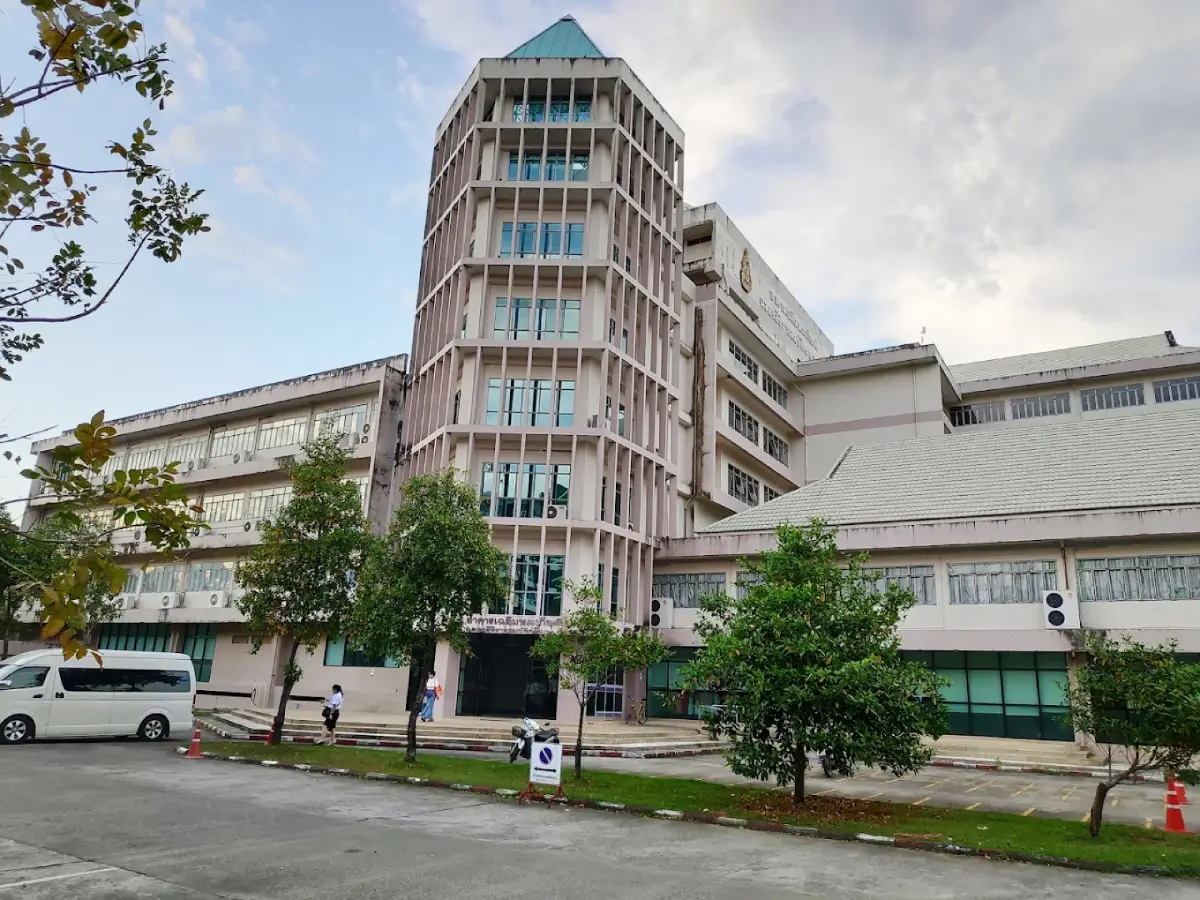
The main campus is situated near the Khao Rai Ya intersection, between Rak Sak Chamun Road and Sukhumvit Road, approximately 6 kilometers from central Chanthaburi. The university occupies about 720 rai and 3 ngan and contains academic buildings, administrative offices, library facilities, auditoriums, sports areas, landscaped grounds, and the historic buildings of Suan Ban Kaew Palace. Mature trees, gardens, and preserved sections of the royal estate create an atmosphere that combines natural beauty and architectural heritage with contemporary university life.
Before Chanthaburi Teachers College was established, Suan Ban Kaew was closely associated with Queen Rambhai Barni, the royal consort of King Prajadhipok, Thailand's seventh monarch of the Chakri dynasty. Following major political and social changes in Thailand, the Queen spent part of her life in Chanthaburi, where she developed Suan Ban Kaew as a private residence and agricultural estate. Her life there was marked by an interest in nature, gardening, practical work, and a comparatively simple style of living.
Suan Ban Kaew was more than a royal residence. It was also associated with agriculture, local livelihoods, and community engagement. The Queen's activities in farming and handicrafts contributed to her close relationship with the people of Chanthaburi. That connection later became an important part of the story of how the estate was used for public education, giving the university's name a meaning that extends well beyond its official title.
When the Thai Ministry of Education developed plans to establish regional teachers colleges, Chanthaburi was selected as a location for a new institution. The expansion was intended to address teacher shortages and improve access to higher education outside Bangkok. The Ministry arranged to acquire the Suan Ban Kaew estate for 18 million baht with Queen Rambhai Barni's support for its educational use. The transformation of the former royal residence into a teachers college became a significant event in both the history of the university and the wider educational development of Chanthaburi.
Chanthaburi Teachers College was officially established on 15 June 1972. Its principal mission was to prepare teachers and educational personnel for the growing number of schools in Chanthaburi and other eastern provinces. In its early years, the college faced limitations in buildings and equipment, but continued developing its academic facilities and services through the efforts of administrators, lecturers, staff, and students.
Teaching began in 1972 with an advanced educational certificate program. The original temporary classrooms occupied an area formerly used as part of the Queen's poultry facilities. Students in the first cohort therefore became affectionately known as the Chicken Coop Generation, or Run Lao Kai in Thai. This memorable name reflects the modest conditions of the institution's beginnings and remains a distinctive part of its historical identity.
On 27 March 1973, Chanthaburi Teachers College received permission to use the Sakdidet royal insignia, associated with King Prajadhipok, as the college emblem. Pink and green were adopted as its official colors. Pink represents kindness, compassion, and gentleness, and is associated with Tuesday, the day of Queen Rambhai Barni's birth. Green represents growth and prosperity and is associated with Wednesday, the day of King Prajadhipok's birth.
The royal emblem and official colors helped establish the college's institutional identity and strengthened its historical connection with King Rama VII and Queen Rambhai Barni. Pink and green remain important symbols in university events, student traditions, and the shared identity of alumni and current members of the university community.
In 1975, Chanthaburi Teachers College began offering bachelor's degree education programs under the Teachers College Act. This was an important stage in the development of professional teacher education, raising academic standards and enabling students to obtain degree-level qualifications. Graduates could apply their knowledge to teaching, curriculum development, and the improvement of schools across the region.
During the following decade, Thailand's changing economy and society created demand for professionals in disciplines beyond teaching. Legislative changes permitted teachers colleges to broaden their academic responsibilities. In 1985, Chanthaburi Teachers College introduced programs in science and arts, supporting the preparation of graduates for government, business, and community development work.
In March 1985, the college received royal permission to adopt the name of Queen Rambhai Barni and was renamed Rambhai Barni College. This was a particularly significant milestone because it connected the institution's official identity directly with the historical figure whose former estate had become its campus. The name continues to recognize the Queen's contribution to higher education in Chanthaburi.
The name Rambhai Barni is therefore rooted in the Queen's personal history rather than simply being an invented institutional title. Queen Rambhai Barni played an important role in the history of the royal residence and maintained strong connections with the local community. Naming the college after her helped preserve the memory of that relationship while giving the institution a distinctive identity among Thai higher education establishments.
From 1986 onward, the college expanded opportunities for working adults through special education programs designed for employed personnel. In 1994, off-campus educational services were extended into Rayong Province in cooperation with local educational institutions. These initiatives enabled teachers and other professionals to improve their qualifications without necessarily leaving their employment or relocating to Chanthaburi for full-time study.
On 21 June 1990, Somdet Phra Nyanasamvara, the Supreme Patriarch of Thailand, bestowed the Buddhist maxim Pandito Nipunam Samvidheti upon the college. It is commonly translated as "A wise person manages skillfully." The maxim emphasizes the thoughtful and responsible application of knowledge, reflecting the institution's commitment to producing graduates who are capable of making sound decisions and contributing to society.
On 14 February 1993, King Bhumibol Adulyadej bestowed the name Rajabhat Institute upon Thailand's teachers colleges. Following the enactment of the Rajabhat Institute Act in 1995, Rambhai Barni College became Rambhai Barni Rajabhat Institute. Its responsibilities now explicitly included higher education, research, academic services, cultural preservation, and local development.
In 1999, the institution introduced postgraduate education for the first time through a special program in Educational Administration. Additional graduate studies followed in Social Sciences for Development in 2000 and Curriculum and Instruction in 2001. The introduction of postgraduate education expanded its role in developing researchers, educational administrators, and professionals seeking advanced academic qualifications.
On 15 June 2004, Rambhai Barni Rajabhat Institute became Rambhai Barni Rajabhat University under the Rajabhat University Act. University status supported further academic diversification and institutional development while preserving its public mission of providing higher education, research, and services that contribute to local communities.
Following the transition to university status, new academic units were created to respond to changing workforce needs. The Faculty of Law was established in 2007, followed by the Graduate School and the Faculty of Computer Science and Information Technology in 2009. The Faculty of Communication Arts was also established in 2009. In 2010, the university developed the Faculty of Gemology and Applied Arts and the Faculty of Nursing, broadening its academic expertise beyond its original teacher-training mission.
In 2026, Rambhai Barni Rajabhat University celebrated 54 years since its foundation on 15 June 1972 and 22 years under its current university status, dating from 2004. The institution's development illustrates the expansion of regional higher education from a relatively small teachers college into a multidisciplinary university serving students, businesses, public organizations, and communities throughout eastern Thailand.
In October 2026, Associate Professor Porphan Sutthiwatthana received a royal appointment as President of Rambhai Barni Rajabhat University. The university held the formal ceremony acknowledging the Royal Command on 19 October 2026 at the Sirirambhaiphan Auditorium in Building 36. Under the new leadership, the university continued to emphasize educational quality, community engagement, research, and the practical application of university knowledge to local development.
The university's official colors remain pink and green, reflecting the royal birthdays and personal qualities associated with King Prajadhipok and Queen Rambhai Barni. Its symbolic flower is the Chaiyaphruek, scientifically known as Cassia javanica L., a flowering tree associated with the university's landscaped environment and natural heritage.
The current university emblem is based on the royal seal of King Rama IX, shared by Thailand's Rajabhat universities. It includes the eight-direction throne, royal wheel, radiating rays, and a seven-tiered white umbrella, with the university's name displayed in Thai and English. The emblem's blue, green, gold, orange, and white colors represent the monarchy, nature, wisdom, regional arts and culture, and the purity of scholarly thought.
Another important symbol within the university is the Queen Rambhai Barni Monument. Students, staff, alumni, and visitors pay their respects here during important ceremonies and commemorative activities. The monument serves not only as a historical memorial but also as a focal point for the university community's connection with the Queen's legacy and the history of Suan Ban Kaew.
Suan Ban Kaew Palace is among the most important heritage sites on campus. Its historic buildings are associated with the Queen's residence and everyday life, particularly the Main or Grey Palace Building and Don Khae Palace, also known as the Red Palace. These structures are important examples of the architectural and cultural history of Chanthaburi. Today, parts of the former royal residence serve as historical museums and educational spaces.
The Main Palace, often called the Grey Palace, is a traditional residence combining masonry and timber construction and painted a smoky-grey color. It was designed under the direction of Prince Samaichaloem Kridakorn. The building served as the Queen's private residence and a reception venue. The upper floor contains the former royal bedroom and a veranda overlooking the gardens, while the reception rooms and other spaces illustrate how the residence functioned during its original period of use.
Don Khae Palace, or the Red Palace, is a two-story teak building with Western-influenced architectural details and a red-painted exterior. Its name relates to the rows of flowering trees that once lined the approach. The residence was associated with members of the royal household, including Mom Rajawongse Samaksaman Kridakorn and Princess Phongphatsamani Chakrabandhu, who served as royal secretaries. The building preserves an architectural connection with the history of the royal household in Chanthaburi.
The Suan Ban Kaew Palace Museum displays royal personal belongings, photographs, historical documents, and material relating to Queen Rambhai Barni's life. Exhibitions also provide insights into the cultural heritage of Chanthaburi. Together, these collections help visitors understand the relationship between the former royal residence, local history, and the development of the university.
The Suan Ban Kaew Palace Museum welcomes visitors daily from 09:00 to 16:00. Guests can explore the historical displays and enjoy the quiet gardens surrounding the palace buildings. Visitors should respect museum regulations, follow staff instructions, and exercise care around objects and structures of historical significance.
The university's Office of Arts, Culture and Community Development plays an important role in preserving the palace's heritage, sharing historical knowledge, and supporting local cultural traditions. Its activities connect academic learning with the Queen's history, Chanthaburi's cultural identity, and the interests of students, residents, and visitors.
Beyond the palace complex, RBRU contains important modern academic buildings and meeting facilities. Building 36 houses educational services and the Sirirambhaiphan Auditorium, where major events such as institutional anniversaries, conferences, and formal ceremonies take place. Building 35 supports academic information resources, technology services, and meeting facilities used for teaching and professional activities.
The Rambhai Barni Golf Course is another distinctive feature of the campus. The nine-hole course is surrounded by greenery and provides opportunities for sport and recreation. Other university facilities include sports grounds, exercise areas, and activity spaces supporting student wellbeing and recreational participation according to the regulations of the responsible departments.
Rambhai Barni Rajabhat University has 10 principal faculties: the Faculty of Education; Faculty of Science and Technology; Faculty of Humanities and Social Sciences; Faculty of Management Science; Faculty of Agricultural Technology; Faculty of Engineering and Industrial Technology; Faculty of Law; Faculty of Computer Science and Information Technology; Faculty of Communication Arts; and Faculty of Nursing. Graduate education and other university support services are coordinated through additional academic and administrative units.
The Faculty of Education continues the institution's original teacher-training mission. Its academic fields include Elementary Education, Early Childhood Education, Social Studies, Thai, English, Mathematics, and Science Education. Teacher preparation focuses on subject knowledge, teaching methods, understanding learners, and developing educational activities appropriate for schools and local communities.
The Faculty of Science and Technology provides education in fundamental and applied sciences, including Chemistry, Microbiology, Environmental Science, and subjects involving data analysis and natural-resource management. Scientific education and research are important for product quality control, environmental protection, technological development, and the creation of practical solutions to community challenges.
The Faculty of Humanities and Social Sciences offers studies in Thai, Chinese, Business English, Political Science, Public Administration, Community Development, Music, and Visual Arts. These fields develop communication, cultural understanding, analytical thinking, and the ability to work effectively with people and institutions in the public and private sectors.
The Faculty of Management Science emphasizes business administration, organizational management, finance, investment, marketing, tourism, and service-sector economics. Chanthaburi's economy includes fruit trading, gemstone businesses, tourism, and other commercial activities, allowing students to connect classroom knowledge with regional business conditions and entrepreneurial opportunities.
The Faculty of Agricultural Technology is particularly relevant to Chanthaburi's status as a major producer of tropical fruit. Its fields include Agriculture, Aquaculture Technology, Food Innovation, and Agricultural Technology. Teaching and research may contribute to improved crop production, sustainable resource management, agricultural product development, and the growth of locally based agricultural enterprises.
The Faculty of Engineering and Industrial Technology develops professional knowledge in fields such as Electrical Engineering, Mechanical Engineering, Civil Engineering, Logistics Engineering, and manufacturing systems. Its teaching emphasizes applied problem-solving, technical competence, and the use of engineering tools relevant to industrial development in eastern Thailand.
The Faculty of Law supports legal education and understanding of the justice system, while the Faculty of Computer Science and Information Technology develops knowledge of information systems, computer science, and digital technology. These disciplines contribute to the development of organizations that require reliable legal frameworks, sound information management, and technical capabilities.
The Faculty of Communication Arts focuses on mass communication, creative media, and modern communication platforms, with an emphasis on professional responsibility and digital technologies. The Faculty of Nursing prepares healthcare professionals with knowledge of patient care, health promotion, disease prevention, and ethical professional practice.
RBRU also provides postgraduate education at master's and doctoral levels. Published areas include Educational Administration, Law, Communication Arts, and interdisciplinary studies for sustainable development. Advanced study enables professionals, administrators, and researchers to deepen their expertise and contribute to the improvement of organizations and communities.
Research and innovation are central to the university's contribution to eastern Thailand. Important areas include agricultural and food product development, environmental management, information technology, community business development, and the study of local cultural heritage. Research units and academic services support cooperation with communities and the transfer of knowledge to local entrepreneurs.
Chanthaburi is one of Thailand's major producers of durian, mangosteen, rambutan, and other commercially valuable fruits. Agricultural research is therefore closely connected with product quality, plant genetic resources, pest and disease management, water use, and value-added agricultural processing. Cooperation between university researchers and growers can help translate scientific findings into practical improvements in orchards and agricultural businesses.
On 28 October 2026, the University President, administrators, and staff visited areas within the campus to prepare a project focusing on the genetic resources and diversity of local durian varieties. The initiative aims to document the history of different durian cultivars and develop information on genetic diversity to support both in-situ and ex-situ conservation. It is particularly relevant to the preservation of local agricultural biodiversity and the economic importance of Chanthaburi's fruit industry.
The university also supports environmental sustainability through initiatives related to carbon neutrality. On 20 October 2026, a committee meeting considered energy conservation, solar power, electric vehicles, waste management, and biochar technology as part of the university's environmental planning. Such activities demonstrate how scientific knowledge can contribute to institutional management and wider community development.
Research and academic services concerning human–elephant conflict in eastern Thailand provide another example of the university's engagement with regional problems. Previous activities have included community consultations, the study of impacts from wild elephants, and the development of technological approaches to improve monitoring and early warning. This work reflects the role of universities in addressing complex environmental and social challenges.
University traditions are closely linked with the institution's royal and historical heritage. Paying respects at the Queen Rambhai Barni Monument is an important part of commemorative activities, helping members of the university community appreciate the origins of Suan Ban Kaew and the Queen's contribution to higher education in Chanthaburi.
New student welcoming activities, including the Pink and Green Camp, reflect the university's official colors and help students develop relationships with their peers and lecturers. Other documented university traditions include Wai Khru ceremonies, the Pong Lan Run, and ceremonies involving the royal seal and the historical Sakdidet emblem. These customs help transmit institutional history to new generations of students.
Wai Khru continues to be an important educational tradition. On 17 September 2026, the Thai Language Program of the Faculty of Humanities and Social Sciences held a Wai Khru and student blessing event for first-year and Chinese students in Building 35. The ceremony included traditional blessings and recognition of student contributions to faculty activities, emphasizing respect for teachers and a sense of belonging.
On 15 June 2026, Rambhai Barni Rajabhat University celebrated its 54th foundation anniversary at the Sirirambhaiphan Auditorium. Activities included Buddhist religious ceremonies, royal tributes, and institutional commemorations. The anniversary provided an opportunity for university administrators, lecturers, staff, students, and alumni to reflect on the institution's history and its continuing responsibility to local communities.
On 3 September 2026, the Office of Arts, Culture and Community Development organized a special event at the Queen Rambhai Barni Monument, inviting graduating students to offer flowers, pay their respects, and take commemorative photographs. The activity expressed the emotional connection between graduates and the historic site that forms the foundation of their university.
The relationship between the university and Chanthaburi communities is reflected in educational programs, professional training, cultural preservation, and place-based research. Work involving tropical fruit products, local handicrafts, cultural tourism, and small-business development supports the transfer of knowledge and encourages sustainable economic opportunities in the province.
For visitors interested in educational tourism, RBRU offers the chance to explore Suan Ban Kaew Palace, study the Queen's life and legacy, see the preserved royal residences, and enjoy the campus landscape. Public lectures, cultural exhibitions, and community-focused academic activities may also offer opportunities for engagement when announced by the responsible university departments.
For administrative matters, the university's Office of Academic Services operates Monday to Friday from 08:30 to 16:30, except government and public holidays. The Suan Ban Kaew Palace Museum welcomes visitors daily from 09:00 to 16:00. Other faculty offices, libraries, and laboratories may have different opening schedules or access conditions.
Getting There to Rambhai Barni Rajabhat University is possible by private car from central Chanthaburi along Rak Sak Chamun Road toward the Khao Rai Ya intersection, or via Sukhumvit Road. The official address is 41 Moo 5, Tha Chang Subdistrict, Mueang Chanthaburi District, Chanthaburi 22000. Visitors should check the most suitable entrance and their intended destination within the campus, as the university covers a large area and connects to more than one major road.
Travelers from Bangkok can follow the major highway network toward Chanthaburi and continue via Sukhumvit Road or Rak Sak Chamun Road. Those arriving by interprovincial bus can continue from Chanthaburi Bus Terminal by taxi or other locally available transport. Visitors specifically wishing to see the historic palace should select Suan Ban Kaew Palace Museum as their final navigation destination.
Other important cultural attractions in Chanthaburi include the Chanthaboon Waterfront Community, the Cathedral of the Immaculate Conception, the Chanthaburi City Pillar Shrine, and the King Taksin the Great Shrine. These places illustrate the province's distinctive mixture of Thai, Chinese, and Catholic heritage, as well as its historical importance in the development of eastern Thailand.
Rambhai Barni Rajabhat University is therefore an institution of considerable educational, historical, and cultural significance. From Chanthaburi Teachers College in 1972 to a multidisciplinary public university in 2026, its development over 54 years reflects the expansion of higher education and the growth of academic disciplines serving regional needs. At the same time, its identity as a university within the former Suan Ban Kaew Palace remains a unique legacy, connecting education, royal history, cultural preservation, research, and community development.
| University Name | Rambhai Barni Rajabhat University (RBRU) |
| Thai Name | มหาวิทยาลัยราชภัฏรำไพพรรณี |
| Institution Type | Public University, Rajabhat University System |
| Location | Tha Chang Subdistrict, Mueang Chanthaburi District, Chanthaburi Province, Thailand |
| Full Address | 41 Moo 5, Tha Chang, Mueang Chanthaburi, Chanthaburi 22000, Thailand |
| Surrounding Area | Near Khao Rai Ya Intersection, between Rak Sak Chamun Road and Sukhumvit Road, approximately 6 kilometers from central Chanthaburi |
| Main Campus Area | 720 rai and 3 ngan |
| Former Institutional Names | 1. Chanthaburi Teachers College 2. Rambhai Barni College 3. Rambhai Barni Rajabhat Institute |
| Foundation Date | 15 June 1972, as Chanthaburi Teachers College |
| Sakdidet Emblem Granted | 27 March 1973 |
| Bachelor's Degree Education Began | 1975 |
| Royal Permission to Use the Name Rambhai Barni | March 1985 |
| Traditional Buddhist Maxim | Pandito Nipunam Samvidheti — A Wise Person Manages Skillfully |
| Postgraduate Education Began | 1999, in Educational Administration |
| Rajabhat University Status | 15 June 2004 |
| Institutional Age in 2026 | 54 years since 15 June 1972 |
| Important Historical Figures | 1. Queen Rambhai Barni, whose former royal estate became the university campus 2. King Prajadhipok (King Rama VII), associated with the Sakdidet emblem 3. Somdet Phra Nyanasamvara, Supreme Patriarch of Thailand, who bestowed the institution's Buddhist maxim |
| University President in 2026 | Associate Professor Porphan Sutthiwatthana |
| University Colors | Pink and Green |
| University Flower | Chaiyaphruek (Cassia javanica L.) |
| Current University Emblem | Royal Seal of King Rama IX, surrounded by the university's Thai and English names |
| Faculties | 1. Faculty of Education 2. Faculty of Science and Technology 3. Faculty of Humanities and Social Sciences 4. Faculty of Management Science 5. Faculty of Agricultural Technology 6. Faculty of Engineering and Industrial Technology 7. Faculty of Law 8. Faculty of Computer Science and Information Technology 9. Faculty of Communication Arts 10. Faculty of Nursing |
| Academic Levels | Bachelor's, Master's, and Doctoral Degrees according to the university's published academic programs |
| Academic Strengths | Teacher Education, Science, Agriculture, Engineering, Law, Information Technology, Communication Arts, Nursing, Local Development Research, and Cultural Heritage Preservation |
| Important Campus Attractions and Facilities | 1. Suan Ban Kaew Palace 2. Main or Grey Palace Building 3. Don Khae or Red Palace Building 4. Queen Rambhai Barni Museum 5. Queen Rambhai Barni Monument 6. Buildings 35 and 36 7. Sirirambhaiphan Auditorium 8. Rambhai Barni Golf Course 9. Office of Arts, Culture and Community Development |
| Important Traditions and Activities | 1. University Foundation Anniversary on 15 June 2. New Student Welcome Activities and Pink and Green Camp 3. Wai Khru and Student Blessing Ceremonies 4. Commemorations at Queen Rambhai Barni Monument 5. Cultural Preservation and Community Development Programs 6. Research and Academic Outreach Activities |
| Office of Academic Services — Open Days | Monday – Friday, except government and public holidays |
| Office of Academic Services — Opening Hours | 08:30 – 16:30 |
| Suan Ban Kaew Palace Museum — Open Days | Daily |
| Suan Ban Kaew Palace Museum — Opening Hours | 09:00 – 16:00 |
| Suan Ban Kaew Palace Museum Admission | Free Admission |
| Facilities | Academic Buildings, Laboratories, Library, Auditoriums, Student Activity Areas, Sports Facilities, Golf Course, Museum, Food Court, and Parking |
| Getting There | Travel from central Chanthaburi along Rak Sak Chamun Road or Sukhumvit Road toward the Khao Rai Ya intersection by private vehicle or hired local transport |
| Attractions and Learning Destinations in the Area | 1. Suan Ban Kaew Palace 2. Queen Rambhai Barni Monument 3. Chanthaboon Waterfront Community 4. Cathedral of the Immaculate Conception 5. Chanthaburi City Pillar Shrine |
| Restaurants in and Around Chanthaburi | 1. Khun RaGa Chicken Rice, Building 36, Tel. +66 86 779 7732 2. Tha Chang Seafood, Tel. +66 92 189 8585 3. Pae Yim Suki and Grill Buffet, Tha Chang, Tel. +66 96 285 5588 4. Somtam Sae Rim Nam at Tha Chang, Tel. +66 97 221 2041 5. Ruen Lamphu Chanthaburi, Tel. +66 81 153 2323 |
| Accommodation in and Around Chanthaburi | 1. Rim Green Hotel, Tel. +66 39 471 050 2. Little Rooms, Tha Chang, Tel. +66 84 348 7227 3. Ch.Chang Homeplace, Tel. +66 81 824 8771 4. DD Mansion, Tel. +66 89 504 7229 5. T Lup T Norn, Tel. +66 82 008 1855 |
| University Telephone | +66 39 319 111 ext. 0, 10164–10166 |
| Educational Services Telephone | +66 39 319 111 ext. 10181–10182 |
| Suan Ban Kaew Palace Museum Telephone | +66 39 471 072 |
| Official Website | www.rbru.ac.th |
| Admissions Website | admission.rbru.ac.th |
| Current Status | Active Public University offering higher education, research, and academic services in 2026, with the historic Suan Ban Kaew Palace open to visitors |
Academic Programs and Fields of Study at Rambhai Barni Rajabhat University, Academic Year 2026 (B.E. 2569)
| Faculty / Academic Unit | Academic Programs and Fields Published by the University |
| Faculty of Education | Bachelor's Degree Fields 1. Bachelor of Education in Elementary Education 2. Bachelor of Education in Early Childhood Education 3. Bachelor of Education in Social Studies 4. Bachelor of Education in Physical Education 5. Bachelor of Education in Thai 6. Bachelor of Education in English 7. Bachelor of Education in Chemistry 8. Bachelor of Education in Biology 9. Bachelor of Education in Physics 10. Bachelor of Education in General Science 11. Bachelor of Education in Mathematics 12. Bachelor of Education in Computer Education 1. Educational Administration, with master's and doctoral education published by the university |
| Faculty of Science and Technology | Bachelor's Degree Fields 1. Applied Statistics 2. Home Economics 3. Environmental Science 4. Chemistry 5. Microbiology |
| Faculty of Humanities and Social Sciences | Bachelor's Degree Fields 1. Visual Arts 2. Public Administration 3. Community Development 4. Thai Language 5. Music 6. Chinese Language 7. Business English 8. Political Science 1. Interdisciplinary Studies for Sustainable Development, doctoral level |
| Faculty of Management Science | Bachelor's Degree Fields 1. Business Economics 2. Tourism 3. Business Computer 4. Management 5. Finance and Investment |
| Faculty of Agricultural Technology | Bachelor's Degree Fields 1. Agriculture 2. Aquaculture Technology 3. Food Innovation and Technology 4. Agricultural Technology |
| Faculty of Engineering and Industrial Technology | Bachelor's Degree Fields 1. Creative Design 2. Electrical Engineering 3. Mechanical Engineering 4. Logistics Engineering 5. Civil Engineering 6. Production Engineering and Quality Management 7. Energy Technology 8. Aircraft Parts Manufacturing Technology 9. Gems and Jewelry Technology 10. Industrial Arts |
| Faculty of Law | Bachelor's Degree 1. Bachelor of Laws 1. Master of Laws |
| Faculty of Computer Science and Information Technology | Bachelor's Degree Fields 1. Information Technology 2. Geoinformatics 3. Computer Science 4. Computer Network Technology |
| Faculty of Communication Arts | Bachelor's Degree Fields 1. Mass Communication 2. Entertainment, Performing Arts and Tourism Business 3. Communication Arts (Trilingual Program) 1. Master's-level Communication Arts program 2. Doctoral-level Communication Arts program |
| Faculty of Nursing | Bachelor's Degree 1. Bachelor of Nursing Science |
Frequently Asked Questions (FAQ)
Q: What days is Rambhai Barni Rajabhat University open, and what are its opening hours?
A: The Office of Academic Services operates Monday to Friday, from 08:30 to 16:30, except government and public holidays. Suan Ban Kaew Palace Museum is open daily from 09:00 to 16:00. Other university departments may have different service schedules.
Q: Where is Rambhai Barni Rajabhat University located?
A: The university is at 41 Moo 5, Tha Chang Subdistrict, Mueang Chanthaburi District, Chanthaburi 22000, Thailand, near the Khao Rai Ya intersection between Rak Sak Chamun Road and Sukhumvit Road.
Q: When was Rambhai Barni Rajabhat University established?
A: It was founded on 15 June 1972 as Chanthaburi Teachers College and became Rambhai Barni Rajabhat University on 15 June 2004.
Q: Why is Rambhai Barni Rajabhat University located on the grounds of Suan Ban Kaew Palace?
A: The estate was formerly Queen Rambhai Barni's private royal residence. With her support, Thailand's Ministry of Education acquired the land to establish a regional teachers college and expand higher education in Chanthaburi.
Q: Who is the President of Rambhai Barni Rajabhat University in 2026?
A: Associate Professor Porphan Sutthiwatthana, whose formal royal appointment was acknowledged at a university ceremony on 19 October 2026.
Q: What faculties does Rambhai Barni Rajabhat University have?
A: Its 10 faculties are Education; Science and Technology; Humanities and Social Sciences; Management Science; Agricultural Technology; Engineering and Industrial Technology; Law; Computer Science and Information Technology; Communication Arts; and Nursing.
Q: Is Suan Ban Kaew Palace Museum open every day?
A: Yes. The museum is open daily from 09:00 to 16:00, and admission is free. Visitors should follow museum regulations when exploring the historic palace buildings.
Q: What are the university's official colors and flower?
A: Its official colors are pink and green, and its symbolic flower is Chaiyaphruek, scientifically known as Cassia javanica L.
Q: What important traditions are associated with Rambhai Barni Rajabhat University?
A: Traditions include the university foundation anniversary on 15 June, the Pink and Green Camp, Wai Khru ceremonies, and commemorative activities at the Queen Rambhai Barni Monument.
Q: Does the university offer master's and doctoral degrees?
A: Yes. Published postgraduate fields include Educational Administration, Law, and Communication Arts. Prospective students should consult the university's admissions system for the relevant academic year and application period.
Q: How can visitors get to Rambhai Barni Rajabhat University?
A: From central Chanthaburi, travel along Rak Sak Chamun Road or Sukhumvit Road toward the Khao Rai Ya intersection. Visitors can use private vehicles or hired local transport from Chanthaburi Bus Terminal.
 Category: ●University
 Group: ●Rajabhat University
Last Update : 5 DayAgo
 Last Update : 5 DayAgo
 Click to Access the Navigation Map GPS
Rambhai Barni Rajabhat University Map
Recommend

 Art, Culture and Heritage
 Historical Sites and Monuments(7)
 Landmarks and Memorials(7)
 Royal Palace(1)
 Art, Craft Centres, Tradition(7)
 Museums(2)
 Educational Places
 Educational Gardens, Farm(5)
 Autonomous Universities(1)
 Rajamangala University of Technology(1)
Rajabhat University(1)
 Places of Worship
 Temple(25)
 Church(1)
 Other Sacred Sites(16)
 Research and Development
 Royal Project(1)
 Suburban Living
 Village, Community(4)
 Local Market(5)
 Nature and Wildlife
 National Parks and Marine Reserves(7)
 Mountain (Doi)(3)
 Dam, Reservoir, Lake(8)
 Waterfalls(21)
 Hot Springs(1)
 Caves(4)
 River, Canal(3)
 Bays and Beaches(9)
 Islands(2)
 Other natural attractions(3)
 Entertainment and Agricultural
 Zoos and Aquariums(3)
 Stadium(1)
 Farms, Parks and Ecotourism(7)
 Outdoor and Adventure Activities(3)
 Travel Articles, Recipes
 Travel Review, Food Review(3)


