
lovethailand home >Northeastern Travel Attractions >Udon Thani Travel Attractions >Kut Chap >Khon Yung > Tham Sing Cave
TL;DR: Tham Sing Cave is located at Khon Yung Subdistrict, Kut Chap District, Udon Thani Province, open Daily, hours 08.00 – 17.00.
Tham Sing Cave
Open Days: Daily
Opening Hours: 08.00 – 17.00
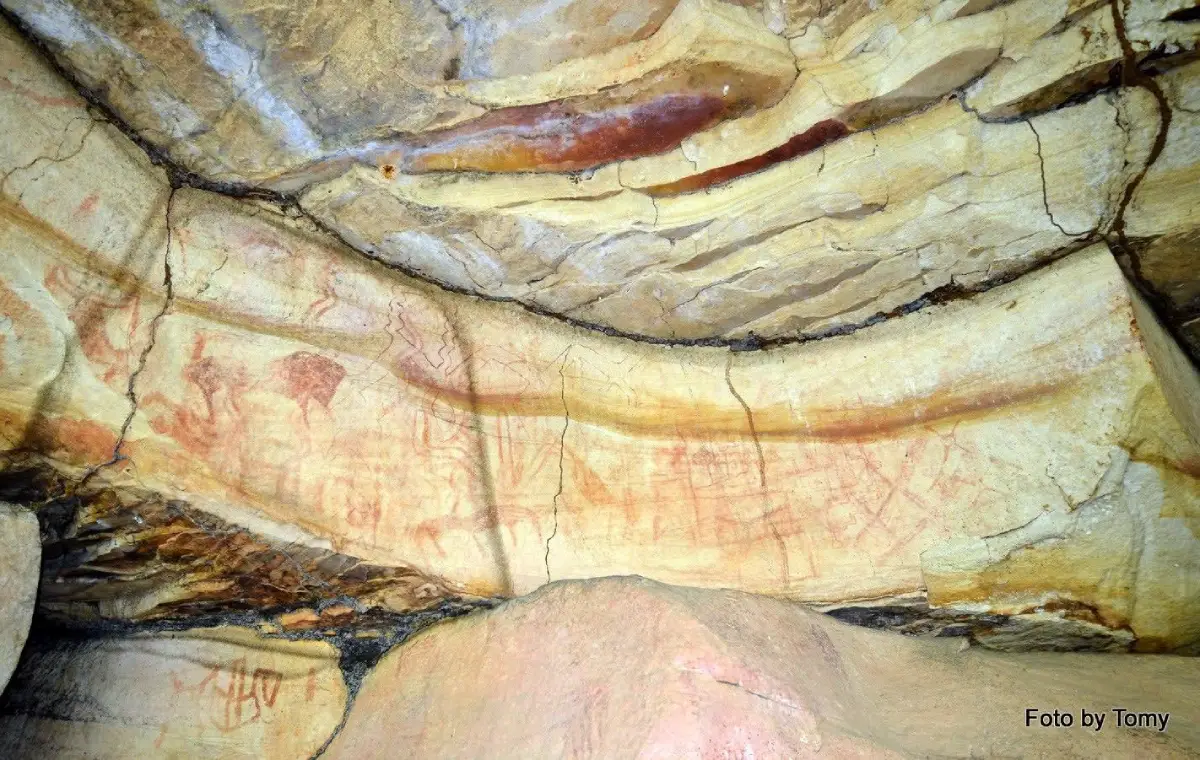
Tham Sing in Udon Thani Province is an eco-tourism and prehistoric rock-art site in Khon Yung Subdistrict, Kut Chap District. The site is located within the Kut Chap forest landscape and the Tham Sing recreational forest area. Its main highlight is a sandstone cave and rock shelter where ancient red pictographs remain visible on the rock surface. These paintings are about 2,300 years old and include animal-like figures, hand images, geometric patterns, and symbolic forms. The cave area is also associated with colored stones and traces of pottery-related objects or ancient tools and utensils, making Tham Sing valuable for archaeology, history, nature education, and forest-based learning in one destination.
Tham Sing is a strong choice for travelers who want to see a deeper side of Udon Thani beyond the province’s well-known temples, archaeological museums, and city attractions. The site combines forest, sandstone formations, cave shelters, ancient pictographs, local legends, viewpoints, small waterfalls, and a nature study trail. Visitors do not come here only to look at one cave wall. They come to experience a complete landscape where ancient human traces, local memory, and the natural environment remain connected.
The red pictographs are the central feature of Tham Sing. The name “Tham Sing” comes from a four-legged animal image on the rock wall that local people saw as resembling a lion or mythical singha. This image helped give the cave its name and identity. In 2001, the discovery of the paintings was formally reported to Khon Yung Subdistrict Administrative Organization, and relevant local and educational authorities later conducted official surveys. The paintings became recognized as important prehistoric evidence showing that the Kut Chap forest area had human activity or symbolic meaning thousands of years ago.
The paintings at Tham Sing use red pigment and are examples of pictographs, or images made by applying color directly to rock. The visible images include both figure and non-figure forms. Figure images are forms that can still be identified or interpreted as animals, hands, or living forms. Non-figure images are more abstract, such as lines, symbols, and geometric patterns. Seeing these paintings in their original rock-shelter context helps visitors understand that archaeology does not exist only inside museums. It can also remain in the landscape where ancient people once used natural rock surfaces as meaningful spaces.
Tham Sing is not only an archaeological site. It is also an eco-tourism area with a nature study trail of about 3 km. The route passes through the Kut Chap National Reserved Forest, where several forest types can be observed, including mixed deciduous forest, dry dipterocarp forest, and grassland forest. Local tree species along the route include pradu, daeng, makha tae, and krabok. The natural setting gives the visit a broader value: travelers can learn about forest ecology, local vegetation, sandstone landforms, and ancient rock art during the same walk.
The Tham Sing nature study trail is best experienced slowly. Along the route, visitors can stop at several points connected with nature, local stories, and historical memory. Important places include Pha Atsana Phra Isuan Viewpoint, Pu Ta Pu Lup Shrine, Tham Khok Ma, Tham Nok Yung, a former communist food-and-weapon hiding place, Thap Khwai, Sam Khanun Waterfall, Wang Khanun Waterfall, Wat Pa Phu Lon, Ruesi Cave, and rock formations. These places make the route more than a simple forest walk. They turn the area into a layered cultural and ecological landscape.
Pha Atsana Phra Isuan Viewpoint is one of the most important stops on the route. It is a steep cliff area with a large rock associated with a local legend about Phra Isuan. From this viewpoint, visitors can see wide scenery across the highland landscape. Looking west, the view reaches toward Nong Bua Lamphu Province and the distant Phu Kradueng area. Looking east, visitors can see the direction of Kut Chap District in Udon Thani, as well as the landscape around Huai Luang Reservoir. This viewpoint adds a panoramic mountain and forest experience to a trip that already includes prehistoric paintings.
Pu Ta Pu Lup Shrine reflects the relationship between local communities and the forest. Local residents respect the shrine and have traditionally made offerings before taking livestock up to the mountain during the farming season. They ask the sacred guardian to protect both animals and people. This point shows that Tham Sing and the Kut Chap forest are not only tourist sites, but also cultural spaces connected with local belief, community life, and memory.
Tham Khok Ma is a rock shelter made of overlapping stone with a hollow passage that visitors can pass through. Its name is connected with the Isan folk legend of Usa and Barot. According to the local story, Thao Barot was searching for Nang Usa and tied his horse at this place. The form of the cave, together with the story attached to it, makes Tham Khok Ma interesting both as a natural rock feature and as a cultural stop on the trail.
Tham Nok Yung is another meaningful cave stop. Local hunters once found peafowl nesting in the rock hollow, and the cave became known as Tham Nok Yung, or Peacock Cave. The cave is a large rock cavity with formations at the front that resemble a peacock spreading its tail. This point shows how local place names often arise from visible natural features, animal life, and community memory. It also helps visitors notice how each cave or rock shelter in the area has its own character.
The former communist food-and-weapon hiding place adds a modern historical layer to the trail. In the past, a group used a rock hollow in this area to hide supplies and weapons while escaping from authorities. The hiding place is described as a hollow with a wide opening and a passage that runs through to the other side of a rock platform. This feature gives Tham Sing a rare historical depth, because the same route contains prehistoric paintings, folk belief, natural rock shelters, and traces of more recent political history.
Thap Khwai, Sam Khanun Waterfall, Wang Khanun Waterfall, Wat Pa Phu Lon, Ruesi Cave, and the rock formation area complete the Tham Sing route. Thap Khwai is connected with past livestock use in the forest. Sam Khanun and Wang Khanun waterfalls show the role of water and terrain in the Kut Chap forest. Wat Pa Phu Lon adds a quiet religious dimension. Ruesi Cave and the rock formations show the special sandstone character of the area. These stops make the route suitable for travelers who want to understand the whole landscape rather than visit only the painted wall.
Tham Sing has been developed as an eco-tourism attraction under the idea of a natural classroom and recreational forest. Visitor facilities include a nature trail, a tourist service center, basic visitor services, and accommodation or guesthouse support in the area. This development allows general travelers and students to access the site more easily while still emphasizing careful use. The ancient paintings and forest ecosystem are irreplaceable. Once damaged by touching, writing, or careless behavior, their value cannot be restored.
Visitors who come to view the pictographs should do so with respect and care. The rock wall should not be touched, rubbed, marked, or sprayed with any substance. Visitors should not add writing, scratch the surface, or stand too close to fragile areas. The best way to experience the paintings is to observe them from a suitable distance, look carefully at the remaining red lines, and consider their position on the stone surface. Every visible trace is a surviving piece of prehistoric cultural evidence.
The best time to visit Tham Sing is from morning to early afternoon. The weather is more comfortable for walking, and visitors have enough time to complete the nature trail before late afternoon. During the rainy season, the forest becomes greener and more humid, but some sections of the trail may be slippery. The cool season offers comfortable walking conditions and is especially suitable for viewpoints. The hot season is still possible for a visit, but travelers should bring enough drinking water, wear a hat, and begin the walk early.
Tham Sing is suitable for different types of travelers. History-focused visitors will appreciate the 2,300-year-old rock paintings and pottery-related traces. Nature travelers will enjoy the forest, sandstone rocks, caves, and waterfalls. Cultural travelers can learn about local shrines, folk legends, and community memory. Families can use the area as an outdoor classroom where children can understand how forests, caves, ancient art, and local communities are connected.
Getting There from Udon Thani city involves traveling toward Kut Chap District, then continuing to Khon Yung Subdistrict and the Tham Sing recreational forest area. The site is best reached by private car, rental car, or hired vehicle with a driver because it is located in a forest and rural area. Travelers should use an online map together with local directions, especially near the entrance to Khon Yung and the forest route. Once near the site, visitors should follow signs toward Tham Sing recreational forest and the tourist service center.
To experience Tham Sing properly, visitors should allow at least half a day. The nature study trail is about 3 km and includes several stops. A rushed visit may miss important details such as Pha Atsana Phra Isuan Viewpoint, Tham Khok Ma, Tham Nok Yung, and the small waterfall areas. Walking slowly and observing the stones, plants, wind, shade, and rock paintings gives a much deeper understanding of the place.
Useful items to bring include non-slip walking shoes, drinking water, a hat, mosquito repellent, a small towel, a personal trash bag, and waterproof protection for phones or cameras. During the rainy season, a light rain jacket or waterproof bag is useful because forest paths and rock surfaces may become slippery. Proper preparation improves safety and helps reduce impact on the natural environment.
For international travelers, Tham Sing is especially interesting because it combines prehistoric art, forest ecology, and local culture in one place. A rental car or hired driver is recommended. Travelers should keep the Thai place name available for asking directions because English signs and English-speaking services may be limited in the local area. The experience is valuable for those interested in archaeology, nature, cultural landscapes, and rural northeastern Thailand.
Responsible behavior is essential at Tham Sing. Visitors should not litter, damage plants, disturb animals, write on rocks, touch the paintings, make loud noise, or leave the marked route. The area is a tourist site, learning space, and cultural heritage location at the same time. Keeping it clean and calm preserves its value for local residents, future travelers, and anyone interested in Thailand’s prehistoric past.
In summary, Tham Sing in Udon Thani is an eco-tourism and ancient rock-art site in Khon Yung Subdistrict, Kut Chap District. The area features red pictographs about 2,300 years old, sandstone caves and rock shelters, a 3 km nature study trail, Pha Atsana Phra Isuan Viewpoint, Pu Ta Pu Lup Shrine, Tham Khok Ma, Tham Nok Yung, Thap Khwai, Sam Khanun Waterfall, Wang Khanun Waterfall, Wat Pa Phu Lon, Ruesi Cave, and rock formations. It is suitable for travelers who want a complete Udon Thani experience that includes nature, archaeology, history, culture, and forest ecology. With careful preparation and respect for conservation rules, Tham Sing becomes one of the most meaningful cultural-nature destinations in Udon Thani.
| Name | Tham Sing |
| Location | Khon Yung Subdistrict, Kut Chap District, Udon Thani Province |
| Address | Tham Sing Recreational Forest, Kut Chap Forest, Khon Yung Subdistrict, Kut Chap District, Udon Thani 41250, Thailand |
| Highlights | A sandstone cave and rock shelter with ancient red pictographs about 2,300 years old, together with a 3 km nature study trail |
| History | A prehistoric rock-art site formally reported in 2001 and developed as an eco-tourism attraction under the natural classroom and recreational forest concept |
| Name Origin | The name “Tham Sing” comes from a four-legged animal image on the cave wall that local people saw as resembling a singha or lion |
| Distinctive Features | Red pictographs, animal images, hand images, geometric patterns, sandstone caves, forest trail, viewpoint, local shrine, and nearby waterfall points within Kut Chap forest |
| Travel Information | From Udon Thani city, travel toward Kut Chap District, then continue to Khon Yung Subdistrict and Tham Sing recreational forest; private car, rental car, or hired vehicle is recommended |
| Current Status | Open as an eco-tourism and ancient rock-art attraction of Khon Yung Subdistrict, Kut Chap District, Udon Thani Province |
| Open Days | Daily |
| Opening Hours | 08.00 – 17.00 |
| Fees | No Entrance Fee |
| Facilities | Tourist service center, nature study trail, toilets, food, shops, parking, guesthouse support, and nature learning areas |
| Main Areas / Zones | Ancient Tham Sing pictograph zone About 3 km nature study trail zone Pha Atsana Phra Isuan Viewpoint zone Pu Ta Pu Lup Shrine zone Tham Khok Ma and Tham Nok Yung zone Thap Khwai, Sam Khanun Waterfall, and Wang Khanun Waterfall zone Wat Pa Phu Lon, Ruesi Cave, and rock formation zone Tourist service center and guesthouse zone |
| Caretaker | National Reserved Forest Management Center 145, Kut Chap Forest, under Forest Resource Management Office 6 (Udon Thani), Royal Forest Department, together with local authorities in Khon Yung Subdistrict |
| Main Contact Number | Tham Sing / local tourism information, Tel. 042-325406 Khon Yung Subdistrict Administrative Organization, Tel. 0-4221-9672 |
| Official Website / Official Page | Smart DASTA and Khon Yung Subdistrict Administrative Organization |
| Nearby Tourist Attractions | 1. Pha Atsana Phra Isuan Viewpoint, about 1 km 2. Tham Khok Ma, about 1 km 3. Tham Nok Yung, about 1 km 4. Thap Khwai, about 2 km 5. Sam Khanun Waterfall, about 2 km 6. Wang Khanun Waterfall, about 3 km 7. Wat Pa Phu Lon, about 3 km 8. Ruesi Cave and rock formations, about 3 km |
| Nearby Restaurants | 1. PunThai Coffee Kut Chap, about 18 km, Tel. 098-253-5273 2. Pordeekham Coffee & Cafe’, about 24 km, Tel. 063-490-1664, 089-937-6167 3. Baan Thai Restaurant, about 25 km, Tel. 094-690-9995 4. Khun Kob Kut Chap Restaurant, about 25 km, Tel. 095-816-0971 5. Yai Toi Noodles, about 26 km, Tel. 083-503-8431 6. Thida Shabu & Grill, about 27 km, Tel. 083-664-4288 |
| Nearby Accommodations | 1. Leelawadee Resort Kut Chap, about 25 km 2. Ruean Rak Rao Resort, about 28 km 3. Thung Na Hotel, about 30 km 4. Pumin Resort Udon-Thani, about 45 km, Tel. 098-625-6525 5. Intara Resort Udon Thani, about 55 km |
Frequently Asked Questions (FAQ)
Q: Where is Tham Sing located?
A: Tham Sing is located in Khon Yung Subdistrict, Kut Chap District, Udon Thani Province, within the Tham Sing recreational forest and Kut Chap National Reserved Forest area.
Q: What days is Tham Sing open?
A: Tham Sing is open daily from 08.00 to 17.00. Morning to early afternoon is the best time for walking the nature trail.
Q: Is there an entrance fee for Tham Sing?
A: No. Tham Sing has no entrance fee. Visitors can view the pictographs and walk the nature trail while respecting conservation rules.
Q: How old are the Tham Sing rock paintings?
A: The Tham Sing rock paintings are about 2,300 years old. They are red pictographs on sandstone, including animal images, hand images, geometric patterns, and symbols.
Q: What makes Tham Sing special?
A: Tham Sing combines ancient red pictographs, sandstone caves, a 3 km nature study trail, Pha Atsana Phra Isuan Viewpoint, Tham Khok Ma, Tham Nok Yung, Sam Khanun Waterfall, and Wang Khanun Waterfall.
Q: How can travelers get to Tham Sing?
A: From Udon Thani city, travel toward Kut Chap District, then continue to Khon Yung Subdistrict and Tham Sing recreational forest. Private transport is recommended.
Q: Is Tham Sing suitable for families with children?
A: It is suitable for families who want children to learn about nature and history. Adults should supervise children closely and make sure they do not touch the paintings, run on rocks, or leave the trail.
Q: What should visitors bring to Tham Sing?
A: Visitors should bring non-slip shoes, drinking water, a hat, mosquito repellent, a personal trash bag, and waterproof protection for phones or cameras.
 Category: ●Nature and Wildlife
 Group: ●Caves
Last Update : 1 MonthAgo
 Last Update : 1 MonthAgo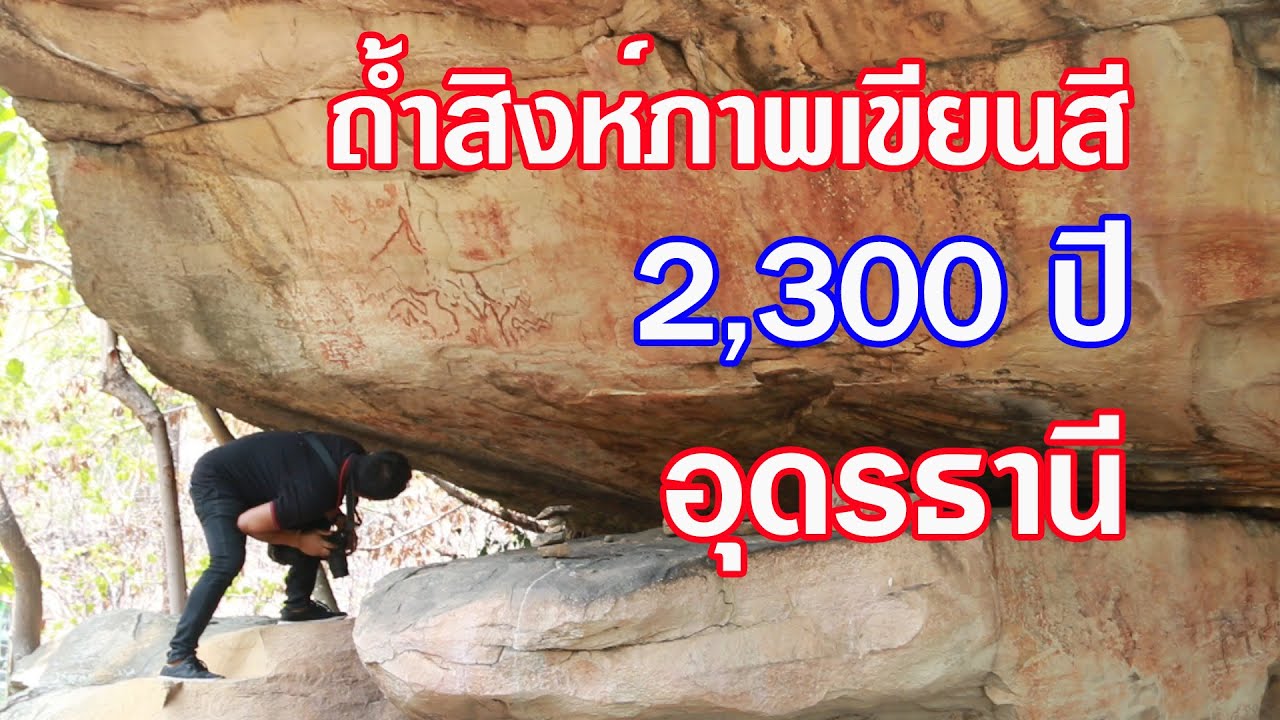
 Click to Access the Navigation Map GPS
Tham Sing Cave Map
Recommend

 Art, Culture and Heritage
 Historical Sites and Monuments(1)
 Landmarks and Memorials(1)
 Art, Craft Centres, Tradition(2)
 Museums(2)
 Places of Worship
 Temple(21)
 Other Sacred Sites(8)
 Suburban Living
 Village, Community(3)
 National Parks and Marine Reserves(3)
 Mountain (Doi)(1)
 Dam, Reservoir, Lake(8)
 Waterfalls(6)
Caves(1)
Waterfalls(6)
Caves(1)
 River, Canal(4)
 Islands(1)
 Other natural attractions(1)
 Entertainment and Agricultural
 Farms, Parks and Ecotourism(3)
 Waterpark(1)
 Shopping
 Shopping and Night Market(1)


