
lovethailand home >Northeastern Travel Attractions >Udon Thani Travel Attractions >Muang Udon Thani >Mak Khaeng > Wat Thipphayarat Nimit
TL;DR: Wat Thipphayarat Nimit is located at Mak Khaeng Subdistrict, Mueang Udon Thani District, Udon Thani Province, open Daily, hours 08.30 – 16.30.
Wat Thipphayarat Nimit
Open Days: Daily
Opening Hours: 08.30 – 16.30
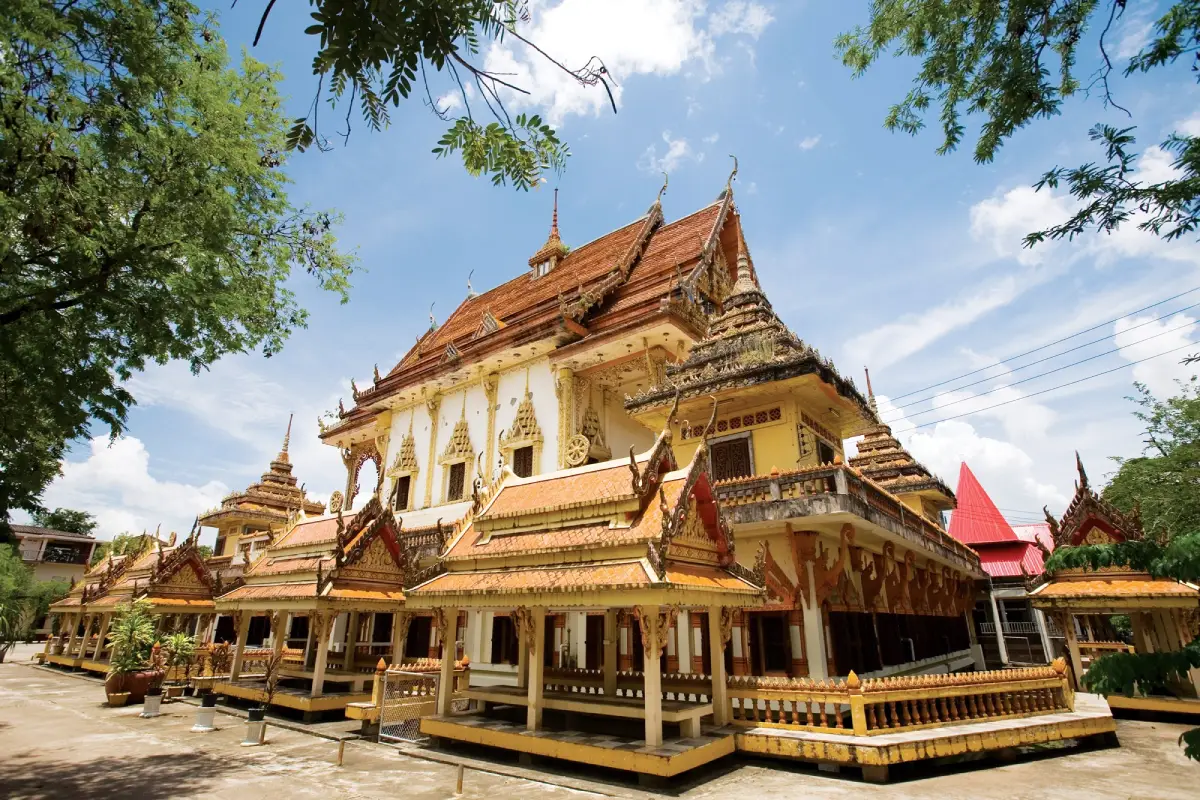
Wat Thipphayarat Nimit, also known as Wat Pa Ban Chik, is a forest-style Buddhist temple in the city of Udon Thani. The temple remains open daily for visitors who wish to pay respect, make merit, and experience a quieter spiritual side of the city. Its key highlights include a large stupa enshrining Buddha relics, a water-surrounded ordination hall, a cloistered area with Buddha images, the Twin Giant Pavilion, and a pavilion displaying the statue and monastic requisites of Luang Pu Thir Chittammo. For travelers looking beyond standard check-in spots, this temple offers a deeper introduction to Buddhist culture, local faith, and the forest meditation tradition in northeastern Thailand.
The temple is widely known among local people as Wat Pa Ban Chik because it stands in the Ban Chik area, an old community within Mueang Udon Thani District. Located on Naresuan Road in Mak Khaeng Subdistrict, the temple is close to schools, local communities, government offices, and main urban routes. What makes Wat Thipphayarat Nimit special is not only its convenient location, but also the contrast between the busy city outside and the calm atmosphere inside. Once visitors step through the temple gate, the mood changes noticeably. Trees, shaded paths, religious buildings, open spaces, and quiet corners for contemplation create the feeling of a forest monastery placed within an urban setting.
Wat Thipphayarat Nimit has long been connected to the Ban Chik community and to Buddhist life in central Udon Thani. The temple developed from local faith and community support before gradually becoming an important religious center. Its history includes the establishment of a monastic residence, the construction of temple buildings, and the continuous improvement of the grounds for worship and meditation. Over time, the temple became a place where local residents come to make merit, attend Buddhist ceremonies, listen to Dhamma teachings, and maintain a spiritual connection with respected monks.
The most visually distinctive feature of the temple is the large stupa that enshrines Buddha relics. Its form resembles an old measuring vessel known in Thai as “thanan,” a traditional container associated in Buddhist memory with the measuring of sacred relics. This symbolic form gives the stupa a meaning beyond architecture. It represents reverence for the Buddha, remembrance of the sacred relic tradition, and the devotion of the community that built and preserves the temple. For most visitors, this stupa is the main point of worship and the most memorable image of Wat Thipphayarat Nimit.
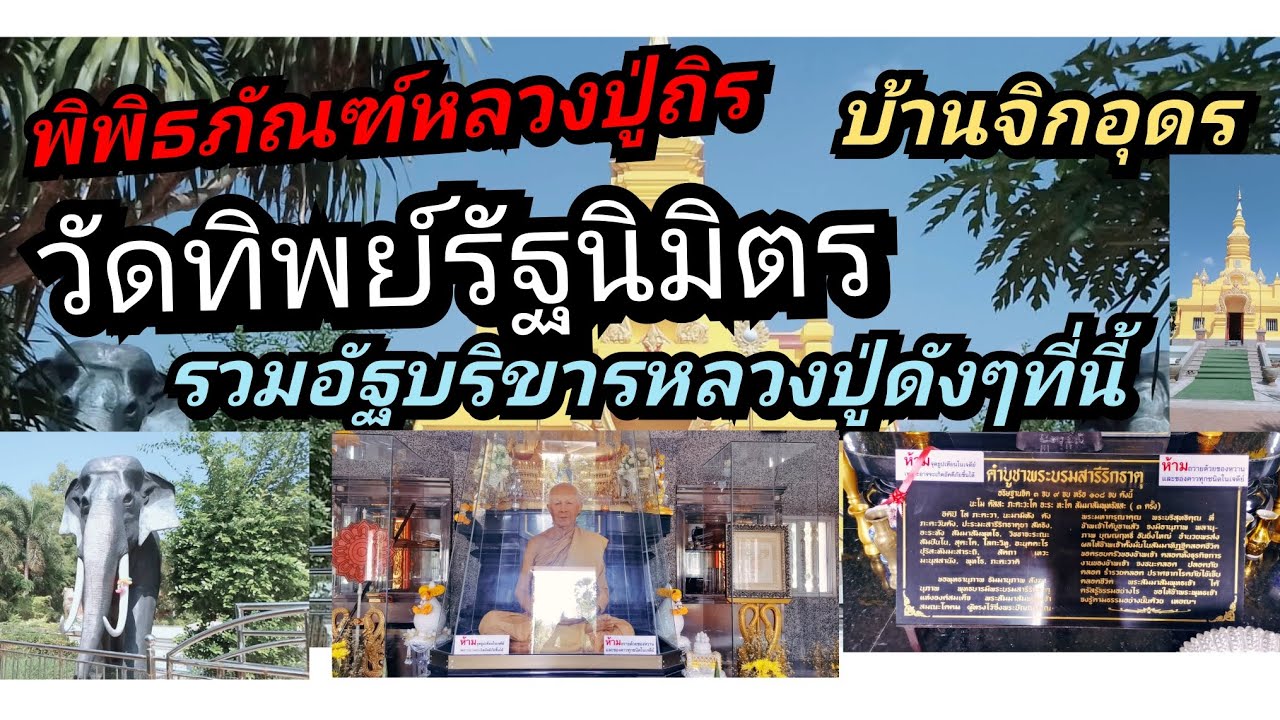
Inside the temple grounds, visitors will also find a pavilion displaying a statue of Luang Pu Thir Chittammo together with his monastic requisites. Luang Pu Thir is deeply respected by disciples and local devotees, and his memory is closely tied to the temple’s identity. His connection with the forest meditation tradition gives the temple a strong spiritual character. Visitors who come here are not simply viewing buildings; they are entering a place shaped by monastic discipline, simplicity, mindfulness, and the legacy of a revered Buddhist teacher.
The current abbot is Phra Khru Palat Aphichai Aphipunyo. Under the temple’s continuing religious role, Wat Thipphayarat Nimit remains a functioning Buddhist monastery where monks conduct daily monastic duties and laypeople come to make merit. This is one of the reasons the temple feels authentic for both Thai and foreign visitors. It is not a staged tourist site, but a living religious place used by the community. For travelers who want to understand how Buddhism remains woven into everyday Thai urban life, this temple is an excellent place to observe respectfully.
The ordination hall is another important area to visit. The newer hall is noted for its graceful architectural character, blending influences reminiscent of Sukhothai and Ayutthaya artistic styles. Inside, the principal Buddha image has a calm, gentle, and compassionate expression. The hall is suitable for paying respect, sitting quietly for a few moments, and observing the sense of serenity that Thai Buddhist architecture is designed to create. Its value lies not only in decoration, but in the way the space encourages composure and mindfulness.
The Twin Giant Pavilion adds another distinctive cultural element to the temple. The old pavilion is guarded by two giant figures standing at the entrance. In Thai temple art, guardian giants often symbolize protection of sacred space and the preservation of the Dhamma. Here, the giants help create a strong visual identity for the temple and give visitors another point of cultural interest. The pavilion also reflects how religious architecture, folk belief, and community memory often overlap in Thai temples.
The cloistered area, or wihan khot, contains Buddha images in various postures, allowing visitors to walk, observe, and pay respect in a calm sequence. This area adds another layer to the temple’s religious landscape. Wat Thipphayarat Nimit is not defined by a single structure; it is composed of several zones that together form a complete temple environment. The stupa, ordination hall, pavilion, cloister, monks’ residences, ponds, and shaded meditation areas each serve a different role, helping visitors understand how a Thai temple functions as a place of worship, monastic life, and community gathering.
The internal layout of the temple creates a gradual transition from the surrounding city into a more contemplative space. Near the entrance, the atmosphere still feels connected to the neighborhood and urban road network. Deeper inside, the mood becomes quieter. Ponds, trees, temple buildings, and walking paths soften the noise of the city and create a suitable environment for meditation and reflection. This is why the temple is often appreciated by people who want a peaceful stop without traveling far from central Udon Thani.
Wat Thipphayarat Nimit also plays an important role during annual Buddhist ceremonies. One of the temple’s key traditions is the Kathin robe-offering ceremony held around the 14th waxing moon of the 12th lunar month, a date associated with Luang Pu Thir’s birthday. This ceremony brings together monks, disciples, local residents, and devotees who gather to offer robes and support the temple after the Buddhist Lent period. The event carries religious, communal, and devotional meaning, linking the temple’s present life with the memory of its respected teacher.
On Buddhist holy days and major Buddhist festivals, the temple becomes a place for merit-making, chanting, candlelight processions, and other religious activities. The atmosphere can be livelier than on ordinary days, but the temple still retains a respectful and composed character. Visitors should dress modestly, speak quietly, avoid disturbing monks or meditators, and be mindful when taking photographs. These simple practices help preserve the dignity of the place and allow both locals and travelers to share the temple respectfully.
The special character of Wat Pa Ban Chik is that it is a forest-style temple within the city. Local people can stop by before work, after work, or during Buddhist observance days. Travelers staying in central Udon Thani can also include the temple in an easy half-day cultural route with nearby sites such as Udon Thani City Museum, the City Pillar Shrine, Wat Phothisomphon, Udon Thani Walking Street, Nong Prajak Public Park, and the Thai-Chinese Cultural Center. This makes the temple suitable for short visits, family trips, spiritual travel, and cultural exploration.
For travelers interested in local history, the temple reveals the development of Udon Thani through the lens of a neighborhood community. The name Ban Chik points to the old local identity of the area, while the temple’s location near major city roads and schools shows how religious life, education, community, and urban development coexist. Temples like Wat Thipphayarat Nimit help visitors understand that Buddhism in Thailand is not confined to remote sacred places; it is part of daily life in towns and cities.
The relic stupa should be visited with particular respect. Visitors may offer prayers, bow, and reflect on the symbolic meaning of Buddha relics in Thai Buddhism. The stupa’s vessel-like shape gives it a unique identity and makes it different from many other stupas. For cultural travelers and photographers, this is the most important visual point of the temple because it communicates faith, architecture, and Buddhist symbolism in one structure.
The pavilion of Luang Pu Thir is another meaningful stop. His statue and monastic requisites express the simplicity of forest monastic life. Such objects remind visitors that forest monks emphasize restraint, mindfulness, and inner discipline rather than material display. For foreign travelers who want to understand Thai Buddhist practice beyond temple decoration, this area offers a quiet and direct introduction to the spirit of the forest tradition.
A meaningful visit to Wat Thipphayarat Nimit should not be rushed. A short visit of 30 minutes may be enough for paying respect and seeing the main stupa, but spending around 1 hour allows visitors to walk through the grounds, see the ordination hall, observe the pavilion, and absorb the peaceful atmosphere. Visitors who come for merit-making, chanting, or a special ceremony should allow more time, especially during Buddhist holy days or annual temple events.
The temple has no admission fee, making it accessible to local residents, families, students, and travelers. Donations may be offered voluntarily according to personal faith. As with all Buddhist temples in Thailand, visitors should enter respectfully, dress modestly, avoid climbing on religious structures, and keep the area clean. These practices are particularly important in a temple that is still actively used by monks and the local community.
Getting There is convenient because the temple is located within Mueang Udon Thani District. Travelers can arrive by private car, local taxi, public local transport, or ride-hailing service from hotels in the city. The temple is connected with Naresuan Road and other central routes. From central Udon Thani, the journey is short under normal traffic conditions, making it easy to combine the temple with other city attractions.
The best time to visit is in the morning, when the weather is cooler and the temple atmosphere is calm. Late afternoon is also suitable, especially for travelers who prefer softer light and a slower pace. Visitors should plan their trip within the daily opening hours of 08.30 to 16.30. During special ceremonies, the temple may be busier, but these occasions also provide a valuable glimpse into living Buddhist tradition.
A good Udon Thani city route can begin with Wat Thipphayarat Nimit in the morning, followed by Udon Thani City Museum, the City Pillar Shrine, Wat Phothisomphon, Nong Prajak Public Park, and the Thai-Chinese Cultural Center. In the evening, travelers can continue to Udon Thani Walking Street or nearby restaurants. This route offers a balanced view of the city through religion, local history, public space, and food culture.
Several restaurants are located near the temple, ranging from cafés and local eateries to well-known Udon Thani restaurants. Dose Factory is close to the temple and serves as a convenient café and dining stop. Maeya is a long-established restaurant known among locals. King Ocha is associated with Vietnamese-style breakfast dishes, while VT Namnueng on Phosri Road is one of the city’s best-known Vietnamese-style restaurants. These nearby food options make the temple a practical starting point for a cultural and culinary route in Udon Thani.
There are also several accommodations near the temple, including Delio Boutique Hotel, Kitlada Hotel Udonthani, The Siri Place Udonthani, President Hotel Udonthani, and Civilize Hotel Udon Thani. Staying in the Mak Khaeng or central Udon Thani area allows travelers to reach the temple, the airport, bus terminals, shopping areas, restaurants, and other attractions with relative ease. This makes the location suitable for both independent travelers and visitors who rely on local transport.
Wat Thipphayarat Nimit is worth visiting not simply because it is close to the city center, but because it reveals a quieter and more reflective side of Udon Thani. Many travelers know the province through famous sites such as Ban Chiang, Nong Prajak, or other major attractions. Wat Pa Ban Chik adds another dimension: the world of forest monks, local devotion, relic worship, and temple life within an urban community.
For Thai visitors, the temple is suitable for merit-making, paying respect to sacred objects, and remembering respected teachers of the forest tradition. For foreign travelers, it offers a clear example of a Thai temple that continues to serve real community life. Visitors can see how a temple functions as a sacred place, a community space, a place of learning, and a refuge for calmness. This makes the experience more meaningful than simply viewing architecture.
Wat Thipphayarat Nimit is especially suitable for deeper cultural travel because it combines several important elements: the history of Ban Chik community, the role of local donors, the legacy of Luang Pu Thir, the relic stupa, the water-surrounded ordination hall, the Twin Giant Pavilion, the cloistered Buddha images, and the annual Kathin ceremony. Together, these elements make the temple more than a neighborhood temple; they make it a valuable cultural and spiritual site in upper northeastern Thailand.
Before visiting for a major ceremony, travelers may contact the temple directly to confirm schedules, especially for Kathin or other annual merit-making events. For ordinary visits, the temple can be visited daily during opening hours. Those seeking a quiet atmosphere may prefer weekdays or early mornings, while those interested in local religious life may choose Buddhist holy days or annual ceremonies. Either way, Wat Thipphayarat Nimit offers a calm, accessible, and culturally rich temple experience in the heart of Udon Thani.
In summary, Wat Thipphayarat Nimit, or Wat Pa Ban Chik, is an important Buddhist temple in central Udon Thani. It is suitable for paying respect, making merit, learning about the Ban Chik community, visiting the relic stupa, and experiencing the forest meditation tradition in an accessible urban setting. For travelers who want to explore Udon Thani more deeply than standard tourist routes, this temple deserves a place on the itinerary.
| Name | Wat Thipphayarat Nimit (Wat Pa Ban Chik) |
| Location | Mak Khaeng Subdistrict, Mueang Udon Thani District, Udon Thani Province |
| Address | 201 Naresuan Road, Mak Khaeng Subdistrict, Mueang Udon Thani District, Udon Thani 41000, Thailand |
| Highlights | Urban forest-style temple, Buddha relic stupa, water-surrounded ordination hall, Twin Giant Pavilion, cloistered Buddha images, and the statue of Luang Pu Thir Chittammo |
| History | Developed through the faith of the Ban Chik community and local supporters; the newer ordination hall was completed and marked by a consecration ceremony in B.E. 2533 |
| Name Origin | Wat Thipphayarat Nimit is the official name, while Wat Pa Ban Chik refers to the Ban Chik neighborhood where the temple stands |
| Distinctive Features | A peaceful forest-style temple located within the city, suitable for merit-making, worship, quiet reflection, and learning about the forest meditation tradition |
| Travel Information | Accessible by private car, local taxi, public local transport, or ride-hailing service from central Udon Thani; the temple is located near Naresuan Road and other city attractions |
| Current Status | Open for visits, worship, and merit-making during opening hours |
| Open Days | Daily |
| Opening Hours | 08.30 – 16.30 |
| Fees | No admission fee |
| Facilities | Parking area, pavilion, shaded areas, worship areas, and spaces for Buddhist activities |
| Main Areas / Zones | Buddha relic stupa, water-surrounded ordination hall, Twin Giant Pavilion, cloistered Buddha images, pavilion of Luang Pu Thir Chittammo, meditation areas, monks’ residences, and ponds |
| Abbot / Caretaker | Phra Khru Palat Aphichai Aphipunyo |
| Main Contact Number | 083-566-0844 |
| Official Website / Official Page | Facebook: Watbanjik.udon |
| Nearby Tourist Attractions | 1. Udon Thani City Museum, about 1.6 km 2. Udon Thani City Pillar Shrine, about 1.9 km 3. Wat Phothisomphon, about 1.9 km 4. Udon Thani Walking Street, about 1.9 km 5. Wat Matchimawat Udon Thani, about 2.0 km 6. Nong Prajak Public Park, about 2.1 km 7. Thai-Chinese Cultural Center Udon Thani, about 2.6 km |
| Nearby Restaurants | 1. Khao Khua Hua Hom, about 0.5 km 2. Dose Factory Udon Thani, about 0.5 km, Tel. 098-661-4642 3. Maeya Restaurant, about 1.0 km, Tel. 042-223-889, 042-221-590 4. King Ocha, about 1.4 km 5. VT Namnueng Phosri Branch, about 2.4 km, Tel. 042-219-555 |
| Nearby Accommodations | 1. Delio Boutique Hotel, about 0.4 km 2. Kitlada Hotel Udonthani, about 0.5 km, Tel. 042-245-542 3. The Siri Place Udonthani, about 0.6 km, Tel. 042-221-265 4. President Hotel Udonthani, about 0.6 km, Tel. 042-221-388 5. Civilize Hotel Udon Thani, about 1.3 km, Tel. 081-465-4477 |
Frequently Asked Questions (FAQ)
Q: Where is Wat Thipphayarat Nimit located?
A: Wat Thipphayarat Nimit, also known as Wat Pa Ban Chik, is located on Naresuan Road in Mak Khaeng Subdistrict, Mueang Udon Thani District, Udon Thani Province.
Q: What are the opening days and opening hours of Wat Thipphayarat Nimit?
A: The temple is open daily from 08.30 to 16.30.
Q: Is there an admission fee for Wat Thipphayarat Nimit?
A: No. There is no admission fee. Visitors may enter for worship, merit-making, and sightseeing during opening hours.
Q: What are the main highlights of Wat Thipphayarat Nimit?
A: The main highlights are the Buddha relic stupa shaped like an ancient measuring vessel, the water-surrounded ordination hall, the Twin Giant Pavilion, the cloistered Buddha images, and the statue of Luang Pu Thir Chittammo.
Q: Who is the abbot of Wat Thipphayarat Nimit?
A: The abbot is Phra Khru Palat Aphichai Aphipunyo.
Q: What type of travelers is this temple suitable for?
A: It is suitable for travelers who want to make merit, visit a peaceful temple in Udon Thani city, learn about the Ban Chik community, and experience the forest meditation tradition in an accessible urban setting.
Q: Does the temple have any important annual tradition?
A: Yes. Around the 14th waxing moon of the 12th lunar month, the temple holds a Kathin robe-offering ceremony and merit-making event connected with the birthday of Luang Pu Thir.
Q: What nearby places can be visited together with Wat Thipphayarat Nimit?
A: Nearby attractions include Udon Thani City Museum, the City Pillar Shrine, Wat Phothisomphon, Udon Thani Walking Street, Nong Prajak Public Park, and the Thai-Chinese Cultural Center Udon Thani.
 Category: ●Places of Worship
 Group: ●Temple
Last Update : 3 MonthAgo
 Last Update : 3 MonthAgo
 Click to Access the Navigation Map GPS
Wat Thipphayarat Nimit Map
Recommend

 Art, Culture and Heritage
 Historical Sites and Monuments(2)
 Landmarks and Memorials(1)
 Art, Craft Centres, Tradition(2)
 Museums(2)
 University
 Public university(2)
 Rajabhat University(1)
Temple(21)
 Other Sacred Sites(8)
 Suburban Living
 Village, Community(3)
 Nature and Wildlife
 National Parks and Marine Reserves(3)
 Mountain (Doi)(1)
 Dam, Reservoir, Lake(8)
 Waterfalls(6)
 Caves(1)
 River, Canal(4)
 Islands(1)
 Other natural attractions(1)
 Entertainment and Agricultural
 Farms, Parks and Ecotourism(3)
 Waterpark(2)
 Shopping
 Shopping and Night Market(1)
 Department Store(1)
 Travel Articles, Recipes
 Travel Review, Food Review(1)


