
lovethailand home >Northeastern Travel Attractions >Nakhon Phanom Travel Attractions >Muang Nakhon Phanom >Kham Thao > Nakhon Phanom University
TL;DR: Nakhon Phanom University, open Monday – Friday (Administrative Offices; Excluding Public Holidays), hours 08:30 – 16:30 (Administrative Office Hours).
Nakhon Phanom University
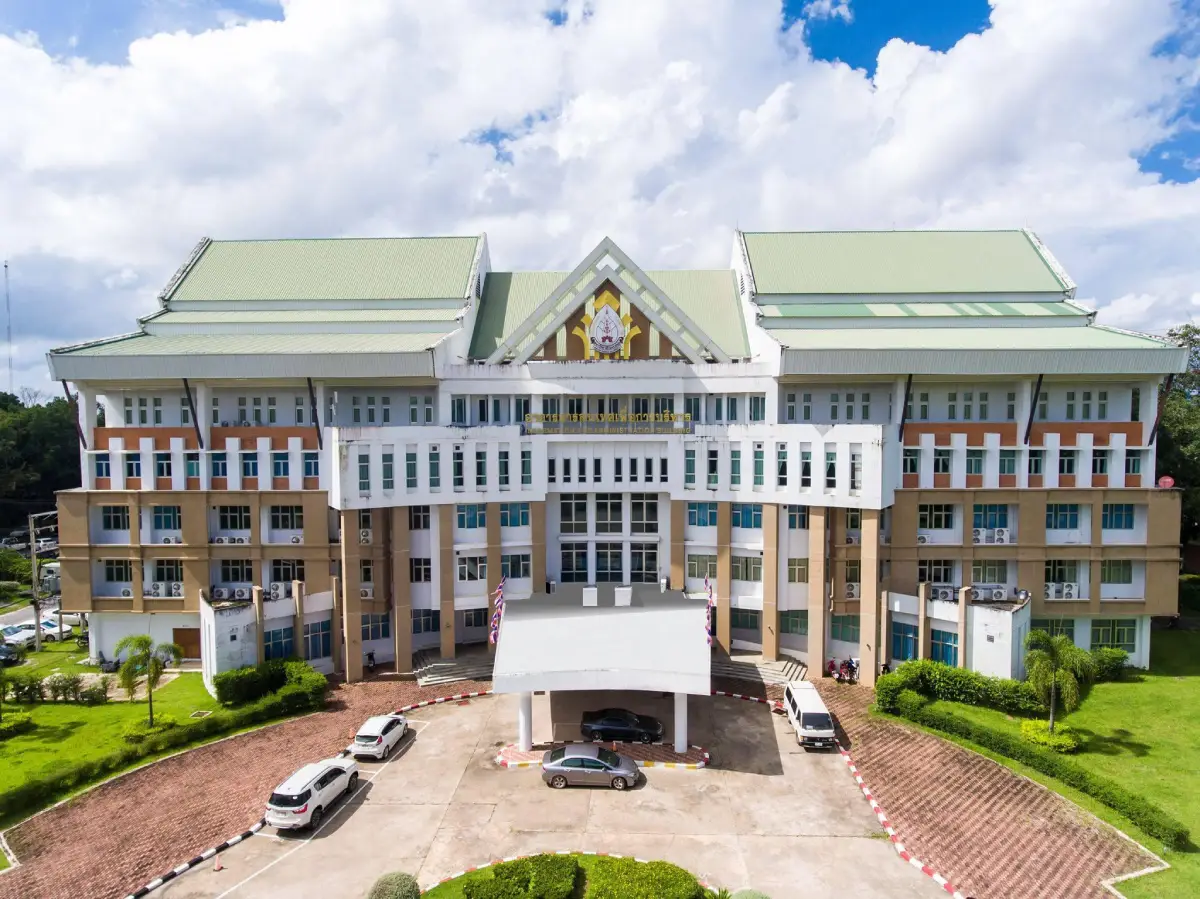
Open Days: Monday – Friday (Administrative Offices; Excluding Public Holidays)
Opening Hours: 08:30 – 16:30 (Administrative Office Hours)
Nakhon Phanom University (NPU) is a public university in Nakhon Phanom Province, northeastern Thailand. Officially established on September 2, 2005, under the Nakhon Phanom University Act B.E. 2548 (2005), it was created through the merger of seven existing educational institutions. The university is distinctive for offering several levels of education within one organization, ranging from vocational certificates and higher vocational diplomas to bachelor's, master's, and doctoral degrees. Its academic fields include education, engineering, industrial technology, agriculture, science, health sciences, nursing, aviation, tourism, business, languages, and social sciences. The Office of the President is located at 103 Moo 3, Chayangkun Road, Kham Thao Subdistrict, Mueang Nakhon Phanom District, Nakhon Phanom 48000, while the university's teaching facilities are distributed across several districts of the province.
Unlike universities that evolved from a single college or were established on a completely new campus, Nakhon Phanom University was formed by bringing together institutions with different educational missions, professional traditions, and areas of expertise. This integration created a university capable of serving learners with diverse academic backgrounds. Students can pursue vocational qualifications, continue their education through transfer or continuing-degree pathways, or undertake advanced university study. The arrangement provides an important connection between vocational education, professional skills, academic knowledge, and opportunities for regional employment.
The university operates in a province whose geography, history, and cultural identity have long been shaped by the Mekong River. Nakhon Phanom is known for its Buddhist heritage, cross-border relationships, ethnic diversity, Thai-Vietnamese communities, and longstanding traditions. These regional characteristics provide a meaningful context for NPU's work in education, agriculture, tourism, engineering, healthcare, and cultural preservation. The university is therefore closely connected with local development rather than functioning solely as an institution for awarding academic degrees.
Before Nakhon Phanom University was established, the province already had several educational institutions responsible for preparing teachers, technicians, agricultural workers, nurses, and other professionals. Each institution developed its own teaching traditions and specialized facilities. Teacher education supported the growth of regional schools; technical colleges responded to the demand for skilled industrial workers; agricultural education served farming communities; and nursing education contributed to the healthcare workforce. These different educational foundations eventually became the building blocks of the university.
The seven institutions formally merged under the 2005 Act were Nakhon Phanom Rajabhat University, Mahasarakham University's Nakhon Phanom Campus, Nakhon Phanom Technical College, Nakhon Phanom College of Agriculture and Technology, That Phanom Industrial and Community Education College, Na Wa Industrial and Community Education College, and Boromarajonani College of Nursing, Nakhon Phanom. Together, they provided an unusually broad foundation for a new university, combining academic higher education with technical, agricultural, professional, and nursing education.
The Nakhon Phanom University Act B.E. 2548 was published in the Royal Gazette on September 1, 2005, and the establishment of the university took effect on September 2, 2005. Under the legislation, the newly formed university became a public legal entity with responsibilities defined by Thai law. It subsequently came under the Ministry of Higher Education, Science, Research and Innovation following changes in the national administration of higher education.
The merger was particularly significant because it preserved the specialist strengths of the original institutions while providing opportunities for cooperation. Engineering knowledge could be combined with industrial technology and aviation training; agricultural education could benefit from science and business management; and teacher education and nursing could support community development and public services. The new university was therefore designed around the idea that different educational disciplines could become more effective when organized within a shared institution.
Another important consequence was the creation of pathways between educational levels. Students completing vocational qualifications could progress to relevant higher vocational or degree programs, including courses designed for credit transfer and continuing study. These options help learners build on existing practical experience and qualifications rather than beginning an entirely unrelated course of study. This flexibility remains one of the most useful features of NPU's educational structure.
When examining the university's history, it is important to distinguish between the establishment of NPU in 2005 and the earlier histories of its constituent institutions. Several of the original colleges had already been operating for many years before the merger. September 2, 2005, is the official founding date of Nakhon Phanom University as a legal institution, while the university's educational heritage extends much further into the past through the schools and colleges that were brought together.
The name Nakhon Phanom University expresses the institution's geographical identity and its commitment to the province. Its abbreviation, NPU, is also interpreted by the university through the words Network, Pool, and Unity, representing cooperation through networks, the pooling of collective strength, and unity. These ideas are particularly relevant to an institution formed through the integration of seven previously separate educational organizations.
The university emblem reflects both this shared educational history and the cultural identity of Nakhon Phanom. Its design features a brown teardrop-shaped outline enclosing Phra That Phanom above a lotus, four directional gateways, three blue waves, seven lotus motifs, golden rice ears, and a lion-base ornament. The merging drops of water symbolize the formation of a river of education, while the waves refer to the Mekong River. The seven lotus motifs represent the seven original institutions whose merger created NPU.
Phra That Phanom, which appears prominently in the emblem, is one of the most important Buddhist religious monuments in northeastern Thailand and is deeply connected with the faith and cultural heritage of communities along the Mekong River. Its inclusion gives the university's visual identity a strong geographical and spiritual association with Nakhon Phanom Province. The emblem therefore communicates not only the institutional merger but also the university's connection with the region's history and traditions.
The official university color is golden yellow. Its symbolic flower is the Kan Krao flower, produced by the tree commonly known botanically as Fagraea fragrans. The flowers typically begin as white blossoms before developing a yellow-orange appearance as they mature. The species provides a natural symbol that connects the university with the landscape and botanical heritage of Thailand.
The university also has a principal Buddha image named Phra Phuttha Phitthaya Mongkhon, a royally bestowed name associated with the prosperity of knowledge and learning. The image is a gilded brass Buddha in a meditative posture, approximately 1.2 meters across the lap, designed by Associate Professor Dr. Pinyo Suwankiri. Its symbolic importance reflects the connection between education, wisdom, moral values, and the Buddhist traditions of Thai society.
In 2026, Nakhon Phanom University is led by Emeritus Professor Dr. Thawatchai Supadit, its rector. University administration involves coordinating a complex system of faculties, vocational colleges, academic services, research activities, and teaching locations. This structure presents different responsibilities from those of a university operating entirely on a single campus, as academic planning and resources must serve students across multiple districts.
According to the Academic Administration Division's first-semester statistics for the 2026 academic year, NPU had 10,108 students with normal enrollment status, excluding its demonstration school. The official statistical report recorded 98 academic programs and 13 faculties or colleges with enrolled students. These figures demonstrate the university's considerable range of educational activity, covering both vocational study and degree-level education.
The Faculty of Education is responsible for teacher preparation, educational research, and professional development. Its fields include early childhood education, primary education, Thai, English, mathematics, science, social studies, computer education, and music education. It also offers postgraduate study in education-related disciplines. The faculty continues an important part of the region's teacher-training tradition while responding to modern educational needs.
The Faculty of Industrial Technology builds on the university's technical and vocational education heritage. It offers vocational programs in automotive mechanics, electricity, machine tools, construction, electronics, digital business technology, and related areas. Degree-level options include industrial engineering and technology fields, with continuing or transfer pathways for suitably qualified students. The faculty also supports postgraduate education in selected technical disciplines.
The Faculty of Liberal Arts and Sciences provides education in languages, social development, environmental studies, public administration, and law. These disciplines are relevant to communication, public institutions, local governance, and community engagement. They also help students develop a deeper understanding of social and cultural issues affecting Nakhon Phanom and the wider northeastern region.
The Faculty of Management Science and Information Technology combines business-related education with digital and communication fields. Its academic areas include management, accounting, marketing innovation, logistics, information technology, digital communication arts, and related subjects. These programs are connected with the skills required by contemporary businesses, including organizational management, technology adoption, professional communication, and economic planning.
The Faculty of Science offers studies in both fundamental and applied sciences. Its fields include biology, chemistry, physics, mathematics, science education, medical technology, and community public health. Students learn scientific concepts and practical techniques appropriate to their disciplines, preparing for careers involving laboratories, scientific applications, healthcare-related services, and education.
The Faculty of Engineering offers civil, electrical, computer, mechanical, logistics, and industrial engineering and management. These fields contribute to the development of professional expertise in infrastructure, industrial systems, technology, construction, transportation, and manufacturing. Their relevance extends from local infrastructure projects to broader industrial and commercial applications.
The Faculty of Agriculture and Technology continues another important element of the university's educational heritage. Its vocational and degree programs cover agricultural science, crop production, animal science, fisheries, food technology, and agricultural machinery. These disciplines are particularly significant in a region where agriculture remains closely connected with livelihoods and economic activity. Academic training can support improved production methods, technological development, and greater value creation in agricultural enterprises.
Boromarajonani College of Nursing, Nakhon Phanom, is a major unit for nursing and healthcare education. It offers a Bachelor of Nursing Science degree, postgraduate education in community nurse practitioner studies, and a nursing assistant certificate. The college contributes to the preparation of healthcare personnel who can serve hospitals, community health services, and other areas of the health system.
That Phanom College and Na Wa College illustrate NPU's geographically distributed model of education. Their vocational and academic courses address fields such as mechanical technology, electrical systems, electronics, accounting, digital business, and management. By maintaining educational facilities outside Mueang Nakhon Phanom District, the university helps provide access to learning and professional training for people living in other parts of the province.
Sri Songkhram Industrial Technology College also plays an important role in vocational and technical education. Its programs cover electrical systems, mechanics, accounting, marketing, digital business, industrial robotics, and automation. The college helps create educational opportunities in Sri Songkhram District while preparing students for technical and industrial employment.
The College of Tourism and Service Industry offers education related to tourism business management, hospitality, hotels, events, and culinary services. These subjects are particularly relevant to Nakhon Phanom's cultural and religious tourism economy. The province attracts visitors to the Mekong riverfront, Buddhist temples, heritage sites, and traditional festivals, all of which create opportunities for professionally trained tourism and hospitality personnel.
The International Aviation, Education and Research College is one of NPU's most distinctive academic units. Formerly known as the International Aviation College, it provides aviation management education, aircraft-related technical training, and specialist aviation courses. Its published training fields include private pilot training, commercial pilot training, instrument ratings, multi-engine ratings, and flight instructor training. This aviation specialization adds an unusual professional dimension to the university's broad academic portfolio.
An important institutional development in 2026 concerns the Faculty of Medicine. On April 28, 2026, the Thai Cabinet approved a long-term project to establish the faculty and increase medical workforce capacity in upper northeastern Thailand. The university has been developing its Doctor of Medicine curriculum and related resources, with the first student intake targeted for the 2028 academic year. The medical degree was therefore still under preparation in 2026 and should not be treated as an already operating 2026 undergraduate program.
Research and innovation are central to the university's public mission. Because NPU brings together many different academic and vocational disciplines, it is able to connect research with practical challenges in education, engineering, agriculture, healthcare, business, and tourism. Such work can support better professional skills, technical improvements, stronger local enterprises, and the responsible application of knowledge in communities throughout the region.
Academic service and community engagement provide another important connection between the university and the wider public. University personnel can work with schools, healthcare organizations, local authorities, agricultural groups, community enterprises, and other partners. Training, consultation, joint projects, and professional development activities help make academic knowledge accessible beyond the classroom while giving students opportunities to understand practical social and economic issues.
Cultural preservation is particularly meaningful in Nakhon Phanom because of the province's strong Mekong identity. Local traditions involve Buddhism, naga beliefs, river-based customs, northeastern music, and community celebrations. The university's wide range of academic disciplines allows it to approach cultural heritage from multiple perspectives, including the arts, science, technology, education, and event management.
A prominent example is the university's participation in Nakhon Phanom's Lai Ruea Fai, or Illuminated Boat Procession Festival, traditionally associated with the end of Buddhist Lent. In October 2026, NPU presented an illuminated exhibition boat approximately 60 meters long and 18 meters high, featuring around 7,900 lights. Its scheduled display dates were October 16, 18, 20, 22, 24, 26, and 27 along Sunthon Wichit Road beside the Mekong River. The project demonstrated how institutional knowledge and technical expertise could contribute to the preservation and presentation of a major provincial tradition.
The university's festival involvement also included student cultural performances and presentations combining traditional northeastern Thai music with contemporary forms. This approach gives younger generations opportunities to participate in inherited customs while exploring creative ways of presenting their meaning. It illustrates the university's role in keeping cultural knowledge relevant to contemporary society rather than treating traditional practices as isolated historical objects.
Nakhon Phanom University commemorates its founding anniversary on September 2. In 2026, it celebrated its 21st anniversary with a Buddhist merit-making and almsgiving ceremony at the Wachirabophit Auditorium in the Marukkha Nakhon area. University administrators, staff, students, and alumni took part. Such ceremonies strengthen the institutional community and express the relationship between the university's history and Thai cultural values.
The Wai Khru ceremony and student orientation activities are also significant elements of university life. Wai Khru provides an opportunity for students to show respect and gratitude to their teachers, while orientation introduces new students to academic expectations, university services, and campus life. These events are particularly useful in an institution that brings together students from different provinces and educational backgrounds.
NPU's facilities are located across several educational areas. The Office of the President in the Si Khot Buran area is an important center for university administration. The Marukkha Nakhon area includes facilities used for major activities, including Wachirabophit Auditorium. The Phanom Burin area accommodates teaching and practical training related to engineering and industrial technology. Other academic units operate in That Phanom, Na Wa, and Sri Songkhram districts.
This distributed structure has practical implications for visitors. A faculty or college may be situated well away from the central administrative office. Those visiting That Phanom College, for example, should travel to That Phanom District rather than assume it is located beside the Office of the President. The same principle applies to Na Wa College and Sri Songkhram Industrial Technology College. Confirming the exact faculty and educational area in advance is therefore an essential part of planning a university visit.
Facilities that may be of interest to academic visitors include classrooms, libraries, vocational workshops, research laboratories, specialist teaching facilities, and event venues. However, access to some areas is controlled for educational, operational, and safety reasons. Nursing laboratories, aviation training facilities, and specialist scientific or engineering workshops should be visited only through arrangements with the responsible academic unit.
For travelers interested in educational tourism, Nakhon Phanom University provides an opportunity to understand an unusual institutional model in Thailand's higher education system. The history of the seven-institution merger, the connection between vocational and university education, and the integration of professional training with regional development make NPU a valuable subject for educational study visits and professional exchanges.
A university visit can also be combined with cultural exploration in Mueang Nakhon Phanom. The Mekong riverfront, Phaya Sri Sattanakharat monument, Thai-Vietnamese heritage sites, historic buildings, and local food culture provide additional insights into the province. Travelers should plan their route around the specific university unit they intend to visit, as the university's educational locations are not concentrated in one place.
Getting There Visitors contacting the central Office of the President should travel to 103 Moo 3, Chayangkun Road, Kham Thao Subdistrict, Mueang Nakhon Phanom District, Nakhon Phanom Province. The office can be reached by private car or hired local transport from Nakhon Phanom town. Travelers arriving from other provinces can use interprovincial bus services or fly into Nakhon Phanom Airport before continuing by road to the relevant university location. The Academic Administration Division has a separate address at 167 Moo 8, Ban Noen Sa-at, Na Rat Khwai Subdistrict, Mueang Nakhon Phanom District, so visitors requiring registration or admissions assistance should use that address instead of the central office.
Administrative services follow official working schedules. The Academic Administration Division lists its office hours as Monday through Friday, from 08:30 to 16:30, excluding public holidays. These hours refer to administrative services rather than the opening and closing times of every university gate or facility. Faculties, vocational colleges, training centers, and event venues may operate under different schedules according to their educational activities.
In summary, Nakhon Phanom University is a distinctive public institution created through the merger of seven educational organizations in 2005. Its structure preserves strengths in teacher education, vocational training, agriculture, nursing, engineering, aviation, tourism, and other disciplines while offering pathways to higher qualifications. The university also contributes to community development and the preservation of Mekong cultural traditions. Through education, research, professional training, and public engagement, NPU continues to play an important role in the social, cultural, and economic development of northeastern Thailand.
Nakhon Phanom University Summary Table
| University Name | Nakhon Phanom University (มหาวิทยาลัยนครพนม) |
| Abbreviation | NPU |
| University Type | Public University under the Ministry of Higher Education, Science, Research and Innovation |
| Office of the President Address | 103 Moo 3, Chayangkun Road, Kham Thao Subdistrict, Mueang Nakhon Phanom District, Nakhon Phanom 48000, Thailand |
| Academic Administration Address | 167 Moo 8, Ban Noen Sa-at, Na Rat Khwai Subdistrict, Mueang Nakhon Phanom District, Nakhon Phanom 48000, Thailand |
| Establishment Date | September 2, 2005 |
| Founding Legislation | Nakhon Phanom University Act B.E. 2548 (2005) |
| Institutional Origins | Established through the merger of seven educational institutions in Nakhon Phanom Province |
| University Age in 2026 | 21 Years since Official Establishment |
| Rector | Emeritus Professor Dr. Thawatchai Supadit |
| University Color | Golden Yellow |
| University Flower | Kan Krao (Fagraea fragrans) |
| Principal Buddha Image | Phra Phuttha Phitthaya Mongkhon |
| Education Levels | Short Courses, Vocational Certificates, Higher Vocational Diplomas, Nursing Assistant Certificate, Bachelor's Degrees, Graduate Diploma, Master's Degrees, and Doctoral Degrees |
| Faculties and Colleges with Enrolled Students | 13 According to First-Semester 2026 Statistics; the Faculty of Medicine was Preparing a New Medical Degree Program |
| Student Enrollment | 10,108 Students with Normal Enrollment Status in Semester 1/2026, Excluding the Demonstration School |
| Programs in Official Statistics | 98 Programs, Semester 1/2026 |
| Academic Faculties and Colleges | Faculty of Education, Faculty of Industrial Technology, Faculty of Liberal Arts and Sciences, Faculty of Management Science and Information Technology, Faculty of Science, Faculty of Engineering, Faculty of Agriculture and Technology, Boromarajonani College of Nursing Nakhon Phanom, That Phanom College, Na Wa College, Sri Songkhram Industrial Technology College, College of Tourism and Service Industry, International Aviation Education and Research College, and Faculty of Medicine (Medical Program under Development) |
| Major Educational Areas | Si Khot Buran, Marukkha Nakhon, Phanom Burin, and Educational Facilities in That Phanom, Na Wa, and Sri Songkhram Districts |
| Academic Strengths | Integrated Vocational and University Education, Aviation, Nursing, Engineering, Agriculture, Technology, and Local Development |
| Important Facilities | Office of the President in Si Khot Buran, Wachirabophit Auditorium in Marukkha Nakhon, and Teaching and Practical Training Facilities at Faculty and College Locations |
| University Traditions | University Foundation Anniversary, Wai Khru Ceremony, Student Orientation, and Participation in Nakhon Phanom's Illuminated Boat Festival |
| Administrative Open Days | Monday – Friday, Excluding Public Holidays |
| Administrative Opening Hours | 08:30 – 16:30 |
| Getting There | Private Car or Local Hired Transport; Interprovincial Bus or Flight to Nakhon Phanom, Followed by Road Transport to the Relevant University Location |
| Visitor Access | Administrative Visits and Public Events According to Each Unit's Schedule; Advance Arrangements Required for Specialist Facilities and Study Visits |
| Attractions in Mueang Nakhon Phanom | 1. Phaya Sri Sattanakharat Monument and Plaza 2. Ho Chi Minh's House, Ban Na Chok 3. Chaloem Phra Kiat National Library, Nakhon Phanom 4. Thai-Vietnamese Memorial Clock Tower 5. Nakhon Phanom Walking Street |
| Restaurants in Mueang Nakhon Phanom | 1. Sabai Dee 1 @ Nakhon Phanom 2. Pon Thep Breakfast 3. Lab To Daeng Nakhon Phanom 4. Vietnamese Kitchen Nakhon Phanom 5. Sabai Dee Nakhon Phanom |
| Hotels in Mueang Nakhon Phanom | 1. Porpiang Hotel 2. The River Hotel Nakhon Phanom 3. VELA Dhi Nakhon Phanom 4. Siri Regent Hotel 5. Mekong Heritage Hotel Nakhon Phanom |
| Office of the President Phone | +66 42 064 777, +66 61 174 8254 |
| Academic Administration Phone | +66 42 532 525 |
| Official Website | https://www.npu.ac.th/ |
| Current Status | Operating Public University |
Nakhon Phanom University Academic Programs, Academic Year 2026
| Faculty of Education | Bachelor's Degree 1. Bachelor of Education in Education (Majors: Early Childhood Education, Computer Education, Science, English, Mathematics Education, Social Studies, Thai, Music Education, and Primary Education) Graduate Diploma 1. Teaching Profession Master's Degrees 1. Educational Administration and Development 2. Curriculum and Instruction 3. Innovation in Primary Education Learning Management Doctoral Degrees 1. Educational Administration and Development 2. Curriculum and Instruction |
| Faculty of Industrial Technology | Vocational Certificates 1. Automotive Mechanics 2. Machine Tools 3. Welding 4. Electrical Technology 5. Electronics 6. Construction 7. Architecture 8. Accounting 9. Marketing 10. Digital Office Management 11. Hospitality 12. Digital Business Technology Higher Vocational Diplomas 1. Mechanical Technology 2. Electric Vehicle Technology 3. Production Technology 4. Metal Technology 5. Electrical Technology 6. Electronics Technology 7. Construction 8. Architectural Technology 9. Accounting 10. Marketing 11. Digital Office Management 12. Hospitality 13. Digital Business Technology Bachelor's Degrees 1. Architectural and Construction Technology 2. Electrical Engineering (Transfer/Continuing) 3. Mechanical Engineering (Transfer/Continuing) 4. Industrial Engineering (Transfer/Continuing) 5. Electronics and Robotics Engineering (Continuing) Master's Degrees 1. Electrical Engineering 2. Industrial Technology Doctoral Degrees 1. Electrical Engineering 2. Industrial Technology |
| Faculty of Liberal Arts and Sciences | Bachelor's Degrees 1. English 2. Chinese 3. Thai for Communication in the Digital Era 4. Social and Environmental Development 5. Public Administration 6. Law Master's Degrees 1. Public Administration 2. Development Innovation Doctoral Degrees 1. Public Administration 2. Development Innovation |
| Faculty of Management Science and Information Technology | Bachelor's Degrees 1. Management 2. Accounting 3. Digital Communication Arts 4. Marketing Innovation and Smart Business 5. International Logistics Management 6. Information Technology and Computer Innovation 7. Sports and Exercise Science Master's Degrees 1. Accounting 2. Marketing Innovation 3. Management and Digital Innovation Doctoral Degrees 1. Accounting 2. Marketing Innovation 3. Management and Digital Innovation |
| Faculty of Science | Bachelor's Degrees 1. Science (Tracks: Chemistry, Physics, Biology, and Mathematics) 2. Science Education (Majors: Chemistry, Physics, and Biology) 3. Medical Technology 4. Community Public Health |
| Faculty of Engineering | Bachelor's Degrees 1. Civil Engineering 2. Electrical Engineering 3. Computer Engineering 4. Mechanical Engineering 5. Logistics Engineering 6. Industrial Engineering and Management Master's Degree 1. Construction and Infrastructure Management |
| Faculty of Agriculture and Technology | Vocational Certificate 1. Agriculture Higher Vocational Diplomas 1. Crop Science 2. Animal Science 3. Agro-Industry and Food 4. Agricultural Machinery 5. Aquaculture Bachelor's Degrees 1. Agricultural Technology (Tracks: Crop Science, Fisheries, Food Technology, and Agricultural Machinery Technology) 2. Animal Science Master's Degree 1. Agricultural Innovation and Technology |
| Boromarajonani College of Nursing, Nakhon Phanom | Certificate 1. Nursing Assistant Bachelor's Degree 1. Nursing Science Master's Degree 1. Community Nurse Practitioner |
| That Phanom College | Vocational Certificates 1. Automotive Mechanics 2. Electrical Technology 3. Electronics 4. Accounting 5. Digital Business Technology Higher Vocational Diplomas 1. Mechanical Technology 2. Electrical Technology 3. Electronics and Robotics 4. Accounting 5. Computer and Digital Marketing Bachelor's Degrees 1. Energy Engineering 2. Modern Trade Business Management 3. Electrical and Mechanical Production (Continuing; Electrical Control and Mechanical Production Tracks) 4. Accounting (Transfer/Continuing) |
| Sri Songkhram Industrial Technology College | Vocational Certificates 1. Automotive Mechanics 2. Electrical Technology 3. Electronics 4. Accounting 5. Marketing 6. Digital Business Technology Higher Vocational Diplomas 1. Mechanical Technology 2. Electrical Technology 3. Accounting 4. Marketing 5. Digital Business Technology Bachelor's Degrees 1. Industrial Robotics and Automation 2. Robotics and Automation Engineering 3. Industrial Maintenance Engineering and Automation |
| Na Wa College | Vocational Certificates 1. Automotive Mechanics 2. Electrical Technology 3. Retail Business 4. Accounting 5. Digital Business Technology Higher Vocational Diplomas 1. Electric Vehicle Technology 2. Electrical Technology 3. Electronics Technology 4. Accounting 5. Digital Business Technology |
| College of Tourism and Service Industry | Bachelor's Degree 1. Tourism and Service Business Management (Tracks: Tourism and Events; Hospitality and Culinary Arts) Master's Degree 1. Tourism and Hotel Business Management Doctoral Degree 1. Tourism and Hotel Business Management |
| International Aviation, Education and Research College | Higher Vocational Diploma 1. Mechanical Technology (Aircraft Maintenance) Bachelor's Degree 1. Aviation Management Specialist Aviation Training Courses 1. Private Pilot License 2. Commercial Pilot License 3. Instrument Rating 4. Multi-engine Rating 5. Flight Instructor Rating |
Frequently Asked Questions (FAQ)
Q: Where is Nakhon Phanom University located?
A: The central Office of the President is located at 103 Moo 3, Chayangkun Road, Kham Thao Subdistrict, Mueang Nakhon Phanom District, Nakhon Phanom 48000, Thailand. Faculties and colleges also operate at other locations across the province.
Q: What are Nakhon Phanom University's opening days and hours?
A: The Academic Administration Division provides services Monday through Friday from 08:30 to 16:30, excluding public holidays. These are administrative hours, not the opening hours of every campus gate or facility.
Q: When was Nakhon Phanom University founded?
A: Nakhon Phanom University was officially established on September 2, 2005, under the Nakhon Phanom University Act B.E. 2548.
Q: How many institutions were merged to create Nakhon Phanom University?
A: Seven institutions were merged: Nakhon Phanom Rajabhat University, Mahasarakham University's Nakhon Phanom Campus, Nakhon Phanom Technical College, Nakhon Phanom College of Agriculture and Technology, That Phanom Industrial and Community Education College, Na Wa Industrial and Community Education College, and Boromarajonani College of Nursing Nakhon Phanom.
Q: Does Nakhon Phanom University offer vocational education?
A: Yes. Its educational system includes vocational certificates, higher vocational diplomas, undergraduate degrees, and postgraduate programs across relevant faculties and colleges.
Q: Does Nakhon Phanom University have a Faculty of Medicine?
A: The university is developing a Faculty of Medicine and a Doctor of Medicine program, with its first medical student intake targeted for the 2028 academic year. The medical degree was not an operating 2026 intake program.
Q: What is Nakhon Phanom University known for?
A: The university is particularly distinctive for its combination of vocational and degree-level education, including engineering, industrial technology, aviation, nursing, agriculture, and regional development. It also participates in the preservation of Nakhon Phanom's Mekong cultural traditions.
Q: How can prospective students contact Nakhon Phanom University?
A: Prospective students can use the official university website or the admissions portal at admission.npu.ac.th. The Academic Administration Division can also be contacted by telephone at +66 42 532 525.
 Category: ●University
 Group: ●Public university
Last Update : 6 DayAgo
 Last Update : 6 DayAgo
 Click to Access the Navigation Map GPS
Nakhon Phanom University Map
Recommend

 Art, Culture and Heritage
 Historical Sites and Monuments(3)
 Landmarks and Memorials(2)
 Art, Craft Centres, Tradition(3)
 Museums(3)
 Educational Places
 Library(1)
Public university(2)
 Places of Worship
 Temple(23)
 Church(1)
 Other Sacred Sites(11)
 Suburban Living
 Village, Community(5)
 Nature and Wildlife
 National Parks and Marine Reserves(1)
 Dam, Reservoir, Lake(5)
 Waterfalls(2)
 River, Canal(3)
 Bays and Beaches(3)
 Other natural attractions(2)
 Entertainment and Agricultural
 Zoos and Aquariums(1)
 Farms, Parks and Ecotourism(2)
 Shopping
 Shopping and Night Market(1)
 Travel Articles, Recipes
 Travel Review, Food Review(1)


