
lovethailand home >Northeastern Travel Attractions >Nakhon Phanom Travel Attractions >That Phanom >That Phanom > Wat Phra That Phanom Woramahawihan
TL;DR: Wat Phra That Phanom Woramahawihan is located at 183/13 Moo 13, Chayangkun Road, That Phanom Subdistrict, That Phanom District, Nakhon Phanom Province 48110, Thailand, open Daily, hours 05.00 – 21.00.
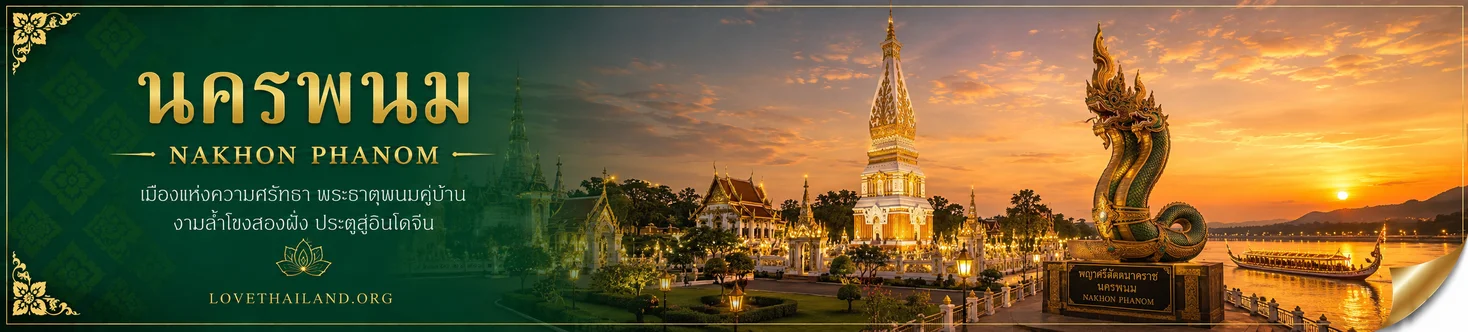
Wat Phra That Phanom Woramahawihan
Open Days: Daily
Opening Hours: 05.00 – 21.00
Admission Fee: Free admission
Wat Phra That Phanom Woramahawihan in Nakhon Phanom Province is a first-class royal monastery of the Woramahawihan category affiliated with Thailand’s Maha Nikaya monastic order. At the heart of the temple stands Phra That Phanom, one of the most revered Buddhist monuments in the Middle Mekong region. The stupa is traditionally believed to enshrine the Uranga relic, or a sacred relic from the breastbone of the Buddha. It is also regarded as the birth-year stupa for people born in the Year of the Monkey and the birth-day stupa for those born on Sunday, although pilgrims of every background are welcome to worship.
The temple is far more than a single religious monument. It is a living cultural landscape where archaeology, Buddhist architecture, ritual, community history, traditional performance, pilgrimage, and the daily life of Mekong residents remain closely connected. Visitors encounter the white-and-gold stupa, ancient carved bricks, royal monastic buildings, a museum containing objects recovered during restoration, annual rice-offering traditions, the invitation of Phra Upakhut, devotional dances, and customs maintained by communities on both sides of the Mekong River.
Wat Phra That Phanom is located at 183/13 Moo 13, Chayangkun Road, That Phanom Subdistrict, That Phanom District, Nakhon Phanom Province. It lies approximately 52 km south of Nakhon Phanom city and about 600 meters west of the Mekong River. The temple occupies the center of That Phanom town, with markets, restaurants, accommodation, cultural sites, and the riverfront within a short distance.
The sacred site is associated with a location known in the Uranga Chronicle as Phu Kamphra. According to the chronicle, after the Buddha entered final nirvana, the elder Maha Kassapa brought the Uranga relic to this area with 500 arahants. Rulers from several Mekong polities then cooperated in constructing a reliquary monument around B.E. 8.
The date B.E. 8 belongs to sacred tradition and remains deeply meaningful to worshippers. Archaeological investigation, however, places the earliest surviving construction layers around the 12th to 14th Buddhist centuries, corresponding approximately to the 7th to 9th centuries CE. The two forms of knowledge serve different purposes: the chronicle explains sacred meaning and regional memory, while archaeology examines materials, construction, artistic form, and physical evidence.
The earliest monument was a relatively low square brick structure resembling a mandapa or sanctuary. Local accounts describe it as approximately 8 meters high. Its internal chamber was used to enshrine relics and offerings. Carved bricks and architectural fragments demonstrate relationships with Cham, Khmer, and regional artistic traditions. Human figures, animals, scrolling vegetation, and fern-like designs provide important evidence of cultural exchange across mainland Southeast Asia.
Phra That Phanom did not retain one unchanged form. Rulers, monks, artisans, and local communities repeatedly repaired and enlarged it. Each phase introduced new technology and artistic preferences. The ancient sanctuary-like base was gradually combined with a tall lotus-shaped upper section associated with Lan Xang architecture, creating a form that later inspired many stupas in northeastern Thailand and Laos.
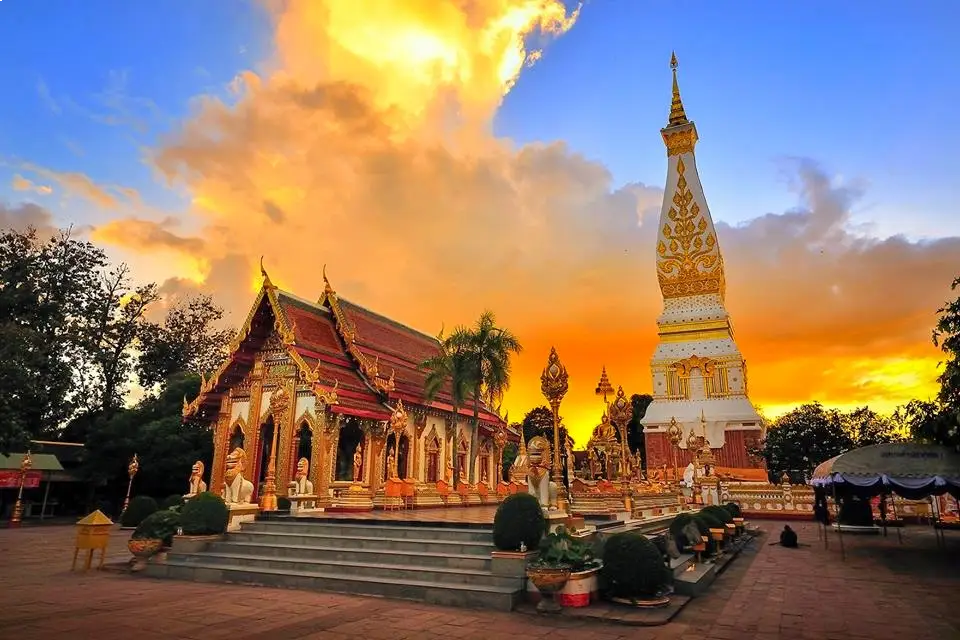
The present stupa rises approximately 53.60 meters. It consists of two superimposed square mandapa-like levels supporting a tall, tapering lotus-bud form. The main structure is reinforced concrete with a hollow interior and internal beams. A functional entrance is located on the eastern side of the lower level, while the other three sides contain symbolic doorways.
The walls are decorated with red carved-brick panels, figures, animals, scrolling patterns, and motifs derived from the earlier monument. Doorways on the four sides include phak pheka arches, Rahu imagery, and carved representations of Buddha images. The upper levels contain lotus moldings, floral decoration, and a sequence of increasingly narrow ornamental sections leading toward the golden finial.
The white surface allows the gilded ornament to remain visible from a considerable distance. Floral forms, lotus petals, rice-bud motifs, and decorative foliage create a visual transition between the stable square base and the slender upper tower. These motifs express growth, purity, devotion, and the presentation of fine craftsmanship as an offering to the Buddha.
A golden ceremonial umbrella crowns the stupa and marks the highest point of the composition. In Buddhist and royal visual culture, the umbrella represents honor and spiritual eminence. When sunlight reaches the upper ornament, the gold reflects above the town and reinforces the stupa’s role as the visual and spiritual center of That Phanom.
The most dramatic event in the modern history of Phra That Phanom occurred on 11 August 1975 at 19.38. After several days of severe rain and storms, the tall, top-heavy monument collapsed from its weakened ancient brick foundation. The event caused profound grief among Thai and Lao communities because the stupa was understood not simply as an old building but as a shared sacred center of the Mekong region.
Following the collapse, government agencies, archaeologists, engineers, conservators, monks, and specialists examined the site. Soil testing, excavation, brick analysis, architectural documentation, and the recovery of sacred objects were conducted systematically. The operation had to satisfy both scientific requirements and the religious expectations of worshippers.
A large bronze reliquary was recovered from the debris. Inside were several nested gold containers protecting sacred relics. The discovery generated enormous joy among Buddhist communities. Thousands of additional offerings, including gold, silver, gemstones, Buddha images, coins, and ritual objects, demonstrated that generations of devotees had contributed to the sacred treasury.
Reconstruction began after the 1975 collapse with support from the government, the monarchy, the Supreme Patriarch, specialists, craftspeople, and donors in Thailand and abroad. The project aimed to preserve the former appearance while strengthening the internal structure with modern engineering. The reconstruction therefore combined historical continuity with improved structural stability.
Original materials that remained suitable were reused whenever possible. Important carved bricks and decorative forms were documented, replicated, or returned to appropriate positions. Artists recreated stucco, gilded ornament, doorways, windows, and upper architectural elements while preserving the recognizable character of Mekong religious art.
The reconstruction continued from 1975 to 1979 and was completed on 23 March 1979. The sacred relics were ceremonially re-enshrined within the restored monument. The project was therefore not simply the replacement of a destroyed structure; it restored the spiritual center of an entire region through broad public cooperation.
The collapse and reconstruction have become an important case study in the conservation of living sacred heritage. Specialists had to balance the retention of original remains, the reuse of historic materials, the recovery of the pre-collapse form, structural safety, and the emotional needs of worshipping communities who wished to see the stupa restored in its original setting.
Phra That Phanom was registered as a national ancient monument in 1935. Its protected boundary was expanded in 1979 to cover approximately 17 rai, 3 ngan, and 56 square wah within the principal Buddhist zone of the monastery. Construction, excavation, utilities, and alterations within this area must therefore follow heritage-protection requirements.
In 2017, Thailand placed “Phra That Phanom, its related historic buildings and associated landscape” on the UNESCO World Heritage Tentative List. Tentative-list status is not the same as full World Heritage inscription, but it confirms that Thailand recognizes the property’s potential international significance in architecture, cultural exchange, and the spiritual life of Mekong communities.
The architectural value of Phra That Phanom comes from its combination of several traditions. The lower form and carved brickwork relate to Cham, Khmer, and regional art, while the tall square-lotus upper section reflects Lan Xang development. These elements accumulated through repeated restoration rather than being created at one moment.
Phra That Phanom is the stupa associated with Sunday in Nakhon Phanom’s seven-day birth-stupa tradition. People born on Sunday commonly visit to pray for stability, progress, wisdom, and auspiciousness. It is also associated with the Year of the Monkey. These traditions do not restrict access; people born on any day or in any year may worship.
Clockwise circumambulation is one of the principal devotional activities. Worshippers keep the stupa on their right and may walk three rounds in remembrance of the Buddha, the Dhamma, and the Sangha. Visitors should move calmly, avoid overtaking elderly worshippers, and keep ceremonial routes clear.
Common offerings include flowers, candles, incense, popped rice, and scented water. They should be used only at locations designated by the temple. Open flame, smoke, and melted wax can damage historic surfaces. Flowers, folded hands, ethical conduct, and quiet reflection are sufficient forms of worship.
The main ordination hall contains Luang Pho Ong Saen Sasada, the principal Buddha image of the monastery. Visitors may worship here before or after approaching the stupa. The hall remains an active monastic building used for ordination, recitation, and formal Sangha ceremonies, so access may be limited during religious functions.
Ho Phra Kaeo contains Phra Phuttha Marawichai Sasada and other revered images. Visitors must remove shoes, silence phones, and avoid pointing their feet toward Buddha images. The building provides an additional worship area during periods when large numbers of pilgrims enter the temple.
The Rattanamoli Si Khotrabun Art and Cultural Center, also known as the Wat Phra That Phanom Museum, was established in 1987. It contains objects recovered during excavation and reconstruction, including carved bricks, Buddha images, pottery, inscriptions, manuscript cabinets, historic currency, and Buddhist ritual objects.
The museum explains aspects of the monument that cannot be understood from exterior observation alone. Its collections reveal construction phases, devotional offerings, artistic exchange, and the changing material culture of the region. The museum is open daily from 08.30 to 16.00 and does not charge admission.
Bo Nam Phra In and the Murathaphisek pond are associated with sacred water and temple ritual. Water has major significance in Mekong culture as a source of life, agricultural fertility, cleansing, and spiritual purity. Visitors must remain within designated areas and should not collect water or place objects in the pond without permission.
The reclining Buddha hall, Maharattana Sala, bell tower, great drum, Bodhi tree, and other buildings support worship, education, monastic life, and community ceremonies. These structures were constructed in different periods and should not all be described as being as old as the principal stupa.
The sacred Bodhi tree represents the tree beneath which the Buddha attained enlightenment. Its shade is also used for rest and meditation. Visitors must not cut bark, remove living leaves, hammer nails, hang heavy objects, or leave waste around the roots.
The annual Phra That Phanom festival is normally held during the third lunar month, beginning on the tenth waxing day and continuing until the first waning day. The nine-day, nine-night event attracts pilgrims from Thailand, Laos, and other countries. The temple and town contain merit processions, charity kitchens, community products, cultural performance, chanting, meditation, and worship throughout the festival.
The invitation of Phra Upakhut is an important opening ritual. In Mekong belief, Phra Upakhut is an arahant who meditates beneath the ocean or river and protects major Buddhist ceremonies. The procession commonly begins before sunrise near the Mekong and moves toward the temple.
The Khao Phuet Phak offering presents newly harvested rice, seeds, and agricultural products to the stupa. The tradition connects Buddhist merit with farming, seasonal labor, water, land, and community gratitude after the harvest.
The Sia Kha Hua or Kha Okat tradition is associated with descendants of communities historically assigned to serve and protect the stupa. In this context, Kha Okat refers to hereditary temple-service communities rather than slavery in the general modern sense. Their offerings reaffirm a continuing spiritual relationship with Phra That Phanom.
The wrapping of the stupa with ceremonial cloth expresses reverence and symbolic protection of the relics. Cloth should be presented through official temple procedures rather than attached independently to architecture or decoration.
Devotional dance reflects the ethnic diversity of the region. Phu Thai, Thai Yo, Tai Saek, Tai Kaloeng, and other communities wear local clothing and perform music and dance as an offering. These performances are acts of worship and community identity, not entertainment alone.
Sattanaga Memorial Day makes merit for seven nagas believed to have protected Phra That Phanom since its earliest construction. Naga belief is closely associated with the Mekong, rainfall, fertility, and the defense of Buddhism and appears in local narrative, sculpture, architecture, and ritual.
Makha Bucha, Visakha Bucha, Asalha Bucha, Buddhist Lent, the end of Buddhist Lent, royal Kathin, and New Year chanting attract large numbers of worshippers. Visitors may join ceremonies when appropriate but must dress respectfully, remain quiet, and allow monks and participants sufficient space.
The temple can be explored through several principal areas: the stupa and circumambulation court; the ordination hall and Luang Pho Ong Saen Sasada; Ho Phra Kaeo; the Rattanamoli Si Khotrabun Art and Cultural Center; Bo Nam Phra In and the Murathaphisek pond; the reclining Buddha hall and Maharattana Sala; the Bodhi tree; and the pilgrim service and activity areas.
A recommended visit begins at the stupa in the morning, followed by worship in the ordination hall and Ho Phra Kaeo, then a museum visit. This order allows travelers to experience devotion first and then study the historical and archaeological material that explains the development of the sacred site.
The period from 05.00 to 08.00 is suitable for a quiet atmosphere and morning merit-making. The period from 08.30 to 16.00 is required for museum access. Late afternoon and early evening are ideal for viewing the stupa under changing light and illumination. Visitors should leave sufficient time before the gates close.
Allow approximately two to three hours for the principal areas. A half-day is more appropriate for a detailed museum visit, chanting, meditation, or exploration of the Mekong riverfront. During the annual festival, additional time is required for traffic, parking, and large crowds.
The cool season from November to February provides the most comfortable weather and often overlaps with the pilgrimage season. Summer visitors should arrive early or late and carry drinking water. Rainy-season visitors should take care on wet paths and avoid placing umbrellas or luggage against historic buildings.
Clothing should cover shoulders and knees. Transparent or excessively tight clothing is inappropriate. Shoes and hats must be removed before entering designated buildings. Visitors should not point their feet toward Buddha images or monks or pose disrespectfully for photographs.
Women should not touch monks or hand objects directly to them. Children must remain under adult supervision and must not climb the stupa base or touch museum objects. Elderly visitors and wheelchair users should choose level routes and avoid the most crowded ceremonial periods.
Exterior photography is normally possible when it does not obstruct worship or processions. Signs and temple instructions apply inside the ordination hall, Ho Phra Kaeo, and museum. Flash, large tripods, commercial filming, and drone operation require permission.
Visitors should be cautious when purchasing offerings from anyone using pressure or unclear pricing. Use shops and booths with visible prices and temple authorization. Expensive offerings are not required for meaningful worship, and concerns can be reported to temple staff or local authorities.
Admission to the principal temple areas and museum is free. Donations may be made through official boxes or channels and support monastic education, utilities, ceremonies, pilgrim services, buildings, and conservation. Money should not be placed on Buddha images, the stupa, or the floor.
The current abbot is Phra Dhamma Wachira Sophon, an adviser to the Ecclesiastical Region 10. He oversees monastic administration, education, ceremony, heritage protection, and cooperation with government and community organizations. Groups, researchers, and media teams should contact the temple in advance at +66 63 004 9049.
Getting There From Nakhon Phanom city, follow Highway 212 south toward That Phanom for approximately 52 km. The drive normally takes 50 to 65 minutes. In That Phanom town, follow signs toward Chayangkun Road and Wat Phra That Phanom. Navigation coordinates are 16.942656, 104.724144.
Nakhon Phanom Airport is approximately 60 km away, with a driving time of about 60 to 75 minutes. Rental cars, pre-booked taxis, and private transfers are the most convenient options. Travelers from Mukdahan follow Highway 212 north for approximately 50 km, while travelers from Sakon Nakhon use Highway 223.
Parking is available within and around the temple area, but roads and parking arrangements may change during festivals and Buddhist holidays. Drivers must follow official directions and avoid blocking gates, homes, emergency routes, and ceremonial areas.
Nearby cultural sites can be combined into a continuous route. The Rattanamoli Si Khotrabun Center is inside the temple. That Phanom Indochina Market and walking street are nearby, while the Mekong riverfront is suitable for an evening visit. Wat Hua Wiang Rangsi, Wat Pho Kham, and Phra That Noi Si Bun Rueang provide further insight into Isan murals, traditional sim architecture, and the wider stupa network.
Dining around the temple includes Vietnamese, Isan, Thai, Mekong fish, cafés, and desserts. Dao Thong is known for Vietnamese dishes, Sister That Phanom offers a broad menu, Sweet Factory is a local café, and Chom Khong River View and Nateethong Restaurant provide riverside dining. Groups should reserve tables in advance.
Accommodation ranges from guesthouses to riverside hotels. Sangthong Heritage is near the historic community, while Pornnarumit Hotel and Na That Phanom Place are convenient for the temple. That Phanom River View Hotel and Tho Saeng Hotel provide additional facilities for families and groups. Early booking is essential during major festivals.
Wat Phra That Phanom is significant because its faith has never been limited to the past. The Uranga legend, archaeological remains, repeated restorations, the 1975 collapse, national reconstruction, annual pilgrimage, and continuing community ceremonies form one connected history. A meaningful visit requires more than taking photographs of the stupa.
Conservation is a shared responsibility of the monastery, community, heritage agencies, businesses, and visitors. Avoiding contact with carved bricks, climbing, littering, open flame, and inaccurate online information directly supports the protection of the site.
Before sunrise, the first light reaches the golden finial as chanting begins and the town starts its day. In the evening, gilded patterns shine above the surrounding streets. These different moments demonstrate that the stupa remains part of everyday community life rather than an isolated ancient monument.
Wat Phra That Phanom Woramahawihan is therefore an essential destination for travelers interested in Buddhist relics, Mekong history, Cham, Khmer, and Lan Xang art, stupa architecture, Isan ritual, pilgrimage, and living cultural heritage. A respectful visit provides spiritual calm, historical understanding, and direct experience of the profound relationship between the sacred monument and the people of both Mekong banks.
| Name | Wat Phra That Phanom Woramahawihan |
| Temple Classification | First-Class Royal Monastery, Woramahawihan Category, Maha Nikaya Order |
| Location | 183/13 Moo 13, Chayangkun Road, That Phanom Subdistrict, That Phanom District, Nakhon Phanom Province 48110, Thailand |
| Coordinates | 16.942656, 104.724144 |
| Current Abbot | Phra Dhamma Wachira Sophon, Adviser to Ecclesiastical Region 10 |
| Temple Contact | +66 63 004 9049 |
| Current Status | Active royal monastery open for regular worship and religious activities |
| Principal Sacred Relic | The Uranga relic, traditionally identified as a relic from the Buddha’s breastbone |
| Birth-Day and Birth-Year Associations | Sunday and the Year of the Monkey |
| Traditional Foundation | The Uranga Chronicle places the foundation around B.E. 8 by Maha Kassapa, 500 arahants, and Mekong rulers |
| Archaeological Period | Earliest identified construction layers date approximately to the 7th–9th centuries CE |
| Present Height | Approximately 53.60 meters |
| Architectural Form | Two square mandapa-like levels supporting a tapering square lotus tower, combining Cham, Khmer, regional, and Lan Xang influences |
| Collapse | 11 August 1975 at 19.38, following prolonged storms and heavy rain |
| Present Reconstruction | Reconstructed from 1975 to 1979 and completed on 23 March 1979 |
| National Heritage Registration | Registered as a national ancient monument in 1935; protected boundary expanded in 1979 |
| UNESCO Status | Included on the UNESCO World Heritage Tentative List since 2017 |
| Principal Buddha Image | Luang Pho Ong Saen Sasada in the ordination hall |
| Main Areas | 1. Phra That Phanom and Circumambulation Court 2. Ordination Hall and Luang Pho Ong Saen Sasada 3. Ho Phra Kaeo and Phra Phuttha Marawichai Sasada 4. Rattanamoli Si Khotrabun Art and Cultural Center 5. Bo Nam Phra In and Murathaphisek Pond 6. Reclining Buddha Hall and Maharattana Sala 7. Sacred Bodhi Tree and Rest Areas 8. Pilgrim Service and Activity Areas |
| Museum | Rattanamoli Si Khotrabun Art and Cultural Center, open daily from 08.30 to 16.00, free admission, Tel. +66 42 541 050 |
| Major Traditions | Nine-Day Phra That Phanom Festival, Phra Upakhut Invitation, New Rice Offering, Kha Okat Tradition, Stupa Cloth Offering, Devotional Dance, and Sattanaga Memorial Day |
| Open Days | Daily |
| Opening Hours | 05.00 – 21.00; hours may change for ceremonies or official temple announcements |
| Admission Fee | Free admission; voluntary donations may be made through official temple channels |
| Recommended Visit Duration | Approximately 2–3 hours, or half a day with the museum and Mekong riverfront |
| Facilities | Parking, toilets, resting pavilions, information points, offering shops, official donation points, restaurants, and souvenir shops nearby |
| Visitor Guidelines | Dress modestly, remove shoes where required, do not climb or touch the stupa, avoid flash inside the museum, obtain permission for drones, and keep ceremonial routes clear |
| Getting There | Approximately 52 km from Nakhon Phanom via Highway 212, 50 km from Mukdahan via Highway 212, and accessible from Sakon Nakhon via Highway 223 |
| Nearby Tourist Attractions | 1. Rattanamoli Si Khotrabun Art and Cultural Center, inside the temple, 0 km, Tel. +66 42 541 050 2. That Phanom Indochina Market and Walking Street, approximately 1 km 3. That Phanom Mekong Promenade and Naga Court, approximately 1 km 4. Wat Hua Wiang Rangsi, approximately 2 km 5. Wat Pho Kham at Ban Nam Kam, approximately 5 km 6. Phra That Noi Si Bun Rueang, approximately 9 km |
| Nearby Restaurants | 1. Sister That Phanom, approximately 1 km, Tel. +66 42 532 148 2. Sweet Factory Drink & Dessert Cafe, approximately 1 km, Tel. +66 64 985 5924 or +66 95 746 4649 3. Dao Thong Vietnamese Restaurant, approximately 1 km, Tel. +66 81 380 1769 or +66 42 540 488 4. Chom Khong River View That Phanom, approximately 2 km, Tel. +66 64 694 1989 or +66 95 169 1966 5. Nateethong Restaurant at That Phanom River View Hotel, approximately 2 km, Tel. +66 42 541 555 |
| Nearby Accommodations | 1. Pornnarumit Hotel, approximately 1 km, Tel. +66 61 695 9642 2. Sangthong Heritage, approximately 1 km, Tel. +66 81 578 7960 3. Na That Phanom Place Hotel, approximately 1 km, Tel. +66 81 504 7899 or +66 42 532 149 4. Tho Saeng Hotel That Phanom, approximately 1 km, Tel. +66 84 686 0558 or +66 95 940 4777 5. That Phanom River View Hotel, approximately 2 km, Tel. +66 42 541 555 or +66 89 967 7282 |
Frequently Asked Questions (FAQ)
Q: What are the opening hours of Wat Phra That Phanom?
A: The temple is open daily from 05.00 to 21.00. The Rattanamoli Si Khotrabun Art and Cultural Center is open from 08.30 to 16.00. Hours may change during major ceremonies.
Q: Is there an admission fee?
A: Admission to the principal temple areas and museum is free. Visitors may make voluntary donations through official temple channels.
Q: Which Buddha relic is believed to be enshrined in the stupa?
A: Mekong Buddhist tradition identifies the relic as the Uranga relic, a sacred relic from the breastbone of the Buddha.
Q: When was Phra That Phanom originally constructed?
A: The Uranga Chronicle places the foundation around B.E. 8, while archaeology dates the earliest identified construction layers approximately to the 7th–9th centuries CE.
Q: When did the stupa collapse and when was it rebuilt?
A: The stupa collapsed on 11 August 1975 at 19.38 after prolonged heavy rain. The present reconstruction was completed on 23 March 1979.
Q: Who traditionally visits Phra That Phanom according to birth-day and birth-year beliefs?
A: The stupa is associated with people born on Sunday and in the Year of the Monkey, although everyone is welcome to worship.
Q: When is the annual Phra That Phanom festival held?
A: It is normally held during the third lunar month, from the tenth waxing day to the first waning day, for a total of nine days and nine nights.
Q: How can travelers reach the temple from Nakhon Phanom city?
A: Follow Highway 212 south for approximately 52 km. The journey takes about 50–65 minutes. Navigation coordinates are 16.942656, 104.724144.
 Category: ●Places of Worship
 Group: ●Temple
Last Update : 3 MonthAgo
 Last Update : 3 MonthAgo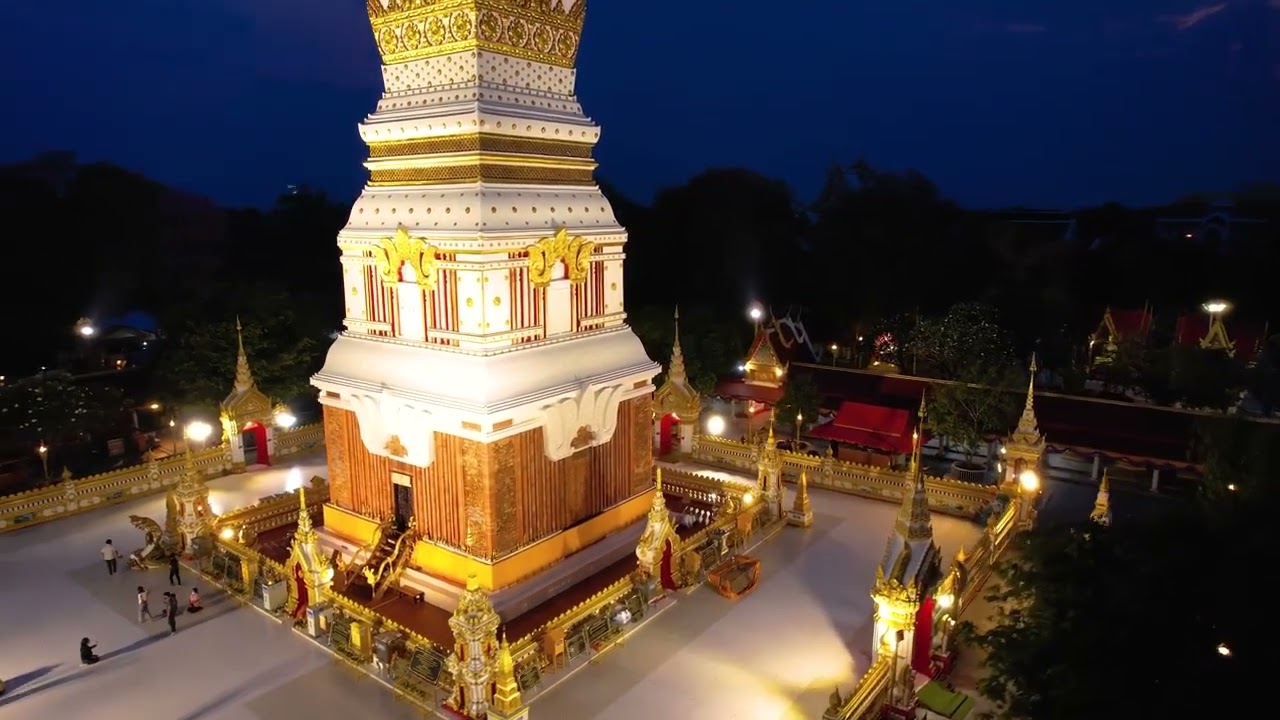
 Click to Access the Navigation Map GPS
Wat Phra That Phanom Woramahawihan Map
Gellery
Recommend

 Art, Culture and Heritage
 Historical Sites and Monuments(3)
 Landmarks and Memorials(2)
 Art, Craft Centres, Tradition(3)
 Museums(3)
 Educational Places
 Library(1)
Temple(23)
Library(1)
Temple(23)
 Church(1)
 Other Sacred Sites(11)
 Suburban Living
 Village, Community(5)
 Nature and Wildlife
 National Parks and Marine Reserves(1)
 Dam, Reservoir, Lake(5)
 Waterfalls(2)
 River, Canal(3)
 Bays and Beaches(3)
 Other natural attractions(2)
 Entertainment and Agricultural
 Zoos and Aquariums(1)
 Farms, Parks and Ecotourism(2)
 Shopping
 Shopping and Night Market(1)


