
lovethailand home >Northeastern Travel Attractions >Nakhon Phanom Travel Attractions >Muang Nakhon Phanom >Nai Muang > Nakhon Phanom Walking Street
TL;DR: Nakhon Phanom Walking Street is located at Vietnamese Memorial Clock Tower neighborhood beside the Mekong River, Nai Mueang Subdistrict, Mueang Nakhon Phanom District, Nakhon Phanom, open Friday, Saturday, and Sunday, hours 16:30–20:30.
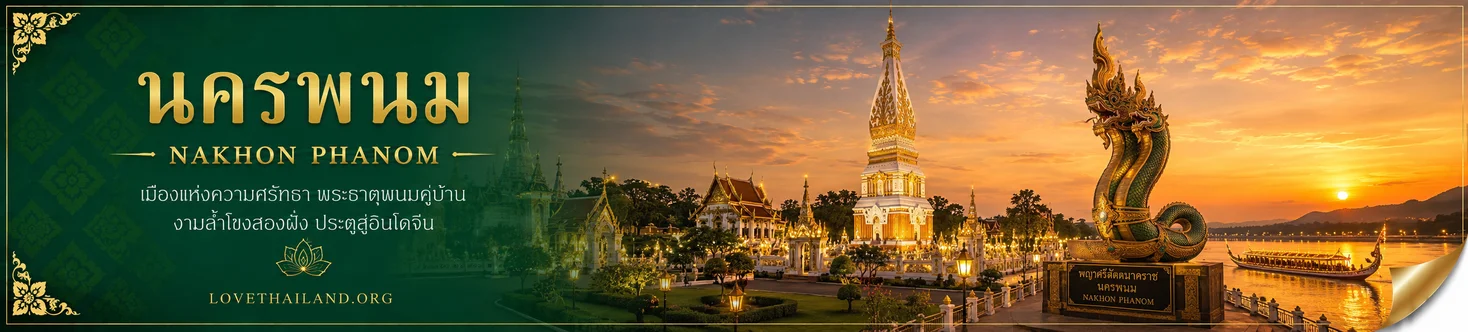
Nakhon Phanom Walking Street
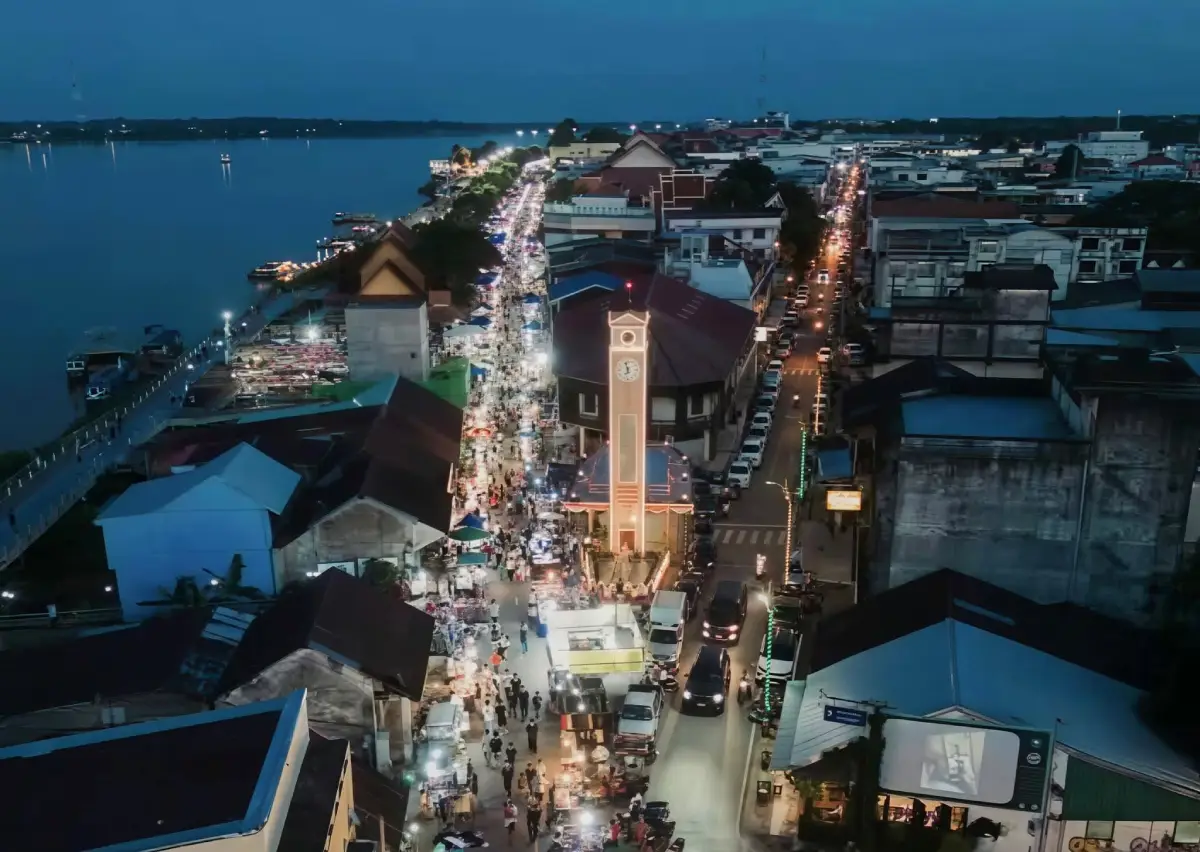
Open Days: Friday, Saturday, and Sunday
Opening Hours: 16:30–20:30
Nakhon Phanom Walking Street, also known as Mekong Walking Street, is a weekend night market beside the Mekong River in the historic Vietnamese Memorial Clock Tower neighborhood of central Nakhon Phanom. It opens every Friday, Saturday, and Sunday from 16:30 to 20:30, with free admission. Visitors can explore Vietnamese and Isan food, local desserts, seasonal produce, OTOP products, clothing, handicrafts, souvenirs, old riverside houses, and views across the Mekong toward Thakhek in Khammouane Province, Laos. The municipal project began on 5 August 2011 to revive the historic clock-tower district, a multicultural community shaped by Chinese, French, and Vietnamese influences. Travelers should allow one to two hours and arrive before sunset to experience the heritage streetscape, riverside scenery, and evening market lights.
Nakhon Phanom Walking Street is one of the most rewarding places to experience central Nakhon Phanom after the heat of the afternoon begins to fade. The market combines local food, community commerce, riverside life, historic architecture, and the cultural memory of several ethnic communities within one walkable district. It is organized around the Vietnamese Memorial Clock Tower and the nearby section of Sunthon Wichit Road beside the Mekong River, within easy walking or driving distance of hotels, restaurants, temples, historical buildings, and the city’s riverside landmarks.
Unlike a large commercial night market that is defined mainly by the number of stalls, this walking street is closely connected to the surrounding neighborhood. Vendors operate among old shophouses, historic riverside homes, cafés, small hotels, and streets that once formed an important commercial quarter. Visitors therefore experience more than shopping. They move through a living part of the old city where architecture, food, migration, trade, and everyday community life remain visible.
The walking-street project was launched by Nakhon Phanom Municipality on 5 August 2011. The clock-tower neighborhood was selected because it had previously been one of the city’s active commercial areas and retained strong historical and cultural value. Its position beside the Mekong supported the movement of goods, people, languages, and cultural influences over many generations. As newer business districts developed elsewhere, municipal authorities recognized the need to bring economic and social activity back to the older riverside community.
The initiative was developed during the administration of Niwat Chiawiriyabunya, then mayor of Nakhon Phanom. The municipality saw that the area still possessed valuable cultural resources, including the clock tower, old buildings, riverside houses, and the Mekong promenade. Organizing a regular pedestrian market could restore activity to the neighborhood, attract visitors, create a venue for local products, and generate additional income for residents and small businesses from Nakhon Phanom and surrounding districts.
The original project operated on Fridays, reflecting its initial role as a weekly community event. As visitor numbers increased and weekend travel became more important, the operating schedule expanded. The market now opens on Friday, Saturday, and Sunday from 16:30 to 20:30. The three-night schedule gives travelers more flexibility and allows local vendors to reach both residents and visitors staying in the city over the weekend.
The clock-tower district reflects Chinese, French, and Vietnamese cultural influences. Nakhon Phanom is a border city where communities have moved, settled, traded, and exchanged knowledge along the Mekong for generations. Vietnamese migration had an especially visible influence on the city’s food, architecture, religious life, and commercial culture. Chinese trading practices and family businesses also shaped the old commercial streets, while the history of French Indochina contributed architectural and culinary elements that remain visible today.
Chinese influence can be recognized in the organization of old family-run shops, commercial buildings, and food traditions that combine Chinese techniques with regional ingredients. French influence is associated with the wider historical context of the Mekong and Indochina and appears in certain building proportions, tall doors and windows, coffee culture, and the use of bread. Vietnamese influence is particularly prominent in local cuisine and in the stories connected to the clock tower and riverside community.
Vietnamese dishes form an important part of everyday eating in Nakhon Phanom. Travelers may encounter freshly steamed Vietnamese rice-skin dumplings, Vietnamese noodle soup, rice-flour rolls, Vietnamese sausage, fermented pork, fresh vegetables, and baguette-based snacks such as khao chi pate. These are not foods created solely for tourism. They are part of the city’s regular culinary identity and demonstrate how migration and cultural exchange have become integrated into local life.
The Vietnamese Memorial Clock Tower is the physical and symbolic center of the walking street. It was created by members of the Vietnamese community as a memorial and an expression of gratitude to the people of Nakhon Phanom before many Vietnamese residents returned to their homeland. The tower was officially opened on 22 December 1960 and transferred to the municipality on 1 March 1961. It remains a visible record of migration, friendship, shared history, and Thai–Vietnamese relations.
During the day, the streets around the tower continue to function as part of the urban road network and commercial neighborhood. In the late afternoon, vendors begin preparing their stalls, traffic is restricted around the market area, and the clock tower becomes the backdrop to a pedestrian night market. It serves as an easy meeting point, a navigation landmark, and the most recognizable place to begin exploring the surrounding stalls and riverside streets.
Several riverside houses and old commercial buildings in the district are close to or more than a century old. They reflect a period when the riverfront was central to trade, migration, and settlement. Some structures have been adapted into cafés, restaurants, accommodation, or shops, but wooden elements, balconies, shutters, proportions, and traditional building forms still communicate the atmosphere of earlier Nakhon Phanom.
Placing the walking street within the old neighborhood has helped restore public interest in these buildings. Without regular activity, historic houses and commercial streets can be neglected or altered until their original character disappears. By bringing residents, visitors, and income back into the district, the market strengthens the practical value of conservation. Heritage becomes part of a functioning neighborhood rather than an isolated display.
The market was designed not only to attract tourists but also to create employment and commercial opportunities. Small vendors can sell food, handmade goods, agricultural products, clothing, and processed local products without maintaining a permanent shop. The walking street therefore functions as a low-cost entry point for community entrepreneurs, home cooks, craftspeople, farmers, and small-scale producers who need direct access to customers.
For visitors, the market offers a useful introduction to local preferences and everyday life. The types of food, popular stalls, family groups, student vendors, and residents meeting after work reveal how people use the city. A successful community market should not exist exclusively for tourists. Local residents should still shop, eat, and socialize there. Nakhon Phanom Walking Street retains this quality, giving it a more natural atmosphere than a purpose-built tourist market.
A practical visit begins at the Vietnamese Memorial Clock Tower. From there, travelers can follow the vendor-lined streets, explore the adjoining lanes, and continue toward the Mekong promenade. The tower is easy to remember and works well as a meeting point for groups. The exact arrangement of stalls may change according to municipal planning, special events, weather, and the number of participating vendors.
The best arrival time is approximately 16:30 to 17:00. At this hour, natural light is still available for viewing the old buildings, clock tower, and riverfront. Travelers can look across the Mekong toward Thakhek in Khammouane Province, Laos, where limestone mountains form a dramatic background. As daylight fades, stall lights, street lamps, and illuminated buildings gradually transform the district into a lively evening market.
After 18:00, the walking street usually reaches its busiest period. Food aromas spread through the streets, souvenir and clothing stalls are fully illuminated, and groups of residents and travelers fill the market. Visitors seeking the strongest night-market atmosphere may prefer this period. Families with young children, older travelers, and wheelchair users may find it easier to arrive earlier, before the central route becomes crowded.
The market can be understood through several functional zones. The first is the clock-tower and heritage-community zone. This area acts as the principal meeting point, photography location, and introduction to the district’s Vietnamese history. Visitors should take time to observe the tower, surrounding houses, and street pattern before moving deeper into the market.
The second zone contains food stalls and casual street dining. It is often the busiest part of the market and offers northeastern Thai dishes, Vietnamese food, grilled items, fried snacks, desserts, fruit, drinks, and simple meals. Travelers who want to sample several dishes should order smaller portions and share them with companions rather than purchasing a full meal from the first stall.
The third zone focuses on OTOP products, local food gifts, and community goods. Common items include Vietnamese sausage, fermented pork, packaged food, woven textiles, local fabrics, baskets, wooden goods, decorations, and Nakhon Phanom souvenirs. Buying directly from local producers helps distribute tourism income. Travelers should check storage instructions, expiry dates, and airline restrictions before purchasing perishable food.
The fourth zone includes clothing, accessories, vintage items, handmade jewelry, bags, and creative products. The range changes according to participating vendors, but these stalls give young designers, artists, and small businesses a place to test new products. This variety prevents the market from being limited to food and provides additional browsing for visitors who are not looking for edible souvenirs.
The fifth zone consists of community activities and performance areas. Depending on the municipal calendar, the market may host music, school performances, seasonal programs, cultural demonstrations, or public information activities. These events help transform the market from a line of commercial stalls into a community space where local skills and cultural expression can be shared.
The sixth zone is the Mekong promenade and riverside viewing area. This is the feature that gives Nakhon Phanom Walking Street its distinctive setting. Visitors can step away from the busiest stalls, feel the river breeze, view Thakhek and the mountains of Laos, and enjoy food beside the water. The transition between market streets and open river scenery makes the evening feel less enclosed than many urban night markets.
Recommended foods include Vietnamese rice-skin dumplings, Vietnamese noodle soup, khao chi pate, Vietnamese sausage, naem nueang, som tam, larb, grilled chicken, Mekong fish, local desserts, and seasonal snacks. The exact selection varies from night to night. Walking through the full market before making major purchases allows visitors to compare portions, prices, preparation styles, and the number of customers at each stall.
Fresh Vietnamese rice-skin dumplings are one of the clearest expressions of the city’s Vietnamese heritage. Thin steamed sheets are filled with seasoned pork or other ingredients and served with fried shallots, Vietnamese sausage, and dipping sauce. Vietnamese noodle soup is a comforting evening dish with chewy noodles and hot broth. Khao chi pate combines French-style bread with local fillings and seasoning, reflecting the layered culinary history of the region.
Processed foods such as Vietnamese sausage and fermented pork are popular gifts. Travelers should check labels, production dates, refrigeration requirements, and packaging quality. Products intended for long journeys should be properly sealed. International visitors must check the food-import rules of their destination country, as meat products may be restricted or prohibited.
Friday evenings often feel like the beginning of the local weekend. Residents arrive after work, while newly arrived travelers begin exploring the riverfront. Saturday is generally the busiest night because more domestic visitors stay in the city. Sunday tends to be calmer and can be convenient for purchasing gifts before departure. Each evening offers the same core experience but a different level of activity.
The cool season from approximately November to February provides the most comfortable conditions. Evening temperatures beside the Mekong can feel cooler than streets farther inland, particularly in December and January. A light jacket may be useful for children, older travelers, and anyone planning to sit beside the river. Clear cool-season skies also improve views toward the limestone mountains in Laos.
From March to May, afternoons can be hot, although temperatures become more comfortable after sunset. Visitors should drink water, wear breathable clothing, and avoid carrying heavy purchases from the beginning of the walk. Those planning to buy several gifts can return to selected stalls near the end of the visit rather than carrying packages through the entire market.
The rainy season brings greener riverfront scenery and cooler air, but outdoor market activity can be affected by rain and wind. Travelers should check the weather, carry an umbrella or lightweight rain jacket, wear shoes with reliable grip, and protect phones or cameras from moisture. Puddles may form after heavy rain, so remaining on the organized pedestrian route is advisable.
Most visitors should allow one to two hours. Two hours provides enough time to sample several foods, examine local products, photograph the clock tower, observe old houses, and walk beside the Mekong. Travelers with only 45 minutes should begin at the tower, focus on food and souvenir stalls, and finish with a short riverfront walk. It is not necessary to explore every lane to experience the essential character of the market.
Getting There from the Phaya Si Sattanakharat Naga Monument and the central riverfront is straightforward. Follow Sunthon Wichit Road north for approximately 1.3 kilometers until reaching the Vietnamese Memorial Clock Tower. Travelers staying in the old town may walk or cycle. Those coming from other parts of the city can use a private car, rental car, taxi, or local three-wheeled vehicle and ask for the “clock-tower walking street.”
Nakhon Phanom Airport is approximately 16–18 kilometers from the city center. Rental cars, taxis, and hotel transfers are the most practical options. Travelers arriving in the evening should leave luggage at their accommodation before visiting the market. Roads immediately around the clock tower may be closed or restricted when vendors are operating, so vehicles should stop in an authorized area outside the pedestrian zone.
From Nakhon Phanom Bus Terminal, local taxis and three-wheeled vehicles provide direct access to the clock-tower district. The trip is short under normal traffic conditions. Visitors should agree on the fare before departure and identify the destination clearly as the “Vietnamese Memorial Clock Tower walking street beside the Mekong,” because the city contains several markets and event spaces.
Drivers visiting on Saturday should allow additional time for parking. The market streets are intended for pedestrians during operating hours, and vehicles should not attempt to enter the central area. Park only in authorized spaces on surrounding streets or designated areas. Do not block private homes, shop entrances, emergency routes, or sections marked as no-parking zones.
Wheelchair users and travelers with limited mobility can use many parts of the main street and riverside promenade, although crowds, raised curbs, uneven surfaces, and vendor layouts may make some sections difficult. Arriving at opening time provides more space. Nearby hotels and restaurants can serve as convenient rest points, and traveling with a companion is recommended when the market is busy.
Families should establish the clock tower as a meeting point and place a parent’s telephone number in a child’s pocket or wristband. Young children should remain close to adults in crowded sections and beside the river. They should not run between food stalls where hot grills, oil, cooking equipment, and heavy containers may be present.
Older travelers should arrive early, wear comfortable shoes, and rest when necessary. The riverfront can become cool and windy during the cool season, making a light jacket useful. When ordering food, visitors with dietary restrictions should ask about chili, salt, allergens, meat ingredients, and cooking methods before purchasing.
As with any busy public market, visitors should secure phones, wallets, and bags. Avoid leaving belongings on the ground or placing them where they obstruct movement. Hot food containers should be carried carefully, particularly around children and oncoming pedestrians. Groups should share their location and agree on a meeting time during festivals or especially crowded weekends.
Keeping the market and riverfront clean is essential. Waste should be placed in designated bins, and food containers should never be thrown into the Mekong. If a nearby bin is full, carry rubbish to the next collection point rather than leaving it beside the bin. Reducing single-use plastic and bringing a reusable bag can help limit waste generated by the market.
Photographers should capture the clock tower and old houses before natural light disappears, then photograph the illuminated stalls later in the evening. The riverfront provides open views of the sky, water, and Lao mountains. Permission should be requested before taking close portraits of vendors, photographing cooking procedures at short range, or photographing children working with their families.
Many stalls accept cash, while some support Thai QR payments. Small banknotes are useful and make transactions faster. International travelers should carry sufficient Thai baht because small vendors may not accept credit cards or foreign currency. Always check the displayed payment amount before confirming a digital transaction and secure the phone immediately afterward.
Nearby attractions include the Vietnamese Memorial Clock Tower within the market, Wat Okat Si Bua Ban with its revered Buddha images, the Phaya Si Sattanakharat Naga Monument beside the river, the Old Nakhon Phanom Governor’s Residence Museum, and Saint Anna Nong Saeng Catholic Church. These destinations are all located within central Nakhon Phanom and can be combined in a half-day or full-day itinerary.
A practical afternoon-to-evening route begins at the Old Governor’s Residence Museum, continues to Saint Anna Nong Saeng Catholic Church, and returns to the clock-tower district before 17:00. After exploring the market and eating dinner, travelers can walk south along the Mekong toward the Phaya Si Sattanakharat Naga Monument. This itinerary combines history, religion, food, architecture, and nighttime river scenery.
Restaurants around the clock tower range from permanent businesses to temporary market stalls. Sabaidee Nakhon Phanom specializes in Vietnamese food near the river. Hor Nalika is located beside the walking-street district. N.Nom Original serves drinks and desserts, while Tom Sen Hor Nalika is a convenient choice for Vietnamese-style noodle soup. Thai Samakkhi provides food, drinks, and an old-town atmosphere. Individual restaurant hours may differ from market hours.
Several accommodation options are within easy reach. Racha Khong Hotel is located in the clock-tower district and is convenient for travelers who want immediate access to the market. Landmark Nakhon Phanom Hotel is also close to the walking street and river. VELA Dhi Nakhon Phanom and Fortune View Khong Hotel are larger hotels farther south, while Chewa Khong Hotel provides another city-based option with convenient road access.
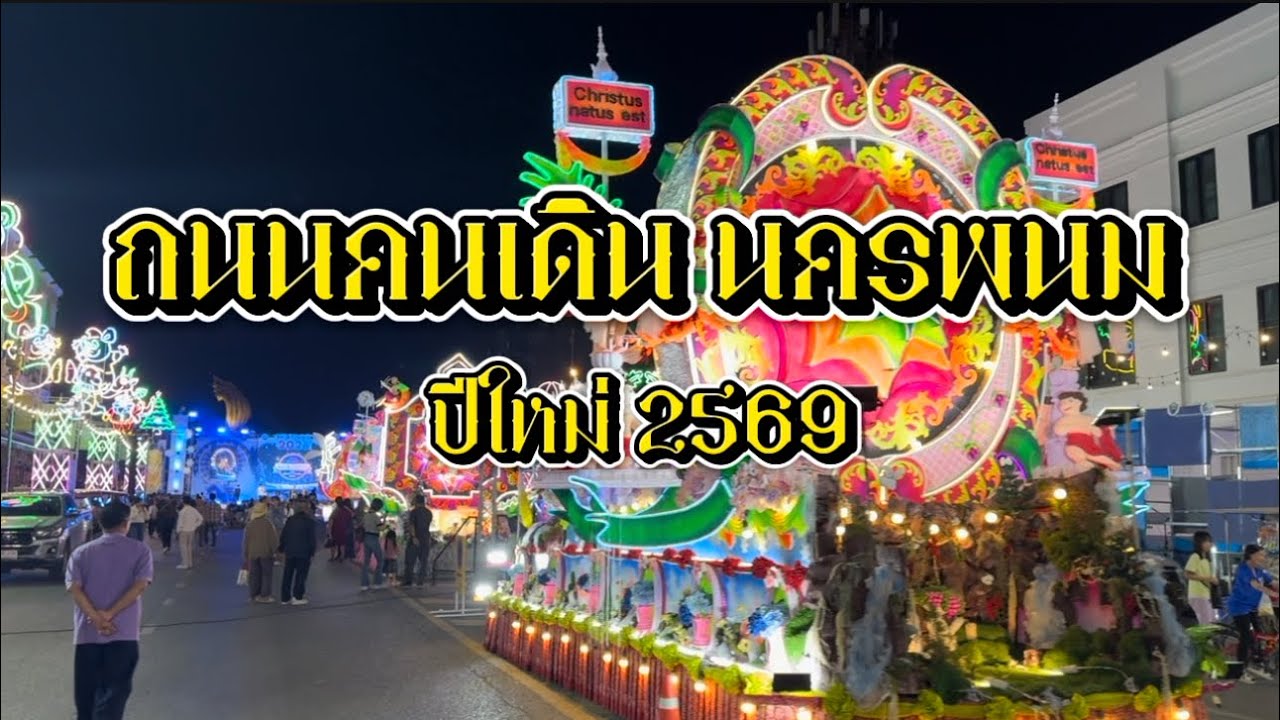
During the Illuminated Boat Procession Festival, the Phaya Si Sattanakharat worship festival, New Year, Songkran, and long public-holiday periods, the riverfront may contain additional activities and larger crowds. Accommodation should be reserved early, and travelers should arrive before the busiest period. Temporary road closures and event arrangements should be checked through Nakhon Phanom Municipality.
The cultural value of the walking street comes from its ability to connect heritage with present-day use. The clock tower and old houses are not isolated museum objects. They remain surrounded by shops, accommodation, food businesses, and residents. Market activity allows visitors to encounter history in a functioning neighborhood, while commercial activity provides a practical reason for maintaining the old district.
The market also represents Nakhon Phanom as a multicultural city. Vietnamese food, buildings with Western influence, Chinese commercial traditions, Thai and Lao beliefs, and views toward Thakhek all appear within one evening experience. Travelers can understand the city through what they see, hear, taste, and observe rather than relying only on written historical explanations.
For first-time visitors, the walking street provides an accessible introduction to Nakhon Phanom because food, souvenirs, architecture, residents, and the Mekong can be experienced together. Returning travelers may still find new vendors, dishes, and activities because the market changes with seasons and participation. Arriving before sunset, walking slowly, and paying attention to the neighborhood around the clock tower creates a deeper experience than a brief photograph stop.
Nakhon Phanom Walking Street is therefore more than a place to buy dinner or souvenirs. It is a public setting where the city presents its story through the clock tower, riverside houses, food, trade, and community life. From the municipal project launched on 5 August 2011 to revive the historic commercial district, the market has developed into a central weekend activity. Visitors can support its future by respecting residents, keeping the riverfront clean, purchasing from local producers, and taking time to understand the old neighborhood.
| Name | Nakhon Phanom Walking Street, also known as Mekong Walking Street |
| Location | Vietnamese Memorial Clock Tower neighborhood beside the Mekong River, Nai Mueang Subdistrict, Mueang Nakhon Phanom District, Nakhon Phanom Province |
| Address | Sunthon Wichit Road and Si Thep Road around the Vietnamese Memorial Clock Tower, Nai Mueang Subdistrict, Mueang Nakhon Phanom District, Nakhon Phanom 48000, Thailand |
| Coordinates | 17.405193, 104.787137 |
| Highlights | A Mekong riverside night market featuring the Vietnamese Memorial Clock Tower, historic riverside houses, Vietnamese and Isan food, OTOP goods, handicrafts, souvenirs, and views toward Thakhek in Laos |
| History | Nakhon Phanom Municipality launched the project on 5 August 2011 to revive the historic clock-tower community, promote tourism, create employment, and increase income for local vendors. |
| Cultural Significance | The market occupies a historic neighborhood influenced by Chinese, French, and Vietnamese cultures and containing several old riverside buildings. |
| Vietnamese Memorial Clock Tower | Built by the Vietnamese community as a memorial and expression of gratitude to Nakhon Phanom. It opened on 22 December 1960 and was transferred to the municipality on 1 March 1961. |
| Distinctive Features | Combines a community market, historic district, Thai–Vietnamese heritage, street food, and Mekong scenery within one walkable area |
| Products | Local and Vietnamese food, desserts, seasonal produce, OTOP goods, clothing, accessories, handicrafts, food gifts, and souvenirs |
| Recommended Food | Vietnamese rice-skin dumplings, Vietnamese noodle soup, khao chi pate, Vietnamese sausage, naem nueang, som tam, larb, grilled chicken, Mekong fish, and local desserts |
| Main Areas / Zones | 1. Clock Tower and Historic Community Zone 2. Food and Street-Food Zone 3. OTOP and Local Souvenir Zone 4. Clothing, Accessories, and Creative Products Zone 5. Community Activity and Performance Zone 6. Mekong Promenade and River-View Zone |
| Activities | Sampling food, shopping for gifts, viewing historic buildings, photographing the clock tower, watching the sunset, walking beside the Mekong, and attending community activities |
| Recommended Duration | Approximately 1–2 hours |
| Best Arrival Time | Approximately 16:30–17:00, allowing time to see the old buildings and Mekong view before sunset and explore the illuminated market afterward |
| Open Days | Friday, Saturday, and Sunday |
| Opening Hours | 16:30–20:30 |
| Admission Fee | Free admission; visitors pay only for selected food, products, and services |
| Facilities | Street lighting, riverside paths, seating areas, restaurants, drink shops, accommodation, and authorized parking areas on surrounding streets |
| Travel Information | From the Phaya Si Sattanakharat Naga Monument, follow Sunthon Wichit Road north for approximately 1.3 km. The market can be reached by walking, bicycle, private car, rental car, taxi, or local three-wheeled vehicle. |
| Current Status | Operating as a weekend walking street and major evening attraction in central Nakhon Phanom |
| Caretaker | Nakhon Phanom Municipality |
| Main Contact Number | Nakhon Phanom Municipality: 042-512-005 |
| Nearby Tourist Attractions | 1. Vietnamese Memorial Clock Tower, 0 km 2. Wat Okat Si Bua Ban, 0.5 km 3. Phaya Si Sattanakharat Naga Monument, 1.3 km 4. Old Nakhon Phanom Governor’s Residence Museum, 1.4 km 5. Saint Anna Nong Saeng Catholic Church, 2.1 km |
| Nearby Restaurants | 1. Hor Nalika, 0.1 km, Tel. 095-169-6866 2. Sabaidee Nakhon Phanom, 0.1 km, Tel. 042-064-200 3. N.Nom Original, 0.1 km, Tel. 095-563-0434, 065-417-8999 4. Tom Sen Hor Nalika, 0.2 km, Tel. 095-429-7966 5. Thai Samakkhi Nakhon Phanom, 0.2 km, Tel. 095-286-4222 |
| Nearby Accommodations | 1. Racha Khong Hotel, 0.1 km, Tel. 042-199-815, 095-194-1641 2. Landmark Nakhon Phanom Hotel, 0.2 km, Tel. 091-740-3001 3. VELA Dhi Nakhon Phanom, 1.6 km, Tel. 042-515-919 4. Fortune View Khong Hotel Nakhon Phanom, 2.4 km, Tel. 042-513-564 5. Chewa Khong Hotel Nakhon Phanom, 3.4 km, Tel. 042-514-242, 098-935-1442 |
Frequently Asked Questions (FAQ)
Q: Which days is Nakhon Phanom Walking Street open?
A: It opens every Friday, Saturday, and Sunday from 16:30 to 20:30.
Q: Where is Nakhon Phanom Walking Street located?
A: It is located around the Vietnamese Memorial Clock Tower on Sunthon Wichit Road and Si Thep Road beside the Mekong River in central Nakhon Phanom.
Q: Is there an admission fee?
A: Admission is free. Visitors pay only for food, products, souvenirs, and services they choose to purchase.
Q: What time should travelers arrive?
A: Arriving between 16:30 and 17:00 provides time to see the historic houses, clock tower, Mekong River, and sunset before the market becomes busiest.
Q: What can visitors buy at the market?
A: The market offers Vietnamese and Isan food, local desserts, seasonal produce, OTOP goods, Vietnamese sausage, clothing, accessories, handicrafts, food gifts, and souvenirs.
Q: Which foods should foreign travelers try?
A: Recommended dishes include Vietnamese rice-skin dumplings, Vietnamese noodle soup, khao chi pate, Vietnamese sausage, naem nueang, som tam, larb, grilled chicken, and Mekong fish.
Q: How long should visitors spend at the walking street?
A: One to two hours is suitable for tasting food, shopping, photographing the clock tower, viewing old buildings, and walking beside the Mekong.
Q: Which attractions can be combined with the market?
A: Nearby attractions include Wat Okat Si Bua Ban, the Phaya Si Sattanakharat Naga Monument, the Old Governor’s Residence Museum, and Saint Anna Nong Saeng Catholic Church.
 Category: ●Shopping
 Group: ●Shopping and Night Market
Last Update : 4 MonthAgo
 Last Update : 4 MonthAgo
 Click to Access the Navigation Map GPS
Nakhon Phanom Walking Street Map
Recommend

 Art, Culture and Heritage
 Historical Sites and Monuments(3)
 Landmarks and Memorials(3)
 Art, Craft Centres, Tradition(3)
 Museums(3)
 Educational Places
 Library(1)
 University
 Public university(2)
 Places of Worship
 Temple(23)
 Church(1)
 Other Sacred Sites(11)
 Suburban Living
 Village, Community(5)
 Nature and Wildlife
 National Parks and Marine Reserves(1)
 Dam, Reservoir, Lake(5)
 Waterfalls(2)
 Caves(1)
 River, Canal(3)
 Bays and Beaches(3)
 Other natural attractions(2)
 Entertainment and Agricultural
 Zoos and Aquariums(1)
 Farms, Parks and Ecotourism(2)
Shopping and Night Market(1)
 Department Store(2)
 Travel Articles, Recipes
 Travel Review, Food Review(1)


