
lovethailand home >Northeastern Travel Attractions >Loei Travel Attractions >Dan Sai >Dan Sai > Phi Ta Khon Festival
TL;DR: Phi Ta Khon Festival is located at Dan Sai District, Loei Province, Thailand. Highlights include Phi Ta Khon Mask Parade, Colorful Ghost Masks, Invocation Of Phra Upakhut, Vessantara Procession, Rocket Procession, Mask Releasing Ritual.
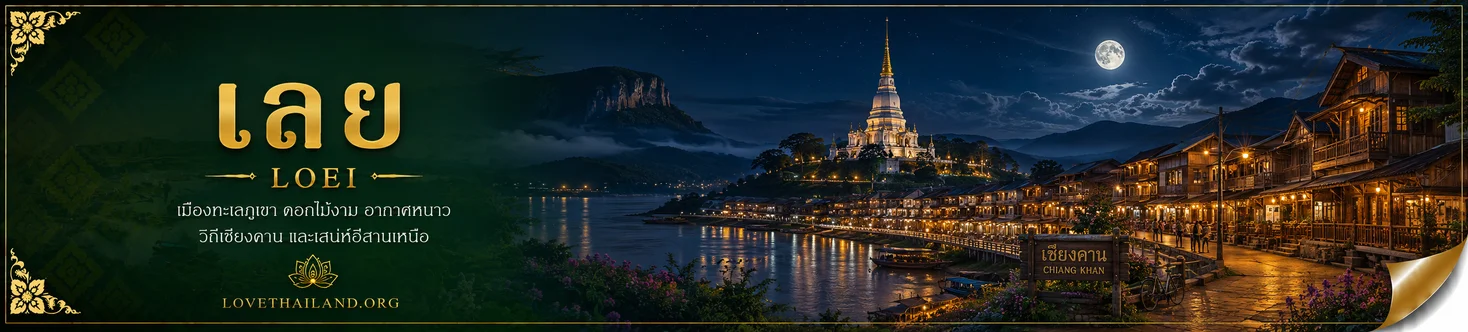
Phi Ta Khon Festival
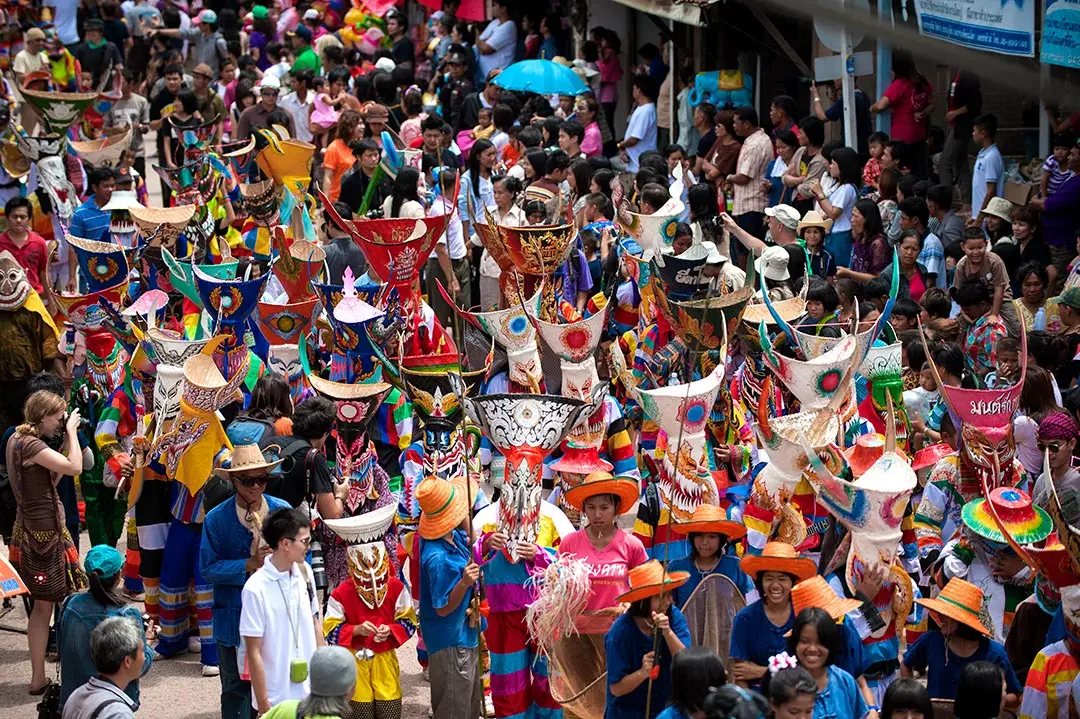
Event Dates: 20 – 22 June 2026
Event Hours: Early Morning – Evening, According To The Daily Programme
Phi Ta Khon Festival in Loei Province is one of the most distinctive cultural traditions in northeastern Thailand and the most iconic annual event of Dan Sai District. The festival usually takes place around May to June, following the local ritual calendar, and in 2026 it was scheduled for 20–22 June at Dan Sai District Office, Kaeo Asa Road, Wat Phon Chai, and the procession routes in Dan Sai town. Known internationally as the Ghost Mask Festival, Phi Ta Khon is far more than a colorful parade. It is part of the Bun Luang merit-making festival, combining Bun Phawet, the rocket festival, the invocation of Phra Upakhut, the welcoming procession of Prince Vessantara, merit-making, ancestral spirit beliefs, Buddhist storytelling, and local creativity into one powerful community event.
The festival has been practiced for generations by the people of Dan Sai, although there is no clear written evidence proving exactly when it began. Local people inherited the tradition from their ancestors and have continued to perform it as a living expression of faith, identity, and community pride. Phi Ta Khon is now recognized as a unique cultural symbol of Loei Province. It represents the way local people combine Buddhism, spirit beliefs, agricultural rituals, humor, and social celebration into a single festival that is both sacred and joyful.
The name Phi Ta Khon is connected with the story of Prince Vessantara. According to local belief, when Prince Vessantara and Princess Maddi returned from the forest to the city, forest spirits, wild beings, and unseen creatures loved and missed them so much that they followed the procession back to town. This idea is often explained through the words “ghosts following people,” which gradually became associated with the name Phi Ta Khon. For this reason, the ghost masks are not simply frightening decorations. They represent the presence of unseen beings joining a sacred and joyful return.
The festival is part of Bun Luang, the great merit-making festival of Dan Sai. Bun Luang brings several ritual traditions together: Bun Phawet, which centers on the Vessantara Jataka and the Great Sermon; the rocket festival, which is connected with rain-making and agricultural hope; purification rituals for the community; and the Phi Ta Khon procession. This combination shows how the festival belongs to a farming society where people depended on rain, respected spirits, made Buddhist merit, and gathered as a community before the rice-growing season.
The festival is usually organized over 3 main days. The first day is often called Wan Hom, the gathering day. It begins very early in the morning with the ceremony to invite Phra Upakhut, a powerful Buddhist protective figure believed to guard the festival from harm and disturbance. The procession then moves through the village and temple areas. Phi Ta Khon performers begin to appear, shaking bells, dancing, and creating a lively atmosphere. This first day announces that the great festival has begun.
The second day is the most visually famous day. It features the grand Phi Ta Khon procession and the symbolic welcoming of Prince Vessantara and Princess Maddi back to the city. Wat Phon Chai becomes the sacred center, while the streets of Dan Sai become a moving stage filled with masks, music, dancing, rockets, community groups, and spectators. The Phi Ta Khon performers tease and entertain the crowd, jumping and dancing to the sound of folk instruments and bells. This day is usually the best day for visitors who want to see the large procession and the full visual power of the festival.
After the procession, some ritual objects, masks, and equipment are traditionally taken to the Man River and released into the water. This act symbolizes the removal of misfortune, suffering, and bad influences. It also marks a ritual transition after the wild joy of the procession. Later, Buddhist chanting and the Great Sermon of 13 chapters connect the festival back to the Vessantara Jataka and the deeper merit-making purpose of Bun Phawet.
The third day focuses more strongly on Buddhist merit-making and listening to the Great Sermon. Although it may appear less visually dramatic than the masked parade, it is essential to the meaning of the festival. It shows that Phi Ta Khon is not merely a tourist show. Its roots lie in Buddhist faith, ritual order, community protection, and the wish for peace and prosperity.
The Phi Ta Khon mask is the most recognizable symbol of the festival. The head is traditionally made from a sticky-rice steamer basket, shaped so that it can be worn over the head. The face is made from dried coconut frond or coconut sheath, cut and shaped into a mask with eye openings, nose, mouth, and ears. The mask is painted in bright colors and expressive patterns. Some masks have long pointed noses, while others have dramatic horns or decorative extensions made from dried coconut materials. The costume is made from multicolored fabric scraps sewn together into a loose, flowing outfit.
Two important accessories complete the Phi Ta Khon character: mak kra laeng and a personal wooden weapon. Mak kra laeng is a bell-like object used to create sound while the performer walks, jumps, or dances. The noise adds rhythm and energy to the procession. The wooden weapon, such as a sword or spear-shaped prop, is used as part of the performance. These objects are not meant for violence. They help create the playful, mischievous, and ritual character of Phi Ta Khon.
There are 2 main types of Phi Ta Khon. Phi Ta Khon Yai, or the large Phi Ta Khon, is a large ritual figure made in male and female forms. It is connected with specific ritual rules and can only be made by people who have the right to do so within local belief. Phi Ta Khon Lek, or the small Phi Ta Khon, refers to the masks and costumes worn by ordinary participants. This second form is more open and creative, allowing villagers, young people, artists, and visitors to engage with the festival atmosphere.
In the past, most Phi Ta Khon performers were men because the role involved jumping, dancing, teasing, and moving actively through the procession. Today, participation is more flexible. Women, children, students, artists, and tourists may take part in workshops, mask-making, photography, costume activities, or some appropriate public activities. This wider participation helps keep the tradition alive while allowing younger generations to understand it in a contemporary way.
Wat Phon Chai is the spiritual and cultural center of the festival. It is the main ritual venue and the location of the Dan Sai Folk Museum, also known as the Phi Ta Khon Museum. Visitors should spend time at the museum because it explains the history, ritual meaning, masks, costumes, and local beliefs behind the festival. Understanding the museum first helps visitors see Phi Ta Khon not as a simple carnival, but as a layered cultural tradition with deep roots in Dan Sai life.
The main festival area includes Dan Sai District Office, Kaeo Asa Road, Wat Phon Chai, the Man River ritual area, the central stage, the mask contest area, food zones, OTOP and souvenir zones, and the Phi Ta Khon Museum. During the festival, the quiet town of Dan Sai becomes a living cultural stage. The streets fill with masks, music, drums, laughter, smoke from offerings, food vendors, travelers, and local families.
Getting There from Loei city is straightforward. Travel from Loei city to Dan Sai District, about 80 km away, then continue to Wat Phon Chai, Kaeo Asa Road, and the district office area. Visitors can also reach Dan Sai from Phu Ruea. During the festival, traffic is heavy and accommodation fills quickly, so visitors should allow extra travel time, arrive early, and reserve lodging well in advance. Those coming from Bangkok can travel to Loei Province by bus, car, or flight connections, then continue by local transport or private vehicle to Dan Sai.
Visitors who want to see the grand procession should arrive early in the morning. Popular viewing spots are around Dan Sai District Office, Kaeo Asa Road, and Wat Phon Chai. Those who prefer less crowded areas can stand along quieter parts of the procession route. Comfortable shoes, breathable clothing, sun protection, drinking water, and a waterproof bag are recommended because the festival takes place during the rainy-season period and can be both hot and wet.
Photography should be respectful. Phi Ta Khon is a ritual procession, not just a costume show. Visitors should not block the procession, grab masks, touch costumes without permission, stand too close to performers while they are dancing, or enter ritual spaces without permission. If taking close-up portraits, ask first. Respecting performers and local residents helps preserve the dignity of the festival.
Food and souvenirs are also important parts of the festival experience. Visitors can find Isan food, local snacks, sticky rice, som tam, noodles, cafés, and handmade Phi Ta Khon souvenirs such as small masks, keychains, paintings, shirts, and craft items. Buying from local makers supports the community and helps preserve the craft of mask-making.
Phi Ta Khon is also an important cultural soft power of Loei Province. It attracts Thai and international visitors, creates income for hotels, restaurants, cafés, local transport, mask makers, food vendors, and tourism services, and gives young people a reason to value their heritage. The festival shows how a local tradition can generate both cultural pride and economic activity without losing its roots.
For international visitors, Phi Ta Khon is easy to enjoy visually but deeper when understood culturally. The masks may look like ghosts, but the festival is not a horror event. The ghost figures are part of a sacred and playful ritual world connected with Buddhism, spirits, rain, agriculture, and community protection. The festival is best understood as a joyful ritual celebration, not simply as a parade of scary masks.
Phi Ta Khon has been recognized as an important element of Thailand’s intangible cultural heritage. This means it should be treated as a living tradition that belongs to the people of Dan Sai. Responsible tourism is important. Visitors should respect rituals, listen to local instructions, avoid leaving trash, and support local businesses. The festival survives because it remains meaningful to the community, not only because it attracts tourists.
A complete Dan Sai itinerary should begin at Wat Phon Chai and the Phi Ta Khon Museum, continue with the procession route on Kaeo Asa Road and the district office area, and then include nearby places such as Phra That Si Song Rak, Wat Neramit Wipassana, cafés, local restaurants, and scenic spots in Dan Sai. Travelers with more time can continue to Phu Ruea, Phu Lom Lo, Phu E-Lert, or other natural attractions in Loei Province.
In conclusion, Phi Ta Khon Festival in Loei Province is a powerful combination of Buddhist merit-making, ancestral spirit belief, rain-making symbolism, mask art, folk performance, humor, and community identity. Its masks made from rice steamers, coconut materials, colorful cloth, bells, and wooden props create an unforgettable visual world. Yet behind the color and noise lies a serious cultural structure: the invocation of Phra Upakhut, the welcoming of Prince Vessantara, the symbolic release of masks into the Man River, and the Great Sermon of 13 chapters. To visit Phi Ta Khon with understanding is to see not only a festival of masks, but the living soul of Dan Sai.
| Event Name | Bun Luang And Phi Ta Khon Festival / Phi Ta Khon Festival |
| Location | Dan Sai District, Loei Province, Thailand |
| Main Venue | Dan Sai District Office, Kaeo Asa Road, Wat Phon Chai, And The Procession Routes In Dan Sai Town |
| Traditional Festival Period | Usually Around May – June Each Year, Or Around The Local Ritual Months 6–8 |
| Latest Event Dates | 20 – 22 June 2026 |
| Event Hours | Early Morning – Evening, According To The Daily Programme; Some Rituals Begin Before Sunrise |
| Highlights | Phi Ta Khon Mask Parade, Colorful Ghost Masks, Invocation Of Phra Upakhut, Vessantara Procession, Rocket Procession, Mask Releasing Ritual, Great Sermon Of 13 Chapters, And Phi Ta Khon Museum At Wat Phon Chai |
| History / Background | A long-standing Dan Sai tradition combining ancestral spirit beliefs, Buddhism, Bun Phawet, rocket festival practices, community purification, and the Bun Luang merit-making festival |
| Cultural Significance | A unique cultural identity of Loei Province and Dan Sai District, recognized as part of Thailand’s intangible cultural heritage in the category of social practices, rituals, and festive events |
| Types Of Phi Ta Khon | Phi Ta Khon Yai And Phi Ta Khon Lek; the large figures are connected with specific ritual rules, while smaller masks allow broader community participation |
| Mask And Costume Materials | Sticky-rice steamer basket, coconut sheath or coconut frond, dried coconut flower sheath, soft wood, paint, colorful fabric scraps, bells, and wooden performance props |
| Admission Fee | No General Admission Fee For The Parade And Public Areas; visitors pay for transport, accommodation, food, souvenirs, or specific activities if announced at the venue |
| Travel Information | From Loei city, travel about 80 km to Dan Sai District, then continue to Wat Phon Chai, Kaeo Asa Road, and Dan Sai District Office. During the festival, allow extra time for traffic and parking |
| Current Status | An annual provincial cultural festival and one of the most important heritage tourism events in Loei Province |
| Facilities | Central stage, parade routes, food stalls, community shops, OTOP products, photo areas, Phi Ta Khon Museum, Wat Phon Chai, temporary toilets, and parking areas under event arrangements |
| Main Areas / Zones | Wat Phon Chai Zone Phi Ta Khon Museum Zone Dan Sai District Office Zone Kaeo Asa Road And Parade Route Zone Phra Upakhut Ritual Area Near The Man River Central Stage And Performance Zone Mask Contest Zone Local Food And Community Market Zone |
| Caretaker / Organizers | Loei Province, Dan Sai District, Dan Sai Municipality, Wat Phon Chai, Tourism Authority Of Thailand Loei Office, cultural agencies, and the Dan Sai community |
| Main Contact Number | Dan Sai Municipality Tel. 042-891-231 / TAT Loei Office Tel. 042-812-812 / Phi Ta Khon Museum, Wat Phon Chai Tel. 081-954-9966 |
| Official Website / Official Page | Dan Sai Municipality / TAT Loei Office / Thailand Festival / Thailand.go.th / Phi Ta Khon Museum, Wat Phon Chai |
| Nearby Tourist Attractions | 1. Wat Phon Chai And Phi Ta Khon Museum, about 0 km, Tel. 081-954-9966 2. Phra That Si Song Rak, about 1 km, Tel. 042-812-812 3. Wat Neramit Wipassana, about 2 km, Tel. 042-891-226, 086-852-5950 4. Dan Sai District Office And Kaeo Asa Road, about 0 km 5. Phu E-Lert, Ban Pak Man, about 18 km, Tel. 061-053-1561 6. Phu Phra, Ban Mak Khaeng, about 35 km, Tel. 080-308-9880 |
| Nearby Restaurants | 1. NANA CAFE’ Dan Sai, about 1 km, Tel. 098-316-1420 2. Krua Dan Nam Chai, about 2 km 3. Woori Café Dan Sai, about 5 km, Tel. 098-815-2203 4. The Enlighten Coffee And Community, about 5 km, Tel. 098-585-2898 5. Kachada Cafe, about 7 km, Tel. 095-198-8816 6. Ta Cafe & Food & Resort, about 2 km, Tel. 082-449-9364 |
| Nearby Accommodations | 1. Ta Resort Dan Sai, about 1 km, Tel. 082-449-9364 2. Phu Na Come Resort, about 2 km, Tel. 042-892-005 3. Dan Sai Resort Hotel, about 3 km, Tel. 042-892-281 4. Ing Phu Resort Dan Sai, about 2 km, Tel. 087-856-0455 5. Mountain Green Resort, about 2 km 6. Sabaidee 2 Resort Dan Sai, about 2 km |
Frequently Asked Questions (FAQ)
Q: Where is Phi Ta Khon Festival held?
A: It is held in Dan Sai District, Loei Province, mainly around Wat Phon Chai, Kaeo Asa Road, Dan Sai District Office, and the procession routes in Dan Sai town.
Q: When does Phi Ta Khon Festival take place?
A: It usually takes place around May to June each year according to the local ritual calendar. In 2026, it was scheduled for 20–22 June.
Q: How is Phi Ta Khon related to Bun Luang?
A: Phi Ta Khon is part of the Bun Luang festival, which combines Bun Phawet, rocket festival practices, the invocation of Phra Upakhut, the welcoming of Prince Vessantara, and the Great Sermon of 13 chapters.
Q: What are Phi Ta Khon masks made from?
A: The head is made from a sticky-rice steamer basket, the face from coconut sheath or coconut frond, and the costume from colorful fabric scraps. Bells and wooden props complete the performance outfit.
Q: Are there different types of Phi Ta Khon?
A: Yes. There are Phi Ta Khon Yai, the large ritual figures, and Phi Ta Khon Lek, the smaller masks and costumes worn by ordinary participants.
Q: Is there an admission fee?
A: There is no general admission fee for the public parade and main activity areas. Visitors pay for travel, accommodation, food, souvenirs, or specific activities if announced at the venue.
Q: Where should visitors learn more about Phi Ta Khon?
A: Visitors should go to the Phi Ta Khon Museum at Wat Phon Chai, which explains the history, masks, costumes, rituals, and cultural meaning of the festival.
Q: Where should visitors stay during the festival?
A: Staying in Dan Sai is best for early access to the parade, but rooms fill quickly. Phu Ruea and Loei city are also practical alternatives if Dan Sai accommodation is full.
 Category: ●Art, Culture and Heritage
 Group: ●Art, Craft Centres, Tradition
Last Update : 3 MonthAgo
 Last Update : 3 MonthAgo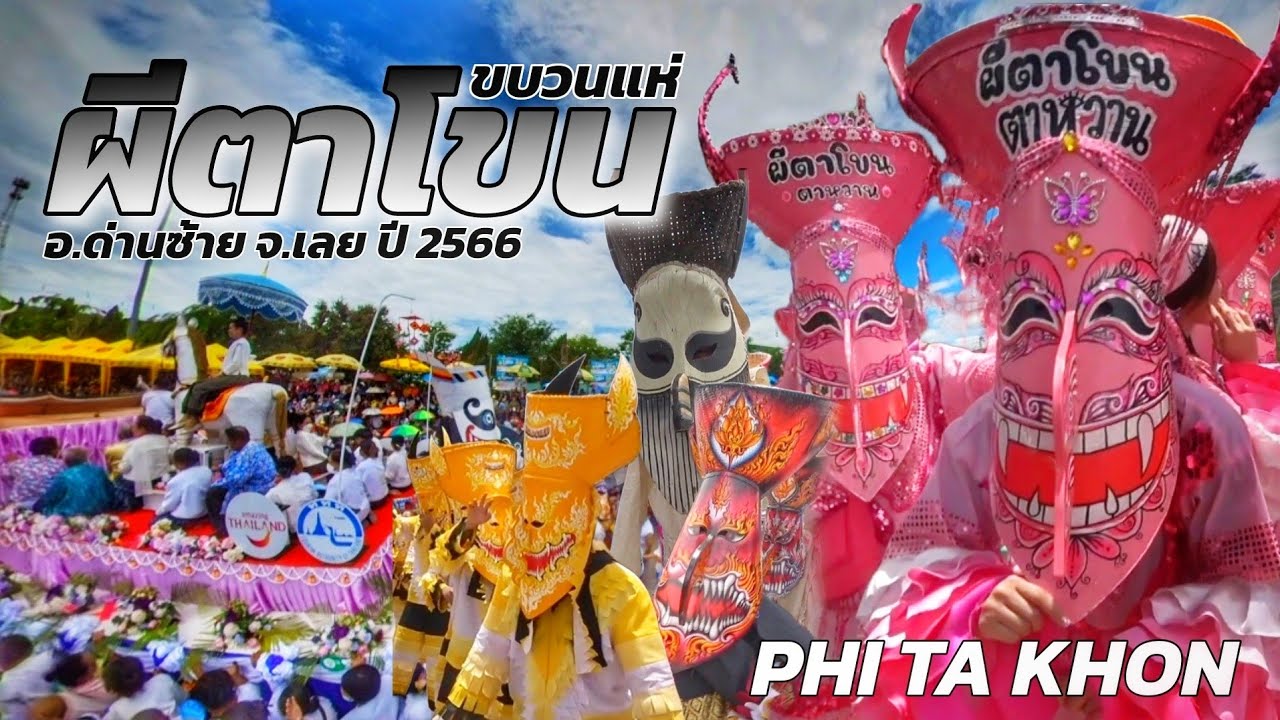

 Historical Sites and Monuments(2)
 Landmarks and Memorials(3)
Art, Craft Centres, Tradition(2)
Landmarks and Memorials(3)
Art, Craft Centres, Tradition(2)
 Museums(4)
 Art Gallery(1)
 Educational Places
 Educational Gardens, Farm(2)
 Places of Worship
 Temple(16)
 Other Sacred Sites(8)
 Research and Development
 Royal Project(3)
 Suburban Living
 Village, Community(3)
 Local Market(1)
 Nature and Wildlife
 National Parks and Marine Reserves(5)
 Mountain (Doi)(10)
 Dam, Reservoir, Lake(7)
 Waterfalls(21)
 Caves(3)
 River, Canal(5)
 Bays and Beaches(1)
 Other natural attractions(1)
 Entertainment and Agricultural
 Farms, Parks and Ecotourism(8)
 Waterpark(1)
 Outdoor and Adventure Activities(2)


