
lovethailand home >Northeastern Travel Attractions >Loei Travel Attractions >Wang Saphung >Wang Saphung > Wat Phatthasimaram
TL;DR: Wat Phatthasimaram is located at Mu 3, Wang Saphung Subdistrict, Wang Saphung District, Loei Province, open Daily, hours 08.00 – 17.00.

Wat Phatthasimaram
Open Days: Daily
Opening Hours: 08.00 – 17.00
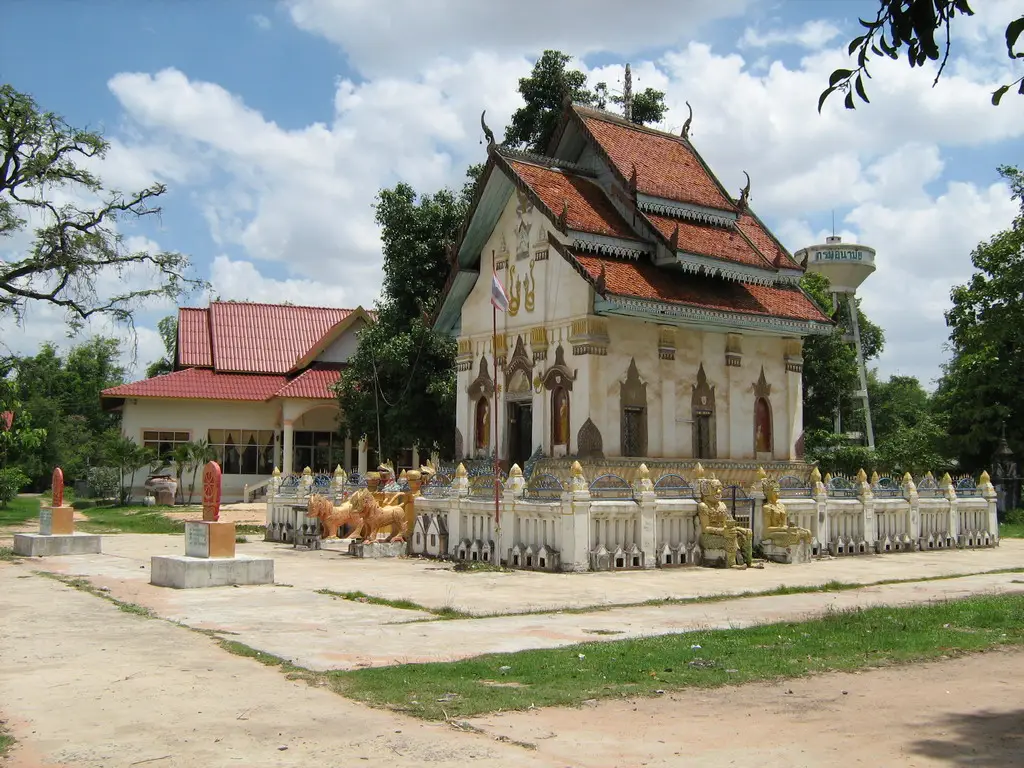
Wat Phatthasimaram in Loei Province is an important cultural temple in Wang Saphung District, best known for its Dvaravati-period sandstone boundary stones. The site is associated with a turtle-back-shaped mound, traces of a moat and earthen embankment on the southern side, and a remarkable group of 45 sandstone sema stones, 31 of which remain in complete condition. Many of the stones are carved with miniature stupa forms supported by rounded ritual water pots, known as purnaghata, a symbol of prosperity and fertility. Dating to around the 13th–16th Buddhist centuries, the sema stones make this temple one of the most valuable archaeological and cultural learning sites in Loei.
Wat Phatthasimaram is located in Mu 3, Wang Saphung Subdistrict, Wang Saphung District, Loei Province, in the Ban Bung Phak Kam and Ban Nong Bua Thong community area near Wang Saphung Hospital. The temple is both an active Buddhist site and the home of the Ban Bung Phak Kam Sema Stone Museum. For international travelers, the temple offers a rare chance to see early Buddhist boundary stones in their local context, rather than inside a distant national museum. This makes the visit meaningful for anyone interested in archaeology, Buddhist art, Dvaravati culture, and the deeper history of northeastern Thailand.
The importance of Wat Phatthasimaram comes from the sandstone sema stones discovered in the temple area and nearby community. These stones are not ordinary decorative objects. In early Buddhist practice, sema stones marked the sacred boundary of an ordination area and separated the religious space from the ordinary world. Their presence shows that the Wang Saphung area had an important Buddhist community during the Dvaravati period, long before the better-known modern history of Loei Province.
The discovery area is especially interesting because it is described as a turtle-back-shaped mound. On the southern side of the site are traces of a moat and earthen embankment, suggesting that the area was once organized as a sacred or community space. Such landscape features help visitors understand that the site was not a random location where stones were found. It was part of a cultural landscape where religious activity, settlement, and symbolic space were carefully connected.
The sema stones at Wat Phatthasimaram number 45 in total, with 31 stones in complete condition. Most are made of white sandstone, while some are red sandstone. They vary in size, shape, and level of detail. The most distinctive carvings show miniature stupas in the center of the stones, often supported by rounded purnaghata water pots. In ancient Indian and Buddhist symbolism, the purnaghata represents abundance, fertility, prosperity, and auspiciousness. This gives the stones a deeper meaning beyond their function as boundary markers.
The artistic style of the stones is strongly connected with Dvaravati art. Their stupa motifs, ritual water pot forms, floral designs, and symbolic composition are similar to sema stones found in other parts of northeastern Thailand. The stones are dated to around the 13th–16th Buddhist centuries, or approximately 900–1,200 years ago. They help confirm that Loei Province was part of a broader cultural network connected with early Buddhist communities in the Mekong and upper northeastern region.
The stones can be understood through several design groups. Some have shapes close to natural stones. Some are flat slabs with clearer carved forms. Some show purnaghata water pots with stupas above them. Others include layered water pots and floral motifs. One group includes an octagonal pillar-like form with a lotus base and tapering top. Another important stone contains traces of ancient writing. This diversity shows the skill of local or regional craftsmen and the complexity of Buddhist visual culture during the Dvaravati period.
One sema stone is associated with ancient script, described as a very faded South Indian or Pallava-style script. Even when the letters cannot be read fully, the presence of such writing is highly significant. It reflects cultural contact between early communities in present-day Thailand and the Indian cultural world. It also shows that Buddhism, writing systems, ritual symbols, and artistic forms were transmitted across regions through religious and cultural networks.
The story of the discovery is also important. In 1963, local villagers found sema stones in a forested area around a mound used for farming. The discovery was reported to local authorities. In 1980, the Fine Arts Department surveyed the sandstone sema group, bringing greater attention to the site as an archaeological heritage of Loei Province. Later, the temple, community, and cultural agencies helped gather, preserve, and display the stones for public learning.
The establishment of the Ban Bung Phak Kam Sema Stone Museum inside Wat Phatthasimaram is a meaningful example of community-based heritage preservation. The stones were not removed from their local context and hidden away from the community. Instead, they remain within the temple, where local people can still see them as part of their cultural identity. Visitors therefore experience not only ancient objects, but also the living relationship between a community, a temple, and its historical memory.
The name Phatthasimaram is also meaningful. The word phatthasima refers to a formally established Buddhist boundary used for important monastic ceremonies. Because the temple is associated with many ancient sema stones, the name carries a powerful symbolic connection. It links the temple’s present identity with the ancient function of boundary stones in Buddhist ritual practice.
For visitors, the most important area is the sema stone display zone. Each stone has its own shape, surface, carving, and historical character. Travelers should take time to observe the miniature stupa motifs, rounded water pot forms, floral patterns, pillar-like shapes, and the weathered sandstone surfaces. These details reveal both religious symbolism and the passage of time. Visitors should not touch, climb on, or move the stones, as they are ancient cultural objects that need careful preservation.
The atmosphere of Wat Phatthasimaram is simple and local. It is not a large tourist complex or a highly commercialized attraction. Its value lies in the concentration of archaeological evidence and the quiet setting of a community temple. This makes the site ideal for slow observation, cultural learning, photography, and educational visits. The temple is especially suitable for travelers who prefer meaningful heritage sites over crowded tourist landmarks.
Understanding the role of sema stones helps make the visit more meaningful. In Buddhist tradition, sema stones mark the sacred boundary of an ordination area. During the Dvaravati period, sema stones found across northeastern Thailand reveal the spread of Theravada Buddhist practice and the use of stone markers to define sacred ritual space. The large number of sema stones at Wat Phatthasimaram shows that the Wang Saphung area had religious significance during that early period.
The stupa motifs carved on the stones are especially important. A stupa symbolizes the presence of the Buddha, relic worship, remembrance, and the sacred center of Buddhist devotion. When a stupa is carved onto a sema stone, the stone becomes more than a boundary marker. It becomes a symbolic miniature Buddhist monument. The purnaghata water pot below the stupa adds another layer of meaning related to abundance, fertility, and auspiciousness.
From an archaeological perspective, Wat Phatthasimaram expands the historical image of Loei Province. Loei is often known for mountains, cool weather, Chiang Khan, Phu Ruea, and Phu Kradueng. However, the Dvaravati sema stones show that the province also has a deep Buddhist and archaeological past. The site helps connect modern Loei with ancient cultural networks across the upper northeast and the Mekong region.
The temple is also suitable for educational trips. Schools, universities, history groups, and archaeology students can use the site to study the Dvaravati period, sandstone carving, Buddhist boundary markers, ancient scripts, moat-and-embankment traces, and community heritage management. Seeing the real stones in place gives a clearer understanding than reading about them in a textbook.
For general travelers, Wat Phatthasimaram can be visited conveniently as a short cultural stop in Wang Saphung District. The temple is not far from Loei town and can be combined with Phra Phutthabat Tham Pha Bing, Wat Tham Pha Bing, Wat Pa Sammanusorn, or attractions in Mueang Loei District. A well-planned route can include temple visits, archaeology, local restaurants, and nearby accommodation in one day.
The best time to visit is in the morning, when the temperature is comfortable and natural light helps reveal the carved details on the stone surfaces. Late afternoon is also suitable for photography because the softer light gives the sandstone more depth. During the rainy season, visitors should watch their steps around the temple grounds. During the cool season, the weather in Loei is especially pleasant for walking and exploring cultural sites.
Visitors should follow both temple etiquette and museum etiquette. Dress modestly, speak quietly, avoid touching or climbing on the stones, do not place personal items on the ancient objects, and do not write or mark anything on the sandstone. Families traveling with children should make sure that children do not run or play too close to the stones. Respectful behavior helps protect this rare cultural heritage for future generations.
Getting There is most convenient by private car or rental car. From Loei town, take the main road toward Wang Saphung District. Once in Wang Saphung, continue to the temple area near the back of Wang Saphung Hospital. Travelers can search online maps for “Wat Phatthasimaram Wang Saphung Loei” or “Ban Bung Phak Kam Sema Stone Museum Wat Phatthasimaram”. The temple is suitable for a half-day or one-day cultural route.
A cultural itinerary can begin with Wat Phatthasimaram to study the Dvaravati sema stones, then continue to Phra Phutthabat Tham Pha Bing or Wat Tham Pha Bing, both important religious attractions in Wang Saphung. Travelers can then stop for food in Wang Saphung town or continue to Mueang Loei for Wat Si Sutthawat, Phu Bo Bit, or accommodation before traveling onward to Phu Ruea, Chiang Khan, or Phu Kradueng.
For photography, focus on the overall display area, the carved stupa motifs, the rounded purnaghata forms, the weathered sandstone textures, and the peaceful temple atmosphere. Good photographs should communicate the historical value and dignity of the site. Visitors should avoid posing in ways that disrespect the ancient stones or Buddhist setting.
Wat Phatthasimaram is therefore suitable for many types of travelers: history lovers, archaeology students, cultural travelers, Buddhist visitors, photographers, and anyone who wants to see a deeper side of Loei Province. The site shows that Loei is not only a province of mountains and rivers, but also a province with ancient Buddhist heritage that reaches back to the Dvaravati period.
Although the temple is quiet and not crowded, its educational value is very high. Visitors should take time to read the stones visually, observe their forms, and think about how these sandstone markers once defined sacred space nearly a thousand years ago. When seen this way, each sema stone is not just an old rock. It is a witness to faith, craftsmanship, ritual practice, and the history of an ancient community in present-day Loei Province.
Wat Phatthasimaram in Loei is one of the most important places for understanding Dvaravati heritage in the upper northeastern region of Thailand. Its 45 sandstone sema stones, turtle-back-shaped mound, traces of moat and earthen embankment, miniature stupa carvings, and purnaghata water pot motifs form a remarkable archaeological record. A visit here offers not only a temple experience but also a direct encounter with the early Buddhist history of Wang Saphung and the cultural memory preserved by the local community.
| Name | Wat Phatthasimaram / Ban Bung Phak Kam Sema Stone Museum, Wat Phatthasimaram |
| Location | Mu 3, Wang Saphung Subdistrict, Wang Saphung District, Loei Province |
| Address | Wat Phatthasimaram, Mu 3, Wang Saphung Subdistrict, Wang Saphung District, Loei Province 42130, Thailand |
| Coordinates | Search Google Maps for “Wat Phatthasimaram Wang Saphung Loei” or “Ban Bung Phak Kam Sema Stone Museum Wat Phatthasimaram” |
| Highlights | Dvaravati-period sandstone sema stones on a turtle-back-shaped mound with traces of a moat and earthen embankment on the southern side |
| History | The sandstone sema stones date to around the 13th–16th Buddhist centuries, approximately 900–1,200 years ago |
| Name Origin | The name Phatthasimaram relates to the Buddhist concept of a formal sacred boundary, matching the presence of many ancient sema stones at the temple |
| Distinctive Features | 45 sandstone sema stones, 31 in complete condition, mostly carved with miniature stupas supported by rounded purnaghata ritual water pots |
| Key Evidence | White and red sandstone sema stones, miniature stupa motifs, purnaghata water pot designs, floral patterns, octagonal pillar-like sema form, and traces of ancient script |
| Travel Information | From Loei town, travel toward Wang Saphung District. The temple is in Wang Saphung Subdistrict near the back of Wang Saphung Hospital. Private car or rental car is recommended. |
| Current Status | Open as a Buddhist temple and local sema stone museum for archaeological and cultural learning |
| Open Days | Daily |
| Opening Hours | 08.00 – 17.00 |
| Fees | No admission fee |
| Facilities | Temple area, sema stone display area, archaeological learning space, and local heritage viewing area |
| Main Areas / Zones | Temple compound, Ban Bung Phak Kam Sema Stone Museum, sandstone sema stone group, display courtyard, and turtle-back-shaped mound area associated with moat and embankment traces |
| Caretaker | Wat Phatthasimaram |
| Main Contact Number | 042-841-727, 042-841-393 |
| Nearby Tourist Attractions | 1. Phra Phutthabat Tham Pha Bing / Wat Tham Pha Bing, about 8 km, Tel. 042-812-812 2. Wat Pa Sammanusorn, about 16 km 3. Luang Pu Louis Chanthasaro Museum Chedi, about 8 km 4. Wat Si Sutthawat Royal Temple, Mueang Loei District, about 22 km 5. Phu Bo Bit, Mueang Loei District, about 28 km 6. Suan Hin Pha Ngam, Nong Hin District, about 46 km |
| Nearby Restaurants | 1. Krua Kan Eng, about 2 km, Tel. 062-782-5698 2. Pranee Mee Bar, about 2 km, Tel. 084-404-2994 3. Na Wang Restaurant, about 2 km, Tel. 042-841-418 4. Hongtae Korean BBQ, about 2 km 5. Kamwan HOME CAFE, about 3 km 6. BALANCE SPECIALTY COFFEE Wangsaphung, about 3 km |
| Nearby Accommodations | 1. The Cozy Hotel, about 2 km, Tel. 095-654-8965 2. RARE LOEI HOTEL, about 3 km, Tel. 098-398-0157 3. Wang Saphung In View Hotel, about 3 km, Tel. 081-505-1569 4. Tonsak Loei Resort, about 4 km, Tel. 093-546-3633 5. Sakul Plang Resort, about 4 km, Tel. 099-071-9937 6. plus hotel, about 3 km, Tel. 042-810-799 |
Frequently Asked Questions (FAQ)
Q: Where is Wat Phatthasimaram located?
A: Wat Phatthasimaram is located in Mu 3, Wang Saphung Subdistrict, Wang Saphung District, Loei Province, near the back of Wang Saphung Hospital.
Q: What is Wat Phatthasimaram known for?
A: The temple is known for its Dvaravati-period sandstone sema stones, with 45 stones in total and 31 in complete condition. Many are carved with miniature stupas and rounded purnaghata water pot forms.
Q: How old are the sema stones at Wat Phatthasimaram?
A: The sema stones are dated to around the 13th–16th Buddhist centuries, or approximately 900–1,200 years ago.
Q: What are the opening hours of Wat Phatthasimaram?
A: The temple and sema stone museum are open daily from 08.00 to 17.00, and there is no admission fee.
Q: How can travelers get to Wat Phatthasimaram?
A: From Loei town, travel toward Wang Saphung District and continue to the temple area in Wang Saphung Subdistrict near Wang Saphung Hospital. A private car or rental car is the most convenient option.
Q: How long should visitors spend at Wat Phatthasimaram?
A: Visitors should allow around 45 minutes to 1 hour to view the sema stones, observe the carvings, take photographs respectfully, and learn about the archaeological significance of the site.
Q: Who should visit Wat Phatthasimaram?
A: The temple is ideal for history lovers, archaeology students, cultural travelers, Buddhist visitors, photographers, and anyone interested in the Dvaravati heritage of northeastern Thailand.
Q: What attractions can be visited near Wat Phatthasimaram?
A: Nearby attractions include Phra Phutthabat Tham Pha Bing, Wat Tham Pha Bing, Wat Pa Sammanusorn, Luang Pu Louis Chanthasaro Museum Chedi, Wat Si Sutthawat, and Phu Bo Bit.
 Category: ●Places of Worship
 Group: ●Temple
Last Update : 1 MonthAgo
 Last Update : 1 MonthAgo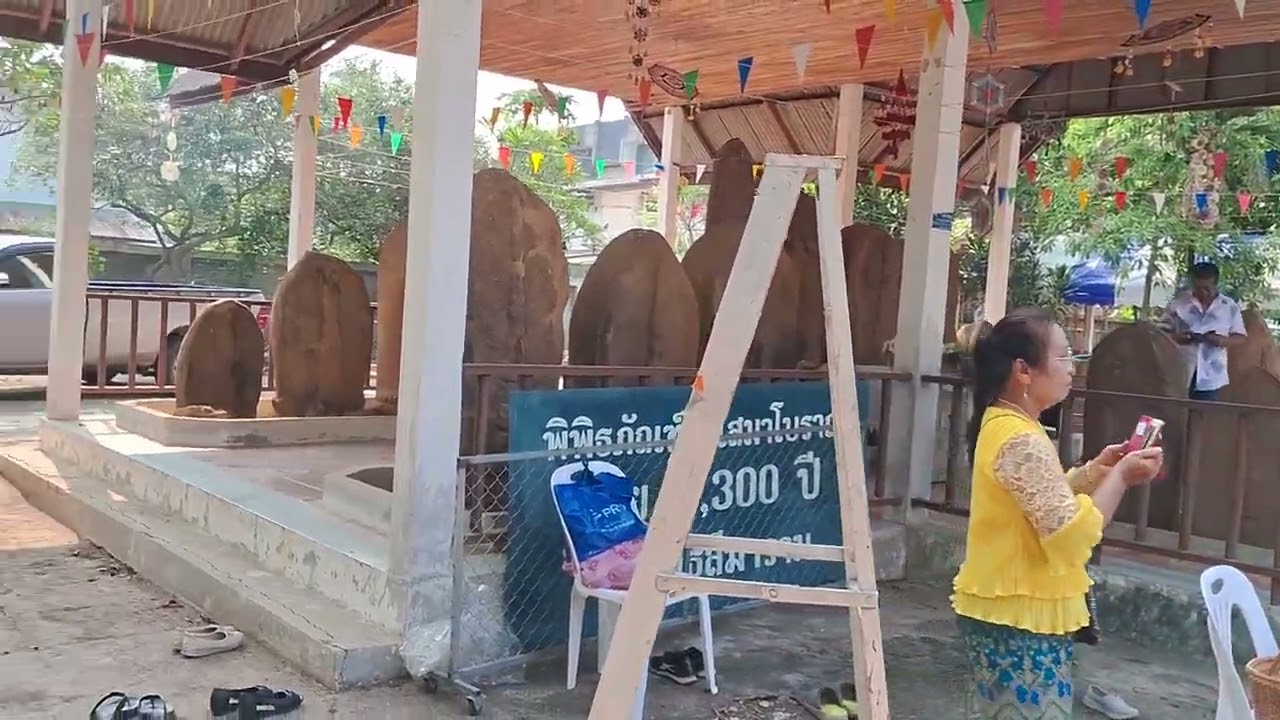
 Click to Access the Navigation Map GPS
Wat Phatthasimaram Map
Recommend

 Art, Culture and Heritage
 Historical Sites and Monuments(2)
 Landmarks and Memorials(3)
 Art, Craft Centres, Tradition(2)
 Museums(4)
 Art Gallery(1)
 Educational Places
 Educational Gardens, Farm(2)
Temple(16)
Educational Gardens, Farm(2)
Temple(16)
 Other Sacred Sites(8)
 Research and Development
 Royal Project(3)
 Suburban Living
 Village, Community(3)
 Local Market(1)
 Nature and Wildlife
 National Parks and Marine Reserves(5)
 Mountain (Doi)(10)
 Dam, Reservoir, Lake(7)
 Waterfalls(21)
 Caves(3)
 River, Canal(5)
 Bays and Beaches(1)
 Other natural attractions(1)
 Entertainment and Agricultural
 Farms, Parks and Ecotourism(8)
 Waterpark(1)
 Outdoor and Adventure Activities(2)


