
lovethailand home >Northeastern Travel Attractions >Loei Travel Attractions >Muang Loei >Na O > Luang Pu Khamdee Pabhaso Museum
TL;DR: Luang Pu Khamdee Pabhaso Museum is located at Wat Tham Pha Pu, Ban Na O, Na O Subdistrict, Mueang Loei District, Loei Province 42000, Thailand, open Daily, hours 08.00 – 17.00 for the museum area; visitors must contact the temple before.
Luang Pu Khamdee Pabhaso Museum
Open Days: Daily
Opening Hours: 08.00 – 17.00 for the museum area; visitors must contact the temple before entering the cave, replica Buddha footprint, and prehistoric rock-painting areas
Luang Pu Khamdee Pabhaso Museum in Loei Province is located inside Wat Tham Pha Pu at Ban Na O, Na O Subdistrict, Mueang Loei District, Loei Province. It is one of the most meaningful Buddhist and cultural sites in the area, dedicated to Phra Khru Yanathassi, widely known as Luang Pu Khamdee Pabhaso. He was a respected Thai forest monk and meditation master who was deeply revered by the people of Na O, the residents of Loei, and Buddhist devotees from many parts of Thailand. After his passing, his relics, monastic requisites, personal belongings, and related objects were preserved and displayed in this museum so that later generations could study his life, his Dhamma practice, and his simple way of living.
The museum is not simply a place where old objects are kept. It is a quiet space of remembrance, faith, and contemplation. Visitors come here to pay respect, learn about the Thai Forest Tradition, and understand how a monk devoted to meditation lived with humility and restraint. The objects displayed inside the museum are ordinary in appearance, yet they carry profound meaning. Robes, walking sticks, eyeglasses, flashlights, bags, utensils, and meditation requisites show a life based on simplicity rather than possession. For foreign travelers who wish to understand the spiritual side of Loei Province, this museum offers a rare and intimate introduction to Thai forest-monk culture.
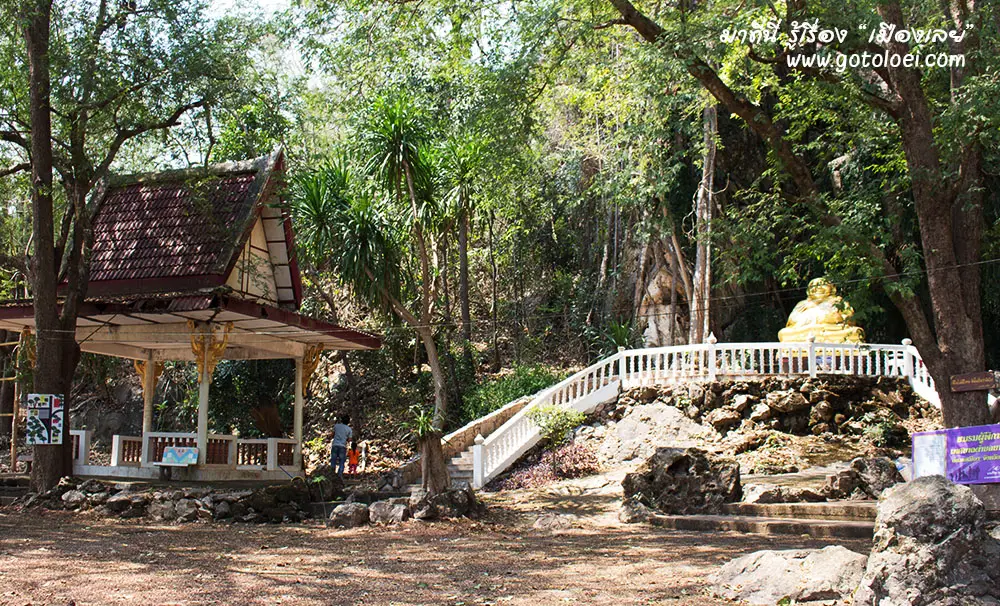
Wat Tham Pha Pu itself is an important part of the experience. The temple lies near the foot of Khao Nimit in Na O Subdistrict and has long been known as a peaceful place for meditation practice. The site combines a forest temple, a meditation center, a religious memorial, natural caves, sacred water, and archaeological traces within the same landscape. Visiting the museum therefore allows travelers to experience both the life of Luang Pu Khamdee and the environment that shaped his practice. The atmosphere is calm, shaded, and contemplative, making it different from a typical sightseeing stop.
Luang Pu Khamdee Pabhaso, whose monastic title was Phra Khru Yanathassi, was born on 26 March 1902 in Ban Nong Khu, Na Wa Subdistrict, Mueang Khon Kaen District, Khon Kaen Province. His lay name was Khamdee Ninkhiao. He grew up in a rural northeastern Thai community where temple life, family duty, farming culture, and Buddhist values were closely connected. At the age of 22, he entered the monkhood at Wat Nong Waeng in Mueang Khon Kaen District. He was first ordained in the Mahanikaya order before later reordaining in the Dhammayuttika order and setting out on forest meditation journeys through different provinces.
His spiritual path reflects the core character of the Thai Forest Tradition. Forest monks emphasize discipline, meditation, restraint, solitude, and direct training of the mind. They often live in forests, caves, and remote areas to reduce worldly distractions and deepen inner practice. Luang Pu Khamdee became known for his gentleness, humility, and firm commitment to the Dhamma. He did not teach through display or grandeur. His way of living itself became a teaching. For this reason, the museum’s display of his personal requisites is especially powerful. It shows that spiritual authority can grow from simplicity, discipline, and a life dedicated to practice.
Wat Tham Pha Pu began as a small monastic residence around 1932. In 1955, Luang Pu Khamdee brought his disciples from Khon Kaen and stayed at this site. From that time onward, the temple developed gradually. Buildings such as halls, a bell tower, monks’ dwellings, and other religious structures were established, and the temple became associated with the Dhammayuttika forest-monk tradition. Luang Pu Khamdee remained at Wat Tham Pha Pu for many years, which is why the temple and his name are inseparably connected in local memory.
In 1956, Luang Pu Khamdee received the ecclesiastical title Phra Khru Yanathassi as a second-class meditation monk. In 1978, he was promoted to first-class status in the field of Vipassana practice. These titles recognized his role as a respected meditation teacher. However, what made him deeply loved by the people was not only his formal position, but his conduct. He lived quietly, practiced steadily, and became a spiritual refuge for local residents and devotees. His life at Wat Tham Pha Pu turned the temple into a place of faith, practice, and Dhamma learning.
Luang Pu Khamdee passed away on 17 November 1984 at Phaet Panya Hospital in Bangkok due to heart failure. He was 82 years old. After his royal cremation ceremony, Phra Achan Sithon Silathano, together with disciples and the public, built Luang Pu Khamdee Pabhaso Museum at Wat Tham Pha Pu. Construction began on 5 August 1986 and was completed in October 1988. The museum was built through the devotion of followers who wished to preserve his memory in a tangible form. It allows future generations to come, pay respect, and learn from the life of a forest monk whose teaching remains relevant through simplicity and mindfulness.
The museum building is one of its most striking features. It is a four-sided mondop-style structure rising about 32 meters high, raised above the ground with an open lower level. Around the exterior is a circumambulatory terrace, and stairs lead up to the building from 4 directions. The building plan is octagonal, while both the exterior and interior are finished with marble and granite from Italy. Four entrances face east, west, north, and south. The wooden doors are carved with floral patterns, and the roof is a layered wooden structure covered with turtle-scale terracotta tiles. The uppermost part forms an octagonal stupa-like element, giving the building both solemnity and elegance.
Inside the museum, the principal object of devotion is the statue of Phra Khru Yanathassi, or Luang Pu Khamdee Pabhaso, placed on a marble lotus pedestal on the western side of the building. The statue faces east. In front of it, his relics are placed in a glass-covered vessel, together with offerings. A photograph of Luang Pu Khamdee is displayed behind the statue above the western doorway. This arrangement makes the interior feel both like a museum and a sacred memorial. Visitors usually begin by paying respect before walking around to view the display cases.
The inner walls contain glass-fronted display cases where his monastic requisites, personal objects, hair, relics, short biography, sacred relics, and related items are preserved. Each display is lit and accompanied by basic information. These objects are not impressive because of luxury. They are moving because of their simplicity. They reveal the practical life of a forest monk who used only what was necessary. The museum communicates the Dhamma through material traces of restraint, mindfulness, and disciplined living.
The first display case, on the southwest side, presents a brief biography of Luang Pu Khamdee, his hair, relics that became sacred crystalline relics, and the ceremonial fan connected to his ecclesiastical title. This section introduces visitors to his life and his recognized status as a meditation monk. It also helps devotees contemplate the connection between practice, purity, and remembrance in Thai Buddhist culture.
The second display case, on the northwest side, contains his lower robe, outer robes, sanghati, and other cloths. These monastic garments are simple, but they speak directly to the discipline of the monkhood. They remind visitors that the monk’s life is based on restraint and renunciation. For those unfamiliar with Thai Buddhism, this display helps explain how clothing itself becomes part of spiritual training, representing modesty, detachment, and commitment to the Vinaya.
The third display case, on the northeast side, displays requisites used during forest wandering and meditation practice, together with sacred relics associated with the Buddha and important disciples. This section is especially valuable for understanding the forest-monk way of life. A monk traveling through forests and remote areas carried only essential things. These objects point to a way of practice that required courage, endurance, and inner steadiness.
The fourth display case, on the southeast side, presents personal belongings such as a hot-water flask, bag, spoon, fork, needle, thread, pen, eyeglasses, flashlight, sandals, walking stick, and nail clippers. These are ordinary objects, but in the context of Luang Pu Khamdee’s life, they become reminders of mindful simplicity. They show that the Dhamma can be seen not only in sermons but also in the way a person uses everyday objects with care and moderation.
Near the entrance area of Wat Tham Pha Pu, visitors can also see the stupa memorial of Luang Pu Khamdee Pabhaso. It was built in 1993 as a memorial connected to his cremation and was completed in 1994. The stupa is made of marble and contains monastic requisites and statues of important forest-monk masters, including Luang Pu Sao Kantasilo, Luang Pu Mun Bhuridatto, Luang Pu Sing Khantayakamo, and Luang Pu Khamdee Pabhaso. This memorial links Luang Pu Khamdee to the wider lineage of Thai forest meditation teachers.
Wat Tham Pha Pu is also known for natural and cultural features beyond the museum. The temple grounds include caves on Khao Nimit, sacred water inside Tham Pha Pu, a replica Buddha footprint, spectacled langurs, and prehistoric rock paintings near the entrance of Tham Phra. These elements make the temple a multi-layered cultural landscape. Visitors who wish to enter the cave, see the replica footprint, or visit the prehistoric rock-painting area must contact the temple in advance because these areas are not open for independent access.
The museum is meaningful because it turns Dhamma into something visitors can physically encounter. Rather than reading only a biography, visitors see the place, the statue, the relics, the robes, the walking requisites, and the objects used in daily life. Together they form a quiet lesson on diligence, restraint, contentment, and impermanence. Even visitors who are not familiar with Buddhist doctrine can sense the message of a life reduced to essentials.
For the people of Na O, the museum and Wat Tham Pha Pu are deeply connected to community memory. Luang Pu Khamdee was not only a monk of national spiritual significance but also a teacher close to local people. Preserving his relics and belongings in the museum is therefore an act of gratitude. It keeps the relationship between teacher, disciples, temple, and community alive. Younger generations can learn that respect is earned through conduct, compassion, and moral discipline, not through wealth or public image.
A good visit should begin with quiet respect. Visitors can first pay homage to the statue and relics of Luang Pu Khamdee, then walk slowly around the interior display cases. Reading the labels and observing each object carefully is more meaningful than rushing through the building. The museum area itself can be visited in about 45 minutes to 1 hour, while those who also wish to see the memorial stupa and temple grounds should allow extra time.
Getting There is convenient by private car, rental car, or local transport from Loei city. The temple is located in Ban Na O, Na O Subdistrict, about 10 kilometers from central Loei. Travelers can use the Loei–Tha Li route or the Loei–Chiang Khan route to reach Wat Tham Pha Pu. The museum is suitable for families, elderly visitors, Buddhist pilgrims, cultural travelers, and those interested in quiet spiritual places. Some cave-related areas involve natural terrain and require care, so visitors should follow temple guidance.
Visitors should dress politely, speak quietly, avoid touching the exhibits, and respect the sacred character of the site. The museum is both a learning space and a place of worship. Photography should be done respectfully, especially near the statue, relics, and sacred objects. Responsible behavior helps preserve the peaceful atmosphere and allows other visitors to pay respect without disturbance.
The museum does not charge an admission fee. This makes it accessible to local residents, students, families, pilgrims, and travelers. Visitors may make merit according to their faith in designated areas. Keeping the area clean and following temple instructions helps maintain the museum as a quiet place for future generations.
The main areas worth seeing include the mondop museum building, the statue of Luang Pu Khamdee, the relic display, the 4 display cases of monastic requisites and personal belongings, the memorial stupa, the sacred water area, the caves, and the prehistoric rock-painting area. Each area reveals a different aspect of Wat Tham Pha Pu. The museum focuses on Luang Pu Khamdee’s life and teachings, the stupa connects him to the forest-monk lineage, and the natural areas show the landscape that supports meditation and contemplation.
For travelers studying the Thai Forest Tradition, this museum is particularly valuable. Luang Pu Khamdee was part of the lineage connected to Luang Pu Mun Bhuridatto, one of Thailand’s most influential meditation masters. Seeing Luang Pu Khamdee’s requisites and visiting the temple where he lived for many years gives the tradition a real and local context. It shows that Thai forest practice was not only a philosophy but a lived discipline in forests, caves, and rural communities.
The Na O area also has a gentle local character. It is close to Loei city but still retains a quieter community atmosphere. Travelers can visit the museum in the morning, have lunch in Na O or Mueang Loei, then continue to Phu Bo Bit, Loei Walking Street, or Chiang Khan later in the day. This makes the museum easy to include in a balanced itinerary that combines faith, local culture, food, and nature.
For international visitors, Luang Pu Khamdee Pabhaso Museum offers a clear introduction to Buddhist simplicity. Even when some information is in Thai, the objects, statue, architecture, and temple atmosphere communicate the essential message. Visitors can understand that a revered monk’s greatness does not depend on luxury, but on moral discipline, compassion, meditation, and a life lived with few possessions. This makes the museum a meaningful cultural stop for anyone wishing to see the spiritual depth of Loei Province.
In summary, Luang Pu Khamdee Pabhaso Museum is one of Loei’s most important religious and cultural learning sites. It preserves the memory of a respected forest-monk teacher through his statue, relics, robes, meditation requisites, personal belongings, and the peaceful setting of Wat Tham Pha Pu. It is free to enter, open daily for the museum area, and located within easy reach of Loei city. For travelers who want to understand Loei beyond scenery, this museum offers a quiet, sincere, and deeply human encounter with Thai Buddhist heritage.
| Name | Luang Pu Khamdee Pabhaso Museum, Wat Tham Pha Pu |
| Location | Wat Tham Pha Pu, Ban Na O, Na O Subdistrict, Mueang Loei District, Loei Province 42000, Thailand |
| Address | Loei–Tha Li Road, Ban Na O, Na O Subdistrict, Mueang Loei District, Loei Province 42000, Thailand |
| Highlights | A Thai forest-monk museum displaying the statue, relics, monastic requisites, brief biography, ceremonial fan, robes, and personal belongings of Luang Pu Khamdee Pabhaso |
| History | Luang Pu Khamdee Pabhaso stayed at Wat Tham Pha Pu from around 1955 and remained closely associated with the temple. After his passing in 1984, disciples and the public built the museum. Construction began on 5 August 1986 and was completed in October 1988. |
| Distinctive Features | A four-sided mondop-style building about 32 meters high, with an octagonal plan, marble and granite finishes, stairs on 4 sides, and display cases around the inner walls |
| Key Exhibits | Statue of Phra Khru Yanathassi or Luang Pu Khamdee Pabhaso, relics, hair, sacred relics, ceremonial fan, robes, lower robe, sanghati, forest-meditation requisites, hot-water flask, bag, spoon, fork, needle, thread, pen, eyeglasses, flashlight, sandals, walking stick, and nail clippers |
| Main Areas / Zones | 1. Statue and relic worship area 2. Display Case 1: Brief biography, hair, sacred relics, and ceremonial fan 3. Display Case 2: Lower robe, robes, sanghati, and other cloths 4. Display Case 3: Forest-meditation requisites, sacred relics, and related relics 5. Display Case 4: Personal belongings and daily-use objects 6. Luang Pu Khamdee Pabhaso memorial stupa near the temple entrance 7. Cave area, sacred water, replica Buddha footprint, and prehistoric rock paintings inside Wat Tham Pha Pu |
| Abbot / Caretaker | Managed by Wat Tham Pha Pu; the abbot is Phra Athikan Bon Pasanno |
| Travel Information | Travel from central Loei via the Loei–Tha Li route or Loei–Chiang Khan route to Ban Na O, Na O Subdistrict. The temple is about 10 km from Loei city and can be reached by private car, rental car, or local transport. |
| Current Status | Open and recognized as an important Buddhist, historical, religious, and cultural tourism site in Loei Province |
| Open Days | Daily |
| Opening Hours | 08.00 – 17.00 for the museum area; visitors must contact the temple before entering the cave, replica Buddha footprint, and prehistoric rock-painting areas |
| Fees | Free admission |
| Facilities | Worship area, indoor exhibition area, circumambulatory terrace, temple grounds, parking area, and quiet areas for Buddhist practice and respectful visits |
| Main Contact Number | 0 4283 4930, 042-801-188, 042-811-334 |
| Nearby Tourist Attractions | 1. Sacred Water Cave Area inside Wat Tham Pha Pu, about 1 km 2. Prehistoric Rock Paintings near Tham Phra, Wat Tham Pha Pu, about 1 km 3. Tai Loei Weaving Group at Ban Kang Pla, about 7 km 4. Phu Bo Bit Forest Park, about 12 km 5. Loei Walking Street, about 12 km |
| Nearby Restaurants | 1. KOEN, Wat Tham Pha Pu Soi, about 1 km 2. Chom Bua Cafe & Restaurant, Na O, about 4 km, Tel. 082-945-5796 3. Phu Loei Restaurant, Ruamjai Road, about 11 km, Tel. 093-486-8585 4. Ban Tha Pae Restaurant, about 13 km, Tel. 095-604-5544 5. Lanchang Garden Bar & Restaurant, about 15 km, Tel. 042-833-733, 085-465-1234 |
| Nearby Accommodations | 1. AU Place Hotel Loei, about 7 km, Tel. 065-237-7115, 042-813-441 2. Loei Palace Hotel, about 12 km, Tel. 062-196-3896 3. Indiego Space, about 12 km, Tel. 090-974-2926 4. Loei Village Hotel, about 13 km, Tel. 042-811-599, 084-785-2337 5. HOP INN Loei, about 13 km, Tel. 02-080-2222 6. Fortune D Hotel Loei, about 14 km, Tel. 042-036-630, 064-226-2726 |
Frequently Asked Questions (FAQ)
Q: Where is Luang Pu Khamdee Pabhaso Museum located?
A: Luang Pu Khamdee Pabhaso Museum is located inside Wat Tham Pha Pu at Ban Na O, Na O Subdistrict, Mueang Loei District, Loei Province 42000, Thailand.
Q: What are the opening days and hours of Luang Pu Khamdee Pabhaso Museum?
A: The museum area is open daily from 08.00 to 17.00. Visitors must contact the temple before entering the cave, replica Buddha footprint, and prehistoric rock-painting areas.
Q: Is there an admission fee for Luang Pu Khamdee Pabhaso Museum?
A: No. Admission to the museum is free.
Q: What can visitors see inside the museum?
A: Visitors can see the statue of Luang Pu Khamdee Pabhaso, his relics, hair, sacred relics, ceremonial fan, robes, forest-meditation requisites, and personal belongings used in daily monastic life.
Q: Why is Luang Pu Khamdee Pabhaso important?
A: Luang Pu Khamdee Pabhaso, also known as Phra Khru Yanathassi, was a respected Thai forest meditation master connected to the lineage of Luang Pu Mun Bhuridatto and deeply revered by the people of Na O, Loei, and Buddhist devotees.
Q: Who is the current abbot of Wat Tham Pha Pu?
A: The abbot of Wat Tham Pha Pu is Phra Athikan Bon Pasanno.
Q: How long should visitors spend at the museum?
A: Visitors should allow about 45 minutes to 1 hour for the museum area and more time if they also wish to see the memorial stupa and other areas within Wat Tham Pha Pu.
Q: What nearby places can be visited after the museum?
A: Visitors can continue to the sacred water area inside Wat Tham Pha Pu, the prehistoric rock-painting area, the Tai Loei weaving group at Ban Kang Pla, Phu Bo Bit Forest Park, or Loei Walking Street.
 Category: ●Art, Culture and Heritage
 Group: ●Museums
Last Update : 1 MonthAgo
 Last Update : 1 MonthAgo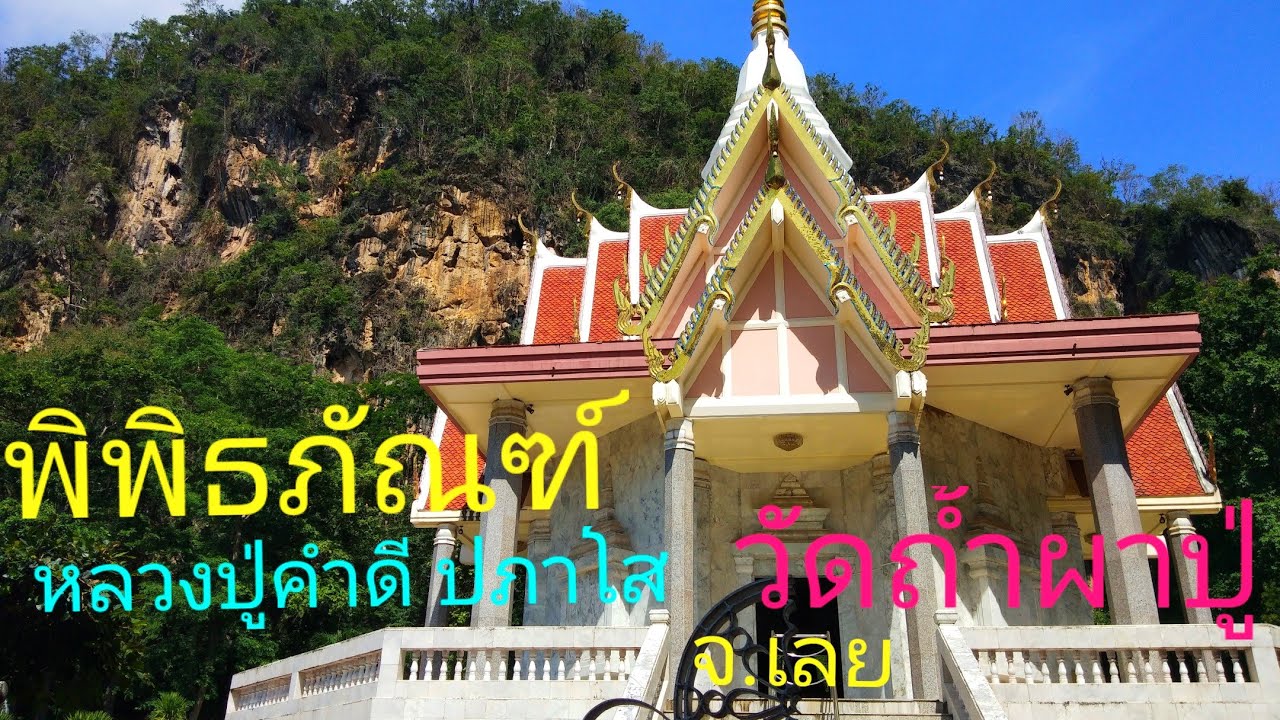
 Click to Access the Navigation Map GPS
Luang Pu Khamdee Pabhaso Museum Map
Recommend

 Historical Sites and Monuments(2)
 Landmarks and Memorials(3)
 Art, Craft Centres, Tradition(2)
Museums(4)
Art, Craft Centres, Tradition(2)
Museums(4)
 Art Gallery(1)
 Educational Places
 Educational Gardens, Farm(2)
 Places of Worship
 Temple(16)
 Other Sacred Sites(8)
 Research and Development
 Royal Project(3)
 Suburban Living
 Village, Community(3)
 Local Market(1)
 Nature and Wildlife
 National Parks and Marine Reserves(5)
 Mountain (Doi)(10)
 Dam, Reservoir, Lake(7)
 Waterfalls(21)
 Caves(3)
 River, Canal(5)
 Bays and Beaches(1)
 Other natural attractions(1)
 Entertainment and Agricultural
 Farms, Parks and Ecotourism(8)
 Waterpark(1)
 Outdoor and Adventure Activities(2)


