
lovethailand home >Northeastern Travel Attractions >Khon Kaen Travel Attractions >Muang Khon Kaen >Nai Muang > Khon Kaen University
TL;DR: Khon Kaen University, open Monday – Friday (University Administrative Offices, Excluding Public Holidays), hours 08:30 – 16:30 (Administrative Office Hours, Not the Visiting Hours of Every.

Khon Kaen University
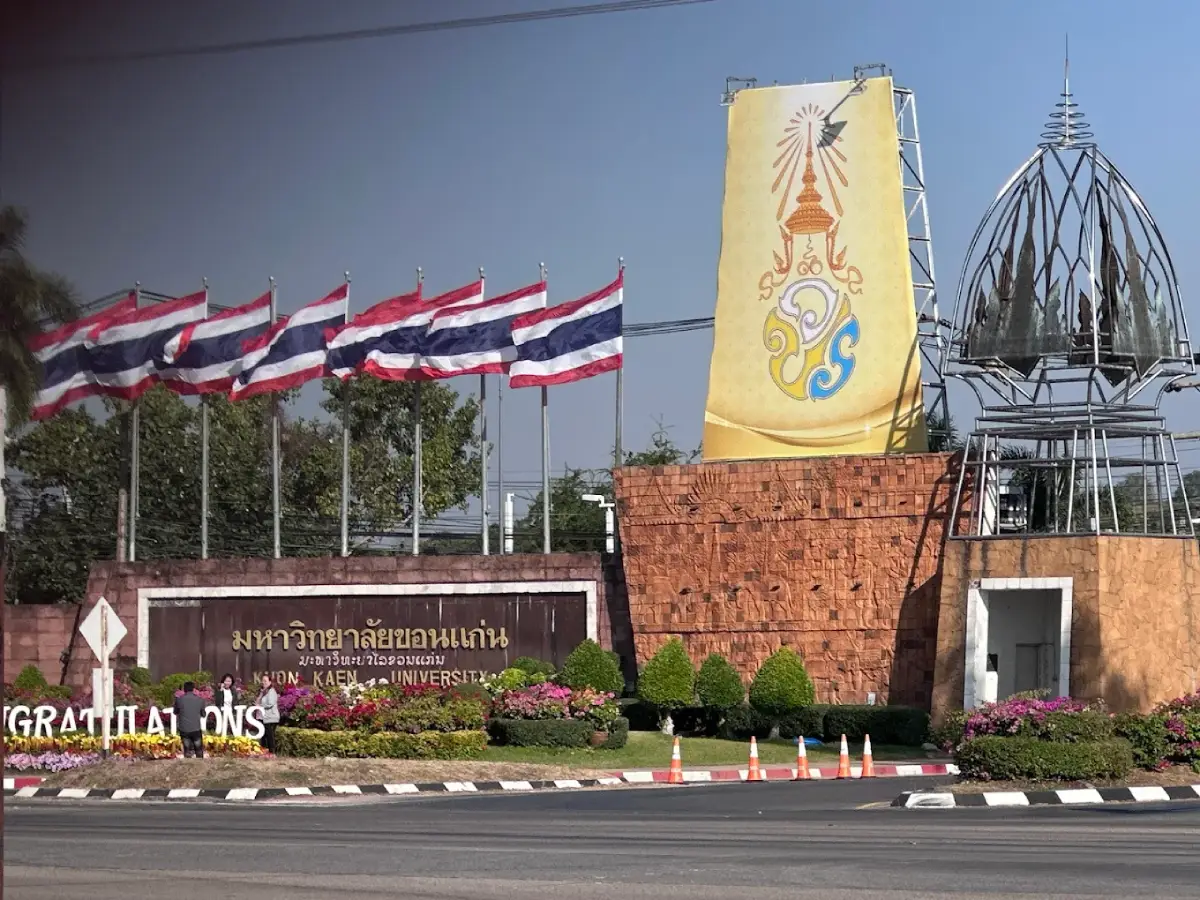
Open Days: Monday – Friday (University Administrative Offices, Excluding Public Holidays)
Opening Hours: 08:30 – 16:30 (Administrative Office Hours, Not the Visiting Hours of Every Facility)
Khon Kaen University (KKU) is an autonomous public university located at 123 Moo 16, Mittraphap Road, Nai Mueang Subdistrict, Mueang Khon Kaen District, Khon Kaen Province 40002, Thailand. It was the first university established in northeastern Thailand, created to expand access to higher education and develop knowledge that could support the region's economic and social progress. The university began operating academically in 1964, recognizes January 25, 1966, as its legal foundation date, and was formally inaugurated on December 20, 1967. Today, Khon Kaen University provides education in health sciences, science and technology, humanities, and social sciences through a wide range of faculties and colleges. It also operates an educational campus in Nong Khai Province. The university is particularly recognized for its medical services, research on liver fluke infection and cholangiocarcinoma, engineering, agricultural sciences, education, and regional development. Major facilities include Srinagarind Hospital, the Golden Jubilee Convention Hall, Bueng Si Than Lake, and university museums. Together, these institutions and attractions make Khon Kaen University an important center for higher education, healthcare, research, and educational tourism in northeastern Thailand.
Khon Kaen University is situated in an area traditionally known as Mo Din Daeng, a name associated with the reddish soil and landforms that characterized the original campus. The main university grounds cover approximately 5,500 rai and include academic buildings, hospitals, laboratories, student residences, sports facilities, cultural centers, museums, gardens, green spaces, and public service institutions. Because of its extensive grounds and wide range of services, the campus functions as a university city connecting the daily lives of students, staff, patients, entrepreneurs, and visitors.
The importance of Khon Kaen University extends far beyond the production of university graduates. Its development is closely connected with the history of northeastern Thailand. Before the university was established, opportunities for higher education were concentrated mainly in Bangkok and a small number of other major cities. Many students from the Northeast faced considerable financial and geographical barriers to university education. Establishing a regional university was therefore an important measure for developing human resources and improving educational opportunities.
The idea of establishing a university in northeastern Thailand emerged before the Second World War, but practical development began in earnest during the early 1960s. At that time, national policy placed increasing emphasis on regional economic development. Northeastern Thailand had a large population and extensive agricultural land, but many communities faced challenges related to water management, poverty, and access to public services. Higher education was regarded as an important mechanism for preparing skilled personnel and developing research that could address these issues systematically.
On January 22, 1962, the Northeastern Development Committee, chaired by Field Marshal Sarit Thanarat, approved the establishment of an institution of higher education specializing in engineering and agriculture in Khon Kaen Province. The proposed institution was intended to become an academic center for the development of northeastern Thailand. This decision was consistent with national economic development policies that sought to improve educational infrastructure and increase the number of people trained in science and technology.
During its initial development, the institution was known as the University of the Northeast. Some historical university documents also refer to the English name Khon Kaen Institute of Technology, abbreviated K.I.T. Campus construction and educational operations began in 1964. Engineering and agriculture were the principal academic priorities because they were directly relevant to regional development. Basic science and arts courses were also provided to support the academic preparation of students.
The university admitted 107 students during its first academic year. Its initial academic structure included the Faculty of Agriculture, the Faculty of Engineering, and the Faculty of Science and Arts. At first, the Faculty of Science and Arts primarily provided foundational courses rather than admitting students into a full range of independent degree programs. The small first student cohort reflected an institution still developing its academic systems and physical infrastructure, but it marked a decisive beginning for university-level education in the Northeast.
In August 1965, the Thai Cabinet approved the name Khon Kaen University. The Khon Kaen University Act B.E. 2508 was subsequently published in the Royal Gazette on January 25, 1966. The university therefore recognizes January 25 as its official foundation anniversary. Distinguishing the beginning of educational operations in 1964 from the legal foundation date in 1966 is important for understanding the different stages of the institution's establishment.
On December 20, 1967, His Majesty King Bhumibol Adulyadej and Her Majesty Queen Sirikit formally inaugurated Khon Kaen University. The royal inauguration was a major event in the institution's history and reflected the importance of extending educational opportunities to northeastern Thailand in order to improve the quality of life and future prospects of the region's population.
In the 1967 academic year, the university produced its first group of 59 undergraduate graduates. Their graduation represented an important achievement for the newly established university and marked the beginning of its contribution to the country's professional workforce. Graduates went on to work in government agencies, private enterprises, agriculture, and communities across Thailand.
The period from 1964 to 1973 was the university's foundational era. New academic units were established, including the Faculty of Education, Faculty of Nursing, and Faculty of Medicine. Khon Kaen University Demonstration School was also founded to support practical teacher education and provide educational services to the community. The expansion into health sciences and education demonstrated the university's growing role beyond its initial strengths in engineering and agriculture.
Between 1974 and 1983, Khon Kaen University continued expanding into the health sciences and other specialized disciplines. New units included the Faculty of Associated Medical Sciences, Faculty of Public Health, Faculty of Dentistry, Faculty of Pharmaceutical Sciences, Faculty of Humanities and Social Sciences, and the Graduate School. During this period, the development of Srinagarind Hospital provided a major teaching facility for medical students and strengthened healthcare services for people throughout northeastern Thailand.
Srinagarind Hospital holds particular importance in the university's development because it connects education, clinical care, and medical research. As a university hospital, it provides essential practical training for medical personnel and supports the treatment of patients with complex conditions from Khon Kaen and neighboring provinces. This role has contributed to improved access to specialized healthcare in the region.
The period from 1984 to 1993 was marked by further expansion in technology and professional education. The university established the Faculty of Technology, Faculty of Veterinary Medicine, Faculty of Architecture, and what was then the Faculty of Management Science. It also developed support units for computing, continuing education, and the Queen Sirikit Heart Center of the Northeast. These developments strengthened Khon Kaen University's role as a center for healthcare, technology, economic development, and professional training.
Khon Kaen University also contributed to the wider development of higher education in northeastern Thailand. During the expansion of the country's university system, it supported educational establishment projects that later became Ubon Ratchathani University and Suranaree University of Technology. This role illustrates the university's importance as a regional academic institution that helped establish additional centers of higher learning.
From 1994 to 2003, Khon Kaen University continued broadening its academic programs and community services. Major developments included the establishment of the Faculty of Fine and Applied Arts, the Nong Khai Campus, and the College of Graduate Study in Management. Administrative, registration, international cooperation, and specialized research facilities were also strengthened. The development of the Nong Khai Campus extended educational opportunities toward the Thai–Lao border and the Greater Mekong Subregion, where economic and cultural conditions differ from those of Khon Kaen Province.
From 2004 onward, Khon Kaen University increasingly emphasized strategic management, research excellence, and the development of knowledge relevant to regional problems. Research groups and specialized centers were supported, while administrative systems were improved to enhance educational quality. In 2009, the university was selected as one of Thailand's National Research Universities, marking an important stage in the development of its research capacity.
Important academic developments during this period included the establishment of the Faculty of Law in 2006, the College of Local Administration in 2007, and the International College in 2008, together with expanded educational activities at the Nong Khai Campus. These new units reflected growing demand for expertise in law, public administration, and international education, particularly in a region with expanding connections to neighboring countries.
On July 18, 2015, Khon Kaen University changed its institutional status from a government department to an autonomous university under state supervision, in accordance with the Khon Kaen University Act B.E. 2558. The change provided greater flexibility in university administration while retaining public oversight. It was particularly important for resource management, academic personnel development, curriculum planning, and collaboration with external organizations at a time when Thai higher education was undergoing demographic and technological changes.
Also in 2015, the university separated the Faculty of Economics from the Faculty of Management Science. The remaining management faculty became the Faculty of Business Administration and Accountancy. This restructuring provided clearer institutional identities for economics and business education, allowing each faculty to develop academic programs and professional expertise within its own field.
In 2026, Khon Kaen University reached its 60th anniversary when measured from the legal foundation date of January 25, 1966, and its 62nd year when measured from the beginning of teaching in 1964. Both dates are meaningful parts of the institution's history. The university continues to provide education, research, healthcare, academic services, and community development activities at regional, national, and international levels.
As of 2026, the President of Khon Kaen University is Associate Professor Dr. Charnchai Panthongviriyakul, a physician and academic administrator who was appointed for another term effective March 20, 2025. The university's administration emphasizes research excellence, innovation, educational development, and the creation of practical benefits for society through its commitment to social responsibility.
One of the university's most recognizable characteristics is its official color, reddish brown, commonly referred to in Thai as Si Din Daeng. The color is closely associated with the name Mo Din Daeng and the historical appearance of the campus land. Over time, it has become a symbol of belonging for students, alumni, and university staff. Mo Din Daeng therefore represents not only a geographical location but also the shared identity and memories of the university community.
The university emblem features Phra That Phanom, an important Buddhist monument in northeastern Thailand. The design process involved Phraya Anuman Rajadhon, also known as Yong Sathirakoses, who commissioned Phinit Suwannabun to prepare the initial design. The emblem was later refined to include symbolic elements representing auspiciousness and the virtues expected of students.
The emblem incorporates Phra That Phanom and decorative motifs associated with the cultural identity of northeastern Thailand. Its background is divided into three sections representing three essential student virtues: Vidya, meaning sound knowledge; Chariya, meaning good conduct; and Panya, meaning wisdom developed through learning and thoughtful reflection. The emblem therefore connects academic achievement with ethical responsibility and regional cultural heritage.
The symbolic tree of Khon Kaen University is the Kanlapaphruek tree, known for its attractive clusters of pale pink to white flowers. The tree contributes to the university's natural identity and is closely associated with its landscaped grounds and green environment.
The guiding principle of Khon Kaen University is Social Devotion, expressing the institution's commitment to serving communities and society. This principle emphasizes the importance of applying education and research to improve people's lives. The university therefore works to create practical benefits through healthcare, agricultural development, natural resource management, efforts to reduce inequality, and professional education.
Khon Kaen University's academic structure comprises 19 faculties, together with the College of Computing, College of Local Administration, International College, College of Graduate Study in Management, and Graduate School. These institutions collectively offer education in a wide range of disciplines, from agriculture and engineering to medicine, education, law, economics, digital technology, and management.
Health sciences are among the university's principal strengths. Important faculties include Medicine, Dentistry, Nursing, Pharmaceutical Sciences, Associated Medical Sciences, Public Health, and Veterinary Medicine. These academic units prepare professionals for healthcare and animal health services while offering graduate education and research opportunities in medical and health-related fields.
The Faculty of Medicine has a direct connection with Srinagarind Hospital, which serves as an important teaching hospital and healthcare center. The hospital supports clinical education and medical research on diseases that are especially significant in northeastern Thailand. Research on cholangiocarcinoma, or bile duct cancer, and the prevention of regional health problems are among the university's important areas of academic contribution.
The Queen Sirikit Heart Center of the Northeast is another major medical institution associated with Khon Kaen University. It contributes to the diagnosis and treatment of cardiovascular diseases and supports medical education and specialized training. The presence of such a facility strengthens the regional healthcare system and reduces barriers for patients who would otherwise need to travel to central Thailand for specialized treatment.
The Faculty of Associated Medical Sciences provides education connected with laboratory diagnostics and physical therapy. The Faculty of Nursing prepares professional nurses and promotes nursing research, while the Faculty of Pharmaceutical Sciences is concerned with medicines, pharmaceutical knowledge, and appropriate drug use. The Faculty of Dentistry develops dental professionals and provides oral healthcare services. These disciplines demonstrate the importance of cooperation among different healthcare professions.
The Faculty of Public Health focuses on health promotion, disease prevention, environmental health, and population wellbeing. The Faculty of Veterinary Medicine addresses animal healthcare, diseases shared by animals and humans, and safe animal production systems. These fields relate closely to the One Health concept, which recognizes the links between human health, animal health, and the environment.
The university's science and technology disciplines include the Faculty of Agriculture, Faculty of Science, Faculty of Engineering, Faculty of Technology, Faculty of Architecture, and College of Computing. Together, these academic units contribute to agriculture, manufacturing, industrial systems, design, digital technology, and scientific problem-solving. Their educational activities are particularly relevant to the development of skilled personnel and an innovation-driven economy.
The Faculty of Agriculture was one of the university's original faculties. Agricultural education is especially important in northeastern Thailand, where farming and rural communities remain central to the regional economy. Research on crop production, animal systems, fisheries, soil and water resources, and farm management supports more efficient agricultural practices adapted to local environmental conditions.
The Faculty of Engineering was another founding faculty. It provides education in important engineering disciplines such as civil, mechanical, electrical, industrial, computer, and chemical engineering. Engineering education involves applying scientific and mathematical principles to the design of technologies, infrastructure, and industrial systems, while preparing students to solve practical problems faced by businesses and society.
The Faculty of Science and Faculty of Technology contribute essential knowledge in chemistry, biology, physics, mathematics, microbiology, biotechnology, food technology, and other applied scientific fields. Their educational and research activities support both fundamental scientific inquiry and the development of innovations, particularly those that can increase the value of natural resources and agricultural products.
The College of Computing prepares students in computer science, information technology, and geo-informatics, together with related areas of data and digital technology. These fields develop practical abilities in programming, data analysis, information systems, and the use of technology to address complex problems in business, government, and society.
The university's humanities and social sciences cover the Faculty of Humanities and Social Sciences, Faculty of Education, Faculty of Fine and Applied Arts, Faculty of Law, Faculty of Economics, Faculty of Business Administration and Accountancy, and colleges specializing in local government, management, and international education. These disciplines contribute to social development, economic analysis, cultural preservation, educational improvement, and organizational management.
The Faculty of Education plays an important role in preparing teachers and educational professionals and developing research on learning innovation. Khon Kaen University Demonstration School also provides educational services and a practical setting for teacher development. These institutions connect knowledge of curriculum design, teaching methods, and educational research with the learning experiences of children and young people.
The Faculty of Humanities and Social Sciences provides education in languages, culture, information studies, social development, and public administration. The Faculty of Fine and Applied Arts develops talent in visual arts, music, and creative design. Both faculties contribute to the preservation and interpretation of the languages, traditions, and artistic heritage of northeastern Thailand while developing skills for contemporary creative industries.
The Faculty of Business Administration and Accountancy offers programs in accounting, finance and financial technology, management, logistics, marketing, and hospitality-related business. The Faculty of Economics focuses on economic systems and policy analysis. The Faculty of Law and College of Local Administration contribute expertise in legal systems, public affairs, and local government development.
The International College provides opportunities to study in English-language and international programs associated with international business, marketing, and innovation management. International education supports the development of communication skills and creates learning environments connecting students with ideas and cultures from different countries.
The College of Graduate Study in Management supports the development of managers and senior professionals through advanced management education. The Graduate School coordinates and supports master's degrees, doctoral programs, and other postgraduate qualifications offered across the university. Graduate education promotes specialized expertise, research skills, and the generation of knowledge relevant to professional and societal needs.
Khon Kaen University also operates the Nong Khai Campus at 112 Moo 7, Ban Nong Doen, Nong Kom Ko Subdistrict, Mueang Nong Khai District, Nong Khai Province 43000. The Faculty of Interdisciplinary Studies is a major academic unit at this campus. Nong Khai's location on the Thai–Lao border gives the campus a distinctive context connected with cross-border trade, tourism, and the social and cultural relationships of the Mekong region.
Education at the Faculty of Interdisciplinary Studies draws on different academic disciplines, including business administration, applied sciences, law, and regional development. The Nong Khai Campus is also associated with the Nong Khai Aquarium, an educational attraction featuring freshwater aquatic life and the ecosystems of the Mekong River. The aquarium provides learning opportunities for residents, students, and visitors interested in natural resources and conservation.
One of Khon Kaen University's most distinctive research contributions concerns liver fluke infection and cholangiocarcinoma, major public health challenges in northeastern Thailand. Research in this field addresses risk factors, prevention, screening, diagnostic technology, medical treatment, and public awareness. Educational programs also help communities understand dietary and behavioral factors that contribute to health risks.
Research on liver fluke infection and cholangiocarcinoma demonstrates the importance of interdisciplinary cooperation. Addressing a regional health problem requires not only medical expertise but also public health, behavioral science, education, communication, and community engagement. Academic research therefore contributes both to scientific discovery and to the development of long-term disease prevention strategies.
The university also conducts research connected with chronic kidney disease prevention, mathematics education, poverty alleviation, community development based on the Sufficiency Economy Philosophy, and water resource management in northeastern Thailand. These activities illustrate how expertise from different faculties can be combined to improve quality of life and support sustainable development.
Khon Kaen University plays an important role in the region's innovation ecosystem through institutions and activities supporting technology development, entrepreneurship, and collaboration between academia and industry. The Northeastern Science Park and intellectual property support services contribute to the process of transforming academic research into useful products, services, and business opportunities. Innovation at the university therefore extends beyond laboratory discoveries to their application in society and the economy.
Cultural preservation is another significant part of the university's mission. Khon Kaen University promotes the heritage of northeastern Thailand through its Art and Culture Center, student activities, exhibitions, and community projects. Important subjects include traditional music, performing arts, Buddhist customs, handicrafts, and knowledge associated with Isan ways of life. These activities connect academic learning with the collective memory and cultural identity of the region.
One of the university's most distinctive cultural events is the Sithan KKU Festival, held around the Loy Krathong season beside Bueng Si Than Lake. Often presented through the cultural theme of Bun Somma Bucha Nak, the festival combines beliefs associated with the Naga, the cultural heritage of the Mekong region, contemporary art, ceremonial processions, musical performances, and creative student activities. It attracts university students and members of the wider public.
The meaning of the Sithan KKU Festival is connected with respect for water and the cultural beliefs of northeastern Thailand. The event is therefore more than a public celebration. It provides opportunities to learn about local traditions, including the Isan concepts of Heet Sip Song and Khong Sip Si, while demonstrating how cultural heritage can be reinterpreted through modern creative activities. The university's academic calendar for 2026 identifies a festival period in November, with detailed activities subject to official event announcements.
Khon Kaen University's foundation anniversary is observed on January 25 each year. This occasion commemorates the institution's history and the contributions of people involved in its establishment and development. Related activities include institutional recognition, appreciation of university achievements, and events reinforcing the connection among students, staff, and alumni.
Teacher appreciation ceremonies and welcoming activities for new students are also important aspects of Thai university culture. They encourage respect for teachers, gratitude, and relationships between new students and the wider academic community. Blessing and Bai Sri Su Khwan traditions associated with northeastern Thai culture also express the warmth and shared identity of the university community.
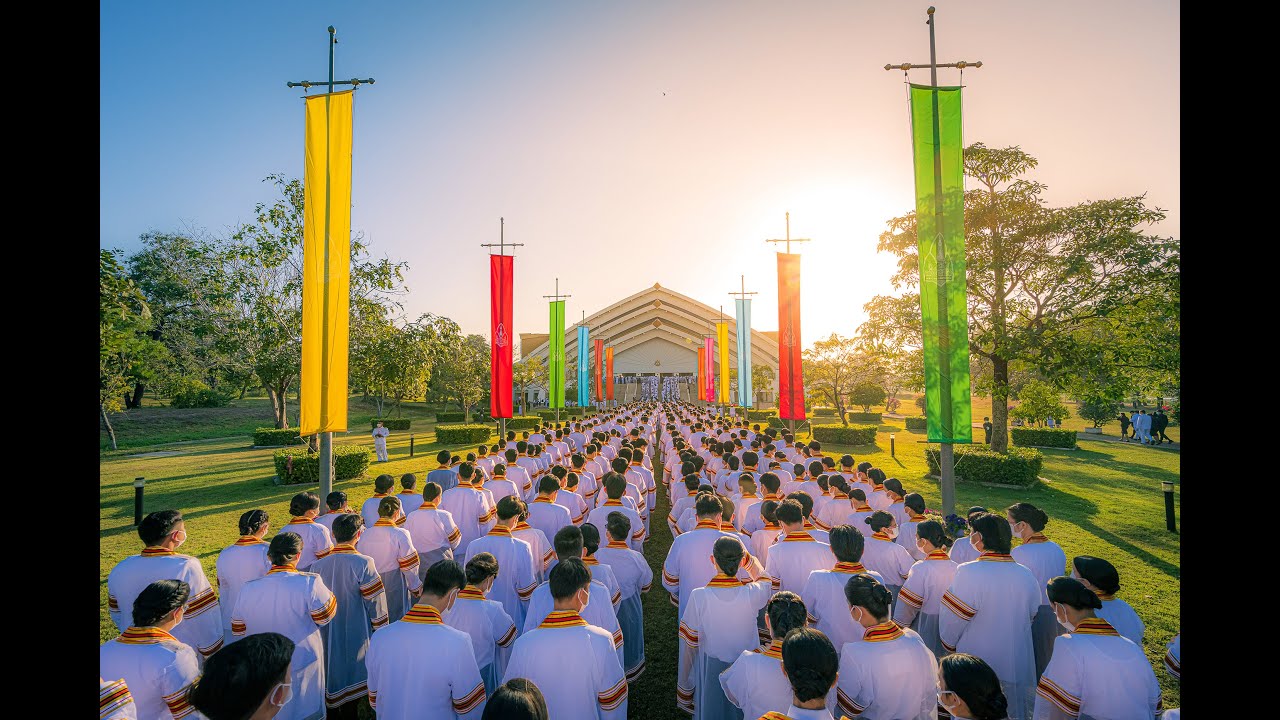
University commencement ceremonies are another major institutional occasion. The Golden Jubilee Convention Hall provides a venue for graduation ceremonies and other large university events. The building is recognizable for its sweeping golden roof and its position among landscaped green areas and water features. It is an important part of university life and also supports academic conferences, exhibitions, and public events in Khon Kaen.
Bueng Si Than Lake is a central campus landmark connecting university life with the wider community. Its surrounding areas provide spaces for walking, exercise, relaxation, and cultural activities. The lake therefore serves as both an important landscape feature and a public gathering area where students, staff, and visitors can spend time outdoors.
The Khon Kaen University Art and Culture Museum provides opportunities to learn about art, cultural heritage, and creative expression. Exhibitions and activities held at the venue connect local traditions with contemporary artistic practice. The Science Museum and Natural History Museum offer further educational experiences, helping visitors explore scientific knowledge, biodiversity, and the natural world through exhibitions and learning activities.
Mo Din Daeng Shrine is another significant place within the university environment. It holds cultural and spiritual meaning for members of the university community and visitors. Although Khon Kaen University is a modern academic institution, the shrine demonstrates the continuing relationship between campus life, local beliefs, and regional traditions.
Khon Kaen University Library serves as a central resource for students, academic staff, researchers, and other users. Its services include learning resources, digital information systems, and facilities supporting research and lifelong learning. Collaborative study spaces and technology-based services also support modern educational methods that depend increasingly on the effective use of information.
Transportation within the university is supported by KKU Smart Transit, a campus shuttle system connecting academic buildings, student residences, and service areas. The service plays an important role in campus mobility and reducing dependence on private vehicles. Because the university grounds are extensive, visitors attending meetings at multiple locations should plan their routes and parking arrangements in advance.
The university also operates BAYASITA@KKU, a campus-based hotel and hospitality facility. The accommodation is useful for visitors attending conferences, educational visits, official meetings, or appointments at university facilities, including its hospitals. It also supports the university's broader service and hospitality activities.
For those interested in educational tourism, Khon Kaen University offers several destinations that can be combined in a campus visit. These include Bueng Si Than Lake, the Art and Culture Museum, the Science Museum, the Golden Jubilee Convention Hall, and selected public activity spaces. The opening hours of museums should be checked individually rather than assumed to be the same as university administrative office hours. Access to laboratories, hospitals, and specialized research facilities should be arranged in advance with the responsible departments.
As a university with a large student and staff population, Khon Kaen University makes substantial contributions to the provincial economy. Its activities support employment, accommodation, restaurants, transportation, meetings, conferences, healthcare, and local business services. The institution therefore plays an important role in the ongoing development of Khon Kaen as an educational, medical, commercial, and innovation center of northeastern Thailand.
Prospective students should consult Khon Kaen University's official admissions system for current information. Undergraduate admissions include the Thai University Central Admission System, or TCAS, together with other university-designated channels. Each faculty and degree program may have different application rounds, selection criteria, examination requirements, and additional qualifications. Applicants interested in regulated professions should also review the relevant professional standards, including those for medicine, nursing, dentistry, pharmacy, and teaching.
Choosing an academic program should involve considering personal interests, academic strengths, career objectives, and opportunities for continuing professional development. Khon Kaen University offers a wide range of educational pathways from undergraduate to graduate study, including Thai-language, English-language, and selected international programs. Postgraduate education is particularly relevant to applicants seeking research experience, advanced professional expertise, or leadership positions.
From the beginning of academic operations in 1964 to the year 2026, Khon Kaen University has developed from a regional institution focused initially on agriculture and engineering into a comprehensive research university with responsibilities spanning healthcare, science, technology, education, culture, and social development. Its importance lies both in its historical contribution to expanding higher education and in its continuing ability to produce knowledge that improves the quality of life of people in northeastern Thailand and beyond.
Getting There The main campus of Khon Kaen University is located on Mittraphap Road in Nai Mueang Subdistrict, Mueang Khon Kaen District. Visitors can approach the university from the city or the main regional highway and select an entrance suitable for their destination. Khon Kaen can be reached from other provinces by private car, intercity bus, train, or air travel, followed by local transportation to the campus. Because the university grounds are extensive, specifying the exact faculty or building in a navigation application is recommended. Visitors traveling to the Nong Khai Campus should use the separate address at 112 Moo 7, Nong Kom Ko Subdistrict, Mueang Nong Khai District, Nong Khai Province. General university administrative offices operate Monday to Friday, 08:30–16:30, excluding public holidays.
| University Name | Khon Kaen University |
| Thai Name | มหาวิทยาลัยขอนแก่น |
| Abbreviation | KKU |
| Institution Type | Autonomous Public University Under State Supervision |
| Main Campus Address | 123 Moo 16, Mittraphap Road, Nai Mueang Subdistrict, Mueang Khon Kaen District, Khon Kaen Province 40002, Thailand |
| Nong Khai Campus Address | 112 Moo 7, Ban Nong Doen, Nong Kom Ko Subdistrict, Mueang Nong Khai District, Nong Khai Province 43000, Thailand |
| Main Campus Area | Approximately 5,500 Rai |
| Campus Environment | The Mo Din Daeng Area Along Mittraphap Road, With Extensive Academic, Medical, Residential, Cultural, Recreational, and Green Spaces |
| Initial Establishment Resolution | January 22, 1962 |
| Academic Operations Began | 1964 |
| Original Institutional Name | University of the Northeast |
| Legal Foundation Date | January 25, 1966 |
| Official Royal Inauguration | December 20, 1967 |
| Autonomous University Status | July 18, 2015 |
| Institutional Age in 2026 | 60 Years Since the Legal Foundation Date; 62 Years Since Academic Operations Began |
| Key Figure in Establishment | Field Marshal Sarit Thanarat and the Northeastern Development Committee |
| Key Figures in Emblem Design | Phraya Anuman Rajadhon (Yong Sathirakoses) and Phinit Suwannabun |
| University President in 2026 | Associate Professor Dr. Charnchai Panthongviriyakul |
| University Color | Reddish Brown (Si Din Daeng) |
| University Tree | Kanlapaphruek Tree |
| University Emblem | Phra That Phanom, With Symbolism Representing Knowledge, Good Conduct, and Wisdom |
| Guiding Principle | Social Devotion |
| Academic Faculties | 1. Faculty of Agriculture 2. Faculty of Dentistry 3. Faculty of Associated Medical Sciences 4. Faculty of Technology 5. Faculty of Law 6. Faculty of Business Administration and Accountancy 7. Faculty of Nursing 8. Faculty of Medicine 9. Faculty of Pharmaceutical Sciences 10. Faculty of Humanities and Social Sciences 11. Faculty of Science 12. Faculty of Engineering 13. Faculty of Fine and Applied Arts 14. Faculty of Education 15. Faculty of Economics 16. Faculty of Architecture 17. Faculty of Interdisciplinary Studies 18. Faculty of Veterinary Medicine 19. Faculty of Public Health |
| Colleges And Graduate School | 1. College of Computing 2. College of Local Administration 3. International College 4. College of Graduate Study in Management 5. Graduate School |
| Campus Locations | 1. Main Campus, Khon Kaen Province 2. Nong Khai Campus, Nong Khai Province |
| Academic Strengths | Medicine, Health Sciences, Cholangiocarcinoma Research, Agriculture, Engineering, Digital Technology, Education, and Community Development |
| Important Campus Facilities | 1. Srinagarind Hospital 2. Queen Sirikit Heart Center of the Northeast 3. Golden Jubilee Convention Hall 4. Bueng Si Than Lake 5. Khon Kaen University Art and Culture Museum 6. Science Museum 7. Mo Din Daeng Shrine 8. Khon Kaen University Library 9. Khon Kaen University Demonstration School |
| Traditions And University Events | Foundation Anniversary on January 25, Sithan KKU Festival, Bun Somma Bucha Nak, Wai Khru Ceremony, New Student Blessing Activities, Commencement Ceremonies, and Isan Cultural Events |
| Administrative Office Days | Monday – Friday, Excluding Public Holidays |
| Administrative Office Hours | 08:30 – 16:30 |
| Educational Visits | Advance Coordination Is Recommended for Faculty Visits, Museums, Laboratories, and Specialized Facilities |
| Facilities And Services | University Library, Student Dormitories, Hospitals, KKU Smart Transit, Convention Facilities, Sports Areas, Green Spaces, and BAYASITA@KKU Accommodation |
| Getting There | Main Campus via Mittraphap Road, Mueang Khon Kaen District; Nong Khai Campus in Nong Kom Ko Subdistrict, Mueang Nong Khai District |
| Attractions And Educational Sites in the University Area And Khon Kaen City | 1. Bueng Si Than Lake, On Campus 2. Khon Kaen University Art and Culture Museum, On Campus 3. Science Museum, Khon Kaen University 4. Golden Jubilee Convention Hall, On Campus 5. Bueng Kaen Nakhon Public Park, Khon Kaen City |
| Restaurants Near Khon Kaen University | 1. See Na Nuan Cafe, Tel. 043-001-200 2. Haru Hana Japanese Cafe, Tel. 091-052-7310 3. Organt KKU Branch 4. The Nua Mookata, KKU Branch, Tel. 094-036-8263 5. Fengfu Mookata, Tel. 096-153-7998 |
| Accommodation On Campus And in Mueang Khon Kaen District | 1. BAYASITA@KKU, On Campus, Tel. 095-442-5509 2. XOTEL, Mueang Khon Kaen, Tel. 043-002-249 3. Baan Phor Phan Hotel, Tel. 043-333-708 4. Ad Lib Khon Kaen, Tel. 043-100-555 5. KOSA HOTEL Khon Kaen, Tel. 043-320-320 |
| University Telephone | 043-009-700 |
| Nong Khai Campus Contact | 042-415-600 |
| Official Website | www.kku.ac.th |
| Institutional Status in 2026 | Active Autonomous Public University Providing Higher Education, Research, Innovation, Healthcare, and Academic Services |
Academic Programs And Fields Of Study at Khon Kaen University, Academic Year 2026
| Faculty / College / Campus | Published Degree Programs And Academic Fields |
| Faculty of Agriculture | Bachelor's Degree Level 1. Agricultural Sciences, Including Crop Science, Animal Science, and Agricultural Production 2. Fisheries and Aquatic Resource Studies 3. Master's and Doctoral Studies in Agriculture and Agricultural Sciences |
| Faculty of Dentistry | Undergraduate Professional Degree 1. Doctor of Dental Surgery 2. Oral Sciences and Specialized Dentistry |
| Faculty of Associated Medical Sciences | Bachelor's Degrees 1. Bachelor of Medical Technology 2. Bachelor of Science in Physical Therapy 3. Biomedical Sciences and Related Fields |
| Faculty of Technology | Bachelor's Degree Fields 1. Food Technology 2. Biotechnology 3. Geotechnology 4. Research Programs in Technology and Applied Sciences |
| Faculty of Law | Bachelor's Degree 1. Bachelor of Laws |
| Faculty of Business Administration and Accountancy | Bachelor's Degrees 1. Bachelor of Accountancy 2. Bachelor of Accountancy (International Program) 3. Bachelor of Business Administration in Finance and Financial Technology 4. Bachelor of Business Administration in Management, Entrepreneurship and Logistics 5. Bachelor of Business Administration in Digital Entrepreneurship and Marketing Technology (Digital Entrepreneurship and Marketing Technology Majors) 6. Bachelor of Business Administration in Tourism Innovation Management 7. Bachelor of Business Administration in Hospitality and Event Management 8. Master of Business Administration 9. Master of Accountancy 10. Doctor of Philosophy in Business-Related Studies |
| Faculty of Nursing | Bachelor's Degree 1. Bachelor of Nursing Science 2. Master's Programs in Nursing 3. Doctoral Programs in Nursing Science |
| Faculty of Medicine | Professional Degree 1. Doctor of Medicine 2. Medical Sciences and Health Research Programs 3. Specialist Medical Training and Higher Graduate Diploma Programs in Clinical Medical Sciences |
| Faculty of Pharmaceutical Sciences | Professional Degree 1. Doctor of Pharmacy 2. Pharmaceutical Sciences, Pharmaceutical Chemistry, and Drug Development Research |
| Faculty of Humanities and Social Sciences | Bachelor's Degrees 1. Bachelor of Arts in English 2. Bachelor of Arts in Thai 3. Bachelor of Arts in Eastern Languages (Chinese, Japanese, and Korean Majors) 4. Bachelor of Arts in Western Languages (French, German, and Spanish Majors) 5. Bachelor of Arts in Southeast Asian Studies 6. Bachelor of Arts in Sociology and Anthropology 7. Bachelor of Arts in Social Development 8. Bachelor of Information Science 9. Bachelor of Public Administration 10. Language Studies, Information Studies, Mekong Studies, Development Studies, and Public Administration |
| Faculty of Science | Bachelor's Degree Fields 1. Chemistry 2. Biology 3. Physics 4. Mathematics and Statistics 5. Microbiology 6. Master's and Doctoral Research in Related Scientific Disciplines |
| Faculty of Engineering | Bachelor's Degrees 1. Bachelor of Engineering in Civil Engineering 2. Bachelor of Engineering in Mechanical Engineering 3. Bachelor of Engineering in Electrical Engineering 4. Bachelor of Engineering in Industrial Engineering 5. Bachelor of Engineering in Computer Engineering 6. Bachelor of Engineering in Chemical Engineering 7. Master's and Doctoral Programs in Engineering |
| Faculty of Fine and Applied Arts | Bachelor's Degree Fields 1. Visual Arts 2. Music 3. Design and Creative Arts 4. Research Programs in Fine Arts and Cultural Studies |
| Faculty of Education | Bachelor of Education Teaching Majors 1. Mathematics Education 2. Science Education 3. Computer Education 4. Social Studies Education 5. Thai Language Teaching 6. Physical Education 7. Curriculum and Instruction, Educational Administration, and Learning Innovation |
| Faculty of Economics | Bachelor's Degree 1. Bachelor of Economics 2. Master's Programs in Economics |
| Faculty of Architecture | Undergraduate Fields 1. Architecture 2. Design 3. Architecture, Urban Planning, and Design |
| Faculty of Interdisciplinary Studies, Nong Khai Campus | Undergraduate Fields 1. Business Administration and Management 2. Applied Sciences 3. Law and Social Sciences 4. Regional Development, Educational Quality Management, Entrepreneurship, and Innovation |
| Faculty of Veterinary Medicine | Professional Degree 1. Doctor of Veterinary Medicine 2. Veterinary Sciences and Animal Health Research |
| Faculty of Public Health | Bachelor's Degree 1. Bachelor of Public Health 2. Master of Public Health 3. Doctoral Studies in Public Health |
| College of Computing | Bachelor's Degrees 1. Bachelor of Science in Computer Science 2. Bachelor of Science in Information Technology 3. Bachelor of Science in Geo-Informatics 4. Research Programs in Computing and Digital Technology |
| College of Local Administration | Bachelor's Degree 1. Bachelor of Public Administration (Governance and Public Affairs, Financial and Fiscal Management, and Urban Management and Technology Majors) 2. Public Affairs Administration |
| International College | International Undergraduate Programs 1. Bachelor of Business Administration (International Marketing Major) 2. Bachelor of Management (Bioinnovation Management Major) 3. International Management and Global Business Fields |
| College of Graduate Study in Management | Master's Degree 1. Master of Business Administration, Designed for Professional and Management Development |
| Graduate School | Postgraduate Administration And Support 1. Coordination of Master's Degree Programs Offered Across Faculties and Colleges 2. Coordination of Doctoral Degree Programs Offered Across Faculties and Colleges 3. Support for Graduate Diploma and Higher Graduate Diploma Programs Offered by the University |
Frequently Asked Questions (FAQ)
Q: Where is Khon Kaen University located?
A: The main campus is located at 123 Moo 16, Mittraphap Road, Nai Mueang Subdistrict, Mueang Khon Kaen District, Khon Kaen Province 40002, Thailand. The university also operates a campus in Mueang Nong Khai District, Nong Khai Province.
Q: When was Khon Kaen University established?
A: Academic operations began in 1964. The university recognizes January 25, 1966, as its legal foundation date, and the official royal inauguration took place on December 20, 1967.
Q: What are the opening days and hours of Khon Kaen University?
A: General administrative office hours are Monday to Friday, 08:30–16:30, excluding public holidays. Museums, hospitals, and other facilities have their own operating schedules.
Q: How many faculties and colleges does Khon Kaen University have?
A: Khon Kaen University has 19 faculties, together with the College of Computing, College of Local Administration, International College, College of Graduate Study in Management, and Graduate School. These institutions cover health sciences, science and technology, humanities, and social sciences.
Q: What is Khon Kaen University best known for?
A: The university is especially recognized for medicine and health sciences, research on liver fluke infection and cholangiocarcinoma, agricultural development, engineering, digital technology, teacher education, and regional development.
Q: What are the university's official color, tree, and emblem?
A: The university color is reddish brown, the symbolic tree is the Kanlapaphruek tree, and the university emblem features Phra That Phanom.
Q: Can members of the public visit attractions inside Khon Kaen University?
A: Selected public areas and educational attractions, including Bueng Si Than Lake and university museums, can be visited according to each facility's regulations. Access to laboratories, research centers, and specialized medical areas should be arranged with the responsible departments in advance.
Q: How can visitors contact Khon Kaen University?
A: The university can be contacted at 043-009-700 or through its official website at www.kku.ac.th. For the Nong Khai Campus, the Faculty of Interdisciplinary Studies can be contacted at 042-415-600.
 Category: ●University
 Group: ●Public university
Last Update : 7 DayAgo
 Last Update : 7 DayAgo
 Click to Access the Navigation Map GPS
Khon Kaen University Map
Recommend

 Art, Culture and Heritage
 Historical Sites and Monuments(7)
 Landmarks and Memorials(3)
 Art, Craft Centres, Tradition(2)
 Museums(4)
 Educational Places
 Museum for Study(2)
Public university(2)
 Autonomous Universities(2)
 Rajamangala University of Technology(1)
 Private University(2)
 Places of Worship
 Temple(27)
 Other Sacred Sites(5)
 Suburban Living
 Village, Community(3)
 Local Market(1)
 Nature and Wildlife
 National Parks and Marine Reserves(5)
 Mountain (Doi)(1)
 Dam, Reservoir, Lake(4)
 Waterfalls(8)
 Caves(9)
 River, Canal(10)
 Bays and Beaches(3)
 Islands(1)
 Other natural attractions(5)
 Entertainment and Agricultural
 Zoos and Aquariums(2)
 Animal camps and shows(2)
 Farms, Parks and Ecotourism(7)
 Waterpark(3)
 Travel Articles, Recipes
 Travel Review, Food Review(1)


