
lovethailand home >Northeastern Travel Attractions >Chaiyaphum Travel Attractions >Muang Chaiyaphum >Na Fai > Chaiyaphum Rajabhat University
TL;DR: Chaiyaphum Rajabhat University, Chaiyaphum attractions : University, Rajabhat University.

Chaiyaphum Rajabhat University
Open Days: Monday – Friday (University Offices, Excluding Public Holidays)
Opening Hours: 08:30 – 16:30 (Administrative Office Hours)
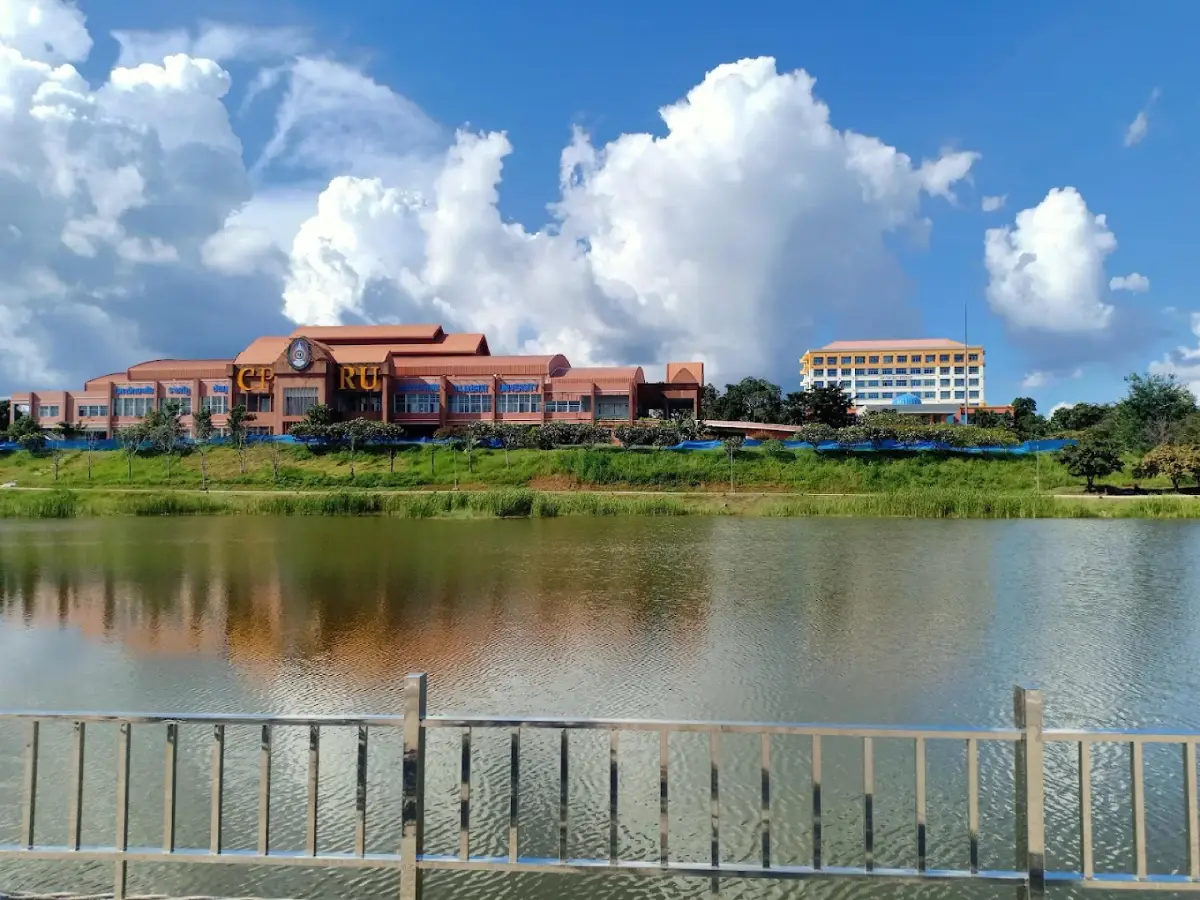
Chaiyaphum Rajabhat University (CPRU) is a public university in Thailand's Rajabhat university system. It is located at 167 Moo 2, Chaiyaphum–Tat Ton Road, Na Fai Subdistrict, Mueang Chaiyaphum District, Chaiyaphum Province 36000. The university is distinguished by its commitment to regional development, teacher education, nursing, public health, science, technology, engineering, liberal arts, and other disciplines that contribute to local economic and social progress. Its origins date to 1994, when the Chaiyaphum Rajabhat Institute Establishment Project was initiated. It was formally established as Chaiyaphum Rajabhat Institute on July 12, 2001, before becoming Chaiyaphum Rajabhat University in 2004. In 2026, the institution marked its 25th anniversary, measured from the establishment of the Rajabhat institute. Today, the university continues to serve Chaiyaphum Province and northeastern Thailand through higher education, research, academic services, and the preservation of local arts and culture.
Chaiyaphum Rajabhat University has a setting that distinguishes it from many other higher education institutions in Thailand. Its campus occupies an area around Khao Sa Hong in Na Fai Subdistrict, where rolling terrain, forested surroundings, natural slopes, and green open spaces form part of the university landscape. The physical environment reflects the wider geography of Chaiyaphum Province, which includes foothills, mountain ranges, forests, and agricultural lowlands. Academic buildings and campus facilities are distributed across land of varying elevations, creating a learning environment closely connected to the surrounding natural landscape.
The university lies along the road leading toward Tat Ton National Park, one of Chaiyaphum's best-known natural attractions. This relationship between the campus and its environmental setting provides a valuable context for studying ecology, community development, natural resource management, and the geography of northeastern Thailand. The university also contributes to the educational, economic, and social life of nearby communities.
The establishment of Chaiyaphum Rajabhat University reflects the longstanding efforts of local communities and government agencies to develop a higher education institution within the province. Before the university was established, many young people from Chaiyaphum had to travel to other provinces, particularly Nakhon Ratchasima and Khon Kaen, to pursue university-level education. Establishing a local institution was therefore an important step toward expanding educational opportunities, reducing geographical barriers, and supporting the development of the province's workforce.
The project to establish Chaiyaphum Rajabhat Institute began in 1994. Its central objective was to create a higher education institution capable of responding to the educational needs of Chaiyaphum residents and those living in surrounding provinces. From the beginning, the project depended on cooperation among government organizations, established educational institutions, local communities, and individuals who recognized the long-term importance of higher education.
The land selected for the university was originally public land in the Khao Sa Hong area. Communities in Na Fai and Ban Huai Chan played important roles in supporting land allocation and development. The university's foundation was therefore more than a government construction initiative. It also represented a shared commitment by local residents to creating opportunities for future generations to study and develop professional skills without leaving their home province.
The original university project covered approximately 1,439 rai of land. Local residents subsequently contributed approximately 42 additional rai, bringing the historical campus area to more than 1,482 rai. The extensive grounds created opportunities for long-term development, including academic buildings, administrative facilities, student activity spaces, and environmental improvements.
In 1997, the establishment project received government funding of 15 million baht to begin developing essential infrastructure. During its initial period, the project operated from temporary offices at Chaiyaphum College of Physical Education. On August 12, 1998, operations were relocated to the university's own site, marking an important step in the institution's physical development.
Constructing a university on elevated terrain presented challenges relating to road access, land preparation, infrastructure, and academic buildings. Several local organizations and institutions helped support the project, including the Chaiyaphum Phakdi Chumphon School Alumni Association, the Phu Khiao Education Foundation, and Mobile Development Unit 55, which contributed to road infrastructure development.
Nakhon Ratchasima Rajabhat Institute also played an important role as a supporting institution during the early stages of development. It assisted the emerging institution with academic and organizational matters. This relationship provided valuable experience and resources for establishing a functioning higher education system in Chaiyaphum.
In 1999, the project received an additional 10 million baht for academic building development through Nakhon Ratchasima Rajabhat Institute. Further infrastructure investment followed. In 2001, a budget of 72 million baht was allocated for the construction of a six-storey academic building, forming part of the essential facilities required to expand university-level teaching.
On July 12, 2001, Chaiyaphum Rajabhat Institute was formally established by Royal Decree. The university continues to recognize July 12 as its institutional foundation anniversary. This event marked the transition from an establishment project into an officially recognized higher education institution with a defined legal status.
Associate Professor Dr. Siri Charoenwai served as the institution's first rector from 2002 to 2004. This early period was important for developing academic administration, educational programs, institutional staffing, and the foundations necessary for the university's future growth.
On June 10, 2004, His Majesty King Bhumibol Adulyadej signed the Rajabhat University Act B.E. 2547 (2004). The Act was published in the Royal Gazette on June 14, 2004. As a result of the new legislation, Chaiyaphum Rajabhat Institute was elevated to university status and became Chaiyaphum Rajabhat University, operating as a public higher education institution within Thailand's Rajabhat university system.
The transition from a Rajabhat institute to a Rajabhat university was significant for educational development in Chaiyaphum Province. It strengthened the institution's capacity to provide degree-level education, conduct research, serve communities, and preserve cultural heritage. It also created a stronger framework for developing academic programs that respond to changing workforce requirements and local development priorities.
Following its elevation to university status, Chaiyaphum Rajabhat University continued to expand its academic structure and educational activities. The Faculty of Arts and Science became an important institutional unit, while educational programs developed across teacher education, health sciences, technology, engineering, management, and social sciences. These disciplines broadened opportunities for students and contributed to the development of the province.
An important organizational development occurred in 2023, when the Faculty of Education and Human Development was established as an official academic division under the relevant ministerial regulation. Further administrative restructuring followed in 2024. The university's principal organizational units include the Office of the President, the Faculty of Education and Human Development, the Faculty of Arts and Science, the Office of Academic Promotion and Lifelong Learning, and the Faculty of Nursing as an internal academic unit.
In 2026, Chaiyaphum Rajabhat University celebrated 25 years since the establishment of Chaiyaphum Rajabhat Institute in 2001. The anniversary celebration, held on July 10, 2026, adopted the theme Smart CPRU: 25 Years of Local Synergy. The event emphasized the university's commitment to combining knowledge, innovation, technology, and local partnerships to support sustainable regional development.
The name Rajabhat holds particular significance in Thailand's higher education system. It is associated with the royal name bestowed upon Rajabhat institutions by His Majesty King Bhumibol Adulyadej. The term reflects the concept of serving the nation and its people. This meaning has become central to the identity of Rajabhat universities, whose educational mission includes preparing graduates with knowledge, ethical responsibility, and a commitment to public service.
The university emblem incorporates the royal insignia of King Rama IX, which is shared by Rajabhat universities throughout Thailand. Its oval design contains the Maha Unalome symbol within a chakra, surrounded by rays and topped with a seven-tiered royal umbrella. The university's Thai and English names appear around the emblem. This symbol represents the historical relationship between Rajabhat universities and the Thai monarchy, as well as their responsibilities in education and service to society.
The official university colors are yellow and light blue. Yellow symbolizes brightness, optimism, moral integrity, and leadership, while light blue represents freshness, happiness, kindness, and consideration for others. These colors appear on the university flag, which has two horizontal bands, yellow above light blue, with the university emblem positioned at the center.
The university's symbolic tree is the Padu King On, a type of padauk tree. Its flowering branches are associated with the growth and achievements of graduating students. The tree symbolizes the development of graduates who have acquired both knowledge and moral values and are ready to use their abilities in service to society.
The university's philosophy is expressed in the principle of sustainable development founded upon wisdom. Its graduate identity emphasizes knowledge, moral integrity, and social leadership. Together, these ideas communicate the university's commitment to educating graduates who possess more than academic qualifications. They are expected to apply their knowledge responsibly, behave ethically, and contribute to the long-term wellbeing of local communities.
As of 2026, Assistant Professor Dr. Sanon Danphakdi serves as President of Chaiyaphum Rajabhat University, having been appointed from June 30, 2024. The university's administration focuses on educational quality, academic collaboration, staff development, professional training, and strengthening the institution's role in regional development.
Academically, Chaiyaphum Rajabhat University offers education across several disciplines. The Faculty of Education and Human Development is particularly important for preparing teachers and educational professionals. Teacher education plays a crucial role in the province because teachers contribute to the development of children and young people from early childhood through secondary education.
The Bachelor of Education program includes teaching specializations in early childhood education, Thai language, English, mathematics, general science, social studies, computer education, physical education, and primary education, together with other specializations specified in the university's curriculum structure. In June 2026, the Teachers' Council of Thailand approved designated education degree programs and the Graduate Diploma in Teaching Profession according to the relevant professional recognition requirements.
Modern teacher education involves much more than subject knowledge. It includes understanding individual learning differences, using digital technology, designing meaningful learning activities, assessing student progress, and developing essential twenty-first-century competencies. Teacher education students must therefore develop expertise in their teaching subjects together with educational psychology, classroom management, assessment methods, and professional ethics.
At the graduate level, the Faculty of Education and Human Development offers programs in Curriculum and Instruction and Educational Administration. Its program information also includes doctoral study in Educational Administration and an Advanced Graduate Diploma in Learning Management Innovation. These academic pathways are particularly relevant to teachers, school administrators, and educational professionals seeking to strengthen their expertise and leadership abilities.
The Faculty of Arts and Science is another major academic unit at Chaiyaphum Rajabhat University. Its academic information includes programs in public health, computer science, art and design innovation, engineering, management, and social sciences. These disciplines are relevant to workforce development in businesses, industries, government organizations, and local communities.
Public health education prepares students to understand health promotion, disease prevention, community health assessment, and the management of factors affecting public wellbeing. Public health professionals contribute to hospitals, public health agencies, local administrative organizations, and community development projects. Such expertise is particularly important in rural communities where health services, environmental conditions, and public health challenges differ from those of larger cities.
Computer science and technology education focus on applying computational knowledge to practical problems. Students develop an understanding of programming, information systems, data management, and digital technologies. These competencies support employment in both public and private organizations, where the ability to use technology and manage information has become increasingly important.
Engineering education contributes to industrial development and infrastructure management. Degree programs published in the university's academic information include Industrial Engineering and Logistics, Construction and Railway System Engineering, Mechanical Engineering, and Production Engineering and Automation Systems. These subjects relate to technical design, manufacturing processes, transportation systems, operational efficiency, and the application of engineering principles in economic development.
The university's academic information also includes political science, public administration, law, and interdisciplinary local development. These fields help students understand government administration, legal systems, public policy, social organization, and community development. Their relevance extends to local government, public services, policy analysis, legal professions, and organizations addressing social and regional development issues.
The Faculty of Nursing is another important academic unit of Chaiyaphum Rajabhat University. It prepares nursing graduates with professional knowledge, practical abilities, and ethical values. Nursing education covers patient care, health promotion, disease prevention, care across different stages of life, and clinical practice according to professional standards.
The Bachelor of Nursing Science program operates within Thailand's professional nursing education framework. The curriculum has received consideration from the Thailand Nursing and Midwifery Council, and the faculty's published institutional accreditation covers the academic years 2023–2026. This accreditation is an important consideration for prospective students planning to enter a regulated healthcare profession.
The Faculty of Nursing also provides education through a Practical Nursing Certificate program. This pathway supports the development of personnel who assist professional nursing teams within defined responsibilities. Such training helps strengthen healthcare services by preparing supporting staff for patient care activities in appropriate professional settings.
Chaiyaphum Rajabhat University is also involved in graduate education in political science and administration. Its published curriculum information includes the Master of Political Science and the Doctor of Political Science programs. These programs emphasize advanced knowledge of politics, public administration, social relationships, and the use of research methods to examine challenges affecting governments and communities.
Beyond conventional degree education, the university promotes lifelong learning through the Office of Academic Promotion and Lifelong Learning. Its activities are intended to help students, working adults, and members of the public develop additional skills and professional competencies. The CPRU MOOC online learning platform further extends access to educational resources by offering digital courses and learning opportunities beyond the traditional classroom.
Research and innovation are essential components of Chaiyaphum Rajabhat University's mission. The university's research interests are closely connected with issues affecting the province, including education, human resource development, public health, environmental management, agriculture, entrepreneurship, and community administration. For a university devoted to local development, research is particularly valuable when academic findings can be applied to practical community needs.
One important approach involves cooperation among the university, public agencies, and local communities to develop knowledge and innovations suited to local resources. During the university's 24th anniversary activities in 2025, an academic cooperation agreement was signed concerning improved water management among water user organizations and local networks in Chaiyaphum Province.
Water resource management is particularly significant in Chaiyaphum because the province includes agricultural areas, rural settlements, mountainous terrain, and important watershed environments. Cooperation in water management provides an example of how university expertise can support practical solutions and contribute to sustainable local development.
The university is also associated with the Chaiyaphum Agricultural Technology and Innovation Center, or AIC network, which supports activities relating to agricultural knowledge and technological development. Applying engineering and technological expertise to agriculture can strengthen production efficiency, encourage innovation, and expand learning opportunities for people working in the agricultural sector.
Cultural preservation is another important responsibility of Chaiyaphum Rajabhat University. Chaiyaphum Province has distinctive northeastern Thai traditions, including religious customs, community celebrations, and cultural practices associated with local history. The university's cultural activities encourage students to understand the heritage of their communities and recognize the value of preserving local identity while responding to contemporary social development.
Rajabhat Day is observed annually on February 14 at Rajabhat universities throughout Thailand. It commemorates the royal contribution of His Majesty King Bhumibol Adulyadej, who bestowed the Rajabhat name. In 2026, Chaiyaphum Rajabhat University organized a commemorative ceremony on February 13 under the theme of serving the monarchy and the nation. The program included floral tributes, ceremonial observances, and expressions of gratitude for the royal contribution to higher education.
The university's foundation anniversary is observed on July 12 each year, commemorating the formal establishment of Chaiyaphum Rajabhat Institute in 2001. Anniversary activities have included Buddhist merit-making ceremonies, recognition of outstanding university personnel, researchers, alumni, and students, academic exhibitions, and cultural performances. These occasions provide opportunities for the wider community to learn about the university's achievements and development.
The 25th anniversary celebration on July 10, 2026, featured religious ceremonies, an academic open house, skills competitions, technological activities, and cultural performances. Traditional activities included a Bai Sri arrangement competition, a creative som tam competition, and a mor lam performance. Together, these events reflected the university's efforts to combine modern education and technology with the living cultural traditions of northeastern Thailand.
The Royal Emblem Procession and Freshman Insignia Ceremony is another meaningful part of campus tradition. On August 13, 2026, the university organized this ceremony at CPRU HALL to welcome new students and strengthen their sense of institutional belonging. The ceremony also emphasized personal responsibility, moral values, and respect for the history and identity of Rajabhat education.
Student orientation and the CPRU Smart Freshy 2026 competition also formed part of campus life. These activities provided opportunities for new students to demonstrate creativity, confidence, communication skills, and individual talents while developing relationships with classmates, senior students, and lecturers. Participation in student activities can contribute to leadership development, cooperation, and personal growth.
Chaiyaphum Rajabhat University also participates in the Bun Duean Hok festival honoring Chao Pho Phraya Lae, an important cultural tradition of Chaiyaphum Province. On April 22, 2026, university administrators, lecturers, staff, and students joined a ceremonial procession associated with the royal trophy for a traditional Bai Sri arrangement competition. Their participation supported the preservation of local arts and demonstrated the university's relationship with the wider community.
The Bun Duean Hok festival is associated with the veneration of Phraya Phakdi Chumphon, also known as Phraya Lae, an important historical figure in the foundation of Chaiyaphum. The university's participation in this tradition illustrates how higher education institutions can contribute to cultural continuity by helping younger generations learn about local beliefs, history, and artistic heritage.
The Faculty of Nursing has also organized activities connecting healthcare education with local wisdom and community traditions. These include educational activities involving medicinal herbs and traditional healthcare knowledge, as well as cultural events associated with Loy Krathong and environmental awareness. Such programs demonstrate how professional healthcare education can engage with the cultural practices and everyday experiences of local communities.
Among the notable facilities on campus, CPRU HALL is an important venue for large university events. It hosts official ceremonies, anniversary celebrations, academic competitions, student activities, and cultural programs. The hall therefore serves as a major gathering place for lecturers, staff, students, alumni, and members of the public participating in university events.
The nine-storey academic building is another significant campus facility, supporting administrative and educational functions. The 50th Birthday Anniversary of Maha Vajiralongkorn Building is also associated with the institution's early expansion and the construction of academic infrastructure during the development of Chaiyaphum Rajabhat Institute.
The university's Library and Information Technology Services play an important role in supporting academic work. These services include access to library collections, academic databases, information technology resources, and spaces for individual or collaborative learning. The availability of academic information and digital services is essential for university education, particularly for independent research and the development of information literacy.
Another distinctive facility is PHUM Rajabhat Hill, a professional training center associated with hospitality and tourism education. It operates as a hotel-style accommodation and training facility, providing practical exposure to the operations of the hospitality industry. This type of facility helps students connect classroom knowledge with the everyday responsibilities of hotel and service management.
University communications have described PHUM Rajabhat Hill as offering VIP Suite, Deluxe, and Standard room categories. Beyond its educational role, the facility can provide accommodation for people visiting the university for academic events, meetings, official business, or educational activities.
The overall campus atmosphere is shaped by green surroundings and the natural slopes of Khao Sa Hong. Academic buildings, outdoor activity areas, and internal roads occupy different elevations within the university grounds. This landscape is a distinctive feature of Chaiyaphum Rajabhat University, and visitors should use designated internal roads and pathways when moving between facilities.
Visitors interested in educational tourism can contact the university to inquire about organized campus visits, academic facilities, learning centers, and public activities. Access to classrooms, laboratories, and specialized training areas should be arranged through the relevant university departments in advance to avoid disrupting teaching and professional activities.
Prospective students should consult the Office of Academic Promotion and Lifelong Learning and the university's official admissions system for current application information. Admission periods, qualifications, degree programs, and application procedures differ according to faculty, subject, and academic year. Professional programs may also have additional requirements established by the relevant regulatory organizations.
Choosing a university program involves considering personal interests, academic strengths, career objectives, and the professional qualifications required after graduation. Prospective teacher education students should review the recognition requirements of the Teachers' Council of Thailand, while nursing applicants should examine the applicable standards of the Thailand Nursing and Midwifery Council. Students interested in engineering, technology, management, or other subjects should consider how program content aligns with the skills expected in their intended careers.
From a travel perspective, Chaiyaphum Rajabhat University is located in a province with a rich combination of natural landscapes, historical places, and cultural attractions. The Chaiyaphum–Tat Ton Road connects the urban area with the province's natural attractions. Visitors attending university events can combine their trip with learning about local history and exploring selected destinations within Mueang Chaiyaphum District.
Chaiyaphum Rajabhat University also serves as an important educational opportunity for students who prefer to pursue higher education within their home province. Its lifelong learning and community service activities extend the university's educational contribution to working adults and members of the wider public, not only students enrolled in degree programs.
From the initial establishment project in 1994 to its development as a public university in 2026, Chaiyaphum Rajabhat University has grown into an institution with responsibilities spanning education, research, innovation, cultural heritage, and community development. Its importance extends beyond awarding university degrees. It functions as a center of knowledge, professional development, and local cooperation, contributing to the long-term educational and social development of Chaiyaphum Province.
Getting There Chaiyaphum Rajabhat University can be reached by private car from central Chaiyaphum via Chaiyaphum–Tat Ton Road, heading toward Tat Ton National Park and Na Fai Subdistrict. Visitors can enter the university's official address, 167 Moo 2, or search for Chaiyaphum Rajabhat University in a navigation application. Travelers arriving from other provinces by public bus can reach central Chaiyaphum and arrange onward transportation by local taxi. University administrative offices generally provide services Monday to Friday, 08:30–16:30, excluding public holidays. Visitors with appointments or plans to attend specific activities should contact the appropriate university department in advance.
| University Name | Chaiyaphum Rajabhat University |
| Thai Name | มหาวิทยาลัยราชภัฏชัยภูมิ |
| Abbreviation | CPRU |
| Institution Type | Public University in Thailand's Rajabhat University System |
| Address | 167 Moo 2, Chaiyaphum–Tat Ton Road, Na Fai Subdistrict, Mueang Chaiyaphum District, Chaiyaphum Province 36000, Thailand |
| Campus Environment | Hilly Campus at Khao Sa Hong, Surrounded by Green Areas and Natural Slopes in Na Fai |
| Historical Campus Area | Approximately 1,482 Rai |
| Establishment Project Began | 1994 |
| Rajabhat Institute Foundation Date | July 12, 2001 |
| University Status | 2004, Under the Rajabhat University Act B.E. 2547 |
| Institutional Age in 2026 | 25 Years Since July 12, 2001 |
| First Rector | Associate Professor Dr. Siri Charoenwai (2002–2004) |
| University President | Assistant Professor Dr. Sanon Danphakdi |
| Philosophy | Sustainable Development Founded Upon Wisdom |
| Graduate Identity | Knowledge, Moral Integrity, and Social Leadership |
| University Colors | Yellow and Light Blue |
| University Tree | Padu King On (Padauk Tree) |
| University Emblem | Rajabhat University Royal Emblem Associated with King Rama IX |
| Academic And Administrative Units | 1. Faculty of Education and Human Development 2. Faculty of Arts and Science 3. Faculty of Nursing (Internal Academic Unit) 4. Office of Academic Promotion and Lifelong Learning 5. Office of the President |
| Academic Strengths | Teacher Education, Nursing, Public Health, Science, Technology, Engineering, and Local Development |
| Important Campus Facilities | CPRU HALL, Nine-Storey Academic Building, 50th Birthday Anniversary of Maha Vajiralongkorn Building, Central Library, PHUM Rajabhat Hill, and Academic Learning Facilities |
| Traditions And Cultural Activities | Rajabhat Day (February 14), Foundation Anniversary (July 12), Royal Emblem Ceremony, Freshman Activities, Cultural Programs, and Participation in the Bun Duean Hok Festival Honoring Chao Pho Phraya Lae |
| Administrative Office Days | Monday – Friday, Excluding Public Holidays |
| Administrative Office Hours | 08:30 – 16:30 |
| Educational Visits | Advance Contact Recommended for Campus Tours, Academic Visits, Laboratories, and Specialized Facilities |
| Facilities And Services | Central Library, Co-working Space, Student Services, Information Technology Services, Professional Training Center, and Student Activity Areas |
| Getting There | By Private Car or Local Taxi from Central Chaiyaphum via Chaiyaphum–Tat Ton Road Toward Na Fai Subdistrict |
| Attractions in Mueang Chaiyaphum District | 1. Tat Ton National Park 2. Phraya Phakdi Chumphon (Lae) Monument 3. Prang Ku Chaiyaphum 4. Chaiyaphum Traditional Textile Museum 5. Nong Pla Thao Public Park |
| Restaurants And Cafes in the Campus Area And Mueang Chaiyaphum District | 1. PunThai Coffee, Near the Business Administration Faculty, Tel. 093-576-3896 2. Thai Ban Boat Noodles, Rajabhat Chaiyaphum, Tel. 093-136-2361 3. Tonmai Cafe, Na Fai, Tel. 095-684-0338 4. Ruen Rom Garden Restaurant, Na Fai, Tel. 065-332-6641 5. Mata Cuisine, Chaiyaphum, Tel. 093-448-2999 |
| Accommodation in the Campus Area And Mueang Chaiyaphum District | 1. PHUM Rajabhat Hill, University Training Center, Tel. 044-815168 2. Sapmanee Resort, Na Fai, Tel. 087-885-4200 3. Lertnimitra Hotel, Chaiyaphum Town 4. Green Lake View Chaiyaphum, Chaiyaphum Town 5. HOP INN Chaiyaphum, Tel. 02-080-2222 |
| University Telephone | 044-815111 |
| Faculty of Education Contact | 044-815111 Ext. 6700 |
| Faculty of Nursing Contact | 044-815111 Ext. 5100, 5102 |
| Official Website | www.cpru.ac.th |
| Current Academic Status | Active Public University Providing Higher Education, Research, Academic Services, and Student Activities in Academic Year 2026 |
Academic Programs And Fields Of Study at Chaiyaphum Rajabhat University, Academic Year 2026
| Faculty / Academic Unit | Degree Programs And Fields Of Study |
| Faculty of Education and Human Development | Bachelor's Degree 1. Bachelor of Education in Education (Revised Curriculum, 2024). Published Teaching Majors Include Early Childhood Education, Thai, Physical Education, Mathematics, English, Social Studies, Computer Education, General Science, and Primary Education. 2. Bachelor of Education in Education (New Curriculum, 2024), with Three Additional Teaching Majors Recognized Under the Teachers' Council Announcement. 3. Graduate Diploma in Teaching Profession (Revised Curriculum, 2025) 4. Advanced Graduate Diploma in Learning Management Innovation (New Curriculum, 2025) 5. Master of Education in Curriculum and Instruction (Revised Curriculum, 2024) 6. Master of Education in Educational Administration (Revised Curriculum, 2024) 7. Doctor of Education in Educational Administration |
| Faculty of Arts and Science And Other University-Published Programs | Bachelor's Degrees 1. Bachelor of Public Health in Public Health (Majors in Public Health and Elderly Health Management) 2. Bachelor of Science in Computer Science 3. Bachelor of Fine and Applied Arts in Arts and Design Innovation 4. Bachelor of Engineering in Industrial Engineering and Logistics 5. Bachelor of Engineering in Construction and Railway System Engineering 6. Bachelor of Engineering in Mechanical Engineering 7. Bachelor of Engineering in Production Engineering and Automation Systems 8. Bachelor of Laws 9. Bachelor of Arts in Interdisciplinary Studies for Local Development 10. Bachelor of Public Administration in Public Administration 11. Bachelor of Political Science in Political Science 12. Master of Political Science in Political Science (Revised Curriculum, 2024) 13. Doctor of Political Science in Political Science (Revised Curriculum, 2024) |
| Faculty of Nursing | Bachelor's Degree 1. Bachelor of Nursing Science (Revised Curriculum, 2023) 2. Practical Nursing Certificate (2026 Admission Announcement Published) |
Frequently Asked Questions (FAQ)
Q: Where is Chaiyaphum Rajabhat University located?
A: The university is located at 167 Moo 2, Chaiyaphum–Tat Ton Road, Na Fai Subdistrict, Mueang Chaiyaphum District, Chaiyaphum Province 36000, Thailand, in the Khao Sa Hong area.
Q: When was Chaiyaphum Rajabhat University established?
A: The establishment project began in 1994. It officially became Chaiyaphum Rajabhat Institute on July 12, 2001, and was elevated to university status in 2004.
Q: What are the opening days and hours of Chaiyaphum Rajabhat University?
A: The university's administrative office hours are Monday to Friday, 08:30–16:30, excluding public holidays. Teaching schedules and special activities may take place outside these hours.
Q: What faculties does Chaiyaphum Rajabhat University have?
A: The university's principal academic units include the Faculty of Education and Human Development, the Faculty of Arts and Science, and the Faculty of Nursing.
Q: What is Chaiyaphum Rajabhat University known for?
A: It is known for its role in regional development, teacher education, nursing, public health, science, technology, and university research connected with the needs of Chaiyaphum communities.
Q: What are the university colors and symbolic tree?
A: The official colors are yellow and light blue. The university's symbolic tree is the Padu King On, representing the growth and achievements of graduates who are prepared to contribute to society.
Q: Can visitors arrange an educational tour of Chaiyaphum Rajabhat University?
A: Visitors interested in educational tours should contact the Office of the President or the relevant faculty in advance, particularly when requesting access to teaching facilities or laboratories.
Q: How can I contact Chaiyaphum Rajabhat University?
A: Contact the university at 044-815111 or visit its official website at www.cpru.ac.th for academic information, contact details, and announcements.
 Category: ●University
 Group: ●Rajabhat University
Last Update : 7 DayAgo
 Last Update : 7 DayAgo

 Click to Access the Navigation Map GPS
Chaiyaphum Rajabhat University Map
Recommend

 Art, Culture and Heritage
 Historical Sites and Monuments(1)
 Landmarks and Memorials(3)
 Royal Palace(1)
 Art, Craft Centres, Tradition(3)
 Educational Places
 Educational Gardens, Farm(1)
 Public university(2)
Rajabhat University(1)
 Places of Worship
 Temple(141)
 Other Sacred Sites(8)
 Suburban Living
 Village, Community(4)
 Nature and Wildlife
 National Parks and Marine Reserves(7)
 Mountain (Doi)(5)
 Dam, Reservoir, Lake(10)
 Waterfalls(15)
 Caves(5)
 River, Canal(4)
 Other natural attractions(1)
 Entertainment and Agricultural
 Farms, Parks and Ecotourism(2)
 Waterpark(2)
 Travel Articles, Recipes
 Travel Review, Food Review(1)


