
lovethailand home >Northeastern Travel Attractions >Chaiyaphum Travel Attractions >Chatturat >Lahan > Bueng Lahan
TL;DR: Bueng Lahan is located at Chatturat District, Chaiyaphum Province, covering areas of Lahan, Nong Bua Yai, Nong Bua Ban, and Ban Kok subdistricts. The main red lotus, open Daily, hours 06.00 – 18.00.

Bueng Lahan
Open Days: Daily
Opening Hours: 06.00 – 18.00
Bueng Lahan in Chaiyaphum Province is a large natural freshwater wetland in Chatturat District, valued for its ecology, local fisheries, community-based tourism, and spiritual significance. The lake is known as a fish conservation area, a local fishing ground, a scenic recreation site, and a place where nearby communities continue to maintain a close relationship with water, nature, and local beliefs. Around the lake, earthen embankments, walking areas, wooden bridges, boat points, red lotus viewing areas, and the Chao Pho Han Kham Shrine make Bueng Lahan a meaningful destination for both Thai and international travelers.
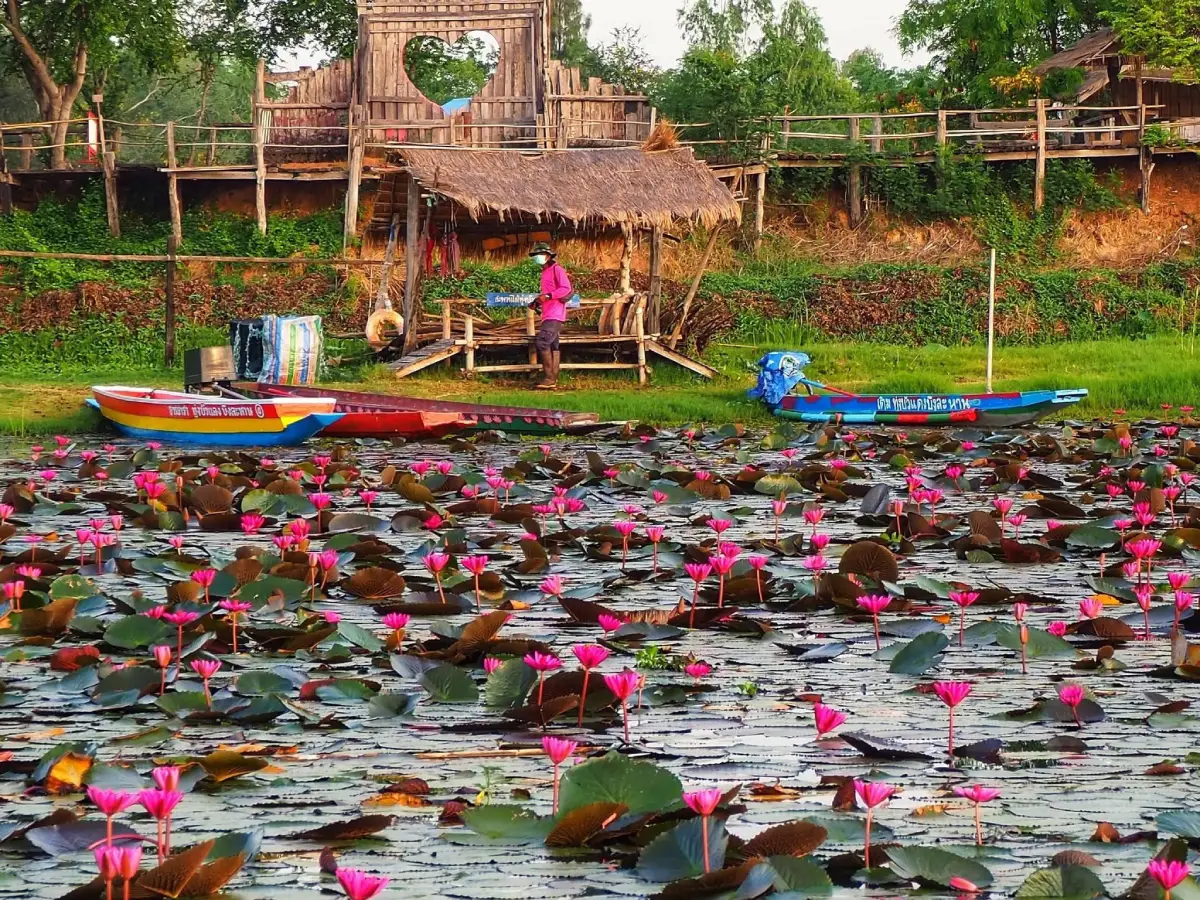
The charm of Bueng Lahan lies in its open freshwater landscape. Visitors can see wide water surfaces, aquatic plants, fishing boats, birds, lotus fields, and local life along the lake. In some seasons, red lotus flowers bloom across the water, creating one of the most memorable scenes in Chaiyaphum. The lake is peaceful in the early morning, lively when boats take visitors into the lotus fields, and beautifully calm in the evening when sunlight reflects across the water.
Bueng Lahan is not only a scenic place. It is a living wetland connected to local livelihoods. The lake functions as a fish breeding area, a freshwater fishing ground, a community water resource, and a setting for local water-based traditions. For nearby villages, the lake is part of daily life. It provides food, income, identity, and a natural gathering place. For visitors, understanding this relationship makes the experience richer than simply taking photographs of lotus flowers.
As a freshwater ecosystem, Bueng Lahan supports aquatic plants, fish, birds, and small wetland life. The lake’s aquatic vegetation provides shelter and breeding areas for fish and other freshwater species. The surrounding wetlands also attract birds and support traditional fishing activities. Local fishing boats on the lake are therefore not just picturesque elements; they are part of a real way of life that has continued around the water for generations.
The Chao Pho Han Kham Shrine is one of the most important cultural points around Bueng Lahan. Local people respect the shrine as a sacred place connected with protection, belief, and the spirit of the lake area. Visitors should treat the shrine respectfully, speak softly, keep the area clean, and avoid inappropriate behavior. The shrine adds a spiritual dimension to the lake, showing that Bueng Lahan is both a natural and cultural landscape.
The earthen embankments around the lake help make Bueng Lahan more accessible. They allow visitors to walk, view the water, cycle in some areas, and reach scenic spots more easily. From the embankment, travelers can observe the wide lake, lotus fields, local boats, and surrounding communities. This makes Bueng Lahan suitable for slow travel, nature watching, family visits, and learning about wetland landscapes.
The red lotus field is the best-known highlight of Bueng Lahan. In the right season, lotus flowers open beautifully in the morning light, covering parts of the lake in soft pink and red tones. Early morning is the best time to visit because the air is cooler, the flowers are more open, and the light is ideal for photography. Visitors who want the best experience should arrive early rather than waiting until the sun becomes strong.
Boat trips into the red lotus field allow visitors to experience the lake from the water. From a boat, the lotus flowers appear closer, the surface of the lake feels wider, and local fishing life becomes easier to observe. Visitors should follow the boat operator’s instructions, wear a life jacket when provided, stay seated, avoid shaking the boat, and never pick lotus flowers or damage aquatic plants. Responsible boating helps protect the beauty of the lake.
Bueng Lahan is also a good place to watch sunrise and sunset. Morning visits are best for lotus flowers and local fishing scenes, while evening visits offer soft light and a peaceful atmosphere over the lake. Photographers can choose the wooden bridge, lakeside paths, or embankment viewpoints to capture the changing light. Visitors should return before it becomes too dark and avoid isolated areas at night.
Local fisheries are an essential part of Bueng Lahan. Small boats, fishing tools, and fish-based restaurants near the lake reflect the connection between the wetland and local food culture. Travelers should respect fishing areas, avoid blocking boat routes, and ask before photographing people at close range. The lake is not only a tourist attraction but also a working landscape for local residents.
Because Bueng Lahan is a fish conservation area, visitors should understand the importance of protecting breeding zones and aquatic habitats. Conservation areas allow fish and other freshwater animals to reproduce and maintain the lake’s ecological balance. Visitors should not fish in restricted areas, disturb aquatic habitats, throw trash into the water, or feed wildlife inappropriately. The long-term beauty of the lake depends on this balance.
The wooden bridge at the red lotus field is one of the most popular places to walk and take photographs. It brings visitors close to the wetland scenery without needing to enter the water. During the lotus blooming season, the bridge provides a beautiful view of flowers, water, boats, and open sky. Visitors should walk carefully, avoid crowding, never climb on railings, and keep the bridge clean.
Walking or cycling along the lake embankment is suitable for travelers who want to stay longer and see more than one viewpoint. Moving around the lake reveals different sides of Bueng Lahan: lotus fields, fishing areas, village edges, shrine areas, sunset viewpoints, and open water. This slow movement helps visitors understand the lake as a broad living landscape rather than a single photo spot.
The best time to visit Bueng Lahan is early morning or late afternoon. Morning is ideal for lotus viewing and boat trips, while late afternoon is suitable for sunset views and cooler air. During hot months, visitors should bring a hat, drinking water, sunscreen, and comfortable shoes. Midday can be very hot and less suitable for long walks around the lake.
Bueng Lahan is suitable for many types of visitors. Families can bring children to learn about wetlands, fish, lotus flowers, and birds. Couples and photographers can enjoy the light and open scenery. Cultural travelers can visit the Chao Pho Han Kham Shrine. Nature lovers can observe the lake’s ecosystem and fishing way of life. All visitors should remember that the lake is also a home and working space for local communities.
Getting There to Bueng Lahan is most convenient by private car or motorcycle. From Chatturat District, travelers can head toward Ban Makluea in Ban Kok Subdistrict, using Highway 2170 and turning in via Wat Makluea for about 4 km to reach the red lotus tourism area. Private transport allows visitors to stop at the shrine, the wooden bridge, restaurants, and viewpoints around the lake more easily.
Visitors who want to see the red lotus field should leave early. Around 06.00 to 08.00 is the best period for soft light and blooming flowers. On weekends or during peak blooming season, there may be more visitors, so extra time should be allowed for parking, walking on the bridge, and arranging boat trips.
A visit to the Chao Pho Han Kham Shrine should be done respectfully. Visitors do not need to perform complicated rituals. A simple, sincere act of respect is enough. The shrine represents the local belief and emotional connection between the community and the lake, so travelers should treat the area with dignity and keep it clean.
Useful items to bring include comfortable clothes, sun protection, drinking water, a camera or charged phone, a personal trash bag, and shoes suitable for walking near water. If joining a boat trip, visitors should secure valuables carefully and follow safety instructions. Weather conditions should also be considered before going out on the lake.
Cleanliness is especially important at Bueng Lahan. Plastic bottles, food containers, and small pieces of trash can easily enter the water and harm fish, birds, aquatic plants, and the overall scenery. Visitors should take trash back out or dispose of it properly. Lotus flowers and aquatic plants should not be picked or damaged.
For photographers, Bueng Lahan offers many subjects: red lotus flowers, wooden bridges, boats, sunrise, sunset, fishermen, wetland plants, and the Chao Pho Han Kham Shrine. Photography should be respectful. Do not block the bridge, disturb fishermen, fly drones in ways that disturb people or birds, or enter restricted areas for a better angle.
For children, Bueng Lahan can be a valuable outdoor classroom. They can learn about freshwater wetlands, fish conservation, aquatic plants, birds, and the importance of not littering. Parents should supervise children closely near water, especially on bridges, boat points, and embankments.
For elderly visitors, Bueng Lahan is suitable for scenic viewing, shrine visits, and short walks near accessible areas. Morning and late afternoon are better than midday because the weather is cooler. If walking is difficult, choose viewpoints close to parking areas and avoid long walks in strong sunlight.
Bueng Lahan can be combined with nearby attractions and food stops in Chatturat District. Visitors can plan a route including the red lotus field, Chao Pho Han Kham Shrine, Wat Makluea, Wat Ban Lahan, local fish restaurants, and nearby cafés. With more time, the trip can extend toward Chaiyaphum city, Phu Lan Kha National Park, Mo Hin Khao, or other provincial attractions.
Local food is an important part of the Bueng Lahan experience. Because the lake is closely connected with freshwater fish, nearby restaurants often highlight fish dishes and local Isan flavors. Eating locally supports the community and allows travelers to experience the lake through its food culture as well as its scenery.
For foreign travelers, Bueng Lahan is a strong example of community-based nature tourism in northeastern Thailand. It is a large freshwater wetland with red lotus flowers, fishing life, a local shrine, fish conservation, and lakeside communities. It offers a different image of Thailand from beaches or major cities, showing the quiet beauty of Isan’s wetlands and rural landscapes.
To explain Bueng Lahan simply, it can be described as a large freshwater wetland and red lotus lake in Chaiyaphum. However, the lake is more than a flower-viewing spot. Its meaning also comes from fish conservation, local fishing, the Chao Pho Han Kham Shrine, earthen embankments, boat trips, and the everyday relationship between people and water.
Visitors should be aware of heat, slippery surfaces, bridge safety, boat safety, and changing weather. Children should never be left unattended near water. If it rains, if strong wind occurs, or if conditions on the lake are unsafe, boat trips should be avoided and lakeside viewpoints should be used instead.
The true charm of Bueng Lahan is the balance between wide open nature and close community life. The lake feels spacious and peaceful, but fishing boats, local food, the shrine, and nearby villages give it warmth and identity. This makes Bueng Lahan a living destination, not only a seasonal lotus viewpoint.
In conclusion, Bueng Lahan in Chaiyaphum Province is an important freshwater wetland and conservation-oriented destination in Chatturat District. It is ideal for visitors who want to see red lotus fields, take a boat trip, observe local fishing life, pay respect at the Chao Pho Han Kham Shrine, and understand the relationship between community and freshwater ecology. With responsible behavior, careful travel, and respect for the local area, Bueng Lahan becomes one of Chaiyaphum’s most meaningful nature-based travel experiences.
| Name | Bueng Lahan / Bueng Lahan Red Lotus Field |
| Location | Chatturat District, Chaiyaphum Province, covering areas of Lahan, Nong Bua Yai, Nong Bua Ban, and Ban Kok subdistricts. The main red lotus tourism point is around Ban Makluea, Ban Kok Subdistrict |
| Type | Freshwater lake, wetland, fish conservation area, and community-based nature attraction |
| Highlights | Large freshwater lake, red lotus field, wooden bridge, local fishing life, lake embankment, fish conservation area, and Chao Pho Han Kham Shrine |
| Importance | A fish breeding area, local fishing ground, community water resource, and site for local water-based traditions |
| Sacred Site | Chao Pho Han Kham Shrine, respected by local communities around Bueng Lahan |
| Recommended Season | February – May for red lotus viewing. Early morning is best for blooming flowers and photography |
| Main Areas / Zones | 1. Ban Makluea red lotus area 2. Wooden bridge viewpoint 3. Red lotus boat trip zone 4. Lake embankment zone 5. Chao Pho Han Kham Shrine zone 6. Local fishing life zone 7. Fish and freshwater conservation zone 8. Sunrise and sunset viewpoint zone |
| Caretaker | Bueng Lahan Non-Hunting Area, local administrative organizations, and communities around Bueng Lahan |
| Main Contact | Bueng Lahan, Tel. 044-812-350 Lahan SAO, Tel. 044-852648 Ban Kok SAO, Tel. 044-056391 Red Lotus Boat Service, Phi Ting, Tel. 081-070-1782 Red Lotus Boat Service, Phi Noi, Tel. 098-965-7527 |
| Travel Information | From Chatturat District, take Highway 2170 and turn in via Wat Makluea for about 4 km to reach the Bueng Lahan red lotus tourism area. Private car or motorcycle is recommended |
| Open Days | Daily |
| Opening Hours | 06.00 – 18.00 |
| Best Lotus Viewing Time | Around 06.30 – 08.00, when lotus flowers are open and morning light is suitable for photography |
| Facilities | Lake embankment, wooden bridge, viewpoints, boat access point, seasonal local vendors, parking areas, and Chao Pho Han Kham Shrine |
| Visitor Cautions | Do not litter, do not pick lotus flowers, do not damage aquatic plants, supervise children near water, walk carefully on wooden bridges, and follow boat operator instructions |
| Nearby Tourist Attractions | 1. Chao Pho Han Kham Shrine, about 1 km 2. Ban Makluea Red Lotus Field, about 1 km 3. Wat Makluea, about 4 km 4. Wat Ban Lahan, about 5 km 5. Ban Makluea Red Lotus Wooden Bridge, about 1 km 6. Chatturat District Center, about 10 km |
| Nearby Restaurants | 1. Fisherman Restaurant, about 2 km, Tel. 044-852660 2. Ma Der Mana Cafe, about 3 km 3. Don Lanam Restaurant, about 4 km, Tel. 081-877-8397, 044-890-611 4. Tod Mun Pla Krai 3 Jor, about 4 km 5. Rabiang Rai Rabiang Na, Chatturat, about 4 km 6. Na Yai Bai Chaiyaphum, about 4 km |
| Nearby Accommodations | 1. The Palm Village, about 5 km 2. Ban Non Chan, about 6 km 3. Ban Rai Ruean Khwan, about 20 km 4. Smile View Resort, about 21 km 5. The Peak Chaiyaphum Resort, about 20 km 6. Lertnimitra Hotel, about 27 km |
Frequently Asked Questions (FAQ)
Q: Where is Bueng Lahan located?
A: Bueng Lahan is located in Chatturat District, Chaiyaphum Province. It covers several subdistricts, including Lahan, Nong Bua Yai, Nong Bua Ban, and Ban Kok. The main red lotus tourism point is around Ban Makluea in Ban Kok Subdistrict.
Q: What is special about Bueng Lahan?
A: Bueng Lahan is known for its red lotus field, wooden bridge, boat trips, local fishing life, fish conservation area, lake embankment, and the Chao Pho Han Kham Shrine respected by local people.
Q: When is the best time to see the red lotus field?
A: February to May is recommended for red lotus viewing. Early morning, around 06.30 to 08.00, is the best time because the flowers are open and the light is beautiful.
Q: What are the opening hours of Bueng Lahan?
A: The red lotus tourism area is open daily from 06.00 to 18.00. Visitors who want to see the lotus flowers or take a boat trip should arrive in the morning.
Q: Is there a shrine at Bueng Lahan?
A: Yes. Chao Pho Han Kham Shrine is an important sacred place respected by local communities around Bueng Lahan. Visitors should behave respectfully and keep the area clean.
Q: What should visitors bring?
A: Visitors should bring sun protection, drinking water, a camera or charged phone, comfortable walking shoes, and a personal trash bag. For boat trips, they should follow safety instructions from the operator.
Q: Is Bueng Lahan suitable for foreign travelers?
A: Yes. It is suitable for foreign travelers interested in freshwater wetlands, red lotus fields, local fishing life, community-based tourism, and the relationship between nature and local belief in northeastern Thailand.
Q: What nearby attractions can be combined with Bueng Lahan?
A: Visitors can combine the trip with Chao Pho Han Kham Shrine, Ban Makluea Red Lotus Field, Wat Makluea, Wat Ban Lahan, local fish restaurants, and other attractions around Chatturat District.
 Category: ●Nature and Wildlife
 Group: ●River, Canal
Last Update : 4 MonthAgo
 Last Update : 4 MonthAgo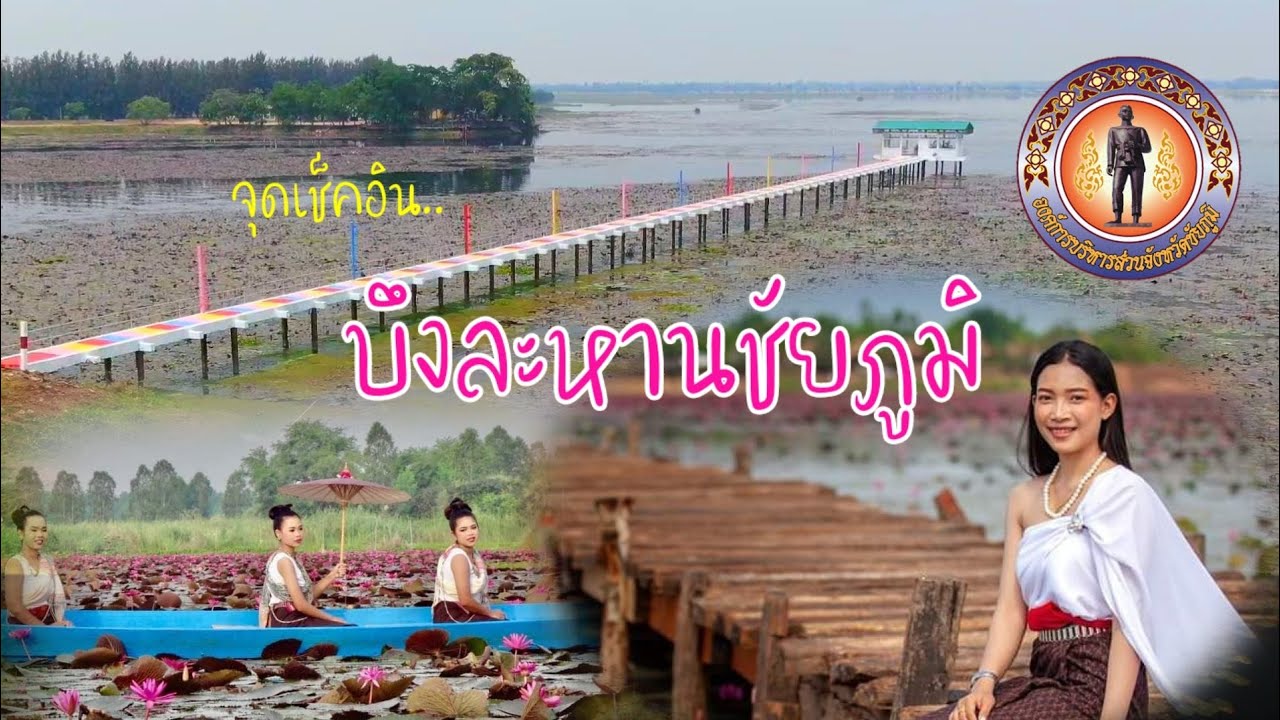
 Click to Access the Navigation Map GPS
Bueng Lahan Map
Recommend

 Art, Culture and Heritage
 Historical Sites and Monuments(1)
 Landmarks and Memorials(3)
 Royal Palace(1)
 Art, Craft Centres, Tradition(3)
 Educational Places
 Educational Gardens, Farm(1)
 Places of Worship
 Temple(141)
 Other Sacred Sites(8)
 Suburban Living
 Village, Community(4)
 National Parks and Marine Reserves(7)
 Mountain (Doi)(5)
 Dam, Reservoir, Lake(10)
 Waterfalls(15)
 Caves(5)
River, Canal(4)
Caves(5)
River, Canal(4)
 Other natural attractions(1)
 Entertainment and Agricultural
 Farms, Parks and Ecotourism(2)
 Waterpark(2)
 Travel Articles, Recipes
 Travel Review, Food Review(1)


