
lovethailand home >Northeastern Travel Attractions >Chaiyaphum Travel Attractions >Chatturat >Ban Kok > Wat Siriphong Sawat
TL;DR: Wat Siriphong Sawat is located at Ban Kok Subdistrict, Chatturat District, Chaiyaphum Province, open Daily, hours 08.00 – 17.00.
Wat Siriphong Sawat
Open Days: Daily
Opening Hours: 08.00 – 17.00
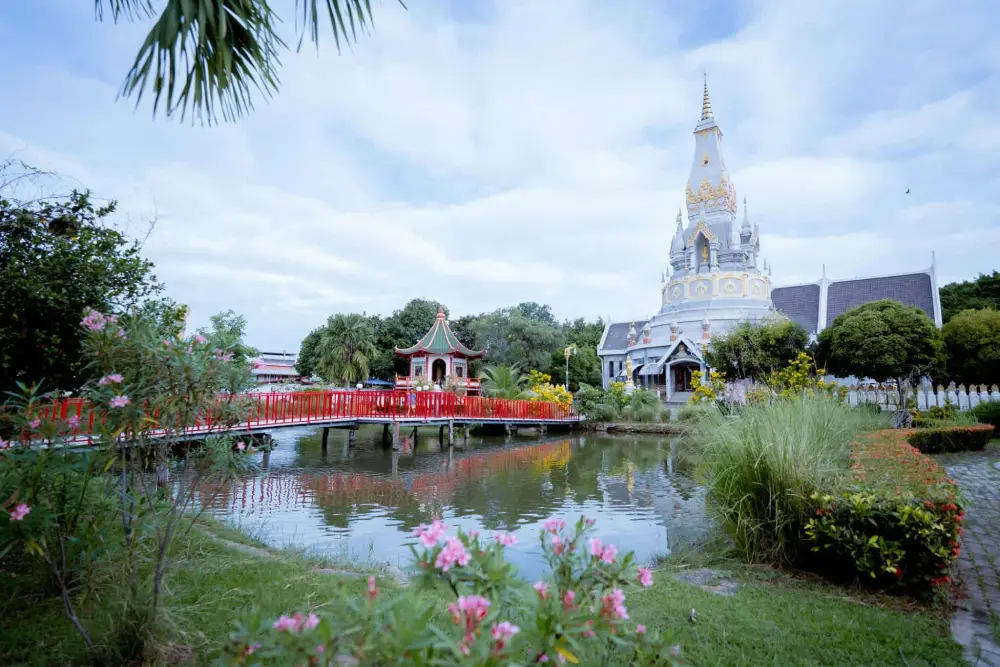
Wat Siriphong Sawat is a Buddhist temple located in Ban Kok Subdistrict, Chatturat District, Chaiyaphum Province. The temple is known for its distinctive ordination hall built in the form of a chedi, known as Phra That Chedi Siri Maha Mongkhon. The top of this sacred chedi enshrines relics, making the temple an important place of faith for local Buddhists and visitors who wish to make merit, pay respect, practice mindfulness, and experience a peaceful temple atmosphere in northeastern Thailand.
The most memorable feature of Wat Siriphong Sawat is Phra That Chedi Siri Maha Mongkhon. Unlike a conventional ordination hall with a standard Thai roof form, this sacred structure combines the function of an ordination hall with the symbolic form of a Buddhist chedi. Its white appearance gives the impression of purity, peace, and auspiciousness, while the enshrined relics at the top deepen the spiritual meaning of the site. For foreign travelers, this makes the temple especially interesting because it presents Buddhist architecture in a form that is visually distinctive and culturally meaningful.
The temple is located in Ban Kok Subdistrict of Chatturat District, an area connected to important routes between Chaiyaphum and neighboring provinces. Because of this accessible location, the temple is suitable for travelers passing through Chatturat as well as visitors planning a faith-based route in Chaiyaphum. It can be visited as a short stop for worship, or combined with nearby natural attractions such as Bueng Lahan and the Red Lotus Field area.
Phra That Chedi Siri Maha Mongkhon is the spiritual heart of the temple. Visitors can walk around the chedi, pay respect, make offerings, and spend quiet time contemplating the meaning of relic worship in Thai Buddhism. The white chedi stands calmly within the temple grounds and creates a strong visual impression. Its design encourages visitors to slow down, observe carefully, and approach the place with respect rather than treating it only as a photo spot.
The fact that the ordination hall is shaped like a chedi carries deep Buddhist meaning. In Thai Buddhism, an ordination hall is a sacred place where monks perform important Sangha ceremonies, while a chedi is a structure of reverence associated with the Buddha, Buddhist relics, and spiritual memory. By combining these two meanings, Phra That Chedi Siri Maha Mongkhon becomes both a functional sacred space and a visible symbol of devotion.
The relics enshrined at the top of the chedi make the temple especially meaningful for Buddhist worshippers. Relics are among the most respected sacred objects in Buddhist tradition. For many visitors, paying respect to a chedi that enshrines relics is an act of devotion, gratitude, and mindfulness. It is also a way of remembering the Buddha’s teachings and the path of moral practice.
The atmosphere of Wat Siriphong Sawat is peaceful and shaded by large trees. Visitors can pay respect at the chedi, walk quietly within the temple grounds, rest under the trees, or spend a short time in meditation. The temple is not only a sightseeing point; it is a place where people can slow down, breathe more calmly, and reconnect with a sense of inner quiet.
Wat Siriphong Sawat serves as a venue for religious activities of monks, local Buddhists, and the wider public. These activities include Buddhist holy day observances, merit-making, Dhamma listening, chanting, meditation, Kathin robe offering, forest robe offering, and annual temple events. The temple therefore plays an important role in both religious practice and community life in Ban Kok Subdistrict.
On Buddhist holy days, local devotees come to the temple to make merit, listen to Dhamma, and cultivate mindfulness. The morning atmosphere is suitable for worship and quiet reflection. Elderly villagers often maintain a close relationship with the temple through regular merit-making, while younger family members who return home during festivals may join temple activities as a way of reconnecting with family and community.
During Buddhist Lent, the end of Lent, and the Kathin season, the temple becomes an important gathering place for the community. Villagers and devotees offer candles, robes, food, daily necessities, and donations to support the monks and maintain the temple. These events strengthen generosity, cooperation, and the relationship between Buddhism and local life.
Local Isan traditions are closely connected with Buddhist temples. Annual customs such as Bun Khao Chi, Bun Phawet, Songkran merit-making, Buddhist Lent, the end of Lent, Kathin, and forest robe offerings often use temples as the center of gathering. Wat Siriphong Sawat therefore preserves more than religious practice; it also supports community culture, family relationships, and the continuity of local identity.
Bun Khao Chi is one example of how Isan culture connects food, faith, and merit-making. Sticky rice, the staple food of northeastern Thailand, is shaped, grilled, and offered to monks as an act of merit. Such traditions show why village temples remain important. They are places where everyday life, food, devotion, and community cooperation come together.
Bun Phawet, or the Mahachat sermon tradition, also shows the role of temples in transmitting Buddhist teachings. Through the story of Vessantara, villagers learn about generosity, sacrifice, and moral conduct. In a local temple, Dhamma is not only studied from books. It is heard through sermons, practiced through giving, and experienced through community participation.
During Songkran, the temple becomes a place of gratitude and renewal. Local people may make merit, bathe Buddha images, pay respect to elders, and take part in activities that bring blessings for the Thai New Year. For foreign travelers, visiting a temple during this period can reveal the deeper cultural meaning of Songkran beyond water festivities.
Wat Siriphong Sawat is also suitable for visitors interested in meditation and quiet reflection. The shaded grounds and the presence of the white chedi create a calm environment. A visit does not need to be long to be meaningful. Paying respect mindfully, walking slowly, and spending a few quiet minutes in the temple can be enough to bring a sense of peace.
The temple is also interesting for those who appreciate Buddhist architecture. An ordination hall in the form of a chedi is not a structure seen at every temple. The shape of the chedi suggests spiritual elevation, while its white color suggests purity and clarity. This gives the temple a memorable identity and makes it one of the notable Buddhist sites in Chatturat District.
Visitors should dress modestly when entering the temple. Shoulders should be covered, clothing should be appropriate, and behavior should be calm. Speaking quietly, avoiding disturbance to monks or worshippers, and respecting the area around the chedi are basic forms of temple etiquette. Photography is generally suitable in public areas, but it should never disturb ceremonies, monks, elderly villagers, or people practicing meditation.
A visit to Wat Siriphong Sawat can be combined with nearby attractions in Chatturat District. Travelers may begin with worship at Phra That Chedi Siri Maha Mongkhon, then continue to the Red Lotus Field wooden bridge at Bueng Lahan, the wider Bueng Lahan wetland area, local restaurants, cafes, and accommodation in Chatturat. This kind of route combines faith, nature, and community life in one journey.
Bueng Lahan is an important wetland in Chaiyaphum Province and a major natural feature of Chatturat District. The Red Lotus Field area at Ban Maklua in Ban Kok Subdistrict is especially suitable for travelers interested in nature, wetland scenery, birds, and rural life. Visiting both the temple and Bueng Lahan allows travelers to experience two different but connected aspects of Chatturat: Buddhist faith and the natural landscape.
Getting There is easiest by private car. From Chaiyaphum city, travel toward Chatturat District and continue into Ban Kok Subdistrict. A digital map can guide visitors directly to Wat Siriphong Sawat. Travelers passing through Lotus Chatturat or the main community area of Chatturat can conveniently stop at the temple for worship and a short visit.
Public transport may bring visitors to Chatturat District first, but onward travel to the temple and nearby attractions may require a local vehicle, hired transport, or assistance from residents familiar with the area. Travelers planning to visit several places in one day should use a private car or rental car for better control of time and route.
The best time to visit is in the morning or late afternoon, especially within the usual visiting period of 08.00 to 17.00. The light is pleasant, the weather is more comfortable, and the temple atmosphere is suitable for worship, photography, and quiet reflection. Visitors who prefer a peaceful experience may choose an ordinary weekday, while those who want to observe local religious life may visit on Buddhist holy days or during temple festivals.
In the wider context of Chaiyaphum Province, Wat Siriphong Sawat adds cultural depth to a destination often known for mountains, national parks, flower fields, and natural scenery. Visiting this temple helps travelers understand the province through Buddhist faith, local architecture, community practice, and sacred symbolism. It is especially suitable for those who prefer meaningful cultural travel rather than mainstream sightseeing alone.
In summary, Wat Siriphong Sawat is an important Buddhist temple in Ban Kok Subdistrict, Chatturat District, Chaiyaphum Province. Its distinctive ordination hall in the form of Phra That Chedi Siri Maha Mongkhon, with relics enshrined at the top, makes it a memorable faith-based destination. The temple is suitable for merit-making, Buddhist worship, meditation, cultural learning, and peaceful travel in northeastern Thailand.
| Name | Wat Siriphong Sawat |
| Location | Ban Kok Subdistrict, Chatturat District, Chaiyaphum Province |
| Address | Ban Kok Subdistrict, Chatturat District, Chaiyaphum Province 36130, Thailand |
| Highlights | A distinctive ordination hall in the form of a chedi, known as Phra That Chedi Siri Maha Mongkhon, with relics enshrined at the top |
| Distinctive Features | A peaceful temple with a white chedi-style ordination hall, shaded grounds, and a calm atmosphere suitable for worship and meditation |
| Sacred Objects | Phra That Chedi Siri Maha Mongkhon and the relics enshrined at the top of the chedi |
| Name Meaning | The name suggests auspiciousness and spiritual prosperity, while Phra That Chedi Siri Maha Mongkhon refers to the highly auspicious sacred chedi of the temple |
| Temple Status | A public Buddhist temple in Ban Kok Subdistrict, Chatturat District, Chaiyaphum Province |
| Temple Phone | 081-186-0974 |
| Travel Information | Private car is the most convenient option. From Chaiyaphum city, travel toward Chatturat District and continue to Ban Kok Subdistrict. A digital map is recommended |
| Current Status | An active Buddhist temple open for worship, merit-making, meditation, and visits to Phra That Chedi Siri Maha Mongkhon |
| Open Days | Daily |
| Opening Hours | 08.00 – 17.00 |
| Facilities | Parking Area, Worship Area, Chedi Walking Area, Shaded Rest Area, Meditation Area, And Religious Activity Space |
| Main Areas / Zones | Phra That Chedi Siri Maha Mongkhon, Chedi-Style Ordination Hall, Relic Worship Area, Candle Walking Area, Meditation Area, Merit-Making Area, Shaded Rest Area, And Temple Activity Space |
| Nearby Tourist Attractions | 1. Phra That Chedi Siri Maha Mongkhon, Inside The Temple, About 0 km 2. Red Lotus Field Wooden Bridge, Ban Maklua, Ban Kok Subdistrict, About 8 km 3. Bueng Lahan, Chatturat District, About 10 km 4. Wat Pa Chapphan Rangsi, Chatturat District, About 12 km 5. Chao Pho Phaya Lae Monument, Mueang Chaiyaphum District, About 38 km |
| Nearby Restaurants | 1. Na Chai Thung Steak & Jaew Hon, Ban Kok Subdistrict, About 2 km, Tel. 044-840-445 2. Ruam Jai Phochana Restaurant, Chatturat District, About 4 km, Tel. 081-266-9384, 044-851-027 3. Chatturat Bakery, Chatturat District, About 4 km, Tel. 096-030-9442, 064-446-5279 4. Khao Kaeng Chatturat, PTT Chatturat, About 5 km, Tel. 063-639-3922 5. Jud Zaep Fai Daeng Rot Dee, Nong Bua Yai Subdistrict, About 7 km, Tel. 082-669-3951 |
| Nearby Accommodations | 1. Sook Jai Resort, Chatturat District, About 5 km, Tel. 094-465-7366 2. Fasuay Resort Chaiyaphum, Chatturat District, About 8 km, Tel. 083-682-2828 3. The Palm Village, Chatturat District, About 12 km, Tel. 044-890-585 4. Marina Palms Resort, Lahan Subdistrict, About 15 km, Tel. 064-470-1807 5. Rai Chao Aey Cafe & Stay, Chatturat District, About 15 km, Tel. 086-334-1581 |
Frequently Asked Questions (FAQ)
Q: Where is Wat Siriphong Sawat located?
A: Wat Siriphong Sawat is located in Ban Kok Subdistrict, Chatturat District, Chaiyaphum Province, Thailand.
Q: What is the main highlight of Wat Siriphong Sawat?
A: The main highlight is the chedi-style ordination hall known as Phra That Chedi Siri Maha Mongkhon, with relics enshrined at the top.
Q: What are the opening hours of Wat Siriphong Sawat?
A: Wat Siriphong Sawat is open daily from 08.00 to 17.00, which is suitable for worship, merit-making, and a peaceful temple visit.
Q: What type of travel is Wat Siriphong Sawat suitable for?
A: It is suitable for Buddhist worship, merit-making, meditation, architectural appreciation, and faith-based travel in Chatturat District.
Q: How can travelers get to Wat Siriphong Sawat?
A: Traveling by private car is the most convenient option. From Chaiyaphum city, drive toward Chatturat District and continue to Ban Kok Subdistrict using a digital map.
Q: Are there attractions near Wat Siriphong Sawat?
A: Nearby attractions include the Red Lotus Field Wooden Bridge at Bueng Lahan, Bueng Lahan, Wat Pa Chapphan Rangsi, and the Chao Pho Phaya Lae Monument.
Q: Is Wat Siriphong Sawat suitable for meditation?
A: Yes. The temple has a peaceful and shaded atmosphere suitable for worship, chanting, quiet reflection, and simple meditation.
Q: What should visitors keep in mind when visiting Wat Siriphong Sawat?
A: Visitors should dress respectfully, speak quietly, respect the chedi area, avoid disturbing monks or practitioners, and take photographs with consideration.
 Category: ●Places of Worship
 Group: ●Temple
Last Update : 2 MonthAgo
 Last Update : 2 MonthAgo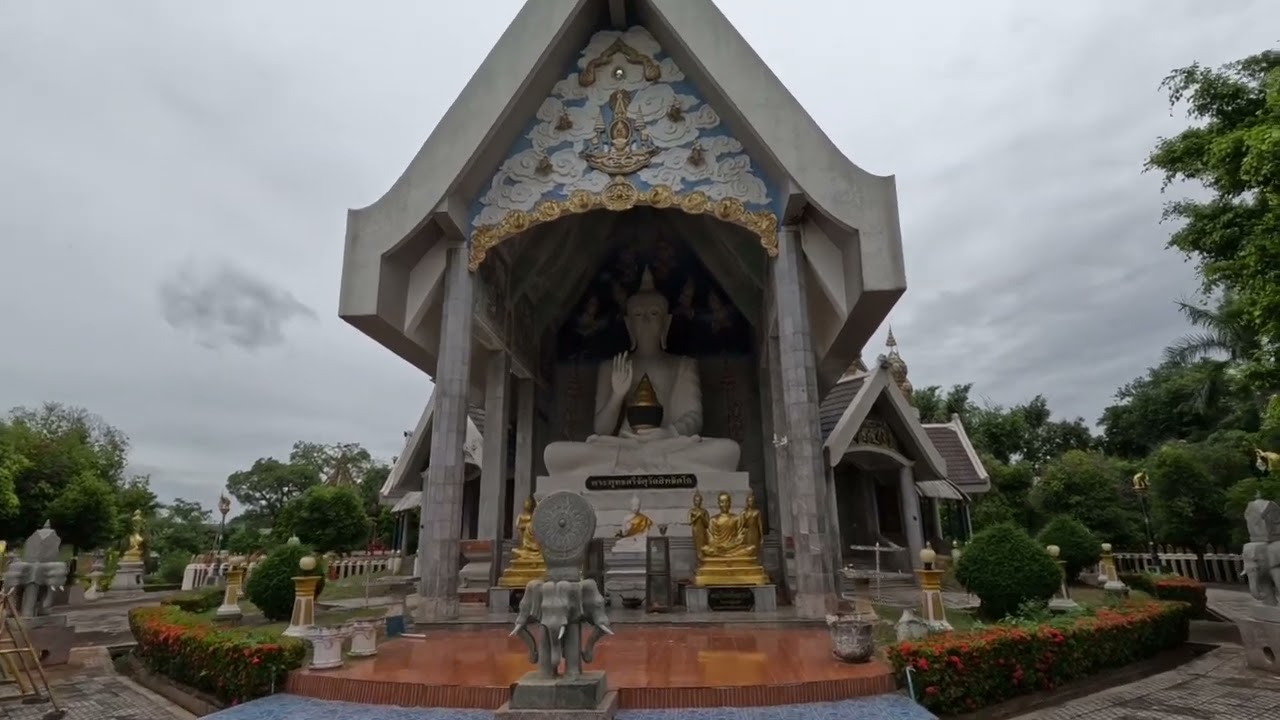
 Click to Access the Navigation Map GPS
Wat Siriphong Sawat Map
Recommend

 Art, Culture and Heritage
 Historical Sites and Monuments(1)
 Landmarks and Memorials(3)
 Royal Palace(1)
 Art, Craft Centres, Tradition(3)
 Educational Places
 Educational Gardens, Farm(1)
Temple(141)
Educational Gardens, Farm(1)
Temple(141)
 Other Sacred Sites(7)
 Suburban Living
 Village, Community(4)
 Nature and Wildlife
 National Parks and Marine Reserves(7)
 Mountain (Doi)(5)
 Dam, Reservoir, Lake(10)
 Waterfalls(15)
 Caves(5)
 River, Canal(4)
 Other natural attractions(1)
 Entertainment and Agricultural
 Farms, Parks and Ecotourism(2)


