
lovethailand home >Northeastern Travel Attractions >Chaiyaphum Travel Attractions >Khon Sawan >Khon Sawan > Phra Yai Bai Sema
TL;DR: Phra Yai Bai Sema is located at Wat Khon Sawan, Ban Khon Sawan, Khon Sawan Subdistrict, Khon Sawan District, Chaiyaphum Province, open Daily, hours 08.00 – 17.00.
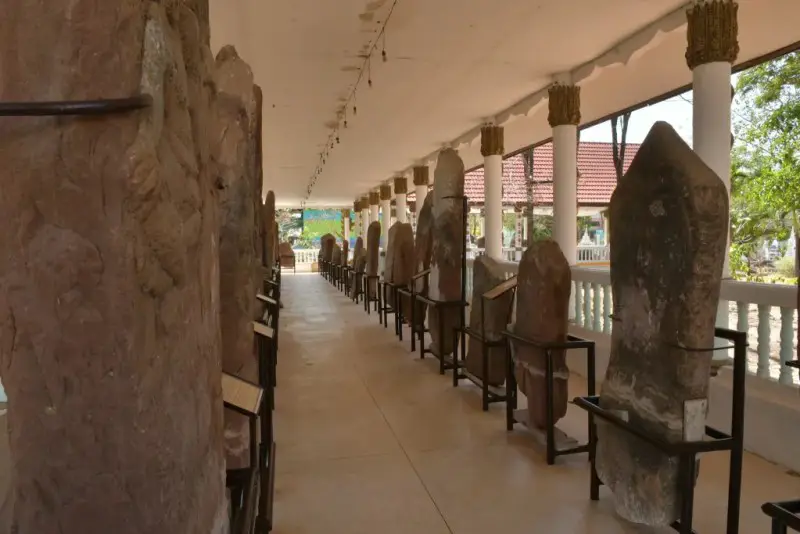
Phra Yai Bai Sema
Open Days: Daily
Opening Hours: 08.00 – 17.00
Phra Yai Bai Sema in Chaiyaphum Province is enshrined inside Wat Khon Sawan in Ban Khon Sawan, Khon Sawan Subdistrict, Khon Sawan District. The site is known for its large standing Buddha image in Dvaravati style and its group of ancient sandstone sema stones. Locally revered as Luang Pho Yai, the Buddha image is carved from laterite and is closely associated with ancient Nakhon Kalong. The site is one of the most important cultural and religious landmarks in Khon Sawan District, combining Buddhist worship, Dvaravati art, ancient boundary stones, Jataka carvings, a Mon-script inscription, and the living faith of the local community.
For international travelers interested in early Buddhist heritage in Thailand, Phra Yai Bai Sema is an especially meaningful destination. It is not only a place to pay respect to an ancient Buddha image, but also a cultural landscape where art history, archaeology, local faith, and community memory meet. The standing Buddha image and sema stones help explain how Buddhism developed in northeastern Thailand during the Dvaravati period and how these ancient objects continue to remain sacred in present-day village life.
The name Phra Yai Bai Sema refers to the two most important elements of the site: the large Buddha image and the sandstone sema stones. The Buddha image represents Buddhist devotion and artistic expression, while the sema stones mark sacred space and preserve Buddhist stories in carved stone. Together, they make Wat Khon Sawan one of the key places in Chaiyaphum for understanding early Buddhist art and the religious culture of ancient Nakhon Kalong.
Wat Khon Sawan is a living Buddhist temple. Monks still reside here, villagers come to make merit, and regular Buddhist activities continue throughout the year. At the same time, the temple preserves ancient cultural objects that are many centuries old. This coexistence between a functioning temple and an archaeological heritage site makes the visit more meaningful. Travelers can observe both present-day Buddhist practice and the deeper historical roots of Buddhism in the region.
The main Buddha image is a standing laterite Buddha in Dvaravati style. It is commonly described as being around 2-3 meters tall, depending on how the height is measured in local records. The image has a cone-shaped head, oval face, joined eyebrows, lowered eyes, prominent nose, thick lips, long ears, and a calm upright posture. The right hand is raised near the chest, while the left hand hangs or rests beside the body. These features reflect the serene and restrained character of Dvaravati Buddhist art.
Laterite gives the image a strong and distinctive presence. Unlike bronze or plaster images, a laterite Buddha has a solid, earthy, and ancient character. The surface, weight, and texture of the stone make the image feel closely connected with the landscape of northeastern Thailand. Carving such a large image from laterite required skill, devotion, and a deep understanding of the material. This is one reason why Luang Pho Yai continues to be deeply respected by local people.
Dvaravati art is one of the earliest major Buddhist art traditions in Thailand. It was influenced by Indian Buddhist models but developed its own local features over time. Standing Buddha images from this tradition often show calm facial expression, simple robes, restrained gestures, and a strong sense of spiritual stillness. Phra Yai Bai Sema at Wat Khon Sawan preserves these qualities clearly, allowing visitors to encounter early Buddhist art not through a museum display, but through a sacred image still worshipped in its local context.
The site is connected with ancient Nakhon Kalong, an early settlement area in Khon Sawan District. Ancient settlements of this type were often associated with moats, earthworks, water sources, sacred objects, and sema stones. The presence of the standing Buddha image, sandstone sema stones, carved Jataka scenes, and Mon-script inscription suggests that this area was part of a broader Buddhist cultural network in northeastern Thailand. It was not an isolated rural settlement, but a place with religious and cultural importance.
The discovery and relocation of Luang Pho Yai remain important in local memory. In 1925, local leaders and villagers became aware of ancient Buddha images southwest of the village, near an area known as Non Ku. The main image and smaller associated images were then brought to Wat Khon Sawan for protection and worship. Because the image is carved from heavy laterite, the relocation required great effort. Villagers used a wooden platform cart and worked together for several days to move the image to the temple.
This story of relocation shows the strength of community faith. The villagers did not treat the Buddha image merely as an old object. They saw it as a sacred image that should be preserved, worshipped, and protected. Their collective effort transformed Luang Pho Yai into a shared spiritual center of Khon Sawan. Today, the image remains an object of devotion and a symbol of the community’s connection with its ancient past.
The Buddha image was once kept on the western side of the temple, near Nong O and the moat area of ancient Nakhon Kalong. Later, because of concerns about security and preservation, the image and associated smaller images were moved to a newer shrine on the eastern side of the temple, closer to the village. This move made it easier for local people and monks to protect and care for the image. It also shows how communities adapt heritage care to changing circumstances.
The smaller Buddha images found with Luang Pho Yai are also important. Although they are smaller in size, they help show that the area was once a significant religious site with multiple sacred objects. These companion images provide context for the main Buddha image and suggest that the original sacred landscape was more complex than a single isolated statue.
The sandstone sema stones are another major feature of the site. In the Dvaravati cultural world, sema stones were used to define sacred Buddhist space and may also have served ritual functions. At Wat Khon Sawan, both decorated and undecorated sema stones are preserved. Some are carved with Jataka scenes, stories of the Buddha’s previous lives. These carvings show how ancient Buddhist communities used stone art to teach moral lessons and communicate religious ideas.
The Jataka scenes on the sema stones are especially valuable. They present Buddhist teachings through visual storytelling. Themes such as generosity, patience, compassion, honesty, and self-sacrifice were made visible through carved images. For travelers, these stones are not simply archaeological objects. They are moral narratives preserved in stone, offering insight into how Buddhism was taught and understood in early communities.
Undecorated sema stones are also important. Even without carved scenes, their shape, size, material, and placement help explain how sacred space was organized. When viewed together, the decorated and undecorated sema stones at Wat Khon Sawan form a valuable collection for understanding Dvaravati religious practice in northeastern Thailand.
The Mon-script inscription associated with the site adds another layer of historical importance. Mon script is closely related to the Dvaravati cultural world and the spread of Buddhism in early Thailand. An inscription is like a surviving voice from the past. It shows that the Khon Sawan area was connected not only to religious image-making, but also to literacy, communication, and wider Buddhist networks.
Wat Khon Sawan also preserves an old sim, a traditional northeastern Thai ordination hall or chapel. The old sim represents another historical layer, later than the Dvaravati objects but still deeply important to local Buddhist culture. Together, the standing Buddha image, sema stones, inscription, old sim, and modern temple activities make Wat Khon Sawan a place where many periods of religious history can be seen in one compound.
The annual celebration of Phra Yai and the Dvaravati sema stones keeps the site active in contemporary community life. Monks, villagers, local authorities, and devotees gather to honor Luang Pho Yai and the sema stones. Such traditions prevent ancient heritage from becoming disconnected from the present. Instead, the community continues to care for the site through faith, merit-making, and cultural participation.
Preserving Phra Yai Bai Sema requires cooperation. The temple, monks, local committee, villagers, local authorities, and visitors all play a role. Ancient stone images, sema stones, and inscriptions can be damaged by touching, climbing, moving fragments, or careless behavior. Visitors should therefore avoid touching fragile objects unnecessarily, should not climb on any ancient elements, and should not place personal items on archaeological or sacred objects.
For worshippers, Luang Pho Yai remains a powerful spiritual center. People come to pray for health, family well-being, work, study, travel safety, and good fortune. Worship should be done with calmness and respect. Visitors should remove shoes where required, make offerings in the designated area, and keep voices low inside the shrine. The image should be approached both as a sacred Buddha image and as an ancient cultural treasure.
A meaningful visit begins by observing the Buddha image as a whole. Visitors should notice the upright posture, the calm expression, and the simple but dignified form. After that, they can look more closely at the cone-shaped head, oval face, joined eyebrows, lowered eyes, long ears, and raised right hand. These details reveal the artistic language of the Dvaravati period and help visitors understand the image more deeply.
The sema stones deserve slow and careful observation. Visitors should look at their size, shape, thickness, surface, carvings, and arrangement. If a sema stone has a Jataka carving, it should be viewed as a teaching image, not merely a decorative panel. Taking time with the sema stones transforms the visit from simple sightseeing into cultural learning.
The atmosphere of Wat Khon Sawan is best experienced without rushing. Visitors should allow time to pay respect to Luang Pho Yai, view the sema stones, observe the old sim, and walk quietly around the temple. For families or students, the site is an excellent place to learn about Dvaravati art, Mon cultural influence, Buddhist storytelling, and proper behavior at sacred heritage places.
Phra Yai Bai Sema can be combined with nearby natural and cultural attractions in Khon Sawan District. Bueng Waeng, also known as Nong Waeng, is an important lake and a peaceful local recreation area. Travelers may begin with worship at Wat Khon Sawan and continue to Bueng Waeng for a quiet nature stop. This route combines faith, history, and landscape in one trip.
Bueng Waeng is especially interesting during the cool season when migratory water birds are often seen in the area. The lake is suitable for a calm drive, photography, and relaxation. Combining Wat Khon Sawan with Bueng Waeng helps visitors understand the connection between ancient settlement, water sources, temples, and community life in Khon Sawan.
Other nearby places include Wat Pho, Wat Phum Rattanaram, Wat Si Dao Rueang, Kaen Tham Aranyawasi Meditation Center, Wichitchai Water Park in Kaeng Khro, and Wat Phra Phutthabat Phu Faet. Travelers with limited time can visit Wat Khon Sawan and Bueng Waeng in a half-day trip, while those with a full day can add more temples, cafés, and nearby natural places.
Restaurants in Khon Sawan include local Thai food, made-to-order restaurants, cafés, coffee shops, pizza and dessert shops, and family-style restaurants. Nearby options include Khrua Mae Lek, 13 Cafe, Jungle Cafe Khon Sawan Branch, For You Bingsu & Pizza, Somewhere Space Cafe, Suan Ahan Khun Ngoen, and Im Aroi by Je Kai. Eating locally helps support community businesses and makes the trip more connected to everyday life in Khon Sawan.
Accommodation near Phra Yai Bai Sema is available in Khon Sawan District, Kaeng Khro, and Mueang Chaiyaphum. Nearby options include Ban Poonim Resort, Nonna Resort, Pruesakan Resort, Hongsawan Resort, Nithinath Resort, and V One Apartment in Kaeng Khro. Visitors who prefer more hotel choices may stay in Chaiyaphum city and visit Wat Khon Sawan as a day trip.
Getting There is easiest by private car. From Chaiyaphum city, drive toward Khon Sawan District for about 30 kilometers, then continue to Ban Khon Sawan and Wat Khon Sawan. The site is about 5 kilometers from Khon Sawan District center. Travelers may search for “Wat Khon Sawan” or use coordinates 15.9450158, 102.3240631 for navigation.
The recommended visiting hours are 08.00 to 17.00. Morning and late afternoon are especially suitable because the weather is more comfortable and the light makes the Buddha image, sema stones, and old sim easier to observe. During the annual celebration of Phra Yai and the Dvaravati sema stones, visitors should allow extra time and follow the temple’s guidance.
Modest dress is recommended when visiting Wat Khon Sawan. Shirts should cover the shoulders, and trousers or skirts should be appropriate for a Buddhist temple. Shoes should be removed before entering the shrine or sacred buildings. Visitors should speak quietly and avoid disturbing monks, worshippers, or temple activities. Responsible behavior is part of meaningful cultural travel.
As a faith-based destination, Phra Yai Bai Sema is suitable for travelers who wish to worship an ancient Buddha image and experience a peaceful community temple. As a historical destination, it is ideal for visitors interested in Dvaravati art, sema stones, Mon script, Jataka imagery, ancient Nakhon Kalong, and early Buddhist culture in northeastern Thailand.
Overall, Phra Yai Bai Sema at Wat Khon Sawan is one of Chaiyaphum’s most important cultural heritage sites. It brings together a standing laterite Buddha image, sandstone sema stones, Jataka carvings, a Mon-script inscription, an old sim, ancient Nakhon Kalong, and living Buddhist devotion. The site is more than a place to worship. It is a cultural archive of faith, art, history, and community memory.
For travelers seeking the ancient cultural side of Chaiyaphum, Phra Yai Bai Sema should not be overlooked. It confirms that Khon Sawan was part of a long-standing Buddhist cultural landscape. Visiting this place means paying respect to Luang Pho Yai, learning about Dvaravati art, observing sema stones, understanding local heritage, and helping preserve a sacred cultural legacy that still matters to the people of Chaiyaphum today.
| Name | Phra Yai Bai Sema / Luang Pho Yai Wat Khon Sawan |
| Location | Wat Khon Sawan, Ban Khon Sawan, Khon Sawan Subdistrict, Khon Sawan District, Chaiyaphum Province |
| Address | 14 Moo 11, Khon Sawan Subdistrict, Khon Sawan District, Chaiyaphum 36140, Thailand |
| Coordinates | 15.9450158, 102.3240631 |
| Highlights | A standing laterite Buddha image in Dvaravati style, associated with ancient Nakhon Kalong, sandstone sema stones, Jataka carvings, a Mon-script inscription, and the old sim of Wat Khon Sawan |
| History / Period | Dvaravati-style Buddha image and sema stones dated around the 11th-16th Buddhist centuries, connected with ancient Nakhon Kalong and the archaeological landscape of Khon Sawan District |
| Buddha Image Features | Standing laterite Buddha image, right hand raised near the chest, left hand hanging or resting beside the body, cone-shaped head, oval face, joined eyebrows, lowered eyes, and long ears |
| Approximate Size | A large standing laterite Buddha image, commonly described in local information as about 2-3 meters high, with smaller companion Buddha images found in the same historical context |
| Name Origin | Called “Phra Yai Bai Sema” because the site combines the large Buddha image with a significant group of ancient sandstone sema stones |
| Important Associated Objects | Large sandstone sema stones with Jataka carvings, decorated and undecorated sema stones, Mon-script inscription, smaller Buddha images, the old sim, and the new ordination hall of Wat Khon Sawan |
| Main Areas / Zones | Luang Pho Yai shrine, smaller Buddha image zone, sandstone sema stone zone, Mon inscription zone, old sim zone, new ordination hall zone, temple courtyard, and merit-making area |
| Facilities | Buddha worship shrine, temple courtyard, parking area inside the temple, resting area or temple hall, and nearby restaurants in Khon Sawan District |
| Traditions / Main Activities | Worship of Luang Pho Yai, merit-making at Wat Khon Sawan, celebration of Phra Yai and Dvaravati sema stones, Kathin, robe-offering ceremonies, and major Buddhist observances |
| Caretaker | Wat Khon Sawan, the temple committee, Ban Khon Sawan community, and local authorities in Khon Sawan District |
| Abbot Of Wat Khon Sawan | Phra Athikan Bunrat Nilawanno |
| Open Days | Daily |
| Opening Hours | 08.00 – 17.00 |
| Entrance Fee | No entrance fee; visitors may make donations inside the temple according to their faith |
| Travel Information | From Chaiyaphum city, drive toward Khon Sawan District, about 30 km, then continue to Ban Khon Sawan. Wat Khon Sawan is about 5 km from the district center. Use coordinates 15.9450158, 102.3240631 for navigation |
| Current Status | A sacred and cultural learning site inside Wat Khon Sawan, open for worship and study of Dvaravati Buddhist heritage related to ancient Nakhon Kalong |
| Local Administrative Contact | Khon Sawan Subdistrict Municipality, Tel. 044-889-098 / Khon Sawan Subdistrict Administrative Organization, Tel. 044-848-563 |
| Nearby Tourist Attractions | 1. Old Sim Of Wat Khon Sawan, about 0.1 km 2. Wat Pho, Khon Sawan Subdistrict, about 2 km 3. Bueng Waeng / Nong Waeng, Khon Sawan District, about 3 km 4. Wat Phum Rattanaram, Ban Chok, about 5 km 5. Wat Si Dao Rueang, Nong Kham Subdistrict, about 12 km 6. Kaen Tham Aranyawasi Meditation Center, Huai Rai Subdistrict, about 16 km 7. Wichitchai Water Park, Kaeng Khro District, about 18 km 8. Wat Phra Phutthabat Phu Faet, Mueang Chaiyaphum District, about 23 km |
| Nearby Restaurants | 1. Khrua Mae Lek, about 3 km, Tel. 044-889-046 2. 13 Cafe, about 3 km, Tel. 062-662-9563 3. Jungle Cafe Khon Sawan Branch, about 3 km, Tel. 095-660-9498 4. For You Bingsu & Pizza, about 5 km, Tel. 098-565-6321 5. Somewhere Space Cafe 1, about 6 km, Tel. 094-551-4182 6. Suan Ahan Khun Ngoen, about 7 km, Tel. 091-017-2256 7. Im Aroi By Je Kai, about 10 km, Tel. 093-327-6866 |
| Nearby Accommodations | 1. Ban Poonim Resort, about 3 km, Tel. 089-932-7390 2. Nonna Resort, about 6 km, Tel. 062-905-0145 3. Pruesakan Resort, about 14 km, Tel. 096-469-8645, 044-100-096, 099-359-3597 4. Hongsawan Resort, about 16 km, Tel. 098-157-6599 5. Nithinath Resort, about 20 km, Tel. 044-848696, 081-7905186, 083-1242555 6. V One Apartment, Kaeng Khro District, about 22 km, Tel. 044-831-442 |
Frequently Asked Questions (FAQ)
Q: Where is Phra Yai Bai Sema located?
A: Phra Yai Bai Sema is enshrined inside Wat Khon Sawan in Ban Khon Sawan, Khon Sawan Subdistrict, Khon Sawan District, Chaiyaphum Province.
Q: What period does Phra Yai Bai Sema belong to?
A: The Buddha image and sema stones are associated with Dvaravati art, around the 11th-16th Buddhist centuries, and are connected with ancient Nakhon Kalong.
Q: What are the main features of the large Buddha image?
A: It is a standing laterite Buddha image in Dvaravati style, with the right hand raised near the chest, a cone-shaped head, oval face, joined eyebrows, lowered eyes, and long ears.
Q: Why are the sema stones at Wat Khon Sawan important?
A: The sandstone sema stones are important evidence of Dvaravati Buddhist culture. Some are carved with Jataka scenes, showing how Buddhist teachings were communicated through stone art.
Q: What are the opening hours of Phra Yai Bai Sema?
A: The site is open daily from 08.00 to 17.00, suitable for worship, merit-making, and learning about Dvaravati Buddhist art.
Q: Is there an entrance fee?
A: There is no entrance fee. Visitors may worship freely and make donations inside the temple according to their faith.
Q: How can travelers get to Wat Khon Sawan?
A: From Chaiyaphum city, drive toward Khon Sawan District, about 30 km, then continue to Ban Khon Sawan. Travelers may also use coordinates 15.9450158, 102.3240631 for navigation.
Q: What nearby attractions can be combined with a visit?
A: Nearby places include the old sim of Wat Khon Sawan, Wat Pho, Bueng Waeng, Wat Phum Rattanaram, Wat Si Dao Rueang, Kaen Tham Aranyawasi Meditation Center, Wichitchai Water Park, and Wat Phra Phutthabat Phu Faet.
 Category: ●Places of Worship
 Group: ●Other Sacred Sites
Last Update : 4 MonthAgo
 Last Update : 4 MonthAgo
 Click to Access the Navigation Map GPS
 Art, Culture and Heritage
 Historical Sites and Monuments(1)
 Landmarks and Memorials(3)
 Royal Palace(1)
 Art, Craft Centres, Tradition(3)
 Educational Places
 Educational Gardens, Farm(1)
 Temple(141)
Other Sacred Sites(8)
Temple(141)
Other Sacred Sites(8)
 Suburban Living
 Village, Community(4)
 Nature and Wildlife
 National Parks and Marine Reserves(7)
 Mountain (Doi)(5)
 Dam, Reservoir, Lake(10)
 Waterfalls(15)
 Caves(5)
 River, Canal(4)
 Other natural attractions(1)
 Entertainment and Agricultural
 Farms, Parks and Ecotourism(2)
 Waterpark(2)
 Travel Articles, Recipes
 Travel Review, Food Review(1)


