
lovethailand home >Northeastern Travel Attractions >Chaiyaphum Travel Attractions >Muang Chaiyaphum >Bung Khla > Bai Sema Ban Kut Ngong
TL;DR: Bai Sema Ban Kut Ngong is located at Ban Kut Ngong, Moo 4, Bung Khla Subdistrict, Mueang Chaiyaphum District, Chaiyaphum Province, open Daily, hours 08.30 – 16.00, Advance Contact Recommended.
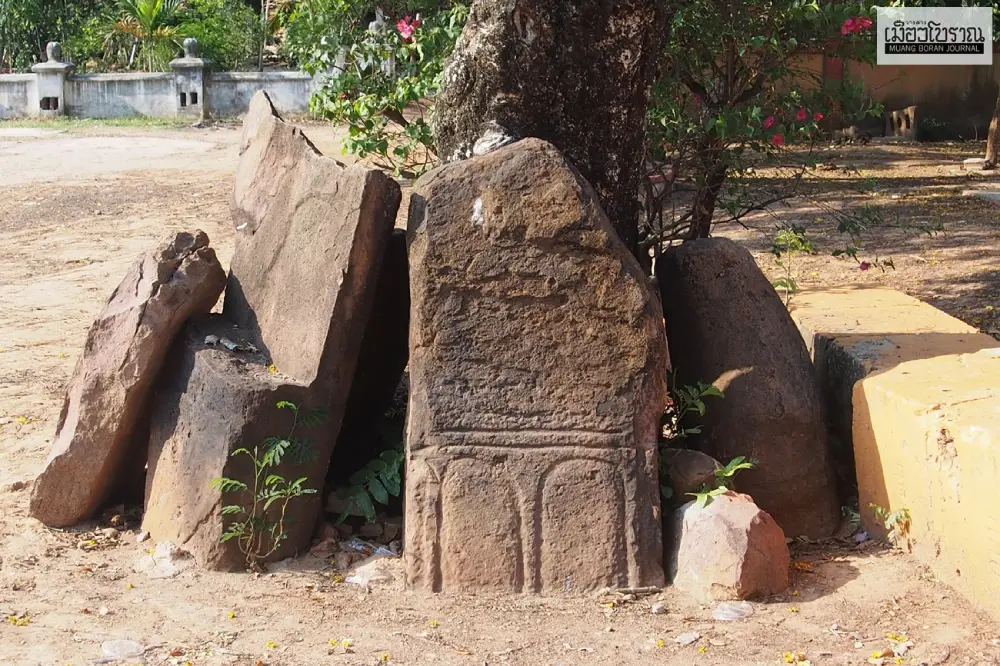
Bai Sema Ban Kut Ngong
Open Days: Daily
Opening Hours: 08.30 – 16.00, Advance Contact Recommended
Bai Sema Ban Kut Ngong in Chaiyaphum Province is one of the most important collections of Dvaravati sandstone boundary stones in northeastern Thailand. The stones are preserved and displayed in the Ban Kut Ngong bai sema pavilion at Ban Kut Ngong, Moo 4, Bung Khla Subdistrict, Mueang Chaiyaphum District. These ancient sandstone markers are more than archaeological objects. They are historical evidence of early Buddhist communities in the Chi River basin, showing how religion, sacred space, local craftsmanship, and regional cultural exchange shaped the identity of this part of Chaiyaphum more than 1,000 years ago.
For foreign travelers who want to explore Chaiyaphum beyond national parks, waterfalls, and mountain scenery, Bai Sema Ban Kut Ngong offers a rare and meaningful cultural experience. The site is quiet, community-based, and deeply connected to the village where the stones were originally found. Inside the pavilion, visitors can see large sandstone slabs carved with Buddhist stories, sacred symbols, Bodhisattva figures, Buddha images, lotus motifs, stupa designs, and inscriptions. The collection helps explain the role of Buddhism in ancient northeastern settlements long before the rise of later Khmer and Thai urban centers.
The word “bai sema” refers to boundary markers used in Buddhist sacred spaces. In later Thai temple culture, sema stones are often associated with the boundary of an ordination hall. In the Dvaravati culture of northeastern Thailand, however, stone sema markers could also define sacred areas around mounds, ritual grounds, or early Buddhist spaces. At Ban Kut Ngong, many stones were once set around earthen mounds and sacred locations in the village area. This makes the site especially valuable because it preserves evidence of how ancient communities marked, respected, and organized religious space.
Ban Kut Ngong itself is an important part of the story. The village lies in an area surrounded by natural waterways, including Lam Pa Thao and smaller streams such as Huai Kok and Huai Lua. The local name reflects this watery landscape. The word “kud” is related to an old watercourse or pond-like feature, while “ngong” refers to a curved or winding form. The name therefore reflects the geography of a settlement shaped by water, raised ground, and fertile land. This environmental setting helps explain why people settled here and why sacred spaces emerged in the area.
The large number of sema stones found around Ban Kut Ngong shows that this was not an ordinary rural settlement. It was a Buddhist community with significant ritual activity. The stones were discovered around the village, especially near mounds where pairs of sema stones had been placed. Such an arrangement indicates sacred zones and ritual boundaries. For archaeologists and cultural travelers, the stones provide important clues about religious practice, settlement patterns, and artistic expression in the Dvaravati period of the northeast.
For many generations, local villagers had seen the stones scattered around fields and village land. At first, they were part of the familiar landscape and were not systematically protected. Over time, especially after theft and the risk of removal from the village, the community realized that these stones were valuable cultural heritage. Villagers began moving the most complete and beautifully carved stones back into the village for safekeeping. In the early stage, only a small number of stones were collected and kept in a temporary temple structure. This community awareness became the foundation of the present conservation effort.
The preservation of Bai Sema Ban Kut Ngong is therefore also a story of community action. Local people, cultural volunteers, monks, scholars, and government agencies all played roles in protecting the stones. The Fine Arts Department later supported the construction of a permanent pavilion so the stones could be displayed and protected in a more appropriate environment. Because the collection remains close to its original community, visitors can still sense the relationship between the artifacts, the village, the temple, the waterways, and local memory.
The display pavilion was built to house and protect the sema stones. Inside, the stones are arranged in an orderly way, allowing visitors to walk slowly from one piece to another. Some are plain and uncarved, while others show lotus designs, stupa motifs, Buddha images, Bodhisattva figures, and narrative scenes from Buddhist literature. The display is simple, but that simplicity helps visitors focus on the texture of the sandstone, the age of the carvings, and the spiritual meaning embedded in each slab.
One of the most important themes found on the sema stones is the standing Bodhisattva on a lotus. The lotus is a powerful Buddhist symbol of purity and spiritual awakening. The figure of the Bodhisattva reflects the compassionate ideal of one who assists living beings on the path toward enlightenment. The style of the figure shows a blend of local northeastern artistic character and Indian religious influence, revealing how Dvaravati communities adapted imported Buddhist ideas into their own visual language.
Another significant image is the Buddha seated on a throne beneath the Bodhi tree. This scene is directly connected with enlightenment and the spiritual authority of the Buddha. On the sema stones of Ban Kut Ngong, such imagery turns the stone marker into more than a boundary object. It becomes a visual teaching tool, a sacred sign, and a reminder of Buddhist doctrine. In an ancient community where visual storytelling was essential, carved stones could communicate religious meaning clearly to worshippers.
Several stones also depict Jataka stories, which are tales of the Buddha’s previous lives. The Jataka scenes at Ban Kut Ngong include stories associated with wisdom, courage, moral discipline, generosity, and spiritual perseverance. These include traditions related to Brahma Narada Jataka, Temiya Jataka, Bhuridatta Jataka, Mahosadha Jataka, Amba Jataka, Panjavudha Jataka, and Vidhura Pandita Jataka. The use of Jataka imagery shows how Buddhist moral teaching was transmitted through art and storytelling in early communities.
The carving style is one of the most fascinating aspects of the collection. Some human figures have square or broad faces, prominent noses, large eye areas, and strong local characteristics. At the same time, certain poses and body arrangements show Indian artistic influence, including graceful body bends and formal sacred postures. This combination gives Bai Sema Ban Kut Ngong a distinctive identity. The carvings are not simple copies of Indian models; they are local creations shaped by regional craftsmanship and Buddhist belief.
Some sema stones bear inscriptions in Pallava script, a writing system from South India that influenced early writing traditions across Southeast Asia. The presence of Pallava-related inscriptions adds great scholarly value to the collection. It shows that ancient communities in this region were connected to wider networks of religion, literacy, and cultural exchange. For foreign visitors, this is an important reminder that inland northeastern Thailand was never isolated from broader Asian history.
Within the wider context of Thailand, Bai Sema Ban Kut Ngong is an important example of Dvaravati culture in the northeastern region. Dvaravati is often associated with central Thailand, but the Ban Kut Ngong stones show that Buddhist culture in the northeast had its own strong identity. The stones help explain how Buddhism spread along river systems and settlement routes, how local communities created sacred spaces, and how art served both religious and social functions.
The conservation history of the site is also significant. In 2020, the 10th Regional Office of Fine Arts, Nakhon Ratchasima, carried out analytical documentation of the line drawings and carved images on the Ban Kut Ngong sema stones. This work was important because sandstone carvings naturally fade over time. By recording and analyzing the remaining carved lines, specialists created a visual record that can support future study, education, and conservation. Such documentation helps preserve knowledge even when the original stone surfaces continue to weather.
One of the strongest qualities of this site is that the sema stones remain close to the community where they were found. Many archaeological objects are removed to large national museums far from their original landscape. At Ban Kut Ngong, visitors can still see the stones within the local environment of the village, temple, waterways, and rural Chaiyaphum landscape. This makes the visit more meaningful because the objects are not separated from the place that gave them historical context.
A visit to Bai Sema Ban Kut Ngong usually takes about 45 minutes to 1 hour. Travelers should walk slowly and observe the stones one by one. Begin with the overall arrangement of the pavilion, then look carefully at the size, thickness, surface texture, carved motifs, lotus forms, stupa images, human figures, Buddha scenes, and inscriptions. Each stone has its own character. Some are impressive because of their scale, while others are valuable because of the stories or symbols carved on them.
Photography is possible, but visitors should act carefully. Avoid using strong flash, do not touch the stone surfaces, do not lean on the stones, and do not move any display elements. Sandstone is vulnerable to gradual weathering, and many carvings have already faded. Good photo angles include the rows of sema stones inside the pavilion, the carved Jataka panels, the Buddha images, and the front view of the sema pavilion. These images can communicate the quiet beauty of a community museum that protects an important archaeological legacy.
Because the site is community-based, advance contact is recommended before visiting. This helps ensure that the pavilion is open and that a caretaker or local volunteer can assist if needed. Visitors should dress modestly, speak softly, avoid touching the stones, keep the area clean, and respect the temple and community environment. This is both a travel destination and a cultural heritage site, so responsible behavior is part of the visit.
Traveling to Ban Kut Ngong also allows visitors to understand local life. The community continues to preserve northeastern Thai traditions throughout the year, including merit-making rituals, Bun Pha Wet, Songkran, Bun Bang Fai, village spirit-related ceremonies, Buddhist Lent, Bun Khao Pradap Din, Bun Khao Sak, the end of Buddhist Lent, Kathin, and Loi Krathong. These living traditions show that the village is not only an archaeological site but also a living cultural community.
For travelers planning a cultural route in Chaiyaphum, Bai Sema Ban Kut Ngong combines well with other historical and sacred sites such as Prang Ku Chaiyaphum, Phraya Phakdi Chumphon Monument, Chao Pho Phaya Lae Shrine at Nong Pla Thao, and Wat Sila At Phu Phra. This route allows visitors to understand Chaiyaphum across several historical layers: Dvaravati Buddhism, Khmer-period religious architecture, early Rattanakosin local history, and contemporary community faith.
Getting There from Chaiyaphum city is straightforward by private car, rental car, or local transport. From the city, take Highway 202 for about 12 km, turn right for about 3 km toward Ban Kut Tum, then turn right again onto the Kut Tum – Bung Khla route for about 4 km to reach Ban Kut Ngong. Travelers unfamiliar with the route should use a map application and search for Ban Kut Ngong, Bung Khla Subdistrict, or ask local residents for directions, as this is a community heritage site rather than a large commercial tourist attraction.
The journey to the site is part of the experience. Along the way, visitors pass rural Chaiyaphum landscapes, fields, village roads, waterways, and small communities. Upon arrival, the atmosphere is calm and authentic. There are no large crowds, no heavy commercialization, and no staged tourist presentation. Instead, the site offers direct contact with ancient heritage protected by a local community.
In summary, Bai Sema Ban Kut Ngong is one of Chaiyaphum’s most valuable cultural heritage sites. It is a collection of Dvaravati sandstone boundary stones, a record of early Buddhist sacred space, a community museum, and a living example of local heritage preservation. Each stone is a visual language from the past. Together, they tell stories of faith, art, settlement, memory, and the determination of Ban Kut Ngong villagers to protect their cultural inheritance for future generations.
| Name | Bai Sema Ban Kut Ngong, Chaiyaphum Province |
| Location | Ban Kut Ngong, Moo 4, Bung Khla Subdistrict, Mueang Chaiyaphum District, Chaiyaphum Province |
| Address | No. 61, Moo 4, Ban Kut Ngong, Bung Khla Subdistrict, Mueang Chaiyaphum District, Chaiyaphum 36000, Thailand |
| Coordinates | 15.78710, 102.11058 |
| Highlights | A major collection of Dvaravati sandstone bai sema stones carved with Jataka scenes, Buddha images, Bodhisattva figures, stupa motifs, lotus designs, and Pallava-script inscriptions |
| History | Dvaravati-period Buddhist boundary stones, broadly dated to around the 12th – 16th Buddhist centuries, reflecting early Buddhist communities in the Chi River basin and central northeastern Thailand |
| Name Origin | The village name Kut Ngong reflects a landscape surrounded by old waterways and curved water features. “Kut” refers to an old pond or watercourse, while “Ngong” suggests a winding or curved form |
| Distinctive Features | Most stones are large sandstone slabs. Some have carved images on the front, some have inscriptions on the back, and many preserve visible Buddhist narrative reliefs |
| Key Evidence | Sandstone sema stones, Jataka carvings, Buddha under the Bodhi tree, standing Bodhisattva on a lotus, Maitreya imagery, stupa motifs, lotus patterns, and Pallava-script inscriptions |
| Travel Information | From Chaiyaphum city, take Highway 202 for about 12 km, turn right for about 3 km to Ban Kut Tum, then turn right onto the Kut Tum – Bung Khla route for about 4 km to reach Ban Kut Ngong |
| Current Status | Open as a community museum and cultural learning site displaying Dvaravati-period bai sema stones |
| Open Days | Daily |
| Opening Hours | 08.30 – 16.00, advance contact recommended |
| Fees | No admission fee |
| Facilities | Sema stone display pavilion, temple grounds, some information signs, local parking area, and walking space for viewing the ancient stones |
| Main Areas / Zones | 1. Ban Kut Ngong Sema Pavilion 2. Sandstone Bai Sema Display Area 3. Jataka-Carved Sema Stones 4. Buddha and Bodhisattva Sema Stones 5. Wat Si Pathum Khongkharam / Wat Ban Kut Ngong Area 6. Ban Kut Ngong Community and Original Discovery Area |
| Caretaker | Ban Kut Ngong Community, local cultural heritage volunteers, the Fine Arts Department, and the 10th Regional Office of Fine Arts, Nakhon Ratchasima |
| Main Contact Number | 086-257-1975, Mr. Seksan Sripratum, Community Cultural Heritage Volunteer |
| Local Traditions | The community preserves northeastern Thai annual traditions such as Bun Khao Chi, Bun Pha Wet, Songkran, Bun Bang Fai, village merit-making, Buddhist Lent, Bun Khao Pradap Din, Bun Khao Sak, end of Buddhist Lent, Kathin, and Loi Krathong |
| Nearby Tourist Attractions | 1. Prang Ku Chaiyaphum, about 13 km 2. Phraya Phakdi Chumphon (Lae) Monument, about 14 km 3. Chao Pho Phaya Lae Shrine at Nong Pla Thao, about 17 km 4. Chaiyaphum Night Bazaar / Walking Street, about 14 km 5. Wat Sila At Phu Phra, about 25 km 6. Tat Ton National Park, about 36 km 7. Mor Hin Khao, about 61 km |
| Nearby Restaurants | 1. Duang Thai Food, about 10 km, Tel. 044-833-840 2. SAYA Cafe & Restaurant, about 12 km, Tel. 090-564-5799 3. Le Pain, about 12 km, Tel. 085-763-2959 4. Roti Riski Chaiyaphum, about 12 km, Tel. 061-053-5509 5. Lakeside Coffee & Cuisine, about 15 km, Tel. 084-589-1616 |
| Nearby Accommodations | 1. Ban Klang Suan Resort, about 4 km 2. Siam River Resort, about 8 km 3. Lertnimit Hotel, about 9 km, Tel. 044-811-522, 080-165-9494 4. Tonkhoon Hotel, about 9 km 5. HOP INN Chaiyaphum, about 11 km, Tel. 065-950-4681 |
Frequently Asked Questions (FAQ)
Q: Where is Bai Sema Ban Kut Ngong located?
A: It is located at Ban Kut Ngong, Moo 4, Bung Khla Subdistrict, Mueang Chaiyaphum District, Chaiyaphum Province, inside the community sema stone display pavilion.
Q: What are the opening hours of Bai Sema Ban Kut Ngong?
A: The site is open daily from 08.30 to 16.00. Advance contact is recommended before visiting.
Q: Is there an admission fee?
A: No. There is no admission fee, but visitors should respect the site and follow the caretaker’s guidance.
Q: Why is Bai Sema Ban Kut Ngong important?
A: It is one of the most important Dvaravati sandstone bai sema collections in northeastern Thailand, showing early Buddhist sacred space, local craftsmanship, and ancient settlement in the Chi River basin.
Q: What can visitors see inside the pavilion?
A: Visitors can see sandstone sema stones with lotus motifs, stupa designs, Buddha images, Bodhisattva figures, Jataka scenes, and some Pallava-script inscriptions.
Q: How long should travelers spend at the site?
A: Travelers should allow about 45 minutes to 1 hour to observe the stones, read the information, and appreciate the carvings in detail.
Q: What should visitors avoid when visiting?
A: Visitors should avoid touching, leaning on, climbing on, or moving the stones. Strong flash photography should also be avoided to help protect the sandstone surfaces.
Q: What nearby attractions can be combined with Bai Sema Ban Kut Ngong?
A: The site can be combined with Prang Ku Chaiyaphum, Phraya Phakdi Chumphon Monument, Chao Pho Phaya Lae Shrine, Chaiyaphum Night Bazaar, Wat Sila At Phu Phra, and Tat Ton National Park.
 Category: ●Art, Culture and Heritage
 Group: ●Landmarks and Memorials
Last Update : 3 MonthAgo
 Last Update : 3 MonthAgo
 Click to Access the Navigation Map GPS
Bai Sema Ban Kut Ngong Map
Recommend

 Historical Sites and Monuments(1)
Landmarks and Memorials(3)
Historical Sites and Monuments(1)
Landmarks and Memorials(3)
 Royal Palace(1)
 Art, Craft Centres, Tradition(3)
 Educational Places
 Educational Gardens, Farm(1)
 Places of Worship
 Temple(141)
 Other Sacred Sites(7)
 Suburban Living
 Village, Community(4)
 Nature and Wildlife
 National Parks and Marine Reserves(7)
 Mountain (Doi)(5)
 Dam, Reservoir, Lake(10)
 Waterfalls(15)
 Caves(5)
 River, Canal(4)
 Other natural attractions(1)
 Entertainment and Agricultural
 Farms, Parks and Ecotourism(2)


