
lovethailand home >Northeastern Travel Attractions >Chaiyaphum Travel Attractions >Phu Khieo >Phak Pang > Ban Khae Topiary and Ornamental Plant Center
TL;DR: Ban Khae Topiary and Ornamental Plant Center is located at Ban Khae, Phak Pang Subdistrict, Phu Khieo District, Chaiyaphum Province, open Daily, hours 08.00 – 18.00 (Individual Shops May Have Different Opening Hours).

Ban Khae Topiary and Ornamental Plant Center
Open Days: Daily
Opening Hours: 08.00 – 18.00 (Individual Shops May Have Different Opening Hours)
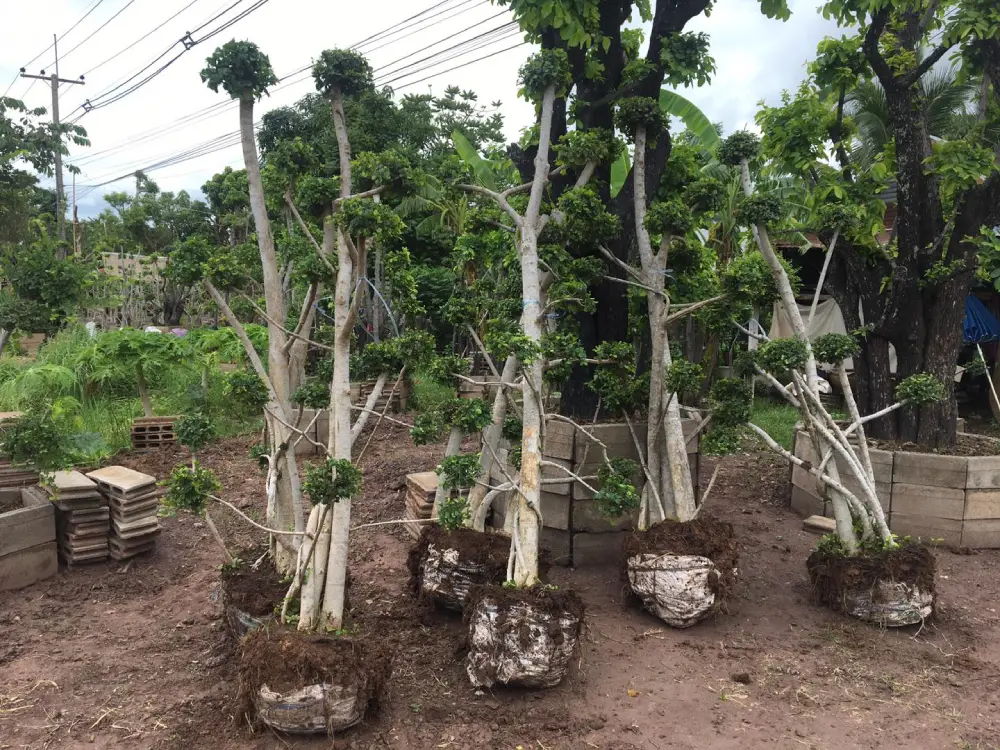
Ban Khae Topiary And Ornamental Plant Center is located along Highway 201 in Ban Khae, Phak Pang Subdistrict, Phu Khieo District, Chaiyaphum Province. It is one of the best-known roadside centers for topiary trees, dug-up landscape trees, and ornamental plants in the province. The center is about 76 kilometers from Chaiyaphum city and only a short distance before reaching Phu Khieo District town. Along both sides of the highway, travelers can see many shops displaying shaped trees in different sizes and forms, suitable for home gardens, resorts, cafés, restaurants, offices, public parks, and landscape projects.
Ban Khae is more than a roadside plant market. It is a community-based craft and livelihood area where local people turn native trees into living decorative forms. Villagers have developed skills in selecting trees, digging and transplanting them, shaping branches, trimming foliage, training canopies, and caring for plants until they are ready for sale. Common plants include takoh, khoi, masang, mok, maka, Fukien tea, banyan, fig, tamarind, and other local trees suitable for shaping or landscape use. The craft combines plant knowledge, patience, artistic vision, and practical gardening skill.
Ban Khae has become widely associated with ornamental topiary in Phu Khieo District. Because it is located directly along Highway 201, the plant shops are easy to see and visit. Travelers can stop to compare trees, ask about prices, and speak directly with growers. The long line of shaped trees along the roadside has become part of the local identity before entering Phu Khieo town. Many travelers remember Ban Khae from the sight of takoh topiary, khoi topiary, and large dug-up trees displayed in front of local shops.
Making topiary takes far longer than many visitors realize. A tree cannot be shaped beautifully in a single day. Growers begin by selecting a plant with suitable trunk, roots, branch structure, age, and strength. The tree is then planted, trained, pruned, and shaped gradually. Branches may be guided into position, unnecessary growth removed, and new shoots encouraged where needed. Some trees take months to form, while others take years before they become full, balanced, and ready for sale.
Takoh is one of the most important trees at Ban Khae. It is hardy, easy to care for, locally available, and suitable for shaping into many forms, such as layered canopies, cloud-like forms, animal shapes, and modern garden designs. Takoh topiary has strong visual presence because of its firm trunk, dense small leaves, and ability to respond well to trimming. For buyers who want a natural but clearly shaped ornamental tree, takoh is one of the most practical choices.
Khoi is another popular topiary tree. It has small leaves and can be trained into a dense and refined canopy. However, khoi usually grows more slowly than takoh and requires more consistent care. A well-shaped khoi tree often reflects years of work and careful pruning. This is why khoi topiary can be more expensive than some other types. Masang, mok, maka, Fukien tea, and other local trees also have their own strengths depending on trunk character, leaf size, branch pattern, and buyer preference.
One of the attractions of Ban Khae is that visitors can compare many shapes and sizes in one area. Some shops specialize in small ornamental trees for home gardens. Others offer large dug-up trees for landscape projects. Some shops accept custom shaping, while others display ready-made takoh, khoi, mok, and Fukien tea trees. Walking along the roadside shops feels like visiting an open-air exhibition of living sculpture, where each shop shows a slightly different taste and technique.
Dug-up landscape trees are another important product at Ban Khae. These are trees moved with root balls so they can be replanted in a new location. They are useful for people who want immediate shade or mature landscape structure without waiting for young trees to grow for many years. Dug-up trees may not always be shaped as carefully as topiary trees, but they are valuable for resorts, restaurants, gardens, and public spaces that need instant greenery.
Topiary requires artistic vision. A skilled grower must see the future form of a tree before it is fully developed. The grower decides which branches to keep, which to cut, which to bend, and where to encourage new growth. A good topiary tree should look balanced from several angles, not only from the front. This makes the craft similar to sculpture, except the material is alive and continues to grow after it leaves the shop.
After buying a topiary tree, care is essential. Buyers should ask sellers about watering, sunlight, pruning, pot changes, root care, and adjustment after transplanting. Some plants prefer full sun, while others grow better with partial shade. Some need regular watering but dislike waterlogging. A good purchase therefore depends not only on the shape and price, but also on whether the buyer can provide suitable long-term care.
For small homes, townhouses, balconies, or compact garden corners, smaller topiary trees are usually more practical. For larger homes, cafés, restaurants, resorts, or public spaces, medium and large trees can create stronger focal points. Choosing the right size prevents the garden from feeling too crowded and makes maintenance easier. Ban Khae offers many options, allowing buyers to choose according to real space and use.
A major advantage of buying at Ban Khae is direct conversation with growers and shop owners. Buyers can ask how old a tree is, what species it is, how it should be trimmed, how often it should be watered, and how it can be transported safely. This advice is valuable because local growers know the behavior of each plant from direct experience. Their knowledge comes from years of working with living trees, not only from general gardening information.
The topiary trade supports the local economy of Ban Khae. The work involves tree collectors, growers, pruners, shop owners, transport workers, and landscape buyers. Many families earn income from growing and selling ornamental trees. Buying trees from Ban Khae therefore supports a community livelihood built on skill, patience, and local plant knowledge.
As a travel stop, Ban Khae Topiary And Ornamental Plant Center is suitable for visitors interested in local products, garden design, landscaping, ornamental plants, and community livelihoods. A short stop may take only 20 minutes, but serious buyers may spend much longer comparing shapes, asking about care, and arranging transport. Each tree has its own form, age, and character, so careful selection is worthwhile.
Visitors should be careful when stopping along Highway 201 because the shops are located beside a main road with steady traffic. Cars should be parked only in areas provided by the shops or where it is safe to stop. Visitors should avoid blocking the shoulder of the road and should be cautious when walking between shops on opposite sides of the highway. Families with children or elderly travelers should take extra care.
Ban Khae is also a convenient stop for travelers continuing to Phu Khieo, Chum Phae, Khon San, or northern Chaiyaphum. Visitors may stop before entering Phu Khieo town or on the return journey to Chaiyaphum city. If buying large trees, it is important to check wrapping, loading, branch protection, and transport safety before continuing the drive.
Topiary trees require continued pruning after purchase. If left untrimmed for too long, the shape can become uneven, branches may stretch, and the canopy may lose balance. Buyers should learn basic maintenance such as trimming new shoots, rotating pots for sunlight, controlling watering, and checking root conditions. Caring for topiary becomes part of the enjoyment of owning a garden.
Different tree species create different garden moods. Takoh feels strong, natural, and durable. Khoi gives a refined and compact appearance. Mok can add graceful form and, in some varieties, fragrant flowers. Maka highlights trunk character. Fukien tea is suitable for dense forms and animal shapes. Banyan, fig, and tamarind can create shade and cultural atmosphere. The best choice depends on both design preference and maintenance ability.
When using topiary in garden design, it is better to give the tree room to stand out. Too many highly shaped trees in a small space may make the garden feel crowded. One well-placed topiary can act as a focal point, while shrubs, ground cover, stone, water, or open space help create balance. Ban Khae trees can be used in Thai gardens, modern gardens, Japanese-inspired spaces, resort landscapes, and restaurant entrances.
Landscape contractors and business owners often find Ban Khae useful because many tree sizes are available in one area. Small topiary trees work for shopfronts and photo corners. Medium trees suit homes and cafés. Large dug-up trees are practical for resorts, restaurants, and projects that need immediate greenery. This variety makes Ban Khae useful for both individual buyers and professional landscape work.
Ban Khae Topiary And Ornamental Plant Center can be combined with nearby attractions in Phu Khieo and the surrounding area. Nearby places include Phak Pang Municipal Public Park, Wat Ta Khaek, Phra That Nong Sam Muen, Non Mueang Ancient Town, Chum Phae City Pillar Shrine, Sok Nam Sai Health Park, and Pha Hua Nak Viewpoint in Phu Laen Kha National Park. This makes Ban Khae a good stop on a broader cultural and nature route.
Phra That Nong Sam Muen is one of the most important cultural sites near Phu Khieo. It is a large ancient stupa with local museum objects, sema stones, inscriptions, and a strong religious atmosphere. Travelers can stop at Ban Khae for ornamental plants and continue to Phra That Nong Sam Muen for worship and historical learning. This creates a route that combines local craft, community livelihood, and ancient heritage.
Non Mueang Ancient Town in Chum Phae is another suitable extension for travelers interested in history. A route from Ban Khae through Phu Khieo toward Chum Phae gives visitors a broader view of northern Chaiyaphum and the cultural borderland with Khon Kaen. The route combines community products, ancient monuments, and regional travel connections.
Restaurants near Ban Khae can be found in Phu Khieo town, Ban Kaeng, and nearby highway areas. Options include Saeng Arun Phochanakan, Chachak40 Phu Khieo, Rabiang Na Cafe’@Phukhieo, Jungle Cafe Phu Khieo, Kuai Tiao Kai Mara Buffet Phu Khieo, and Phor Boonrod in Ban Kaeng. Travelers can plan a meal before or after shopping for trees, especially if continuing toward Chum Phae or Khon San.
Accommodation near Ban Khae is available in Phu Khieo and Ban Kaeng. Options include Bander Hotel, Ban Suan Amara Resort, Phusuay Namsai Resort, Muang Thong Resort Phu Khiao, Jamsai Resort, and other local hotels or resorts in Phu Khieo. Staying overnight can be useful for travelers who want enough time to select trees, arrange transport, and visit nearby cultural sites without rushing.
Getting There from Chaiyaphum city is straightforward by private car. Take Highway 201 toward Phu Khieo District for about 76 kilometers. Before reaching Phu Khieo town by about 1-3 kilometers, the Ban Khae topiary shops appear along both sides of the highway. Travelers may use coordinates 16.3583997, 102.1488931 as a navigation reference. Drivers should slow down carefully before stopping because the shops are located beside a main road.
The recommended visiting time is from morning to late afternoon, around 08.00 to 18.00. Morning is more comfortable for walking among the trees and speaking with shop owners, while afternoon is convenient for travelers passing through the area. Since many shops are open-air, visitors should prepare sun protection such as a hat, umbrella, or long-sleeved clothing.
Overall, Ban Khae Topiary And Ornamental Plant Center is more than a place to buy trees. It shows how a rural community can turn local plants into valuable ornamental products through skill, care, and artistic shaping. Takoh, khoi, masang, and other trees become living sculptures that support family income and create a recognizable identity for Ban Khae and Phu Khieo.
For travelers who want to understand Chaiyaphum through local livelihoods, Ban Khae is a worthwhile stop. Walking along the roadside plant shops, speaking with growers, choosing a tree, and learning how to care for it gives visitors a different view of the province. It is a destination where agriculture, craft, landscape design, and community economy come together in a practical and memorable way.
| Name | Ban Khae Topiary And Ornamental Plant Center / Ban Khae Topiary Village |
| Location | Ban Khae, Phak Pang Subdistrict, Phu Khieo District, Chaiyaphum Province |
| Address | Along Highway 201, Ban Khae, Phak Pang Subdistrict, Phu Khieo District, Chaiyaphum 36110, Thailand |
| Coordinates | 16.3583997, 102.1488931 |
| Highlights | A roadside center for topiary trees, dug-up landscape trees, and ornamental plants along Highway 201 before Phu Khieo town, known for takoh, khoi, mok, maka, Fukien tea, and local shaped trees |
| History / Background | A community livelihood area where Ban Khae villagers developed skills in selecting, growing, shaping, pruning, and selling ornamental topiary trees until it became a well-known local product of Phu Khieo and Chaiyaphum |
| Main Products | Takoh topiary, khoi topiary, masang topiary, mok, maka, Fukien tea, local shaped trees, dug-up landscape trees, garden trees, and ornamental plants for homes, restaurants, resorts, and landscape projects |
| Interesting Processes | Tree selection, digging and transplanting, growing, pruning, branch shaping, canopy training, preparing trees for sale, and giving care advice after purchase |
| Name Origin | Named after Ban Khae, a village in Phak Pang Subdistrict, Phu Khieo District, where many topiary and ornamental plant shops are concentrated along Highway 201 |
| Main Areas / Zones | Highway 201 roadside shop zone, takoh topiary zone, khoi topiary zone, dug-up tree zone, large landscape tree zone, small ornamental plant zone, grower consultation zone, and transport preparation area |
| Facilities | Roadside plant shops, parking space in front of some shops, advice from growers, ornamental plant selection areas, restaurants in Phu Khieo nearby, and local accommodation options |
| Main Activities | Viewing topiary trees, buying garden trees, asking about plant care, speaking with local growers, photographing ornamental plants, and combining the stop with Phu Khieo or Chum Phae travel routes |
| Caretaker / Main Organizations | Ban Khae community, local topiary shop owners, Phak Pang Subdistrict Administrative Organization, and local authorities in Phu Khieo District |
| Local Contact Numbers | Phak Pang SAO, Tel. 044-056-199, 044-056-198 / Phu Khieo Municipality, Tel. 044-861-456 |
| Open Days | Daily |
| Opening Hours | 08.00 – 18.00 (Individual Shops May Have Different Opening Hours) |
| Entrance Fee | No entrance fee; product prices depend on plant species, size, shape, age, shaping difficulty, and transport arrangements |
| Travel Information | From Chaiyaphum city, take Highway 201 toward Phu Khieo District for about 76 km. About 1-3 km before Phu Khieo town, topiary shops appear along both sides of the road at Ban Khae. Use coordinates 16.3583997, 102.1488931 |
| Current Status | An active community livelihood and roadside market for topiary trees, dug-up landscape trees, and ornamental plants along Highway 201 in Ban Khae |
| Nearby Tourist Attractions | 1. Ban Khae Topiary And Ornamental Plant Center, about 0.1 km 2. Phak Pang Municipal Public Park, about 4 km 3. Wat Ta Khaek, Nong Tum Subdistrict, about 8 km 4. Phra That Nong Sam Muen, Ban Kaeng, about 15 km, Tel. 095-838-0517, 087-248-7049 5. Non Mueang Ancient Town, Chum Phae District, about 22 km 6. Chum Phae City Pillar Shrine, about 24 km 7. Sok Nam Sai Health Park, Phu Khieo District, about 12 km 8. Pha Hua Nak Viewpoint, Phu Laen Kha National Park, about 45 km, Tel. 093-0939193 |
| Nearby Restaurants | 1. Saeng Arun Phochanakan (Ko Tee), Phu Khieo, about 4 km, Tel. 044-861-015 2. Chachak40 Phu Khieo, about 5 km, Tel. 092-270-6040 3. Rabiang Na Cafe’@Phukhieo, about 6 km, Tel. 084-227-2252 4. Jungle Cafe Phu Khieo-Chaiyaphum Branch, about 6 km, Tel. 093-071-7544 5. Kuai Tiao Kai Mara Buffet Phu Khieo, about 6 km, Tel. 095-180-0281 6. Phor Boonrod, Ban Kaeng, about 14 km, Tel. 094-361-3350 |
| Nearby Accommodations | 1. Bander Hotel, Phu Khieo, about 4 km, Tel. 044-862-332, 081-068-3563 2. Ban Suan Amara Resort, Phu Khieo District, about 5 km, Tel. 081-546-9909, 082-755-3908 3. Phusuay Namsai Resort, about 6 km, Tel. 061-562-4222 4. Muang Thong Resort Phu Khiao, about 8 km, Tel. 081-967-4810 5. Jamsai Resort, Ban Kaeng, about 13 km 6. Local Hotels And Resorts In Phu Khieo Town, about 4-10 km |
Frequently Asked Questions (FAQ)
Q: Where is Ban Khae Topiary And Ornamental Plant Center located?
A: It is located along Highway 201 in Ban Khae, Phak Pang Subdistrict, Phu Khieo District, Chaiyaphum Province, about 76 km from Chaiyaphum city and about 1-3 km before Phu Khieo town.
Q: What is Ban Khae famous for?
A: Ban Khae is famous for topiary trees, dug-up landscape trees, and ornamental plants, especially takoh topiary, khoi topiary, masang, mok, Fukien tea, and local shaped trees.
Q: What can the trees from Ban Khae be used for?
A: They are suitable for home gardens, resorts, cafés, restaurants, offices, public parks, and landscape projects that need shaped ornamental trees or mature trees for instant greenery.
Q: Is there an entrance fee?
A: There is no entrance fee because Ban Khae is a roadside plant-selling community. Product prices depend on plant species, size, shape, age, shaping difficulty, and transport arrangements.
Q: How should visitors choose a topiary tree?
A: Visitors should choose according to garden size, sunlight, maintenance ability, and design style. They should also ask growers about watering, pruning, transplanting, and long-term care.
Q: What are the recommended opening hours?
A: The recommended visiting hours are 08.00 to 18.00, although individual shops may have different opening hours, especially small family-run shops.
Q: How can travelers get to Ban Khae from Chaiyaphum city?
A: From Chaiyaphum city, take Highway 201 toward Phu Khieo District for about 76 km. Before Phu Khieo town, the topiary shops appear along both sides of the road. Use coordinates 16.3583997, 102.1488931.
Q: What nearby attractions can be combined with a visit?
A: Nearby places include Phak Pang Municipal Public Park, Wat Ta Khaek, Phra That Nong Sam Muen, Non Mueang Ancient Town, Chum Phae City Pillar Shrine, Sok Nam Sai Health Park, and Pha Hua Nak Viewpoint in Phu Laen Kha National Park.
 Category: ●Suburban Living
 Group: ●Village, Community
Last Update : 3 MonthAgo
 Last Update : 3 MonthAgo
 Click to Access the Navigation Map GPS
Ban Khae Topiary and Ornamental Plant Center Map
Recommend

 Art, Culture and Heritage
 Historical Sites and Monuments(1)
 Landmarks and Memorials(3)
 Royal Palace(1)
 Art, Craft Centres, Tradition(3)
 Educational Places
 Educational Gardens, Farm(1)
 Places of Worship
 Temple(141)
 Other Sacred Sites(7)
Village, Community(4)
Other Sacred Sites(7)
Village, Community(4)
 Nature and Wildlife
 National Parks and Marine Reserves(7)
 Mountain (Doi)(5)
 Dam, Reservoir, Lake(10)
 Waterfalls(15)
 Caves(5)
 River, Canal(4)
 Other natural attractions(1)
 Entertainment and Agricultural
 Farms, Parks and Ecotourism(2)


