
lovethailand home >Northeastern Travel Attractions >Chaiyaphum Travel Attractions >Muang Chaiyaphum >Nai Muang > Prang Ku Chaiyaphum
TL;DR: Prang Ku Chaiyaphum is located at Bannakarn Road, Ban Nong Bua, Nai Mueang Subdistrict, Mueang Chaiyaphum District, Chaiyaphum Province, open Daily, hours No Fixed Official Opening Hours.
Prang Ku Chaiyaphum
Open Days: Daily
Opening Hours: No Fixed Official Opening Hours
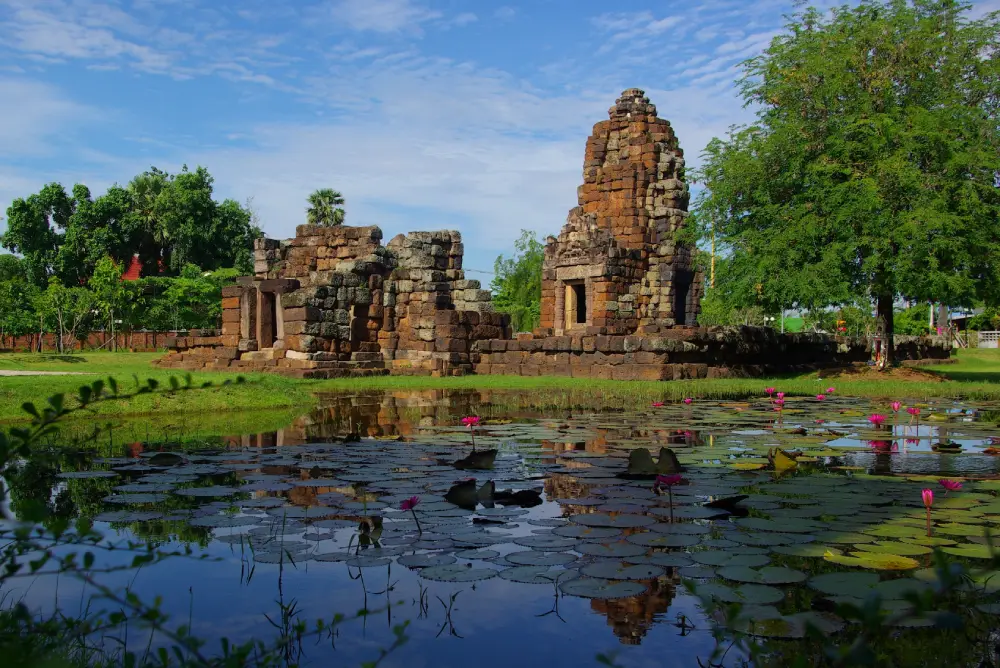
Prang Ku Chaiyaphum is one of the most important Khmer-period archaeological sites in Chaiyaphum Province. Located at Ban Nong Bua, Nai Mueang Subdistrict, Mueang Chaiyaphum District, this compact yet historically rich stone sanctuary stands in the heart of the city and represents one of the clearest examples of an Arogayasala, or a religious sanctuary attached to an ancient medical station, built during the reign of King Jayavarman VII in the 18th Buddhist century. The site consists of a central prang, a library or vihara-like structure, an eastern entrance pavilion, a laterite enclosure wall, and a sacred pond outside the northeastern corner. Together, these components make Prang Ku not merely an old ruin, but a rare surviving record of religion, medicine, administration, and Khmer cultural influence in northeastern Thailand.
For travelers who want to understand Chaiyaphum beyond its mountains, waterfalls, and natural attractions, Prang Ku is an excellent starting point. It is easy to reach from the city center, requires only a short visit, and offers deep cultural value for anyone interested in Khmer art, Mahayana Buddhism, ancient healthcare networks, and local faith. Visitors can walk around the laterite structures, observe the sandstone lintels, study the layout of the ancient sanctuary, pay respect to the Buddha image revered by local residents, and learn how this small archaeological site remains connected to the living culture of Chaiyaphum today.
The name “Prang Ku” reflects both architecture and local language. The word “Prang” refers to a tower-like religious structure commonly associated with Khmer and Thai sacred architecture, while “Ku” is often used in northeastern Thailand to refer to ancient ruins or old sanctuaries made of brick, laterite, or sandstone. Together, the name refers to an ancient sanctuary that has long been associated with the local community of Ban Nong Bua and the old urban area of Chaiyaphum. Over time, Prang Ku has become one of the province’s most recognizable historical landmarks.
The key historical importance of Prang Ku lies in its role as an Arogayasala. In the Khmer Empire, Arogayasala sites were medical-religious establishments associated with Mahayana Buddhist beliefs, especially the worship of Bhaisajyaguru, the Medicine Buddha, who symbolizes healing, protection from illness, and well-being. During the reign of King Jayavarman VII, such sanctuaries were built across important towns and routes of the empire. Prang Ku Chaiyaphum therefore provides strong evidence that this area was once part of a broader Khmer cultural and administrative network.
The overall layout of Prang Ku follows the typical plan of an Arogayasala. The central prang stands inside a laterite enclosure. A library-like building is positioned in front of it. The entrance pavilion, or gopura, faces east. A pond lies outside the wall at the northeastern corner. This arrangement is meaningful. In Khmer sacred architecture, the east often represents light, beginning, and ritual direction, while water is associated with purification, healing, fertility, and sacred geography. Prang Ku should therefore be understood as a complete sacred landscape rather than a single isolated tower.
The central prang is the heart of the site. It is built mainly of laterite and sandstone, faces east, and originally contained the main sacred image of the sanctuary. Only the eastern side functions as the real entrance, while the other three sides are false doors, a common feature in Khmer architecture. Although the original principal image is no longer present, the structure still allows visitors to understand the sacred axis and architectural intention of the site. Its modest scale makes it easy to study, while its surviving details reveal a refined artistic tradition.
One of the most important features of Prang Ku is its sandstone lintel. The northern lintel still preserves a carving of a seated Buddha in meditation above a kala face holding garlands. This imagery is closely related to Bayon-style Khmer art and Mahayana Buddhist symbolism under Jayavarman VII. The presence of carved lintels and pediments makes Prang Ku especially valuable, because many Arogayasala sites have very limited decorative remains. At Chaiyaphum, the surviving carvings provide insight into religious ideas, artistic style, and the craftsmanship of the period.
The front lintel of the main prang is more weathered, but the remaining traces still show that the building was once richly decorated. The contrast between laterite construction and sandstone decorative elements is typical of Khmer-period architecture in the region. Laterite was used for walls and structural mass, while sandstone was reserved for carved details such as lintels, pediments, doorframes, and architectural ornaments. The result is a structure that appears solid and earth-toned from a distance, but reveals delicate symbolic details when observed closely.
Inside the area, a stone Buddha image in meditation posture is also enshrined. It is in Dvaravati style and highly respected by the people of Chaiyaphum, although it was moved here from another location. Its presence adds another cultural layer to Prang Ku. Visitors can see how Dvaravati, Khmer Bayon, and modern local Buddhist devotion coexist within the same place. This layering of cultures is one of the reasons Prang Ku is more than a historical ruin; it is a living cultural site where different periods of belief continue to meet.
The library or vihara-like structure is another important component. In Khmer sanctuaries, such buildings are often associated with sacred texts, ritual objects, or ceremonial use. In the context of an Arogayasala, it may also have been linked to the functions of the medical-religious establishment. The pediment of the library is especially significant because it depicts an episode from the life of Prince Siddhartha as he leaves the palace to seek enlightenment. This Buddhist theme reinforces the Mahayana character of the site and gives visitors another reason to observe the building carefully rather than viewing it only as a small secondary ruin.
The eastern gopura served as the formal entrance into the sacred compound. It created a clear transition from the outside world into the inner ritual space. Even though parts of the structure are now damaged, the plan still shows how visitors in the past would have moved through the entrance, passed the library, and approached the central prang. Walking through the site in this order helps modern travelers understand Khmer architectural planning more clearly than simply taking photographs from one angle.
The laterite enclosure wall defines the sacred boundary of the sanctuary. It separates the inner religious compound from the surrounding landscape and gives the site a sense of order. Laterite, with its porous texture and reddish-brown surface, is one of the most distinctive materials found in archaeological sites across northeastern Thailand. At Prang Ku, the laterite wall, tower, and associated structures create a strong visual identity and help visitors feel the age and atmosphere of the place.
The pond outside the northeastern corner is an essential part of the site plan. In religious and medical contexts, water often represents purity, healing, and completeness. At many Khmer sites, ponds also reflect cosmological ideas and practical water management. The pond at Prang Ku therefore helps complete the Arogayasala layout and shows that the sanctuary was designed as an integrated sacred environment. It was not merely a tower but a carefully arranged complex with ritual, symbolic, and functional meaning.
Modern conservation has played an important role in keeping Prang Ku accessible. The site has been surveyed, excavated, restored, and landscaped by responsible agencies. Restoration using anastylosis has helped strengthen the structure while respecting original evidence. The surrounding grounds have been opened as a cultural learning space, with grass-covered areas and information signs that allow visitors to study the monument in an outdoor setting. This makes Prang Ku suitable for both casual travelers and those with a serious interest in archaeology.
Prang Ku has also been registered as a national ancient monument, confirming its official historical value. The registration and boundary designation protect the site from inappropriate development and help ensure that it remains part of Thailand’s cultural heritage. This formal protection is important because Prang Ku stands within an urban community, surrounded by roads, houses, temples, schools, and public buildings. Its survival within the city makes it especially meaningful as a heritage site that continues to live alongside modern Chaiyaphum.
The atmosphere of Prang Ku is different from remote temple ruins hidden in forests or mountains. Here, the ancient sanctuary stands in an active urban neighborhood. Local residents pass by, walk around the grounds, rest in the open area, and join annual ceremonies. This connection between archaeological heritage and daily life is one of the site’s strongest charms. Visitors do not see only an isolated ruin; they see an ancient monument that remains part of the community’s identity.
The annual tradition held at Prang Ku is another important part of its living heritage. Around the fifth lunar month, usually in April, local people organize merit-making activities, gilding ceremonies, worship, Buddha-image bathing rituals, and community events around the monument. This annual celebration shows that Prang Ku is still a place of devotion and local pride. Travelers visiting during this period may experience a more vibrant atmosphere, with religious activities and community participation bringing the old sanctuary to life.
Visitors interested in archaeology should take time to walk slowly through the site. Start from the eastern approach, pass through the gopura, observe the relationship between the entrance, the library, the enclosure, and the central prang, and then look closely at the lintels, false doors, and Buddha image. This route helps explain the architecture in a natural sequence. Reading the information signs on site will also make the visit more meaningful.
For photography, the best time to visit is in the morning or late afternoon, when the light is softer and the surface of the laterite stones appears more textured. The main tower and enclosure wall provide good angles for wide photographs, while the lintels and doorframes are suitable for detail shots. Visitors should not climb onto the monument, touch carvings unnecessarily, or place objects on ancient stones. Respectful behavior helps preserve the site for future generations.
A typical visit to Prang Ku takes around 30 minutes to 1 hour. It can be included easily in a half-day itinerary around Chaiyaphum city. Travelers may combine it with Phraya Phakdi Chumphon Monument, Chaiyaphum Night Bazaar, Nong Pla Thao Public Park, or continue farther to Tat Ton National Park, Wat Sila At Phu Phra, Phra That Chaiyaphum, or Mor Hin Khao. Because the site is free to visit and located near the city center, it is a practical stop for families, cultural travelers, history enthusiasts, students, and photographers.
Getting There from Chaiyaphum city is convenient by private car, rental car, or local transport. From the city, take Highway 202 on the Chaiyaphum – Bua Yai route for about 1 km, then turn right onto Highway 2158 for another 2 km. Another common route starts from Phraya Phakdi Chumphon Monument and heads east along the old city road or Bannakarn Road. The sanctuary is located near Wat Prang Ku and the local community area, making it easy to find.
Visitors should dress modestly because the site contains a revered Buddha image and remains a place respected by local people. Do not climb on the ancient structures, write on stones, move any fragments, touch carvings unnecessarily, or leave rubbish behind. Prang Ku is part of Chaiyaphum’s cultural identity, and responsible travel is essential to preserving this heritage.
In summary, Prang Ku Chaiyaphum is a compact but deeply meaningful Khmer sanctuary. It represents the Arogayasala network of King Jayavarman VII, Bayon-style art, Mahayana Buddhist symbolism, local devotion, and the living relationship between an ancient monument and a modern Thai city. For foreign travelers seeking a culturally rich destination beyond the usual tourist route, Prang Ku offers a clear, accessible, and rewarding introduction to the historical depth of Chaiyaphum.
| Name | Prang Ku Chaiyaphum |
| Location | Bannakarn Road, Ban Nong Bua, Nai Mueang Subdistrict, Mueang Chaiyaphum District, Chaiyaphum Province |
| Address | Ban Nong Bua, Nai Mueang Subdistrict, Mueang Chaiyaphum District, Chaiyaphum 36000, Thailand |
| Coordinates | 15.806629, 102.044545 |
| Highlights | A Khmer-period Arogayasala sanctuary with a central prang, library, eastern gopura, laterite enclosure wall, and sacred pond |
| History | Built around the 18th Buddhist century in Bayon-style Khmer culture, associated with King Jayavarman VII and Mahayana Buddhist medical sanctuaries |
| Name Origin | “Prang” refers to a sacred tower-like structure, while “Ku” is commonly used in northeastern Thailand for ancient ruins or sanctuaries |
| Distinctive Features | The main prang faces east, has one real entrance and three false doors, and preserves a sandstone lintel showing a seated Buddha above a kala face |
| Key Evidence | Sandstone lintels, pediments, Mahayana Buddhist carvings, a Dvaravati-style stone Buddha image, and a clearly readable Arogayasala layout |
| Travel Information | From Chaiyaphum city, take Highway 202 for about 1 km, then turn right onto Highway 2158 for about 2 km; the site can also be reached from Phraya Phakdi Chumphon Monument via the old city road or Bannakarn Road |
| Current Status | An important cultural attraction and registered ancient monument of Chaiyaphum, open to visitors daily |
| Open Days | Daily |
| Opening Hours | No fixed official opening hours |
| Fees | No admission fee |
| Facilities | Open grass area, on-site information signs, and walking space around the ancient monument |
| Main Areas / Zones | 1. Central Prang 2. Library or Vihara-Like Structure 3. Eastern Gopura 4. Laterite Enclosure Wall 5. Northeastern Pond 6. Open Grounds Around the Monument |
| Caretaker | Fine Arts Department, Chaiyaphum Municipality, and the 12th Regional Office of Fine Arts, Nakhon Ratchasima |
| Annual Tradition | Bun Prang Ku / Prang Ku Gilding and Worship Festival, usually held around the fifth lunar month or April |
| Nearby Tourist Attractions | 1. Phraya Phakdi Chumphon Monument, about 1 km 2. Chao Pho Phraya Lae Shrine, about 2 km 3. Chaiyaphum Walking Street / Night Bazaar, about 2 km 4. Nong Pla Thao Public Park, about 4 km 5. Wat Sila At Phu Phra, about 14 km 6. Tat Ton National Park, about 23 km 7. Mor Hin Khao, about 47 km |
| Nearby Restaurants | 1. SAYA Cafe & Restaurant, about 1 km, Tel. 090-564-5799 2. Roti Riski Chaiyaphum, about 1 km, Tel. 061-053-5509 3. Duang Thai Food, about 1 km, Tel. 083-721-1101 4. Le Pain, about 3 km, Tel. 085-763-2959 5. Lakeside Coffee & Cuisine, about 5 km, Tel. 084-589-1616 |
| Nearby Accommodations | 1. Lertnimit Hotel, about 1 km, Tel. 044-811-522, 080-165-9494 2. Siam River Resort, about 2 km, Tel. 044-811-999 3. HOP INN Chaiyaphum, about 3 km, Tel. 02-080-2222 4. Phusuay Park View Hotel, about 7 km, Tel. 044-854-111, 080-153-1331 5. Chaiyaphum Park Hotel, about 7 km, Tel. 092-506-0810, 093-498-1091 |
Frequently Asked Questions (FAQ)
Q: Where is Prang Ku Chaiyaphum located?
A: Prang Ku is located on Bannakarn Road at Ban Nong Bua, Nai Mueang Subdistrict, Mueang Chaiyaphum District, Chaiyaphum Province, not far from the city center.
Q: Why is Prang Ku historically important?
A: It is a Khmer-period Arogayasala sanctuary associated with King Jayavarman VII and Mahayana Buddhist medical-religious establishments of the 18th Buddhist century.
Q: Is there an admission fee for Prang Ku?
A: No. Visitors can enter Prang Ku free of charge.
Q: Does Prang Ku have fixed opening hours?
A: The site has no fixed official opening hours, but visitors should go during daylight hours for safe and convenient sightseeing.
Q: What can visitors see inside Prang Ku?
A: Visitors can see the central prang, library, eastern gopura, laterite enclosure wall, pond, sandstone lintels, Mahayana Buddhist carvings, and a revered stone Buddha image.
Q: How long should travelers spend at Prang Ku?
A: Most visitors spend around 30 minutes to 1 hour walking around the site, reading the information signs, taking photographs, and observing the architectural details.
Q: When is the best time to visit Prang Ku?
A: Morning and late afternoon are the best times for comfortable walking and photography. April is also significant because local annual ceremonies are usually held around this period.
Q: What should visitors avoid when visiting Prang Ku?
A: Visitors should avoid climbing on the ancient structures, touching carvings unnecessarily, writing on stones, moving fragments, or leaving rubbish at the site.
 Category: ●Art, Culture and Heritage
 Group: ●Historical Sites and Monuments
Last Update : 3 MonthAgo
 Last Update : 3 MonthAgo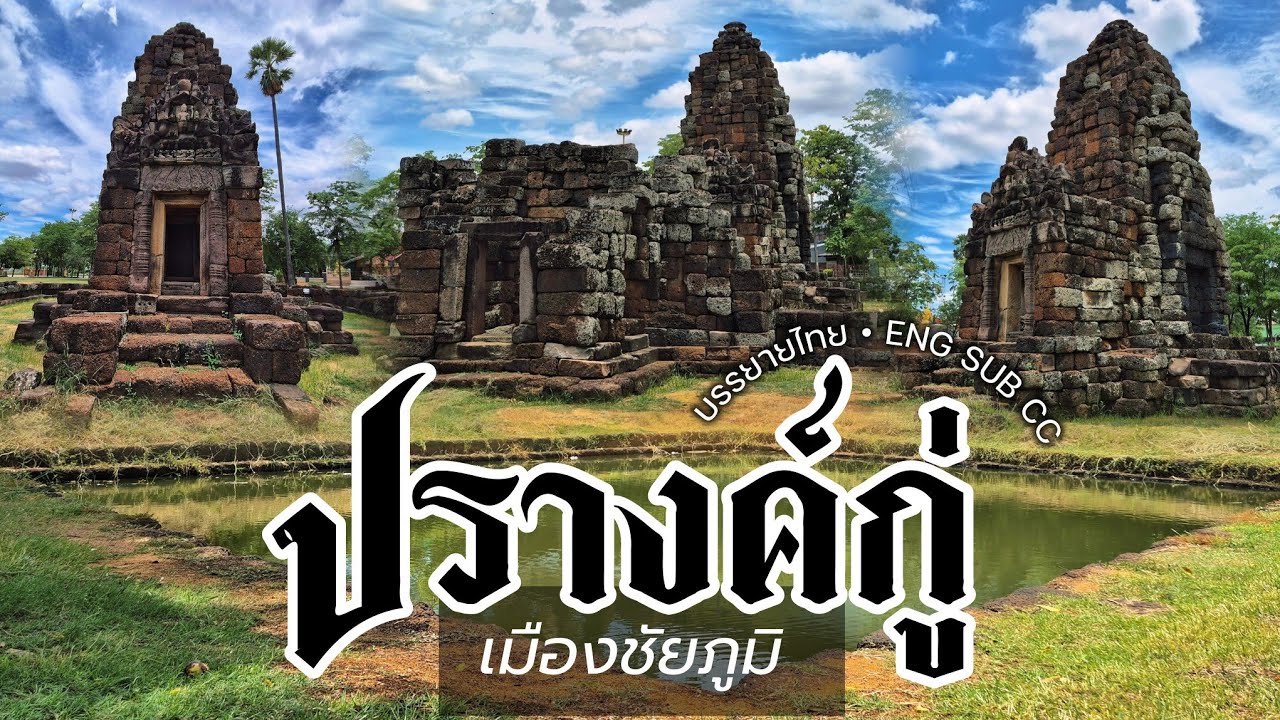
 Click to Access the Navigation Map GPS
Prang Ku Chaiyaphum Map
Recommend
 Historical Sites and Monuments(1)
 Landmarks and Memorials(3)
 Royal Palace(1)
 Art, Craft Centres, Tradition(3)
 Educational Places
 Educational Gardens, Farm(1)
 Places of Worship
 Temple(141)
 Other Sacred Sites(7)
 Suburban Living
 Village, Community(4)
 Nature and Wildlife
 National Parks and Marine Reserves(7)
 Mountain (Doi)(5)
 Dam, Reservoir, Lake(10)
 Waterfalls(15)
 Caves(5)
 River, Canal(4)
 Other natural attractions(1)
 Entertainment and Agricultural
 Farms, Parks and Ecotourism(2)


