
lovethailand home >Northeastern Travel Attractions >Chaiyaphum Travel Attractions >Khon Sawan >Khon Sawan > Bueng Waeng
TL;DR: Bueng Waeng is located at In Front Of Khon Sawan District Office, Khon Sawan Subdistrict, Khon Sawan District, Chaiyaphum Province, open Daily, hours Morning and late afternoon are the best times for nature viewing and.

Bueng Waeng
Open Days: Daily
Opening Hours: Morning and late afternoon are the best times for nature viewing and birdwatching
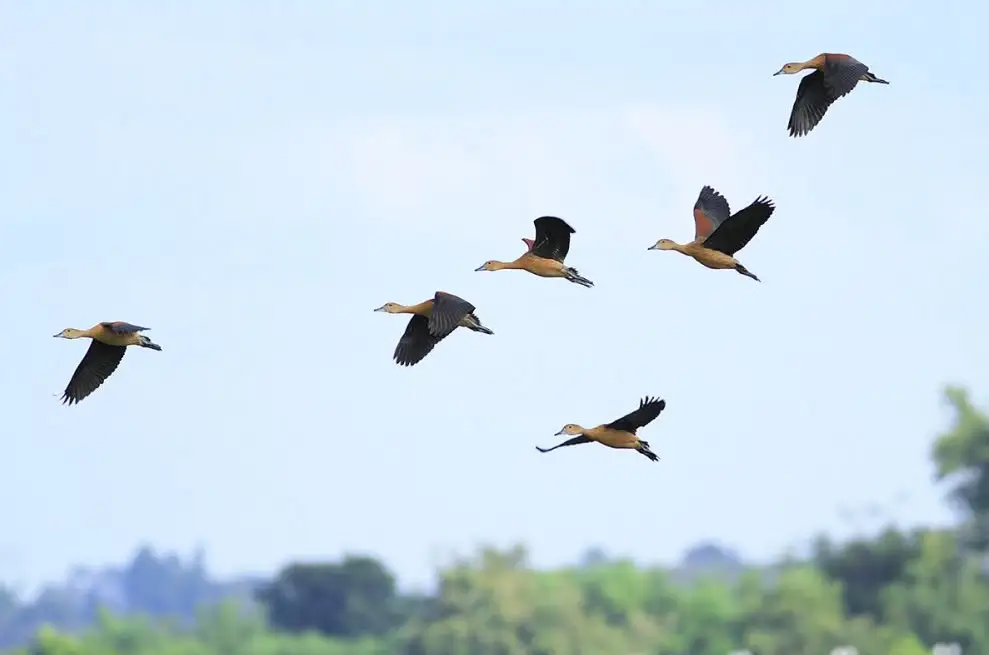
Bueng Waeng, also known locally as Nong Waeng, is a large natural wetland located in front of Khon Sawan District Office in Chaiyaphum Province. Covering approximately 350 rai, this wetland has been designated as a non-hunting wildlife area and is best known as one of Chaiyaphum’s important winter birdwatching sites. From November to April, large numbers of water ducks migrate to the lake, turning Bueng Waeng into a remarkable seasonal habitat. At dusk, flocks of ducks rise from the water and fly across the evening sky, creating a striking scene against the sunset.
Bueng Waeng is more than a scenic lake. It is a community wetland, a public recreational area, a wildlife refuge, a birdwatching site, and an outdoor learning space for understanding wetland ecology in northeastern Thailand. Its location near the district office makes it easy to access, while the road around the lake allows visitors to drive, walk, and enjoy different viewpoints. The atmosphere is calm and local rather than commercial, making it ideal for travelers who want to see a quieter and more authentic side of Chaiyaphum.
The main attraction of Bueng Waeng is the seasonal presence of water ducks. Both resident ducks and migratory ducks use the wetland as a resting and feeding area. During the day, large groups of ducks can be seen floating on the water, resting in quiet areas of the lake. In the late afternoon, especially around 17.00 – 18.00, the birds begin to fly out in groups to feed. This is the most popular time for visitors, photographers, and local residents because the movement of the birds combines beautifully with the changing light of the sunset.
The evening atmosphere at Bueng Waeng is especially memorable. As the sun lowers over the horizon, warm light reflects on the water, and flocks of ducks rise into the sky. The sound of wings, bird calls, and the soft wind around the lake create a natural performance that feels both peaceful and powerful. For travelers who enjoy wildlife, photography, and slow travel, this is the moment that defines Bueng Waeng. Arriving before sunset allows enough time to choose a good viewing spot and observe the birds without rushing.
Early morning offers another side of Bueng Waeng. Around 04.00 – 06.00, the ducks return to the wetland after feeding. Their calls and movements form part of the local rhythm of Khon Sawan. For visitors who prefer a quieter atmosphere, dawn is a rewarding time to experience the lake. The light is soft, the air is cooler, and the wetland feels peaceful before the day begins. Morning visits are particularly suitable for birdwatchers and photographers who want a different perspective from the sunset scene.
A ring road around Bueng Waeng makes the area easy to explore. Visitors can slowly drive around the wetland, stop at different points, walk along suitable sections, or choose a place to sit and watch the lake. Each side of the wetland offers a slightly different view: open water, bird activity, observation towers, community areas, and garden spaces. The lake does not feel like a large tourist complex. Instead, it functions as a real public space for the local community, where people come to relax, exercise, spend time with family, and watch nature close to home.
Several birdwatching towers have been built around the wetland to help visitors observe ducks and other aquatic animals more closely without disturbing the habitat. These towers are useful for first-time birdwatchers, families, students, and anyone interested in wildlife. From the towers, visitors can see the wider shape of the lake, the movement of bird flocks, and the relationship between open water and vegetation. Bringing binoculars will make the visit more enjoyable, as it allows visitors to see the birds in detail from a respectful distance.
The area around Bueng Waeng also includes public recreational facilities such as the Kanchanaphisek Garden, landscaped garden areas, children’s playground equipment, exercise equipment, and stone tables for sitting under the shade. This makes Bueng Waeng suitable for a wide range of visitors. Families can bring children to play and learn about migratory birds. Local residents can exercise or relax in the evening. Travelers can enjoy a simple nature break while experiencing the everyday atmosphere of Khon Sawan District. Bueng Waeng is therefore not only a seasonal birdwatching site but also an important public space for the district.
The conservation value of Bueng Waeng is significant. Its status as a non-hunting wildlife area helps protect birds and other animals that depend on the wetland. Migratory ducks need safe places to rest and feed during their seasonal movement. For this reason, visitors should avoid making loud noises, chasing birds, throwing objects into the water, or entering sensitive habitat areas. Responsible behavior is essential for keeping Bueng Waeng suitable for wildlife and enjoyable for future visitors.
Birdwatching at Bueng Waeng requires patience and respect. Ducks and waterbirds can be sensitive to disturbance. Sudden movement, loud voices, or getting too close may cause the birds to scatter. Visitors should observe from designated viewpoints, birdwatching towers, or appropriate areas along the lake. Binoculars or telephoto lenses are better than approaching the birds directly. Drone use should be avoided in areas where birds gather, as noise and movement from drones can disturb wildlife. Quiet observation helps protect the birds and improves the quality of the experience.
The best season to visit Bueng Waeng is from November to April, when migratory ducks are present in large numbers. Visitors who want to see flocks of birds rising over the lake should come in the late afternoon before sunset. Those who want to see the birds returning to the wetland should arrive before dawn. Outside the migration season, Bueng Waeng remains a pleasant place for relaxation, walking, and local sightseeing, but the number of ducks may be lower than during winter. Timing is therefore important for travelers whose main purpose is birdwatching.
Bueng Waeng is also connected with local cultural identity. Khon Sawan District holds the annual Khon Sawan Duck-Welcoming Tradition around December to promote conservation-based tourism and celebrate the relationship between the community and migratory birds. This event reflects how deeply the ducks have become part of local memory. They are not only wildlife visitors but also a symbol of the district’s natural character. The tradition shows respect for nature and helps build local pride around wetland conservation.
From a landscape perspective, Bueng Waeng is an interesting example of a wetland located close to an administrative and community area. A lake in front of a district office might seem ordinary at first, but here it functions as a wildlife habitat within a semi-urban environment. Roads, government buildings, houses, gardens, water, and birds coexist in the same area. This contrast gives Bueng Waeng a distinctive character. It is a place where local life and wildlife meet visibly and naturally.
For photographers, Bueng Waeng offers several strong visual elements. Visitors can photograph ducks floating on the water, birds flying at sunset, reflections on the lake surface, observation towers, garden areas, and local life around the wetland. The best light is usually in the early morning and late afternoon. Sunset is ideal for dramatic silhouettes of birds against the sky, while morning light is softer and more peaceful. A telephoto lens is useful for photographing birds without disturbing them.
Bueng Waeng is suitable for family travel. Children can learn about migratory birds, wetland ecosystems, seasonal change, and wildlife protection from a real natural setting. Seeing thousands of birds fly over the lake is a memorable experience that helps young visitors understand why conservation matters. The presence of playgrounds, exercise areas, and garden spaces also makes the site practical for families who want a relaxed outdoor stop in Khon Sawan District.
Travelers who prefer slow and local travel will appreciate Bueng Waeng. It can be included in a half-day trip from Chaiyaphum town or combined with nearby places in Khon Sawan District. Visitors may stop at Bueng Waeng in the late afternoon, continue to nearby temples or cafés, and then return to Chaiyaphum town. Those with more time can connect the route with Kaeng Khro, Tat Ton Waterfall, Chao Pho Phraya Lae Shrine, or other attractions in Chaiyaphum Province. The wetland is a good choice for travelers who want to experience Chaiyaphum beyond its more famous mountains and waterfalls.
There are two main driving routes from Chaiyaphum town to Bueng Waeng. The first route follows Highway 202 on the Chaiyaphum – Bua Yai route. At Ban Lat Yai, turn left onto Highway 2054 toward Khon Sawan District. The total distance from Chaiyaphum town is approximately 38 km. The second route follows Highway 201 on the Chaiyaphum – Kaeng Khro route for about 30 km, then turns right toward Khon Sawan District for another 14 km. Both routes are suitable for private cars or rental cars, and travelers should drive carefully, especially during rainy weather or after dark.
Getting There is most convenient by private car or rental car. Since the most important birdwatching times are early morning and late afternoon, having your own vehicle makes the visit easier to plan. Travelers coming from Chaiyaphum town in the afternoon should allow enough time to arrive before sunset. Those who want to see the birds return at dawn may consider staying in Khon Sawan, Kaeng Khro, or Chaiyaphum town. Bring drinking water, a hat, a camera, binoculars, and comfortable shoes for walking around the lake.
Upon arrival, visitors should first explore the viewing points around the lake and choose a location that offers a broad view of the water without disturbing the birds. The birdwatching towers are good starting points. A slow drive or walk around the ring road allows visitors to see different parts of the wetland. Some areas are better for resting, some for photography, and some for observing bird movement. Spending at least 1 – 2 hours at Bueng Waeng is recommended, especially in the late afternoon when the birds become more active.
Visitors should keep the area clean and respect its conservation status. Since Bueng Waeng is a non-hunting wildlife area, no one should hunt, chase, catch, or feed wild animals unnecessarily. Littering, throwing food into the water, and disturbing bird flocks should be avoided. Families with children should supervise them near the water, around observation towers, and along the lakeside. Responsible travel helps ensure that the wetland remains healthy for wildlife and welcoming for visitors.
As a conservation-based destination, Bueng Waeng has strong potential. It combines wildlife, ecology, community recreation, local tradition, and accessible travel in one place. Its strongest identity is the seasonal presence of water ducks, which gives the destination a clear and memorable image. Future tourism development should maintain the balance between visitor convenience and wildlife protection. The most valuable quality of Bueng Waeng is not commercial development, but the natural relationship between water, birds, and the local community.
For beginner birdwatchers, Bueng Waeng is an excellent place to start. Visitors can observe simple behaviors such as ducks floating in groups, flying out to feed at sunset, returning at dawn, and resting on the water during the day. These observations help explain why wetlands are important for bird life. Bueng Waeng can therefore serve as both a relaxing destination and a living classroom for understanding wetland ecology and migratory birds in Thailand.
After visiting the lake, travelers can stop at local cafés and restaurants in Khon Sawan District. Options include cafés near the hospital area, dessert shops, local food places, and lakeside community spots. Eating locally helps make the trip more complete and supports the local economy. For overnight stays, visitors can choose accommodation in Khon Sawan, Kaeng Khro, or Chaiyaphum town depending on the rest of the itinerary.
Bueng Waeng is ideal for travelers who do not need dramatic attractions but value quiet natural experiences. It shows that Chaiyaphum’s beauty is not limited to mountains, waterfalls, and flower fields. A small wetland in a district town can also hold extraordinary natural value when thousands of migratory birds return each winter. Watching the ducks rise into the evening sky over Bueng Waeng is simple, memorable, and deeply connected to the identity of Khon Sawan District.
Overall, Bueng Waeng brings together many layers of value. It is a natural lake, a non-hunting wildlife area, a birdwatching site, a community exercise space, a public garden, a place for children and families, and the center of a local duck-welcoming tradition. Visitors should not rush through the site. The best way to experience Bueng Waeng is to slow down, listen to the birds, watch the light change on the water, and allow the wetland to reveal its character. This quiet richness makes Bueng Waeng one of the most meaningful nature-based destinations in Chaiyaphum Province.
| Name | Bueng Waeng Or Nong Waeng |
| Location | In Front Of Khon Sawan District Office, Khon Sawan Subdistrict, Khon Sawan District, Chaiyaphum Province |
| Address | Khon Sawan Subdistrict, Khon Sawan District, Chaiyaphum 36140, Thailand |
| Highlights | A natural wetland of approximately 350 rai, designated as a non-hunting wildlife area and famous for large numbers of migratory water ducks from November to April |
| History / Local Role | An important wetland of Khon Sawan District used as a public recreation space, wildlife habitat, birdwatching site, and conservation-based tourism area |
| Name Origin | Bueng Waeng is also known as Nong Waeng, a local name that reflects its character as a large community wetland |
| Distinctive Features | Ring road around the lake, 3 birdwatching towers, public garden, children’s playground, exercise equipment, stone tables, and seasonal water duck viewing spots |
| Travel Information | From Chaiyaphum town, take Highway 202 toward Bua Yai, turn left at Ban Lat Yai onto Highway 2054 to Khon Sawan, about 38 km in total; alternatively take Highway 201 toward Kaeng Khro for about 30 km and turn right toward Khon Sawan for another 14 km |
| Current Status | Open as a natural recreation area and birdwatching site within the Nong Waeng Non-Hunting Area |
| Open Days | Daily |
| Best Visiting Time | Around 04.00 – 06.00 for birds returning to the wetland, and around 17.00 – 18.00 for birds flying out to feed and sunset viewing |
| Facilities | Birdwatching towers, Kanchanaphisek Garden, landscaped garden areas, children’s playground, exercise equipment, stone tables, and a ring road around the wetland |
| Main Areas / Zones | 1. Open Water And Duck Habitat Zone 2. 3 Birdwatching Tower Zone 3. Ring Road Around The Wetland 4. Kanchanaphisek Garden And Landscaped Garden Zone 5. Children’s Playground And Exercise Zone 6. Sunset And Evening Birdwatching Zone |
| Caretaker / Local Authority | Khon Sawan Subdistrict Municipality, Khon Sawan District, Chaiyaphum Province, and Nong Waeng Non-Hunting Area, Chaiyaphum Province |
| Main Contact Number | Khon Sawan Subdistrict Municipality, Tel. 044-889-098; TAT Nakhon Ratchasima Office, Tel. 044-213030 |
| Official Website / Official Page | www.khonsawancity.go.th, tourismthailand.org, Nong Waeng Non-Hunting Area Chaiyaphum Facebook Page |
| Nearby Tourist Attractions | 1. Wat Khon Sawan, about 1 km 2. Wat Pho, Khon Sawan Subdistrict, about 3 km 3. Wat Phra Phutthabat Phu Faet, about 18 km 4. Wichitchai Water Park, Kaeng Khro District, about 25 km 5. Tat Ton Waterfall, Chaiyaphum, about 45 km 6. Chao Pho Phraya Lae Shrine, about 48 km |
| Nearby Restaurants | 1. 13 Cafe, about 2 km, Tel. 062-662-9563 2. For You Bingsu & Pizza, about 4 km, Tel. 098-565-6321 3. Ban Rim Bueng Waeng @ Khon Sawan Chaiyaphum, about 1 km 4. Ban Rim Bueng Nong Waeng Khon Sawan Chaiyaphum, about 1 km 5. Mit Aree Shop, Ban Nong Daeng Noi, about 7 km, Tel. 064-743-2723 |
| Nearby Accommodations | 1. Baan Poo Nim Resort, Khon Sawan, about 3 km, Tel. 089-932-7390 2. V One Apartment, Kaeng Khro District, about 25 km, Tel. 044-831-442 3. The Peak Resort Chaiyaphum, about 43 km, Tel. 082-615-5587 4. Thai Ngam Palace Hotel, Chaiyaphum, about 48 km 5. Grand Pruksasiri Hotel Chaiyaphum, about 50 km |
Frequently Asked Questions (FAQ)
Q: Where is Bueng Waeng located?
A: Bueng Waeng is located in front of Khon Sawan District Office in Khon Sawan Subdistrict, Khon Sawan District, Chaiyaphum Province.
Q: What is Bueng Waeng famous for?
A: Bueng Waeng is famous as a non-hunting wildlife area and a seasonal birdwatching site where large numbers of migratory water ducks gather from November to April.
Q: When is the best season to see ducks at Bueng Waeng?
A: The best season is from November to April, when migratory ducks arrive in large numbers and use the wetland as a resting and feeding area.
Q: What is the best time of day for birdwatching at Bueng Waeng?
A: Late afternoon around 17.00 – 18.00 is ideal for seeing birds fly out to feed, while early morning around 04.00 – 06.00 is good for seeing birds return to the wetland.
Q: Is Bueng Waeng suitable for families?
A: Yes. The area has birdwatching towers, garden spaces, children’s playground equipment, exercise areas, and a relaxed lakeside atmosphere suitable for family visits.
Q: How do travelers get to Bueng Waeng from Chaiyaphum town?
A: Travelers can take Highway 202 toward Bua Yai, turn left at Ban Lat Yai onto Highway 2054 to Khon Sawan, about 38 km in total, or take Highway 201 toward Kaeng Khro for about 30 km and turn right toward Khon Sawan for another 14 km.
Q: What should visitors bring to Bueng Waeng?
A: Visitors should bring drinking water, a hat, a camera, binoculars, comfortable shoes, and a quiet attitude for responsible birdwatching.
Q: What attractions can be combined with Bueng Waeng?
A: Nearby places include Wat Khon Sawan, Wat Pho, Wat Phra Phutthabat Phu Faet, Wichitchai Water Park, Tat Ton Waterfall, and Chao Pho Phraya Lae Shrine.
 Category: ●Nature and Wildlife
 Group: ●Dam, Reservoir, Lake
Last Update : 3 MonthAgo
 Last Update : 3 MonthAgo
 Click to Access the Navigation Map GPS
 Art, Culture and Heritage
 Historical Sites and Monuments(1)
 Landmarks and Memorials(3)
 Royal Palace(1)
 Art, Craft Centres, Tradition(3)
 Educational Places
 Educational Gardens, Farm(1)
 Places of Worship
 Temple(141)
 Other Sacred Sites(7)
 Suburban Living
 Village, Community(4)
 National Parks and Marine Reserves(7)
 Mountain (Doi)(5)
Dam, Reservoir, Lake(10)
Mountain (Doi)(5)
Dam, Reservoir, Lake(10)
 Waterfalls(15)
 Caves(5)
 River, Canal(4)
 Other natural attractions(1)
 Entertainment and Agricultural
 Farms, Parks and Ecotourism(2)


