
lovethailand home >Northeastern Travel Attractions >Chaiyaphum Travel Attractions >Thep Sathit >Pong Nok > Thep Phana Waterfall
TL;DR: Thep Phana Waterfall is located at Ban Rai Subdistrict, Thep Sathit District, Chaiyaphum Province, open Daily, hours 08.00 – 17.00.

Thep Phana Waterfall
Open Days: Daily
Opening Hours: 08.00 – 17.00
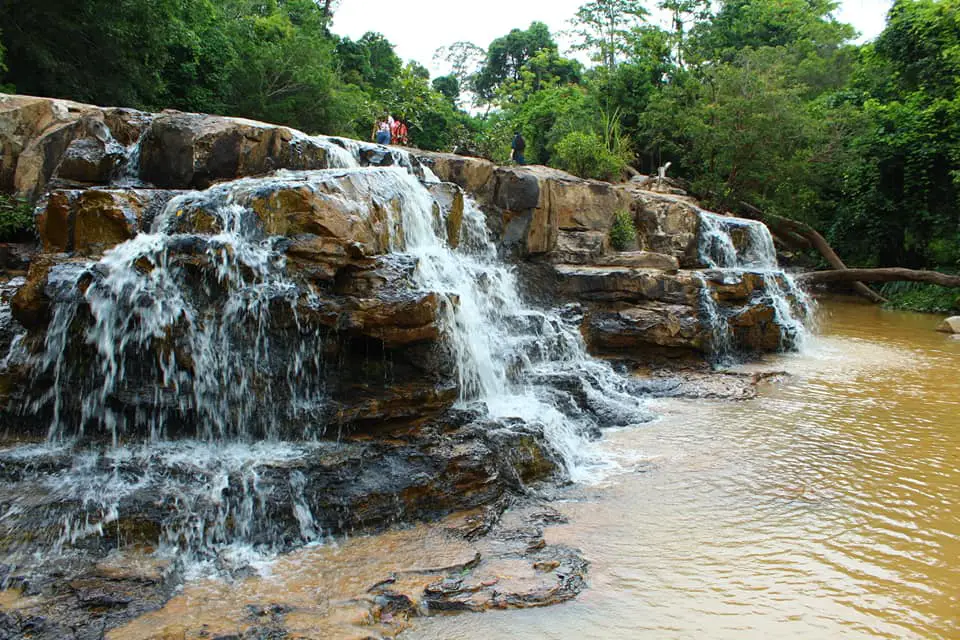
Thep Phana Waterfall in Chaiyaphum Province is a medium-sized seasonal waterfall in Thep Sathit District, located about 7 km east of the Pa Hin Ngam National Park office. It is formed by Lam Huai Krachon, a stream flowing from the Phang Hoei mountain range, and descends through three natural tiers. The upper tier is about 2 – 3 meters high, the second tier is also about 2 – 3 meters high, and the final tier is about 6 meters high. The waterfall is most attractive during the rainy season, when the stream has enough water to flow across the layered rocks and create a refreshing forest atmosphere.
Thep Phana Waterfall is not a huge cliff waterfall. Its beauty comes from its seasonal water flow, natural rock tiers, small cascades, and quiet forest setting. During the rainy season, water moves from one level to the next, flowing over rock surfaces and collecting briefly before descending to the lower tier. This gives the waterfall a gentle, layered character. It is a suitable stop for travelers visiting Pa Hin Ngam National Park, the Siam Tulip fields, Lan Hin Ngam, Sut Phaen Din viewpoint, and other natural attractions in Thep Sathit.
The waterfall is part of the broader natural landscape of the Phang Hoei mountain range, an important highland area in Chaiyaphum. This region is known for forest, rock formations, seasonal flowers, viewpoints, and streams that change with the rainfall cycle. A visit to Thep Phana Waterfall therefore gives travelers a different perspective from the better-known flower fields and rock gardens. Instead of only seeing open viewpoints and unusual rocks, visitors can also experience the sound of running water and the cool atmosphere of a seasonal forest stream.
The waterfall has three tiers. The first and second tiers are relatively low, each about 2 – 3 meters high. These sections show the fine details of flowing water, wet rocks, and small natural channels. The final tier, at about 6 meters high, is the most visually prominent part of the waterfall. When the water volume is good, the flow from the upper tiers continues down to the last tier and creates a compact but attractive multi-level waterfall scene.
The name “Thep Phana” gives the place a forest-like and graceful identity. It fits the atmosphere of the waterfall, which is surrounded by natural scenery and closely connected with the Pa Hin Ngam route. This is not a destination that feels heavily commercialized. Its value lies in quiet observation, seasonal beauty, and the chance to see how rainwater from the mountains becomes a waterfall during the wetter months.
The best time to visit Thep Phana Waterfall is during the rainy season, especially when regular seasonal rain has restored the stream flow. This is also the same period when many travelers visit the Siam Tulip fields in Pa Hin Ngam National Park. The forest is greener, the air is fresher, and the waterfall is more likely to have visible water. Outside the rainy season, the waterfall may have little or no water, so visitors should plan with this seasonal character in mind.
Getting There is most convenient by private car. Travel toward Pa Hin Ngam National Park in Thep Sathit District, then continue about 7 km east of the national park office to reach the Thep Phana Waterfall area. The route can be combined with other attractions in the national park. During the rainy season, visitors should check weather and road conditions before traveling because natural routes and rock surfaces can become slippery after heavy rain.
Thep Phana Waterfall is ideal for a short nature stop as part of a wider Pa Hin Ngam itinerary. Travelers can visit the Siam Tulip fields, Lan Hin Ngam, Sut Phaen Din viewpoint, and Chao Pho Chumphon Shrine, then add Thep Phana Waterfall for a stream-and-waterfall experience. Another option is to visit the waterfall first and continue to the national park afterward. The best order depends on weather, traffic, water conditions, and the time of day.
The surrounding atmosphere is quiet and suitable for light nature appreciation. Visitors can take photos of flowing water, small cascades, rock formations, wet leaves, and forest details. Morning and late afternoon are usually better for photography because the light is softer. Visitors should take photos only from safe areas and avoid climbing wet rocks or standing near fast-flowing sections.
Safety is important at Thep Phana Waterfall, especially in the rainy season. The rocks may be slippery, stream levels can change after rainfall, and the lower tier may have stronger flow when water volume is high. Visitors should avoid deep or fast-moving water, should not stand near the edge of a cascade, and should not allow children to walk near the water without close adult supervision. The waterfall should be enjoyed slowly and carefully.
Recommended items include non-slip shoes, drinking water, light rainwear during the rainy season, outdoor clothing, a waterproof pouch for phones, a towel, and a rubbish bag. Visitors who plan to take photos should protect cameras and mobile phones from spray and rain. Carrying heavy bags onto wet rocks is not recommended because it can affect balance.
Thep Phana Waterfall is a seasonal waterfall, so expectations should be realistic. The best experience comes when visitors understand that its appearance depends strongly on rainfall. In the rainy season, the water flow is more attractive and the forest feels alive. In the dry season, the water may be minimal, but the rock structure and stream channel can still show the natural form of the landscape.
Families can visit Thep Phana Waterfall, but children should be watched closely. The area is a natural waterfall, not a controlled swimming pool. Rocks can be uneven, water depth can vary, and some places may be slippery. The safest way to enjoy the place is to use it as a viewing and photography stop, with water play only in suitable and clearly safe sections.
The waterfall also adds variety to a Chaiyaphum nature trip. Many visitors come to Thep Sathit mainly for the Siam Tulip fields, but Thep Phana Waterfall shows another side of the same landscape. It represents the water system of the mountains, while the flower fields and rock garden show the seasonal plant life and geological character of the area. Together, these attractions make the trip more complete.
For overnight stays, travelers can choose accommodation near Pa Hin Ngam National Park, in Ban Rai Subdistrict, or in Thep Sathit District. During the Siam Tulip blooming season, advance booking is recommended because many travelers visit the area between June and August. Staying near the national park makes it easier to start early, enjoy the morning atmosphere, and combine several attractions in one route.
Food options are available around the Pa Hin Ngam route and Ban Rai area, including local restaurants, cafés, and welfare shops near the national park. However, service availability may vary by season and visitor volume. Travelers should carry drinking water and light snacks, especially on weekdays or outside the main tourist season.
Responsible travel is essential. Visitors should not leave rubbish, should not use soap or shampoo in the stream, should not write on rocks, and should not damage plants. A seasonal waterfall like Thep Phana depends on the balance between forest, rain, stream flow, and careful visitor behavior. Keeping the area clean helps protect both the natural environment and the travel experience for future visitors.
Overall, Thep Phana Waterfall is a meaningful seasonal waterfall near Pa Hin Ngam National Park. It is about 7 km east of the park office, formed by Lam Huai Krachon from the Phang Hoei mountain range, and divided into three descending tiers. The first and second tiers are about 2 – 3 meters high, while the final tier is about 6 meters high. It is best visited during the rainy season and is well suited for travelers who want to combine waterfalls, forest scenery, rock formations, viewpoints, and the famous Siam Tulip fields in one Chaiyaphum nature trip.
| Name | Thep Phana Waterfall |
| Location | Ban Rai Subdistrict, Thep Sathit District, Chaiyaphum Province |
| Address | About 7 km east of Pa Hin Ngam National Park Office, Ban Rai Subdistrict, Thep Sathit District, Chaiyaphum 36230, Thailand |
| Highlights | A medium-sized seasonal waterfall formed by Lam Huai Krachon from the Phang Hoei mountain range, divided into three descending tiers |
| Distinctive Features | The upper tier is about 2 – 3 meters high, the second tier is about 2 – 3 meters high, and the final tier is about 6 meters high, with visible water mainly during the rainy season |
| Headwater / Ecosystem | Formed by Lam Huai Krachon, a seasonal stream flowing from the Phang Hoei mountain range in Thep Sathit District |
| Name Origin | “Thep Phana” reflects the forested natural character of the waterfall and its connection with the Pa Hin Ngam route |
| Travel Information | Travel toward Pa Hin Ngam National Park, then continue about 7 km east of the park office. Private car is the most convenient option |
| Current Status | A seasonal natural attraction near Pa Hin Ngam National Park in Thep Sathit District |
| Open Days | Daily |
| Opening Hours | 08.00 – 17.00 |
| Best Visiting Season | Rainy season, when Lam Huai Krachon has enough water for the waterfall to flow clearly |
| National Park Fee | If entering Pa Hin Ngam National Park area: Thai Adults 40 Baht, Thai Children 20 Baht / Foreign Adults 200 Baht, Foreign Children 100 Baht / Car 30 Baht |
| Facilities | Access route to the waterfall area, natural waterfall viewing points, photo spots, and nearby food/accommodation services along the Pa Hin Ngam route |
| Main Areas / Zones | 1. Route east of Pa Hin Ngam National Park Office 2. Lam Huai Krachon stream from the Phang Hoei mountain range 3. Upper waterfall tier, about 2 – 3 meters high 4. Second waterfall tier, about 2 – 3 meters high 5. Final waterfall tier, about 6 meters high 6. Rock and seasonal-water viewing area 7. Natural photo and resting area |
| Caretaker | Pa Hin Ngam National Park and local authorities in Ban Rai / Thep Sathit area |
| Main Contact Number | Pa Hin Ngam National Park Tel. 044-056-141-2, 082-131-3371 / Department of National Parks, Wildlife and Plant Conservation Tel. 0-2562-0760 |
| Official Website / Official Page | Amazing Thailand: Thep Phana Waterfall / Pa Hin Ngam National Park Official Page / Department of National Parks, Wildlife and Plant Conservation |
| Nearby Tourist Attractions | 1. Pa Hin Ngam National Park, about 7 km 2. Siam Tulip Field, Pa Hin Ngam, about 8 km 3. Lan Hin Ngam, about 8 km 4. Chao Pho Chumphon Shrine, about 8 km 5. Sut Phaen Din Viewpoint, about 9 km 6. Thep Prathan Waterfall, about 16 km 7. Thep Sathit Wind Farm, about 25 km |
| Nearby Restaurants | 1. Pa Hin Ngam Welfare Shop, about 7 km 2. Khrua Chit Bamrung, about 7 km 3. Khrua Ja Jang Pa Hin Ngam Thep Sathit, about 7 km 4. Ruean Thep, about 8 km 5. Yai Dam Homestay Cafe, about 8 km 6. Avoka Cafe’, about 9 km 7. Suan Rak Khun Siam Tulip Chaiyaphum, about 10 km, Tel. 096-194-3858, 096-259-9245, 091-842-5391 |
| Nearby Accommodations | 1. Pa Hin Ngam National Park Bungalows, about 7 km, Tel. 044-056-141-2, 082-131-3371 2. Rai Aeifoon Resort, about 8 km 3. Pa Din Hin Ngam Resort, about 8 km 4. Zelete Chalet, about 8 km 5. Ban Rai Ing Doi @ Siam Tulip Field, about 9 km, Tel. 089-123-3223, 087-868-3223 6. Suan Rak Khun Siam Tulip Chaiyaphum, about 10 km, Tel. 096-194-3858, 096-259-9245, 091-842-5391 7. Bann Tung Krajeaw Highland Resort, about 12 km |
Frequently Asked Questions (FAQ)
Q: Where is Thep Phana Waterfall located?
A: Thep Phana Waterfall is located in Thep Sathit District, Chaiyaphum Province, about 7 km east of Pa Hin Ngam National Park Office.
Q: What makes Thep Phana Waterfall special?
A: It is a medium-sized seasonal waterfall formed by Lam Huai Krachon from the Phang Hoei mountain range and descends through three natural tiers.
Q: How many tiers does Thep Phana Waterfall have?
A: The waterfall has three tiers. The upper tier is about 2 – 3 meters high, the second tier is about 2 – 3 meters high, and the final tier is about 6 meters high.
Q: When is the best time to visit Thep Phana Waterfall?
A: The rainy season is the best time to visit because this is when the stream has enough water and the waterfall flows clearly. Outside the rainy season, the waterfall may have little or no water.
Q: Is Thep Phana Waterfall close to Pa Hin Ngam National Park?
A: Yes. It is located about 7 km east of the national park office, making it easy to combine with the Siam Tulip fields, Lan Hin Ngam, and Sut Phaen Din.
Q: Can visitors swim at Thep Phana Waterfall?
A: Visitors may relax near the water or play in suitable safe sections when water conditions allow, but wet rocks, strong current, and changing water levels require caution.
Q: What should visitors bring?
A: Visitors should bring non-slip shoes, drinking water, light rainwear during the rainy season, a waterproof phone pouch, a towel, and a rubbish bag.
Q: Who can visitors contact for local information?
A: Visitors can contact Pa Hin Ngam National Park at 044-056-141-2, 082-131-3371 or the Department of National Parks, Wildlife and Plant Conservation at 0-2562-0760.
 Category: ●Nature and Wildlife
 Group: ●Waterfalls
Last Update : 3 MonthAgo
 Last Update : 3 MonthAgo
 Click to Access the Navigation Map GPS
Thep Phana Waterfall Map
Recommend

 Art, Culture and Heritage
 Historical Sites and Monuments(1)
 Landmarks and Memorials(3)
 Royal Palace(1)
 Art, Craft Centres, Tradition(3)
 Educational Places
 Educational Gardens, Farm(1)
 Places of Worship
 Temple(141)
 Other Sacred Sites(7)
 Suburban Living
 Village, Community(4)
 National Parks and Marine Reserves(7)
 Mountain (Doi)(5)
 Dam, Reservoir, Lake(10)
Waterfalls(15)
Dam, Reservoir, Lake(10)
Waterfalls(15)
 Caves(5)
 River, Canal(4)
 Other natural attractions(1)
 Entertainment and Agricultural
 Farms, Parks and Ecotourism(2)


