
lovethailand home >North Travel Attractions >Uthai Thani Travel Attractions >Thap Than >Thung Na Thai > Wat Khao Khok Kho
TL;DR: Wat Khao Khok Kho is located at Ban Khao Khok Kho, Moo 3, Thung Na Thai Subdistrict, Thap Than District, Uthai Thani Province, open Daily, hours 08.00 – 17.00.
Wat Khao Khok Kho
Open Days: Daily
Opening Hours: 08.00 – 17.00
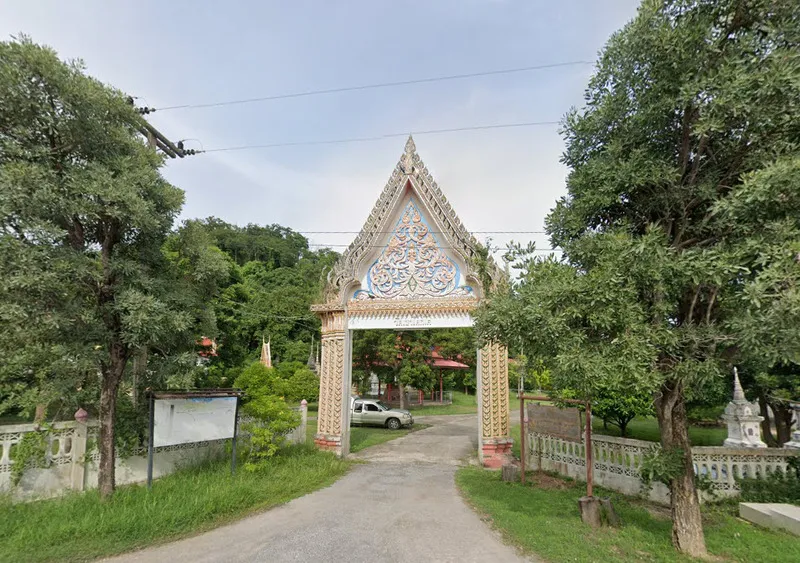
Wat Khao Khok Kho is an important local Buddhist temple in Thap Than District, Uthai Thani Province. It is located at No. 24, Ban Khao Khok Kho, Moo 3, Thung Na Thai Subdistrict, Thap Than District. The temple is about 8 km from Thap Than town. Visitors can take the Thap Than – Uthai Thani route and turn left near Ban Kamnan Prathuan, then continue for about 3 km. Wat Khao Khok Kho is especially meaningful for travelers interested in old local temples, Buddhist heritage, hilltop temple landscapes, and religious art that remains closely connected with the community.
The temple is not a large mainstream tourist attraction, but it preserves a rich collection of historic and religious elements. These include two ancient ponds, a large boundary marker, a brass Buddha footprint, a gilded carved teak pulpit, octagonal wooden pillars, a hilltop viharn, paintings of the Vessantara Jataka, and murals of the Ten Jataka stories and the life of the Buddha. For visitors who appreciate cultural depth, Wat Khao Khok Kho offers a quiet and rewarding experience beyond the usual tourist route in Uthai Thani.
The historical importance of the temple is closely connected with Luang Pu Sunthon Muni, also known as Luang Pu Chiam. He was a former abbot of Wat Khao Khok Kho and was appointed as the first provincial ecclesiastical governor of Uthai Thani. This connection gives the temple special significance in the history of the Sangha in Uthai Thani Province. The temple was not only a place of worship for local villagers, but also a site associated with a respected monk who played an important role in the development of Buddhist administration in the province.
One of the notable features of Wat Khao Khok Kho is its ancient ponds. The temple has two ponds: the older one is about 213 years old and covers approximately 80 square wa, while the newer one is about 75 years old and covers approximately 100 square wa. In Thai temple culture, water sources are important not only for daily use but also for ritual, community life, and the creation of a peaceful temple atmosphere. These ponds reflect how the temple once functioned as a practical and spiritual center for the surrounding community.
The large boundary marker installed near the wall of the ordination hall is another important object. It is regarded as one of the largest boundary markers in Uthai Thani Province and was created in the late Ayutthaya period. In Thai Buddhism, boundary markers define the sacred space of the ubosot where important monastic ceremonies are performed. The presence of such a large marker suggests the temple’s historical importance and the continuing significance of its sacred space.
The brass Buddha footprint is one of the most important sacred objects at Wat Khao Khok Kho. It measures about 1.18 meters wide, 3.10 meters long, and 1.20 meters high. The toe area is decorated with spiral motifs. It was created by Nai Tun Saksung and his descendants in 1927. In Buddhist tradition, the Buddha footprint symbolizes the presence of the Buddha and the path of the Dharma. It allows devotees to pay respect to the Buddha through a sacred sign of his spiritual presence in the world.
The gilded carved teak pulpit inside the temple is a fine example of Thai religious craftsmanship. A pulpit in a Buddhist temple is not merely a functional object used for giving sermons. It represents the elevated status of the Dharma. The carving and gilding reflect the faith of the donors and the skill of craftsmen who wished to honor Buddhist teaching through beautiful workmanship.
The temple also preserves 12 octagonal wooden pillars made from tae wood, each with a diameter of about 50 centimeters. These pillars are valuable architectural elements because they show the use of local durable timber and traditional woodworking skills. The octagonal form requires careful shaping and proportion, making the pillars both structural and decorative. They are evidence of the technical knowledge of local craftsmen in the past.
The viharn of Wat Khao Khok Kho is located on the hilltop. This gives the temple a distinctive landscape character. In Thai religious thought, elevated places are often associated with sacredness, quietness, and spiritual distance from everyday life. Although some older buildings were damaged by fire in the past, the hilltop area remains important as a sacred space where visitors can experience the calm atmosphere of a temple connected with both nature and faith.
The paintings in the chanting hall are especially valuable. They are painted on the upper wooden section known as mai kho song and depict the Vessantara Jataka in all 13 chapters. The Vessantara Jataka tells the story of the Bodhisattva’s perfection of generosity. By presenting the complete story through paintings, the temple preserves an important visual teaching tradition. The images would have helped local people learn Buddhist values through narrative art.
The sermon hall contains paintings of the Ten Jataka stories and the life of the Buddha. The Ten Jataka stories describe the ten great perfections cultivated by the Bodhisattva before becoming the Buddha, while the life of the Buddha presents the key episodes from his birth to enlightenment, teaching, and passing into final nirvana. These paintings make the temple a local learning space for Buddhist history, ethics, and religious imagination.
Wat Khao Khok Kho brings together several forms of cultural heritage in one place: hilltop religious architecture, sacred water features, ancient boundary markers, sacred footprints, carved woodwork, Jataka paintings, and monastic history. The temple rewards slow observation. Visitors should not rush, because many important details require close attention, especially the paintings, carved wood, and sacred objects that reveal the devotional life of the community.
For travelers, the temple is suitable for those who want to explore Uthai Thani beyond its most famous sites. After visiting major temples such as Wat Tha Sung, Wat Sangkat Rattana Khiri, or Wat Ubosatharam, a trip to Thap Than District and Wat Khao Khok Kho offers a deeper view of rural temple culture. It shows how local communities preserve Buddhist heritage in quieter settings away from crowded tourist areas.
Getting There is easiest by private car. From Thap Than District, take the Thap Than – Uthai Thani route and turn left near Ban Kamnan Prathuan, then continue for about 3 km. The temple is about 8 km from Thap Than town. Some sections of the road are narrow, and the route includes hill areas, so drivers should proceed carefully, especially during or after rain. Travelers without a private car should arrange a local hired vehicle from Thap Than town in advance.
Visitors should prepare for a hill temple environment. Comfortable walking shoes, drinking water, a hat, or an umbrella are useful. As this is an active Buddhist temple, visitors should dress modestly and behave respectfully. Sacred objects and old artworks should not be touched, moved, or climbed on. This respectful behavior helps preserve the temple’s heritage for future generations.
For photography, the temple offers several meaningful subjects, including the hilltop viharn, ancient ponds, the brass Buddha footprint, the carved teak pulpit, the old wooden pillars, and Jataka paintings. Morning and late afternoon light are suitable for photographing the temple atmosphere and surrounding landscape. Flash photography should be avoided around old paintings and delicate objects.
Wat Khao Khok Kho remains important to the local community as a place of worship, memory, and religious activity. It is not merely a site that stores old objects, but a living temple where local people continue to make merit and maintain their connection with Buddhism. For visitors, this makes the experience more meaningful because the temple heritage is still part of real community life.
In summary, Wat Khao Khok Kho is an important cultural temple in Thap Than District, Uthai Thani Province. It is associated with Luang Pu Sunthon Muni, or Luang Pu Chiam, the first provincial ecclesiastical governor of Uthai Thani. The temple preserves ancient ponds, a large boundary marker, a brass Buddha footprint, a gilded carved teak pulpit, octagonal wooden pillars, a hilltop viharn, complete Vessantara Jataka paintings, and murals of the Ten Jataka stories and the life of the Buddha. For travelers interested in Buddhist art, local history, and quiet rural temples, Wat Khao Khok Kho is a highly worthwhile destination.
| Name | Wat Khao Khok Kho |
| Location | Ban Khao Khok Kho, Moo 3, Thung Na Thai Subdistrict, Thap Than District, Uthai Thani Province |
| Address | No. 24, Ban Khao Khok Kho, Moo 3, Thung Na Thai Subdistrict, Thap Than District, Uthai Thani Province, Thailand |
| Coordinates | Approximately 15.49, 99.92 |
| Highlights | Hilltop Viharn, Two Ancient Ponds, Large Boundary Marker, Brass Buddha Footprint, Gilded Carved Teak Pulpit, Octagonal Wooden Pillars, Complete Vessantara Jataka Paintings, And Ten Jataka Murals |
| History | An Important Old Temple Of Thap Than District Associated With Luang Pu Sunthon Muni Or Luang Pu Chiam, A Former Abbot Who Became The First Provincial Ecclesiastical Governor Of Uthai Thani |
| Name Origin | The Name Is Connected With Ban Khao Khok Kho And The Hill Landscape Of Thung Na Thai Subdistrict In Thap Than District |
| Distinctive Features | A Hill Temple Combining Religious Heritage, Sacred Objects, Wood Carving, Jataka Paintings, Ancient Water Features, And Local Monastic History In One Site |
| Travel Information | From Thap Than District, Take The Thap Than – Uthai Thani Route, Turn Left Near Ban Kamnan Prathuan, And Continue For About 3 km. The Temple Is About 8 km From Thap Than Town. Some Road Sections Are Narrow And Hilly |
| Current Status | Open To Visitors And Worshippers |
| Open Days | Daily |
| Opening Hours | 08.00 – 17.00 |
| Fees | No Admission Fee |
| Facilities | Worship Areas, Hilltop Viharn, Temple Courtyard, Ancient Ponds, Parking Area, And Local Community Atmosphere Around The Temple |
| Main Areas / Zones | 1. Hilltop Viharn 2. Two Ancient Ponds 3. Large Boundary Marker Near The Ubosot 4. Brass Buddha Footprint 5. Gilded Carved Teak Pulpit 6. Twelve Octagonal Wooden Pillars 7. Chanting Hall With Complete Vessantara Jataka Paintings 8. Sermon Hall With Ten Jataka And Buddha-Life Murals |
| Abbot / Caretaker | The Monastic Community Of Wat Khao Khok Kho, Thung Na Thai Subdistrict, Thap Than District, Uthai Thani Province |
| Nearby Tourist Attractions | 1. Wat Thap Than Watthanaram, About 8 km 2. Chao Pho Chao Mae Thap Than Shrine, About 8 km 3. Thap Than Municipal Health Park, About 8 km 4. Phra Phuttha Metta Arch, Thap Than, About 9 km 5. Wat Sangkat Rattana Khiri And Khao Sakae Krang, About 28 km 6. Wat Tha Sung, About 35 km |
| Nearby Restaurants | 1. Mom’s Secret Garden, About 9 km, Tel. 099-261-9666 2. CLEAN CAFE, About 8 km, Tel. 088-559-3156 3. Kuai Chap Je Ngueng Thap Than, About 8 km 4. Krua Suan Lung Porn, About 10 km 5. Rom Khoi Cha & Coffee, About 9 km |
| Nearby Accommodations | 1. Bunga Resort @ Thap Than, About 9 km, Tel. 081-973-0577 2. Homestay Thap Than, About 9 km, Tel. 088-156-4490 3. 4/7 Resort, About 9 km 4. Nam Hom Resort, About 20 km, Tel. 089-035-3637, 086-603-1122 5. Baan Ing Nam, Mueang Uthai Thani District, About 29 km, Tel. 0-5698-0199, 080-839-9499 |
Frequently Asked Questions (FAQ)
Q: Where Is Wat Khao Khok Kho Located?
A: Wat Khao Khok Kho is located at No. 24, Ban Khao Khok Kho, Moo 3, Thung Na Thai Subdistrict, Thap Than District, Uthai Thani Province.
Q: What Is Wat Khao Khok Kho Known For?
A: The temple is known for its ancient ponds, large boundary marker, brass Buddha footprint, gilded carved teak pulpit, wooden pillars, hilltop viharn, and Jataka paintings.
Q: How Is Wat Khao Khok Kho Connected With Luang Pu Chiam?
A: Luang Pu Sunthon Muni, also known as Luang Pu Chiam, was a former abbot of the temple and became the first provincial ecclesiastical governor of Uthai Thani.
Q: Is There An Admission Fee?
A: No. There is no admission fee for visiting the temple.
Q: How Can Visitors Get To Wat Khao Khok Kho?
A: From Thap Than District, take the Thap Than – Uthai Thani route, turn left near Ban Kamnan Prathuan, and continue for about 3 km. Some sections of the road are narrow and hilly.
Q: How Long Should Visitors Spend At Wat Khao Khok Kho?
A: Visitors should allow about 1 to 2 hours to pay respect, walk around the hilltop temple, and study the ancient objects and Buddhist paintings.
Q: Who Should Visit Wat Khao Khok Kho?
A: The temple is suitable for travelers interested in old temples, Buddhist art, Jataka paintings, local history, monastic heritage, and peaceful rural temple settings.
Q: What Nearby Places Can Visitors Combine With Wat Khao Khok Kho?
A: Nearby places include Wat Thap Than Watthanaram, Chao Pho Chao Mae Thap Than Shrine, Thap Than Municipal Health Park, Wat Sangkat Rattana Khiri, and Wat Tha Sung.
 Category: ●Places of Worship
 Group: ●Temple
Last Update : 6 MonthAgo
 Last Update : 6 MonthAgo
 Click to Access the Navigation Map GPS
Wat Khao Khok Kho Map
Recommend

 Art, Culture and Heritage
 Historical Sites and Monuments(3)
 Landmarks and Memorials(1)
 Art, Craft Centres, Tradition(5)
 Museums(1)
 University
 Public university(1)
Temple(31)
 Other Sacred Sites(3)
 Suburban Living
 Village, Community(4)
 Local Market(1)
 Nature and Wildlife
 National Parks and Marine Reserves(2)
 Mountain (Doi)(7)
 Dam, Reservoir, Lake(5)
 Waterfalls(5)
 Hot Springs(1)
 Caves(9)
 Flower Field(2)
 River, Canal(2)
 Islands(1)
 Other natural attractions(1)
 Entertainment and Agricultural
 Farms, Parks and Ecotourism(2)
 Shopping
 Shopping and Night Market(1)
 Travel Articles, Recipes
 Travel Review, Food Review(1)


