
lovethailand home >North Travel Attractions >Uthai Thani Travel Attractions >Thap Than >Khok Mo > Ban Khok Mo Traditional Weaving Center
TL;DR: Ban Khok Mo Traditional Weaving Center is located at Khok Mo Subdistrict, Thap Than District, Uthai Thani Province, open Daily, hours 08.00 – 17.30.

Ban Khok Mo Traditional Weaving Center
Open Days: Daily
Opening Hours: 08.00 – 17.30
Ban Khok Mo Traditional Weaving Center in Uthai Thani Province is one of the most meaningful cultural destinations for travelers who want to understand the textile heritage of the Lao Khrang community in Thap Than District. The village is known for its traditional weaving skills, especially mudmee textiles with supplementary jok borders, ancient patterned silk, cotton textiles, and naturally dyed fabrics. A visit here offers more than shopping; it allows travelers to see how history, identity, craftsmanship, and community life are woven together through fabric.
Ban Khok Mo is a Lao Khrang community with cultural roots linked to migration from Vientiane during the early Rattanakosin period. After settling in Uthai Thani, the community preserved language, customs, beliefs, and weaving knowledge as part of everyday life. Weaving became more than a household craft. It became a cultural inheritance that carried memory, identity, and local pride from one generation to the next.
The uniqueness of Ban Khok Mo textiles lies in their patterns, techniques, and symbolic meanings. Designs such as Dan Mueang Lao, Naga motifs, Dan Yai, ancient border patterns, and jok-style lower borders are not merely decorative. They reflect stories of migration, belief, auspiciousness, and the worldview of the Lao Khrang people. Each piece of fabric can be read as a cultural record made with thread, color, memory, and skilled hands.
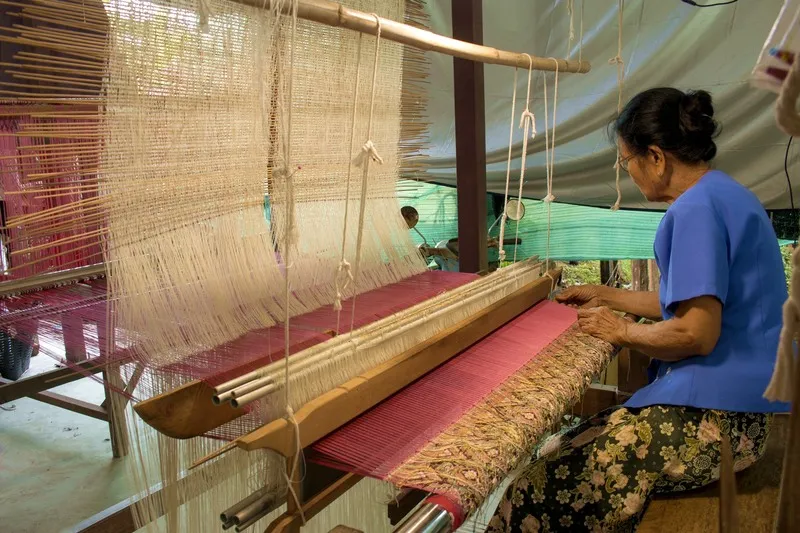
In the past, women in Ban Khok Mo often wove textiles after the rice-farming season. Once agricultural work became less demanding, they returned to the loom to produce cloth for household use and extra income. The process required several stages, including preparing yarn, tying mudmee patterns, dyeing, winding thread, setting up the loom, and weaving the fabric. These skills were learned within families and passed from mothers to daughters, grandmothers to grandchildren, and senior weavers to younger community members.
Mudmee textiles with jok borders are among the most important examples of the community’s weaving expertise. The mudmee technique requires careful planning before dyeing the yarn, while the jok technique demands precision in adding supplementary threads to create intricate border designs. A small mistake in tying, dyeing, or weaving can change the entire pattern. This is why Ban Khok Mo textiles are valued for patience, experience, and the refined discipline of hand weaving.
Another important feature of Ban Khok Mo textiles is the relationship between color and nature. In the past, lac was used to dye cloth, producing a rich red color that became closely associated with Lao Khrang identity. The red lac color carries cultural meaning because it connects the community name, natural resources, traditional dyeing knowledge, and the beauty of old textiles. Although production has adapted to modern needs, the memory of lac-dyed cloth remains central to the story of Ban Khok Mo weaving.
The weaving centers in Ban Khok Mo allow visitors to observe the production process more closely. Travelers can see looms, yarn preparation, weaving techniques, and finished products such as silk cloth, cotton cloth, sarongs, clothing fabric, pha khao ma, and contemporary textile products. Watching the weavers at work helps visitors understand that every piece of cloth requires time, attention, and years of accumulated knowledge.
There are two important weaving groups in Ban Khok Mo. The first is Ban Khok Mo Weaving Center, known for ancient silk patterns, adapted designs, mudmee with jok borders, and traditional patterned textiles. The second is the demonstration and product sales center of Ban Khok Mo weaving group in Moo 2, which is known for cotton weaving and natural dyeing. Together, these two groups show the full character of Ban Khok Mo textiles, from refined silk to simpler and more natural cotton fabrics.
The community organization behind the weaving groups is very important. It helps preserve traditional knowledge, generate income for families, create learning opportunities, and keep local identity alive. When women in the village earn income through weaving, the community becomes more resilient. At the same time, the textile tradition remains connected with real life rather than becoming only a display of the past.
Visitors who come to Ban Khok Mo will understand that a handwoven textile carries far more than its price. A single piece contains time, skill, family memory, belief, and the life of the maker. Buying fabric from the community directly supports local livelihoods and helps preserve a living heritage. Travelers who understand the background of the cloth will see it not simply as a souvenir, but as wearable culture.
For those interested in ethnic history, Ban Khok Mo is especially valuable. The Lao Khrang people have a long history of migration, settlement, adaptation, and cultural preservation in Thailand. Their identity appears in language, food, clothing, customs, and textiles. Visiting the weaving center helps travelers see that culture is not only found in museums or written records. It continues to live in the hands of weavers, in community spaces, and in daily practice.
The textile patterns of Ban Khok Mo also reveal a distinctive sense of beauty. Beauty here is not only brightness or decoration, but also rhythm, balance, proportion, and meaning. Some textiles use deep colors and strong patterns to express dignity and cultural depth, while others use softer colors and adapted designs for modern daily use. This ability to adapt while keeping cultural roots is one reason Ban Khok Mo textiles remain relevant today.
Ban Khok Mo Traditional Weaving Center is suitable for cultural travelers, students, designers, textile researchers, craft lovers, and visitors who want to buy high-quality local products. The experience is not only about taking photos. It is about seeing a real process, speaking with local weavers, touching the fabric, and understanding how community knowledge survives through practice.
Getting There is convenient by private car. From Thap Than District, follow Highway 3013 toward Sawang Arom District for about 10 km, then turn onto Highway 3456 and continue for about 4 km to Ban Khok Mo. The weaving group is located near Wat Khok Mo and the village area. Driving is the most practical option because visitors can combine the trip with nearby attractions in Thap Than District and Uthai Thani town.
From Uthai Thani town, the weaving center can be included in a half-day cultural route. Travelers may visit Ban Khok Mo in the morning or early afternoon, observe weaving, purchase local textiles, and then continue to restaurants or cafes in Thap Than. Those who want a broader cultural route can return to Uthai Thani town to visit Wat Sangkat Rattana Khiri, Uthai Thani City Pillar Shrine, Trok Rong Ya Walking Street, or Wat Uposatharam.
The best time to visit is during the daytime, especially from morning to afternoon, when it is easier to see the weaving process and shop for products. Groups of visitors should contact the weaving group in advance so the community can prepare information, demonstrations, or suitable visiting arrangements. Contacting ahead is also useful because activities may vary by season, production schedule, and community availability.
Visitors should respect the working area of the weavers. Do not touch looms, yarn, or equipment without permission. If taking photos or videos, especially close-up images of weavers or production steps, ask first. Respectful behavior helps build a good relationship between visitors and the community and makes cultural tourism more beneficial for everyone involved.
When choosing textiles, visitors may consider fabric type, pattern, color, fineness, and intended use. For ceremonial or traditional wear, a jok-bordered sarong or mudmee textile may be suitable. For daily use, cotton fabric, pha khao ma, or contemporary textile products may be easier to care for. Asking the weavers about washing, storage, and pattern meanings can make the purchase more meaningful.
Overall, Ban Khok Mo Traditional Weaving Center shows that Thai local wisdom is still alive within the community. The textiles connect older and younger generations, Lao Khrang history and modern community economy, handcraft beauty and cultural tourism. Visitors who come here will gain knowledge, appreciation, and a chance to support local heritage directly through meaningful travel.
| Name | Ban Khok Mo Traditional Weaving Center / Ban Khok Mo Weaving Group |
| Location | Khok Mo Subdistrict, Thap Than District, Uthai Thani Province |
| Address | 4/1 Moo 2, Khok Mo Subdistrict, Thap Than District, Uthai Thani Province 61120 |
| Highlights | Lao Khrang weaving heritage over 200 years old, featuring mudmee textiles, jok borders, traditional sarongs, ancient silk patterns, cotton textiles, and natural dyeing |
| History | The Lao Khrang people of Ban Khok Mo migrated from Vientiane during the early Rattanakosin period and have preserved weaving knowledge for more than 200 years |
| Name Origin | Ban Khok Mo is the name of the local community in Thap Than District, while the weaving center name reflects the village’s traditional textile wisdom |
| Distinctive Features | Ancient silk patterns, naturally dyed cotton, mudmee and jok techniques, floral border weaving, and textile motifs connected with Lao Khrang culture |
| Travel Information | From Thap Than District, take Highway 3013 toward Sawang Arom for about 10 km, then turn onto Highway 3456 and continue about 4 km to Ban Khok Mo |
| Current Status | Open as a community learning center and sales point for traditional Ban Khok Mo textiles |
| Open Days | Daily |
| Opening Hours | 08.00 – 17.30 |
| Facilities | Weaving demonstration area, product sales area, community learning space, and parking area where available |
| Main Areas / Zones | 1. Ban Khok Mo Weaving Center Near Wat Khok Mo 2. Ban Khok Mo Weaving Demonstration And Product Sales Center, Moo 2 3. Weaving Demonstration Area 4. Silk, Cotton, And Contemporary Textile Product Area 5. Wat Khok Mo And Surrounding Lao Khrang Community Area |
| Caretaker / Contact Person | Khun Manee Philuek / Khok Mo Subdistrict Housewives Agricultural Group |
| Main Contact Number | 089-906-9929, 081-379-1200, 056-986-123 |
| Official Website / Official Page | Khok Mo Subdistrict Administrative Organization / Ban Khok Mo Ancient Silk Weaving Group |
| Nearby Tourist Attractions | 1. Wat Khok Mo, about 0 km 2. Wat Thap Than, about 8 km 3. Khao Tham Phra, about 18 km 4. Uthai Thani City Pillar Shrine, about 25 km 5. Wat Sangkat Rattana Khiri / Khao Sakae Krang, about 28 km |
| Nearby Restaurants | 1. Mom's Secret Garden, about 8 km 2. CLEAN CAFE, about 8 km 3. Kuai Chap Je Ngueng Thap Than, about 8 km 4. Kaphrao Phon Fai Restaurant, about 8 km 5. Rom Khoi Tea & Coffee, about 8 km |
| Nearby Accommodations | 1. Namhom Resort, about 12 km, Tel. 089-035-3637, 086-603-1122 2. Eakjira Resort, about 12 km, Tel. 094-589-6441 3. BN Organic Farm Resort, about 14 km 4. Pathawi Homestay, about 18 km, Tel. 065-464-7835 5. Baan Suan Phu Si, about 22 km |
Frequently Asked Questions (FAQ)
Q: Where is Ban Khok Mo Traditional Weaving Center located?
A: It is located in Khok Mo Subdistrict, Thap Than District, Uthai Thani Province, with key weaving groups near Wat Khok Mo and in Moo 2 of the community.
Q: Why is Ban Khok Mo culturally important?
A: Ban Khok Mo is a Lao Khrang community that has preserved traditional weaving knowledge for more than 200 years, making its textiles both craft products and cultural heritage.
Q: What textile patterns are Ban Khok Mo known for?
A: Important patterns and techniques include Dan Mueang Lao, Naga motifs, Dan Yai, mudmee with jok borders, ancient floral border designs, and traditional jok-bordered sarongs.
Q: Can visitors watch weaving and buy textiles?
A: Yes. Visitors can observe weaving activities and purchase silk, cotton, and contemporary textile products from the community. Groups should contact the weaving center in advance.
Q: How can travelers get to Ban Khok Mo?
A: From Thap Than District, take Highway 3013 toward Sawang Arom for about 10 km, then turn onto Highway 3456 and continue about 4 km to Ban Khok Mo.
Q: What kind of travelers should visit Ban Khok Mo?
A: It is suitable for travelers interested in Thai textiles, Lao Khrang culture, handcrafts, community-based tourism, and locally made textile products.
Q: What nearby places can be visited after Ban Khok Mo?
A: Nearby places include Wat Khok Mo, Wat Thap Than, Khao Tham Phra, Uthai Thani City Pillar Shrine, and Wat Sangkat Rattana Khiri.
 Category: ●Suburban Living
 Group: ●Village, Community
Last Update : 4 MonthAgo
 Last Update : 4 MonthAgo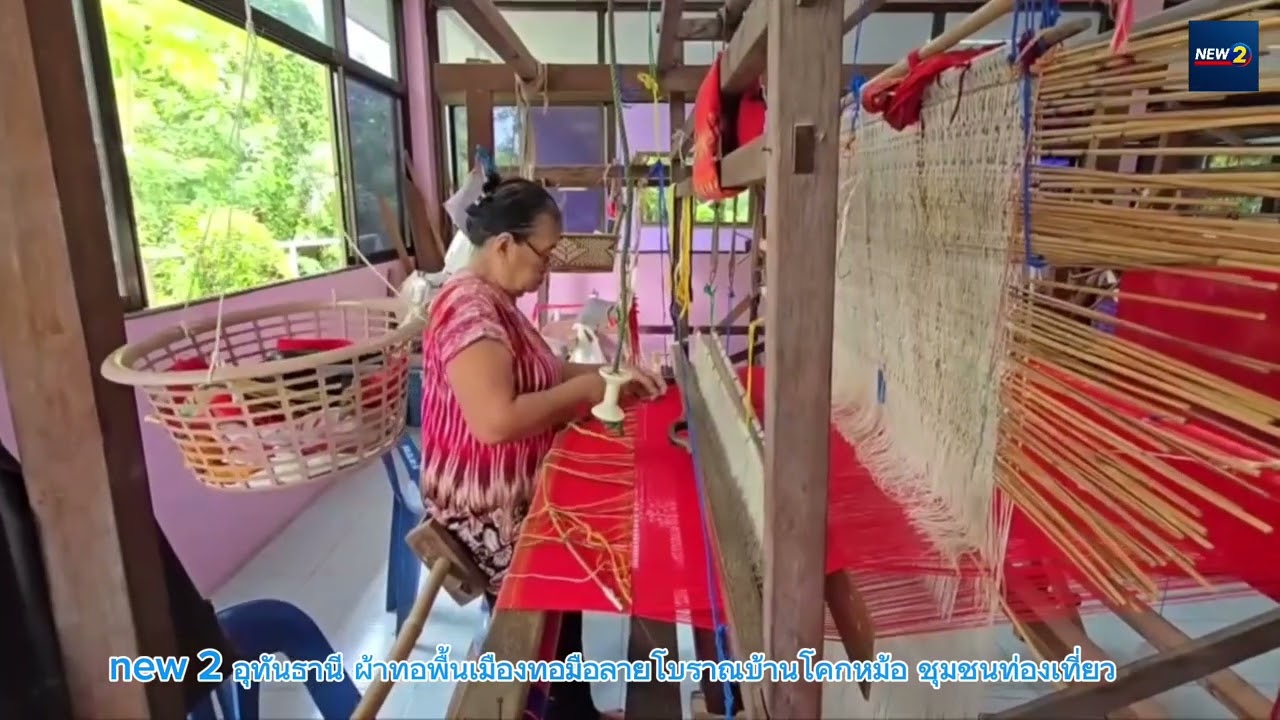
 Click to Access the Navigation Map GPS
Ban Khok Mo Traditional Weaving Center Map
Recommend

 Art, Culture and Heritage
 Historical Sites and Monuments(3)
 Landmarks and Memorials(1)
 Art, Craft Centres, Tradition(5)
 Museums(1)
 Places of Worship
 Temple(31)
 Other Sacred Sites(3)
Village, Community(4)
Other Sacred Sites(3)
Village, Community(4)
 Local Market(1)
 Nature and Wildlife
 National Parks and Marine Reserves(2)
 Mountain (Doi)(7)
 Dam, Reservoir, Lake(5)
 Waterfalls(5)
 Hot Springs(1)
 Caves(9)
 Flower Field(2)
 River, Canal(2)
 Islands(1)
 Other natural attractions(1)
 Entertainment and Agricultural
 Farms, Parks and Ecotourism(2)
 Shopping
 Shopping and Night Market(1)


