
lovethailand home >North Travel Attractions >Uthai Thani Travel Attractions >Nong Khayang >Nong Kha Yang > Wat Nong Phluang
TL;DR: Wat Nong Phluang is located at No. 1, Moo 2, Nong Khayang Subdistrict, Nong Khayang District, Uthai Thani Province, open Daily, hours Best Visited During Daylight Hours.
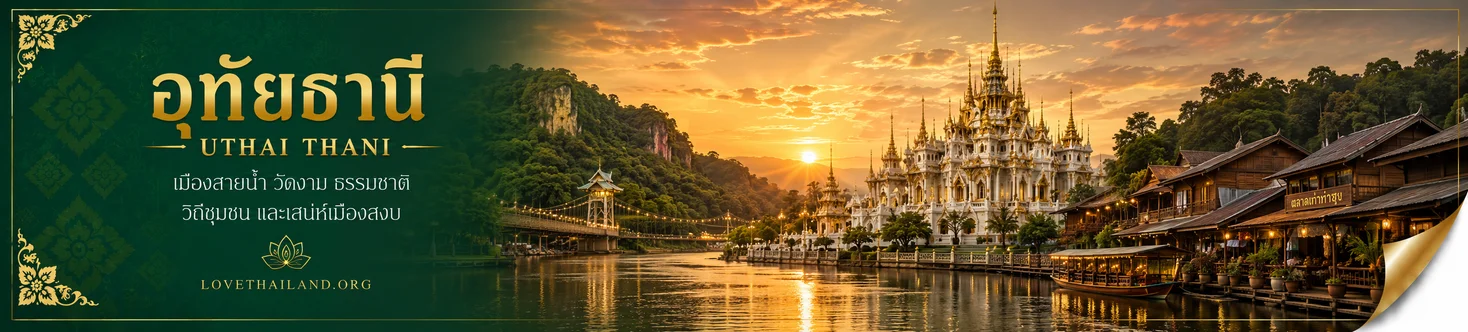
Wat Nong Phluang

Open Days: Daily
Opening Hours: Best Visited During Daylight Hours
Wat Nong Phluang in Uthai Thani Province is an old Buddhist temple located at No. 1, Moo 2, Nong Khayang Subdistrict, Nong Khayang District, Uthai Thani Province. Established in B.E. 2232, the temple is nearly 400 years old and is one of the valuable cultural and religious sites in the area. It is especially important for travelers interested in old Thai temple architecture, local history, and traditional craftsmanship.
The main highlight of Wat Nong Phluang is its ancient ordination hall, designed in the rare “boat-belly” style. The building is made of brick and plaster, with a gable roof and a beautifully decorated front pediment. The front of the ordination hall is adorned with stucco patterns and glazed ceramic pieces, while the rear side is plain white plaster without complex decoration. This contrast gives the building a unique balance between ornate beauty and calm simplicity.
The ordination hall is the spiritual and architectural heart of the temple. Its boat-belly form reflects an old style of Thai religious architecture that is rarely seen today. The curved and graceful body of the building gives a sense of movement and elegance, while its masonry structure shows the strength and skill of ancient craftsmen. For visitors interested in Thai art history, this ordination hall is the most important feature to observe carefully.
The front pediment of the ordination hall is decorated with stucco reliefs and glazed ceramics. This decorative technique was used in many old Thai temples to add color, texture, and refinement to sacred buildings. When light touches the glazed ceramic surfaces, the details become more vivid. The stucco work also shows the careful hand of traditional craftsmen, who used religious architecture as a way to express devotion.
The rear of the ordination hall is very different from the front. It is plain, smooth, and white, with no elaborate ornamentation. This simplicity gives the building a peaceful character. The contrast between the decorated front and the plain rear makes the ordination hall of Wat Nong Phluang especially interesting. It shows how traditional Thai architecture can combine refinement and restraint within the same sacred structure.
Another distinctive feature of the ordination hall is that it has only one entrance and no chofa roof finials. Around the hall are carved stone boundary markers placed on lotus-shaped bases. In Thai Buddhist temples, boundary markers define the consecrated area of the ordination hall. The carved stone markers at Wat Nong Phluang are beautifully made and add both religious and artistic value to the site.
The lotus-shaped bases beneath the boundary stones are meaningful in Buddhist symbolism. The lotus represents purity, spiritual growth, and rising above worldly impurities. By placing the boundary stones on lotus bases, the temple connects architecture with Buddhist meaning. Visitors who walk around the ordination hall can therefore learn not only about design, but also about the symbolic language of Thai Buddhism.
Because Wat Nong Phluang was built in B.E. 2232, it offers a glimpse into the religious and artistic life of the past. Old temples in Thailand were not only places for worship. They were also community centers, learning spaces, meeting points, and places where values were passed from one generation to another. Wat Nong Phluang preserves this historical role through its architecture and continued religious use.
Religiously, Wat Nong Phluang remains a local Buddhist temple where villagers can make merit, pay respect to Buddha images, listen to sermons, chant, and join activities on important Buddhist holy days. This living role is important because the temple is not merely a historic monument. It is still a sacred place connected with local Buddhist life and community devotion.
Typical Buddhist activities at a local temple like Wat Nong Phluang include merit-making on Buddhist holy days, offering food to monks, chanting, listening to Dhamma teachings, and joining ceremonies during Makha Bucha Day, Visakha Bucha Day, Asalha Bucha Day, Buddhist Lent, and the end of Buddhist Lent. These activities help maintain the relationship between the temple and the surrounding community.
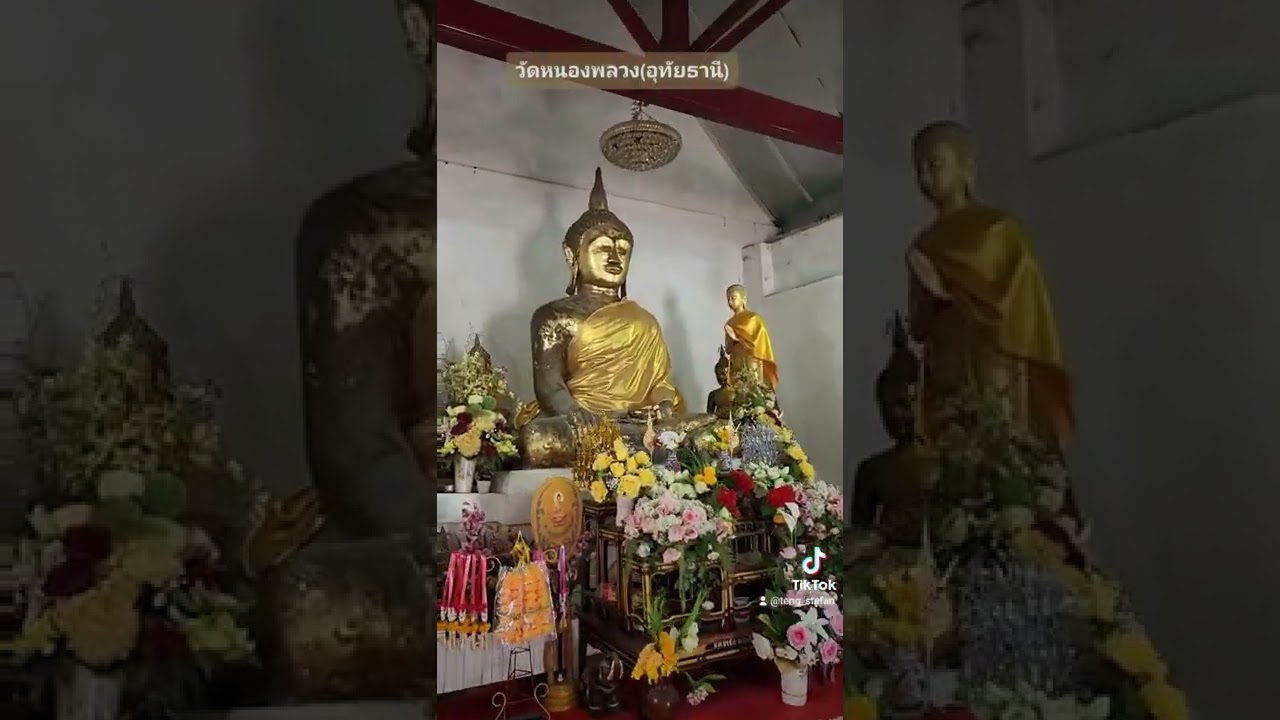
The atmosphere of Wat Nong Phluang is quiet and simple. Visitors can walk around the ordination hall, observe the stone boundary markers, study the stucco and ceramic decoration, and spend time in the peaceful temple grounds. The temple is best appreciated slowly because its value lies in architectural details, age, and the calm presence of an old local temple.
For travelers interested in Thai architecture, the boat-belly ordination hall is especially valuable. The building shows an old architectural style that is becoming rare. Its form, materials, decorative front, plain rear, single entrance, and carved boundary stones all provide important clues about traditional Buddhist architecture and local craftsmanship in Uthai Thani.
The temple also helps visitors understand how old Thai craftsmen used materials such as brick, plaster, stucco, stone, and glazed ceramics. These materials were not only practical; they were used to express religious meaning and beauty. The craftsmanship at Wat Nong Phluang demonstrates how art and faith were integrated in traditional temple construction.
Wat Nong Phluang is located within easy reach of Uthai Thani town. From town, take Highway 333 toward Nong Khayang District. Between kilometer markers 9 and 10, the temple is on the right-hand side near Nong Khayang Witthaya School. This convenient location makes it suitable for a short cultural stop or as part of a temple route around Uthai Thani.
The temple can be visited as a half-day trip from Uthai Thani town. Visitors can spend time at Wat Nong Phluang and then continue to other cultural attractions such as Wat Tha Pho, Wat Uposatharam, Trok Rong Ya Walking Street, Wat Sangkat Rattana Khiri, Wat Chantharam or Wat Tha Sung, and Ko Thepho. This route is suitable for travelers who want to explore both old temples and local life in Uthai Thani.
Visitors should dress modestly and behave respectfully because Wat Nong Phluang is still an active Buddhist temple. They should avoid touching or climbing on old architectural elements, speak quietly, and take photographs with respect. The ordination hall and boundary stones are valuable heritage features, so careful behavior helps preserve them for future generations.
A visit to Wat Nong Phluang should allow at least 45 minutes to 1 hour. This gives enough time to observe the ordination hall, walk around the boundary stones, study the front and rear details of the building, and rest in the peaceful temple grounds. Those who want to photograph or study the architecture more carefully may want to spend longer.
In summary, Wat Nong Phluang is an important old temple in Uthai Thani with value in religion, history, architecture, and traditional craftsmanship. Its ancient boat-belly ordination hall, stucco and ceramic decoration, carved stone boundary markers, lotus bases, and quiet atmosphere make it a meaningful destination for travelers who want to understand the cultural depth of Uthai Thani beyond the better-known attractions.
| Name | Wat Nong Phluang, Uthai Thani |
| Location | No. 1, Moo 2, Nong Khayang Subdistrict, Nong Khayang District, Uthai Thani Province |
| Address | No. 1, Moo 2, Nong Khayang Subdistrict, Nong Khayang District, Uthai Thani 61130, Thailand |
| Highlights | Ancient boat-belly ordination hall built in B.E. 2232, front pediment decorated with stucco and glazed ceramics, carved stone boundary markers on lotus-shaped bases |
| History | Established in B.E. 2232, nearly 400 years old, and an important example of old temple architecture and craftsmanship in Uthai Thani |
| Distinctive Features | Brick-and-plaster boat-belly ordination hall with gable roof, decorated front, plain white rear wall, no chofa finials, and one entrance |
| Important Features | Ancient ordination hall, carved stone boundary markers, lotus-shaped bases, stucco decoration, glazed ceramics, and worship area within the temple grounds |
| Rituals And Local Beliefs | Merit-making, Buddhist worship, chanting, listening to sermons, and activities on Makha Bucha Day, Visakha Bucha Day, Buddhist Lent, and the end of Buddhist Lent |
| Main Areas / Zones | Ancient ordination hall, area around the hall, carved boundary markers, worship area, and surrounding temple grounds |
| Abbot / Caretaker | Phra Athikan Sitthisak Kovito |
| Travel Information | From Uthai Thani town, take Highway 333 toward Nong Khayang District. Between kilometer markers 9 and 10, the temple is on the right-hand side near Nong Khayang Witthaya School |
| Current Status | Active local Buddhist temple open for worship, merit-making, and cultural visits to the old ordination hall |
| Open Days | Daily |
| Opening Hours | Best visited during daylight hours |
| Facilities | Worship area, walking area around the old ordination hall, and peaceful temple grounds |
| Visitor Guidelines | Dress modestly, keep quiet, avoid climbing on or touching old architectural elements unnecessarily, and photograph respectfully |
| Nearby Tourist Attractions | 1. Wat Tha Pho, about 5 km 2. Wat Uposatharam, about 12 km 3. Trok Rong Ya Walking Street, about 12 km 4. Wat Sangkat Rattana Khiri, about 13 km 5. Wat Chantharam or Wat Tha Sung, about 17 km 6. Ko Thepho, about 18 km |
| Nearby Restaurants | 1. Baan Nok Rim Na, about 4 km, Tel. 087-200-4998 2. MRA Cafe & Bistro Uthaithani, about 5 km, Tel. 062-259-1424 3. P.Garden Cafe, about 6 km 4. Krua Yang Na, about 6 km 5. Euamphon Restaurant, about 7 km |
| Nearby Accommodations | 1. Uthai Thani Resort, about 5 km, Tel. 061-592-7033 2. Baan Phu Yai Coffee & Resort, about 5 km, Tel. 090-318-7471 3. Ruean Khao Hom Residence, about 6 km, Tel. 056-510-851, 087-729-9015 4. Dee Prom Resort Uthai Thani, about 8 km, Tel. 084-379-3496 5. C2U Hotel Uthai-thani, about 9 km |
Frequently Asked Questions (FAQ)
Q: Where is Wat Nong Phluang located?
A: Wat Nong Phluang is located at No. 1, Moo 2, Nong Khayang Subdistrict, Nong Khayang District, Uthai Thani Province, near Nong Khayang Witthaya School.
Q: Why is Wat Nong Phluang important?
A: Wat Nong Phluang is an old temple built in B.E. 2232. It is important for its ancient boat-belly ordination hall and as a valuable example of old Thai temple architecture in Uthai Thani.
Q: What is special about the boat-belly ordination hall?
A: The ordination hall is made of brick and plaster, with a gable roof, a decorated front pediment, glazed ceramics, a plain white rear wall, no chofa finials, and only one entrance.
Q: What is special about the boundary markers at Wat Nong Phluang?
A: The boundary markers are finely carved stone markers placed on lotus-shaped bases, reflecting both Buddhist symbolism and traditional craftsmanship.
Q: What type of travelers should visit Wat Nong Phluang?
A: The temple is suitable for Buddhist visitors, cultural travelers, architecture enthusiasts, history lovers, and anyone interested in old temples in Uthai Thani.
Q: How can travelers get to Wat Nong Phluang?
A: From Uthai Thani town, take Highway 333 toward Nong Khayang District. Between kilometer markers 9 and 10, the temple is on the right-hand side near Nong Khayang Witthaya School.
Q: Is there an admission fee for Wat Nong Phluang?
A: Wat Nong Phluang is a local Buddhist temple where visitors can make merit, pay respect, and visit the old ordination hall as usual.
Q: What nearby places can be visited with Wat Nong Phluang?
A: Nearby places include Wat Tha Pho, Wat Uposatharam, Trok Rong Ya Walking Street, Wat Sangkat Rattana Khiri, Wat Chantharam or Wat Tha Sung, and Ko Thepho.
 Category: ●Places of Worship
 Group: ●Temple
Last Update : 6 MonthAgo
 Last Update : 6 MonthAgo
 Click to Access the Navigation Map GPS
Wat Nong Phluang Map
Recommend

 Art, Culture and Heritage
 Historical Sites and Monuments(3)
 Landmarks and Memorials(1)
 Art, Craft Centres, Tradition(5)
 Museums(1)
 University
 Public university(1)
Temple(31)
 Other Sacred Sites(3)
 Suburban Living
 Village, Community(4)
 Local Market(1)
 Nature and Wildlife
 National Parks and Marine Reserves(2)
 Mountain (Doi)(7)
 Dam, Reservoir, Lake(5)
 Waterfalls(5)
 Hot Springs(1)
 Caves(9)
 Flower Field(2)
 River, Canal(2)
 Islands(1)
 Other natural attractions(1)
 Entertainment and Agricultural
 Farms, Parks and Ecotourism(2)
 Shopping
 Shopping and Night Market(1)
 Travel Articles, Recipes
 Travel Review, Food Review(1)


