
lovethailand home >North Travel Attractions >Uthai Thani Travel Attractions >Nong Chang >Nong Suang > Wat Nong Khun Chat
TL;DR: Wat Nong Khun Chat is located at Nong Suang Subdistrict, Nong Chang District, Uthai Thani Province, open Daily, hours Open During General Temple Visiting Hours / Local Museum 09.00 – 16.00, Closed.
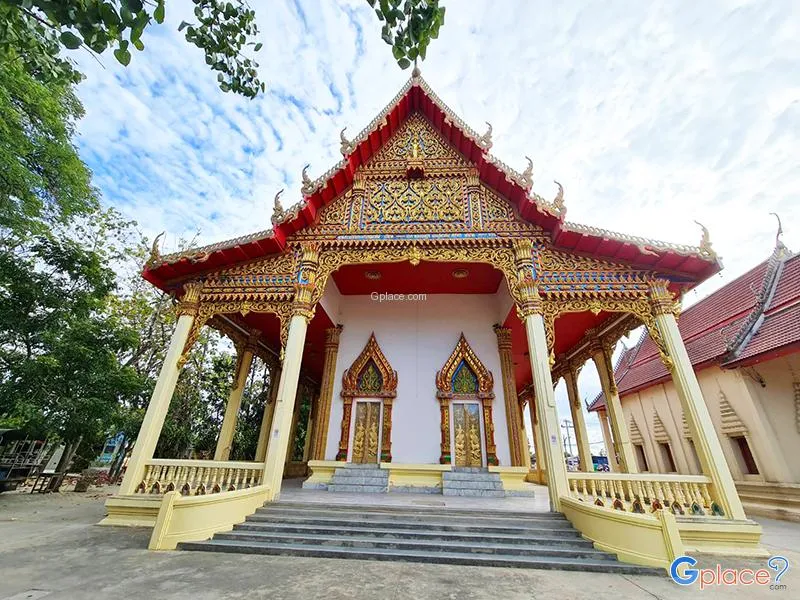
Wat Nong Khun Chat
Open Days: Daily
Opening Hours: Open During General Temple Visiting Hours / Local Museum 09.00 – 16.00, Closed Monday–Tuesday
Wat Nong Khun Chat in Uthai Thani Province is an old local Buddhist temple in Nong Suang Subdistrict, Nong Chang District. It is a historically important temple connected with local faith, traditional Thai craftsmanship, Buddhist ceremonies, and the cultural memory of the Nong Chang community. Founded in 1821, the temple is known for its three revered Buddha images, Luang Pho Suk, Luang Pho Sue, and Luang Pho Tum, its replica Buddha footprint, its annual Buddha footprint worship festival, and its local museum that preserves antiques, farming tools, household objects, old weapons, traditional baskets, and historical currencies.
For foreign travelers interested in Thai temples beyond the main tourist routes, Wat Nong Khun Chat offers a meaningful and educational experience. It is not only a place for worship but also a cultural learning site where visitors can understand how a rural Thai temple functions as a spiritual center, a historical archive, a community gathering place, and a keeper of local traditions. The temple grounds include worship areas, a vihara, an old ordination hall, a mondop housing the replica Buddha footprint, a local museum, a sermon hall, and areas used for community activities.
The history of Wat Nong Khun Chat dates back to the early Rattanakosin period. The temple was founded in 1821 by Khun Sanit together with local villagers of Nong Suang. In its early years, the temple was known as Wat Sanit Thammatharam, a name connected with its founder and the religious intentions of the community. Later, it became known as Wat Nong Suang after the village name. As local administration and settlement patterns developed, the temple eventually took the name Wat Nong Khun Chat, which remains in use today.
The changing names of the temple reflect the changing history of the community. When administrative developments took place in the area, including the relocation of the old Uthai district office in 1906 and the renaming of the district as Nong Chang District in 1922, the temple’s identity also became closely associated with the surrounding community. This makes Wat Nong Khun Chat an important reference point for understanding the social and cultural development of Nong Chang District.
Wat Nong Khun Chat received its first royal boundary grant, or Wisungkhamsima, around 1900 and later received a more recent royal grant on November 3, 1995. In Thai Buddhist tradition, a Wisungkhamsima defines the sacred boundary of an ordination hall where important monastic ceremonies can be performed. This confirms the temple’s long-standing religious role and its importance as a place for Buddhist rites, community worship, and monastic activities.
Artistically, Wat Nong Khun Chat is notable for its traditional Thai craftsmanship. The old ordination hall features finely carved wooden doors and window panels, showing the refined skill of Thai artisans in the Rattanakosin period. These carvings are not merely decorative; they reflect the devotion of the community and the care invested in creating a sacred space. For travelers who enjoy Thai temple architecture, these wooden details are among the most valuable features of the temple.
The old ordination hall also contains mural paintings from the reign of King Rama V. These murals depict Buddhist stories and various episodes related to the life of the Buddha. One especially interesting detail is the appearance of figures dressed in Western-style clothing and wearing brimmed hats, a visual sign of the period when Western influence began to appear in Thai society. These murals therefore serve not only as Buddhist art but also as historical evidence of cultural change in Thailand during the later Rattanakosin period.
The spiritual heart of Wat Nong Khun Chat is the vihara that houses the three revered Buddha images: Luang Pho Suk, Luang Pho Sue, and Luang Pho Tum. These sacred images are deeply respected by local residents and visitors from nearby areas. Many people come to the temple to pay respect, make merit, ask for blessings, and calm the mind. The continuing devotion to these three Buddha images keeps the temple closely connected to the faith and emotional life of the local community.
Another major sacred point inside the temple is the mondop that enshrines the replica Buddha footprint. This site is central to the annual Buddha footprint worship festival, held from the 12th waxing moon day of the third Thai lunar month to the 5th waning moon day of the same month, lasting about 10 days and 10 nights. During this period, local people and visitors gather to pay respect to the Buddha footprint, make merit, join religious activities, and experience the atmosphere of a traditional Thai temple fair.
The annual Buddha footprint worship festival is one of the clearest examples of the relationship between Wat Nong Khun Chat and the community. A temple festival in Thailand is not only a religious event; it is also a time when villagers gather, renew shared traditions, support the temple, and pass local faith from one generation to the next. For foreign travelers, attending such a festival offers a deeper understanding of how Buddhism, community life, and local culture remain closely connected in provincial Thailand.
The Local Museum of Wat Nong Khun Chat is one of the temple’s most distinctive features. The museum was established to collect and display objects related to the local history and everyday life of the people of Nong Chang. Its collection includes antiques, farming tools, household items, old weapons such as bows and swords, woven baskets, Thai musical instruments, kitchenware, and displays of old currencies. These objects help visitors visualize how people lived, worked, traveled, cooked, farmed, and made merit in the past.
The value of the museum lies not only in the number of objects it preserves but also in the stories those objects tell. Simple items such as carrying baskets, clay pots, agricultural tools, food containers, or old kitchen equipment become evidence of labor, family life, local occupations, and the relationship between villagers and the temple. When viewed within the context of an old Buddhist temple, these objects help foreign visitors understand that Thai temples often preserve not only religious heritage but also the memory of everyday community life.
The Local Museum of Wat Nong Khun Chat is located inside the temple at 114 Moo 2, Ban Nong Khun Chat, Nong Suang Subdistrict, Nong Chang District, Uthai Thani Province 61110. The museum is open from 09.00 to 16.00 and is closed on Monday and Tuesday. No admission fee is charged. Visitors who especially want to see the museum should plan their trip during the museum’s opening hours.
A recommended route inside the temple begins at the worship area and the vihara of the three revered Buddha images. Visitors can then continue to the old ordination hall to observe the carved wooden doors, window panels, and mural paintings. After that, the mondop of the replica Buddha footprint is an important stop, especially for those interested in the annual worship tradition. Finally, the local museum provides a strong cultural conclusion to the visit by showing the everyday life and history of the Nong Chang community.
Wat Nong Khun Chat also functions as a place for Buddhist education. It has been associated with monastic study and the teaching of Dhamma for monks. This role is important because Buddhist education supports the continuity of monastic discipline, religious knowledge, and proper temple practice. Visitors can therefore see that the temple preserves not only old buildings and objects but also the living tradition of Buddhist learning.
The temple is currently under the care of Phra Ratcha Uthai Sophon, an important monastic figure in Uthai Thani Province. The role of the abbot is essential in maintaining the temple, guiding religious activities, supporting local traditions, and overseeing the cultural value of the temple and museum. Because of this continuing leadership and community support, Wat Nong Khun Chat remains an active temple rather than a preserved historical site without daily life.
From a local history perspective, Wat Nong Khun Chat helps explain the development of Nong Chang District. Its former names, royal boundary grants, connection with district administration, religious traditions, and museum collections all reveal how the community developed through Buddhism, local governance, education, and rural life. For travelers interested in Uthai Thani’s history, this temple is a valuable starting point for understanding Nong Chang beyond surface-level sightseeing.
From an artistic perspective, Wat Nong Khun Chat is especially meaningful for those interested in Thai wood carving, temple murals, and Rattanakosin-period architecture. The carved doors and windows deserve slow observation because they show the patience and skill of traditional craftsmen. The murals in the old ordination hall connect Buddhist narratives with the social atmosphere of their period, making them a visual record of both faith and history.
For photographers, Wat Nong Khun Chat offers several quiet and culturally rich scenes: old temple architecture, carved wooden details, the mondop of the Buddha footprint, the local museum, and the daily rhythm of a rural temple community. Photographs taken here tend to feel calm and detailed rather than dramatic. Visitors should photograph respectfully, avoid disturbing worshippers, and avoid using flash around old artworks or museum objects.
For families and young travelers, the temple is a useful outdoor learning site. Children and students can learn about Thai Buddhism, local history, traditional tools, old weapons, farming life, woven objects, and old currencies through real objects rather than textbooks. The museum turns ordinary objects from the past into understandable cultural evidence, making Wat Nong Khun Chat a good place for cultural education.
Getting There is convenient by private car. The temple is located near Nong Chang Market. From Highway 3012, the Nong Chang–Thap Than route, turn left at the three-way junction and continue along Highway 3013 to reach the temple area. From Uthai Thani town, drive toward Nong Chang District and continue to Nong Suang Subdistrict. A private car is the easiest option because it allows travelers to combine the temple with nearby restaurants, Nong Chang Market, and other attractions in the district.
Travelers coming from Bangkok can drive toward Uthai Thani via the main routes connected with Nakhon Sawan and Chai Nat, then continue to Nong Chang District. Those using public transport should travel to Uthai Thani town or Nong Chang Market first, then arrange local transport to the temple. Because public transport in rural areas may be limited, private transport or a hired vehicle is recommended for a smoother visit.
The best time to visit Wat Nong Khun Chat is in the morning or late afternoon, when the weather is more comfortable for walking around the temple. Visitors who want to see the museum should arrive between 09.00 and 16.00 and avoid Monday and Tuesday. Travelers who want to experience the temple at its most lively should plan their visit during the annual Buddha footprint worship festival in the third Thai lunar month.
Visitors should dress politely because this is an active Buddhist temple. Shoulders and knees should be covered, voices should be kept low, and sacred spaces should be respected. Museum objects, old wooden carvings, and mural paintings should not be touched unless permission is given. Respectful behavior helps preserve the temple’s atmosphere and protects its cultural heritage for future generations.
Overall, Wat Nong Khun Chat is a highly worthwhile cultural destination in Uthai Thani Province. It combines a long temple history, revered Buddha images, the annual Buddha footprint worship tradition, traditional wood carving, old murals, a local museum, and the living culture of Nong Chang District. Visitors gain not only a peaceful temple experience but also a deeper understanding of local Thai history and community heritage.
| Name | Wat Nong Khun Chat |
| Location | Nong Suang Subdistrict, Nong Chang District, Uthai Thani Province |
| Address | Wat Nong Khun Chat, 114 Moo 2, Ban Nong Khun Chat, Nong Suang Subdistrict, Nong Chang District, Uthai Thani Province 61110, Thailand |
| Highlights | Old Rattanakosin-period temple, three revered Buddha images, replica Buddha footprint, annual worship festival, old ordination hall with wood carving and murals, and a local museum |
| History | Founded in 1821. The temple was formerly known as Wat Sanit Thammatharam, later Wat Nong Suang, and is now known as Wat Nong Khun Chat |
| Name Origin | The temple’s name changed with the development of the local community, from a name connected with Khun Sanit to Nong Suang village and finally Nong Khun Chat |
| Distinctive Features | Vihara housing Luang Pho Suk, Luang Pho Sue, and Luang Pho Tum; replica Buddha footprint; old ordination hall with wood carvings and Rama V-period murals |
| Travel Information | From Highway 3012 on the Nong Chang–Thap Than route, turn left at the three-way junction and follow Highway 3013 to the temple. The temple is close to Nong Chang Market and is best reached by private car |
| Current Status | Active local Buddhist temple under the Mahanikaya order and a cultural, historical, and museum attraction in Nong Chang District |
| Open Days | Temple Open Daily / Local Museum Closed Monday–Tuesday |
| Opening Hours | Temple Open During General Visiting Hours / Local Museum 09.00 – 16.00 |
| Fees | No Admission Fee |
| Facilities | Worship areas, vihara, ordination hall, replica Buddha footprint mondop, sermon hall, local museum, parking area, and nearby restaurants |
| Main Areas / Zones | Vihara of the three revered Buddha images Old ordination hall and wood carvings Replica Buddha footprint mondop Wat Nong Khun Chat Local Museum Sermon hall and community activity area Buddhist study area |
| Abbot / Caretaker | Phra Ratcha Uthai Sophon |
| Main Contact Number | 0 5653 1296, 09 3047 4826 |
| Nearby Tourist Attractions | 1. Nong Chang Market, about 1 km 2. Wat Luang Pho Khleap, Nong Chang District, about 8 km 3. Khao Pathawi, Thap Than District, about 18 km 4. Hup Pa Tat, Lan Sak District, about 28 km 5. Ban Chai Khao Viewpoint, about 29 km 6. Khao Sakae Krang, Mueang Uthai Thani District, about 35 km 7. Trok Rong Ya Walking Street, Mueang Uthai Thani District, about 36 km |
| Nearby Restaurants | 1. Kuay Tiao & Khao Pad Je Kung @ Wat Nong Khun Chat, about 0 km, Tel. 087-195-8507 2. The Winner Cafe Nong Chang, about 1 km 3. Traditional Noodle Shop Nong Suang, about 1 km 4. 88Cafe & Bistro, about 1 km 5. Star Coffee Nong Suang, about 1 km 6. Banja Cafe, about 7 km |
| Nearby Accommodations | 1. Cheng Resort, Nong Chang District, about 5 km, Tel. 093-050-5282, 081-745-9552 2. Ai Aoon Resort, Nong Chang District, about 8 km, Tel. 081-887-6717, 064-539-2920 3. The Khun, Nong Chang District, about 18 km, Tel. 094-669-9935 4. Namhom Resort, Thap Than District, about 19 km 5. BN Organic Farm Resort, about 22 km 6. C2U Boutique Hotel Uthai Thani, about 32 km |
Frequently Asked Questions (FAQ)
Q: Where is Wat Nong Khun Chat located?
A: Wat Nong Khun Chat is located at 114 Moo 2, Ban Nong Khun Chat, Nong Suang Subdistrict, Nong Chang District, Uthai Thani Province 61110, close to Nong Chang Market.
Q: What is the history of Wat Nong Khun Chat?
A: The temple was founded in 1821 by Khun Sanit and local villagers. It was first called Wat Sanit Thammatharam, later Wat Nong Suang, and is now known as Wat Nong Khun Chat.
Q: What sacred objects are important at Wat Nong Khun Chat?
A: The temple is known for three revered Buddha images, Luang Pho Suk, Luang Pho Sue, and Luang Pho Tum, as well as the replica Buddha footprint in the mondop.
Q: When is the Wat Nong Khun Chat Local Museum open?
A: The local museum is open from 09.00 to 16.00 and is closed on Monday and Tuesday. No admission fee is charged.
Q: When is the annual Buddha footprint worship festival held?
A: The festival is held every year from the 12th waxing moon day of the third Thai lunar month to the 5th waning moon day, lasting about 10 days and 10 nights.
Q: Who should visit Wat Nong Khun Chat?
A: It is ideal for travelers interested in Thai temples, old murals, wood carving, Buddhist culture, local museums, and the history of Nong Chang District.
Q: How can travelers get to Wat Nong Khun Chat?
A: The temple is best reached by private car. From Highway 3012 on the Nong Chang–Thap Than route, turn left at the three-way junction and follow Highway 3013 to the temple area.
Q: What attractions can be visited near Wat Nong Khun Chat?
A: Nearby places include Nong Chang Market, Wat Luang Pho Khleap, Khao Pathawi, Hup Pa Tat, Ban Chai Khao Viewpoint, Khao Sakae Krang, and Trok Rong Ya Walking Street.
 Category: ●Places of Worship
 Group: ●Temple
Last Update : 6 MonthAgo
 Last Update : 6 MonthAgo
 Click to Access the Navigation Map GPS

 Art, Culture and Heritage
 Historical Sites and Monuments(3)
 Landmarks and Memorials(1)
 Art, Craft Centres, Tradition(5)
 Museums(1)
 University
 Public university(1)
Temple(31)
 Other Sacred Sites(3)
 Suburban Living
 Village, Community(4)
 Local Market(1)
 Nature and Wildlife
 National Parks and Marine Reserves(2)
 Mountain (Doi)(7)
 Dam, Reservoir, Lake(5)
 Waterfalls(5)
 Hot Springs(1)
 Caves(9)
 Flower Field(2)
 River, Canal(2)
 Islands(1)
 Other natural attractions(1)
 Entertainment and Agricultural
 Farms, Parks and Ecotourism(2)
 Shopping
 Shopping and Night Market(1)
 Travel Articles, Recipes
 Travel Review, Food Review(1)


