
lovethailand home >North Travel Attractions >Uthai Thani Travel Attractions >Muang Uthai Thani >Uthai Mai > Wat Thammakhosok
TL;DR: Wat Thammakhosok is located at Uthai Mai Subdistrict, Mueang Uthai Thani District, Uthai Thani Province, open Daily, hours 08.00 – 17.00.
Wat Thammakhosok

Open Days: Daily
Opening Hours: 08.00 – 17.00
Wat Thammakhosok, commonly known by local people as Wat Rong Kho, is one of the most historically and artistically significant temples in Uthai Thani Province. Located in Uthai Mai Subdistrict, Mueang Uthai Thani District, near the municipal market and the old-town area, this temple offers a quieter but deeply meaningful cultural experience. It is not a large modern tourist temple, but a temple rich in local history, early Rattanakosin art, Buddhist murals, stucco decoration, carved wooden doors, old Buddha images, prangs, chedis, and stories connected with the civic life of old Uthai Thani.
For foreign travelers, Wat Thammakhosok is a valuable place to understand Uthai Thani beyond its better-known attractions. The temple preserves the atmosphere of an old urban monastery closely connected with the surrounding community. Its value lies not in grandeur, but in detail. Visitors who take time to observe the ordination hall, the raised viharn, the mural paintings, the window frames, the carved doors, and the surrounding sacred structures will discover how Thai religious art, local craftsmanship, and urban history come together in one compact temple compound.
The temple was originally known as Wat Rong Kho, a local name that has been passed down through the community. Historical information records that it was established as a temple in 1782, at the beginning of the Rattanakosin period, and received its official consecrated boundary in 1802. This was a period when Siam was rebuilding political, religious, and cultural institutions after the fall of Ayutthaya. Temples from this era often served more than purely religious functions. They were also connected with civic ceremonies, community organization, local authority, and social memory.
One of the most important historical aspects of Wat Thammakhosok is its former role as a venue for the oath-taking ceremony of local government officials in Uthai Thani. In the Thai administrative tradition, the oath of allegiance was a solemn ritual expressing loyalty, honesty, and responsibility toward the state. The fact that this temple was used for such a ceremony shows that it once held an important civic status within the town. It was not only a place for worship, but also a public space where religion, authority, and administration met.
The temple also carries a more serious historical memory: the temple grounds were once associated with executions of prisoners. This gives Wat Thammakhosok a complex historical dimension. In older Thai society, some temple spaces were closely linked with ideas of merit, karma, justice, authority, and social order. Walking through the temple today, visitors experience a peaceful Buddhist atmosphere, yet beneath that calm surface lies a layered memory of how religious and civic life were intertwined in the past.
The most outstanding artistic feature of Wat Thammakhosok is the mural painting inside the ordination hall. These murals are often regarded as among the finest in Uthai Thani Province. Scholars have suggested that the paintings may have been created by craftsmen from the late Ayutthaya tradition who continued working into the early Rattanakosin period. This makes the murals especially valuable because they stand at a stylistic transition between Ayutthaya and Rattanakosin art. Such works are important for understanding how artistic forms survived, changed, and adapted after a major historical rupture.
Most of the murals inside the ordination hall depict episodes from the life of the Buddha. Two particularly important scenes are the Buddha’s descent from Tavatimsa Heaven and the scene of the Buddha overcoming Mara. These episodes are central to Buddhist visual storytelling. The descent from Tavatimsa expresses the connection between the human world, the celestial realm, and Buddhist merit, while the victory over Mara represents the triumph of enlightenment over temptation and obstruction. The paintings use composition, gesture, color, facial expression, and symbolic arrangement to communicate Buddhist meaning through visual narrative.
The upper wall of the ordination hall is decorated with celestial assemblies alternating with ceremonial fans of rank. In Thai mural tradition, celestial beings often appear as witnesses to the Buddha’s virtue and teaching. Their placement high on the walls creates the impression that the sacred space of the ordination hall extends upward into a divine realm. The ceremonial fans also reflect the relationship between Buddhism, monastic hierarchy, and social order in traditional Thai society.
The exterior window frames of the ordination hall are decorated with delicate stucco patterns. These details deserve careful attention because they reveal the skill of local craftsmen. Stucco decoration in Thai temple architecture is more than surface ornament. It creates rhythm, depth, and symbolic beauty on the exterior walls. When sunlight touches the raised patterns, the decoration becomes more dimensional, allowing visitors to appreciate the craftsmanship even before entering the building.
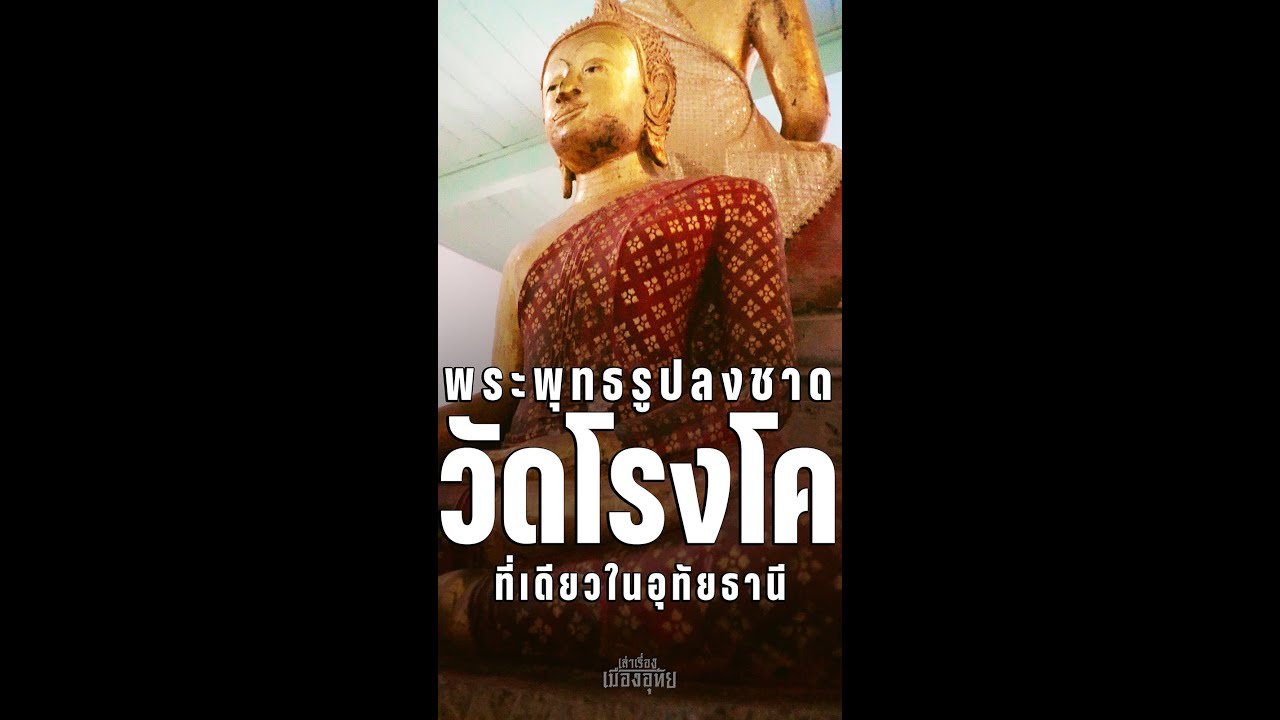
The viharn at Wat Thammakhosok is built on a higher platform than the ordination hall, giving it a dignified presence within the temple compound. Its pediment is decorated with a three-headed elephant, an image associated with power, protection, and sacred symbolism in Thai art. Inside the viharn, around 20 Buddha images are enshrined on an elevated base in an orderly arrangement. The atmosphere is calm, solemn, and suitable for paying respect. Visitors interested in Buddhist sculpture should take time to observe the forms, facial expressions, postures, and arrangement of the images.
Another important artistic detail is the stucco decoration around the exterior windows of the viharn, which tells stories from the Ramakien, the Thai version of the Ramayana. This shows that temple art in Thailand did not only present Buddhist stories. It also incorporated literary narratives, moral lessons, heroic ideals, and symbolic struggles between virtue and evil. The presence of Ramakien imagery in a Buddhist temple reflects the richness of Thai cultural imagination and the way literature, religion, and art were woven together.
The viharn doors are made of carved wood with floral motifs and painted in a vivid red color. These doors are among the details that make the temple especially attractive for travelers interested in traditional craftsmanship. The red surface enhances the carved floral designs, while the motifs suggest beauty, fertility, auspiciousness, and refinement. Wood carving requires patience, skill, and a strong sense of rhythm. Looking closely at the door panels allows visitors to appreciate the handwork and intention of craftsmen from the past.
Around the ordination hall and the viharn, visitors can see several prangs and chedis. These sacred structures complete the atmosphere of an old temple compound. They are not merely decorative additions. In Thai Buddhist architecture, prangs and chedis mark sacred space, express continuity of faith, and connect the temple with wider traditions of Buddhist worship. Their presence gives Wat Thammakhosok a distinctly old and contemplative atmosphere, making the temple rewarding for slow observation and cultural photography.
Wat Thammakhosok is meaningful because it brings together several dimensions in one place. History lovers can learn about the oath-taking ceremony and the former execution ground. Art lovers can study murals, stucco work, carved wood, and architectural details. Buddhist visitors can pay respect to Buddha images and experience the calm of an old temple. Travelers interested in Uthai Thani can understand how a town temple is connected with markets, communities, civic authority, and local identity. It is a small temple in physical scale, but its cultural content is rich and layered.
Visitors should dress respectfully because Wat Thammakhosok remains an active Buddhist temple. Shoulders and knees should be covered, and behavior inside the ordination hall and viharn should be quiet and considerate. The murals, stucco decoration, and carved wooden doors should not be touched, as old artworks can be fragile. Photography should be done respectfully, and flash should be avoided around old mural paintings. If any area is closed or marked with temple instructions, visitors should follow the rules carefully.
In terms of travel planning, Wat Thammakhosok is easy to combine with other attractions in Uthai Thani town. Visitors can start with the temple in the morning, continue to Trok Rong Ya Walking Street, Baan Jongrak, the Sakae Krang riverside market, Wat Uposatharam, or Wat Sangkat Rattana Khiri on Khao Sakae Krang. This route allows travelers to experience Buddhist heritage, old-town atmosphere, riverside life, local food, and community history within a single day.
Getting There is convenient because the temple is located in the town area of Uthai Thani. Travelers with a private car can navigate to Wat Thammakhosok or Wat Rong Kho in Mueang Uthai Thani District. The route through town is simple, and parking is usually possible around nearby areas depending on local conditions. Travelers staying in town can use local transport, motorcycle taxis, or continue from the municipal market and old-town area. The temple is suitable for a short but meaningful cultural stop in the morning or afternoon.
Travelers who enjoy photographing Thai art should prepare for close-up details rather than only wide-angle shots. The strongest visual features of the temple are the mural paintings, stucco frames, carved wooden doors, and small architectural details. Soft natural light is preferable, and flash should not be used on old murals. Taking time to observe shadows, lines, and textures will make the visit more rewarding than a quick walk-through.
Wat Thammakhosok is also a strong example of why secondary cities in Thailand are culturally rewarding. Some smaller and less famous temples preserve deep historical and artistic value that is easy to overlook. This temple shows that Uthai Thani is not only about Wat Tha Sung or Khao Sakae Krang. It also contains quiet old-town temples where local history, Buddhist art, civic memory, and community identity remain visible. For travelers who prefer meaningful cultural sites over crowded attractions, Wat Thammakhosok is a highly worthwhile stop.
Overall, Wat Thammakhosok is an important cultural treasure of Uthai Thani Province. Its early Rattanakosin history, late Ayutthaya artistic influence, Buddhist murals, raised viharn, three-headed elephant pediment, Ramakien stucco decoration, red carved wooden doors, prangs, chedis, and association with local civic ceremonies make it one of the most interesting old temples in the town. Visiting this temple is not only an act of worship, but also a way to read local history through architecture, painting, and sacred space.
| Name | Wat Thammakhosok, Also Known As Wat Rong Kho |
| Location | Uthai Mai Subdistrict, Mueang Uthai Thani District, Uthai Thani Province |
| Address | Sri Uthai Road / Uthai Thani Municipal Area, Near The Municipal Market, Uthai Mai Subdistrict, Mueang Uthai Thani District, Uthai Thani Province, Thailand |
| Coordinates | Approximately 15.3790, 100.0240 |
| Highlights | Buddhist murals, the Buddha descending from Tavatimsa Heaven, the Buddha overcoming Mara, celestial assemblies, stucco window frames, raised viharn, three-headed elephant pediment, Ramakien stucco decoration, and red carved wooden doors |
| History | Established as a temple in 1782 during the early Rattanakosin period and officially consecrated in 1802. It was formerly used for the oath-taking ceremony of Uthai Thani officials and was associated with an execution ground in the past |
| Name Origin | The official name is Wat Thammakhosok, while Wat Rong Kho is the local name remembered and used by the community |
| Distinctive Features | An old town temple combining local civic history, Buddhist murals, stucco work, carved wood, prangs, chedis, and a quiet early Rattanakosin temple atmosphere |
| Travel Information | Easy to reach by private car, local transport, or from the municipal market and old-town area of Uthai Thani. The temple is located within the town area and can be combined with nearby cultural attractions |
| Current Status | Open To Visitors And Worshippers |
| Open Days | Daily |
| Opening Hours | 08.00 – 17.00 |
| Fees | No Admission Fee |
| Facilities | Worship areas, ordination hall, viharn, temple courtyard, nearby parking areas, and shops around the municipal market area |
| Main Areas / Zones | 1. Old Ordination Hall With Buddhist Murals 2. Raised Viharn With Buddha Images 3. Stucco Window Frames 4. Red Carved Wooden Doors 5. Ramakien Stucco Decoration Around The Viharn 6. Prangs And Chedis Around The Ordination Hall And Viharn 7. Temple Courtyard Connected With Local History |
| Abbot / Caretaker | Phra Maha Ophat Somchitto |
| Main Contact Number | 056-511-450 |
| Nearby Tourist Attractions | 1. Trok Rong Ya Walking Street, About 1 km 2. Baan Jongrak, About 1 km 3. Sakae Krang Riverside Morning Market, About 1 km 4. Wat Uposatharam, About 2 km 5. Wat Sangkat Rattana Khiri And Khao Sakae Krang, About 3 km |
| Nearby Restaurants | 1. Baan Bua Luang Restaurant, About 1 km, Tel. 056-525-047, 062-252-9445 2. Pa Samran Restaurant, About 6 km, Tel. 056-980-085, 083-874-0376 3. Krua Rim Suan Uthai Thani, About 2 km, Tel. 089-008-3062 4. Freshy Cafe’ & Bistro, About 2 km 5. Krua Baan Suan Uthai Thani, About 3 km |
| Nearby Accommodations | 1. Baan Rao Uthai Thani Homestay, About 1 km, Tel. 082-595-3344 2. Baan Na Non, About 1 km, Tel. 085-874-2846, 083-018-8866 3. Comeneetee Uthai, About 1 km, Tel. 089-907-2098, 086-652-7749 4. Payamai Resort, About 2 km, Tel. 081-674-1992 5. Klang Mueang Villa, About 2 km, Tel. 056-049-713, 098-781-4564, 096-675-5466 |
Frequently Asked Questions (FAQ)
Q: Where is Wat Thammakhosok or Wat Rong Kho located?
A: Wat Thammakhosok, also known as Wat Rong Kho, is located in Uthai Mai Subdistrict, Mueang Uthai Thani District, Uthai Thani Province, near the municipal market and the old-town area.
Q: Why is Wat Thammakhosok historically important?
A: The temple dates back to the early Rattanakosin period and was formerly used for the oath-taking ceremony of Uthai Thani officials. It was also associated with an execution ground in the past.
Q: What are the main artistic highlights of Wat Thammakhosok?
A: The main highlights include Buddhist murals inside the ordination hall, scenes of the Buddha descending from Tavatimsa Heaven, the Buddha overcoming Mara, celestial assemblies, stucco decoration, and red carved wooden doors.
Q: Is there an admission fee at Wat Thammakhosok?
A: No. There is no admission fee for visiting the temple.
Q: Who is the abbot of Wat Thammakhosok?
A: The abbot of Wat Thammakhosok is Phra Maha Ophat Somchitto.
Q: How long should visitors spend at Wat Thammakhosok?
A: Visitors should allow around 30 minutes to 1 hour, especially if they want to study the murals, stucco work, viharn, and carved wooden details carefully.
Q: What nearby places can visitors combine with Wat Thammakhosok?
A: Nearby places include Trok Rong Ya Walking Street, Baan Jongrak, Sakae Krang Riverside Morning Market, Wat Uposatharam, and Wat Sangkat Rattana Khiri.
Q: Is Wat Thammakhosok suitable for foreign travelers?
A: Yes. It is suitable for foreign travelers interested in Thai art, local history, Buddhist culture, and quiet old temples in Thailand’s secondary cities.
 Category: ●Places of Worship
 Group: ●Temple
Last Update : 6 MonthAgo
 Last Update : 6 MonthAgo
 Click to Access the Navigation Map GPS
Wat Thammakhosok Map
Recommend

 Art, Culture and Heritage
 Historical Sites and Monuments(3)
 Landmarks and Memorials(1)
 Art, Craft Centres, Tradition(5)
 Museums(1)
 University
 Public university(1)
Temple(31)
 Other Sacred Sites(3)
 Suburban Living
 Village, Community(4)
 Local Market(1)
 Nature and Wildlife
 National Parks and Marine Reserves(2)
 Mountain (Doi)(7)
 Dam, Reservoir, Lake(5)
 Waterfalls(5)
 Hot Springs(1)
 Caves(9)
 Flower Field(2)
 River, Canal(2)
 Islands(1)
 Other natural attractions(1)
 Entertainment and Agricultural
 Farms, Parks and Ecotourism(2)
 Shopping
 Shopping and Night Market(1)
 Travel Articles, Recipes
 Travel Review, Food Review(1)


