
lovethailand home >North Travel Attractions >Uthai Thani Travel Attractions >Thap Than >Thap Than > Wat Thap Than
TL;DR: Wat Thap Than is located at Ban Thap Than, Moo 1, Thap Than Subdistrict, Thap Than District, Uthai Thani Province, open Daily, hours 08.00 – 17.00.

Wat Thap Than
Open Days: Daily
Opening Hours: 08.00 – 17.00
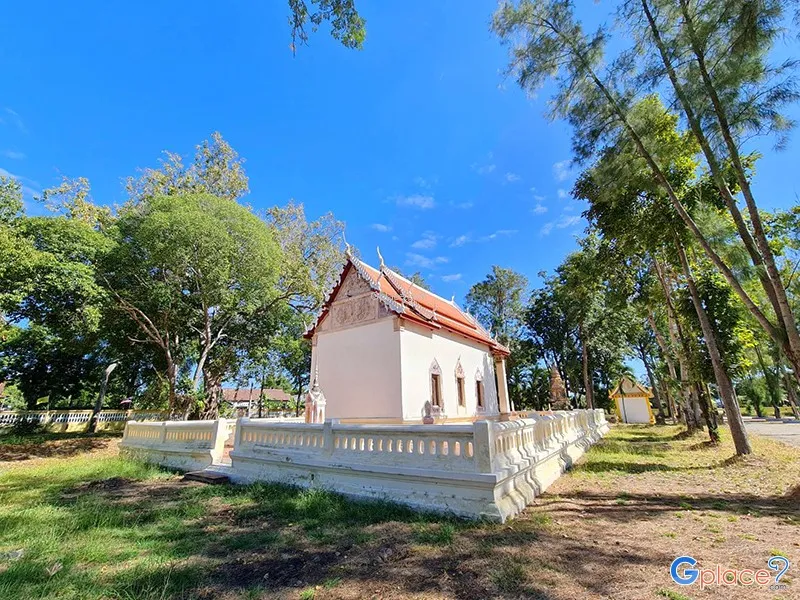
Wat Thap Than, officially known as Wat Thap Than Watthanaram, is an important old temple in Thap Than District, Uthai Thani Province. It is located at 273 Ban Thap Than, Moo 1, Thap Than Subdistrict, Thap Than District, along the Uthai Thani – Thap Than Road, Highway 3221. The temple is about 19 km from Uthai Thani town and about 1 km before Thap Than District Office on the left-hand side. For travelers interested in Thai art, local craftsmanship, and quiet cultural sites outside the main city, this temple is a rewarding stop.
Wat Thap Than is not a large modern tourist temple. Its value lies in the details of its old ordination hall, carved teakwood doors, gilded lacquer work, and Buddhist paintings related to meditation practice. The temple preserves examples of Rattanakosin-period Thai craftsmanship, especially the carved wooden doors of the ubosot. These doors are important not only as architectural elements, but also as works of local religious art that reveal the beliefs, imagination, and technical skill of Thai craftsmen in the past.
The temple stands along an important local road connecting Uthai Thani town with Thap Than District. This location makes it convenient for visitors traveling by private car. The route along Highway 3221 passes through local communities and rural landscapes, giving travelers a sense of Uthai Thani beyond the riverside old town. Wat Thap Than is therefore suitable for a half-day cultural route that combines temple art, local cafés, and small-town atmosphere.
The name Wat Thap Than is directly connected with the Thap Than community. Like many Thai community temples, it has long served as a religious and social center for local residents. A temple of this kind is not merely a place for ceremonies. It is also a space for merit-making, festivals, community memory, education, and the preservation of local identity. For this reason, visiting Wat Thap Than helps travelers understand how Buddhist temples continue to shape everyday life in provincial Thailand.
The most remarkable feature of the temple is the carved teakwood doors of the old ordination hall. These doors are decorated with lacquer and gilding, showing the skill of craftsmen who worked with both structural wood and symbolic imagery. Carving temple doors requires high craftsmanship because the artist must balance durability, beauty, religious meaning, and the visual rhythm of the door panels. At Wat Thap Than, the doors function as more than entrances; they mark the transition into a sacred Buddhist space.
One door panel is carved with a figure holding a flag and includes the Buddhist year 2466, equivalent to 1923 CE. This date is highly valuable because it allows visitors to connect the artwork with a specific historical period. The early 20th century was a time when traditional Thai temple craftsmanship was still active, while local artisans continued to express their own imagination within established religious forms. The dated carving at Wat Thap Than therefore gives the temple strong documentary and artistic value.
Another door panel is carved with the Year of the Pig motif. The pattern expands beautifully along the central door bar, known in Thai architectural terminology as the ok lao. This detail shows that the craftsmen paid attention not only to the main image, but also to the structural parts of the door. Instead of leaving the central bar plain, they turned it into a continuous decorative surface. The result is a door panel that combines symbolism, rhythm, and technical refinement.
Another pair of door panels is carved with celestial beings holding bows while standing on nagas. Below them are mountains decorated with small animals, while the upper part contains floral kanok scrollwork. This composition is especially interesting because it brings together several symbolic levels. The lower section suggests the natural world, the naga represents protection and sacred power, and the celestial figure suggests the divine realm. The door therefore becomes a symbolic image of a protected sacred universe.
In Thai Buddhist art, the naga is often associated with protection, water, fertility, and guardianship of the Dharma. A celestial being standing on a naga can be interpreted as a powerful guardian image for the sacred space of the ordination hall. The bow may suggest readiness to protect the temple from harmful forces. Seen in this way, the carved door is not only decorative. It expresses the belief that the entrance to a sacred building should be protected by auspicious and powerful imagery.
The floral kanok scrollwork at the top of the door panels adds softness and grace to the composition. Kanok motifs are among the most important decorative forms in Thai art. They suggest growth, order, refinement, and auspicious beauty. When combined with jasmine-like floral elements, the design becomes especially appropriate for a Buddhist setting, as jasmine is associated with purity and respectful offering in Thai culture. These details reveal how even small decorative choices carry cultural meaning.
Although one pair of doors does not include the same level of carving on the central door bar as the others, it still maintains balance and beauty. Thai craftsmanship values not only dense decoration, but also proportion, rhythm, and meaningful empty space. The doors at Wat Thap Than demonstrate this balance well. Some panels emphasize narrative and symbolic figures, while others emphasize line, pattern, and overall harmony. Together, they form one of the most interesting examples of local temple door carving in Uthai Thani.
Inside the ordination hall are paintings of the ten stages of corpse contemplation, known in Thai Buddhist practice as asubha meditation subjects. These images are used to support insight meditation and the contemplation of impermanence. They remind practitioners that the human body is subject to decay, change, and dissolution. The presence of these images shows that Wat Thap Than was not only a place for ritual worship, but also a place connected with serious Buddhist practice and reflection.
Asubha paintings are not commonly emphasized in general tourist temples because their content is direct and contemplative. They are intended to reduce attachment to physical beauty and to encourage insight into the nature of the body. At Wat Thap Than, these paintings give the temple a distinctive spiritual character. They demonstrate how art in a Thai temple can function as a teaching tool, guiding viewers toward reflection on impermanence, suffering, and non-self.
The temple is also associated with respected monks remembered by the local community, including Phra Khru Udom Thammaphan and Phra Khru Ulan Thammakhosit, or Luang Pho Sanga Chittasangwaro. These monks are part of the religious memory of Thap Than and are connected with the temple’s development and spiritual reputation. Visitors who come to the temple can therefore appreciate not only the art, but also the monastic lineage and devotion that helped sustain the temple over time.
Today, Wat Thap Than Watthanaram is under the care of Phra Khru Ukhosatham Wisut, also known as Kriangsak Kammasuttho. The temple continues to serve the local community through merit-making, Buddhist ceremonies, Kathin offerings, and the preservation of its historic religious art. Temples like this are especially important in secondary provinces because they preserve cultural roots that might otherwise be overlooked by mainstream tourism.
The atmosphere around Wat Thap Than is calm and local. Visitors can spend time paying respect, walking around the temple courtyard, and studying the carved doors at a slow pace. This is not a place to rush through. The beauty of the temple becomes clearer when visitors look closely at the lines of the carving, the symbolic animals, the celestial figures, the naga forms, and the traces of old craftsmanship. Those who enjoy quiet cultural travel will find the temple especially meaningful.
For travelers interested in Thai art, Wat Thap Than helps complete the cultural picture of Uthai Thani. Many visitors know the province for Wat Tha Sung, Wat Sangkat Rattana Khiri, or riverside temples in Uthai Thani town. However, Thap Than District also preserves valuable religious craftsmanship in a quieter setting. Visiting this temple shows that Uthai Thani’s cultural heritage is not limited to its most famous attractions, but extends into smaller communities where local art and faith remain visible.
The temple can be included in a cultural route from Uthai Thani town to Thap Than District. Travelers can drive along Highway 3221, stop at Wat Thap Than to see the carved ubosot doors, then continue to local cafés, restaurants, or nearby community landmarks. This route is suitable for travelers who prefer slower cultural exploration and want to see temples that are less crowded but historically meaningful.
Getting There is easiest by private car. From Uthai Thani town, take the Uthai Thani – Thap Than Road, Highway 3221, for about 19 km. The temple is located on the left about 1 km before Thap Than District Office. Travelers without a private car can travel to Thap Than town and continue by local hired vehicle or motorcycle taxi, as regular public transport does not consistently stop directly at the temple. Planning the return trip in advance is recommended.
For visitors traveling from Bangkok or nearby provinces, set the destination to Thap Than District, Uthai Thani Province, and then navigate to Wat Thap Than Watthanaram. Driving is the most practical option because it allows visitors to combine the temple with local restaurants, cafés, and other nearby attractions. Families and small groups will find private transport more convenient than relying on public transport.
Visitors should dress respectfully when entering the temple. Clothing should cover shoulders and knees. Inside the ordination hall and around old artworks, visitors should speak quietly, avoid touching the carved doors, and refrain from leaning on old wooden structures. If taking photographs, avoid using flash near old paintings or delicate objects. Respectful behavior helps preserve the temple’s sacred atmosphere and fragile craftsmanship for future generations.
Those who want to study the carved doors should look at each panel separately. Start with the figure holding a flag and the date 2466, then examine the Year of the Pig motif extending along the central bar, and finally observe the celestial figure with a bow standing on a naga, with mountains and animals below. This method of viewing helps visitors understand that each panel has its own concept. Some preserve historical evidence, some show zodiac symbolism, and others express sacred protection through Buddhist and local imagery.
For photography, Wat Thap Than is best suited to close-up detail shots rather than only wide-angle views. The carved teakwood doors, gilded lacquer surfaces, naga forms, celestial figures, animals, floral motifs, and old ubosot atmosphere are the strongest visual subjects. Soft light is best for capturing texture. Photographers should remember that this is an active Buddhist temple, not only a photo location, and should avoid disturbing monks or local worshippers.
In summary, Wat Thap Than or Wat Thap Than Watthanaram is an important cultural temple in Uthai Thani Province. It preserves Rattanakosin-period craftsmanship, carved teakwood ubosot doors, gilded lacquer decoration, Buddhist symbolic imagery, and asubha meditation paintings inside the ordination hall. A visit here is both an act of worship and a chance to study traditional Thai art in a quiet local setting. For travelers who appreciate cultural depth, local history, and craftsmanship, Wat Thap Than is a meaningful destination beyond the usual tourist route.
| Name | Wat Thap Than / Wat Thap Than Watthanaram |
| Location | Ban Thap Than, Moo 1, Thap Than Subdistrict, Thap Than District, Uthai Thani Province |
| Address | 273 Ban Thap Than, Moo 1, Thap Than Subdistrict, Thap Than District, Uthai Thani 61120, Thailand, Along Uthai Thani – Thap Than Road, Highway 3221 |
| Coordinates | Approximately 15.4650, 99.8950 |
| Highlights | Old Ubosot, Carved Teakwood Doors With Gilded Lacquer, Flag-Holding Figure With The Year 2466, Year Of The Pig Motif, Celestial Being Holding A Bow Standing On A Naga, Floral Kanok Scrollwork, And Asubha Meditation Paintings Inside The Ubosot |
| History | An Important Old Temple Of Thap Than District Preserving Rattanakosin-Period Thai Art And Architecture. Some Carved Door Panels Bear The Buddhist Year 2466, Reflecting Craftsmanship From That Period |
| Name Origin | The Name Is Connected With The Thap Than Community And Thap Than District, A Local Religious And Cultural Area Of Uthai Thani Province |
| Distinctive Features | Notable For Carved Wooden Ubosot Doors And Asubha Paintings Used For Contemplating The Impermanence Of The Body In Buddhist Meditation Practice |
| Travel Information | From Uthai Thani Town, Take Highway 3221 For About 19 km Toward Thap Than District. The Temple Is On The Left About 1 km Before Thap Than District Office. Visitors Without A Private Car Can Continue From Thap Than Town By Local Hired Vehicle Or Motorcycle Taxi |
| Current Status | Open To Visitors And Worshippers |
| Open Days | Daily |
| Opening Hours | 08.00 – 17.00 |
| Fees | No Admission Fee |
| Facilities | Worship Area, Old Ubosot, Temple Courtyard, Parking Area Within Or Near The Temple, And Local Shops In Thap Than Community |
| Main Areas / Zones | 1. Old Ubosot 2. Carved Teakwood Doors With Gilded Lacquer 3. Asubha Meditation Paintings Inside The Ubosot 4. Worship Area For Phra Khru Udom Thammaphan 5. Memorial Area Associated With Phra Khru Ulan Thammakhosit Or Luang Pho Sanga Chittasangwaro 6. Temple Courtyard And Community Religious Activity Area |
| Abbot / Caretaker | Phra Khru Ukhosatham Wisut (Kriangsak Kammasuttho) |
| Main Contact Number | 056-514-651 |
| Nearby Tourist Attractions | 1. Chao Pho Chao Mae Thap Than Shrine, About 1 km 2. Phra Phuttha Metta Arch, Thap Than, About 1 km 3. Thap Than Municipal Health Park, About 2 km 4. Wat Nong Ya Plong, About 5 km 5. Wat Sangkat Rattana Khiri And Khao Sakae Krang, About 23 km 6. Wat Tha Sung, About 30 km |
| Nearby Restaurants | 1. Mom’s Secret Garden, About 2 km, Tel. 099-261-9666 2. CLEAN CAFE, About 1 km, Tel. 088-559-3156 3. Kuai Chap Je Ngueng Thap Than, About 1 km 4. Krua Suan Lung Porn, About 4 km 5. Rom Khoi Cha & Coffee, About 2 km |
| Nearby Accommodations | 1. Bunga Resort @ Thap Than, About 2 km, Tel. 081-973-0577 2. Homestay Thap Than, About 2 km, Tel. 088-156-4490 3. 4/7 Resort, About 2 km 4. Nam Hom Resort, About 15 km, Tel. 089-035-3637, 086-603-1122 5. Baan Ing Nam, Mueang Uthai Thani District, About 24 km, Tel. 0-5698-0199, 080-839-9499 |
Frequently Asked Questions (FAQ)
Q: Where Is Wat Thap Than Located?
A: Wat Thap Than, or Wat Thap Than Watthanaram, is located at Ban Thap Than, Moo 1, Thap Than Subdistrict, Thap Than District, Uthai Thani Province, along Highway 3221.
Q: What Is Wat Thap Than Known For?
A: It is known for its old ubosot, carved teakwood doors with gilded lacquer, the dated flag-holding figure from Buddhist year 2466, Year of the Pig motif, naga and celestial imagery, and asubha meditation paintings.
Q: Is There An Admission Fee At Wat Thap Than?
A: No. There is no admission fee for visiting the temple.
Q: Who Is The Abbot Of Wat Thap Than?
A: The abbot of Wat Thap Than Watthanaram is Phra Khru Ukhosatham Wisut, also known as Kriangsak Kammasuttho.
Q: How Far Is Wat Thap Than From Uthai Thani Town?
A: The temple is about 19 km from Uthai Thani town via the Uthai Thani – Thap Than Road, Highway 3221.
Q: How Can Visitors Reach Wat Thap Than Without A Private Car?
A: Visitors can travel to Thap Than town and continue by local hired vehicle or motorcycle taxi, as regular public transport does not consistently stop directly at the temple.
Q: How Long Should Visitors Spend At Wat Thap Than?
A: Around 30 minutes to 1 hour is suitable for paying respect, viewing the old ubosot, studying the carved doors, and observing the temple’s artistic details.
Q: What Nearby Places Can Visitors Combine With Wat Thap Than?
A: Visitors can combine the trip with local Thap Than landmarks, cafés, and restaurants, or return to Uthai Thani town to visit Wat Sangkat Rattana Khiri, Wat Ubosatharam, and Trok Rong Ya Walking Street.
 Category: ●Places of Worship
 Group: ●Temple
Last Update : 6 MonthAgo
 Last Update : 6 MonthAgo
 Click to Access the Navigation Map GPS

 Art, Culture and Heritage
 Historical Sites and Monuments(3)
 Landmarks and Memorials(1)
 Art, Craft Centres, Tradition(5)
 Museums(1)
 University
 Public university(1)
Temple(31)
 Other Sacred Sites(3)
 Suburban Living
 Village, Community(4)
 Local Market(1)
 Nature and Wildlife
 National Parks and Marine Reserves(2)
 Mountain (Doi)(7)
 Dam, Reservoir, Lake(5)
 Waterfalls(5)
 Hot Springs(1)
 Caves(9)
 Flower Field(2)
 River, Canal(2)
 Islands(1)
 Other natural attractions(1)
 Entertainment and Agricultural
 Farms, Parks and Ecotourism(2)
 Shopping
 Shopping and Night Market(1)
 Travel Articles, Recipes
 Travel Review, Food Review(1)


