
lovethailand home >Central Travel Attractions >Suphan Buri Travel Attractions >Muang Suphan Buri >Sanam Chai > The Hall of Fame Banhan Silpa-Archa
TL;DR: The Hall of Fame Banhan Silpa-Archa is located at Sanam Chai Subdistrict, Mueang Suphan Buri District, Suphan Buri Province, open Wednesday – Sunday and Public Holidays, hours 09.00 – 16.00.
The Hall of Fame Banhan Silpa-Archa
Open Days: Wednesday – Sunday and Public Holidays
Opening Hours: 09.00 – 16.00
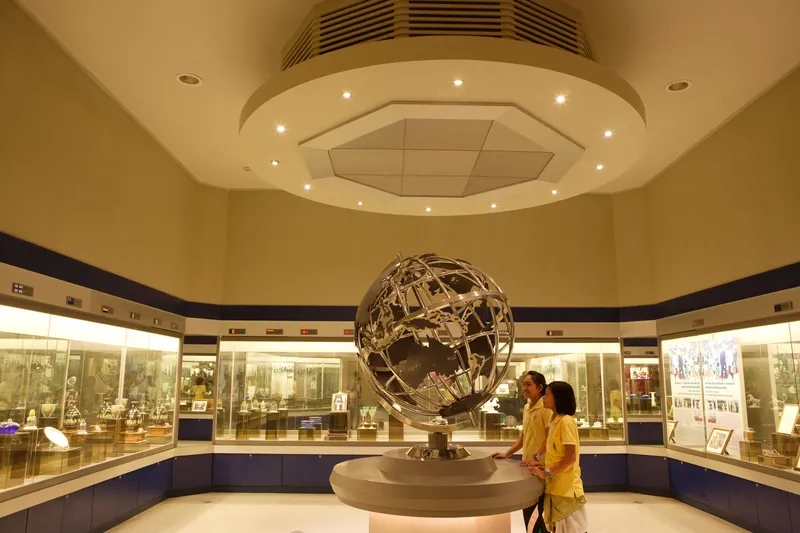
The Hall of Fame of H.E. Banharn Silpa-Archa, the 21st Prime Minister of Thailand, is an important learning center in Suphan Buri Province dedicated to the life, achievements, and political legacy of Banharn Silpa-Archa. Located on the Suphan Buri – Chainat Road, Highway 340, in Sanam Chai Subdistrict, Mueang Suphan Buri District, the two-storey exhibition building presents the story of a man who rose from a local trading family in Suphan Buri to become a businessman, a national politician, and eventually Thailand’s 21st Prime Minister. For foreign travelers, this site offers a rare opportunity to understand Thai political history through the personal journey of one of Suphan Buri’s most influential public figures.
The hall is more than a museum displaying photographs, documents, and memorabilia. It is a carefully arranged biographical exhibition that follows Banharn Silpa-Archa from childhood to national leadership. Visitors can trace his early family responsibilities, his working life, his business career, his political path, his royal appointment as Prime Minister, and the works associated with his role in developing Suphan Buri Province and serving in national government. The story is presented in a way that makes Thai political history more accessible, especially for students and visitors who may not be familiar with the details of modern Thai politics.
The Hall of Fame was built through the collective effort of the people of Suphan Buri, who donated funds for its construction without using a government construction budget. The building was designed by the Fine Arts Department, giving it an appropriate form for a historical and archival exhibition space. It was later established as a unit under the National Archives, Fine Arts Department, with the purpose of serving as a place for studying Thai political history and as an example of life values for younger generations.
One of the most meaningful aspects of the exhibition is that it begins with ordinary life rather than political power. The first floor recreates the atmosphere of the “Yong Yu Hong” shop in Suphan Buri Market around 1944. This setting introduces visitors to Banharn Silpa-Archa as a 12-year-old boy who had responsibilities within his family. The recreated shop is not only a scenic display; it is the foundation of the story. It shows the social and economic environment of a market family in provincial Thailand and explains how discipline, hard work, and family duty shaped his character from an early age.
The first-floor exhibition helps visitors understand the early world of Banharn Silpa-Archa. Suphan Buri Market was not merely a place of trade; it was a living classroom where a young boy learned responsibility, communication, negotiation, and endurance. The displays show that his later success did not appear suddenly. It grew from daily work, family support, and the practical lessons of local life. This makes the exhibition valuable not only as a political biography, but also as a story of social mobility and personal determination.
From childhood, the exhibition continues into his working life. Visitors learn about his path as a life fighter who helped his elder brother before later establishing his own business and building financial stability. This part of the exhibition emphasizes perseverance and gradual self-development. It does not present success as a single event, but as a long process of work, experience, risk-taking, and decision-making. For international visitors, it gives useful insight into how business, local networks, and provincial identity have often shaped political careers in Thailand.
The first floor also presents important moments in his life before entering politics, including ordination, marriage, and other personal milestones. These sections help visitors see Banharn Silpa-Archa not only as a public figure, but as a person with family, faith, turning points, and responsibilities. This human dimension makes the exhibition easier to relate to, particularly for younger visitors who may be learning how personal values can influence public life.
Another important part of the exhibition focuses on his contributions to Suphan Buri Province. For many people in Suphan Buri, Banharn Silpa-Archa is remembered not only as a former Prime Minister, but also as a key figure associated with the development of roads, bridges, schools, public facilities, learning centers, and landmarks in the province. This local connection gives the Hall of Fame a strong sense of place. It shows how national politics and provincial development can be closely linked through the career of one political leader.
As visitors move through the exhibition, they encounter Banharn Silpa-Archa’s political career in the Chart Thai Party, his roles in several governments, and his rise to become Thailand’s 21st Prime Minister. This part of the hall is particularly useful for those interested in modern Thai political history. It shows how a politician could move from local representation to party leadership and then to the highest executive office in the country. The exhibition helps visitors understand political life as a long path involving community roots, party organization, public service, and national responsibility.
The second floor is dedicated to the most significant stage of his political life: the royal command appointing Banharn Silpa-Archa as the 21st Prime Minister of Thailand. This section introduces visitors to the formal meaning of national leadership within Thailand’s constitutional monarchy. It also presents the honor of a Suphan Buri native who rose from a provincial background to lead the country. For foreign travelers, this area helps explain the formal and symbolic elements of Thai political institutions.
The second floor also displays major policies and achievements of the government during Banharn Silpa-Archa’s premiership, as well as his political roles in domestic administration, public policy, and international relations. These displays are valuable for understanding the political conditions and priorities of Thailand in the mid-1990s. They also help visitors see that a Prime Minister’s work is not limited to one policy area, but includes administration, diplomacy, national development, public communication, and coordination among many sectors.
The section on honors and recognition adds another layer to the story. The items displayed are not simply personal souvenirs. They are evidence of public service, diplomatic encounters, political relationships, and formal recognition received during a long public career. In this sense, the Hall of Fame functions both as a museum and an archival space. Its photographs, documents, objects, and recreated scenes preserve a social memory connected with Thai politics and Suphan Buri’s modern development.
The strength of the Hall of Fame lies in the way it makes political history approachable. Visitors begin with a small shop in a provincial market and gradually follow the life path of a man who entered business, politics, government, and national leadership. This narrative structure allows visitors to understand that public achievement is not only about a title. It is also about life experience, hard work, networks, responsibility, and the relationship between a person and his hometown.
For younger visitors, the hall offers useful lessons beyond history. It presents the value of responsibility at a young age, gratitude toward family, perseverance in work, and commitment to one’s community. The life story of Banharn Silpa-Archa can therefore be read as both a political biography and a moral example. This is one reason the hall is suitable for school groups, families, university students, and visitors interested in civic education.
In terms of travel planning, the Hall of Fame fits well into a cultural and educational route in Suphan Buri town. It can be visited together with Suphan Buri National Museum, the Western National Theatre, the Dragon Descendants Museum, Suphan Buri City Pillar Shrine, Wat Pa Lelai Worawihan, and Banharn-Jamsai Tower. These nearby sites help travelers understand different layers of the province, including archaeology, performing arts, local belief, Buddhism, urban development, and modern public memory.
For a half-day itinerary, visitors can begin with the Hall of Fame and Suphan Buri National Museum, as the two are close to each other. They can then continue to the City Pillar Shrine and Dragon Descendants Museum, or head into town to visit Banharn-Jamsai Tower. With a full day, the route can be extended to Wat Pa Lelai Worawihan, Wat Khae, Suphan Buri town market, or Sam Chuk 100-Year Market. This makes the Hall of Fame a practical stop for travelers who want both knowledge and a wider view of the province.
The atmosphere inside the Hall of Fame is best experienced slowly. Visitors should take time to read the captions, observe the recreated scenes, view the photographs, and follow the chronological story. Those interested in political history should allow enough time for both floors, because the exhibition covers personal life, local development, party politics, government administration, and international roles. A slow visit helps connect the life of one person with the broader history of Suphan Buri and modern Thailand.
Getting There is convenient by private car, rental vehicle, or public transport to Suphan Buri town. From Bangkok, travelers can take Highway 340 toward Suphan Buri and continue to Sanam Chai Subdistrict along the Suphan Buri – Chainat Road. The hall is located near Suphan Buri National Museum. Those arriving at Suphan Buri Bus Terminal can continue by local hired transport to the Sanam Chai area.
Visitors should check the opening schedule before traveling, especially for group visits or educational trips. The hall is open from Wednesday to Sunday and on public holidays, with no admission fee. It is suitable for schools, families, researchers, students, and general travelers who want to add an educational dimension to their Suphan Buri trip. Visitors should dress politely, keep the exhibition space quiet, and follow staff instructions while inside the building.
The Hall of Fame of H.E. Banharn Silpa-Archa, the 21st Prime Minister of Thailand, should therefore be understood as an important learning center rather than only a biographical museum. It connects one person’s life with family, community, provincial development, Thai politics, and national memory. Visitors leave with a clearer sense of how a local boy from Suphan Buri became a national leader, and how his public career remains closely connected with the identity of the province.
| Name | Hall of Fame of H.E. Banharn Silpa-Archa, the 21st Prime Minister of Thailand |
| Location | Sanam Chai Subdistrict, Mueang Suphan Buri District, Suphan Buri Province |
| Address | Suphan Buri – Chainat Road, Highway 340, Sanam Chai Subdistrict, Mueang Suphan Buri District, Suphan Buri 72000, Thailand |
| Highlights | A two-storey exhibition building presenting the life, achievements, business path, political career, premiership, and honors of H.E. Banharn Silpa-Archa |
| History | Built through public donations from the people of Suphan Buri, designed by the Fine Arts Department, and established as a unit under the National Archives, Fine Arts Department |
| Distinctive Features | A political history learning center told through the life of Thailand’s 21st Prime Minister, from childhood to national leadership |
| Travel Information | From Bangkok, take Highway 340 toward Suphan Buri and continue to Sanam Chai Subdistrict on the Suphan Buri – Chainat Road. The hall is located near Suphan Buri National Museum. |
| Current Status | Open as a learning center and exhibition site dedicated to an important political figure of Suphan Buri |
| Open Days | Wednesday – Sunday and Public Holidays |
| Opening Hours | 09.00 – 16.00 |
| Fees | No Admission Fee |
| Facilities | Exhibition building, display rooms, multimedia and object displays, group visit areas, and parking area nearby |
| Main Areas / Zones | 1. First-Floor Exhibition Area 2. Recreated “Yong Yu Hong” Shop in Suphan Buri Market 3. Childhood and Self-Made Life Zone 4. Family Life and Pre-Political Life Zone 5. Political Path and Chart Thai Party Zone 6. Second-Floor Exhibition Area 7. Royal Command Appointing Him as the 21st Prime Minister Zone 8. Government Achievements, Major Policies, and Honors Zone |
| Caretaker | National Archives, Fine Arts Department / Suphan Buri National Archives |
| Main Contact Number | 0-3553-5119, 0-3553-5121 |
| Nearby Tourist Attractions | 1. Suphan Buri National Museum, about 1 km 2. Western National Theatre, Suphan Buri, about 1 km 3. Suphan Buri City Pillar Shrine and Dragon Descendants Museum, about 4 km 4. Wat Pa Lelai Worawihan, about 5 km 5. Banharn-Jamsai Tower, about 6 km 6. Wat Khae, about 7 km 7. Sam Chuk 100-Year Market, about 36 km |
| Nearby Restaurants | 1. Nopparatana Restaurant, about 5 km, Tel. 035-555-333, 081-587-6154 2. Lainam Restaurant, about 6 km 3. Surachai Pla Phao, about 7 km, Tel. 081-763-6102, 081-942-4654 4. Restaurants Around Dragon Descendants Museum and City Pillar Shrine, about 4 km 5. Restaurants in Suphan Buri Town, about 5 km |
| Nearby Accommodations | 1. Songphanburi Hotel, about 5 km 2. Vasidtee City Hotel Suphan Buri, about 6 km, Tel. 035-526-111, 035-526-123 3. Hop Inn Suphan Buri, about 7 km, Tel. 02-080-2222 4. B2 Suphan Buri Premier Hotel, about 7 km 5. Country Lake View Hotel, about 8 km 6. Hotels and Resorts in Mueang Suphan Buri District, about 5 km |
Frequently Asked Questions (FAQ)
Q: Where is the Hall of Fame of H.E. Banharn Silpa-Archa located?
A: It is located on the Suphan Buri – Chainat Road, Highway 340, in Sanam Chai Subdistrict, Mueang Suphan Buri District, near Suphan Buri National Museum.
Q: What does the Hall of Fame display?
A: It displays the life, achievements, business career, political path, premiership, and honors of H.E. Banharn Silpa-Archa, Thailand’s 21st Prime Minister.
Q: When is the Hall of Fame open?
A: It is open from Wednesday to Sunday and on public holidays, from 09.00 to 16.00.
Q: Is there an admission fee?
A: No. Visitors can enter the Hall of Fame free of charge.
Q: What can visitors see on the first floor?
A: The first floor includes the recreated “Yong Yu Hong” shop, childhood stories, family responsibilities, self-made life, and important moments before Banharn Silpa-Archa entered politics.
Q: What can visitors see on the second floor?
A: The second floor presents the royal command appointing him as Thailand’s 21st Prime Minister, government achievements, major policies, political roles, and honors.
Q: Who should visit this Hall of Fame?
A: It is suitable for students, families, researchers, travelers interested in Thai political history, and anyone who wants to understand an important public figure from Suphan Buri.
Q: What nearby attractions can be visited together with the Hall of Fame?
A: Nearby attractions include Suphan Buri National Museum, Western National Theatre, Suphan Buri City Pillar Shrine, Dragon Descendants Museum, Wat Pa Lelai Worawihan, and Banharn-Jamsai Tower.
Tel : 035535119-21
 Tel : 035535119-21
Fax : 035535120
 Fax : 035535120
 Category: ●Art, Culture and Heritage
 Group: ●Landmarks and Memorials
Last Update : 4 MonthAgo
 Last Update : 4 MonthAgo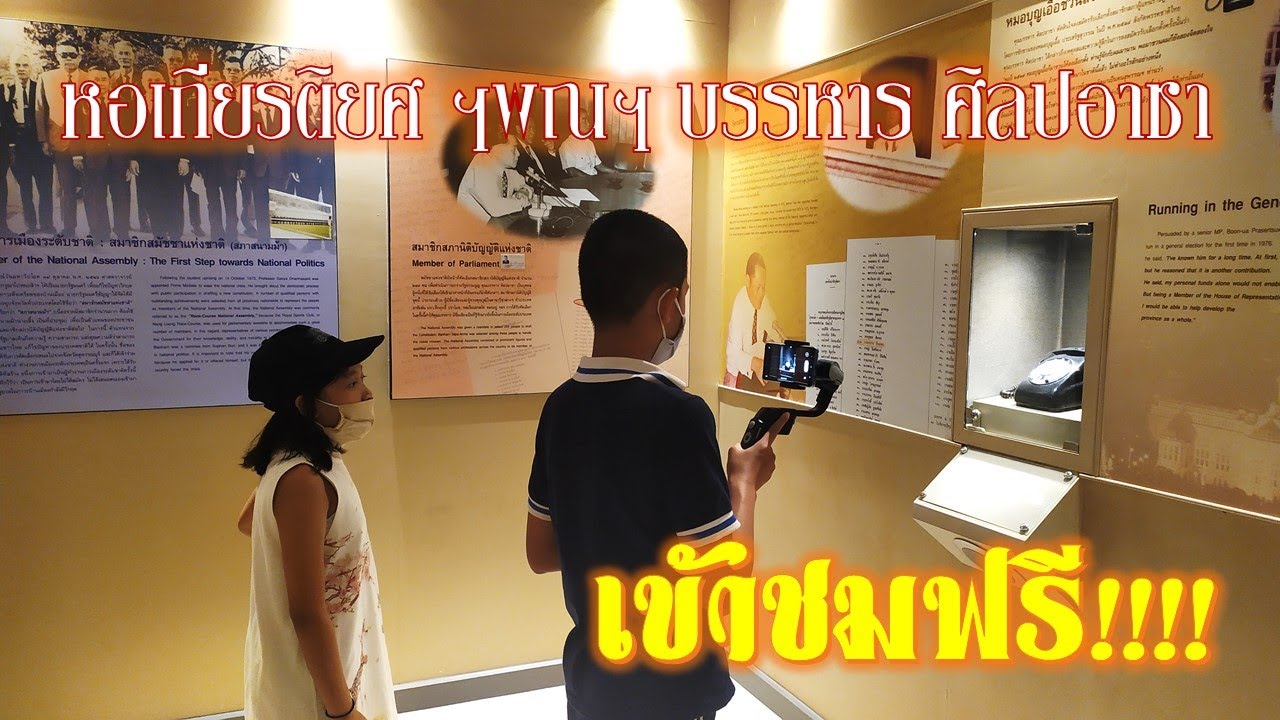
 Click to Access the Navigation Map GPS
The Hall of Fame Banhan Silpa-Archa Map
Recommend

 Historical Sites and Monuments(2)
Landmarks and Memorials(4)
Historical Sites and Monuments(2)
Landmarks and Memorials(4)
 Art, Craft Centres, Tradition(2)
 Museums(5)
 Educational Places
 Educational Gardens, Farm(4)
 Training Center(2)
 Places of Worship
 Temple(36)
 Other Sacred Sites(4)
 Suburban Living
 Village, Community(6)
 Local Market(7)
 Floating Market(1)
 Nature and Wildlife
 National Parks and Marine Reserves(4)
 Mountain (Doi)(2)
 Dam, Reservoir, Lake(3)
 Caves(1)
 Bays and Beaches(1)
 Entertainment and Agricultural
 Farms, Parks and Ecotourism(6)
 Theater(1)


