
lovethailand home >Central Travel Attractions >Suphan Buri Travel Attractions >Doem Bang Nang Buat >Doem Bang > Wat Doem Bang
TL;DR: Wat Doem Bang is located at Doem Bang Subdistrict, Doem Bang Nang Buat District, Suphan Buri Province 72120, Thailand, open Daily, hours 07.00 – 20.30.
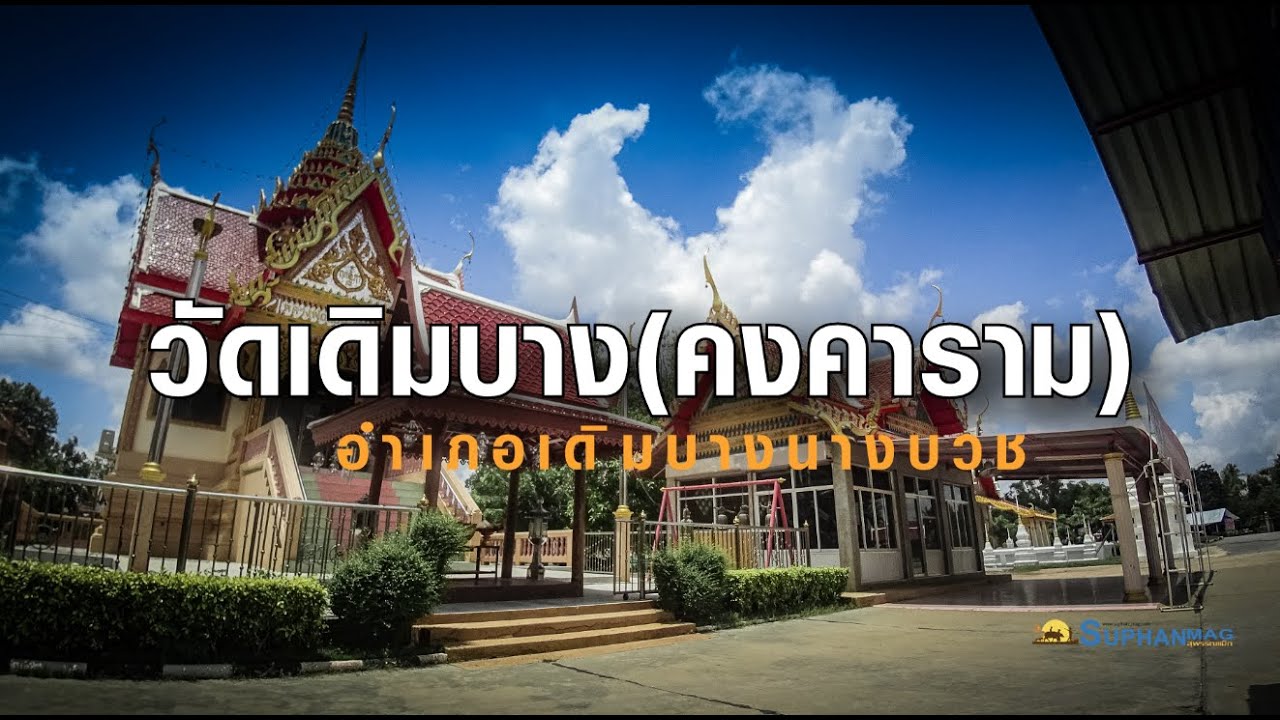
Wat Doem Bang

Open Days: Daily
Opening Hours: 07.00 – 20.30
Wat Doem Bang in Suphan Buri Province, also known as Wat Khongkharam, is an old riverside temple in Doem Bang Subdistrict, Doem Bang Nang Buat District. Located on the eastern bank of the Tha Chin River about 55 kilometers from Suphan Buri town, the temple is known for its rare Thai-Chinese pulpit, royal gifts from King Chulalongkorn, a beautifully crafted mondop and bell tower, and well-preserved mural paintings inside the restored ordination hall. For travelers interested in old Thai temples, riverside communities, and cultural heritage connected with King Rama V, Wat Doem Bang is one of the most meaningful places to visit in upper Suphan Buri.
Wat Doem Bang is not only a place for merit-making. It is a temple that reflects the history of a riverside community along the Tha Chin River. In the past, rivers were essential routes for travel, trade, food, and religious life in central Thailand. Temples located along the river often served as spiritual centers, community gathering places, and resting points for travelers. Wat Doem Bang preserves this atmosphere clearly. Its location beside the river gives the temple a quiet and local character that differs from large tourist temples in the provincial town.
The temple was established in 1882 during the reign of King Chulalongkorn, Rama V. In 1908, King Chulalongkorn traveled along Khlong Makham Thao and stopped at Wat Doem Bang. He later bestowed the name “Wat Khongkharam” upon the temple. The name carries an association with water and sacred stability, which suits the temple’s riverside location. Although many people still call it Wat Doem Bang after the local area, the name Wat Khongkharam gives the temple a strong royal and historical identity.
The most famous object inside the temple is the ancient pulpit built by Chinese craftsmen. It is a Thai-Chinese artistic work that began construction in 1915 and was completed in 1923. Today, the pulpit is preserved on the sermon hall. This object is one of the temple’s most important cultural treasures because it represents the blending of Thai Buddhist function with Chinese craftsmanship. It also reflects the multicultural character of riverside communities in central Thailand during the late 19th and early 20th centuries.
A pulpit in a Thai temple is not just a decorative structure. It is the place from which monks deliver sermons and teach the Dhamma to the community. The fact that Wat Doem Bang’s pulpit was crafted with such care shows how deeply local people valued Buddhist teaching. The Chinese craftsmanship adds another layer of meaning, showing how Chinese artisans and Thai Buddhist communities worked together to create religious art. Visitors should view the pulpit as both a sacred object and a cultural record of local society.
Inside the chanting hall, the temple preserves three valuable objects: a mother-of-pearl alms-bowl lid, a ceremonial fan, and a tiered food carrier. These were royal gifts from King Chulalongkorn and have been kept in good condition. Each item carries historical and symbolic value. The alms-bowl lid reflects Buddhist monastic culture, the ceremonial fan relates to monastic rank and religious ceremonies, and the food carrier reflects the tradition of offering food to monks. As royal gifts, these objects connect the temple with the history of King Rama V and the relationship between the monarchy and local Buddhist institutions.
The presence of these royal gifts makes Wat Doem Bang especially meaningful for visitors interested in the reign of King Chulalongkorn. His travels to local communities were important in Thai history because they allowed him to observe people’s lives and local conditions more closely. Wat Doem Bang is one of the places where this royal memory remains visible through preserved objects and the temple’s royal name.
The temple also features a carefully built mondop and bell tower. A mondop is often used to enshrine sacred objects or important images, while a bell tower is an essential part of traditional Thai temple life. The bell was used to signal time, call monks, and mark religious activities. These structures add architectural beauty and spiritual atmosphere to the temple grounds. They also help visitors understand how different buildings within a Thai temple serve both symbolic and practical functions.
The restored ordination hall of Wat Doem Bang contains well-preserved mural paintings. The ordination hall is one of the most sacred buildings in a temple because it is used for important monastic rites such as ordination. The murals inside the hall add artistic and educational value. In Thai Buddhist culture, mural paintings are not merely decoration. They often teach stories from the Buddha’s life, Buddhist cosmology, morality, and local beliefs through visual language.
Visitors who appreciate Thai art should spend time observing the murals carefully. Look at the composition, colors, narrative scenes, and the relationship between the paintings and the sacred space of the ordination hall. Because the murals are inside a religious building, visitors should behave quietly, dress modestly, and avoid touching painted surfaces. The ordination hall is not only an art space; it remains a sacred part of the temple.
In recent years, Wat Doem Bang has also become known among devotees for Thao Wessuwan with a golden face, a sacred figure worshipped for protection, fortune, business success, and prosperity. This contemporary devotional element adds another layer to the temple’s identity. Wat Doem Bang now combines older historical treasures with living faith practices that attract modern visitors. This balance between heritage and current devotion makes the temple active and relevant rather than merely historical.
Wat Doem Bang therefore offers several important areas for visitors: the sermon hall with the Thai-Chinese pulpit, the chanting hall with royal gifts, the restored ordination hall with murals, the mondop, the bell tower, the riverside area, and the worship area of Thao Wessuwan. Visitors should allow at least one hour to appreciate the temple properly. A quick stop may miss the details that make the temple significant.
The temple also reveals the long relationship between Thai and Chinese communities in the Tha Chin River basin. Chinese craftsmen played an important role in creating the pulpit, while the temple itself served a Thai Buddhist community along the river. This combination shows that Thai temple art has never been completely isolated from outside influences. Instead, it developed through exchange, adaptation, and local patronage. Wat Doem Bang is a clear example of this cultural blending.
For travelers interested in community-based tourism, Wat Doem Bang can be combined with Tha Chang Market, Bueng Chawak, Wat Hua Khao, Wat Phra Achan Thammachot, and Sam Chuk 100-Year Market. This route offers a good mix of old temples, riverside markets, local food, nature learning, and rural community life. Families can begin with a temple visit in the morning, continue to Bueng Chawak, and end the day at a local market or riverside restaurant.
The riverside atmosphere is one of the temple’s quiet charms. The Tha Chin River gives Wat Doem Bang a sense of calm and continuity. Standing near the river, visitors can imagine how boats once moved along this waterway, connecting communities, markets, and temples. Many central Thai temples were built beside rivers for this reason. The river was not only a natural feature; it was the main artery of local life.
Getting there is easiest by private car. From Suphan Buri town, drive toward Doem Bang Nang Buat District for about 55 kilometers and continue to Doem Bang Subdistrict. The temple is located on the eastern bank of the Tha Chin River. From Bangkok, travelers can use either the Bang Bua Thong–Suphan Buri route or the Nakhon Pathom–Suphan Buri route, then continue north toward Doem Bang Nang Buat. Travel time is usually around 2.5 to 3.5 hours depending on traffic.
Travelers using public transport can reach Doem Bang Nang Buat or Suphan Buri town first and then continue by local transport or taxi. However, private transport is more convenient for those planning to visit several attractions in one day because the district’s temples, markets, and nature sites are spread across different areas.
The best time to visit is in the morning or late afternoon, when the weather is more comfortable and the light is suitable for photography. Visitors should dress modestly, speak quietly inside sacred buildings, avoid touching old objects without permission, and respect areas where royal gifts and murals are preserved. A careful and respectful visit will make the experience more meaningful.
For foreign travelers, Wat Doem Bang is a useful introduction to Thai riverside temple culture. The temple shows how Buddhism, royal history, Chinese craftsmanship, local community life, and modern devotional practice can exist together in one place. The Thai-Chinese pulpit demonstrates cultural exchange, while the royal gifts from King Rama V reveal the relationship between the Thai monarchy and local temples. The murals, mondop, bell tower, and riverside setting make the temple a compact but rich cultural destination.
In summary, Wat Doem Bang or Wat Khongkharam is an important temple in Doem Bang Nang Buat District, Suphan Buri Province. Its highlights include the Thai-Chinese pulpit built by Chinese craftsmen, royal gifts from King Chulalongkorn, the restored ordination hall with murals, the mondop, the bell tower, the riverside atmosphere of the Tha Chin River, and the contemporary worship area of Thao Wessuwan. For travelers seeking an old temple with history, art, and local character, Wat Doem Bang is a worthwhile stop in upper Suphan Buri.
| Name | Wat Doem Bang / Wat Khongkharam |
| Location | Doem Bang Subdistrict, Doem Bang Nang Buat District, Suphan Buri Province 72120, Thailand |
| Address | No. 233, Moo 1, Doem Bang Subdistrict, Doem Bang Nang Buat District, Suphan Buri Province, Thailand |
| Highlights | Thai-Chinese pulpit, royal gifts from King Rama V, mondop, bell tower, murals inside the ordination hall, and the riverside atmosphere of the Tha Chin River |
| History | Established in 1882 during the reign of King Rama V. In 1908, King Chulalongkorn visited the temple while traveling along Khlong Makham Thao and bestowed the name Wat Khongkharam. |
| Name Origin | Wat Doem Bang is the local name connected with the area, while Wat Khongkharam is the royal name bestowed by King Rama V, reflecting the temple’s riverside identity. |
| Distinctive Features | A Mahanikaya local temple on the eastern bank of the Tha Chin River, preserving old religious art, royal gifts, and Thai-Chinese craftsmanship |
| Important Objects And Areas | Thai-Chinese pulpit, mother-of-pearl alms-bowl lid, ceremonial fan, tiered food carrier, mondop, bell tower, ordination hall, mural paintings, sermon hall, chanting hall, and Thao Wessuwan with a golden face |
| Travel Information | From Suphan Buri town, drive about 55 km toward Doem Bang Nang Buat District and continue to Doem Bang Subdistrict. The temple is located on the eastern bank of the Tha Chin River. |
| Current Status | Open for merit-making, worship, cultural sightseeing, and visits to the temple’s important historical objects during opening hours |
| Open Days | Daily |
| Opening Hours | 07.00 – 20.30 |
| Facilities | Parking area, sermon hall, chanting hall, ordination hall, mondop, bell tower, merit-making area, worship area, and riverside area |
| Main Areas / Zones | Sermon Hall And Ancient Pulpit Zone Chanting Hall And Royal Gifts Zone Ordination Hall And Mural Paintings Zone Mondop And Bell Tower Zone Thao Wessuwan Golden Face Zone Tha Chin Riverside Zone |
| Abbot / Caretaker | Phra Khru Suwan PunyArak |
| Main Contact Number | 095-001-1826 |
| Nearby Tourist Attractions | 1. Tha Chang Market, about 6 km 2. Bueng Chawak, about 9 km 3. Wat Hua Khao, about 12 km 4. Wat Phra Achan Thammachot / Wat Khao Nang Buat, about 9 km 5. Sam Chuk 100-Year Market, about 20 km |
| Nearby Restaurants | 1. Krua Mai Ngam, about 6 km, Tel. 098-414-8405 2. Lek Siao Hong, about 7 km 3. Decandra, about 8 km 4. Surin Giant Fish Ball Noodle, about 7 km 5. Restaurants around Tha Chang Market, about 6 km |
| Nearby Accommodations | 1. Tha Chang Vintage, about 0.5 km 2. Tha Chin River Home, about 1 km 3. Nai Suan Inn, about 2 km 4. Doem Bang Villa, about 2 km, Tel. 083-316-9557 5. Than Ra Rin Villa, about 3 km |
Frequently Asked Questions (FAQ)
Q: Where is Wat Doem Bang located?
A: Wat Doem Bang, also known as Wat Khongkharam, is located at No. 233, Moo 1, Doem Bang Subdistrict, Doem Bang Nang Buat District, Suphan Buri Province, on the eastern bank of the Tha Chin River.
Q: What is Wat Doem Bang famous for?
A: The temple is famous for its Thai-Chinese pulpit, royal gifts from King Rama V, beautiful mondop and bell tower, mural paintings inside the ordination hall, and riverside atmosphere.
Q: When was the Thai-Chinese pulpit built?
A: The pulpit was built by Chinese craftsmen. Construction began in 1915 and was completed in 1923.
Q: How is Wat Doem Bang connected with King Rama V?
A: King Rama V visited the temple while traveling along Khlong Makham Thao and bestowed the name Wat Khongkharam. The temple also preserves royal gifts from him: a mother-of-pearl alms-bowl lid, a ceremonial fan, and a tiered food carrier.
Q: What are the opening hours of Wat Doem Bang?
A: Wat Doem Bang is open daily from 07.00 to 20.30.
Q: Who should visit Wat Doem Bang?
A: The temple is suitable for travelers interested in old temples, Thai-Chinese art, King Rama V history, Buddhist murals, riverside communities, and cultural travel in Doem Bang Nang Buat.
Q: What nearby attractions can be visited with Wat Doem Bang?
A: Nearby attractions include Tha Chang Market, Bueng Chawak, Wat Hua Khao, Wat Phra Achan Thammachot, and Sam Chuk 100-Year Market.
Q: How can travelers get to Wat Doem Bang from Suphan Buri town?
A: From Suphan Buri town, drive about 55 km toward Doem Bang Nang Buat District and continue to Doem Bang Subdistrict. The temple is on the eastern bank of the Tha Chin River.
 Category: ●Places of Worship
 Group: ●Temple
Last Update : 6 MonthAgo
 Last Update : 6 MonthAgo
 Click to Access the Navigation Map GPS
Wat Doem Bang Map
Recommend

 Art, Culture and Heritage
 Historical Sites and Monuments(2)
 Landmarks and Memorials(4)
 Art, Craft Centres, Tradition(2)
 Museums(5)
 Educational Places
 Educational Gardens, Farm(4)
 Training Center(2)
 University
 Public university(1)
 Rajamangala University of Technology(1)
Temple(36)
 Other Sacred Sites(4)
 Suburban Living
 Village, Community(6)
 Local Market(7)
 Floating Market(1)
 Nature and Wildlife
 National Parks and Marine Reserves(4)
 Mountain (Doi)(2)
 Dam, Reservoir, Lake(3)
 Caves(1)
 Bays and Beaches(1)
 Entertainment and Agricultural
 Farms, Parks and Ecotourism(6)
 Theater(1)
 Shopping
 Department Store(1)
 Travel Articles, Recipes
 Travel Review, Food Review(1)


