
lovethailand home >Central Travel Attractions >Suphan Buri Travel Attractions >U Thong >U Thong > Wat Khao Phra Si Sanphetchayaram (Wat Khao Phra)
TL;DR: Wat Khao Phra Si Sanphetchayaram (Wat Khao Phra) is located at Malai Maen Road, U Thong Subdistrict, U Thong District, Suphan Buri Province, open Daily, hours 08.00 – 17.00.
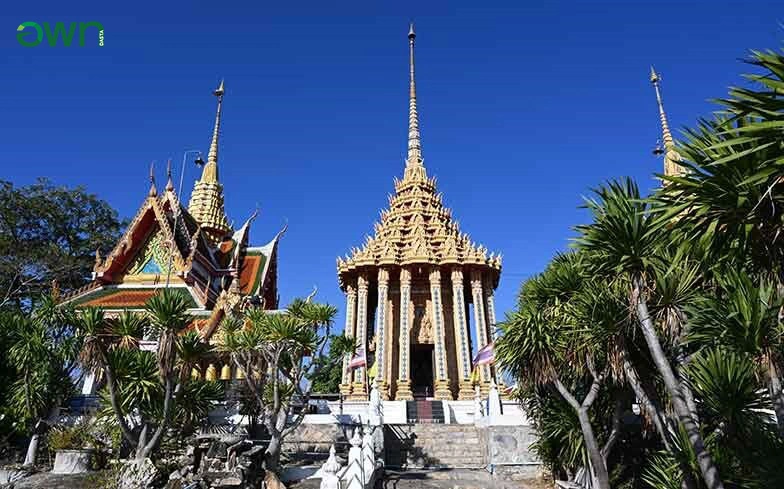
Wat Khao Phra Si Sanphetchayaram (Wat Khao Phra)
Open Days: Daily
Opening Hours: 08.00 – 17.00
Wat Khao Phra Si Sanphetchayaram, also known as Wat Khao Phra, in Suphan Buri Province is one of the most important ancient temples in U Thong District. Located along Malai Maen Road near the Banharn-Jamsai Clock Tower, the temple is reached by entering a side road for about 2 km. It is about 34 km from Suphan Buri town and stands on a small hill within the historic landscape of ancient U Thong. The temple is known for its reclining Buddha in a cave, stone Buddha images, a stone Narayana discus image, ancient artifacts, the remains of an Ayutthaya-period pagoda on the hilltop, and a natural green-stone replica of the Buddha’s Footprint enshrined in a hilltop mondop.
The significance of Wat Khao Phra Si Sanphetchayaram lies in its combination of religion, archaeology, sacred geography, and living local tradition. U Thong is one of the most important historical areas in western central Thailand, with many archaeological traces connected to the Dvaravati period. Wat Khao Phra reflects this long cultural continuity through its cave shrine, ancient stone sculptures, hilltop worship area, and annual devotional ceremonies. For visitors, the temple is not only a place to pay respect, but also a site where the history of Buddhism in U Thong can be experienced through real objects and real landscapes.
The temple is believed to have ancient roots dating back to the Dvaravati period, based on the discovery of many old artifacts in and around the site. These include the reclining Buddha, stone Buddha images in various postures, a stone image related to Narayana, amulets, Phra Tham Suea, Phra Phirot, and hermit figures in Dvaravati-style molds. These objects suggest that the area was once an active religious zone where Buddhist and Brahmanical ideas existed side by side. The presence of both Buddhist images and a Narayana-related artifact reflects the religious diversity of ancient U Thong.
One of the main highlights is the cave that houses the reclining Buddha. This sacred image has long been respected by the people of U Thong. In Buddhist symbolism, the reclining Buddha represents the Buddha’s final passing into Parinirvana, a state of perfect peace and liberation. Paying respect to the reclining Buddha inside the cave gives visitors a very different experience from worshiping in a conventional temple hall. The cave atmosphere adds a sense of quietness, age, and sacred depth, making the act of worship more intimate and contemplative.
The reclining Buddha is also the center of the temple’s annual worship tradition. Every year, the temple holds the Worship Ceremony for the Reclining Buddha twice: on the full moon day and the first waning day of the 12th lunar month, and again on the 14th and 15th waxing days and the first waning day of the 5th lunar month. These ceremonies bring local people and devotees together for merit-making, worship, and the continuation of community faith. They show that Wat Khao Phra is not merely an archaeological site, but a living temple connected with the religious calendar and local identity of U Thong.
Another important sacred object is the replica of the Buddha’s Footprint carved from natural green stone. It is enshrined in a mondop on the hilltop. In Thai Buddhist belief, a Buddha’s Footprint represents the spiritual presence of the Buddha and serves as a focus for devotion. The journey from the lower temple area up to the hilltop shrine has symbolic meaning. It is not only a physical climb, but also a devotional movement from ordinary ground toward a higher sacred space. This makes the hilltop area one of the most meaningful parts of the temple.
On the hilltop, visitors can also find the remains of an Ayutthaya-period pagoda. This ruin shows that the sacred use of the hill continued long after the Dvaravati period. A pagoda, or chedi, is an important Buddhist structure associated with remembrance of the Buddha and sacred relics. The placement of a pagoda on the hilltop reinforces the spiritual importance of Khao Phra and shows how the site continued to be revered through different historical periods. The temple therefore preserves several layers of Thai religious history in one place.
The stone Narayana-related image found at the site is another important feature. Its presence alongside Buddhist images suggests that ancient U Thong was a place of religious exchange and cultural diversity. In early Southeast Asian communities, Buddhist and Brahmanical beliefs often coexisted and influenced one another. The artifacts at Wat Khao Phra help visitors understand that the religious life of ancient U Thong was complex, creative, and connected to wider cultural networks.
The stone Buddha images found at Wat Khao Phra also reveal the skill of ancient craftsmen. Carving Buddha images from stone required knowledge of proportion, posture, symbolic gesture, and material. The presence of Buddha images in several postures indicates that this area was once an important center of Buddhist devotion. These images were likely created as offerings and objects of worship, reflecting the faith of people who lived in and traveled through ancient U Thong.
The landscape of Wat Khao Phra is one of its strongest attractions. The temple is located on a small hill within U Thong town, giving visitors a sense of elevation without requiring a long mountain journey. The site includes a cave, stairways, worship areas, a hilltop shrine, ancient remains, and viewpoints. This combination allows visitors to move through different layers of sacred space. From the base of the temple to the cave and then up to the Buddha’s Footprint on the hilltop, the visit becomes a gradual encounter with history, faith, and nature.
For cultural travelers, the annual ceremonies at Wat Khao Phra are especially important. The Worship Ceremony for the Reclining Buddha is held twice a year, in the 12th and 5th lunar months. These dates follow the Thai lunar calendar and are deeply connected with traditional Buddhist practice. During the ceremonies, local people gather to make merit, pay respect to the reclining Buddha, and continue a tradition that has been passed down through generations. For travelers, attending or learning about this ceremony provides insight into how historic temples remain meaningful in daily community life.
Wat Khao Phra also has a local folk museum, known as the Wat Khao Phra Folk Museum. This adds another educational dimension to the visit. A folk museum helps preserve everyday objects, local memories, and community history. It allows visitors to understand the temple not only through ancient artifacts, but also through the life of local people in U Thong. For those interested in local culture, the museum makes the temple more than a religious stop; it becomes a place for learning about the relationship between the temple and the community.
Compared with many other attractions in U Thong, Wat Khao Phra is notable because it gathers many important elements in one compact area. Visitors can see a cave shrine, a reclining Buddha, stone Buddha images, ancient artifacts, a hilltop Buddha’s Footprint, an Ayutthaya-period pagoda ruin, a folk museum, and scenic views in a single visit. This makes the temple ideal for travelers who want to understand U Thong’s Buddhist heritage without moving too far between locations.
Getting There is convenient by private car. From Suphan Buri town, drive along Malai Maen Road toward U Thong District for about 34 km. The temple is near the Banharn-Jamsai Clock Tower in U Thong. Enter the side road for about 2 km to reach the temple. The route can easily be combined with U Thong National Museum, the ancient city of U Thong, Wat Khao Tham Thiam, Wat Khao Di Salak, and local cafés or restaurants in U Thong town.
Visitors should dress respectfully because the temple contains important Buddhist images and sacred spaces. Shoes should be removed where required. Visitors should avoid climbing on ancient remains, touching artifacts unnecessarily, or making loud noise inside the cave and worship areas. Those visiting during the annual reclining Buddha worship ceremonies should allow extra time, as more local devotees may come to the temple on those days.
For travelers planning a historical route in Suphan Buri, Wat Khao Phra Si Sanphetchayaram is an excellent starting point for exploring ancient U Thong. From this temple, visitors can continue to U Thong National Museum to see archaeological evidence in greater detail, then visit Wat Khao Tham Thiam or Wat Khao Di Salak to compare other sacred hills in the area. This route helps show that U Thong was not a single isolated settlement, but a cultural landscape of hills, caves, temples, museums, and ancient communities.
For international visitors, Wat Khao Phra is particularly useful for understanding Thai Buddhism through real places and objects. The temple includes a reclining Buddha, a Buddha’s Footprint, a cave shrine, and hilltop pagoda remains. These features illustrate how Buddhism in Thailand is connected not only with temple buildings, but also with mountains, caves, natural spaces, and community traditions. The site is therefore suitable for foreign travelers who want a deeper cultural experience beyond major tourist temples.
The value of Wat Khao Phra lies in its continuity. Its artifacts tell the story of ancient U Thong and the Dvaravati period. The hilltop pagoda remains reflect later use in the Ayutthaya period. The reclining Buddha and Buddha’s Footprint continue to attract worshippers today. The annual ceremonies keep the temple alive as a community sacred space. Visitors therefore gain not only knowledge, but also a sense of connection with a living cultural heritage.
In summary, Wat Khao Phra Si Sanphetchayaram, or Wat Khao Phra, is one of the most important temples in U Thong District. It is ideal for worship, cultural travel, historical learning, and understanding the Buddhist heritage of Suphan Buri. Its reclining Buddha, green-stone Buddha’s Footprint, stone Buddha images, Narayana-related artifact, Ayutthaya pagoda remains, cave shrine, folk museum, and annual worship ceremonies make it a complete destination for travelers who want to experience the deeper history of U Thong in one place.
| Name | Wat Khao Phra Si Sanphetchayaram, also known as Wat Khao Phra |
| Location | Malai Maen Road, U Thong Subdistrict, U Thong District, Suphan Buri Province |
| Address | U Thong Subdistrict, U Thong District, Suphan Buri Province |
| Highlights | Reclining Buddha in a cave, green-stone Buddha’s Footprint on the hilltop, stone Buddha images, Narayana-related stone artifact, Ayutthaya-period pagoda remains, and Wat Khao Phra Folk Museum |
| History | An ancient temple believed to date back to the Dvaravati period, with evidence of continued sacred use into the Ayutthaya period |
| Distinctive Features | A small hill temple in U Thong with a cave shrine, hilltop worship area, ancient artifacts, and annual worship ceremonies for the reclining Buddha |
| Importance | An important Buddhist and archaeological site connecting Dvaravati art, ancient U Thong, local faith, and sacred mountain landscape |
| Tradition / Rituals | The Worship Ceremony for the Reclining Buddha is held twice a year: on the full moon day and first waning day of the 12th lunar month, and on the 14th–15th waxing days and first waning day of the 5th lunar month |
| Travel Information | About 34 km from Suphan Buri town. Take Malai Maen Road toward U Thong District. The temple is near the Banharn-Jamsai Clock Tower; enter the side road for about 2 km |
| Current Status | A Buddhist temple under the Mahanikaya order and a religious, historical, and cultural attraction in U Thong District |
| Open Days | Daily |
| Opening Hours | 08.00 – 17.00 |
| Fees | No admission fee |
| Facilities | Parking area, pavilion, worship area, reclining Buddha cave, hilltop Buddha’s Footprint mondop, stairway, and folk museum |
| Main Areas / Zones | Reclining Buddha cave Hilltop Buddha’s Footprint mondop Ayutthaya-period pagoda remains Ancient artifact and stone Buddha image area Wat Khao Phra Folk Museum Temple courtyard and hilltop viewpoint |
| Caretaker | Wat Khao Phra Si Sanphetchayaram and the U Thong local community |
| Nearby Tourist Attractions | 1. U Thong National Museum, about 2 km 2. Ancient City of U Thong, about 2 km 3. Wat Khao Tham Thiam, about 5 km 4. Wat Khao Di Salak, about 8 km 5. Dragon Descendants Museum, Suphan Buri City Pillar Shrine, about 34 km |
| Nearby Restaurants | 1. A Life Cafe U Thong, about 2 km 2. the little hut by tolo cafe, about 3 km 3. Lock & Load, about 3 km 4. Tu Kap Khao, about 3 km 5. Local restaurants in U Thong town, about 2–5 km |
| Nearby Accommodations | 1. Tolopoti Hotel & Resort, about 3 km, Tel. 082-333-3308 2. Baandin Rimnum Resort U Thong, about 8 km, Tel. 088-629-6654 3. Pusayapuri Hotel, about 3 km 4. Prem Mansion U Thong, about 3 km 5. Petchngam Home Resort, about 5 km |
Frequently Asked Questions (FAQ)
Q: Where is Wat Khao Phra Si Sanphetchayaram located?
A: Wat Khao Phra Si Sanphetchayaram, or Wat Khao Phra, is located in U Thong Subdistrict, U Thong District, Suphan Buri Province, near the Banharn-Jamsai Clock Tower and about 2 km from Malai Maen Road.
Q: What are the main highlights of Wat Khao Phra?
A: The main highlights are the reclining Buddha in a cave, the green-stone Buddha’s Footprint on the hilltop, stone Buddha images, the Narayana-related stone artifact, Ayutthaya pagoda remains, and the Wat Khao Phra Folk Museum.
Q: Why is Wat Khao Phra connected with the Dvaravati period?
A: The temple is believed to have ancient roots from the Dvaravati period because many artifacts have been found here, including stone Buddha images, amulets, Phra Tham Suea, Phra Phirot, hermit figures, and a Narayana-related stone image.
Q: When is the Worship Ceremony for the Reclining Buddha held?
A: It is held twice a year: on the full moon day and first waning day of the 12th lunar month, and on the 14th–15th waxing days and first waning day of the 5th lunar month.
Q: Is there an admission fee at Wat Khao Phra?
A: No admission fee is collected. Visitors can pay respect, visit the cave, see the Buddha’s Footprint, and explore the temple respectfully.
Q: How do I get to Wat Khao Phra from Suphan Buri town?
A: Drive along Malai Maen Road toward U Thong District for about 34 km. Near the Banharn-Jamsai Clock Tower, enter the side road for about 2 km to reach the temple.
Q: What nearby attractions can be visited with Wat Khao Phra?
A: Nearby attractions include U Thong National Museum, the Ancient City of U Thong, Wat Khao Tham Thiam, Wat Khao Di Salak, and the Dragon Descendants Museum.
 Category: ●Places of Worship
 Group: ●Temple
Last Update : 4 MonthAgo
 Last Update : 4 MonthAgo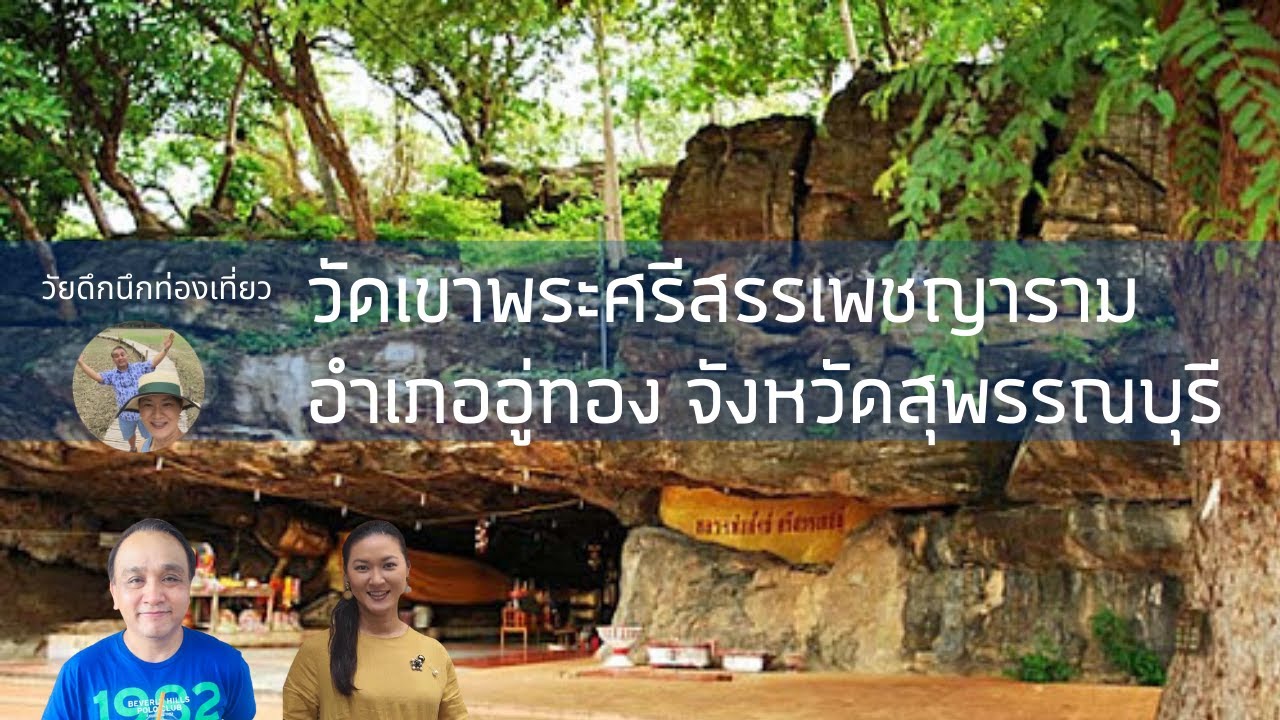
 Click to Access the Navigation Map GPS
Wat Khao Phra Si Sanphetchayaram (Wat Khao Phra) Map
Recommend

 Art, Culture and Heritage
 Historical Sites and Monuments(2)
 Landmarks and Memorials(4)
 Art, Craft Centres, Tradition(2)
 Museums(5)
 Educational Places
 Educational Gardens, Farm(4)
 Training Center(2)
Temple(36)
Training Center(2)
Temple(36)
 Other Sacred Sites(4)
 Suburban Living
 Village, Community(6)
 Local Market(7)
 Floating Market(1)
 Nature and Wildlife
 National Parks and Marine Reserves(4)
 Mountain (Doi)(2)
 Dam, Reservoir, Lake(3)
 Caves(1)
 Bays and Beaches(1)
 Entertainment and Agricultural
 Farms, Parks and Ecotourism(6)
 Theater(1)


