
lovethailand home >Central Travel Attractions >Suphan Buri Travel Attractions >Muang Suphan Buri >Pho Phraya > Wat Phrao
TL;DR: Wat Phrao is located at Pho Phraya Subdistrict, Mueang Suphan Buri District, Suphan Buri Province, open Daily, hours 08.00 – 17.00.
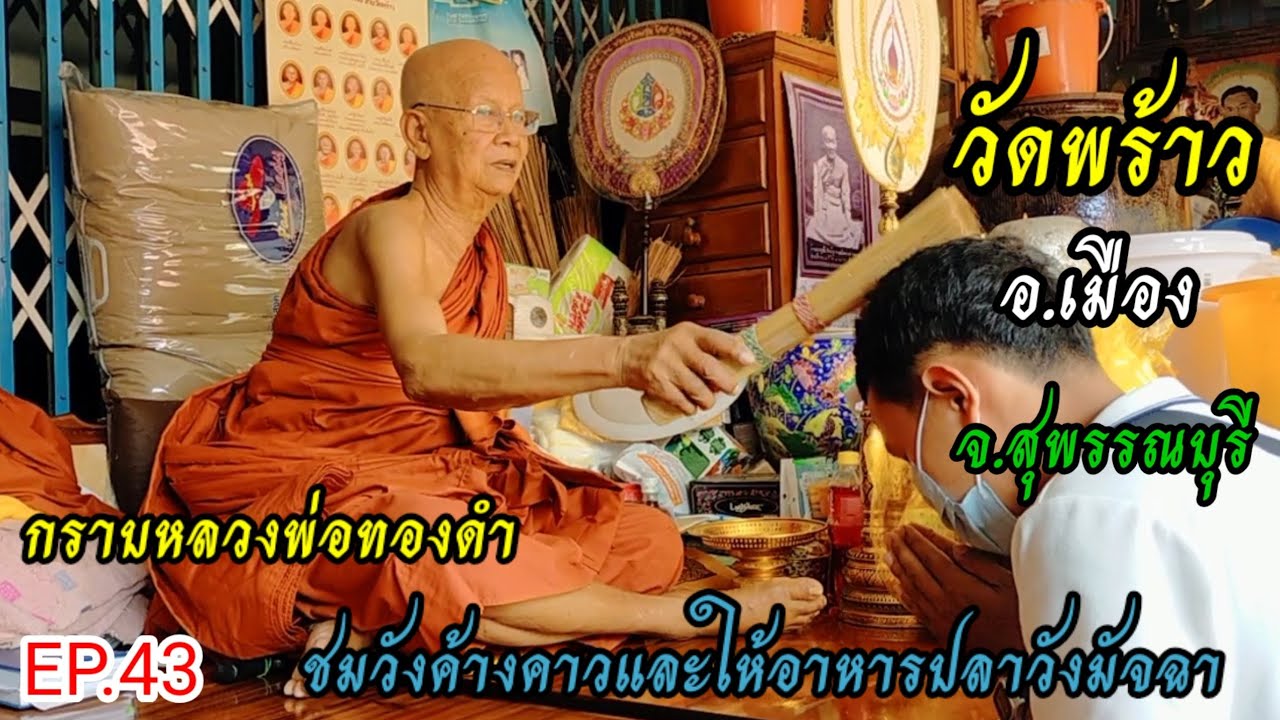
Wat Phrao

Open Days: Daily
Opening Hours: 08.00 – 17.00
Wat Phrao in Suphan Buri Province is an old local Buddhist temple in Pho Phraya Subdistrict, Mueang Suphan Buri District. Located next to the Pho Phraya water gate, slightly north of Wat Phra Non and about 9 km from downtown Suphan Buri, the temple is a distinctive cultural stop for travelers who want to explore a quieter side of the province. Wat Phrao is known for its Burmese-inspired viharn with a tall multi-tiered roof, a replica Buddha footprint, a scripture hall built over water, old scripture cabinets, and a large colony of flying foxes living in the trees behind the temple.
Wat Phrao offers a travel experience that combines Buddhist devotion, architecture, local heritage, and nature. The first feature that catches the eye is the viharn inspired by Burmese architectural style. Its high layered roof gives the building a striking and unusual appearance when compared with many central Thai temple structures. The roof rises in tiers, creating a vertical rhythm that makes the building elegant and memorable. This viharn is both a sacred worship space and an architectural highlight that gives Wat Phrao a unique identity among temples around Suphan Buri town.
The temple’s location near the Pho Phraya water gate also adds local significance. Suphan Buri has long been shaped by rivers, canals, irrigation systems, and agricultural communities. A temple in this setting is not merely a religious place. It is part of a landscape where water, settlement, farming, and community life meet. Although Wat Phrao is only a short drive from town, its atmosphere feels calmer and more rural than the main urban attractions. This makes it suitable for travelers who prefer temples with local character rather than crowded tourist landmarks.
Inside the viharn is a replica Buddha footprint, one of the temple’s main sacred objects. In Buddhist tradition, the Buddha footprint represents the presence of the Buddha and the path of the Dharma. Paying respect to a Buddha footprint is a way to remember the Buddha’s teachings and to reflect on one’s own path in life. At Wat Phrao, the replica footprint allows visitors to make merit, pray, and contemplate the idea of following the Buddha’s path with mindfulness, compassion, and moral discipline.
The Burmese-inspired architecture of the viharn is especially interesting because it shows that Thai temple architecture can absorb influences from many cultural sources. Temples in central Thailand often reflect interactions among Thai, Mon, Burmese, Chinese, and other regional traditions. The viharn at Wat Phrao is a good example of how a local temple can express cross-cultural artistic influence while remaining part of Thai Buddhist practice. Visitors interested in architecture should observe the tiered roof, the vertical form, the proportions of the building, and the overall visual character that distinguishes it from more typical central Thai temple halls.
Behind the temple is another important feature: the scripture hall over water, or ho trai. In Thai Buddhist culture, a ho trai was traditionally used to store Buddhist scriptures, palm-leaf manuscripts, and sacred texts. Building a scripture hall over water was a practical and symbolic solution. The water helped protect manuscripts from termites, ants, and insects, while the elevated and isolated setting emphasized the sacred value of the texts. The ho trai at Wat Phrao therefore reflects both religious reverence and local wisdom in preserving Buddhist knowledge.
Scripture cabinets at the temple are closely connected with the role of the ho trai. Such cabinets were used to store palm-leaf manuscripts, Thai folded books, or other religious texts. Their presence shows that Wat Phrao was not only a place for rituals and merit-making but also a place connected with learning, preservation, and Buddhist knowledge. For cultural travelers, these objects help broaden the meaning of the temple. Wat Phrao should be seen not only as a place of worship but also as a local repository of religious memory.
One of the most memorable natural features of Wat Phrao is the large colony of flying foxes living in the trees behind the temple. In Thai, they are often called khang khao mae kai, meaning fruit bats or flying foxes. They are much larger than common small bats, with dark bodies and a size that local people compare with a hen. Many of them hang upside down from branches during the day, creating a remarkable sight for visitors. Looking up into the trees, travelers can see dozens or hundreds of dark shapes gathered together in their natural resting place.
Flying foxes are important to the ecosystem. They help disperse seeds and support forest regeneration through their feeding behavior. The presence of so many flying foxes at Wat Phrao suggests that the temple grounds provide a safe and relatively undisturbed habitat with large trees and a calm environment. Visitors who come to see them should observe quietly from a suitable distance. They should not shout, throw objects, shake branches, or shine strong lights at the bats. The experience should be based on respectful nature observation rather than disturbance.
The flying fox colony gives Wat Phrao a special relationship between religion and nature. Many Thai temples unintentionally become small conservation areas because they contain old trees, quiet grounds, and cultural respect for non-harming. Wat Phrao is a good example of a temple where faith and nature coexist. Visitors can see how a Buddhist place can also serve as a refuge for wildlife and a green space for the community. This makes the temple meaningful not only for worship but also for environmental awareness.
Wat Phrao is also connected with ancient objects from the late U Thong and Ayutthaya periods, including red sandstone boundary markers, late U Thong Buddha images, lacquered scripture cabinets, and manuscript-related objects. These items show that the temple has deeper cultural roots and that the area has long been part of Suphan Buri’s religious landscape. Although some museum-related functions are not currently presented as an active visitor attraction, the temple’s association with ancient objects remains important for understanding local heritage.
The temple atmosphere is calm and suitable for quiet worship. Visitors can pay respect to the replica Buddha footprint, make merit, observe the architecture, see the ho trai over water, and quietly view the flying foxes behind the temple. The visit does not feel commercial or crowded. Instead, Wat Phrao offers the feeling of a living community temple that has preserved its distinctive character. This makes it a rewarding stop for travelers who enjoy local temples with stories rather than only famous landmarks.
Wat Phrao can be included in a temple route north of Suphan Buri town. A useful itinerary can begin in downtown Suphan Buri, continue to Wat Phra Non to see the unusual supine reclining Buddha and fish sanctuary, then proceed to Wat Phrao for the Burmese-style viharn, ho trai, and flying foxes. Afterward, travelers can return toward town to visit Wat Phra Rup, Wat Phra Si Rattana Mahathat, Wat Khae, or the Dragon Descendants Museum. This route offers a varied day trip combining architecture, wildlife, old temples, and local riverside culture.
Getting There is easiest by private car. From downtown Suphan Buri, travel toward Pho Phraya Subdistrict for about 9 km. Wat Phrao is located next to the Pho Phraya water gate and slightly north of Wat Phra Non. The route is suitable for a self-drive trip with several stops. Travelers without a private car can first reach Suphan Buri town by bus or van and then continue to the temple by local hired transport. A private car or hired vehicle is the most practical option for visiting several temples in one day.
The best time to visit is in the morning or late afternoon, when the weather is more comfortable for walking around the temple. Visitors who want to observe the flying foxes should come while there is still enough daylight to see them clearly, but they should avoid disturbing the colony. Families with children and elderly travelers should plan a relaxed visit, bring drinking water, and take breaks in shaded areas, especially during the hot season.
Temple etiquette is important at Wat Phrao. Visitors should dress modestly, speak quietly in worship areas, and avoid touching old objects or scripture cabinets without permission. The flying fox area should also be treated with respect. Visitors should not disturb the animals or damage the trees where they roost. Wat Phrao is both a sacred Buddhist site and a habitat for living creatures, so careful behavior helps preserve the temple’s peaceful atmosphere.
Wat Phrao is suitable for several kinds of travelers. Buddhist visitors can pay respect to the replica Buddha footprint. Architecture enthusiasts can appreciate the Burmese-inspired viharn. Nature lovers can quietly observe the flying fox colony. Families and students can learn about temples, scripture halls, manuscript preservation, and wildlife in one place. For foreign travelers, the temple offers an authentic local experience that is different from the more famous temple sites in Suphan Buri.
Overall, Wat Phrao is a distinctive temple that deserves attention when traveling in Suphan Buri. Its Burmese-style viharn, replica Buddha footprint, scripture hall over water, scripture cabinets, and flying fox colony make it different from ordinary temple visits. The temple adds depth to a Suphan Buri itinerary by showing how faith, architecture, local wisdom, water management, and nature can exist together in one peaceful setting.
A visit to Wat Phrao also reveals a quieter identity of Suphan Buri. The province is not only known for major historic temples and city landmarks; it also contains smaller local temples with unique stories and living ecological value. Wat Phrao is one of those places. It invites travelers to slow down, observe carefully, and appreciate the relationship between Buddhism, community heritage, and the natural world.
| Name | Wat Phrao, Suphan Buri Province |
| Location | Pho Phraya Subdistrict, Mueang Suphan Buri District, Suphan Buri Province |
| Address | 179 Moo 1, Pho Phraya Subdistrict, Mueang Suphan Buri District, Suphan Buri 72000, Thailand |
| Highlights | Burmese-inspired viharn with a tall tiered roof, replica Buddha footprint, scripture hall over water, scripture cabinets, and a large flying fox colony behind the temple |
| History | A local Buddhist temple associated with Pho Phraya community and ancient objects from the late U Thong to Ayutthaya periods |
| Distinctive Features | The viharn has a high layered roof inspired by Burmese architecture, while the rear temple area contains a scripture hall over water and trees used as a natural roost by many flying foxes |
| Travel Information | From downtown Suphan Buri, travel toward Pho Phraya Subdistrict for about 9 km. The temple is next to the Pho Phraya water gate and slightly north of Wat Phra Non. |
| Current Status | Open to visitors as a local temple with worship areas, a replica Buddha footprint, a scripture hall over water, and a natural flying fox viewing area |
| Open Days | Daily |
| Opening Hours | 08.00 – 17.00 |
| Facilities | Temple grounds, replica Buddha footprint viharn, scripture hall over water, open temple yard, flying fox viewing area, and parking space around the temple |
| Main Areas / Zones | 1. Burmese-inspired viharn 2. Replica Buddha footprint area 3. Scripture hall over water 4. Scripture cabinet and temple heritage area 5. Rear temple trees where flying foxes roost 6. Temple courtyard and resting area |
| Abbot / Caretaker | Phra Ajarn Khomsan Punnakamo, Acting Abbot of Wat Phrao |
| Main Contact Number | 035-408381, 035-535787 |
| Nearby Tourist Attractions | 1. Pho Phraya Water Gate, about 0.5 km 2. Wat Phra Non, about 6 km 3. Wat No Phutthangkun, about 7 km 4. Wat Phra Loi, about 8 km 5. Wat Khae and Khum Khun Phaen, about 9 km 6. Wat Phra Rup, about 9 km 7. Wat Phra Si Rattana Mahathat, about 10 km |
| Nearby Restaurants | 1. Som Tam Nong Khaimuk, about 3 km 2. Rong Lek Ban Cha Restaurant & Cafe Suphan Buri, about 4 km 3. Tai Thun Bar Phuean Chanok, about 4 km 4. Omsin Cafe, about 5 km 5. Ruean Phae Krua Suphan, about 8 km 6. Restaurants in downtown Suphan Buri, about 9 km 7. Restaurants around Suphan Buri Market, about 9 km |
| Nearby Accommodations | 1. Baan Khiang Khlong, about 4 km 2. Baan Yoo Dee Mee Suk, about 5 km 3. K2 Green Suphan Buri, about 6 km 4. Scene Sky Resort, about 6 km 5. The Scene Suphan Buri, about 7 km 6. CPS Mansion Suphan Buri, about 7 km 7. Lamoon Boutique Hotel, about 8 km |
Frequently Asked Questions (FAQ)
Q: Where is Wat Phrao in Suphan Buri located?
A: Wat Phrao is located at 179 Moo 1, Pho Phraya Subdistrict, Mueang Suphan Buri District, Suphan Buri Province, next to the Pho Phraya water gate and about 9 km from downtown Suphan Buri.
Q: What is Wat Phrao famous for?
A: Wat Phrao is known for its Burmese-inspired viharn, tall tiered roof, replica Buddha footprint, scripture hall over water, scripture cabinets, and large flying fox colony behind the temple.
Q: Can visitors see flying foxes at Wat Phrao?
A: Yes. Many flying foxes live in the trees behind the temple. Visitors should observe them quietly from a suitable distance and avoid disturbing the animals.
Q: Why is the scripture hall over water important?
A: A scripture hall over water was traditionally used to protect Buddhist manuscripts from termites, ants, and insects. It reflects both religious respect and local preservation wisdom.
Q: What are the opening hours of Wat Phrao?
A: Wat Phrao is open daily from 08.00 to 17.00.
Q: How can visitors get to Wat Phrao?
A: From downtown Suphan Buri, travel toward Pho Phraya Subdistrict for about 9 km. The temple is located next to the Pho Phraya water gate and slightly north of Wat Phra Non.
Q: What nearby attractions can be visited with Wat Phrao?
A: Nearby attractions include Pho Phraya Water Gate, Wat Phra Non, Wat No Phutthangkun, Wat Phra Loi, Wat Khae, Wat Phra Rup, and Wat Phra Si Rattana Mahathat.
 Category: ●Places of Worship
 Group: ●Temple
Last Update : 6 MonthAgo
 Last Update : 6 MonthAgo
 Click to Access the Navigation Map GPS

 Art, Culture and Heritage
 Historical Sites and Monuments(2)
 Landmarks and Memorials(4)
 Art, Craft Centres, Tradition(2)
 Museums(5)
 Educational Places
 Educational Gardens, Farm(4)
 Training Center(2)
 University
 Public university(1)
 Rajamangala University of Technology(1)
Temple(36)
 Other Sacred Sites(4)
 Suburban Living
 Village, Community(6)
 Local Market(7)
 Floating Market(1)
 Nature and Wildlife
 National Parks and Marine Reserves(4)
 Mountain (Doi)(2)
 Dam, Reservoir, Lake(3)
 Caves(1)
 Bays and Beaches(1)
 Entertainment and Agricultural
 Farms, Parks and Ecotourism(6)
 Theater(1)
 Shopping
 Department Store(1)
 Travel Articles, Recipes
 Travel Review, Food Review(1)


