
lovethailand home >Central Travel Attractions >Suphan Buri Travel Attractions >Muang Suphan Buri >Rua Yai > Wat Phra Loi
TL;DR: Wat Phra Loi is located at Moo 2, Rua Yai Subdistrict, Mueang Suphan Buri District, Suphan Buri Province, open Daily, hours 08.00 – 17.00.
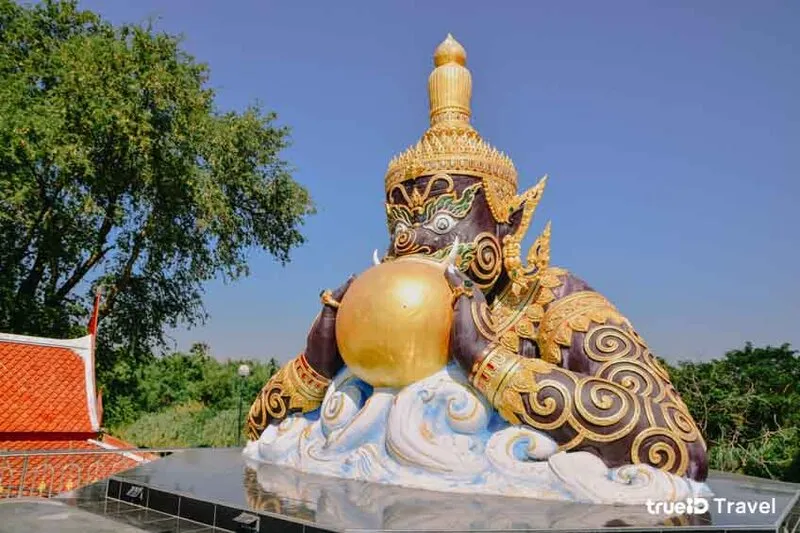
Wat Phra Loi
Open Days: Daily
Opening Hours: 08.00 – 17.00
Wat Phra Loi in Suphan Buri Province is an old riverside Buddhist temple located in Rua Yai Subdistrict, Mueang Suphan Buri District. The temple stands along the Tha Chin River, also known locally as the Suphan River, not far beyond Wat Khae. It is one of the meaningful cultural and religious sites in Suphan Buri because it combines a sacred legend of a Buddha image floating along the river, ancient sandstone Buddhist art, an old ordination hall associated with the U Thong period, a large four-sided ubosot, and a riverside fish sanctuary where visitors can feed fish and relax by the water.
The most important story behind Wat Phra Loi is the legend of a white sandstone Buddha image in the Naga-protected posture that floated along the Tha Chin River. Local people performed a ceremony to respectfully bring the image up from the water and enshrine it at the temple. This event became the origin of the name “Wat Phra Loi,” which means the temple of the floating Buddha image. The name is not merely a geographical label; it preserves the memory of local faith, the sacred river, and the community’s devotion to a revered Buddha image.
Wat Phra Loi is strongly connected with the Tha Chin River. In traditional central Thai life, rivers were routes of transportation, sources of livelihood, and spaces of community connection. Temples located beside rivers often became both religious and social centers. Wat Phra Loi still reflects this older relationship. The temple is a place where people come to worship, make merit, take part in Buddhist activities, and spend time by the river. For foreign travelers, it offers a clear example of how Thai temples, rivers, and local communities have long existed together.
The white sandstone Buddha image in the Naga-protected posture is believed to belong to the Lopburi period. This type of image has deep symbolic meaning in Buddhist art. It refers to the episode in which the Naga king Mucalinda protected the Buddha from rain and storm after enlightenment. The Naga-protected posture therefore represents protection, spiritual stability, and the safeguarding of the Dharma. At Wat Phra Loi, this meaning becomes even stronger because the image is associated with the river and the story of being discovered floating on the water.
The sacred image is important not only because of its age or artistic style but also because of its role in the community. Once the image was brought from the river and enshrined at the temple, it became the spiritual heart of Wat Phra Loi. Local devotion, temple identity, and the river legend are all tied together through this Buddha image. Visitors who come to the temple therefore encounter more than an old sculpture. They experience a living story of faith that has been preserved by generations of local people.
The temple also contains an old ordination hall that had fallen into ruin. It is believed to have been built during the time of King U Thong. Later, the temple restored the sacred space by building a new structure over the old hall. This approach allows the old religious site to be preserved while still supporting present-day Buddhist use. The coexistence of old and new architecture gives Wat Phra Loi an important historical dimension. It shows how Thai temples often preserve older sacred spaces by adapting them for continued religious life.
For visitors interested in history, the old ordination hall area is worth observing carefully. The older structure tells of the temple’s past, while the newer building shows how the community continues to care for its religious heritage. Wat Phra Loi is therefore not simply a riverside temple with a legend. It is a site where different historical layers remain visible: Lopburi-period Buddhist art, U Thong-period associations, later restoration, and present-day temple life.
Another prominent feature is the large four-sided ubosot, or ordination hall, which stands with impressive height and dignity. A four-sided structure creates balance and visual presence from multiple directions. Inside the ubosot is the beautiful Phra Phuttha Nawarat Mongkhon, an important Buddha image worshipped by visitors and local devotees. The hall is a suitable place for prayer, reflection, and merit-making before continuing to explore the rest of the temple.
Phra Phuttha Nawarat Mongkhon gives the interior of the ubosot a peaceful and auspicious atmosphere. Many visitors begin their trip by paying respect to this principal Buddha image, making offerings, or spending a quiet moment in reflection. The spacious hall and dignified architecture make the ubosot one of the most visually memorable areas of Wat Phra Loi. It also represents the temple’s continued role as an active Buddhist place of worship rather than only a historical site.
In addition to the floating Buddha image and the principal Buddha in the ubosot, Wat Phra Loi also preserves several ancient sandstone Buddha images in different postures. These images are important for understanding the Buddhist art of Suphan Buri and the broader central Thai region. Sandstone was widely used in ancient Buddhist sculpture, especially in works connected with Lopburi-period and Khmer-influenced art. Seeing multiple sandstone images in the same temple helps visitors appreciate the diversity of Buddhist iconography and the long artistic history of the region.
Each Buddha posture carries meaning. Some postures refer to enlightenment, meditation, protection, or compassion. The Naga-protected posture is especially powerful because it represents divine protection and calmness amid danger. Visitors who take time to observe the details of the face, body, posture, material, and carving style will gain a deeper appreciation of the temple’s artistic value. Wat Phra Loi is therefore suitable not only for merit-making but also for cultural learning.
The riverside area in front of the temple is another major attraction. It is a protected aquatic zone and functions as a fish sanctuary. Many kinds of fish gather at the temple pier, and visitors can feed them. This simple activity is popular among families and local visitors because it reflects the Buddhist value of compassion toward living beings. The fish sanctuary also adds life and movement to the temple atmosphere, making the riverside area a relaxing place to spend time after worshipping inside the temple.
The fish sanctuary is more than a recreational feature. It shows how a Thai temple can care for both spiritual and natural environments. By protecting fish in the river, the temple creates a space of non-harm and kindness. Visitors should feed fish responsibly, use appropriate fish food, avoid throwing plastic bags or waste into the water, and help keep the pier area clean. Respectful behavior allows the sanctuary to remain a peaceful and healthy place for both people and animals.
A good route through Wat Phra Loi begins at the four-sided ubosot, where visitors can pay respect to Phra Phuttha Nawarat Mongkhon. From there, they can continue to the white sandstone Naga-protected Buddha image, which is the origin of the temple’s name, then walk to the old ordination hall area and view the ancient sandstone Buddha images. The visit can end at the riverside fish sanctuary, where travelers can rest, feed fish, and enjoy the calm atmosphere of the Tha Chin River.
Wat Phra Loi can be easily included in a cultural temple route around Suphan Buri. It is located near Wat Khae, Wat Phra Rup, Wat Phra Non, Wat Phra Si Rattana Mahathat, and Wat Pa Lelai Worawihan. A meaningful itinerary can start at Wat Khae, which is associated with the Khun Phaen legend, continue to Wat Phra Loi for the floating Buddha story and fish sanctuary, and then move on to other historic temples in the city. This route is suitable for travelers who want to understand Suphan Buri through temples, legends, rivers, and Buddhist art.
Getting There is convenient by private car, rental car, or local hired transport. From downtown Suphan Buri, travel toward Rua Yai Subdistrict and continue past the Wat Khae area for a short distance. Wat Phra Loi is located beside the Tha Chin River. Travelers without a private car can first reach Suphan Buri town by bus or van, then continue to the temple by local transport. Hiring a local vehicle is practical because it allows visitors to combine Wat Phra Loi with nearby temples in one trip.
The best time to visit Wat Phra Loi is in the morning or late afternoon. The weather is more comfortable at these times, especially for walking around the temple and spending time at the riverside fish sanctuary. Midday can be hot, so visitors should bring drinking water, a hat, or sun protection. A general visit takes about 45 minutes to 1.5 hours, depending on how much time is spent worshipping, observing the sandstone images, and feeding fish by the river.
Visitors should follow basic temple etiquette. Modest clothing is recommended, and behavior should remain calm and respectful inside the ubosot and worship areas. Ancient sandstone images and historical structures should not be touched unnecessarily or climbed. At the fish sanctuary, visitors should use proper fish food and avoid throwing any waste into the river. Because Wat Phra Loi is both a sacred temple and a public riverside resting place, responsible behavior helps preserve its peaceful atmosphere.
Wat Phra Loi is suitable for many types of travelers. Buddhist visitors can pay respect to the sacred Buddha images. Cultural travelers can learn about Lopburi-style sandstone sculpture and U Thong-period associations. Families can enjoy feeding fish at the riverside sanctuary. Travelers interested in local legends can connect the temple’s floating Buddha story with the broader river culture of Suphan Buri. The temple offers a balanced experience of faith, history, art, and nature.
Overall, Wat Phra Loi is more than a riverside temple. It preserves a sacred legend, an ancient Naga-protected sandstone Buddha image, traces of an old ordination hall, a large four-sided ubosot, beautiful Buddhist images, and a lively fish sanctuary along the Tha Chin River. These elements make the temple one of the meaningful cultural stops in Suphan Buri. For travelers who want to see the quieter and more local side of the province, Wat Phra Loi deserves a place on the itinerary.
A visit to Wat Phra Loi also helps travelers understand the identity of Suphan Buri as a historic river city. The Tha Chin River is not just a landscape feature; it is part of the temple’s origin story and local memory. The floating Buddha image, the riverfront fish sanctuary, and the nearby historic temples all show how faith, water, community, and history remain closely connected. This makes Wat Phra Loi a rewarding destination for both Thai visitors and foreign travelers seeking a deeper cultural experience.
| Name | Wat Phra Loi, Suphan Buri |
| Location | Moo 2, Rua Yai Subdistrict, Mueang Suphan Buri District, Suphan Buri Province |
| Address | Rua Yai Subdistrict, Mueang Suphan Buri District, Suphan Buri 72000, Thailand |
| Highlights | A white sandstone Naga-protected Buddha image said to have floated along the Tha Chin River, a large four-sided ubosot, Phra Phuttha Nawarat Mongkhon, and a riverside fish sanctuary |
| History | Associated with the legend of a floating white sandstone Naga-protected Buddha image believed to be Lopburi-period art, and an old ordination hall believed to date to the time of King U Thong |
| Name Origin | The temple name comes from the story of a white sandstone Buddha image floating along the Tha Chin River and being ceremonially brought up from the water by local people |
| Distinctive Features | Ancient sandstone Buddha images, a restored old ordination hall, a large four-sided ubosot, the principal Phra Phuttha Nawarat Mongkhon image, and a riverside fish sanctuary |
| Travel Information | From downtown Suphan Buri, travel toward Rua Yai Subdistrict and continue past the Wat Khae area for a short distance. The temple is located beside the Tha Chin River and is convenient by private car, rental car, or local hired transport. |
| Current Status | Open to visitors as an old riverside temple with worship areas, Buddhist images, and a fish sanctuary along the Tha Chin River |
| Open Days | Daily |
| Opening Hours | 08.00 – 17.00 |
| Facilities | Temple grounds, four-sided ubosot, worship areas, pier by the Tha Chin River, fish sanctuary, and parking area around the temple |
| Main Areas / Zones | 1. Four-sided ubosot housing Phra Phuttha Nawarat Mongkhon 2. Area of the white sandstone Naga-protected Buddha image 3. Restored old ordination hall with a new structure built over it 4. Ancient sandstone Buddha image area 5. Tha Chin River pier and fish sanctuary 6. Temple area for worship and relaxation |
| Abbot / Caretaker | Phra Khru Sri Rattanaphiwat, Dr. |
| Main Contact Number | 094-2362367 |
| Tourism Information Contact | 035-522324, 089-6162108 |
| Nearby Tourist Attractions | 1. Wat Khae and Khum Khun Phaen, about 1 km 2. Wat Phra Rup, about 2 km 3. Wat Phra Non, about 3 km 4. Wat Phra Si Rattana Mahathat, about 3 km 5. Dragon Descendants Museum and Suphan Buri City Pillar Shrine, about 4 km 6. Wat Pa Lelai Worawihan, about 4 km 7. Suphan Buri National Museum, about 5 km |
| Nearby Restaurants | 1. Ruean Phae Krua Suphan, about 3 km 2. Raed Zaap Nua, about 3 km 3. Tang Nguan Thai, about 3 km 4. Kuai Tiao Je Pai, about 3 km 5. Kuai Tiao Tom Yum Nai Klae Suphan Buri, about 4 km 6. Chaana Suphan Buri, about 4 km 7. Sukh Cafe, about 4 km |
| Nearby Accommodations | 1. Baan Suan Resort Juree Punsuk, about 0.2 km 2. Sweet Hug Hotel, about 2 km 3. Muaan Resort, about 3 km 4. Sutharnlai Apartment, about 3 km 5. Songphanburi Hotel, about 4 km 6. Soi 4 Service Residence, about 4 km 7. Sri U-Thong Grand Hotel, about 4 km |
Frequently Asked Questions (FAQ)
Q: Where is Wat Phra Loi located?
A: Wat Phra Loi is located in Moo 2, Rua Yai Subdistrict, Mueang Suphan Buri District, Suphan Buri Province, beside the Tha Chin River and not far beyond Wat Khae.
Q: Why is the temple called Wat Phra Loi?
A: The name comes from the legend of a white sandstone Naga-protected Buddha image floating along the Tha Chin River before being respectfully brought up from the water by local people.
Q: What important Buddha images are found at Wat Phra Loi?
A: The temple houses a white sandstone Naga-protected Buddha image believed to belong to the Lopburi period, as well as Phra Phuttha Nawarat Mongkhon inside the large four-sided ubosot.
Q: Is there a fish sanctuary at Wat Phra Loi?
A: Yes. The riverside area in front of the temple is a protected aquatic zone and fish sanctuary where visitors can feed fish.
Q: What are the opening hours of Wat Phra Loi?
A: Wat Phra Loi is open daily from 08.00 to 17.00.
Q: How can visitors get to Wat Phra Loi?
A: From downtown Suphan Buri, travel toward Rua Yai Subdistrict and continue past the Wat Khae area for a short distance. The temple is beside the Tha Chin River and is easiest to reach by private car, rental car, or local hired transport.
Q: What nearby attractions can be visited with Wat Phra Loi?
A: Nearby attractions include Wat Khae, Khum Khun Phaen, Wat Phra Rup, Wat Phra Non, Wat Phra Si Rattana Mahathat, Wat Pa Lelai Worawihan, the Dragon Descendants Museum, and Suphan Buri National Museum.
 Category: ●Places of Worship
 Group: ●Temple
Last Update : 6 MonthAgo
 Last Update : 6 MonthAgo

 Click to Access the Navigation Map GPS
Wat Phra Loi Map
Recommend

 Art, Culture and Heritage
 Historical Sites and Monuments(2)
 Landmarks and Memorials(4)
 Art, Craft Centres, Tradition(2)
 Museums(5)
 Educational Places
 Educational Gardens, Farm(4)
 Training Center(2)
 University
 Public university(1)
 Rajamangala University of Technology(1)
Temple(36)
 Other Sacred Sites(4)
 Suburban Living
 Village, Community(6)
 Local Market(7)
 Floating Market(1)
 Nature and Wildlife
 National Parks and Marine Reserves(4)
 Mountain (Doi)(2)
 Dam, Reservoir, Lake(3)
 Caves(1)
 Bays and Beaches(1)
 Entertainment and Agricultural
 Farms, Parks and Ecotourism(6)
 Theater(1)
 Shopping
 Department Store(1)
 Travel Articles, Recipes
 Travel Review, Food Review(1)


