
lovethailand home >Central Travel Attractions >Suphan Buri Travel Attractions >Muang Suphan Buri >Rua Yai > Wat Pratu San
TL;DR: Wat Pratu San is located at Khun Chang Road, Rua Yai Subdistrict / Suphan Buri Town Area, Mueang Suphan Buri District, Suphan Buri Province, open Daily, hours 08.00 – 17.00.
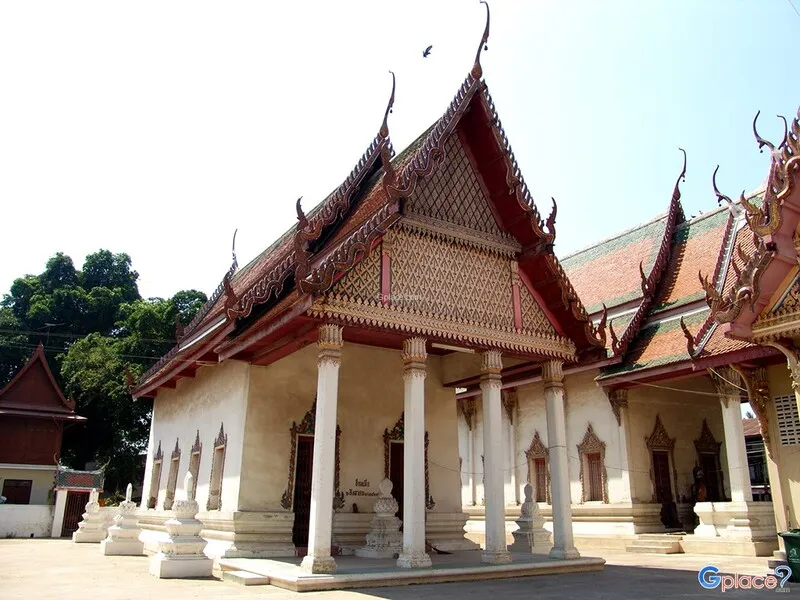
Wat Pratu San
Open Days: Daily
Opening Hours: 08.00 – 17.00
Wat Pratu San is one of the old and culturally important temples in Suphan Buri Province. Located on Khun Chang Road in Rua Yai Subdistrict, Mueang Suphan Buri District, within the municipal area of Suphan Buri town, the temple is known for its historical atmosphere, early Rattanakosin-period mural paintings, and its connection with the cultural landscape of old Suphan Buri. Although there is no clear inscription or historical document confirming the exact year of foundation, the temple is believed to have existed before 1836, the year when the famous Thai poet Sunthorn Phu travelled to Suphan Buri.
The most important highlight of Wat Pratu San is the mural painting inside the ordination hall. These murals depict scenes from the life of the Buddha and are regarded as works by a royal-style artisan. They are believed to have been painted around 1848 by an artist named Kham, who is also associated with the murals at Wat No Phutthangkun in Suphan Buri. For foreign visitors interested in Thai art, Wat Pratu San is a valuable place to study Buddhist storytelling, local history, and the artistic style of early Rattanakosin mural painting outside Bangkok.
Wat Pratu San should be understood not only as a temple, but also as part of the old urban and literary landscape of Suphan Buri. Khun Chang Road and the surrounding city area are closely associated with the story of Khun Chang Khun Phaen, one of Thailand’s most famous literary works. Visiting this temple therefore gives travelers a chance to connect Buddhist art, local history, old-town geography, and Thai literature in one place.
The ordination hall is the main area where visitors should spend time. The murals inside do more than decorate the walls. In traditional Thai society, mural paintings were a visual form of Buddhist teaching. They helped explain the life of the Buddha, moral lessons, sacred stories, and Buddhist cosmology to local communities. At a time when printed media and modern education were not widely available, temple murals functioned as a visual classroom for people of all ages.
The mural style at Wat Pratu San reflects the refinement of Thai painters in the early Rattanakosin period. The paintings show careful composition, continuous storytelling, delicate lines, expressive figures, traditional costumes, architectural details, and scenes that preserve aspects of the social world of the time. These works are valuable not only for religious learning, but also for understanding how people in the past imagined sacred stories through the artistic language of Thai mural painting.
Another important feature of the temple is the set of paintings on wooden panels kept in the vihara. These panels depict stories from the life of the Buddha and the Mahachat, or the Great Birth Story of Prince Vessantara. Their style appears to follow or reproduce the mural paintings inside the ordination hall. This makes the temple especially interesting because it shows how Buddhist narrative art could be transmitted from wall painting to movable wooden panels.
The Mahachat story is highly important in Thai Buddhist culture because it tells the story of Prince Vessantara, who perfected the virtue of generosity. Paintings of the Mahachat were not simply decorative. They were connected with preaching, merit-making, community rituals, and the cultivation of Buddhist virtues. The wooden-panel paintings at Wat Pratu San therefore help visitors understand how art, teaching, faith, and community life were linked in traditional Thai temples.
From an art historical perspective, Wat Pratu San is also important because of its connection with Wat No Phutthangkun. The belief that the same artist painted murals at both temples makes Wat Pratu San a useful site for comparing artistic style, line work, color, narrative composition, and the way Buddhist stories were arranged on temple walls. For researchers and art lovers, this connection adds depth to a cultural route through Suphan Buri’s old temples.
Wat Pratu San is easy to include in a cultural itinerary in Suphan Buri town. Nearby attractions include the Old City Wall and City Gate, Suphan Buri City Pillar Shrine, Dragon Descendants Museum, Wat Pa Lelai Worawihan, Banharn-Jamsai Tower, and Suphan Buri National Museum. A visit to Wat Pratu San can therefore be combined with other sites that explain the history, faith, literature, and urban identity of Suphan Buri.
Visitors who want to photograph or study the murals should behave with care. Old mural paintings can be sensitive to humidity, dust, touch, and strong light. Visitors should avoid using flash, should not touch the walls or old objects, and should keep quiet inside the ordination hall and vihara. Respectful behavior helps protect the murals and allows other visitors to experience the temple peacefully.
Wat Pratu San remains a living Buddhist temple where local people come to make merit, pay respect, and participate in religious life. This makes the temple different from a museum. Visitors are entering an active sacred space, not only an art gallery. Modest clothing, calm behavior, and respect for monks and worshippers are important. The value of the temple lies in both its art and its continuing role in the community.
Getting There is convenient because Wat Pratu San is located in Suphan Buri town on Khun Chang Road. From central Suphan Buri, visitors can travel within the municipal area toward Rua Yai Subdistrict and the old-town zone. From Bangkok, take Highway 340 toward Suphan Buri, enter Mueang Suphan Buri District, and continue to Khun Chang Road. The temple can easily be combined with other old-town and cultural attractions nearby.
Visitors should allow at least 30 minutes to 1 hour to see the ordination hall, mural paintings, and wooden-panel paintings. Those interested in art history may want more time to observe the details of the murals, the sequence of Buddhist stories, the costumes, architectural motifs, facial expressions, and the way the painter arranged narrative scenes across the walls. A slow visit will reveal much more than a quick stop for photographs.
Wat Pratu San is therefore an important cultural temple for travelers who want to understand Suphan Buri beyond its major landmarks. It offers early Rattanakosin mural art, Buddhist narrative painting, local historical atmosphere, and a link with the old city and Thai literary memory. Although it may not be a large landmark, it is a deeply valuable site for those interested in Thai murals, Buddhist art, and the cultural identity of Suphan Buri.
| Name | Wat Pratu San |
| Location | Khun Chang Road, Rua Yai Subdistrict / Suphan Buri Town Area, Mueang Suphan Buri District, Suphan Buri Province |
| Distinctive Features | An old temple in Suphan Buri town with mural paintings of the Buddha’s life inside the ordination hall and wooden-panel paintings of the Buddha’s life and the Mahachat preserved in the vihara |
| History | The exact foundation date is unknown, but the temple is believed to have existed before 1836, the year when Sunthorn Phu travelled to Suphan Buri. The murals are believed to have been painted around 1848. |
| Key Evidence | Early Rattanakosin mural paintings inside the ordination hall, painted by an artist named Kham, and wooden-panel paintings of the Buddha’s life and the Mahachat |
| Highlights | Buddhist mural paintings, royal-style craftsmanship, connection with Wat No Phutthangkun, old-town atmosphere, and Thai Buddhist narrative art |
| Travel Information | From Suphan Buri town, travel to Khun Chang Road within the municipal area. From Bangkok, take Highway 340 to Suphan Buri and continue into the old-town area and Khun Chang Road. |
| Current Status | A living Buddhist temple and cultural learning site for mural paintings in Suphan Buri Province |
| Open Days | Daily |
| Opening Hours | 08.00 – 17.00 |
| Fees | Free Admission |
| Main Areas / Zones | 1. Ordination Hall 2. Mural Paintings of the Buddha’s Life 3. Vihara Preserving Wooden-Panel Paintings 4. Worship and Merit-Making Area 5. Old Temple Area in Suphan Buri Town 6. Early Rattanakosin Thai Art Learning Point |
| Caretaker / Related Organization | Wat Pratu San / Maha Nikaya Sangha / Local Cultural and Tourism Organizations in Suphan Buri Province |
| Abbot | Phra Khru Phaisan Thammawong |
| Main Contact Number | 035-543-598 |
| Visitor Guidelines | Dress modestly, avoid flash photography, do not touch murals or old objects, and keep quiet inside the ordination hall and vihara |
| Nearby Tourist Attractions | 1. Old City Wall and City Gate of Suphan Buri, about 1 km 2. Suphan Buri City Pillar Shrine and Dragon Descendants Museum, about 2 km 3. Wat Pa Lelai Worawihan, about 3 km 4. Banharn-Jamsai Tower, about 3 km 5. Thai Farmers National Museum, about 4 km 6. Suphan Buri National Museum, about 5 km 7. Hall of Fame of H.E. Banharn Silpa-Archa, about 5 km |
| Nearby Restaurants | 1. Local Restaurants Around Khun Chang Road and Suphan Buri Town, about 1 km 2. Café Amazon at Heaven Dragon Park, about 2 km 3. Playground Bistro, about 2 km, Tel. 061-446-9442 4. Nopparatana Restaurant, about 3 km, Tel. 035-555-333, 081-587-6154 5. Lainam Restaurant, about 4 km 6. Surachai Pla Phao, about 6 km, Tel. 081-763-6102, 081-942-4654 |
| Nearby Accommodations | 1. Songphanburi Hotel, about 2 km 2. Vasidtee City Hotel Suphan Buri, about 3 km, Tel. 035-526-111, 035-526-123 3. Sri U-Thong Grand Hotel, about 3 km 4. Hop Inn Suphan Buri, about 4 km, Tel. 02-080-2222 5. B2 Suphan Buri Premier Hotel, about 4 km 6. Country Lake View Hotel, about 6 km |
Frequently Asked Questions (FAQ)
Q: Where is Wat Pratu San located?
A: Wat Pratu San is located on Khun Chang Road in Rua Yai Subdistrict, Mueang Suphan Buri District, Suphan Buri Province, within the municipal area of Suphan Buri town.
Q: Why is Wat Pratu San important?
A: It is an old temple known for its mural paintings of the Buddha’s life and wooden-panel paintings of the Buddha’s life and the Mahachat, making it an important site for Thai Buddhist art.
Q: When was Wat Pratu San built?
A: The exact foundation date is unknown, but the temple is believed to have existed before 1836, the year when Sunthorn Phu travelled to Suphan Buri.
Q: When were the murals at Wat Pratu San painted?
A: The murals inside the ordination hall are believed to have been painted around 1848 by an artist named Kham, who is also associated with the murals at Wat No Phutthangkun.
Q: When is Wat Pratu San open?
A: Wat Pratu San is open daily from 08.00 to 17.00.
Q: Is there an admission fee?
A: Admission is free. Visitors can pay respect, make merit, and view the murals while observing proper temple etiquette.
Q: What should visitors be careful about when viewing the murals?
A: Visitors should avoid flash photography, should not touch the murals or old objects, should dress modestly, and should keep quiet inside the ordination hall and vihara.
Q: What nearby attractions can be visited with Wat Pratu San?
A: Nearby attractions include the Old City Wall and City Gate, Suphan Buri City Pillar Shrine, Dragon Descendants Museum, Wat Pa Lelai Worawihan, Banharn-Jamsai Tower, and Suphan Buri National Museum.
Tel : 035543598
 Tel : 035543598
 Category: ●Places of Worship
 Group: ●Temple
Last Update : 4 MonthAgo
 Last Update : 4 MonthAgo
 Click to Access the Navigation Map GPS
Wat Pratu San Map
Recommend

 Art, Culture and Heritage
 Historical Sites and Monuments(2)
 Landmarks and Memorials(4)
 Art, Craft Centres, Tradition(2)
 Museums(5)
 Educational Places
 Educational Gardens, Farm(4)
 Training Center(2)
Temple(36)
Training Center(2)
Temple(36)
 Other Sacred Sites(4)
 Suburban Living
 Village, Community(6)
 Local Market(7)
 Floating Market(1)
 Nature and Wildlife
 National Parks and Marine Reserves(4)
 Mountain (Doi)(2)
 Dam, Reservoir, Lake(3)
 Caves(1)
 Bays and Beaches(1)
 Entertainment and Agricultural
 Farms, Parks and Ecotourism(6)
 Theater(1)


