
lovethailand home >Central Travel Attractions >Suphan Buri Travel Attractions >Muang Suphan Buri >Sanam Chai > National Museum Suphan Buri
TL;DR: National Museum Suphan Buri is located at Fine Arts Department Government Center of Suphan Buri Province, Sanam Chai Subdistrict, Mueang Suphan Buri District, Suphan Buri Province, open Wednesday – Sunday and Some Public Holidays, hours 09.00 – 16.00.
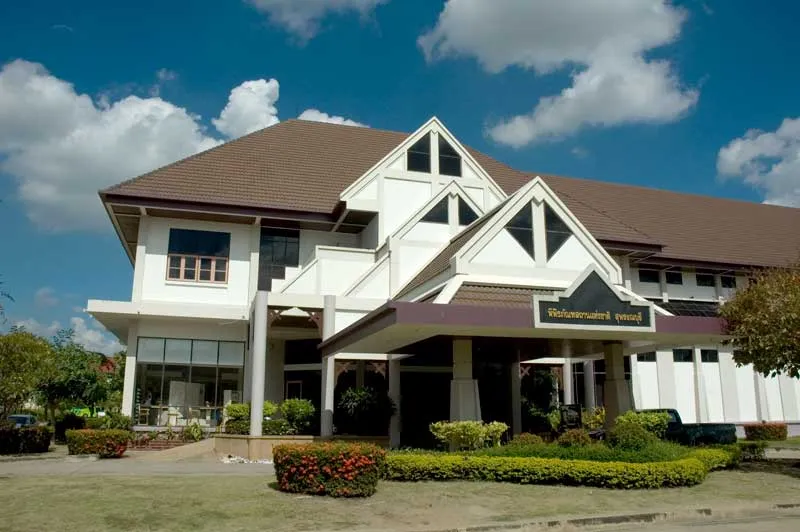
National Museum Suphan Buri
Open Days: Wednesday – Sunday and Some Public Holidays
Opening Hours: 09.00 – 16.00
Suphan Buri National Museum is one of the most important cultural and historical learning centers in Suphan Buri Province. Located along Suphan Buri – Chainat Road, Highway 340, in Sanam Chai Subdistrict, Mueang Suphan Buri District, the museum stands within the Fine Arts Department Government Center of Suphan Buri Province. This cultural complex includes Suphan Buri College of Dramatic Arts, Suphan Buri National Museum, the National Archives of Suphan Buri, the Suphan Buri Chalermphrakiat National Library, and the Western Regional National Theatre of Suphan Buri. For foreign travelers who want to understand the province beyond temples and tourist landmarks, this museum is one of the best places to begin.
The museum was established under the National Museum for Provincial Cities project, inspired by the royal initiative of Her Royal Highness Princess Maha Chakri Sirindhorn. The concept behind this project was to create museums that preserve and explain the identity of each city. Suphan Buri National Museum is therefore not only a place for keeping artifacts. It is a space that explains how Suphan Buri developed through archaeology, history, anthropology, local culture, ethnic diversity, religious art, performing arts, and collective memory.
Inside the permanent exhibition building, visitors can follow the historical development of Suphan Buri from prehistoric times through the Dvaravati, Lopburi, Ayutthaya, and Rattanakosin periods. This chronological presentation helps visitors see that Suphan Buri was not an isolated provincial town, but a historically significant area connected with ancient settlements, Buddhist art, political history, river routes, local communities, and national memory. Each section contributes to a broader understanding of how the province became what it is today.
One of the museum’s strengths is the way it presents Suphan Buri as a city of many historical layers. Visitors do not see artifacts as isolated objects. Instead, they are invited to understand the relationships among people, rivers, settlements, religious sites, art styles, warfare, trade, and local culture. Prehistoric evidence shows early human occupation. Dvaravati and Lopburi materials reveal religious and artistic networks. Ayutthaya-period content connects the city with political history and military events. Rattanakosin-period displays show continuity into modern provincial identity.
A major highlight of the museum is its presentation of the historic elephant duel victory of King Naresuan the Great. This event is one of the most important episodes in Thai historical memory and is strongly associated with Suphan Buri Province. The museum uses audiovisual media to explain the context of the battle, troop movement, geography, and the meaning of the victory. For visitors unfamiliar with Thai history, this section helps transform a famous national story into an understandable historical experience.
Beyond political history and warfare, Suphan Buri National Museum also presents the backgrounds and cultures of different communities living in the province. Suphan Buri has long been home to diverse cultural groups, including local Thai communities, Thai Phuan, Thai-Chinese communities, Lao Khrang, and other cultural groups. By presenting these groups together, the museum shows that Suphan Buri’s identity was shaped by multiple languages, customs, beliefs, foods, occupations, rituals, and community networks.
This ethnic and cultural section is especially valuable because it helps visitors understand that local history is not only about kings, wars, or ancient objects. It is also about people who lived, worked, migrated, farmed, traded, worshipped, sang, and created traditions. The museum therefore presents Suphan Buri as a living cultural landscape rather than a static historical site. For foreign travelers, this is useful because it explains why the province contains many kinds of traditions and why its communities may differ from one district to another.
The museum also displays stories of important people from Suphan Buri. These figures contributed to politics, administration, art, culture, performance, music, and local development. By including biographical material, the museum shows that a province is not made only by monuments and ancient ruins. It is also shaped by people whose work, memory, and influence continue to affect later generations. This is especially meaningful in Suphan Buri, a province strongly associated with folk music, performing arts, and Thai country music.
Visitors can also view ancient votive tablets from famous temple crypts in Suphan Buri. These Buddhist objects are important not only as sacred items, but also as evidence of religious belief, artistic style, temple culture, and local devotion. Votive tablets can tell us about Buddhist practice, craftsmanship, iconography, and the role of temples as spiritual centers of communities. Seeing them in the museum context helps visitors appreciate their historical and cultural value beyond personal belief or amulet collecting.
Suphan Buri is also famous for Thai folk songs and luk thung, or Thai country music. The museum recognizes this identity by presenting works and stories of local artists, folk performers, and well-known singers. This section makes the museum lively because it expands local history beyond archaeology and ancient art. Music, performance, humor, poetic language, and popular entertainment are also part of the province’s heritage. They tell stories of rural life, emotion, love, hardship, humor, and social change.
Folk music from Suphan Buri reflects verbal skill, rhythm, wit, and the cultural character of central Thailand. Luk thung music reflects rural experience, longing, hardship, hope, and changing Thai society. By including these traditions in the museum, Suphan Buri National Museum shows that cultural history can be heard as well as seen. Songs and performances are forms of memory that preserve the voices of ordinary people, making them as important as monuments and artifacts in understanding local identity.
The museum’s location within the Fine Arts Department Government Center adds another layer of value. In the same cultural area, visitors can find institutions related to performing arts, archives, libraries, and theatre. Suphan Buri College of Dramatic Arts reflects the continuation of performance traditions. The National Archives preserves historical documents. The National Library supports research and reading. The Western Regional National Theatre provides a space for performing arts. Together with the museum, this area functions as a major cultural learning hub in western central Thailand.
For students, researchers, and history enthusiasts, Suphan Buri National Museum is a valuable educational destination. Its exhibitions cover archaeology, history, art, anthropology, ethnic diversity, folk performance, country music, and important provincial figures. Visitors can connect what they have read in books with real objects, images, and interpretive displays. Learning through museum exhibitions gives historical knowledge a stronger sense of place and allows visitors to understand why Suphan Buri has long been culturally important.
For general travelers, the museum is best visited early in a Suphan Buri itinerary. After learning the province’s historical background here, other attractions become easier to understand. Wat Pa Lelai Worawihan, Suphan Buri City Pillar Shrine, Dragon Descendants Museum, the Old City Wall, Don Chedi Monument, and other sites gain more meaning when visitors already understand the broader historical and cultural context of the province. The museum therefore works as a gateway to deeper travel in Suphan Buri.
The exhibition building is suitable for calm and thoughtful exploration. Visitors should allow time to read labels, observe artifacts, and watch audiovisual presentations. A quick visit may miss important connections between periods and themes. Spending 1 to 2 hours at the museum allows enough time to understand prehistoric evidence, ancient art, ethnic groups, votive tablets, King Naresuan’s story, and the province’s musical heritage. This slower approach makes the visit more rewarding.
The museum is open from Wednesday to Sunday, 09.00 to 16.00, and on some public holidays. It is closed on Monday, Tuesday, New Year’s Day, and Songkran holidays. Admission follows the national museum rate. Travelers should check the latest announcements before visiting, especially during long holiday periods, because special opening or closing notices may apply. Planning ahead is useful if visitors want to combine the museum with nearby attractions in the same area.
Getting There is convenient by private car, rental vehicle, or local transport. From Bangkok, take Highway 340 toward Suphan Buri and continue to Sanam Chai Subdistrict, where the Fine Arts Department Government Center of Suphan Buri Province is located. Travelers arriving by bus can get off at Suphan Buri Bus Terminal and continue by local transport to the museum. The museum is close to other cultural attractions, including the Thai Farmers National Museum and the Hall of Fame of H.E. Banharn Silpa-Archa.
A half-day itinerary can begin at Suphan Buri National Museum, followed by the Thai Farmers National Museum and the Hall of Fame of H.E. Banharn Silpa-Archa. With a full day, visitors can continue to Suphan Buri City Pillar Shrine, Dragon Descendants Museum, Wat Pa Lelai Worawihan, Banharn-Jamsai Tower, and Wat Khae. This route connects museum knowledge with real places in the city and gives travelers a more complete understanding of Suphan Buri.
Suphan Buri National Museum is therefore an essential destination for anyone who wants to understand the province in depth. It brings together archaeology, historical development, King Naresuan’s elephant duel, ethnic communities, important local figures, votive tablets, folk music, and luk thung heritage in one place. A visit here reveals that Suphan Buri is not merely a province near Bangkok, but a city with dense historical layers, strong cultural memory, and a distinctive local identity worth exploring carefully.
| Name | Suphan Buri National Museum |
| Location | Fine Arts Department Government Center of Suphan Buri Province, Sanam Chai Subdistrict, Mueang Suphan Buri District, Suphan Buri Province |
| Address | 186/1 Fine Arts Department Government Center, Suphan Buri – Chainat Road, Sanam Chai Subdistrict, Mueang Suphan Buri District, Suphan Buri 72000, Thailand |
| Coordinates | Latitude 14.503470, Longitude 100.091970 |
| Highlights | Permanent exhibitions on Suphan Buri from prehistoric times through the Dvaravati, Lopburi, Ayutthaya, and Rattanakosin periods, including King Naresuan’s elephant duel, ancient votive tablets, local ethnic groups, important provincial figures, folk music, and luk thung heritage |
| History | Established under the National Museum for Provincial Cities project as a learning center for archaeology, history, anthropology, and local art and culture of Suphan Buri Province |
| Distinctive Features | A provincial national museum that presents Suphan Buri through historical development, artifacts, votive tablets, ethnic diversity, important figures, and local performing arts |
| Travel Information | From Bangkok, take Highway 340 toward Suphan Buri and continue to Sanam Chai Subdistrict. Bus travelers can get off at Suphan Buri Bus Terminal and continue by local transport to the museum. |
| Current Status | Open as a national museum and cultural learning center under the Fine Arts Department |
| Open Days | Wednesday – Sunday and some public holidays; closed Monday, Tuesday, New Year’s Day, and Songkran holidays |
| Opening Hours | 09.00 – 16.00 |
| Fees | Thai Visitors 20 Baht / Foreign Visitors 100 Baht |
| Facilities | Permanent exhibition building, display galleries, audiovisual media, visitor reception area, restrooms, parking area, and access to nearby Fine Arts Department cultural institutions |
| Main Areas / Zones | 1. Historical Development of Suphan Buri Zone 2. Prehistoric Period Zone 3. Dvaravati, Lopburi, Ayutthaya, and Rattanakosin Period Zone 4. King Naresuan and Elephant Duel Zone 5. Local Ethnic Groups and Cultural Communities Zone 6. Important People of Suphan Buri Zone 7. Ancient Votive Tablets from Famous Temple Crypts Zone 8. Folk Artists, Folk Songs, and Luk Thung Music Zone |
| Caretaker | Fine Arts Department / Suphan Buri National Museum |
| Main Contact Number | 035-535-330 |
| Official Website / Official Page | Fine Arts Department Website: Suphan Buri National Museum / Facebook Page: Suphan Buri National Museum |
| Nearby Tourist Attractions | 1. Thai Farmers National Museum, about 1 km 2. Hall of Fame of H.E. Banharn Silpa-Archa, about 1 km 3. Dragon Descendants Museum and Suphan Buri City Pillar Shrine, about 4 km 4. Wat Pa Lelai Worawihan, about 5 km 5. Banharn-Jamsai Tower, about 6 km 6. Wat Khae, about 7 km 7. Thai Farmer’s Way of Life and Spirit Learning Center, Na Hia Chai, about 12 km |
| Nearby Restaurants | 1. Nopparatana Restaurant, about 5 km 2. Lainam Restaurant, about 6 km 3. Surachai Pla Phao, about 7 km, Tel. 081-763-6102, 081-942-4654 4. Restaurants Around Dragon Descendants Museum, about 4 km 5. Restaurants in Suphan Buri Town, about 5 km |
| Nearby Accommodations | 1. Songphanburi Hotel, about 5 km 2. Vasidtee City Hotel Suphan Buri, about 6 km, Tel. 035-526-111, 035-526-123 3. Hop Inn Suphan Buri, about 7 km, Tel. 02-080-2222 4. B2 Suphan Buri Premier Hotel, about 7 km 5. Country Lake View Hotel, about 8 km 6. Hotels in Mueang Suphan Buri District, about 5 km |
Frequently Asked Questions (FAQ)
Q: Where is Suphan Buri National Museum located?
A: It is located at 186/1 Fine Arts Department Government Center, Suphan Buri – Chainat Road, Sanam Chai Subdistrict, Mueang Suphan Buri District, Suphan Buri Province.
Q: What does Suphan Buri National Museum display?
A: The museum displays the history of Suphan Buri from prehistoric times through the Dvaravati, Lopburi, Ayutthaya, and Rattanakosin periods, including King Naresuan’s elephant duel, local ethnic groups, important provincial figures, ancient votive tablets, folk music, and luk thung heritage.
Q: When is Suphan Buri National Museum open?
A: It is open Wednesday to Sunday from 09.00 to 16.00 and on some public holidays. It is closed on Monday, Tuesday, New Year’s Day, and Songkran holidays.
Q: How much is the admission fee?
A: Admission is 20 baht for Thai visitors and 100 baht for foreign visitors.
Q: What is the main highlight of Suphan Buri National Museum?
A: Its main highlight is the complete presentation of Suphan Buri’s history, archaeology, ethnic diversity, ancient votive tablets, important local figures, folk songs, and luk thung music heritage.
Q: Who should visit Suphan Buri National Museum?
A: The museum is suitable for students, families, history lovers, cultural travelers, and anyone who wants to understand Suphan Buri before visiting other historical and cultural attractions in the province.
Q: How long should visitors spend at the museum?
A: Visitors should allow about 1 to 2 hours to read exhibition texts, view artifacts, and watch audiovisual presentations properly.
Q: What nearby attractions can be visited with Suphan Buri National Museum?
A: Nearby attractions include the Thai Farmers National Museum, the Hall of Fame of H.E. Banharn Silpa-Archa, Suphan Buri City Pillar Shrine, Dragon Descendants Museum, Wat Pa Lelai Worawihan, and Banharn-Jamsai Tower.
Tel : 035535330
 Tel : 035535330
 Category: ●Art, Culture and Heritage
 Group: ●Museums
Last Update : 4 MonthAgo
 Last Update : 4 MonthAgo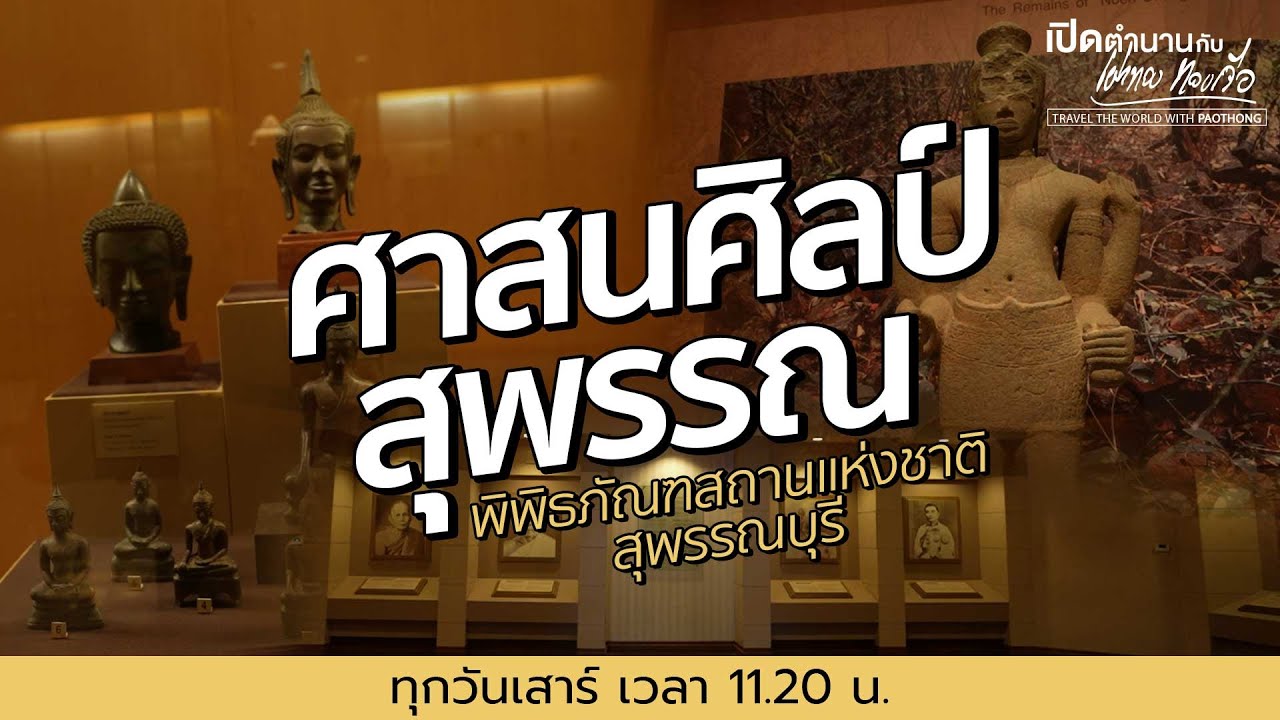
 Click to Access the Navigation Map GPS
National Museum Suphan Buri Map
Recommend

 Historical Sites and Monuments(2)
 Landmarks and Memorials(4)
 Art, Craft Centres, Tradition(2)
Museums(5)
Art, Craft Centres, Tradition(2)
Museums(5)
 Educational Places
 Educational Gardens, Farm(4)
 Training Center(2)
 Places of Worship
 Temple(36)
 Other Sacred Sites(4)
 Suburban Living
 Village, Community(6)
 Local Market(7)
 Floating Market(1)
 Nature and Wildlife
 National Parks and Marine Reserves(4)
 Mountain (Doi)(2)
 Dam, Reservoir, Lake(3)
 Caves(1)
 Bays and Beaches(1)
 Entertainment and Agricultural
 Farms, Parks and Ecotourism(6)
 Theater(1)


