
lovethailand home >Central Travel Attractions >Suphan Buri Travel Attractions >U Thong >Phlap Phla Chai > Ban Kham
TL;DR: Ban Kham is located at Phlapphla Chai Subdistrict, U Thong District, Suphan Buri Province, open Contact the community or Ban Kham Pha Thai group before visiting, hours This is not a commercial tourist attraction with fixed daily opening hours.
Ban Kham
Open Days: Contact the community or Ban Kham Pha Thai group before visiting
Opening Hours: This is not a commercial tourist attraction with fixed daily opening hours
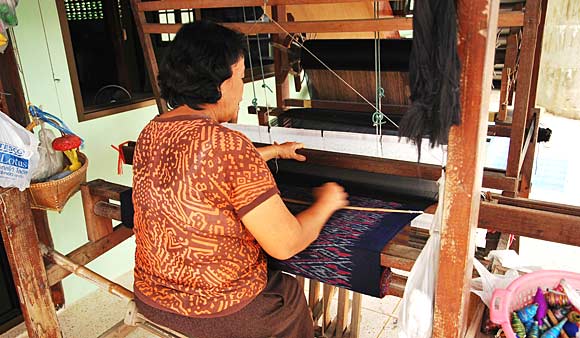
Ban Kham in Suphan Buri Province is a cultural village in Phlapphla Chai Subdistrict, U Thong District, known for its Lao Wiang heritage and traditional handwoven textiles. The community is especially associated with tin chok weaving, ikat-style mudmee textiles, and colorful fabric products such as pillow covers, clothing, shawls, and handbags. For travelers who want to understand U Thong beyond ancient monuments and temples, Ban Kham offers a living cultural experience through people, craft, migration history, and community-based hospitality.
Ban Kham is located in Phlapphla Chai Subdistrict, U Thong District, Suphan Buri Province. It is about 22 kilometers from Suphan Buri town and around 3 kilometers from Ban Don Kha. The village sits within a rural landscape of central Thailand, close to several important cultural and historical attractions of U Thong. Its location makes it suitable for travelers who want to combine textile learning with visits to temples, archaeological sites, and local communities in the same district.
The original people of Ban Kham were Lao migrants from Vientiane. Over time, they settled in Suphan Buri and became part of the Central Thai cultural landscape while preserving important elements of Lao Wiang identity. Their heritage remains visible through woven textiles, patterns, color choices, traditional skills, and community memory. Ban Kham is therefore not only a weaving village but also a place where migration, settlement, and cultural continuity can be understood through fabric.
The village is best known for tin chok and mudmee weaving. Tin chok is a highly skilled supplementary-weft technique in which detailed patterns are created by hand, often on the lower border of a textile. Mudmee, or ikat-style weaving, requires tying and dyeing threads before weaving so that patterns emerge when the threads are placed on the loom. Both techniques demand patience, experience, precision, and a deep understanding of color and pattern structure.
The handwoven textiles of Ban Kham are not limited to traditional garments. The community has developed its fabric into practical and contemporary products such as pillow covers, clothing sets, bags, shawls, and other household items. These products allow traditional weaving to remain relevant in modern daily life. They also help create income for local makers while keeping inherited skills alive among families and community members.
The colors of Ban Kham textiles are part of their charm. Bright tones, strong contrasts, and distinctive motifs give the fabrics a lively character. Each piece reflects the skill of the weaver and the identity of the community. Buying handwoven products from Ban Kham is not simply buying a souvenir. It is a way to support local artisans and help preserve textile knowledge that has been passed down through generations.
To appreciate Ban Kham textiles properly, visitors should understand that one woven piece requires many steps. The process may include preparing threads, selecting colors, tying mudmee patterns, dyeing, setting up the loom, weaving, picking patterns, finishing, and checking the quality of the fabric. Every stage requires the coordination of hands, eyes, memory, and experience. The final textile is therefore a record of labor, knowledge, time, and local identity.
Ban Kham is suitable for community-based cultural tourism. With advance coordination, visitors can meet local people, see textile products, learn about weaving, buy community goods, and understand Lao Wiang heritage in a relaxed village environment. Because Ban Kham is a real community rather than a fully commercial tourist site, visitors should contact the community in advance, especially when traveling as a group or planning to stay overnight.
Homestay services are one of the ways to experience Ban Kham more deeply. Staying overnight allows visitors to see the rhythm of village life, local food, quiet evenings, and community hospitality. It also helps distribute tourism income to local households. A homestay experience in Ban Kham is best suited to travelers who value simplicity, culture, and human connection rather than hotel-style facilities.
The community center and Ban Kham Pha Thai group are important contact points for visitors interested in textiles or community activities. Advance contact is recommended for those who want to see weaving demonstrations, purchase products in larger quantities, arrange a group visit, or book homestay accommodation. This helps the community prepare hosts, products, activities, and meeting points properly.
Getting There from Suphan Buri town can be done by taking Highway 321 toward Ban Suan Taeng. At Ban Suan Taeng, turn right onto Highway 3416 and continue until it connects with Highway 333. Then turn right toward Dan Chang District. Ban Kham is about 22 kilometers from Suphan Buri town and about 3 kilometers from Ban Don Kha. Travelers should use a map and contact the community in advance because Ban Kham is a local village rather than a major attraction with large tourist signs.
Ban Kham can be combined with several important attractions in U Thong District. Travelers may begin with the textile village, then continue to Wat Khao Tham Thiam and Phra Phuttha Pushayakhiri Sri Suvarnabhumi, the large Buddha image carved into a limestone cliff. A visit can also include U Thong National Museum, Wat Khao Di Salak, Wat Khao Phra Si Sanphetchayaram, and other cultural sites that tell the long history of U Thong.
The strength of Ban Kham is that it adds a human and craft-based dimension to a trip around U Thong. Many travelers know U Thong for archaeology, ancient city history, Buddhist sites, and cliff-carved Buddha images. Ban Kham completes the picture by showing a living community where heritage continues through woven cloth, local products, and everyday life. It reminds visitors that culture is not only found in ruins and museums but also in the hands of people who continue to make, teach, and remember.
For travelers interested in handicrafts, Ban Kham deserves a slow visit. Understanding handwoven textiles requires time to look at patterns, colors, texture, and technique. If visitors have a chance to speak with weavers, they will understand that each design comes from experience and memory. Appreciating the process behind the textile helps visitors see the value of Thai fabric beyond its surface beauty.
Ban Kham is also meaningful for students, designers, cultural researchers, and travelers interested in creative community economies. The village shows how local wisdom can be connected with product design, fashion, home decoration, experiential tourism, and cultural identity. When supported in the right way, textile communities like Ban Kham can preserve heritage while adapting to contemporary markets.
Visitors should approach Ban Kham with respect. Ask before photographing people or production processes, dress politely when visiting community spaces, and support local products at fair prices. Handwoven textiles require time, skill, and patience. Respectful purchasing helps ensure that the labor of artisans is valued properly and that community-based tourism benefits local people.
Ban Kham in Suphan Buri is therefore a valuable destination for travelers who want to understand Lao Wiang heritage, Thai textile craftsmanship, and the living culture of U Thong District. With advance planning and enough time, Ban Kham becomes more than a small village on the route between Suphan Buri and U Thong. It becomes a lesson in migration, memory, craft, and the enduring beauty of handwoven Thai textiles.
| Name | Ban Kham / Ban Kham Pha Thai |
| Location | Phlapphla Chai Subdistrict, U Thong District, Suphan Buri Province |
| Address | Ban Kham, Moo 2, Phlapphla Chai Subdistrict, U Thong District, Suphan Buri 72160, Thailand |
| Highlights | Lao Wiang community, tin chok weaving, mudmee textiles, colorful fabric products, homestay, and community cultural learning |
| History | The original community was formed by Lao migrants from Vientiane who settled in the U Thong area and preserved textile weaving skills through generations |
| Name Origin | Ban Kham is the name of the village in Phlapphla Chai Subdistrict and is widely associated with Ban Kham Pha Thai, the local textile group |
| Distinctive Features | Handwoven textiles, tin chok patterns, mudmee patterns, pillow covers, clothing, handbags, and other fabric-based products |
| Travel Information | From Suphan Buri, take Highway 321 to Ban Suan Taeng, turn right onto Highway 3416 until it connects with Highway 333, then turn right toward Dan Chang District. Ban Kham is about 22 km from Suphan Buri town and about 3 km from Ban Don Kha |
| Current Status | A community-based cultural destination and local textile learning village. Advance contact is recommended before visiting |
| Facilities | Community center, textile group, handwoven products, homestay service, and community activity contact point |
| Main Areas / Zones | 1. Ban Kham Community Center 2. Ban Kham Pha Thai Group 3. Textile Demonstration and Product Area 4. Community Homestay Area 5. Lao Wiang Heritage and Handicraft Learning Area |
| Caretaker / Related Authority | Ban Kham Community, Ban Kham Pha Thai Group, and Phlapphla Chai Subdistrict Administrative Organization |
| Community Leader | Mr. Adisak Matsri, Village Headman, Tel. 08-1832-6826 |
| Main Contact Number | Ban Kham Homestay Tel. 081-734-8345, 035-421-770, 087-069-3775 Community Product Group Tel. 081-8535795 Khun Nongnuch, 081-7360448 Khun Khwan, 081-8516992 Khun Kaew |
| Official Website / Official Page | Facebook: Ban Kham Pha Thai Suphan Buri / bkphathai Phlapphla Chai Subdistrict Administrative Organization www.plubplachai.go.th |
| Nearby Tourist Attractions | 1. Ban Don Kha, about 3 km 2. Wat Khao Di Salak, about 8 km 3. Wat Khao Tham Thiam / Phra Phuttha Pushayakhiri Sri Suvarnabhumi, about 12 km 4. U Thong National Museum, about 15 km 5. Wat Khao Phra Si Sanphetchayaram, about 16 km 6. Hermit Park U Thong, about 18 km |
| Nearby Restaurants | 1. Pornprapha Food & Drinks / About Coffee Ban Kham-Don Kha, about 1 km 2. Krua Ja Den Ban Phlapphla Chai, about 6 km 3. Local Restaurants in Don Kha Area, about 3 km 4. The Little Hut by Tolo.cafe, about 12 km 5. A Life Cafe & Gallery, about 13 km 6. Restaurants in U Thong Town, about 15 km |
| Nearby Accommodations | 1. Ban Kham Homestay, about 0 km, Tel. 081-734-8345, 035-421-770, 087-069-3775 2. Community Accommodation in Don Kha Area, about 3 km 3. Accommodation in U Thong Town, about 15 km 4. Accommodation near Phra Phuttha Pushayakhiri Sri Suvarnabhumi, about 12 km 5. Accommodation in Suphan Buri Town, about 22 km |
Frequently Asked Questions (FAQ)
Q: Where is Ban Kham in Suphan Buri located?
A: Ban Kham is located in Phlapphla Chai Subdistrict, U Thong District, Suphan Buri Province, about 22 km from Suphan Buri town and about 3 km from Ban Don Kha.
Q: What is Ban Kham famous for?
A: Ban Kham is known for tin chok weaving, mudmee textiles, and colorful local fabric products such as pillow covers, clothing, and handbags made by the Lao Wiang community.
Q: Is homestay accommodation available in Ban Kham?
A: Yes. Ban Kham has homestay services for visitors who want to stay in the community. Advance contact is recommended before traveling.
Q: Should visitors contact the community before visiting Ban Kham?
A: Yes. Visitors should contact the community in advance, especially for weaving demonstrations, group visits, product purchases, or homestay bookings.
Q: How do travelers get to Ban Kham from Suphan Buri town?
A: Take Highway 321 to Ban Suan Taeng, turn right onto Highway 3416 until it connects with Highway 333, then turn right toward Dan Chang District.
Q: What type of travelers is Ban Kham suitable for?
A: Ban Kham is suitable for travelers interested in Thai textiles, handicrafts, Lao Wiang culture, community-based tourism, and cultural learning in U Thong District.
Q: What nearby attractions can be combined with Ban Kham?
A: Nearby attractions include Ban Don Kha, Wat Khao Di Salak, Wat Khao Tham Thiam, Phra Phuttha Pushayakhiri Sri Suvarnabhumi, U Thong National Museum, and Wat Khao Phra Si Sanphetchayaram.
Q: Is there an entrance fee for Ban Kham?
A: Ban Kham is a community-based cultural village and does not operate like a regular ticketed tourist attraction. Homestay, activities, and product purchases should be arranged directly with the community.
 Category: ●Suburban Living
 Group: ●Village, Community
Last Update : 5 MonthAgo
 Last Update : 5 MonthAgo
 Click to Access the Navigation Map GPS

 Art, Culture and Heritage
 Historical Sites and Monuments(2)
 Landmarks and Memorials(4)
 Art, Craft Centres, Tradition(2)
 Museums(5)
 Educational Places
 Educational Gardens, Farm(4)
 Training Center(2)
 University
 Public university(1)
 Rajamangala University of Technology(1)
 Places of Worship
 Temple(36)
 Other Sacred Sites(4)
Village, Community(6)
 Local Market(7)
 Floating Market(1)
 Nature and Wildlife
 National Parks and Marine Reserves(4)
 Mountain (Doi)(2)
 Dam, Reservoir, Lake(3)
 Caves(1)
 Bays and Beaches(1)
 Entertainment and Agricultural
 Farms, Parks and Ecotourism(6)
 Theater(1)
 Travel Articles, Recipes
 Travel Review, Food Review(1)


