
lovethailand home >Central Travel Attractions >Suphan Buri Travel Attractions >Bang Pla Ma >Bang Pla Ma > Kao Hong Market
TL;DR: Kao Hong Market is located at Moo 2, Bang Pla Ma Subdistrict Municipality, Bang Pla Ma District, Suphan Buri Province, open Daily, hours 08.00 – 17.00.
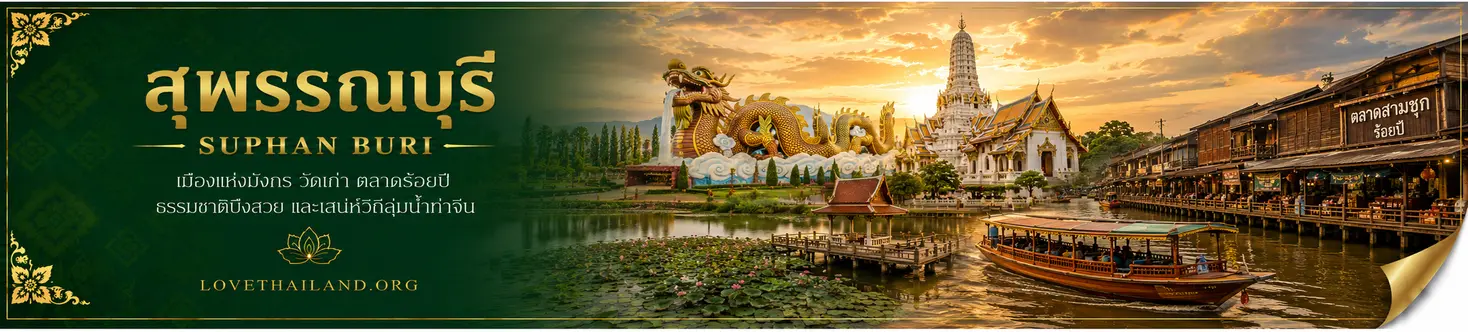
Kao Hong Market

Open Days: Daily
Opening Hours: 08.00 – 17.00
Kao Hong Market in Suphan Buri Province is a historic riverside market on the Tha Chin River in Bang Pla Ma District. Known for its old Thai-Chinese wooden shophouses, Robber Watchtower, community museum, old rice mill, shrine, riverside atmosphere, and Sunday local food stalls, the market is one of the most distinctive old markets in Suphan Buri. It is ideal for travelers who want to understand the history of river trade, Chinese merchant communities, local defense in the past, and the quiet charm of an old Central Thai market that still preserves important cultural traces.
Kao Hong Market is located in Moo 2, Bang Pla Ma Subdistrict Municipality, Bang Pla Ma District, Suphan Buri Province. It is not far from Suphan Buri town and can be reached from Highway 340 around kilometer markers 87-88. From there, visitors turn toward the road to Wat Lan Duk for about 2.4 kilometers. The market stands in a community by the Tha Chin River, which was once one of the important water routes for transportation, rice trade, and riverside commerce in Central Thailand.
The name “Kao Hong,” meaning “nine rooms,” comes from Ban Kao Hong, an old Thai house belonging to Khun Kamhaeng Rit, ancestor of the Prateepthong family. The house stands across the Tha Chin River from the market. It is a raised traditional Thai wooden house with a long layout divided into 9 rooms. This connection between the house, the river, and the market gives Kao Hong Market a strong sense of place and history.
Kao Hong Market was established later, around 1922, by Mr. Boonrod, also known as Hong Liangpanich, a wealthy Chinese merchant who married Nang Phae, a granddaughter of the owner of Ban Kao Hong. The market developed during the period when the Tha Chin River was still a major transportation route. Merchants, farmers, boat travelers, local families, and Thai-Chinese shop owners used the market as a place to trade, meet, eat, and exchange goods.
The market is made up of several sections, often referred to as the upper market, middle market, and lower market. The lower market is especially important because it preserves old 2-storey wooden shophouses in a traditional Chinese style. These buildings help visitors imagine what riverside commercial communities in Central Thailand looked like in the past. Shops were not just places for selling goods; they were also homes, storage spaces, family businesses, and social centers.
The most famous landmark of Kao Hong Market is the Robber Watchtower, or Ho Du Jon. Built in 1934, it is a Chinese-style brick-and-mortar structure with each side measuring about 3 meters and a height similar to a 4-storey building. Small openings were made in the walls for observing and shooting at robbers during a time when bandits were common in the region. Inside, an iron ladder leads up to the rooftop, where the surrounding market and landscape can be seen from above.
The Robber Watchtower is more than an unusual building. It is evidence of a time when prosperous riverside markets had to protect themselves. A busy market with goods, money, rice, boats, and families was vulnerable to robbery. The tower shows how the community responded to threats by creating a defensive structure. This makes Kao Hong Market different from many other old markets, because its history includes not only trade and food but also community security and local conflict.
The Kao Hong Market Museum is another important place for visitors. It was created to preserve and present the history of the market for younger generations. Inside, visitors can learn about old objects, photographs, household items, commercial tools, and memories related to the riverside community. The museum turns a market visit into a cultural learning experience rather than only a food or photo trip.
The old rice mill also connects Kao Hong Market with the agricultural economy of Suphan Buri. The province has long been associated with rice cultivation, and riverside markets often played a role in collecting, processing, and transporting agricultural products. The presence of an old rice mill reminds visitors that the market grew from a real economic system built around farmers, merchants, rice, boats, and river trade.
The shrine inside the market reflects the beliefs of the Thai-Chinese community. In many riverside trading communities, shrines served as spiritual centers and places of protection for merchants and residents. They were also connected with festivals, offerings, and shared community identity. At Kao Hong Market, the shrine, old shop signs, wooden buildings, and Chinese cultural details all help preserve the atmosphere of a traditional Thai-Chinese market.
Today, Kao Hong Market is quieter than large modern tourist markets, but on Sundays local residents often bring savory food, sweets, and community products to sell to visitors. Sunday is therefore the best day to experience the market when it is more lively. Foods may include Chinese pastries, chan-ap sweets, curry puffs, steamed sponge cakes, traditional coffee, braised goose, boat noodles, stir-fried noodles in gravy, pad Thai, and other local dishes.
The charm of the food at Kao Hong Market lies in its simplicity and local character. Many items reflect Thai-Chinese market culture, such as Chinese pastries, traditional coffee, and braised dishes. Other foods such as boat noodles, rad na, and pad Thai are familiar Central Thai market dishes that have been part of local food culture for generations. Eating at the market is therefore another way to taste community history.
Kao Hong Market is best explored slowly. Visitors should take time to look at the wooden buildings, narrow walkways, old shop signs, shrine, Robber Watchtower, museum, and riverside corners. The value of an old market is not found only in one landmark. It is spread through atmosphere, textures, smells, conversations, food stalls, quiet corners, and the relationship between the community and the river.
Conserving Kao Hong Market is important because many old riverside markets in Thailand have lost their original wooden structures and traditional ways of life. Kao Hong still has strong cultural elements, including the Robber Watchtower, old wooden shophouses, museum, rice mill, shrine, and Ban Kao Hong across the river. Visiting respectfully and supporting local vendors helps keep the market alive.
Getting There from Suphan Buri town is convenient. Visitors can take the Suphan Buri-Bang Mae Mai route for about 9 kilometers and turn left toward Kao Hong Market. Another route is to use Highway 340 around kilometer markers 87-88, pass the entrance to Bang Pla Ma District by about 1 kilometer, then turn toward Wat Lan Duk for about 2.4 kilometers. Parking is available in front of the market opposite Wat Ban Mi School. There is also a local bus route from Suphan Buri to Kao Hong Market.
A half-day visit can begin with a walk through the old market, a stop at the Robber Watchtower, a visit to the museum, a look at the shrine and wooden shophouses, and a meal in the market or nearby area. Travelers can then continue to Wat Lan Duk, Wat Pa Lelai Worawihan, Dragon Paradise Park, the Dragon Descendants Museum, or Banharn-Jamsai Tower in Suphan Buri town.
Visitors should understand that Kao Hong Market has its own rhythm. It is not a large modern tourist market packed with shops every day. Sunday is the best day for food and community stalls. Weekdays are quieter and better for photography, architecture, and peaceful walking. If visitors want to enter the museum or meet community groups, advance contact is recommended, especially on weekends.
Kao Hong Market is suitable for families, students, photographers, history lovers, and travelers interested in old riverside communities. In one compact area, visitors can learn about Ban Kao Hong, Chinese merchant culture, river trade, community defense through the Robber Watchtower, local museums, and Thai-Chinese food culture. This makes the market one of the most educational old market destinations in Suphan Buri.
For foreign travelers, Kao Hong Market provides a clear introduction to Central Thai riverside culture. Old wooden buildings, Chinese shrines, the Robber Watchtower, local food, and the Tha Chin River create a story that is easy to understand visually. Traveling with a local guide or Thai companion can make the visit even more meaningful, as many stories are connected with local names, families, and historical memory.
Kao Hong Market is therefore more than an old market over 100 years old. It is a living historical landscape that brings together Ban Kao Hong, the Robber Watchtower, old shophouses, shrine, museum, rice mill, Sunday food stalls, and the Tha Chin River. Visiting the market is not only about walking through old buildings, but about reading the layered history of Bang Pla Ma and Suphan Buri through architecture, food, community, and memory.
| Name | Kao Hong Market / 100-Year Kao Hong Market |
| Location | Moo 2, Bang Pla Ma Subdistrict Municipality, Bang Pla Ma District, Suphan Buri Province |
| Address | Kao Hong Market, Bang Pla Ma Subdistrict, Bang Pla Ma District, Suphan Buri 72150, Thailand |
| Highlights | Old riverside market on the Tha Chin River, Robber Watchtower, traditional Chinese-style wooden shophouses, Kao Hong Market Museum, old rice mill, shrine, Ban Kao Hong, and Sunday local food stalls |
| History | Established around 1922 by Mr. Boonrod, also known as Hong Liangpanich, a wealthy Chinese merchant, and once flourished as a riverside trading community on the Tha Chin River |
| Name Origin | The name comes from Ban Kao Hong, a traditional Thai house with 9 rooms owned by Khun Kamhaeng Rit, located across the Tha Chin River from the market |
| Distinctive Features | The market is divided into upper, middle, and lower sections. The lower market preserves old 2-storey Chinese-style wooden shophouses and the Robber Watchtower as a key landmark |
| Robber Watchtower | Built in 1934, this Chinese-style brick-and-mortar tower measures about 3 meters on each side and rises to the height of a 4-storey building. Small wall openings were used to observe and defend against robbers in the past |
| Travel Information | From Suphan Buri town, take the Suphan Buri-Bang Mae Mai route for about 9 km, or use Highway 340 around kilometer markers 87-88 and turn toward Wat Lan Duk for about 2.4 km. Parking is available opposite Wat Ban Mi School, and a local bus route from Suphan Buri to Kao Hong Market is available |
| Current Status | A conserved old market and riverside community learning site. Sunday is the liveliest day for local food and community stalls |
| Open Days | Daily |
| Opening Hours | 08.00 – 17.00 |
| Fees | No admission fee |
| Facilities | Parking area, local food stalls, community shops, toilets, photo spots, museum building, and walking route through the old market |
| Main Areas / Zones | 1. Upper Market 2. Middle Market 3. Lower Market 4. Robber Watchtower 5. Kao Hong Market Museum 6. Old Rice Mill 7. City Pillar Shrine 8. Maha Charoen Antique House 9. Ban Kao Hong across the Tha Chin River 10. Sunday Local Food and Sweets Area |
| Caretaker / Related Authority | Kao Hong Market Community, Bang Pla Ma Subdistrict Municipality, and Kao Hong Market Museum |
| Main Contact Number | Kao Hong Market Museum Tel. 0-3558-7044, 08-1828-8695 |
| Official Website / Official Page | Kao Hong Market Museum / Thai Museum Database and Suphan Buri tourism information sources |
| Nearby Tourist Attractions | 1. Ban Kao Hong across the Tha Chin River, about 0 km 2. Wat Lan Duk, about 2 km 3. Wat Ban Mi, about 1 km 4. Wat Pa Lelai Worawihan, about 10 km 5. Dragon Paradise Park, about 12 km 6. Dragon Descendants Museum, about 12 km 7. Banharn-Jamsai Tower, about 13 km |
| Nearby Restaurants | 1. Local Food and Sweets Stalls in Kao Hong Market, about 0 km 2. Boat Noodle Shops in Kao Hong Market, about 0 km 3. Rad Na and Pad Thai Shops in Kao Hong Market, about 0 km 4. Traditional Coffee Shops in Kao Hong Market, about 0 km 5. Restaurants in Bang Pla Ma Area, about 5 km 6. Restaurants in Suphan Buri Town, about 12 km |
| Nearby Accommodations | 1. Songphanburi Hotel, about 12 km 2. Hop Inn Suphan Buri, about 13 km 3. Lert Sri Hotel, about 13 km 4. Suanrak Resort, about 14 km 5. The Scene Suphanburi, about 14 km 6. Baan Thai Resort, about 20 km |
Frequently Asked Questions (FAQ)
Q: Where is Kao Hong Market located?
A: Kao Hong Market is located in Moo 2, Bang Pla Ma Subdistrict Municipality, Bang Pla Ma District, Suphan Buri Province, along the Tha Chin River.
Q: What is Kao Hong Market famous for?
A: It is famous for its old riverside market atmosphere, Robber Watchtower, traditional Chinese-style wooden shophouses, Kao Hong Market Museum, shrine, and Sunday local food stalls.
Q: When was the Robber Watchtower built?
A: The Robber Watchtower was built in 1934 as a Chinese-style brick-and-mortar defensive tower used to watch for and defend against robbers in the past.
Q: What are the opening hours of Kao Hong Market?
A: Kao Hong Market is open daily from 08.00 to 17.00. Sunday is the liveliest day for local food and community stalls.
Q: Is there an entrance fee for Kao Hong Market?
A: No. There is no admission fee. Visitors can walk through the old market, see the Robber Watchtower, and enjoy the community atmosphere. Museum visits should be arranged in advance on weekends.
Q: Which day is best for visiting Kao Hong Market?
A: Sunday is best for food and local stalls. Weekdays are quieter and better for photography and peaceful walks through the old market.
Q: How do visitors get to Kao Hong Market?
A: From Suphan Buri town, take the Suphan Buri-Bang Mae Mai route for about 9 km, or use Highway 340 around kilometer markers 87-88 and turn toward Wat Lan Duk for about 2.4 km.
Q: What nearby places can be combined with Kao Hong Market?
A: Nearby places include Wat Lan Duk, Wat Pa Lelai Worawihan, Dragon Paradise Park, the Dragon Descendants Museum, and Banharn-Jamsai Tower.
Tel : 035587044
 Tel : 035587044
Mobile : 0817042183, 0817634133
 Mobile : 0817042183, 0817634133
 Category: ●Suburban Living
 Group: ●Local Market
Last Update : 3 MonthAgo
 Last Update : 3 MonthAgo
 Click to Access the Navigation Map GPS
Kao Hong Market Map
Recommend

 Art, Culture and Heritage
 Historical Sites and Monuments(2)
 Landmarks and Memorials(4)
 Art, Craft Centres, Tradition(2)
 Museums(5)
 Educational Places
 Educational Gardens, Farm(4)
 Training Center(2)
 Places of Worship
 Temple(36)
 Other Sacred Sites(4)
 Village, Community(6)
Local Market(7)
Village, Community(6)
Local Market(7)
 Floating Market(1)
 Nature and Wildlife
 National Parks and Marine Reserves(4)
 Mountain (Doi)(2)
 Dam, Reservoir, Lake(3)
 Caves(1)
 Bays and Beaches(1)
 Entertainment and Agricultural
 Farms, Parks and Ecotourism(6)
 Theater(1)


