
lovethailand home >Central Travel Attractions >Sing Buri Travel Attractions >Bang Ra Chan >Choeng Klat > Wat Phra Prang (Chan Sut)
TL;DR: Wat Phra Prang (Chan Sut) is located at Moo 7, Ban Khok Mo, Choeng Klat Subdistrict, Bang Rachan District, Sing Buri Province, open Daily, hours 08.00 – 16.30.
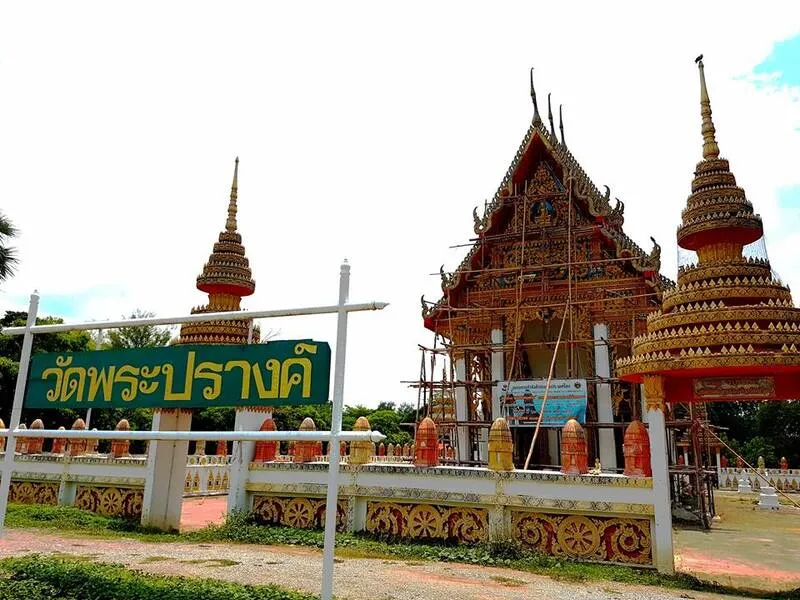
Wat Phra Prang (Chan Sut)
Open Days: Daily
Opening Hours: 08.00 – 16.30
Wat Phra Prang (Chan Sut) in Sing Buri Province is an important ancient temple and historical site located in Moo 7, Ban Khok Mo, Choeng Klat Subdistrict, Bang Rachan District. The temple is best known for its early Ayutthaya-style brick prang, standing about 15 meters high. The prang has a tall, slender form often compared to a corn cob, with a low base, hollow interior, and square inner chamber. Although the old mural traces inside have now faded, the monument still preserves the dignity of an ancient sacred structure and remains one of the most meaningful cultural sites in Bang Rachan.
The temple is often called Wat Phra Prang (Chan Sut) because of its close connection with the Chan Sut area. This name helps distinguish it from other temples with similar names and links the site directly to the local community around Ban Khok Mo and Choeng Klat. The area is historically connected with the Mae Nam Noi river basin, old settlement patterns, pottery production, and Ayutthaya-period religious architecture. A visit to Wat Phra Prang therefore reveals a deeper layer of Sing Buri beyond its better-known heroic history.
The ancient prang is the heart of the temple. Built of brick in a Thai prang form, it rises vertically with a compact base and elegant tower-like body. In Thai Buddhist architecture, a prang is not merely a decorative structure. It represents a sacred center and is often associated with Buddhist cosmology and the presence of holiness. The remaining brickwork shows the skill of old builders who created height, balance, and symbolic power using traditional materials and techniques.
Inside the prang is a hollow chamber with square recesses. The walls once contained mural paintings, but these traces have mostly disappeared over time. Even in their faded state, the traces are important because they show that the interior of the prang was once visually and ritually meaningful. The monument was not only impressive from outside; it also contained an inner sacred space. Visitors should therefore view the prang as both an architectural form and a former devotional environment.
Behind the prang stands an old Ayutthaya-style viharn. Its wooden pediment includes carved lion motifs and old supporting brackets. These details are especially valuable because wooden architectural elements are more fragile than brick or stone. The survival of carved woodwork helps visitors understand the artistic character of older Thai temple buildings. The lion motif suggests strength, protection, and sacred authority, making the viharn not only an architectural remnant but also a meaningful religious structure.
The temple grounds also include a hill-like feature with a replica Buddha footprint on top. In Thai Buddhist tradition, a Buddha footprint is a symbol of reverence and a reminder of following the Buddha’s path. Placing it on a raised area gives visitors the feeling of approaching a sacred point. This feature adds a devotional dimension to the temple, complementing the archaeological value of the prang and the old viharn.
Another highly important feature is the presence of 3 to 4 traces of the Mae Nam Noi kilns within the temple area. The Mae Nam Noi kiln site was one of the major pottery production areas of the Ayutthaya period. It produced many types of ceramic objects, including jars, basins, mortars, small containers, tiles, and other useful objects. The kiln traces at Wat Phra Prang show that the temple area was connected not only with religion but also with production, craft, and the economic life of the old community.
This combination of a temple and kiln site makes Wat Phra Prang unusually valuable. It shows how religion, craft production, and settlement were connected in the Ayutthaya period. Ancient communities did not separate sacred life from practical life as sharply as modern visitors might imagine. Temples could stand near production areas, communities, river routes, and trade networks. At Wat Phra Prang, visitors can understand both the spiritual and material culture of the Mae Nam Noi basin in one place.
Architecturally, the prang is usually described as early Ayutthaya style, around the 21st Buddhist century, and is believed to date to the reign of King Narai the Great. Its tall brick form, hollow interior, and remaining decorative traces help visitors imagine the artistic landscape of Ayutthaya-period central Thailand. Although some details have been lost, the main structure still communicates the power and elegance of old Thai religious architecture.
Wat Phra Prang is registered as a national ancient monument. This recognition confirms its importance in terms of history, archaeology, and art. Visitors should treat the site with care. Do not climb on the prang, remove fragments, write on surfaces, touch old brickwork unnecessarily, or disturb archaeological remains. Every surviving part of the site is evidence of the past and should remain in place for future generations.
Today, Wat Phra Prang remains an active local Buddhist temple as well as a cultural attraction. Recent public information from local tourism activities identifies Chao Athikan Thanayot Katasaro as the abbot of Wat Phra Prang. The temple therefore continues to function as a religious site while also preserving its archaeological and cultural significance. The care of such a place depends on monks, local residents, heritage agencies, and respectful visitors.
The temple is also remembered through the story of Luang Pu Si, or Phra Khru Wiriya Sophit, a respected former abbot associated with Wat Phra Prang. His name remains meaningful among devotees and those interested in Sing Buri’s monk traditions. This adds another layer to the temple’s identity: Wat Phra Prang is important not only because of its ancient architecture and kiln site, but also because of its connection with respected monastic figures.
A meaningful visit should allow at least 1 hour. Begin with the ancient prang, then observe the inner chamber area and the faded mural traces. Continue to the old viharn and its carved wooden features. After that, visit the replica Buddha footprint and the kiln traces. This order helps visitors understand the site as a complete cultural landscape rather than a single monument.
Wat Phra Prang is suitable for many types of travelers. History lovers can study Ayutthaya architecture and pottery production. Buddhist visitors can pay respect and appreciate the sacred atmosphere. Students and families can learn about ancient monuments, conservation, ceramic production, and temple etiquette. Cultural travelers can combine the temple with nearby attractions in Bang Rachan and Chan Sut for a deeper experience of Sing Buri.
Getting There is convenient by private car. From Sing Buri town, take the Sing Buri – Bang Rachan – Sankhaburi route for about 16 to 17 km. The temple is located in Moo 7, Ban Khok Mo, Choeng Klat Subdistrict, Bang Rachan District, about 1 km from Chan Sut Market. Public buses on the Sing Buri – Sankhaburi route pass the Chan Sut area, after which visitors can continue by local transport if needed.
The best time to visit is in the morning or late afternoon because parts of the ancient site are outdoors. Morning offers a quieter atmosphere, while late afternoon light highlights the texture of old brickwork. Visitors who enjoy photography should avoid climbing on any ancient structure and should take photographs in a way that respects both the monument and local worshippers.
Proper etiquette is important because the site is both a temple and an ancient monument. Dress modestly, speak quietly, remove shoes before entering sacred buildings, avoid entering monks’ private areas, and do not touch or remove archaeological materials. Respecting the site helps preserve the temple’s historical and spiritual value.
Overall, Wat Phra Prang (Chan Sut) is one of the most important cultural sites in Sing Buri. Its early Ayutthaya-style prang, old viharn, replica Buddha footprint, faded mural traces, and Mae Nam Noi kiln remains together create a rich historical landscape. For foreign travelers seeking a deeper understanding of central Thailand, this temple offers a rare combination of Buddhist architecture, archaeological evidence, craft history, and living local faith.
| Name | Wat Phra Prang (Chan Sut) |
| Location | Moo 7, Ban Khok Mo, Choeng Klat Subdistrict, Bang Rachan District, Sing Buri Province |
| Address | Choeng Klat Subdistrict, Bang Rachan District, Sing Buri 16130, Thailand |
| Highlights | Early Ayutthaya-style brick prang about 15 meters high, old viharn, carved wooden lion pediment, replica Buddha footprint, and Mae Nam Noi kiln traces |
| History | Believed to have been built during the reign of King Narai the Great, around the 21st Buddhist century. The temple is associated with early Ayutthaya architecture and was registered as an ancient monument on 8 March 1944 |
| Distinctive Features | A cultural site combining Ayutthaya Buddhist architecture, ancient pottery production, Mae Nam Noi kiln remains, and local Chan Sut community history |
| Main Areas / Zones | 1. Early Ayutthaya-Style Brick Prang 2. Inner Chamber And Faded Mural Traces 3. Old Ayutthaya-Style Viharn Behind The Prang 4. Carved Wooden Lion Pediment And Old Brackets 5. Hill Area And Replica Buddha Footprint 6. Three To Four Mae Nam Noi Kiln Traces 7. Temple Grounds And Ban Khok Mo Community Area |
| Travel Information | From Sing Buri town, take the Sing Buri – Bang Rachan – Sankhaburi route for about 16 to 17 km. The temple is about 1 km from Chan Sut Market. Public buses on the Sing Buri – Sankhaburi route pass the Chan Sut area |
| Current Status | Open as a local Buddhist temple and important registered ancient monument of Sing Buri |
| Open Days | Daily |
| Opening Hours | 08.00 – 16.30 |
| Fees | No admission fee; visitors may make merit according to personal faith |
| Abbot / Caretaker | Chao Athikan Thanayot Katasaro, Abbot of Wat Phra Prang |
| Main Contact Number | Sing Buri Provincial Public Relations Office: 036-507-135 Tourism Authority Of Thailand, Lop Buri Office: 036-770-096, 036-770-097 |
| Official Website / Official Page | Tourism Authority Of Thailand Thailand Tourism Directory CBT Thailand Travel Information |
| Nearby Tourist Attractions | 1. Mae Nam Noi Kiln Site, about 0 km 2. Chan Sut Market, about 1 km 3. Wat Chan Sut, about 1 km 4. Bang Rachan Heroes Monument, about 12 km 5. Wat Pho Kao Ton, about 12 km 6. Wat Phikun Thong, about 18 km |
| Nearby Restaurants | 1. Rad Cha, Chan Sut Branch, about 1 km, Tel. 061-495-9956 2. Baan Suan Mae La Ka Rong Restaurant, about 12 km 3. Kuai Tiao Ruea Nphae Wat Sadao, about 13 km 4. Steak Ran Lek, Bang Rachan, about 14 km 5. Rabiang Nam Restaurant, Bang Rachan, about 15 km |
| Nearby Accommodations | 1. Homestay Near Wat Phra Prang, about 2 km 2. Sing Buri Grand Bang Rachan, about 12 km, Tel. 083-152-5799 3. Rim Thung Mae La Resort, about 15 km 4. Parida Resort, about 16 km 5. Golden Dragon Resort, Mueang Sing Buri, about 25 km |
Frequently Asked Questions (FAQ)
Q: Where is Wat Phra Prang (Chan Sut) located?
A: Wat Phra Prang (Chan Sut) is located in Moo 7, Ban Khok Mo, Choeng Klat Subdistrict, Bang Rachan District, Sing Buri Province, near Chan Sut Market.
Q: What is Wat Phra Prang (Chan Sut) known for?
A: The temple is known for its early Ayutthaya-style brick prang, old viharn, replica Buddha footprint, and Mae Nam Noi kiln remains.
Q: What period is the prang associated with?
A: The prang is associated with early Ayutthaya art around the 21st Buddhist century and is believed to date to the reign of King Narai the Great.
Q: How is Wat Phra Prang connected with the Mae Nam Noi kilns?
A: The temple grounds contain about 3 to 4 traces of the Mae Nam Noi kilns, an important pottery production site from the Ayutthaya period.
Q: When was Wat Phra Prang registered as an ancient monument?
A: Wat Phra Prang was registered as an ancient monument on 8 March 1944.
Q: Who is the abbot of Wat Phra Prang?
A: Chao Athikan Thanayot Katasaro is the abbot of Wat Phra Prang.
Q: Is there an admission fee for Wat Phra Prang?
A: No. There is no admission fee. Visitors may make merit according to personal faith.
Q: How can travelers get to Wat Phra Prang (Chan Sut)?
A: From Sing Buri town, take the Sing Buri – Bang Rachan – Sankhaburi route for about 16 to 17 km. The temple is about 1 km from Chan Sut Market, and buses on the Sing Buri – Sankhaburi route pass the Chan Sut area.
 Category: ●Places of Worship
 Group: ●Temple
Last Update : 4 MonthAgo
 Last Update : 4 MonthAgo
 Click to Access the Navigation Map GPS
 Art, Culture and Heritage
 Historical Sites and Monuments(4)
 Landmarks and Memorials(3)
 Art, Craft Centres, Tradition(3)
 Museums(1)
 Educational Places
 Library(1)
Temple(42)
Library(1)
Temple(42)
 Church(1)
 Other Sacred Sites(2)
 Research and Development
 Royal Project(3)
 Suburban Living
 Village, Community(1)
 Local Market(1)
 Nature and Wildlife
 National Parks and Marine Reserves(1)
 River, Canal(7)
 Bays and Beaches(1)
 Other natural attractions(2)
 Entertainment and Agricultural
 Animal camps and shows(1)
 Farms, Parks and Ecotourism(1)


