
lovethailand home >Central Travel Attractions >Sing Buri Travel Attractions >Muang Sing Buri >Bang Krabue > Wat Prachotikaram
TL;DR: Wat Prachotikaram is located at Moo 3, Bang Krabue Subdistrict, Mueang Sing Buri District, Sing Buri Province, open Daily, hours 08.00 – 16.00.
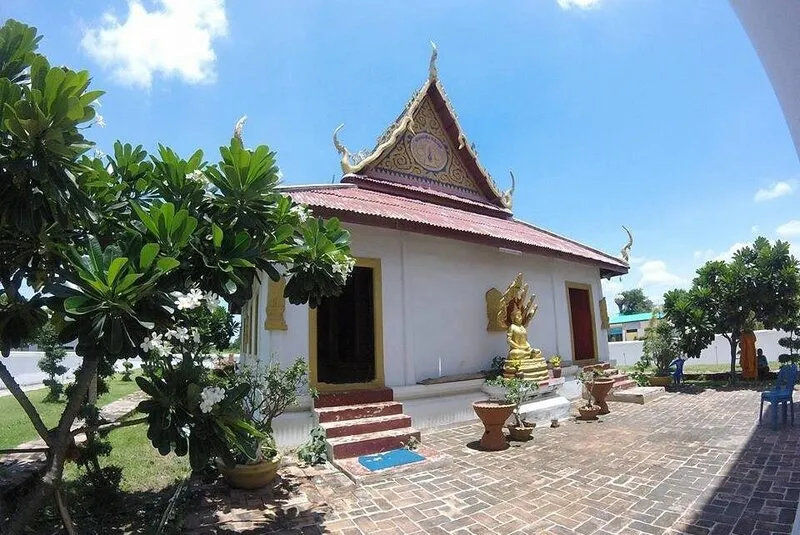
Wat Prachotikaram
Open Days: Daily
Opening Hours: 08.00 – 16.00
Wat Prachotikaram in Sing Buri Province is an old Buddhist temple in Bang Krabue Subdistrict, Mueang Sing Buri District, located about 5 km from the city center. The temple is best known for two large standing Buddha images in the gesture of forbidding relatives, locally revered as Luang Pho Sap and Luang Pho Sin. Both images display graceful Sukhothai-style Buddhist art and are deeply respected by local residents and visitors. For foreign travelers interested in Thai Buddhist culture, local faith, and central Thai temple routes, Wat Prachotikaram is a meaningful and accessible destination on Highway 311, the old Sing Buri – Chai Nat road.
The temple is not far from downtown Sing Buri, making it suitable for a short cultural visit or as part of a one-day temple route around the province. Its main attraction is the pair of standing Buddha images, which gives Wat Prachotikaram a distinctive identity among Sing Buri temples. While the province is widely known for important Buddhist sites such as Wat Phra Non Chakkrasi Worawihan and other major temples, Wat Prachotikaram is especially memorable because of its large standing Buddha pair, a form that creates a different devotional and visual experience from seated or reclining Buddha images.
Luang Pho Sap stands 6 wa and 7 inches high, while Luang Pho Sin stands 3 wa, 3 sok, and 5 inches high. These large standing Buddha images are in the posture commonly known in Thai as Pang Ham Yat, or the gesture of forbidding relatives. The posture represents calm authority, compassion, and the power of the Buddha to bring peace and reconciliation. In Thai Buddhist belief, this gesture is associated with restraint, peace, and the resolution of conflict through wisdom and virtue. Visitors often come to pay respect, ask for blessings, and experience the calm presence of these sacred images.
The artistic style of Luang Pho Sap and Luang Pho Sin is associated with Sukhothai Buddhist art, which is admired for its elegance, balance, and spiritual serenity. Sukhothai-style Buddha images often convey a gentle face, graceful body proportions, and a refined sense of movement even in stillness. At Wat Prachotikaram, the two standing images communicate both dignity and compassion. They are not only religious objects for worship but also important examples of Buddhist artistic expression that help visitors appreciate the beauty of Thai sacred art.
One of the most memorable aspects of the temple is the presence of two large standing Buddha images together. This gives the site a strong visual identity and has made it a well-known temple among people who travel to Sing Buri for merit-making and cultural tourism. For visitors following a theme of Buddhist images in Sing Buri, Wat Prachotikaram can be understood as a temple of standing Buddha images, while other temples in the province are known for reclining, seated, or other important Buddha forms. This makes the temple a valuable stop in understanding the diversity of Thai Buddhist imagery.
Wat Prachotikaram is also connected with local names and memories. It is sometimes referred to by local people as Wat Prachot or Wat Prachot in a shorter form. The exact documentary history of the temple is not fully preserved in modern public records, but the existence of large Sukhothai-style standing Buddha images and the continued devotion of the community show that the temple has long been important in Bang Krabue. For travelers, this means the temple should not be viewed only as a place with beautiful Buddha images. It should also be seen as a living space of memory, faith, and community identity.
The gesture of forbidding relatives has a meaningful place in Buddhist iconography. It is often interpreted as a posture of calming conflict and restoring harmony. When visitors stand before Luang Pho Sap and Luang Pho Sin, the upright posture, raised hand, and serene expression create a sense of moral stability. The images invite reflection on patience, peace, and self-control. This meaning makes the temple especially appropriate for visitors seeking a quiet place to pray for calmness, family harmony, good fortune, and a steady path in life.
The names Luang Pho Sap and Luang Pho Sin are also considered auspicious in Thai culture. The word “sap” suggests wealth, value, and abundance, while “sin” can be associated with assets and prosperity. While Buddhist worship should be grounded in respect for the Triple Gem and moral practice, these auspicious names have made the temple especially popular among visitors who pray for success in work, business, financial stability, and general blessings. This blend of Buddhist faith and local devotional practice is common in Thai temple culture and helps explain why the temple remains active and beloved.
Another important object associated with the temple is Luang Pu Ong, an ancient four-handled jar said to have been found behind the viharn of Luang Pho Sap. Local belief regards it as sacred, and it is used as a container for holy water at the temple. This object reveals an important aspect of Thai local religion: ordinary objects can become spiritually meaningful when connected with temple ritual, local memory, and community belief. For foreign travelers, this is a useful example of how Thai temples often preserve not only formal Buddhist art but also local sacred objects and stories.
Wat Prachotikaram therefore brings together several layers of culture. The standing Buddha images represent Buddhist art and devotion. The ancient jar represents local belief and ritual practice. The temple itself represents the community’s continuity and relationship with Buddhism. These layers make the temple more than a simple stop for taking photographs. It is a place where visitors can observe how Buddhist art, local identity, and everyday religious life are intertwined in central Thailand.
The current abbot of Wat Prachotikaram is Phra Khru Kasem Thammachot. The temple continues to play an active role in local religious life, including annual ceremonies and merit-making events. One important activity is the annual gilding ceremony for Luang Pho Sap and Luang Pho Sin. During such events, local residents and devotees gather to make merit, offer food, join temple activities, and express their faith in the two revered Buddha images. Visiting during a normal day offers a peaceful atmosphere, while visiting during an annual event reveals the temple’s living connection with the community.
The annual gilding ceremony is an important expression of Thai Buddhist devotion. Applying gold leaf to a Buddha image is a symbolic act of respect and merit-making. At Wat Prachotikaram, the ceremony is especially meaningful because it is centered on the temple’s two most important sacred images. The event is not only a personal religious act but also a community gathering that helps sustain the temple’s social and spiritual role. Travelers who wish to attend such events should check announcements from the temple or Bang Krabue Subdistrict Administrative Organization for the latest schedule.
For general visitors, the best way to experience the temple is to begin by paying respect to Luang Pho Sap and Luang Pho Sin. After that, take time to observe the form, posture, and artistic details of the images. Notice the upright stance, the raised hand, and the overall sense of calm. If appropriate, visitors may also ask local people or temple caretakers about the temple’s stories. Many older Thai temples preserve details through oral tradition and local memory, so respectful conversation can add depth to the visit.
Wat Prachotikaram is suitable for many types of visitors. Buddhist devotees come to make merit and ask for blessings. Cultural travelers come to learn about standing Buddha images and local temple traditions. Families can use the visit to teach children about temple etiquette and Thai Buddhist art. History-minded travelers can include the temple in a route that connects nearby old temples and local attractions in Sing Buri. Because the temple is close to the city, it is easy to include in a half-day or full-day itinerary.
Photography should be done respectfully. Visitors should avoid inappropriate poses in front of Buddha images, should not climb onto restricted areas, and should not touch sacred objects without permission. If people are praying or performing rituals, give them space and avoid disturbing them. A respectful visit helps preserve the temple atmosphere and shows consideration for the local community. This is especially important because Wat Prachotikaram is not only a tourist attraction but also an active place of worship.
As a learning site, Wat Prachotikaram is useful for understanding Sukhothai-style Buddhist art. Parents, teachers, and guides can encourage visitors to observe the posture, hand gesture, facial expression, and proportions of the standing Buddha images. Learning from the actual images helps visitors understand Thai art more clearly than reading from a book alone. The temple also provides an opportunity to discuss the meaning of Buddhist postures and how sacred art functions in Thai religious life.
In the wider context of Sing Buri tourism, Wat Prachotikaram completes the province’s rich network of Buddhist attractions. Sing Buri has important temples associated with reclining Buddha images, seated Buddha images, old architecture, local craft, and community history. Wat Prachotikaram adds a strong standing Buddha identity to this network. Travelers interested in temple routes can combine it with Wat Kradangnga Buppharam, Wat Sawang Arom, Wat Phra Non Chakkrasi Worawihan, Sing Buri City Pillar Shrine, and the Bang Rachan Heroes Monument.
The location on Highway 311 makes the temple easy to reach. From Mueang Sing Buri, take Highway 311, the old Sing Buri – Chai Nat route, or the road along the irrigation canal toward In Buri for about 5 km. Wat Prachotikaram is located on the right-hand side when traveling from town. Private car is the most convenient option because it allows travelers to visit several nearby temples and restaurants in the same trip. Local transport may also be used along the Sing Buri – Chai Nat route, followed by short local transport to the temple.
Getting There from downtown Sing Buri is straightforward. Use Highway 311, the old Sing Buri – Chai Nat road, for about 5 km toward In Buri. The temple is in Bang Krabue Subdistrict and is close to Wat Kradangnga Buppharam, which is located slightly farther along the same route. A half-day route can begin at Wat Prachotikaram, continue to Wat Kradangnga Buppharam and Wat Sawang Arom, and then return toward the city for Wat Phra Non Chakkrasi Worawihan or Sing Buri City Pillar Shrine.
The best time to visit is in the morning or early afternoon, when the weather is more comfortable and there is enough time to pray and observe the temple details. Visitors who wish to attend the annual gilding ceremony or other temple events should check the latest local announcements before traveling. A weekday visit is usually quieter and better for those who want a calm experience, while temple festival days offer a lively atmosphere and a closer look at local community faith.
Visitors should dress modestly and behave respectfully. Shoulders and knees should be covered, shoes should be removed where required, voices should be kept low, and sacred objects should not be touched without permission. Donations should be made through official donation boxes or by asking temple caretakers politely. These simple practices help make the visit respectful and meaningful for both travelers and the local worshipping community.
Overall, Wat Prachotikaram is one of Sing Buri’s important cultural temples. Its two large Sukhothai-style standing Buddha images, Luang Pho Sap and Luang Pho Sin, give the temple a unique identity. Its local beliefs, annual religious activities, accessible location, and peaceful atmosphere make it suitable for worship, cultural learning, photography, and a deeper understanding of central Thai Buddhist traditions. For travelers who want to explore Sing Buri beyond the usual highlights, Wat Prachotikaram is a highly worthwhile stop.
| Name | Wat Prachotikaram |
| Location | Moo 3, Bang Krabue Subdistrict, Mueang Sing Buri District, Sing Buri Province |
| Address | No. 1, Moo 3, Highway 311, Bang Krabue Subdistrict, Mueang Sing Buri District, Sing Buri 16000, Thailand |
| Highlights | Two large Sukhothai-style standing Buddha images in the gesture of forbidding relatives, known as Luang Pho Sap and Luang Pho Sin |
| History | An old temple in Bang Krabue Subdistrict, locally associated with the names Wat Prachot or Wat Prachot in local memory, and centered on two highly revered standing Buddha images |
| Distinctive Features | A pair of large standing Buddha images with graceful Sukhothai-style artistic features, symbolizing calmness, blessing, and auspiciousness |
| Main Areas / Zones | 1. Viharn of Luang Pho Sap and Luang Pho Sin 2. Worship Area for the Standing Buddha Images 3. Luang Pu Ong or Ancient Four-Handled Jar for Holy Water 4. Annual Gilding Ceremony Area for Luang Pho Sap and Luang Pho Sin 5. Temple Grounds and Bang Krabue Community Area |
| Travel Information | From downtown Sing Buri, use Highway 311, the old Sing Buri – Chai Nat route, or the irrigation canal road toward In Buri for about 5 km. The temple is on the right-hand side |
| Current Status | Open to visitors and remains an important temple in Bang Krabue Subdistrict |
| Open Days | Daily |
| Opening Hours | 08.00 – 16.00 |
| Abbot / Caretaker | Phra Khru Kasem Thammachot, Abbot of Wat Prachotikaram |
| Main Contact Number | 08 9513 6491 036-512-784 |
| Nearby Tourist Attractions | 1. Wat Kradangnga Buppharam, about 2 km 2. Wat Sawang Arom, about 4 km 3. Wat Phra Non Chakkrasi Worawihan, about 7 km 4. Sing Buri City Pillar Shrine, about 8 km 5. Bang Rachan Heroes Monument, about 17 km |
| Nearby Restaurants | 1. Lan Mae Phayung Boat Noodles, about 1 km, Tel. 083-444-1402, 081-016-2231, 088-483-6747 2. Tamnan Mae La Restaurant, about 2 km, Tel. 036-690288, 088-6391535 3. Kai Op Ong Ajarn Nong Sing Buri Branch, about 3 km, Tel. 082-8526709 4. Chao Plo Jai Cafe Coffee Chonprathan, about 3 km, Tel. 098-5808246 5. Ban Suan Mae La Ka Rong Restaurant, about 8 km, Tel. 036-501047, 092-8024928 |
| Nearby Accommodations | 1. Heyday Singburi Hotel, about 8 km 2. Chaisaeng In The Park, about 9 km, Tel. 081-9919133, 036-812462, 036-510228 3. Chao Phraya Sing Buri Hotel, about 9 km 4. In In Resort, about 13 km, Tel. 036-694544, 097-1360410 5. Maethongbai Resort, about 15 km, Tel. 098-2807106, 098-2807100 |
Frequently Asked Questions (FAQ)
Q: Where is Wat Prachotikaram located?
A: Wat Prachotikaram is located in Moo 3, Bang Krabue Subdistrict, Mueang Sing Buri District, Sing Buri Province, about 5 km from downtown Sing Buri.
Q: What is Wat Prachotikaram famous for?
A: The temple is famous for two large Sukhothai-style standing Buddha images in the gesture of forbidding relatives, known as Luang Pho Sap and Luang Pho Sin.
Q: How tall are Luang Pho Sap and Luang Pho Sin?
A: Luang Pho Sap is 6 wa and 7 inches high, while Luang Pho Sin is 3 wa, 3 sok, and 5 inches high.
Q: What are the opening hours of Wat Prachotikaram?
A: The temple is open daily from 08.00 to 16.00.
Q: Who is the abbot of Wat Prachotikaram?
A: The abbot of Wat Prachotikaram is Phra Khru Kasem Thammachot.
Q: How can travelers get to Wat Prachotikaram?
A: From downtown Sing Buri, take Highway 311, the old Sing Buri – Chai Nat route, or the irrigation canal road toward In Buri for about 5 km. The temple is on the right-hand side.
Q: Does Wat Prachotikaram have an annual ceremony?
A: Yes. The temple has an annual gilding ceremony for Luang Pho Sap and Luang Pho Sin, an important local merit-making event.
Q: What nearby attractions can be visited with Wat Prachotikaram?
A: Nearby attractions include Wat Kradangnga Buppharam, Wat Sawang Arom, Wat Phra Non Chakkrasi Worawihan, Sing Buri City Pillar Shrine, and the Bang Rachan Heroes Monument.
 Category: ●Places of Worship
 Group: ●Temple
Last Update : 4 MonthAgo
 Last Update : 4 MonthAgo
 Click to Access the Navigation Map GPS
 Art, Culture and Heritage
 Historical Sites and Monuments(4)
 Landmarks and Memorials(3)
 Art, Craft Centres, Tradition(3)
 Museums(1)
 Educational Places
 Library(1)
Temple(42)
Library(1)
Temple(42)
 Church(1)
 Other Sacred Sites(2)
 Research and Development
 Royal Project(3)
 Suburban Living
 Village, Community(1)
 Local Market(1)
 Nature and Wildlife
 National Parks and Marine Reserves(1)
 River, Canal(7)
 Bays and Beaches(1)
 Other natural attractions(2)
 Entertainment and Agricultural
 Animal camps and shows(1)
 Farms, Parks and Ecotourism(1)


