
lovethailand home >Central Travel Attractions >Saraburi Travel Attractions >Muak Lek >Muak Lek > Asia-Pacific International University (Muak Lek Ca..
TL;DR: Asia-Pacific International University (Muak Lek Campus) is located at 195 Moo 3, Muak Lek Subdistrict, Muak Lek District, Saraburi Province 18180, Thailand.

Asia-Pacific International University (Muak Lek Campus)
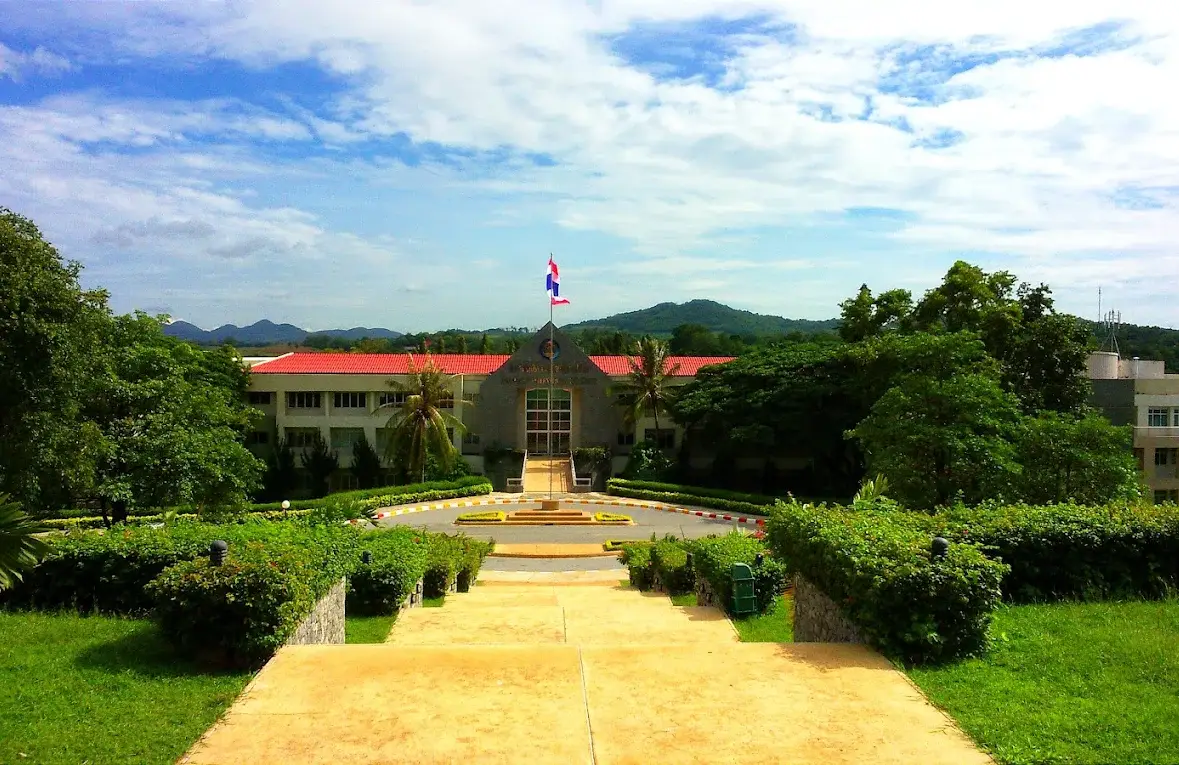
Muak Lek Campus Library Open Days: Sunday – Friday (During Regular Semesters)
Library Opening Hours: Sunday – Thursday 08:00 – 21:30; Friday 08:00 – 16:00
Asia-Pacific International University, Muak Lek Campus (AIU), is a private international university affiliated with the Seventh-day Adventist Church. Its main campus is located at 195 Moo 3, Muak Lek Subdistrict, Muak Lek District, Saraburi Province 18180, Thailand, surrounded by green hills, landscaped grounds, and the natural scenery of the region between Central and Northeastern Thailand. The university developed from the combined heritage of three educational institutions: Southeast Asia Union College in Singapore, the Mission Hospital School of Nursing in Bangkok, and Mission College in Muak Lek. On June 30, 2009, the institution formally adopted its present name and university status. Today, Asia-Pacific International University is known for international education, English-language studies, business administration, education, information technology, bioscience, nursing, and Christian studies. Its educational philosophy emphasizes the development of the whole person, including intellectual, physical, emotional, social, spiritual, and ethical growth.
The Muak Lek Campus is the principal academic and residential center of Asia-Pacific International University. Its distinctive character is that of a residential learning community, where academic buildings, a library, student residence halls, dining facilities, recreational spaces, a church, and student activity areas operate within the same campus. This arrangement allows education to extend beyond the classroom into everyday life, encouraging social interaction, cultural exchange, personal development, and community participation.
Muak Lek District differs considerably from Thailand's major urban centers. Its landscape includes rolling hills, wooded areas, streams, and agricultural communities. The university's surroundings therefore provide a relatively quiet atmosphere for study and residential life. The institution highlights its green setting, scenic hills, colorful flowers, and fresh air as important features of the campus experience, particularly for students arriving from other Thai provinces or overseas.
According to the university's published Quick Facts page, Asia-Pacific International University has 1,209 students, with 39 countries represented within its student community. These figures illustrate the multicultural nature of campus life, where students and staff come from different linguistic, cultural, and national backgrounds. Such diversity gives students opportunities to develop intercultural communication, mutual respect, adaptability, and cooperation through daily interaction rather than classroom study alone.
The history of Asia-Pacific International University is distinctive because the present institution did not originate from a single school or founding event. Instead, it emerged through the development and eventual integration of several educational institutions associated with the Seventh-day Adventist Church. This international educational movement emphasizes holistic development, based on the belief that good education should combine intellectual achievement, professional competence, personal health, ethical responsibility, and meaningful service to others.
One of the oldest historical roots of the university can be traced to Southeast Asia Union College, or SAUC, in Singapore. This institution began as a small school in 1905 and gradually developed into a training institution preparing students for religious and professional service. Over subsequent decades, it expanded its academic offerings and achieved college status. By the 1980s, it had developed higher education pathways through affiliations with institutions in the United States, including internationally oriented degree programs.
The educational experience accumulated by Southeast Asia Union College was important to the later development of the institution in Thailand. SAUC contributed a tradition of English-medium instruction, international academic administration, and educational cooperation across national boundaries. These strengths eventually became part of the foundation for the international programs developed at the new university campus in Muak Lek.
Another major historical foundation developed in Thailand through the healthcare activities of Seventh-day Adventist missionaries. Their medical work was associated with the establishment of hospital services and nursing education in Bangkok. Dr. Raff F. Waddale and his wife are among the figures connected with the early development of Mission medical and nursing education in Thailand. Their work preceded the opening of the Mission Hospital School of Nursing in 1947.
In 1947, the Mission Hospital School of Nursing began offering a three-year nursing course intended to prepare personnel for patient care and healthcare service. In 1955, the school expanded its educational activities by introducing a six-month midwifery course. Another important event occurred in 1958, when Queen Sirikit presided over the opening of a new three-story residential and classroom building. These milestones reflect the gradual development of professional nursing education under the Adventist healthcare tradition in Thailand.
In 1986, the Mission Hospital School of Nursing received approval to become a higher education institution under the name Mission College. The Faculty of Nursing became the institution's first academic faculty. This transformation was significant because it strengthened the provision of undergraduate nursing education and established an institutional framework for expanding into other academic disciplines.
The history of the Muak Lek campus began when Mission College initiated development of an educational site in Muak Lek District, Saraburi Province, in 1988, followed by further expansion around 1990. The purpose was to provide a learning environment for Thai Adventist youth and students from other backgrounds. The campus also incorporated the educational work of the Thailand Adventist Seminary, which had previously provided ministerial training. These developments established Muak Lek as an important location for both professional education and religious studies.
During its early years in Muak Lek, Mission College developed degree programs in business administration, accounting, management, and English. Several four-year academic programs received government approval in 1993, and the campus celebrated its first graduation in 1994. This period marked the establishment of a broader academic identity that extended beyond the original nursing-focused institution in Bangkok.
Another significant development began in 1996, when plans emerged to relocate and integrate international higher education programs from Southeast Asia Union College in Singapore with Mission College in Thailand. The Singapore institution faced the loss of its existing property as a result of major urban development plans. Rather than ending its international academic mission, the educational network sought to preserve its experience and academic programs through a new institution in Muak Lek.
By 1997, the integration process had become increasingly substantial. The new institution combined the international educational experience and academic programs of Southeast Asia Union College with the Thai-language programs developed by Mission College, while continuing nursing education in Bangkok. The vision was to establish a Living and Learning Center, a residential university community where academic facilities, student accommodation, staff residences, and a church would function together as part of a shared educational environment.
The development of new international curricula progressed during the following years. In 1999, a newly designed international degree program received government approval, and by early 2001, the institution had expanded its range of internationally oriented academic programs. This expansion coincided with growing demand for English-medium higher education and international academic opportunities in Southeast Asia.
Alongside academic development, the Muak Lek Campus underwent substantial physical expansion. New academic buildings, student facilities, and campus infrastructure were constructed, while extensive landscaping helped create an attractive residential environment. The university's institutional history states that most of the major building and landscaping work had been completed by July 2002. The resulting campus reflected the intention to create a place where students could live, learn, work, and participate in community activities within one integrated setting.
The institution's success in attracting international students and providing educational services gained additional recognition in 2005, when it received the Prime Minister's Export Award. This recognition supported the institution's growing profile as an international education provider. Following further institutional development, Mission College formally became Asia-Pacific International University on June 30, 2009, marking its transition to university status under its present name.
These historical milestones should be distinguished carefully. The year 1905 refers to the earliest Singapore educational heritage; 1947 marks the opening of the nursing school in Bangkok; 1986 marks the establishment of Mission College as a higher education institution; 1988 marks the beginning of the Muak Lek campus development; and 2009 marks the adoption of the present university name and status. Understanding this chronology helps explain why different sources may describe different founding years for the institution.
Asia-Pacific International University is affiliated with the international Seventh-day Adventist education network and is owned and operated through the Southeast Asia Union Mission of the Church. This association connects the university with a wider educational community extending across many countries. Its international relationships support academic exchanges, cooperation between institutions, and the development of educational approaches informed by shared principles of service, ethics, and holistic learning.
According to the university's current administration information, Dr. Jarurat Sriratanaprapat has served as university president since 2023. The university's leadership emphasizes the development of students in multiple dimensions, including professional knowledge, intellectual capacity, life skills, emotional resilience, spiritual development, social responsibility, and the ability to engage meaningfully with people from different cultures.
One of the institution's defining characteristics is its commitment to holistic Christian education. This philosophy recognizes that students' educational development involves more than academic achievement. It also includes physical well-being, emotional maturity, ethical judgment, social relationships, spiritual awareness, and personal responsibility. The aim is to prepare graduates who are competent in their professions while also capable of contributing positively to families, communities, and society.
These principles influence the everyday life of the university. Students have opportunities to participate in spiritual activities, community programs, leadership development, counseling, and extracurricular initiatives that encourage personal growth. The university also welcomes students from a range of religious and cultural backgrounds, while maintaining institutional expectations and practices consistent with its Christian educational philosophy.
The multicultural nature of the university is another important part of its identity. Students from different countries bring their own languages, food traditions, music, artistic practices, and social experiences into university life. Cultural activities and student clubs provide opportunities for them to share these traditions. Such interactions help students become more comfortable working in diverse groups and develop the cultural awareness required in international academic and professional environments.
In January 2026, the university welcomed a delegation from Sahmyook University in South Korea, including a pastor and students, for a program combining volunteer service, cultural exchange, and spiritual activities. The visiting students introduced Korean traditional games, Dalgona candy-making, Hanbok clothing, and Korean food. The activities offered opportunities for international friendship and practical cultural learning, illustrating the university's relationship with educational institutions in other countries.
Religious traditions at Asia-Pacific International University reflect the practices of the Seventh-day Adventist Church. Saturday is observed as the Sabbath, an important day for worship, Bible study, fellowship, and spiritual reflection. The university's campus therefore includes regular religious programs and community activities that form an important part of life for students and personnel who participate in the Adventist tradition.
The Asia-Pacific International University Church is located within the Muak Lek Campus. Its regular programs include Friday evening worship at 19:00, Saturday morning Sabbath School and worship services, and activities for Adventist youth on Saturday afternoon or evening. The church serves as both a place of worship and a center for community relationships, pastoral support, and spiritual development within the university environment.
In September 2026, the university organized its annual Faith Festival under the theme A Life Journey of Faith. Held from September 7 to 12 at the Kiti-Tasanee Auditorium, the program brought students, faculty members, and staff together for worship, reflection, and spiritual renewal. The event demonstrated the university's continuing commitment to integrating religious and personal development with academic education.
Student participation in university governance and campus activities is also significant. The Student Council for the 2026–2027 academic year includes positions connected with religious activities, Thai and international arts and culture, sports, academic affairs, and student welfare. These responsibilities help students develop leadership, organizational skills, communication abilities, and the capacity to work with people from different backgrounds.
Among the university's important facilities, the Library and Information Center provides essential support for academic study and research. Its services include books, journals, electronic academic resources, online databases, and learning spaces for individual and collaborative study. The library also provides digital collections and information-search services supporting the academic needs of students and university staff.
During regular semesters and examination periods, the university's published library schedule specifies opening hours from Sunday to Thursday, 08:00 to 21:30, and Friday, 08:00 to 16:00. During semester breaks, the published schedule is Sunday to Friday, 08:00 to 12:00. The library is closed on Saturdays and public holidays according to its published timetable. These arrangements reflect the university's academic needs and the religious practices of its institutional community.
The third floor of the university library houses the Ellen G. White Research Center, which provides resources relating to the history, writings, and educational and religious ideas of Ellen G. White. She is an important historical figure associated with the Seventh-day Adventist movement. The center is therefore valuable for individuals studying Adventist history, theology, religious thought, and the philosophy of Christian education.
The Kiti-Tasanee Auditorium is another significant campus facility. It accommodates major gatherings, worship programs, performances, and university-wide activities. The campus also includes teaching buildings and a Science Building supporting academic programs requiring laboratories and practical scientific study. These facilities are part of the university's wider objective of combining academic learning with extracurricular and community experiences.
Student residences are an essential feature of the university's residential campus model. The university publishes information about residence halls including Ruth Hall, Esther Hall, Solomon Hall, and Elijah Hall, each supported by residence staff. Living on campus allows students from Thailand and overseas to stay close to classrooms, the library, recreational facilities, dining areas, and organized campus activities.
The university cafeteria is an important gathering place and a distinctive feature of campus life. It offers vegetarian meals and food choices intended to accommodate students from different cultural backgrounds. Beyond its role in providing daily nutrition, the cafeteria serves as a social space where students, teachers, and staff meet informally and develop relationships across cultural and linguistic boundaries.
Sports and physical recreation are also included in the university's approach to holistic education. Sports facilities, internal walking routes, and student clubs encourage regular exercise and participation in group activities. This emphasis on physical well-being is consistent with Adventist educational principles, which view health, balanced living, and personal discipline as important components of overall development.
Academically, the university publishes information about seven faculties: Arts and Humanities, Business Administration, Education, Information Technology, Nursing, Religious Studies, and Science. These faculties provide educational opportunities through Thai-language and international programs according to their respective curricula. Some degree programs contain several emphasis areas or academic strands, allowing students to focus on particular interests without necessarily pursuing separate degrees.
The Faculty of Arts and Humanities has a particularly strong focus on English-language education. It provides Bachelor of Arts programs in English through both international and Thai-language curricula. Published emphasis areas include Teaching English to Speakers of Other Languages (TESOL), Communication, and Business within the international program, while the Thai program includes fields associated with English for Communication and English for Business.
English education at Asia-Pacific International University involves more than grammar and vocabulary. Students also study intercultural communication, critical thinking, professional writing, public speaking, and digital communication skills. The university additionally provides an English as a Second Language (ESL) program for students and professionals who wish to improve their English proficiency before entering degree programs or for broader career development.
The Faculty of Business Administration offers academic pathways in business management, accounting, and marketing through Thai and international curricula. Learning activities emphasize practical business knowledge, teamwork, leadership, responsible decision-making, and ethical management. The university also offers a Master of Business Administration program for students seeking further professional and academic development in business-related disciplines.
The Faculty of Education prepares students for careers in teaching and educational leadership. Its published academic portfolio includes a Bachelor of Education in Elementary Education and a Master of Education. The master's program provides emphasis areas in Educational Administration, Curriculum and Instruction, and Teaching English to Speakers of Other Languages. These fields are relevant to the development of teachers, school leaders, curriculum specialists, and education professionals in Southeast Asia and other regions.
The Faculty of Information Technology focuses on computing and the practical use of information systems. Students study how organizations use technology to manage information, improve operations, analyze problems, and develop digital solutions. These skills are relevant to businesses, educational institutions, public organizations, and other workplaces that increasingly depend on computer-based systems and digital information management.
The Faculty of Science offers a Bioscience program with published emphasis areas in Biology, Clinical Laboratory Science, and Community Public Health. These areas introduce students to living systems, scientific investigation, laboratory analysis, and the application of scientific knowledge to health-related and community needs. The program also supports the development of practical scientific skills and the ability to evaluate evidence.
The Faculty of Religious Studies provides education in Christian Studies, preparing students for religious, community, and service-related work. The curriculum emphasizes biblical knowledge, theological understanding, ethical responsibility, leadership, and practical ministry experience. The academic study of religion is combined with opportunities to develop skills applicable to service within faith communities and wider society.
The Mission Faculty of Nursing has a particularly important place in the history of Asia-Pacific International University. It offers Bachelor of Nursing Science programs in both Thai and international curricula, with the university publishing information about a new international nursing curriculum for 2026. Nursing education is associated with the university's Bangkok campus on Phitsanulok Road in Dusit District. Prospective students should therefore distinguish the Muak Lek Campus from the Bangkok nursing location when checking their teaching and clinical training arrangements.
At graduate level, the university publishes programs leading to the Master of Business Administration and Master of Education. Students may pursue relevant fields of emphasis, including Accounting, Management, Educational Administration, Curriculum and Instruction, and TESOL. These areas of specialization should not automatically be counted as entirely separate degree programs, since multiple emphasis options may exist within a single officially approved curriculum.
Research and community service are important parts of the university's educational mission. Academic faculties encourage students to apply knowledge to practical needs and social challenges in areas such as business, education, health, language development, and community well-being. These activities support the university's broader objective of preparing graduates who can contribute to society rather than focusing exclusively on individual academic achievement.
A recent example of community engagement occurred in September and October 2026, when the university supported residents affected by flooding in Muak Lek District. On September 27, university representatives distributed 100 meal boxes and first-aid kits to affected residents in Ban Tha Sao. On October 4, students and faculty members from the Faculty of Business Administration delivered 30 relief packages containing food and household necessities to families experiencing hardship. These projects demonstrate the practical application of the university's commitment to compassion and service.
The university also contributes to the local economy and community life of Muak Lek. Students and staff create demand for food, transportation, accommodation, and everyday goods and services, while volunteer activities, academic cooperation, and international visitors encourage relationships between the university and nearby communities. The presence of an international university in a largely rural district also creates opportunities for local cultural exchange and educational engagement.
For visitors interested in educational tourism, the Muak Lek Campus offers an opportunity to learn about residential international education, Christian educational philosophy, multicultural student life, and the integration of academic facilities with green surroundings. Important features include the university church, library, research center, academic buildings, and landscaped areas. The campus is particularly interesting for groups studying the relationship between education, community service, faith, and personal development.
However, Asia-Pacific International University remains an active educational and residential institution. Access to teaching buildings, laboratories, student accommodation, library areas, and other facilities may be restricted or require authorization. Individuals and groups wishing to arrange a campus visit or academic study tour should contact the university in advance to confirm permitted areas and appointment arrangements.
Muak Lek District also provides numerous opportunities for nature tourism and agricultural learning. Nearby destinations include Muak Lek Arboretum, Muak Lek Waterfall, Chet Sao Noi National Park, Dong Phaya Yen Waterfall, Muak Lek Reservoir, and the Thai-Denmark Dairy Farm. These attractions allow visitors to combine university-related activities with nature walks, waterfall visits, environmental learning, and an introduction to Thailand's dairy farming heritage.
Getting There by private car from Bangkok is possible via Phahonyothin Road toward Saraburi Province, followed by Mittraphap Road, or Highway 2, in the direction of Muak Lek. Travelers should then follow the appropriate connecting roads and use a navigation application to locate Asia-Pacific International University, Muak Lek Campus. Entering the full university name and Muak Lek location is important to avoid confusion with the university's nursing campus in Bangkok.
Public transportation is another option. Travelers may use railway or intercity bus services serving the Muak Lek area and then continue to the university by locally available hired transport. Railway passengers should check the current operating station and train timetable with the State Railway of Thailand. Bus passengers should confirm the most convenient stop and local transfer arrangements before beginning the journey.
Visitors arriving from Nakhon Ratchasima Province or the Khao Yai region can travel along Mittraphap Road toward Muak Lek and continue to the university using local connecting roads. Because this corridor serves popular tourist destinations, additional travel time may be needed during holidays and busy travel periods. Planning the journey in advance is particularly important for visitors attending examinations, admissions appointments, academic meetings, or scheduled university activities.
For administrative inquiries, prospective students and visitors can contact the university at +66 36 720 777. Published extensions include 1000 for the operator, 1114 for Thai-language admissions inquiries, and 1116 for English-language admissions and registration inquiries. Confirming the relevant office's working schedule before traveling is recommended, as individual university departments may follow different operating arrangements.
Asia-Pacific International University, Muak Lek Campus, is therefore an important institution in Thailand's international higher education landscape. Its history connects educational institutions in Singapore and Thailand, professional nursing education, Christian educational values, and the development of a multicultural residential campus in Saraburi Province. Since adopting its present university name in 2009, the institution has continued to provide educational opportunities in English, business, education, science, technology, nursing, and religious studies, while encouraging students to develop knowledge, character, leadership, and social responsibility in a naturally scenic environment.
| University Name | Asia-Pacific International University, Muak Lek Campus (AIU) |
| Thai Name | มหาวิทยาลัยนานาชาติเอเชีย-แปซิฟิก วิทยาเขตมวกเหล็ก |
| Institution Type | Private International University Affiliated With The Seventh-day Adventist Church |
| Address | 195 Moo 3, Muak Lek Subdistrict, Muak Lek District, Saraburi Province 18180, Thailand |
| Reference Coordinates | 14.67407, 101.17687 |
| Historical Roots | Southeast Asia Union College, Singapore; Mission Hospital School Of Nursing, Bangkok; And Mission College, Muak Lek |
| Earliest Institutional Heritage | 1905, Singapore |
| Mission Nursing School Opening | 1947 |
| Establishment Of Mission College | 1986 |
| Beginning Of Muak Lek Campus Development | 1988 |
| Present University Name And Status | June 30, 2009 |
| Years Since University Status In 2026 | 17 Years |
| Important Founding Institutions And Individuals | Seventh-day Adventist Education Network, Southeast Asia Union College, And Dr. Raff F. Waddale And His Wife In The History Of Mission Nursing Education |
| University President | Dr. Jarurat Sriratanaprapat, According To The University's Current Administration Page |
| Educational Philosophy | Holistic Education Emphasizing Knowledge, Ethics, Health, Leadership, Spiritual Development And Service To Society |
| Institutional Network | Seventh-day Adventist International Higher Education Network |
| Faculties | 1. Faculty Of Arts And Humanities 2. Faculty Of Business Administration 3. Faculty Of Education 4. Faculty Of Information Technology 5. Mission Faculty Of Nursing 6. Faculty Of Religious Studies 7. Faculty Of Science |
| Other Campus | Bangkok Campus, Mission Faculty Of Nursing, 430 Phitsanulok Road, Dusit District, Bangkok 10300, Thailand |
| Academic Strengths | English And TESOL, Business Administration, Education, Information Technology, Bioscience, Nursing And Christian Studies |
| Important Campus Facilities | Library And Information Center, Ellen G. White Research Center, Kiti-Tasanee Auditorium, University Church, Science Building And Student Residence Halls |
| Traditions And Activities | Sabbath Worship, Annual Faith Festival, Student Clubs, International Cultural Exchange And Community Service Projects |
| Campus Facilities | Academic Buildings, Laboratories, Library, Student Residence Halls, Vegetarian Cafeteria, Sports Facilities, Church And Student Support Services |
| Library Open Days During Regular Semesters | Sunday – Friday; Closed On Saturdays And Public Holidays |
| Library Hours During Regular Semesters | Sunday – Thursday 08:00 – 21:30; Friday 08:00 – 16:00 |
| Library Hours During Semester Breaks | Sunday – Friday 08:00 – 12:00 |
| University Church Office Hours | Monday – Thursday 08:00 – 17:00; Friday 08:00 – 13:00 |
| Campus Visits | Advance Permission And Coordination Recommended For Study Tours And Access To University Facilities |
| Getting There | From Bangkok Via Phahonyothin Road And Mittraphap Road Toward Muak Lek; Railway Or Intercity Bus Connections May Be Combined With Local Hired Transport |
| Nearby Attractions | 1. Muak Lek Arboretum, Tel. +66 36 344 100 2. Thai-Denmark Dairy Farm, Tel. +66 91 890 6335 3. Chet Sao Noi National Park, Tel. +66 36 346 586 4. Dong Phaya Yen Waterfall 5. Muak Lek Reservoir |
| Restaurants And Cafés In Muak Lek | 1. Farmito Arigato Cafe And Farm, Tel. +66 81 496 5979 2. Marderla, Tel. +66 61 674 4099 3. Srifa Thai Homemade, Tel. +66 86 534 0414 4. Penny's Kitchen, Tel. +66 81 293 5429 5. Choc A Bloc Cafe & Bistro, Tel. +66 62 284 9561 |
| Accommodation In Muak Lek | 1. The Breezy Hotel, Tel. +66 84 524 3355 2. Muaklek Paradise Resort, Tel. +66 64 952 1766 3. Zantiis Ndol Villas, Tel. +66 84 341 8484 4. Sir James Resort, Tel. +66 36 341 200 5. Farmsook Glamping Muak Lek, Tel. +66 82 737 4477 |
| University Telephone | +66 36 720 777 |
| Telephone Extensions | Operator 1000; Thai Admissions 1114; English Admissions 1116 |
| Official Website | https://www.apiu.edu/ |
| Current Status | Operating Private International University With Its Main Campus In Muak Lek, Saraburi Province |
Asia-Pacific International University Academic Programs For The 2026 Academic Period (Based On Published University Program Information And Academic Bulletin 2024 – 2026)
| Faculty / Campus | Academic Programs And Emphasis Areas |
| Faculty Of Arts And Humanities Muak Lek Campus | Bachelor's Degree 1. Bachelor Of Arts In English (International Program) Published Emphasis Areas: TESOL, Business English, Communication, And English For Professional Purposes 2. Bachelor Of Arts In English (Thai Program) Published Emphasis Areas: English For Communication And English For Business |
| Faculty Of Business Administration Muak Lek Campus | Bachelor's Degree 1. Bachelor Of Business Administration (International Program) Published Emphasis Areas: Accounting And Management 2. Bachelor Of Business Administration (Thai Program) Published Emphasis Areas: Modern Business Management And Marketing Management 3. Bachelor Of Accountancy (Thai Program) Master's Degree 4. Master Of Business Administration (International Program) Published Emphasis Areas: Accounting And Management |
| Faculty Of Education Muak Lek Campus | Bachelor's Degree 1. Bachelor Of Education In Elementary Education (International Program) Master's Degree 2. Master Of Education In Education (International Program) Published Emphasis Areas: Educational Administration, Curriculum And Instruction, And Teaching English To Speakers Of Other Languages (TESOL) |
| Faculty Of Information Technology Muak Lek Campus | Bachelor's Degree 1. Bachelor Of Science In Information Technology (International Program) |
| Mission Faculty Of Nursing Including The Bangkok Campus | Bachelor's Degree 1. Bachelor Of Nursing Science (Thai Program) 2. Bachelor Of Nursing Science (International Program, Including The 2026 Curriculum Version Published By The University) |
| Faculty Of Religious Studies Muak Lek Campus | Bachelor's Degree 1. Bachelor Of Arts In Christian Studies (International Program) |
| Faculty Of Science Muak Lek Campus | Bachelor's Degree 1. Bachelor Of Science In Bioscience (International Program) Published Emphasis Areas: Biology, Clinical Laboratory Science, And Community Public Health |
| English Language Preparation Muak Lek Campus | Non-Degree Program 1. English As A Second Language (ESL), Designed To Support English Proficiency Development Before University Study Or For Professional Purposes |
Frequently Asked Questions (FAQ)
Q: Where is Asia-Pacific International University's Muak Lek Campus located?
A: The main campus is located at 195 Moo 3, Muak Lek Subdistrict, Muak Lek District, Saraburi Province 18180, Thailand.
Q: What are the opening days and hours of Asia-Pacific International University?
A: The Muak Lek Campus library opens during regular semesters from Sunday to Thursday, 08:00 to 21:30, and on Friday, 08:00 to 16:00. It is closed on Saturdays and public holidays. Visitors should confirm general administrative office hours directly with the university because departmental schedules differ.
Q: When was Asia-Pacific International University founded?
A: The university has historical roots in an educational institution established in Singapore in 1905, a nursing school opened in Bangkok in 1947, and the Mission College campus developed in Muak Lek beginning in 1988. The institution formally adopted its present name and university status on June 30, 2009.
Q: Who founded Asia-Pacific International University?
A: The university emerged through the integration of institutions within the Seventh-day Adventist education network rather than the work of a single founder. Its major historical foundations include Southeast Asia Union College, the Mission Hospital School of Nursing, and Mission College.
Q: What is Asia-Pacific International University known for?
A: The university is known for international education, holistic student development, English-language studies, business administration, education, information technology, bioscience, and a multicultural residential learning environment influenced by Christian values and community service.
Q: What faculties and programs are available at Asia-Pacific International University?
A: The university publishes information about seven faculties: Arts and Humanities, Business Administration, Education, Information Technology, Nursing, Religious Studies, and Science. Its academic portfolio includes bachelor's and master's degrees, as well as an English as a Second Language preparation program.
Q: How many campuses does Asia-Pacific International University have?
A: The university lists two main locations: the Muak Lek Campus in Saraburi Province and the Bangkok Campus associated with the Mission Faculty of Nursing.
Q: Can visitors tour Asia-Pacific International University?
A: Individuals and groups wishing to visit the campus should contact the university in advance, particularly if they intend to enter academic buildings, laboratories, student residences, or other restricted facilities. For information, call +66 36 720 777.
 Category: ●University
 Group: ●Private University
Last Update : 2 DayAgo
 Last Update : 2 DayAgo
 Click to Access the Navigation Map GPS
Asia-Pacific International University (Muak Lek Campus) Map
Recommend

 Art, Culture and Heritage
 Historical Sites and Monuments(2)
 Landmarks and Memorials(2)
 Royal Palace(4)
 Art, Craft Centres, Tradition(4)
 Museums(1)
 Educational Places
 Museum for Study(1)
 Educational Gardens, Farm(2)
Private University(1)
 Places of Worship
 Temple(8)
 Other Sacred Sites(6)
 Research and Development
 Royal Project(1)
 Suburban Living
 Village, Community(3)
 Nature and Wildlife
 National Parks and Marine Reserves(3)
 Mountain (Doi)(3)
 Waterfalls(5)
 Caves(6)
 Flower Field(1)
 River, Canal(1)
 Bays and Beaches(1)
 Other natural attractions(2)
 Entertainment and Agricultural
 Zoos and Aquariums(1)
 Animal camps and shows(1)
 Farms, Parks and Ecotourism(8)
 Outdoor and Adventure Activities(1)
 Travel Articles, Recipes
 Travel Review, Food Review(1)


