
lovethailand home >North Travel Attractions >Lampang Travel Attractions >Mueang Lampang >Phra Bat > Nation University Lampang
TL;DR: Nation University Lampang is located at 444 Moo 2, Vajiravudh Damnoen Road, Phra Bat Subdistrict, Mueang Lampang District, Lampang 52000, Thailand, open Monday – Friday (Closed on Saturdays and Sundays), hours 08:00 – 17:00.

Nation University Lampang
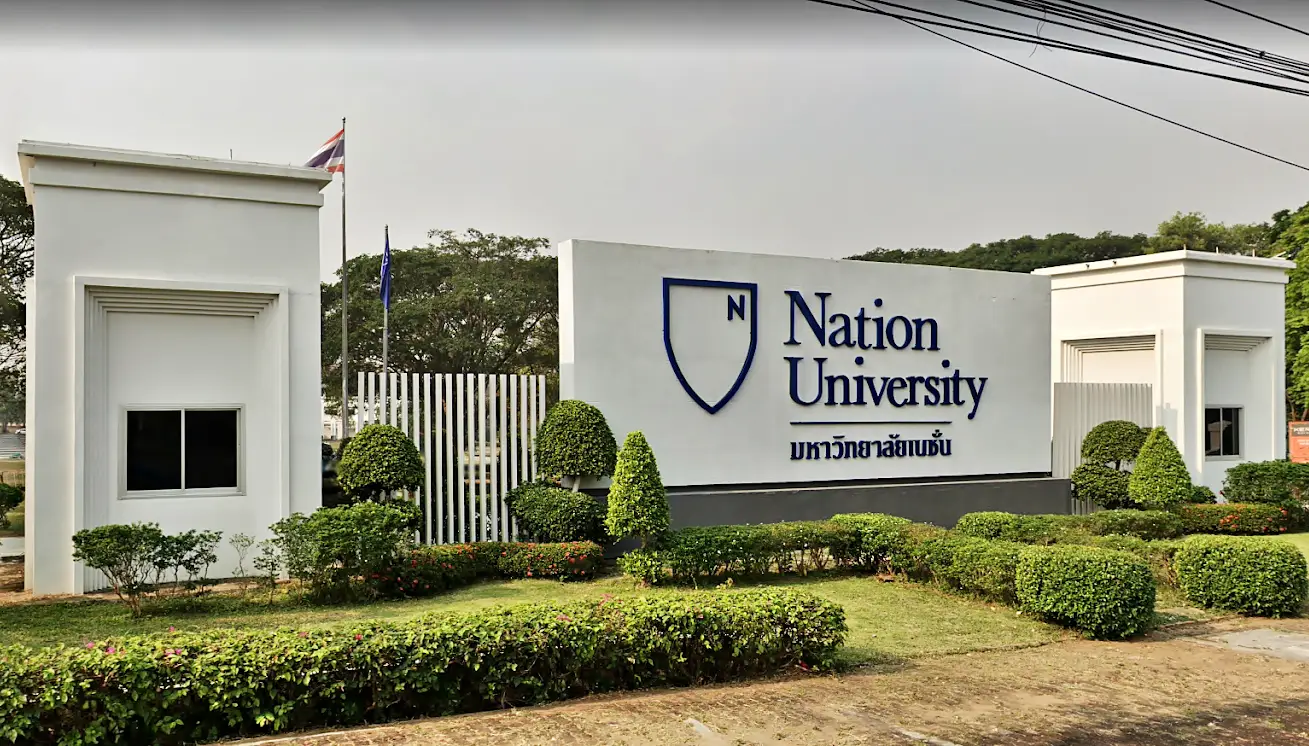
Open Days: Monday – Friday (Closed on Saturdays and Sundays)
Opening Hours: 08:00 – 17:00
Nation University, Lampang is a private higher education institution with a long history in Lampang Province, Northern Thailand. Its campus is located at 444 Moo 2, Vajiravudh Damnoen Road, Phra Bat Subdistrict, Mueang Lampang District, Lampang 52000. The university originated as Yonok College, which began teaching in 1988 under the administration of the Yonok Foundation, with Dr. Niran Jiwasantikarn playing a central role in its establishment. The institution was granted university status under the name Yonok University on August 23, 2006, before officially becoming Nation University on November 30, 2011. By 2026, its institutional history extended over 38 years. At the Lampang campus, the Faculty of Nursing and Faculty of Medical Technology are the principal health sciences faculties, supported by the Liberal Arts and Sciences Division. The university also operates Chiang Mai Campus, where academic activities include Dentistry, Pharmacy, Nursing, and Medicine, together with postgraduate programs advertised through its dedicated admissions channels. Nation University emphasizes the development of professional skills, life skills, and creative skills, preparing students to apply academic knowledge responsibly in their careers and contribute to society.
The establishment of Nation University is closely connected with the development of private higher education in Northern Thailand. Private universities and colleges helped expand opportunities for students who were unable or unwilling to relocate to Bangkok for further education. Lampang has long been an important regional center for transportation, commerce, and Lanna culture, with strong connections to Chiang Mai, Lamphun, Phrae, and other Northern provinces. The creation of Yonok College represented an effort to establish a regional institution capable of preparing graduates for professional work while contributing to economic and social development within Northern Thailand.
The original idea for Yonok College came from Dr. Niran Jiwasantikarn, who wanted to establish a high-quality institution of higher education in Lampang, his home province. His vision developed while he was studying for a doctorate in Educational Administration at Baylor University in the United States. He believed that educational opportunities should form part of regional development and that provincial communities would benefit from having universities capable of providing strong academic programs close to home. His intention was to offer students opportunities for professional and intellectual development without making migration to major cities the only path to university education.
Dr. Niran regarded Lampang as a suitable location for higher education because of its transportation connections, historical significance, and environment conducive to study. Developing a university in the province could help retain skilled people and support economic growth in the surrounding region. The initiative reflected a broader belief that education should contribute to the development of local communities, not merely prepare graduates to seek employment elsewhere. This philosophy became an important part of Yonok College's early institutional identity.
The establishment project received support from individuals and organizations in Thailand and overseas. Historical accounts describe cooperation involving Baylor University, American educational foundations, and international development assistance, together with contributions of land and academic resources. This network of supporters helped the institution begin developing its educational facilities, administrative systems, and learning resources. The project was distinctive in its attempt to combine regional educational needs with international experience in university development.
Dr. Niran Jiwasantikarn and his mother, Toey Jiwasantikarn, contributed to the project through land and other support. Historical records describe an initial donation of 25 rai. Another important figure was Dr. Supachai Panitchpakdi, who served in leading roles connected with the college council and the Yonok Foundation. Cooperation among the institution's founder, administrative leaders, and supporting organizations provided a foundation for the development of academic buildings, educational services, and institutional governance.
In 1988, Yonok College received authorization to begin operations and started teaching its first students. The Faculty of Business Administration was the first academic faculty, offering studies in Accountancy, Management, Marketing, and Business Computing. These fields were closely aligned with Thailand's expanding commercial and service sectors. Business education provided opportunities for students intending to work in private enterprises, manage organizations, or develop their own businesses in Northern Thailand.
The college initially operated at its Si Pong Chai campus, which contained academic buildings and an educational resource center. The development of attractive and functional facilities was an important aspect of the new institution's educational philosophy. Academic planning was accompanied by attention to architecture and landscaping, reflecting the desire to create a university environment that supported both formal instruction and student life.
Shortly after its establishment, Yonok College expanded into Communication Arts. Early programs included Advertising and Public Relations, as well as Journalism and Publishing. These fields responded to growing demand for people with professional communication skills during a period when mass media, advertising, and corporate communication were expanding. The introduction of Communication Arts demonstrated that the college was developing beyond business education into a broader range of professional disciplines.
In 1990, Yonok College relocated its teaching activities to the Doi Phra Bat area, the site of present-day Nation University in Lampang. Historical descriptions identify the larger university development project as occupying more than 150 rai. The move allowed the institution to create a campus with academic buildings, student residences, sports facilities, and recreational spaces within one extensive setting. This physical development followed the concept of an educational park, in which the campus environment was intended to provide opportunities for learning, residence, and community life.
The development of the Doi Phra Bat campus included facilities for Business Administration and computer education, as well as buildings associated with Liberal Arts and Communication Arts. One important building was later named the Chumphon Pornprapha Building in 1993. The structure remains connected with the university's academic history and currently houses the Faculty of Medical Technology's administrative office. Its continuing use demonstrates the relationship between the original Yonok College campus and the university's present health sciences activities.
In the same year as the relocation, Dr. Niran Jiwasantikarn transferred the institution's operations and assets to the Yonok Foundation to support its long-term educational development. This decision was important to the college's administrative structure because the resources involved in establishing the institution became part of a foundation dedicated to educational purposes. It also provided a framework for the continued development of programs and academic facilities.
In 1991, Yonok College introduced Liberal Arts programs, including Business English and Organizational Psychology. This expansion increased the diversity of academic opportunities and provided students with knowledge relevant to professional communication and human behavior in organizations. Language education was particularly valuable for businesses interacting with wider markets, while Organizational Psychology supported understanding of workplace relationships, personnel development, and organizational performance.
In 1992, Yonok College cooperated with the National Institute of Development Administration in offering postgraduate education in Public Administration. In 1994, it introduced a Master of Business Administration program designed for executives. These developments showed that the institution was already extending its role beyond undergraduate education to support working professionals seeking advanced knowledge in management, organizational leadership, and public administration.
The college continued expanding its study options in the following years. In 1996, it introduced an English-language Bachelor of Business Administration in Management, and in 1997 it offered a continuing Business Administration program for students with previous qualifications. These arrangements helped accommodate people with different educational backgrounds and professional circumstances. The development of English-medium business education also reflected the increasing importance of international communication in Thailand's commercial sector.
The name Yonok has historical and cultural associations with Northern Thailand and the Lanna region. It refers to people and territories connected with traditional narratives about the Northern region. Choosing this name reflected the founders' intention to create a higher education institution rooted in regional identity. The original Yonok College emblem incorporated circular forms and a northern star, expressing an educational vision linked with the direction and cultural heritage of Northern Thailand.
On August 23, 2006, the Ministry of Education authorized Yonok College to change its institutional category from a private college to a university, adopting the name Yonok University. The transition reflected the institution's academic development and its wider range of higher education activities. University status represented an important milestone in institutional administration and the development of its educational mission.
On November 30, 2011, the Ministry of Education approved the change of name from Yonok University to Nation University. The renaming was associated with changes in institutional administration and a new phase of development. However, the history of the present university remains continuous with Yonok College, which began teaching in 1988. It is therefore important to distinguish 3 major dates: 1988, when the original institution began operating; 2006, when it was granted university status; and 2011, when the name Nation University was adopted.
Following the name change, Nation University continued emphasizing practical knowledge and professional education. In later years, the institution increasingly focused on health sciences, particularly Nursing and Medical Technology. These disciplines are important to healthcare delivery and require highly specialized teaching staff, laboratories, clinical training arrangements, and professional standards. Developing health sciences education therefore represented a significant shift in the university's academic direction.
The Faculty of Medical Technology was formally established following a resolution of the Nation University Council on August 31, 2018. On November 27 of the same year, the university approved the original Bachelor of Science in Medical Technology curriculum, designated as a new curriculum for 2019. The faculty was developed to prepare professionals qualified to conduct laboratory examinations that support medical diagnosis, treatment monitoring, and the evaluation of patient health.
The Faculty of Medical Technology operates at the Lampang campus, with its administrative office located in the Chumphon Pornprapha Building. Assistant Professor Yupalapat Supalertpurin served as the faculty's first dean. Academic and administrative development continued in subsequent years. In 2026, Assistant Professor Dr. Yuttana Mande was serving as dean, with responsibilities involving professional education, curriculum development, and the improvement of academic quality.
In the 2025 academic year, the Faculty of Medical Technology began implementing its revised Bachelor of Medical Technology curriculum, replacing the earlier Bachelor of Science in Medical Technology program for new cohorts. The revised 2025 curriculum was developed in line with Thailand's higher education standards and an outcome-based education approach. It comprises 137 credits across general education, specialized professional studies, and free electives. This structure is intended to combine scientific knowledge with clinical laboratory competencies, professional ethics, and responsibility toward patients and society.
Medical Technology is essential to modern healthcare because laboratory results provide information used in diagnosis and monitoring. Students must develop knowledge in fields such as Clinical Chemistry, Hematology, Clinical Microbiology, Immunology, and laboratory analytical methods. Their education emphasizes the correct use of instruments, quality control, biosafety, and professional responsibility. The combination of scientific training and ethical practice is especially important because inaccurate laboratory findings can affect decisions about patient care.
The Faculty of Nursing at Nation University, Lampang, is another important academic unit in the health sciences. It offers the Bachelor of Nursing Science, originally introduced through a new curriculum in 2019 and later revised in 2025. Nursing education prepares students through medical sciences, clinical nursing knowledge, professional ethics, and practical skills. The curriculum integrates classroom learning, laboratory practice, and supervised experiences in healthcare environments.
Nursing plays a central role in the care of people throughout their lives, including newborns, children, adults, older people, and patients with complex medical conditions. Nursing students therefore study human anatomy and physiology, pharmacology, health assessment, therapeutic communication, and patient-centered care. Their professional preparation also requires sound judgment, attention to patient safety, and the ability to cooperate effectively with doctors and other healthcare professionals.
Nursing education at Nation University has been connected with practical training in healthcare facilities in Lampang Province. The university has organized activities preparing students for clinical placement and has maintained ceremonies such as the Nursing Cap and Pin Presentation. These ceremonies symbolize a student's progression toward professional clinical practice and an increasing awareness of nursing responsibilities. The university documented such an event for nursing students during the 2024 academic year.
The Liberal Arts and Sciences Division at the Lampang campus supports general education and foundational subjects associated with the university's health sciences programs. Higher education requires more than specialized technical knowledge. Students also benefit from communication skills, logical reasoning, understanding of society, digital literacy, and teamwork. Liberal Arts and Sciences therefore provide an important foundation for the personal and professional development of Nursing and Medical Technology students.
Nation University subsequently expanded its academic operations to Chiang Mai Campus, located at 515 Moo 4, Chiang Mai–Phrao Road, Nong Chom Subdistrict, San Sai District, Chiang Mai 50210. In 2026, the university's official website clearly distinguished its Chiang Mai academic units from those at Lampang. The Chiang Mai campus included the Faculty of Dentistry, Faculty of Nursing, Faculty of Pharmacy, and Faculty of Medicine. This development enabled the university to expand its range of health sciences education across Northern Thailand.
The Faculty of Dentistry offers the Doctor of Dental Surgery program and operates dental training facilities and a teaching clinic at Chiang Mai Campus. The Faculty of Pharmacy also carries out academic activities and professional education in Chiang Mai. Both Dentistry and Pharmacy require intensive scientific knowledge, specialized practical training, and compliance with professional standards. Their location should be distinguished from the Nursing and Medical Technology programs based at the university's Lampang campus.
In 2026, Nation University also advanced the development of its Faculty of Medicine, publicizing a new Doctor of Medicine curriculum and plans to admit an inaugural cohort of 32 students in the 2026 academic year. The faculty undertook activities related to academic preparation and assessment of medical education standards by relevant authorities. This development represented another stage in the expansion of health sciences education at the university. The medical program is associated with the university's Chiang Mai campus rather than the Lampang-based academic units.
Beyond undergraduate education, Nation University advertises postgraduate programs through its Graduate School and dedicated admissions services. Published programs include the Master of Business Administration, Master of Education in Educational Administration, Master of Public Health in Administration, and Master of Public Administration. These fields serve people seeking to develop expertise in organizational leadership, school administration, health systems management, and public sector governance. The university provides separate contact channels for distance-learning undergraduate programs and postgraduate applicants.
The university's combination of health sciences and management education reflects its current approach to professional development. Healthcare professionals need specialized medical knowledge, while leaders of organizations and public services require analytical, planning, and administrative skills. Connections between professional expertise and effective organizational management are particularly important in healthcare, where service quality depends on both clinical knowledge and the appropriate use of resources.
Nation University identifies 3 core dimensions of student development: Professional Skills, Life Skills, and Creative Skills. Its institutional identity emphasizes professional education and the preparation of modern graduates to serve society. These principles encourage students to develop practical competence, the ability to adapt, and creative problem-solving skills. Health sciences education particularly benefits from the integration of these qualities because professional practice depends on technical accuracy, communication, ethics, and lifelong learning.
In 2026, Assistant Professor Dr. Krisada Tanpao served as President of Nation University. The university's administration includes academic and support units serving both Lampang and Chiang Mai. Important offices include the Office of the President, Academic Affairs Office, Administration Office, Corporate Communications Office, and Research, Academic Services and Educational Quality Assurance Office. These departments support university governance, curriculum delivery, research, institutional development, and services for students and the community.
Educational quality assurance is particularly important for universities providing health sciences programs, because such fields require professional competence and compliance with academic standards. In April 2026, Nation University organized a workshop on preparing program-level self-assessment reports using the AUN-QA framework. An invited nursing education specialist shared approaches to improving academic quality assessment with university executives, lecturers, and staff. The activity supported a more systematic approach to curriculum improvement and the evaluation of learning outcomes.
Research and innovation are also among Nation University's academic responsibilities. The Faculty of Nursing and Faculty of Medical Technology publish academic work and conduct activities designed to develop the research skills of faculty members. Research in the health sciences can contribute to patient care, clinical laboratory methods, professional practice, and healthcare service quality. Students must also learn how to understand and evaluate scientific findings so they can apply appropriate evidence in professional situations.
An important example of community engagement in 2026 was an integrated academic service project to improve the quality of life of older adults and local entrepreneurs. The third annual program, known by its Northern Thai title "Chit Kai Sangkhom Bo Lom Bo Luem Bo Suem Sao Kin Khao Lam," took place on February 27, 2026, in Thung Kwao Subdistrict, Mueang Pan District, Lampang Province. Lecturers, university personnel, and students from several faculties cooperated with local administrative organizations to deliver activities concerning healthy aging and community well-being.
The project illustrates how academic knowledge in the health sciences can benefit local communities. Improving older adults' quality of life requires attention to physical health, mental well-being, social relationships, and everyday living conditions. Cooperation between healthcare educators and local organizations can make health information more accessible and relevant to community needs. It also provides students with opportunities to practice communication and teamwork while interacting with people outside the university environment.
Staff development is another part of improving university management. In September 2026, the Research, Academic Services and Educational Quality Assurance Office publicized training in dashboard design and development for data management. Effective information systems can support academic administration, program monitoring, performance analysis, and evidence-based decision-making. Digital competence therefore contributes to the development of more efficient university operations.
The Lampang campus contains academic buildings and facilities developed through successive periods since the Yonok College era. The Chumphon Pornprapha Building is an important historical structure that remains in academic use. Science laboratories and specialized teaching spaces support health sciences programs requiring practical training with instruments and equipment. Education in Medical Technology and Nursing places particular importance on environments where students can develop professional skills before undertaking external clinical training.
Medical Technology laboratories are essential for training in analytical procedures, instrument operation, and quality assurance. Nursing education requires practical spaces for developing patient care skills, clinical communication, and professional procedures. The availability of suitable equipment and supervised training environments is therefore a major element of educational programs intended to prepare students for safe and responsible practice.
The university library and its academic information services support the research and learning activities of students and lecturers. Since the Yonok College period, the institution has placed importance on developing educational resources and providing access to academic publications. Library services enable students to consult books, journals, and other materials relevant to their studies, while electronic learning systems support independent learning. These resources are important for developing information literacy and the ability to make well-informed academic judgments.
The landscape of Nation University's Lampang campus reflects the concept of an educational park developed during the early Yonok College years. The original campus plan integrated academic buildings, green spaces, and areas intended for student life. Historical records describe male and female student residences, sports facilities, recreation areas, and essential infrastructure. This environment was designed to provide students with opportunities not only for classroom learning but also for shared activities and daily life within an academic community.
Cultural traditions remain an important part of Nation University life. Activities include Wai Khru ceremonies, new student orientation, sports gatherings, and events linked with Lanna culture. Participation in these activities allows students to develop teamwork, respect for teachers, and responsibility toward others. These qualities are particularly relevant to professional careers involving care, service, and cooperation with people from different backgrounds.
During the 2026 academic year, Nation University organized a Wai Khru ceremony under the theme "Roi Duang Jai Sit Nom Wai Khru" on September 10, 2026. The event gave students an opportunity to express respect and gratitude toward their lecturers. Wai Khru is a longstanding Thai educational tradition emphasizing the value of knowledge and the contributions of teachers. For health sciences students, this respect is closely connected with professional ethics and a commitment to continuous learning.
Another university tradition is "Phi Pha Nong Tiao Khuen Doi," in which senior students accompany newer students on a traditional hill-walking activity linked with Lanna culture. The university published information about the continuation of this tradition in the 2026 academic year. The activity encourages friendships between student cohorts, teamwork, and engagement with Northern Thai heritage. During an earlier event in 2023, the university connected the walk with religious activities and a cotton-planting program at Wat Samakkhi Bunyaram in Lampang Province.
Traditional hill-walking activities in Northern Thailand can represent much more than a journey to a religious destination. They provide opportunities to experience local geography, community beliefs, and cooperation in a shared environment. Incorporating these traditions into student life encourages experiential learning involving spirituality, friendship, and environmental awareness. It also helps maintain connections between modern educational institutions and the cultures of the communities in which they operate.
On March 2, 2026, the university also organized NTU GAME 2026, an interrelated sports and student activity event intended to encourage participation and physical well-being. Sports gatherings help students practice teamwork, fair play, and cooperation. They also build relationships among students from different academic backgrounds, strengthening the sense of community across the university.
For visitors interested in educational tourism, Nation University in Lampang offers an opportunity to explore the development of a private higher education institution that began as Yonok College in 1988. The history of the Doi Phra Bat campus and its educational park concept provides insight into how an institution was established to serve regional educational needs. Visitors can also learn about its transition from Business Administration and Communication Arts toward contemporary health sciences education, illustrating how universities adapt their academic programs to changing social demands.
Visits to the university should be arranged in advance with its administrative office or the relevant faculty. Medical Technology laboratories, Nursing teaching facilities, and other specialized areas have safety requirements and restrictions on access. Groups wishing to undertake academic study visits should coordinate the purpose of the visit, expected participant numbers, and proposed dates with the responsible department.
Getting There to Nation University, Lampang is possible using its official address at 444 Moo 2, Vajiravudh Damnoen Road, Phra Bat Subdistrict, Mueang Lampang District, Lampang 52000, Thailand. Visitors traveling by private vehicle can follow Vajiravudh Damnoen Road and use navigation systems to locate the campus. Travelers arriving from other provinces may reach Lampang by intercity bus, train, or air and then continue by taxi or available local transport from Lampang Bus Terminal, Nakhon Lampang Railway Station, or Lampang Airport. The destination should be specified as Nation University, Lampang, because the university also operates a campus in Chiang Mai Province.
The Lampang campus can be contacted by telephone at +66 54 265 170 or by email at nationuniversity@nation.ac.th. Its official LINE account for undergraduate health sciences inquiries is @ntu2026. Separate contact channels are available for distance-learning undergraduate and postgraduate programs. Prospective students should consult official admissions announcements for the 2026 academic year, including the requirements and study location of each program.
The surrounding Phra Bat area and central Lampang contain several attractions connected with the region's history and culture. Wat Phra That Mon Cham Sin is known for architectural influences from Burmese and Shan traditions. The Dhanabadee Ceramic Museum presents the history of Lampang's famous rooster-pattern bowls, while Wat Sri Chum is recognized for its distinctive Burmese-style religious architecture. These places provide insight into the cultural diversity of Lampang, shaped by trade, migration, and historical relationships with neighboring regions.
Other attractions include Museum Lampang, which presents the city's history and cultural identity through contemporary exhibitions, and Wat Chiang Rai, noted for its white architecture and Lanna-inspired decorative details. Combining a university visit with these destinations allows visitors to explore both the history of private higher education and the local heritage of Lampang. Such a journey is especially suitable for people interested in education, architecture, cultural history, and Northern Thai traditions.
From 1988 to 2026, Nation University in Lampang developed through 38 years of institutional history. It began as Yonok College, providing higher education opportunities in Northern Thailand, became Yonok University in 2006, and adopted the name Nation University in 2011. Today, its Lampang academic activities emphasize health sciences education, professional standards, research, and community services, while the institution maintains connections with Lanna culture through student activities. Its importance lies in both its contribution to the history of private higher education in Northern Thailand and its continuing role in preparing qualified professionals for the healthcare system and wider society.
| University Name | Nation University, Lampang |
| Institution Type | Private Higher Education Institution |
| Address | 444 Moo 2, Vajiravudh Damnoen Road, Phra Bat Subdistrict, Mueang Lampang District, Lampang 52000, Thailand |
| Coordinates | 18.25684, 99.53635 |
| Original Institution Established | 1988, as Yonok College |
| University Status Granted | August 23, 2006, as Yonok University |
| Nation University Name Adopted | November 30, 2011 |
| Institutional Age in 2026 | 38 Years Since the Original Institution Began Teaching in 1988 |
| Historical Names | 1. Yonok College 2. Yonok University 3. Nation University |
| Founder of the Original Institution | Dr. Niran Jiwasantikarn |
| Important Historical Figures and Organization | Dr. Niran Jiwasantikarn, Toey Jiwasantikarn, Dr. Supachai Panitchpakdi, and the Yonok Foundation |
| University President in 2026 | Assistant Professor Dr. Krisada Tanpao |
| Student Development Identity | 1. Professional Skills 2. Life Skills 3. Creative Skills |
| Institutional Distinctiveness | Professional Education and the Development of Modern Graduates to Serve Society |
| Main Academic Units at Lampang Campus | 1. Faculty of Nursing 2. Faculty of Medical Technology 3. Liberal Arts and Sciences Division |
| Chiang Mai Campus | 515 Moo 4, Chiang Mai–Phrao Road, Nong Chom Subdistrict, San Sai District, Chiang Mai 50210, Thailand |
| Health Sciences Faculties at Chiang Mai Campus | 1. Faculty of Dentistry 2. Faculty of Nursing, Chiang Mai Campus 3. Faculty of Pharmacy 4. Faculty of Medicine |
| Major Programs Based in Lampang | Bachelor of Nursing Science (Revised Curriculum, 2025) and Bachelor of Medical Technology (Revised Curriculum, 2025) |
| University Degree Levels | Undergraduate and Postgraduate Programs, Together with Professional Certificate Courses According to Specific Admissions Announcements |
| Important Lampang Campus Facilities | 1. Chumphon Pornprapha Building 2. Science Teaching Buildings and Laboratories 3. Medical Technology Laboratories 4. Nursing Training Facilities 5. Library and Academic Resource Areas 6. Green Spaces and Student Activity Areas |
| Facilities Described in the Campus's Historical Development | Male and Female Student Dormitories, Library, Computer Laboratories, Academic Buildings, Sports Facilities, and Recreational Spaces |
| Important Events in 2026 | 1. NTU GAME 2026 on March 2 2. Wai Khru Ceremony on September 10 3. Phi Pha Nong Tiao Khuen Doi Tradition 4. Older Adults' Community Health Project on February 27 5. Educational Quality and Data Management Training Activities |
| Academic Strengths | Nursing, Medical Technology, Health Sciences, Professional Standards, Practical Training, and Community Academic Services |
| Educational Study Visits | Contact the University or Responsible Faculty in Advance, Especially for Access to Laboratories and Specialized Professional Training Facilities |
| Getting There | Via Vajiravudh Damnoen Road to Nation University in Phra Bat Subdistrict, Mueang Lampang District, or by Local Transportation from Lampang's Bus Terminal, Railway Station, or Airport |
| Tourist Attractions in Phra Bat and Lampang City | 1. Wat Phra That Mon Cham Sin 2. Dhanabadee Ceramic Museum 3. Wat Sri Chum 4. Museum Lampang 5. Wat Chiang Rai |
| Restaurants and Cafes in Phra Bat and Surrounding Areas | 1. Supakit Grilled Meatballs – Tel. +66 91 801 8129 2. Pressure Bar – Tel. +66 84 169 1274 3. Randerm Lampang 4. Nalalin Home Cafe Lampang – Tel. +66 98 289 8845 5. Spicy Tom Yum Pork Noodles – Tel. +66 54 230 441 |
| Accommodation in Phra Bat and Surrounding Areas | 1. Chok Amnuay Resort Lampang – Tel. +66 81 029 7106 2. Hin Lai Resort – Tel. +66 80 123 5005 3. Tonpho Homestay Lampang – Tel. +66 86 730 6651 4. The Coconut Hotel Lampang – Tel. +66 89 988 6027 5. I2 Resort Lampang – Tel. +66 95 272 2999 |
| Lampang Campus Telephone | +66 54 265 170 |
| University Email | nationuniversity@nation.ac.th |
| LINE Official Account for Undergraduate Health Sciences | @ntu2026 |
| Official Website | https://www.nation.ac.th |
| Current Status | Operating as a Private University with Academic Activities in Lampang and Chiang Mai in the 2026 Academic Year |
Academic Programs and Fields of Study at Nation University, Lampang, Academic Year 2026 (B.E. 2569)
| Faculty / Academic Unit / Campus | Academic Programs and Fields of Study |
| Faculty of Nursing, Lampang | Bachelor's Degree 1. Bachelor of Nursing Science (Revised Curriculum, 2025) Professional Certificate 2. Practical Nursing Program, Listed Separately from Bachelor's Degrees in the University's 2026 Admissions Information |
| Faculty of Medical Technology, Lampang | Bachelor's Degree 1. Bachelor of Medical Technology (Revised Curriculum, 2025; 137 Credits) |
| Liberal Arts and Sciences Division, Lampang | Provides General Education and Foundational Liberal Arts and Science Subjects for University Programs. It Is an Academic Support Unit Rather Than a Separate Degree Program. |
| Faculty of Dentistry, Chiang Mai Campus | Undergraduate Professional Degree 1. Doctor of Dental Surgery |
| Faculty of Nursing, Chiang Mai Campus | Bachelor's Degree 1. Bachelor of Nursing Science (Delivered at Chiang Mai Campus, Separate from the Lampang Faculty's Delivery) |
| Faculty of Pharmacy, Chiang Mai Campus | Undergraduate Professional Degree 1. Doctor of Pharmacy |
| Faculty of Medicine, Chiang Mai Campus | Undergraduate Professional Degree 1. Doctor of Medicine (New Curriculum, 2026, for Which the University Announced Its First Student Intake in the 2026 Academic Year) |
| Graduate School / University-Wide Programs | Master's Degrees Published by the University 1. Master of Business Administration (M.B.A.) 2. Master of Education in Educational Administration (M.Ed.) 3. Master of Public Health in Administration (M.P.H.) 4. Master of Public Administration (M.P.A.) |
Frequently Asked Questions (FAQ)
Q: Where is Nation University, Lampang located?
A: The university is located at 444 Moo 2, Vajiravudh Damnoen Road, Phra Bat Subdistrict, Mueang Lampang District, Lampang 52000, Thailand.
Q: When was Nation University in Lampang established?
A: The institution began teaching in 1988 as Yonok College. It became Yonok University on August 23, 2006, and adopted the name Nation University on November 30, 2011.
Q: Who founded the original institution?
A: Dr. Niran Jiwasantikarn initiated the establishment of Yonok College, with support from his family, the Yonok Foundation, and important educational figures including Dr. Supachai Panitchpakdi.
Q: Is Nation University in Lampang a public or private university?
A: Nation University is a private higher education institution with a continuous history from Yonok College and Yonok University.
Q: What faculties are based at Nation University's Lampang campus in 2026?
A: The Lampang campus includes the Faculty of Nursing and Faculty of Medical Technology, together with the Liberal Arts and Sciences Division. Dentistry, Pharmacy, and Medicine are associated with the university's Chiang Mai campus.
Q: Does Nation University, Lampang offer Nursing and Medical Technology?
A: Yes. The Lampang campus offers the Bachelor of Nursing Science and Bachelor of Medical Technology, both with revised curricula dating from 2025.
Q: Does Nation University offer Dentistry and Medicine at Lampang?
A: The university's Dentistry and Medicine faculties are associated with Chiang Mai Campus. The Faculty of Medicine publicized its first student intake for the 2026 academic year, so prospective students should distinguish Chiang Mai study locations from the Lampang campus.
Q: Can members of the public visit Nation University, Lampang?
A: Visitors may contact the university in advance to arrange campus visits or academic study tours. Access to laboratories and specialized teaching facilities requires permission from the responsible department.
 Category: ●University
 Group: ●Private University
Last Update : 1 WeekAgo
 Last Update : 1 WeekAgo
 Click to Access the Navigation Map GPS
Nation University Lampang Map
Recommend

 Art, Culture and Heritage
 Historical Sites and Monuments(2)
 Landmarks and Memorials(5)
 Art, Craft Centres, Tradition(10)
 Museums(4)
 Historic Homes and Cities(1)
 Public university(2)
 Rajamangala University of Technology(1)
 Rajabhat University(1)
Private University(1)
 Places of Worship
 Temple(86)
 Other Sacred Sites(9)
 Research and Development
 Royal Project(2)
 Suburban Living
 Village, Community(3)
 Local Market(2)
 Nature and Wildlife
 National Parks and Marine Reserves(6)
 Mountain (Doi)(4)
 Dam, Reservoir, Lake(11)
 Waterfalls(15)
 Hot Springs(1)
 Caves(12)
 Flower Field(1)
 River, Canal(1)
 Bays and Beaches(1)
 Other natural attractions(4)
 Entertainment and Agricultural
 Animal camps and shows(1)
 Farms, Parks and Ecotourism(2)
 Outdoor and Adventure Activities(2)
 Shopping
 Shopping and Night Market(2)
 Spas and Wellness
 Spas and Wellness(1)
 Travel Articles, Recipes
 Travel Review, Food Review(1)


