
lovethailand home >North Travel Attractions >Sukhothai Travel Attractions >Thung Saliam >Khao Kaeo Si Sombun > Kin Khao Salak Tradition
TL;DR: Kin Khao Salak Tradition, open According To Each Temple And Community Schedule, Usually Between September And, hours Morning To Midday, According To Each Temple’s Merit-Making And Salak Bhat.
Kin Khao Salak Tradition
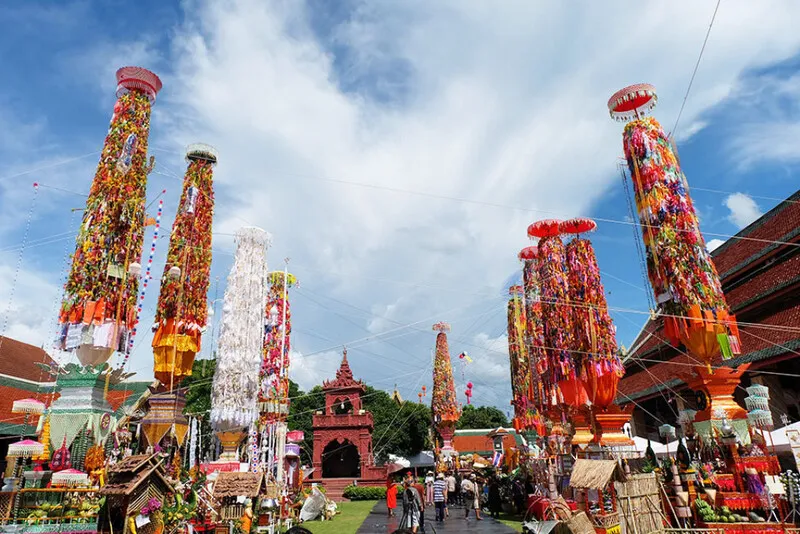
Open Days: According To Each Temple And Community Schedule, Usually Between September And October Every Year
Opening Hours: Morning To Midday, According To Each Temple’s Merit-Making And Salak Bhat Offering Program
The Kin Khao Salak Tradition In Sukhothai Province is one of the most meaningful folk traditions reflecting the Buddhist faith, agricultural life, ancestral gratitude, and community spirit of northern Thailand. Also known as Tan Kuai Salak, Than Salak, Salak Bhat, or the offering of Salak Bhat, this tradition centers on preparing offerings such as rice, sticky rice, dried food, sweets, fruit, daily necessities, and donations for monks. These offerings are marked with a “salak,” or lot, and are then offered according to a drawing system. The practice symbolizes generosity, fairness, remembrance of ancestors, and the shared merit-making life of the community.
In Sukhothai Province, especially in Thung Saliam District, the Kin Khao Salak tradition remains closely connected with communities that preserve Lanna cultural roots. The tradition is practiced in several temples, including Wat Khao Kaew Chai Mongkol in Khao Kaew Si Sombun Subdistrict, Wat Nong Rangsit in Ban Mai Chai Mongkol Subdistrict, and Wat Tha Duea in Thung Saliam Subdistrict. These events usually take place between September and October, a period linked with the late rainy season, the agricultural cycle, and the preparation of newly harvested rice.
The name “Kin Khao Salak” does not simply mean eating rice. In local understanding, it refers to a merit-making event in which rice and offerings are prepared as part of a lottery-based donation ceremony. The word “salak” refers to a lot or a label used to determine which monk receives which offering. This system prevents selective offering and emphasizes equality in giving. Each family can join according to its faith and capacity, and the monks receive useful supplies for monastic life after the rains retreat period.
The tradition is deeply connected to the act of dedicating merit to the deceased. Local people believe that preparing offerings for monks and dedicating the merit can spiritually benefit departed relatives, ancestors, teachers, and benefactors. For this reason, families prepare their offerings with care. A salak basket may include rice, sticky rice, dried food, fruits, traditional sweets, water, daily-use items, and money for the temple. Each item represents devotion, gratitude, and remembrance.
Rice plays a central role in this tradition because it is the heart of Thai agricultural life. In northern communities, rice is closely tied to rain, land, family labor, and seasonal abundance. Bringing rice or newly harvested rice to the temple transforms farm produce into an act of merit. Rice in the salak offering is therefore not merely food; it is a symbol of fertility, gratitude, and the relationship between people, land, and faith.
In the past, preparing a kuai salak or salak offering required time and collective family effort. Elders decided what should be included, while younger family members helped clean containers, arrange items, prepare sweets, wrap food, or write names and labels. Some families wove baskets from bamboo or decorated containers with care. Through this process, children learned the meaning of the tradition by doing, not only by listening. When they later joined the temple ceremony, they understood that every offering represented the intention of their family.
Today, the form of salak offerings may vary. Some families use baskets, trays, modern containers, or ready-made offering sets. However, the heart of the tradition remains unchanged: generosity, dedication of merit, respect for ancestors, and community participation. Many temples still preserve the ritual structure, including writing or arranging lots, gathering offerings, chanting, listening to sermons, presenting offerings to monks, and receiving blessings. At the same time, community activities such as processions, folk dance, music, local performances, and food stalls may also be included.
Wat Khao Kaew Chai Mongkol in Thung Saliam District is one of the important places where the Kin Khao Salak tradition is preserved in Sukhothai. Located in Khao Kaew Si Sombun Subdistrict, the temple stands within a community with clear Lanna cultural roots. The annual event includes Salak Bhat offerings, community gatherings, traditional clothing, folk dance, and merit-making activities. The temple functions not only as a religious space but also as a cultural center where local identity is maintained and passed on.
One of the distinctive qualities of the Kin Khao Salak tradition in Sukhothai is the natural combination of Buddhism, agriculture, and folk art. The religious ritual provides the central meaning, while the cultural activities bring warmth and vitality to the event. Folk dances performed by local women, youth groups, or community members express pride in local heritage. Traditional music, northern-style clothing, and local food all help create an atmosphere that is both sacred and joyful.
Folk dance and local performance in the event are more than entertainment. They are a way for the community to present its identity. Many performers are local residents who rehearse together before the event. Elders transmit gestures, meanings, and performance customs to younger people, while children and youth gain confidence and learn to take part in community culture. In this way, the temple becomes a living classroom where culture continues through participation.
The Salak Bhat offering ceremony has a meaningful ritual structure. After villagers bring their salak baskets or offering sets to the temple, the lots or labels are arranged so that monks and novices receive offerings according to the drawn sequence. The practice reflects a Buddhist ideal of giving without attachment to a specific recipient. The donor gives to the Sangha as a whole, and the monk receives the offering according to the ritual order. This emphasizes faith, equality, and intention rather than status or display.
The tradition also teaches gratitude. Participants remember departed parents, grandparents, relatives, teachers, and benefactors. Dedicating merit helps younger generations understand that their present lives are connected to the labor, kindness, and sacrifices of those who came before them. When families gather in the temple and dedicate merit, family memory becomes part of a larger Buddhist ceremony and community life.
At the community level, Kin Khao Salak strengthens unity. Every step requires cooperation: cleaning the temple, preparing the ceremonial area, arranging offerings, coordinating monks, setting up sound equipment, preparing performances, welcoming visitors, and cleaning up after the event. Villagers are not only participants; they are co-owners of the tradition. This shared responsibility keeps the temple at the center of social and spiritual life.
The tradition also reflects the relationship between people and nature. Its timing is associated with the agricultural cycle and seasonal abundance. Villagers bring products from their land to offer as merit, while also expressing respect for the natural world that sustains life. The ideas of thanking nature, honoring ancestors, and sharing harvest with monks and the community reveal a worldview in which human life is connected with land, rain, food, and faith.
For Sukhothai, the Kin Khao Salak tradition is important because it shows the northern cultural dimension of a province better known internationally for its ancient historical sites. Thung Saliam District has communities that continue to preserve Lanna language, food, clothing, and seasonal customs. When Kin Khao Salak is held here, visitors experience not only a Buddhist offering ceremony but also the living presence of Lanna culture in Sukhothai.
From a cultural tourism perspective, this tradition is highly meaningful for travelers who want to understand local life beyond monuments and museums. Visitors can observe real community merit-making, not a staged show. They may see villagers preparing salak offerings, wearing traditional clothing, entering the temple, making merit, listening to sermons, joining performances, and sharing food. These experiences reveal Thai culture as a living practice sustained by real people and families.
Travelers who wish to attend a Kin Khao Salak event in Thung Saliam should check the annual schedule in advance because each temple may hold the ceremony on a different date. Private car or rental car is the most convenient way to reach temples such as Wat Khao Kaew Chai Mongkol or other participating temples in the district. The journey can be combined with nearby attractions such as Wat Phiphat Mongkhon, Si Satchanalai Historical Park, Thung Saliam temples, local cafés, and community-based attractions.
Getting There from Sukhothai town is best done by private car or rental car toward Thung Saliam District. From there, travelers can continue to Khao Kaew Si Sombun Subdistrict to reach Wat Khao Kaew Chai Mongkol or visit other temples in nearby communities. Those traveling from Sukhothai Historical Park should allow extra travel time because Thung Saliam is farther than the old city area. Visitors who want to attend the ceremony should arrive in the morning to experience the offering ritual, sermons, and community activities fully.
Visitors should behave respectfully when attending the event. Modest clothing is recommended because the ceremony takes place in a temple. Visitors should not walk in front of monks during the ritual, block the procession or performance area, or interrupt the ceremony. Photography should be done respectfully, especially when taking close-up photos of monks, children, elders, or performers. Respectful behavior allows visitors to become part of the merit-making atmosphere rather than merely outside observers.
Suitable items to prepare for the ceremony include rice, sticky rice, dried food, bottled water, sweets, fruit, daily-use items for monks, or a complete offering set. Those unfamiliar with the ceremony may ask the temple or local community in advance. Preparing offerings properly helps visitors understand the meaning of the tradition more closely and participate in a respectful way.
Beyond the Salak Bhat ceremony, visitors can connect the trip with nearby attractions in Thung Saliam and surrounding districts. Wat Phiphat Mongkhon is one of the important temples in the area. Si Satchanalai Historical Park offers a deeper view of Sukhothai’s historical heritage. Local restaurants, cafés, and accommodations allow travelers to experience both religious culture and everyday community life. This makes the journey more complete and rewarding.
The Kin Khao Salak tradition is also a platform for preserving local arts. Folk dance, traditional songs, northern-style clothing, and local performances need real community occasions to survive. Without annual events like this, gestures, songs, offering arrangements, and ritual knowledge may gradually disappear from younger generations. By organizing the tradition every year, the community gives these cultural forms a place to be practiced, seen, and passed on.
The event also supports the local economy in a natural way. When villagers, devotees, and travelers gather for the ceremony, local restaurants, cafés, accommodations, markets, and community vendors benefit. However, the main value of the event remains its faith and community meaning. Its strength lies in the balance between merit-making, cultural preservation, and local livelihood.
The Kin Khao Salak Tradition in Sukhothai Province is therefore a multi-layered cultural heritage. It connects Buddhism, family gratitude, agriculture, folk arts, and tourism. It allows people to remember their ancestors, share agricultural produce, make merit, enjoy local performances, and strengthen community bonds at the same time. Its beauty lies not only in the ceremony itself but also in the many acts of cooperation behind it—from arranging offerings at home to helping at the temple and welcoming visitors.
As long as Kin Khao Salak continues to be practiced in the temples and communities of Sukhothai, it shows that folk culture still has the power to connect people with religion, descendants with ancestors, agriculture with faith, and local communities with visitors. For travelers who want to know Sukhothai beyond ancient ruins, this tradition offers a warm and meaningful experience of living culture, devotion, food, music, and local pride.
| Name | Kin Khao Salak Tradition In Sukhothai Province |
| Other Names | Tan Kuai Salak, Than Salak, Salak Bhat, Salak Bhat Offering Ceremony |
| Period | Usually Between September And October Every Year, Depending On Each Temple And Community Schedule |
| Main Event Locations | Wat Khao Kaew Chai Mongkol, Khao Kaew Si Sombun Subdistrict, Thung Saliam District, Sukhothai Province Wat Nong Rangsit, Ban Mai Chai Mongkol Subdistrict, Thung Saliam District, Sukhothai Province Wat Tha Duea, Thung Saliam Subdistrict, Thung Saliam District, Sukhothai Province |
| Main Address | Wat Khao Kaew Chai Mongkol, Khao Kaew Si Sombun Subdistrict, Thung Saliam District, Sukhothai Province 64150, Thailand |
| Highlights | Salak Bhat offering ceremony, salak baskets, rice offerings, merit dedication to ancestors, folk dance, northern-style clothing, and community activities |
| History | A northern Thai Buddhist merit-making tradition in which villagers offer Salak Bhat to monks, dedicate merit to departed ancestors, and express gratitude through offerings connected with agricultural life. |
| Name Origin | “Salak” refers to a lot or label used to assign offerings to monks, while “Kin Khao Salak” is a local name for the merit-making event involving rice, food, and monastic offerings. |
| Distinctive Features | A Buddhist community ceremony combining ancestor gratitude, agricultural abundance, folk arts, and village unity |
| Travel Information | Travel by private car or rental car from Sukhothai town to Thung Saliam District, then continue to Khao Kaew Si Sombun Subdistrict for Wat Khao Kaew Chai Mongkol. Check the temple schedule before traveling. |
| Current Status | The tradition continues to be practiced in several temples in Thung Saliam District, with temples, communities, and local organizations working together to preserve it. |
| Open Days | According to each temple and community schedule, usually between September and October every year |
| Opening Hours | Morning to midday, according to each temple’s merit-making and Salak Bhat offering program |
| Fees | No admission fee for general merit-making participation |
| Abbot / Caretaker / Local Coordinator | Wat Khao Kaew Chai Mongkol: Phra Khru Chai Rattanabanphot, Abbot Of Wat Khao Kaew Chai Mongkol And Ecclesiastical District Chief Of Thung Saliam Local Coordination: Khao Kaew Si Sombun Subdistrict Municipality And Local Administrative Organizations In Participating Areas |
| Main Contact Number | Wat Khao Kaew Chai Mongkol Tel. 098-919-2645 Wat Khao Kaew Chai Mongkol Tel. 084-537-8106 Ban Mai Chai Mongkol Subdistrict Administrative Organization Tel. 055-615-691 |
| What To Prepare | Rice, sticky rice, dried food, sweets, fruits, drinking water, daily-use items for monks, or a complete offering set for the Salak Bhat ceremony |
| Nearby Tourist Attractions | 1. Wat Thung Saliam And Luang Pho Sila, About 9 km 2. Wat Phiphat Mongkhon, About 11 km 3. Thung Saliam Water Park, About 10 km 4. Ban Choeng Pha Weir, About 13 km 5. Wat Klang Dong Sukhothai, About 18 km 6. Si Satchanalai Historical Park, About 55 km |
| Nearby Restaurants | 1. Ran Ahan Aroi Pracham Amphoe Thung Saliam, About 9 km, Tel. 063-1656395 2. DE MALA Cafe, Thung Saliam District, About 11 km, Tel. 096-6493649, 082-9291494 3. Rotilism, Thung Saliam District, About 10 km, Tel. 080-9971491 4. Friendship Cafe, Thung Saliam District, About 10 km, Tel. 090-3252332 5. Baan Hom Glin Din, Thung Saliam District, About 13 km 6. Sleaf Café, Thung Saliam District, About 10 km |
| Nearby Accommodations | 1. Tonfon Resort, About 13 km 2. Baan Maneekan, About 14 km 3. Rom Mai Chai Nam Resort, Thung Saliam District, About 8 km 4. Banhom Pool Villa, About 9 km 5. DE MALA, Thung Saliam District, About 11 km, Tel. 096-6493649, 082-9291494 6. Jitra Resort, About 28 km |
Frequently Asked Questions (FAQ)
Q: What is the Kin Khao Salak Tradition in Sukhothai?
A: It is a northern Thai Buddhist merit-making tradition in which villagers prepare salak offerings for monks, dedicate merit to departed ancestors, and strengthen community unity.
Q: When is Kin Khao Salak held in Sukhothai?
A: It is generally held between September and October each year, though the exact date depends on each temple and community schedule.
Q: Where can travelers experience Kin Khao Salak in Sukhothai?
A: Important locations include Wat Khao Kaew Chai Mongkol, Wat Nong Rangsit, and Wat Tha Duea in Thung Saliam District.
Q: What is included in a salak offering?
A: A salak offering usually includes rice, sticky rice, dried food, sweets, fruits, drinking water, daily-use items, and donations for monks.
Q: How is Kin Khao Salak connected to ancestors?
A: Villagers dedicate the merit from the offering ceremony to departed relatives and ancestors as an expression of gratitude and remembrance.
Q: Can foreign travelers join the ceremony?
A: Yes. Foreign travelers may respectfully join or observe the ceremony by dressing modestly, following temple etiquette, and preparing suitable offerings if they wish to make merit.
Q: How should travelers get to the event?
A: Private car or rental car is recommended. Travelers should head to Thung Saliam District and check the exact temple location and event schedule in advance.
Q: Why is Kin Khao Salak important to the community?
A: It preserves Buddhist faith, gratitude toward ancestors, agricultural identity, folk arts, and cooperation between temples and local communities.
 Category: ●Art, Culture and Heritage
 Group: ●Art, Craft Centres, Tradition
Last Update : 3 MonthAgo
 Last Update : 3 MonthAgo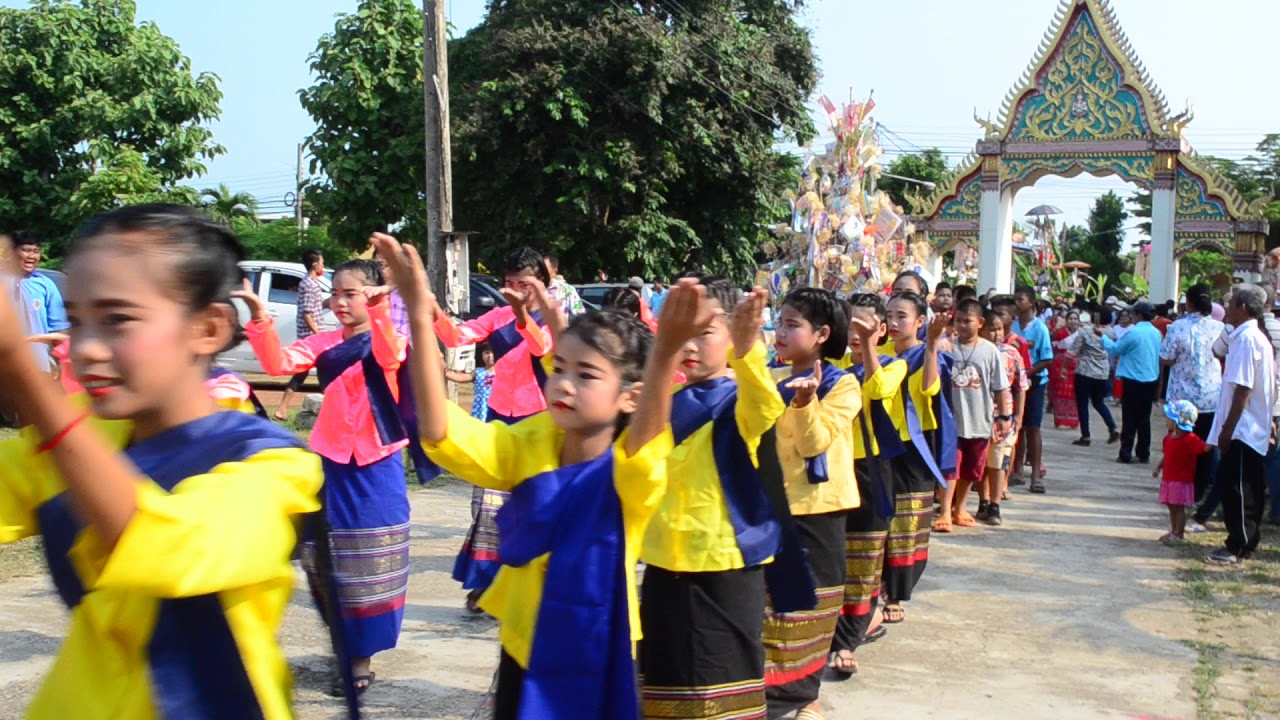

 Historical Sites and Monuments(4)
 Landmarks and Memorials(5)
Art, Craft Centres, Tradition(11)
Landmarks and Memorials(5)
Art, Craft Centres, Tradition(11)
 Museums(5)
 Places of Worship
 Temple(40)
 Other Sacred Sites(10)
 Suburban Living
 Village, Community(3)
 Nature and Wildlife
 National Parks and Marine Reserves(3)
 Mountain (Doi)(2)
 Dam, Reservoir, Lake(4)
 Waterfalls(8)
 Caves(4)
 River, Canal(2)
 Entertainment and Agricultural
 Farms, Parks and Ecotourism(3)


