
lovethailand home >Central Travel Attractions >Pathum Thani Travel Attractions >Thanya Buri >Bueng Nam Rak > Thailand National Sports University (Bangkok Campu..
TL;DR: Thailand National Sports University (Bangkok Campus) is located at 69 Moo 3, Rangsit–Nakhon Nayok Road, Bueng Nam Rak, Thanyaburi, Pathum Thani 12110, Thailand, open Monday – Friday (Administrative Offices), hours 08:30 – 16:30 (Administrative Offices).

Thailand National Sports University (Bangkok Campus)
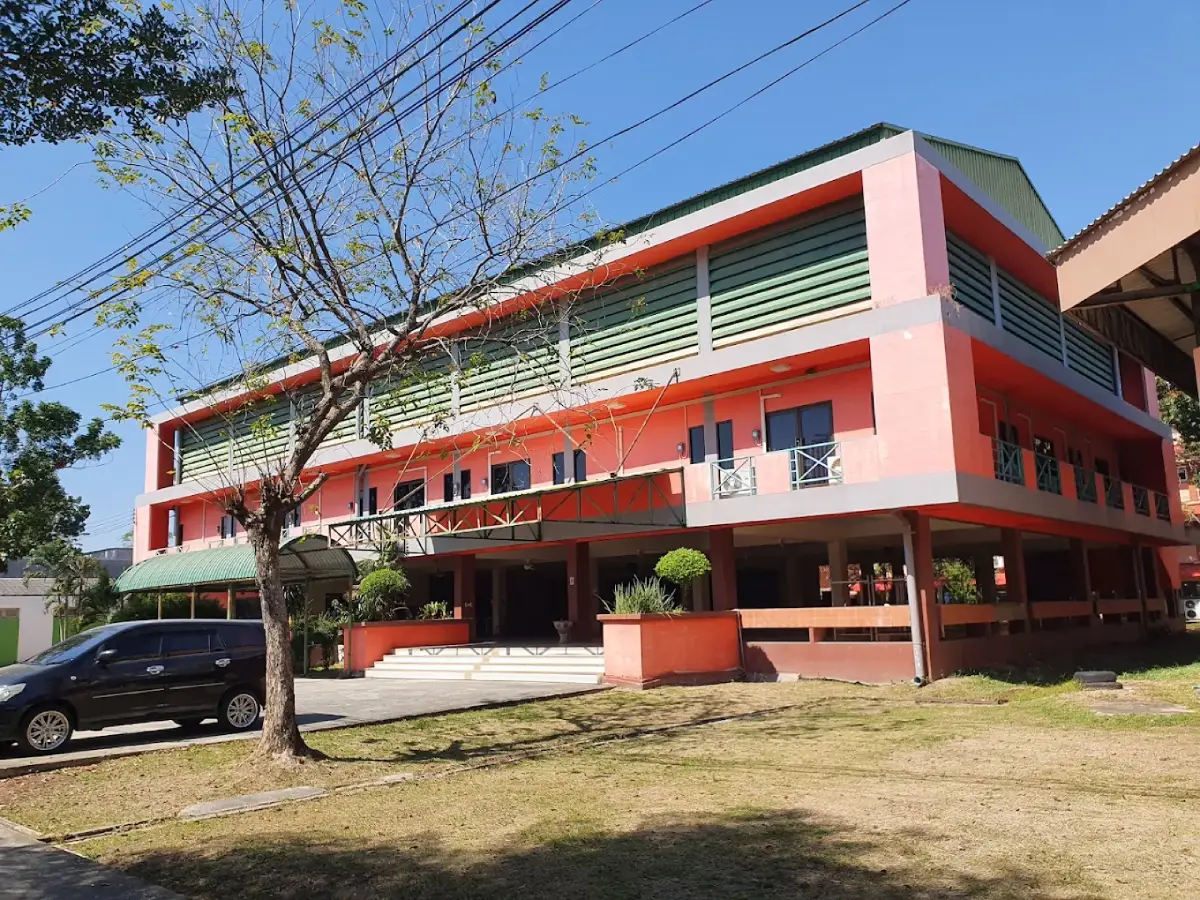
Open Days: Monday – Friday (Administrative Offices)
Opening Hours: 08:30 – 16:30 (Administrative Offices)
Closed Days: Saturday – Sunday
Thailand National Sports University, Bangkok Campus (มหาวิทยาลัยการกีฬาแห่งชาติ วิทยาเขตกรุงเทพ) is a public higher education institution specializing in physical education, sports science, health, recreation, sports tourism, and sports communication. The campus is located at 69 Moo 3, Rangsit–Nakhon Nayok Road, Bueng Nam Rak Subdistrict, Thanyaburi District, Pathum Thani Province, Thailand. Despite its name, Bangkok Campus is situated in Pathum Thani rather than central Bangkok. Its history began on February 13, 1979, when Bangkok College of Physical Education was established. The institution later moved to its present location in 1982 and became part of Thailand National Sports University following the enactment of the Thailand National Sports University Act in 2019. Today, the campus provides undergraduate education through three main faculties: the Faculty of Sports Science and Health, the Faculty of Liberal Arts, and the Faculty of Education. Its mission combines academic knowledge, professional training, practical sporting skills, and sportsmanship to support the development of Thailand's sports and health sectors.
The importance of Bangkok Campus extends beyond preparing competitive athletes. The institution contributes to the education of physical education teachers, sports science professionals, recreation specialists, sports tourism personnel, and sports communication practitioners. These professions play essential roles in promoting physical activity, improving public health, organizing sporting events, supporting educational institutions, and developing economic opportunities associated with sports and tourism.
The campus occupies a site along Rangsit–Nakhon Nayok Road near Khlong 13, in an area connecting Pathum Thani Province with neighboring Nakhon Nayok. Its surroundings reflect the character of the eastern outskirts of Greater Bangkok, where residential communities, educational institutions, local businesses, and agricultural landscapes coexist. Unlike universities located in densely developed city centers, Bangkok Campus has a spacious environment suitable for various sports facilities, academic buildings, and practical training areas.
The institution was founded on February 13, 1979, as Bangkok College of Physical Education under the Department of Physical Education, Ministry of Education. Teaching began during the 1979 academic year, with the Olympic swimming pool area at the National Stadium in Bangkok serving as its original educational venue. The National Stadium was already strongly associated with organized sports and athletic training, making it a fitting starting point for an institution dedicated to physical education and the development of sports personnel.
During its early years, Bangkok College of Physical Education operated within the physical constraints of its original premises. Although the National Stadium provided access to an important sporting environment, the college required more permanent space to develop its educational programs, facilities, and long-term institutional identity. The need for additional land and infrastructure eventually led to the relocation that shaped the modern Bangkok Campus.
In 1982, the college moved to its present site in Bueng Nam Rak Subdistrict, Thanyaburi District, Pathum Thani Province. The new campus was established on land measuring 133 rai and 70 square wah, donated by Than Phuying Chaluai Sutthi-at Narumon, also known as Chaluai Lekyanon, a daughter of Phraya Phrommathat Si Philat (Chalaem Mitranon). This contribution became a significant milestone in the institution's history, providing a permanent location for academic buildings, sports grounds, training facilities, and the expansion of physical education programs.
The land donation represented more than an improvement in physical infrastructure. It helped establish the foundations for a specialized educational environment in which academic learning and sporting practice could develop together. A permanent campus allowed future generations of students to study in facilities designed around the distinctive needs of physical education, competitive sports, exercise training, and related professional disciplines.
Among the important figures associated with the institution's early history was Sathit Tankasem, who appears in the official administrative history as a director of Bangkok College of Physical Education in 1979. Successive administrators contributed to the development of educational activities, facilities, and institutional management. The contribution of Chaluai Lekyanon remains particularly important because of her role in securing the land that enabled the college to establish its permanent home. The name Lekyanon is also preserved in the name of Lekyanon Stadium, one of the principal sporting facilities on campus.
Following its relocation, Bangkok College of Physical Education gradually developed its academic and sporting infrastructure. Physical education was never limited to learning the rules and techniques of individual sports. The field also involved the scientific understanding of exercise, physical fitness, teaching methods, movement skills, and the organization of activities suited to participants of different ages and abilities. These subjects formed the foundations for preparing teachers, coaches, and other professionals working within Thailand's developing sports system.
Another important period of institutional change began in 2002, when government restructuring placed the Department of Physical Education and associated educational institutions under the Ministry of Tourism and Sports. This transition reflected a growing recognition of sports as an area of national policy connected with public health, athlete development, competition management, economic activity, and the wider well-being of society.
In 2005, the enactment of legislation establishing the Institute of Physical Education created a new higher education framework for the country's physical education institutions. Bangkok College of Physical Education consequently became part of the Institute of Physical Education as its Bangkok Campus. This transition strengthened the institution's position within higher education and provided a more clearly defined framework for producing graduates with professional knowledge in physical education and related sports disciplines.
A major milestone followed in 2019 with the enactment of the Thailand National Sports University Act B.E. 2562. The legislation was promulgated on May 22, 2019, transforming the Institute of Physical Education into Thailand National Sports University under the Ministry of Tourism and Sports. Bangkok Campus became part of the new university structure, with an expanded institutional mission encompassing higher education, sports research, academic services, innovation, and the development of national sporting capabilities.
These historical milestones should be distinguished from one another. February 13, 1979, marks the establishment of the original Bangkok College of Physical Education, whereas May 22, 2019, relates to the legal establishment of Thailand National Sports University. In 2026, Bangkok Campus celebrated the 47th anniversary of its institutional origins. A commemorative ceremony marking the anniversary of Bangkok Physical Education was held on February 13, 2026, bringing together university executives, personnel, and representatives of associated organizations.
The name Thailand National Sports University reflects its nationwide mission to advance education and professional development in sports-related fields. The concept of sports, as understood within the university's academic framework, extends to physical education, exercise science, coaching, recreation, sports management, and the many disciplines that support athletes and active communities. The term National expresses the institution's broader responsibility to the country's sports development through a network of campuses across Thailand. The name Bangkok Campus preserves its historical connection with Bangkok College of Physical Education, even though the institution has been located in Pathum Thani since 1982.
The campus identity emphasizes a combination of competence, character, and social responsibility. Its official institutional identity is expressed in the Thai phrase “ทักษะดีมีน้ำใจนักกีฬา พัฒนาสังคม,” conveying the importance of strong skills, sportsmanship, and contribution to society. This philosophy recognizes that graduates in sports-related professions should develop not only physical and technical abilities, but also discipline, ethical awareness, teamwork, and a commitment to the welfare of others.
The university emblem incorporates symbols associated with education, ethical development, and physical education. Its three interconnected rings, shown in green, white, and yellow, represent the balanced development of physical education, moral education, and intellectual education. The emblem also includes the three-headed Erawan elephant and the year 2019, marking the institution's elevation to university status. Bangkok Campus has its own distinctive color, golden yellow, which symbolizes the flourishing of wisdom and knowledge.
Today, Bangkok Campus provides undergraduate education through three principal faculties. Each contributes a different perspective to the study and practice of sports, creating an academic environment in which scientific knowledge, educational expertise, and professional communication complement one another. This multidisciplinary approach is particularly important because the modern sports sector requires specialists in areas extending far beyond athletic performance alone.
The Faculty of Sports Science and Health focuses on the scientific understanding of the human body, movement, physical performance, and exercise. Its academic field draws on disciplines such as anatomy, exercise physiology, biomechanics, physical fitness assessment, and training principles. These areas of knowledge help explain how the body responds to physical activity, how athletic performance can be developed, and how exercise programs can be designed with safety and individual capability in mind.
The practical relevance of sports science extends to athletes, coaches, fitness professionals, and people seeking healthier lifestyles. Scientific training methods can help improve performance, assess physical readiness, and support the development of appropriate exercise programs. For students, this field also provides a foundation for understanding how scientific evidence can inform professional decisions about training, physical conditioning, and health-related activities.
The Faculty of Liberal Arts connects sports with tourism, recreation, communication, and the service sector. Its undergraduate fields include Tourism, Sports and Recreation, and Sports Communication. These disciplines have become increasingly relevant as sporting events, recreational activities, digital media, and sports-related tourism create opportunities for professional development and economic activity.
Tourism, Sports and Recreation is concerned with designing experiences and activities that combine physical engagement, leisure, organization, and service. Students in this field develop an understanding of how activities are planned, how participants are supported, and how sports and recreation can contribute to communities and destinations. Sports tourism, in particular, connects athletic events and active lifestyles with the hospitality sector, local attractions, and regional economic development.
Sports Communication addresses another essential part of the sports sector: the communication of accurate and engaging information. The field is relevant to sports media, event communication, public relations, digital content, and the presentation of athletes and competitions to wider audiences. Effective sports communication requires both familiarity with the sporting environment and the ability to convey information responsibly and clearly.
The Faculty of Education plays a central role in preparing future physical education teachers. Its Physical Education program links educational theory, teaching practice, human movement, and sports activities. Physical education teachers are responsible for helping young people develop movement skills, physical confidence, healthy habits, discipline, and respect for others. Their professional preparation therefore involves more than sporting ability; it also requires knowledge of teaching methods, student development, assessment, and the safe management of activities.
For the 2026 academic year, the campus identifies four principal undergraduate fields of study: Sports Science and Exercise, Tourism, Sports and Recreation, Sports Communication, and Physical Education. Together, these programs demonstrate the breadth of professional education available at Bangkok Campus. They prepare students for different roles within an interconnected sector that includes education, health promotion, sporting organizations, recreation, tourism, and media.
Research and innovation are also important components of the institution's educational mission. In February 2026, Bangkok Campus organized activities promoting innovation in sports science and related disciplines, encouraging the development of research knowledge, practical inventions, and new approaches to sporting challenges. In April 2026, representatives of the campus also participated in university-level presentations and activities involving sports science research and innovation.
Research in sports-related fields can contribute to better training methods, more effective physical fitness assessment, improved exercise programs, and the responsible application of technology. For students, the research process develops skills in questioning assumptions, collecting evidence, interpreting findings, and evaluating results. These abilities are valuable not only in scientific laboratories but also in coaching, teaching, sports management, and community health programs.
The campus's extensive sporting facilities represent one of its most distinctive characteristics. According to the official campus map, the grounds include Lekyanon Stadium, basketball and volleyball gymnasiums, a futsal field, tennis courts, petanque facilities, a sepak takraw gymnasium, boxing and judo gyms, indoor and artificial-turf hockey facilities, handball courts, beach handball facilities, an archery range, a rugby field, and a skateboard area.
These different facilities allow students to encounter a wide range of sporting environments. Every sport has its own rules, equipment, movement patterns, technical demands, and safety considerations. The availability of sport-specific training spaces is therefore particularly useful for practical education, enabling students to understand the relationship between theoretical knowledge and the requirements of different athletic disciplines.
Aquatic sports facilities include a 25-meter swimming pool and a building housing a 50-meter swimming pool. These facilities support the campus's sports-focused environment and activities related to swimming and aquatic training. However, their presence does not mean they are automatically available for unrestricted public use. Individuals wishing to use swimming facilities should contact the university to confirm access arrangements, applicable rules, and authorized operating hours.
The Sports Science Center is another important part of the campus infrastructure. Modern sports training increasingly relies on a scientific understanding of physical performance, exercise, body movement, and fitness evaluation. A facility dedicated to sports science supports the connection between classroom learning and practical knowledge, illustrating the university's commitment to evidence-based education in sports-related fields.
Academic and administrative buildings also play essential roles in campus life. The campus map identifies buildings for the Faculty of Education, Faculty of Liberal Arts, and sports science studies, as well as the 41st Anniversary Sports Building, Training Center, Student Affairs and Special Activities Building, assembly facilities, dining areas, and outdoor activity spaces. The Academic Services Building accommodates important administrative functions, including document administration, personnel services, registration, finance, and procurement.
Student life at Thailand National Sports University has a strong connection with competitive sports and institutional traditions. One of its best-known activities is the inter-campus sports competition known as the Physical Education Games, or “Phalasueksa Games.” This event provides opportunities for student athletes from different campuses to compete, develop their abilities, and build relationships with fellow students, coaches, and university personnel.
In 2026, the 49th Physical Education Games were held in Suphan Buri Province from September 1 to 10. Bangkok Campus participated with athletes, coaches, and officials. Such competitions are important educational experiences because they involve discipline, preparation, teamwork, respect for sporting rules, and the ability to respond constructively to both success and disappointment.
The games also provide an opportunity for students and staff from campuses across the country to exchange experiences and strengthen their shared institutional identity. The educational value of university sports competitions extends beyond medals and results, encouraging leadership, responsibility, friendship, and the spirit of fair competition.
The annual anniversary celebration is another important part of the campus's institutional culture. On February 13, 2026, Bangkok Campus commemorated 47 years since the establishment of Bangkok College of Physical Education. The event provided an opportunity to recognize the contributions of earlier generations of administrators, teachers, staff, and graduates, while reinforcing the institution's continuing commitment to physical education and the development of Thai sports.
Physical education also has deep connections with Thai educational traditions, including respect for teachers and the transmission of knowledge from instructors and coaches to students. University activities associated with teacher-honoring ceremonies, traditional Thai sports, and cultural engagement reflect the recognition that sports education is not exclusively about physical achievement. It also involves cultural understanding, ethical conduct, and respect for the people who contribute to a student's development.
This relationship between sports and culture was reflected in the 2026 TNSU Cultural Influence Thai Fighting Food & Festival, an initiative connecting traditional Thai sports with Thai food, local culture, and tourism. A representative of Bangkok Campus participated in the festival's opening in Suphan Buri Province. The event promoted traditional sports as a means of encouraging exercise, preserving cultural knowledge, strengthening community identity, and creating opportunities for tourism and local economic development.
Community service is another significant aspect of the university's mission. Knowledge in physical education, exercise, recreation, and sports science can support public health and contribute to the development of active communities. By connecting academic knowledge with social needs, institutions specializing in sports education can help promote physical activity, encourage healthy habits, and communicate useful information to people of different ages and backgrounds.
For visitors interested in educational travel, Bangkok Campus offers an opportunity to understand the development of physical education in Thailand. Its history traces the evolution of a specialist college established at Bangkok's National Stadium into part of a nationwide sports university. Its facilities also illustrate how contemporary sports education combines academic classrooms, practical training areas, sporting venues, and scientific approaches to physical performance.
Nevertheless, the campus is primarily an active educational institution rather than a conventional public tourist attraction. Classroom buildings, swimming pools, training centers, and sports grounds may be subject to access restrictions or scheduled academic activities. Individuals planning an educational visit, study tour, organized event, or facility use should contact the campus in advance and follow the regulations of the responsible departments.
Prospective students should consult the university's official recruitment announcements for their intended academic year. Application schedules, entrance requirements, examinations, documentation, and enrollment procedures can vary according to the program and admission category. Before applying, students should carefully consider their academic interests, readiness for practical training, and long-term professional goals.
Getting There is most convenient by private car or hired transport. From Bangkok, travelers can make their way to the Rangsit area and continue east along Rangsit–Nakhon Nayok Road in the direction of Ongkharak District, Nakhon Nayok Province. The Khlong 13 area is an important landmark for locating the university. Drivers should follow navigation directions to 69 Moo 3, Bueng Nam Rak, Thanyaburi, Pathum Thani. Travelers using public transportation can arrange an onward taxi or app-based car service from the Rangsit area, checking pickup locations and transport availability in advance.
Because the institution retains the name Bangkok Campus, first-time visitors should take particular care when entering the destination into a navigation service. The present campus is in Pathum Thani Province and should not be confused with the National Stadium in central Bangkok, which was used as the college's original educational venue in 1979. Searching for Thailand National Sports University, Bangkok Campus, Khlong 13, can help identify the correct destination.
Visitors exploring the surrounding region may also find local temples, traditional markets, restaurants, and educational attractions of interest. Nearby destinations in the wider area include Wat Sra Bua in Bueng Nam Rak, the historic Khlong 12 Hok Wa Market, Wat Pa Khlong 11, and other cultural and educational attractions in Pathum Thani. Travelers should consider road routes, actual driving distances, and the current operating conditions of individual attractions when planning a combined journey.
Thailand National Sports University, Bangkok Campus remains an important institution in the history of physical education and sports development in Thailand. From its beginnings at the National Stadium in 1979 to the establishment of a permanent campus in Pathum Thani in 1982 and its integration into Thailand National Sports University in 2019, the institution reflects the continuing development of sports-related higher education. Its combination of historical significance, specialized academic programs, practical sports facilities, research activities, and commitment to sportsmanship makes it a distinctive contributor to Thailand's educational and sporting landscape.
| Institution Name | Thailand National Sports University, Bangkok Campus |
| Thai Name | มหาวิทยาลัยการกีฬาแห่งชาติ วิทยาเขตกรุงเทพ |
| Institution Type | Public Sports-Focused Higher Education Institution |
| Affiliation | Thailand National Sports University, Ministry of Tourism and Sports |
| Address | 69 Moo 3, Rangsit–Nakhon Nayok Road, Bueng Nam Rak, Thanyaburi, Pathum Thani 12110, Thailand |
| Coordinates | 14.0737155, 100.8867634 |
| Original Foundation Date | February 13, 1979 |
| Former Names | Bangkok College of Physical Education; Institute of Physical Education, Bangkok Campus |
| Relocation to Present Site | 1982 |
| Land Area | 133 Rai and 70 Square Wah, according to the institutional land donation history |
| University Establishment | 2019, following the Thailand National Sports University Act B.E. 2562, promulgated on May 22, 2019 |
| Institutional Age in 2026 | 47 Years Since the Establishment of Bangkok College of Physical Education |
| Important Historical Figures | Than Phuying Chaluai Sutthi-at Narumon (Chaluai Lekyanon), Land Donor; Sathit Tankasem, Early College Director |
| University President | Assistant Professor Dr. Weerasak Wisalaporn |
| Bangkok Campus Vice President | Bannakitbanchong Thongchampa |
| Campus Color | Golden Yellow, Symbolizing the Flourishing of Wisdom |
| Institutional Identity | Strong Skills, Sportsmanship, and Contribution to Society |
| Faculties | 1. Faculty of Sports Science and Health 2. Faculty of Liberal Arts 3. Faculty of Education |
| Undergraduate Fields in 2026 | Sports Science and Exercise; Tourism, Sports and Recreation; Sports Communication; Physical Education |
| Academic Strengths | Physical Education, Sports Science, Exercise, Sports Tourism, Recreation, and Sports Communication |
| Main Sports Facilities | Lekyanon Stadium, 41st Anniversary Sports Building, Sports Science Center, Basketball and Volleyball Gymnasiums, Boxing Gym, Judo Gym, Futsal Field, Tennis Courts, Hockey Facilities, Handball Courts, Archery Range, Rugby Field, 25-Meter Swimming Pool, and 50-Meter Swimming Pool Building |
| Other Campus Facilities | Academic Services Building, Training Center, Student Affairs Building, Assembly Facilities, Dining Areas, and Activity Grounds |
| Major Traditions and Activities | Foundation Anniversary on February 13, Physical Education Games, Sports and Cultural Activities, Research and Innovation Programs |
| Office Open Days | Monday – Friday |
| Office Opening Hours | 08:30 – 16:30 |
| Office Closed Days | Saturday – Sunday |
| Campus Visits and Facility Access | Study Visits, Academic Building Access, Swimming Pool Use, and Sports Facility Use Are Subject to University Regulations and Permission |
| Getting There | Travel Along Rangsit–Nakhon Nayok Road toward Ongkharak, using the Khlong 13 area as a landmark |
| Nearby Cultural and Educational Attractions | 1. Wat Sra Bua, Bueng Nam Rak, Thanyaburi 2. Khlong 12 Hok Wa 100-Year-Old Market, Lam Luk Ka 3. Wat Pa Khlong 11, Nong Suea 4. Wat Panyanantaram, Khlong Luang 5. Rangsit Science Centre for Education, Thanyaburi |
| Restaurants in the Khlong 12–13 Area | 1. Hilal Restaurant, Khlong 13, Tel. 085-045-3655 2. Sara Pizza Halal, Khlong 13, Tel. 085-459-0097 3. Wichian Buri Grilled Chicken, Khlong 12, Tel. 094-325-7940 4. Kham Khuen Shabu and Thai Barbecue, Khlong 13, Tel. 095-561-5966 5. Long Suan Ban Nueng Effect Cafe, Khlong 13, Tel. 083-093-1516 |
| Accommodation in Thanyaburi and Surrounding Khlong Areas | 1. Ban Rim Khlong, Khlong 13 (Monthly Accommodation), Tel. 081-751-7211 2. Nongnuch Apartment, Khlong 13 (Monthly Accommodation) 3. Night Inn Thanya, Khlong 11, Tel. 062-931-5521 4. Sleep Inn Thanya, Khlong 7, Tel. 090-888-1233 5. 37 Resort, Khlong 6, Tel. 081-190-0900 |
| Telephone | +66 2 546 1301 |
| saraban_bkk@tnsu.ac.th | |
| Official Website | www.tnsubkk.ac.th |
| Current Status | Operating and Providing Higher Education in 2026 |
Academic Programs and Fields of Study at Thailand National Sports University, Bangkok Campus, Academic Year 2026
| Faculty | Degree Programs and Fields of Study |
| Faculty of Sports Science and Health | Bachelor's Degree 1. Bachelor of Science in Sports Science and Exercise |
| Faculty of Liberal Arts | Bachelor's Degree 1. Bachelor of Arts in Tourism, Sports and Recreation 2. Bachelor of Arts in Sports Communication |
| Faculty of Education | Bachelor's Degree 1. Bachelor of Education in Physical Education |
Frequently Asked Questions (FAQ)
Q: Where is Thailand National Sports University, Bangkok Campus located?
A: The campus is located at 69 Moo 3, Rangsit–Nakhon Nayok Road, Bueng Nam Rak Subdistrict, Thanyaburi District, Pathum Thani Province 12110, near Khlong 13.
Q: What are the opening days and office hours of Bangkok Campus?
A: The administrative offices operate Monday to Friday, from 08:30 to 16:30, and are closed on Saturdays and Sundays. Sports facilities and swimming pools have separate access arrangements that should be confirmed directly with the university.
Q: When was Thailand National Sports University, Bangkok Campus founded?
A: Its original institution, Bangkok College of Physical Education, was founded on February 13, 1979. It moved to Pathum Thani in 1982 and became part of Thailand National Sports University in 2019.
Q: What faculties are available at Bangkok Campus?
A: The campus has three main faculties: the Faculty of Sports Science and Health, the Faculty of Liberal Arts, and the Faculty of Education.
Q: What undergraduate fields of study are offered for the 2026 academic year?
A: The campus identifies four principal undergraduate fields: Sports Science and Exercise; Tourism, Sports and Recreation; Sports Communication; and Physical Education.
Q: Can members of the public use the university's sports grounds or swimming pools?
A: Access depends on university regulations and permission from the responsible departments. Visitors should contact the campus at +66 2 546 1301 before planning to use any facilities.
Q: What are the main sporting facilities at Bangkok Campus?
A: The campus includes Lekyanon Stadium, a Sports Science Center, several indoor gymnasiums, futsal and tennis facilities, hockey and rugby grounds, an archery range, and swimming pools measuring 25 and 50 meters.
Q: How can visitors travel from Bangkok to Thailand National Sports University, Bangkok Campus?
A: Visitors can travel through Rangsit and continue along Rangsit–Nakhon Nayok Road toward Ongkharak. The campus is in the Khlong 13 area of Thanyaburi, Pathum Thani Province.
 Category: ●University
 Group: ●Public university
Last Update : 1 DayAgo
 Last Update : 1 DayAgo

 Click to Access the Navigation Map GPS
Thailand National Sports University (Bangkok Campus) Map
Recommend

 Art, Culture and Heritage
 Historical Sites and Monuments(2)
 Landmarks and Memorials(1)
 Art, Craft Centres, Tradition(2)
 Museums(11)
 Art Gallery(1)
 Educational Places
 Museum for Study(1)
 Library(1)
 Training Center(1)
Public university(2)
 Rajamangala University of Technology(1)
 Rajabhat University(1)
 Private University(7)
 Places of Worship
 Temple(44)
 Mosque(1)
 Other Sacred Sites(1)
 Research and Development
 Royal Project(1)
 Suburban Living
 Local Market(2)
 Floating Market(3)
 Nature and Wildlife
 River, Canal(1)
 Entertainment and Agricultural
 Animal camps and shows(1)
 Stadium(2)
 Amusement Park(1)
 Waterpark(1)
 Travel Articles, Recipes
 Travel Review, Food Review(1)


