
lovethailand home >Central Travel Attractions >Nakhon Pathom Travel Attractions >Muang Nakhon Pathom >Don Yai Hom > Christian University of Thailand
TL;DR: Christian University of Thailand, Nakhon Pathom attractions : University, Private University.
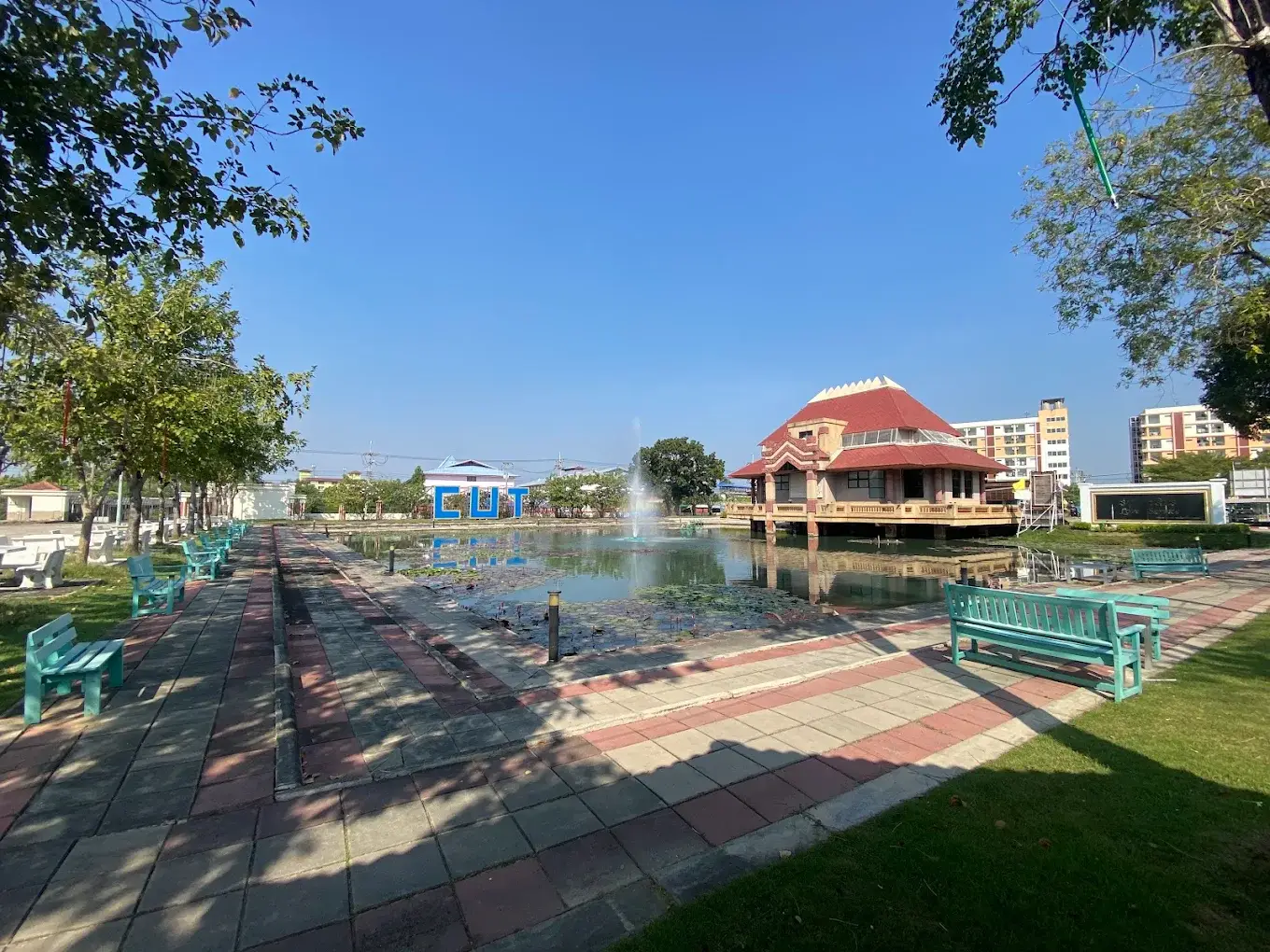
Christian University of Thailand
Open Days: Monday – Sunday
Opening Hours: Monday – Friday, 08:00 – 17:00; Saturday – Sunday, 08:30 – 16:30 (General hours published in a business directory)
Christian University of Thailand (C.T.U.) is a private university affiliated with the Foundation of the Church of Christ in Thailand. It is located at 144 Moo 7, Don Yai Hom Subdistrict, Mueang Nakhon Pathom District, Nakhon Pathom Province 73000, Thailand. The institution was founded on September 7, 1983, as Christian College and began teaching its first Bachelor of Nursing Science program in the 1984 academic year at Bangkok Christian Hospital in Bangkok. It relocated to its permanent campus in Nakhon Pathom in 1996 and was granted university status on August 15, 2001. In 2026, the university celebrates its 43rd anniversary. It comprises four faculties: Nursing Science, Health Sciences, Multidisciplinary College, and Christian Theology. Its academic activities emphasize nursing, wellness, healthcare professions, management, and professional education guided by the institutional motto “Love–Service.”
The identity of Christian University of Thailand is closely connected with the Christian values that influenced its founding. These include love for others, compassion, responsibility, sacrifice, and service to society. Such principles are reflected in the university's academic programs, student development activities, and community services, especially in disciplines that involve direct contact with patients, older adults, and people in need of care. Despite its Christian foundation, the university welcomes students from all religions and backgrounds. Applicants do not need to be Christians or change their religious beliefs to enroll.
The main campus lies in Don Yai Hom, a community south of the urban center of Nakhon Pathom. The surrounding area includes residential neighborhoods, agricultural land, Buddhist temples, shops, restaurants, and student accommodation. Unlike a university located in a densely developed central business district, the campus occupies a relatively spacious setting with buildings designed for teaching, practical training, and student activities. The Phra Prathon–Ban Phaeo Road connects the area with neighboring communities and economic centers.
The university's relationship with Nakhon Pathom Province extends beyond the physical location of its campus. The province has a rich history of Buddhism, traditional communities, agriculture, and healthcare services. These characteristics create opportunities for the university to apply knowledge in health sciences, management, technology, and professional services to improve people's quality of life. Cooperation with hospitals, local organizations, businesses, and community groups also supports the institution's educational and public service mission.
The history of Christian University of Thailand is rooted in the educational and medical activities of Protestant Christian organizations in Thailand. These organizations have long associated healthcare and education with service to others and the development of human well-being. The idea of establishing a higher education institution arose from a need to prepare professionally qualified nurses who would possess not only appropriate clinical knowledge and skills but also compassion, professional responsibility, and ethical awareness.
The Foundation of the Church of Christ in Thailand played a central role in establishing Christian College. Bangkok Christian Hospital provided important support for the institution's development, including facilities for its early educational activities. The relationship between a hospital and a higher education institution was particularly significant because nursing education requires scientific knowledge, practical training, and experience in real healthcare environments. The hospital therefore helped form the foundation of the university's professional identity.
On September 7, 1983, Christian College received authorization to operate as a private higher education institution. Teaching began in the 1984 academic year with the Bachelor of Nursing Science as its first degree program. The college initially used the sixth and seventh floors of the Bradley Building at Bangkok Christian Hospital in Bangkok. This beginning illustrates the close relationship between the institution's educational mission, the preparation of nurses, and the provision of healthcare services.
Beginning with nursing education gave the institution a distinctive character. Nursing students need continuous training in communication, patient assessment, clinical care, medication management, infection prevention, and professional responsibility. Alongside these technical competencies, the college emphasized the dignity of every patient and the importance of treating individuals with understanding and compassion. These values helped shape an educational culture that combined professional competence with concern for others.
As the college developed, the limited space available within the hospital became less suitable for expanding classrooms, laboratories, administrative services, and student accommodation. In 1993, the Foundation of the Church of Christ in Thailand approved the purchase of land in Don Yai Hom, Mueang Nakhon Pathom District. The original acquisition comprised 176 rai, 1 ngan, and 60 square wah and was intended to provide a permanent educational campus capable of supporting future development.
Development of the new site involved the construction of administrative buildings, general teaching facilities, a learning resource center, and student dormitories. The larger area allowed the institution to plan its facilities more systematically, with dedicated spaces for instruction, practical work, administration, residential life, and student activities. These developments also prepared the college for the expansion of academic disciplines beyond its original nursing program.
In the 1996 academic year, Christian College relocated from Bangkok to its permanent site at 144 Moo 7, Don Yai Hom, Mueang Nakhon Pathom District. Bangkok Christian Hospital continued to support the development of the institution. This move was a turning point: the college evolved from a higher education institution operating within hospital premises into a campus-based institution with its own academic buildings, supporting facilities, and residential accommodation.
June 6, 1997, was an important date in the university's history. On that day, Princess Maha Chakri Sirindhorn planted an olive tree in the activity area of the Sri Sirindhon Building. The olive tree is the university's official symbolic tree, representing institutional stability, continuity, and prosperity. The royal planting links the physical campus with an important historical event and the symbolic values the university wishes to preserve.
Following the move to Nakhon Pathom, Christian College gradually expanded its academic work to meet broader social and professional needs. The development of purpose-built facilities and administrative systems made it possible to establish new academic fields and support a wider range of educational activities. On August 15, 2001, the institution received authorization to change its status from Christian College to Christian University of Thailand, marking a major legal and institutional milestone.
The granting of university status in 2001 should not be confused with the institution's original founding date in 1983. These two dates refer to different stages in its development. The distinction helps explain how the university accumulated experience in nursing education and healthcare training before expanding into a broader higher education institution with additional faculties and graduate-level activities.
In the 2006 academic year, Christian University of Thailand was authorized to provide graduate education and to offer selected programs at the Siam Complex Educational Center in Bangkok. This center occupies the eighth and ninth floors of the Church of Christ in Thailand Building at 328 Phaya Thai Road in Ratchathewi District. Its purpose includes serving professionals and working adults seeking advanced education. The Bangkok location improves accessibility for students whose professional responsibilities make regular travel to Nakhon Pathom less convenient.
In the 2008 academic year, Bangkok Institute of Theology became an affiliated institution for education in Christian theology. This development broadened the university's ability to connect higher education with its Christian heritage and the preparation of religious personnel. Academic records for the 2026 academic year include teaching schedules for the Bachelor of Arts in Christian Theology under the Faculty of Christian Theology.
In 2013, an additional land purchase of 3 rai, 3 ngan, and 42 square wah was approved. The university's Faculty of Nursing history records the total area as 180 rai, 1 ngan, and 2 square wah. The expanded campus area has supported academic buildings, teaching facilities, and student services. Meanwhile, the Bangkok educational center continues to form part of the university's wider institutional history and educational network.
In 2026, Christian University of Thailand is led by Assistant Professor Dr. Suluck Pattarathammas as President. Its academic mission includes teaching, research, academic services, and the promotion of arts and culture. The university aims to develop excellence in wellness and professional education while preparing graduates with practical competence, ethical awareness, and a commitment to lifelong learning. Its educational activities are intended to address the changing needs of healthcare organizations, businesses, and communities.
The institutional motto “Love–Service” expresses a central principle of Christian University of Thailand. Love is associated with the teachings of Jesus Christ about care for other people, while service represents putting that care into practice through helpful action. The idea is especially relevant to nursing, elderly care, rehabilitation, healthcare management, and professions involving personal service. It encourages students to view professional competence and ethical responsibility as complementary qualities.
The university's emblem contains a triangular shield representing divine protection. Other elements include a tree, the number 1983, a Christian cross, a flame rising from a lamp, a graduation cap, olive branches, a lamp, and a book. The symbols represent life, growth, the founding year, the love and sacrifice of Jesus Christ, the light of knowledge, the quality of graduates, and the stability of the institution. Together, they express the university's educational and spiritual identity.
The university's official colors are blue and gold, while its symbolic tree is the olive tree. The tree represents lasting stability and continued growth. These symbols appear in institutional communications and help strengthen a shared sense of belonging among students, staff, and alumni. They also serve as reminders of the university's history and the values that have guided its development.
One of the most important campus buildings is the Sri Sirindhon Building, which accommodates educational and university activities. Its main auditorium has been used for worship services, foundation anniversaries, Wai Khru ceremonies, lectures, meetings, and student development programs. The building is therefore significant not only for practical purposes but also as a place where members of the university community gather to celebrate important institutional occasions.
The Administration Building supports central university operations, while general academic buildings and laboratories accommodate the work of different faculties. Nursing and physical therapy facilities are particularly important because they require specialized equipment and supervised practical instruction. These facilities help students develop professional skills before participating in clinical placements and other forms of supervised practice in healthcare settings.
The university's Learning Resource Center and Library support teaching, research, and independent study. Their functions include providing access to academic resources and information services needed for professional education. Library facilities and information retrieval systems help students consult scholarly sources, evaluate evidence, and develop the habit of continuing education that is especially important in rapidly changing fields such as health sciences and technology.
Student dormitories are another important component of university life. Christian University of Thailand provides different residential arrangements, including air-conditioned and fan-cooled accommodation, according to the type of building and room. It also publishes residential rules and information for new students, including arrangements applicable to first-year female students. Accommodation near teaching facilities can be particularly useful for students whose studies involve practical sessions or professional training schedules.
The indoor gymnasium and student activity areas support physical health and social interaction. In 2026, the university organized the Chor Makok Games, featuring sporting competitions, cheerleading, parades, and recreational activities. The event takes its name from the olive tree, the university's symbolic tree, and promotes teamwork, friendship, fair play, and a shared university identity.
Christian University of Thailand also has a Mueang Nakhon Pathom District Cultural Center that supports the preservation and promotion of Thai arts and culture. Its activities include Thai classical dance performances, cultural presentations for overseas visitors, and performances associated with important university occasions. Through such activities, the institution demonstrates that a university with a Christian foundation can also contribute to the preservation of Thai cultural heritage and intercultural understanding.
The Faculty of Nursing Science is the university's historically foundational faculty because nursing was the institution's first degree program in 1984. It offers Bachelor of Nursing Science education in Thai and English. Students develop knowledge of health sciences, clinical assessment, nursing procedures, patient safety, and professional responsibility. Their training also emphasizes patient communication, teamwork within healthcare organizations, and respect for the rights and dignity of those receiving care.
The English-medium nursing program provides an additional opportunity for students interested in developing professional language skills and working in international environments. The faculty's graduate education includes Adult and Older Adult Nursing, Nursing Administration, and doctoral study in Nursing Administration. These programs support the professional development of nurses at different stages of their careers, including specialist practice, leadership, administration, and research.
The Faculty of Nursing Science also offers a Practical Nursing Certificate program. This qualification is distinct from the Bachelor of Nursing Science degree in level, duration, and professional scope. It prepares personnel to provide appropriate support in patient care under the relevant professional framework. In 2026, the faculty organized an orientation for new certificate students, and the revised 2026 certificate curriculum received recognition from the Thailand Nursing and Midwifery Council according to the university's published information.
On October 10, 2026, the Faculty of Nursing Science held its First Step into the Nursing Profession ceremony in Meeting Room 2-201 of the Sri Sirindhon Building. The university president presided over the event. The ceremony helped reinforce the professional values and responsibilities students are expected to demonstrate as they prepare for a career involving the health and well-being of patients and communities.
The Faculty of Health Sciences offers fields connecting healthcare with applied science and technology. Its undergraduate programs include Physical Therapy, Biomedical Engineering, and Sports and Exercise Science. Physical Therapy focuses on human movement, functional assessment, rehabilitation, and recovery. Biomedical Engineering involves applying engineering principles to medical technology and healthcare systems. Sports and Exercise Science examines exercise, physiological performance, and the promotion of healthy lifestyles.
Practical training is essential to physical therapy education. Students need access to specialist laboratories and opportunities to apply their knowledge under professional supervision. The university also provides training in physical therapy assistance, with some certificate courses combining online learning, laboratory practice, and supervised experience with clients. This learning model connects scientific knowledge with the practical skills used in rehabilitation and healthcare services.
The Multidisciplinary College combines studies in management, business, technology, design, and the service industries. Its undergraduate programs include Healthcare Service Management, Graphic and Multimedia Design, and Tourism and Hospitality Management, with Thai-language and English-medium study arrangements. These fields prepare students for occupations requiring effective communication, technology skills, organizational knowledge, and an understanding of professional service standards.
Healthcare Service Management connects business knowledge with the administration of health-related organizations. Students may study organizational management, personnel, service quality, and client-centered operations. Graphic and Multimedia Design addresses digital communication, visual content, image design, and information presentation. These skills can be applied in businesses, educational organizations, media production, and service institutions.
Tourism and Hospitality Management develops competencies in service operations, customer communication, activity planning, and the management of tourism-related organizations. English-medium study options can support students interested in international careers, while Thai-language arrangements provide another route for those preparing to work in Thailand's tourism and hospitality sectors. Both approaches connect classroom knowledge with the service standards expected in professional practice.
At graduate level, the Multidisciplinary College offers the Master of Education in Educational Administration, the Master of Management in Public and Private Management, and the Doctor of Philosophy in Public and Private Management. These programs are relevant to professionals seeking advanced knowledge in leadership, organizational strategy, institutional administration, and research across education, government, and business.
The Faculty of Christian Theology connects academic education with the university's Christian heritage. Its Bachelor of Arts in Christian Theology appears in the university's academic teaching schedules for 2026. The field explores biblical studies, theology, ethics, religious service, and the relationship between Christianity and society. The university's theology activities developed through its relationship with Bangkok Institute of Theology and the broader educational work of Christian organizations in Thailand.
The Center for Lifelong Learning provides professional and vocational training opportunities beyond conventional degree education. Its published certificate programs include Physical Therapy Assistant, Adult and Elderly Caregiver, Nursing Assistant or Care Assistant, and Elderly Care and Rehabilitation. These certificates are separate from bachelor's, master's, and doctoral qualifications and are designed for learners seeking practical skills for defined occupational roles.
Christian University of Thailand also promotes research and academic partnerships in healthcare and professional services. In 2026, the university publicized training collaborations involving nursing, healthcare services, and management with overseas institutions. It also welcomed nursing students from the University of Stavanger in Norway. These activities provide opportunities for academic exchange, professional learning, and greater understanding of healthcare education in different countries.
In addition to international cooperation, the university organizes training in ethics, healthcare, and professional competencies. Specialist courses for hospital personnel are examples of how higher education can contribute to improvements in the quality of professional services. Such activities connect academic knowledge with the practical needs of healthcare organizations and reinforce the importance of lifelong learning for healthcare practitioners.
Worship services are an important part of the university's institutional culture. They provide occasions for thanksgiving, reflection, and prayer in relation to the university's educational mission. On September 7, 2026, Christian University of Thailand held a worship service marking its 43rd anniversary at the auditorium of the Sri Sirindhon Building. The event was attended by 419 administrators, staff, and students and commemorated the institution's founding and continuing mission.
The university also observes the traditional Thai Wai Khru ceremony, demonstrating how Thai cultural practices coexist with its Christian identity. On July 2, 2026, the university organized its annual teacher appreciation ceremony at the Sri Sirindhon Building auditorium, together with the presentation of scholarships. The event encouraged respect for teachers, gratitude, and stronger relationships between students and academic staff.
New student welcoming activities and orientation programs are another important part of campus culture. These activities introduce academic procedures, university regulations, learning resources, and opportunities for personal development. Ethical training, educational camps, and student projects help participants develop teamwork, responsibility, interpersonal skills, and greater confidence as they adapt to university life.
On August 29, 2026, the university held the Chor Makok Games at its indoor gymnasium. Activities included badminton, futsal, petanque, chairball, cheerleading, parades, and recreational competitions. Beyond physical exercise, the event encouraged students to practice cooperation, respect rules, and build relationships across academic programs and student groups.
Thai arts and cultural activities are another important aspect of student life. Although the university has a Christian foundation, its cultural programs include Thai classical dance, traditional music, and cultural performances for international visitors. In 2026, the Mueang Nakhon Pathom District Cultural Center reported performances associated with the university's 43rd anniversary and activities welcoming study visitors from Japan. Such projects support cultural understanding and preserve aspects of Thai artistic heritage.
Prospective students should review the admission requirements for each degree program carefully. Certain healthcare programs require appropriate secondary education and a science-related academic background, while management, tourism, and design programs may apply different eligibility criteria. The university offers Thai-language and English-medium undergraduate study, graduate degree programs, and professional certificates, each with its own admission and learning arrangements.
Choosing a program at Christian University of Thailand involves considering career interests, practical training requirements, tuition and other expenses, and the location where classes are taught. Nursing and health science students may need to attend laboratory sessions or clinical placements beyond conventional classroom schedules. Applicants interested in English-medium education should also examine the language requirements and assessment procedures published for their intended academic year.
For visitors interested in educational tourism, the university offers an opportunity to explore the history of Christian higher education in Thailand, the development of nursing education, and the relationship between healthcare and ethics. Visitors may learn about the university's emblem and symbolic olive tree, view authorized campus areas, or attend public exhibitions and academic events. Entry into teaching laboratories, clinics, specialist training rooms, and other operational facilities should be arranged with the responsible university department.
Getting There by private car from Bangkok is possible via Phet Kasem Road toward Nakhon Pathom, followed by Phra Prathon–Ban Phaeo Road in the direction of Don Yai Hom. The main campus is located at 144 Moo 7. Navigation applications should use the full destination name Christian University of Thailand, Nakhon Pathom, to avoid confusion with similarly named educational institutions elsewhere.
Travelers using the railway network may take a train to Nakhon Pathom Railway Station and continue to Don Yai Hom by taxi or another available local transport service. Those using interprovincial buses should check stopping points and local connections before departure. The university is not located next to the railway station, so visitors should allow additional travel time, especially when attending interviews, examinations, or scheduled university events.
Visitors should confirm the operating hours of the department they intend to contact. Although a business directory lists general hours for every day of the week, individual academic offices, laboratories, libraries, clinics, and event facilities may follow different schedules. Advance coordination is especially advisable during public holidays, semester breaks, or periods when university activities affect access to particular buildings.
Don Yai Hom and the surrounding parts of Nakhon Pathom offer cultural and historical destinations that can be combined with a university visit. Wat Don Yai Hom is an important center of local Buddhist devotion, while Wat Don Khanak serves the surrounding community. Wat Phra Prathon Chedi has connections with the area's ancient history, and Phra Pathom Chedi and Sanam Chandra Palace are prominent landmarks in central Nakhon Pathom. Together, these places introduce visitors to the province's religious traditions, architecture, history, and community life.
Christian University of Thailand holds an important place in the development of private higher education and healthcare professions in Thailand. From its beginnings inside Bangkok Christian Hospital in 1984 to its relocation to Nakhon Pathom in 1996 and its recognition as a university in 2001, the institution has continued to expand its academic work and professional training. Its commitment to “Love–Service” remains central to its mission of preparing competent, responsible, and compassionate graduates who can contribute to healthcare organizations, communities, and society.
| University Name | Christian University of Thailand |
| Thai Name | มหาวิทยาลัยคริสเตียน |
| Abbreviation | C.T.U. |
| Institution Type | Private University Affiliated with the Foundation of the Church of Christ in Thailand |
| Address | 144 Moo 7, Phra Prathon–Ban Phaeo Road, Don Yai Hom Subdistrict, Mueang Nakhon Pathom District, Nakhon Pathom 73000, Thailand |
| Former Name | Christian College |
| Institution Established | September 7, 1983 |
| First Academic Year | 1984 |
| First Degree Program | Bachelor of Nursing Science |
| Original Campus | Sixth and Seventh Floors, Bradley Building, Bangkok Christian Hospital, Bangkok |
| Relocation to Nakhon Pathom | Academic Year 1996 |
| University Status Granted | August 15, 2001 |
| Graduate Education Began | Academic Year 2006 |
| Christian Theology Development | Bangkok Institute of Theology Became an Affiliated Institution in Academic Year 2008 |
| Institutional Age in 2026 | 43 Years |
| Campus Area in Institutional History | 180 Rai, 1 Ngan, and 2 Square Wah |
| Founding Organization | Foundation of the Church of Christ in Thailand, with Support from Bangkok Christian Hospital |
| President in 2026 | Assistant Professor Dr. Suluck Pattarathammas |
| University Motto | Love–Service |
| University Colors | Blue and Gold |
| University Tree | Olive Tree |
| Important Historical Event | Princess Maha Chakri Sirindhorn Planted an Olive Tree on June 6, 1997, at the Sri Sirindhon Building Activity Area |
| University Emblem | Triangular Shield, Christian Cross, Tree, Number 1983, Lamp and Flame, Graduation Cap, Book, and Olive Branches |
| Faculties | Faculty of Nursing Science, Faculty of Health Sciences, Multidisciplinary College, and Faculty of Christian Theology |
| Bangkok Educational Center | Siam Complex Educational Center, Eighth and Ninth Floors, Church of Christ in Thailand Building, 328 Phaya Thai Road, Ratchathewi, Bangkok |
| Academic and Service Centers | Learning Resource Center and Library, Mueang Nakhon Pathom District Cultural Center, Center for Lifelong Learning, and Academic Service Units |
| Important Campus Facilities | Sri Sirindhon Building, Main Auditorium, Administration Building, Academic Buildings, Nursing and Physical Therapy Laboratories, Learning Resource Center, Indoor Gymnasium, and Student Dormitories |
| Traditions and Activities | Foundation Anniversary Worship Service on September 7, Wai Khru Ceremony, First Step into the Nursing Profession Ceremony, Chor Makok Games, Cultural Performances, and Community Service Activities |
| Academic Strengths | Nursing, Physical Therapy, Biomedical Engineering, Sports and Exercise Science, Healthcare Service Management, Tourism and Hospitality Management, and Nursing Administration |
| Open Days Listed in a Business Directory | Monday – Sunday |
| General Hours Listed in a Business Directory | Monday – Friday, 08:00 – 17:00; Saturday – Sunday, 08:30 – 16:30 |
| Educational Visits | Advance Arrangements with the Responsible University Department, Especially for Laboratories, Clinics, Academic Buildings, and Restricted Training Facilities |
| Facilities | Library, Learning Resources, Laboratories, Indoor Gymnasium, Student Accommodation, Activity Areas, and Campus Parking |
| Transportation | Drive via Phet Kasem Road and Phra Prathon–Ban Phaeo Road to Don Yai Hom; Alternatively, Take a Train to Nakhon Pathom Railway Station and Continue by Local Transport |
| Nearby Attractions | 1. Wat Don Khanak, Don Yai Hom 2. Wat Don Yai Hom, Mueang Nakhon Pathom 3. Wat Phra Prathon Chedi Worawihan, Mueang Nakhon Pathom 4. Wat Phra Pathom Chedi Ratchaworamahawihan, Mueang Nakhon Pathom 5. Sanam Chandra Palace, Mueang Nakhon Pathom |
| Nearby Restaurants and Cafes | 1. M-Milk, Near Christian University, Tel. +66 98 509 2642 2. Street Coffee, Christian University Nakhon Pathom Branch 3. Sewana Shabu and Grill Nakhon Pathom, Tel. +66 85 505 9000 4. Krua Rom Phai Chai Nam, Wat Don Khanak, Tel. +66 89 054 6034 5. Duckland Don Yai Hom, Tel. +66 87 815 1760 |
| Accommodation in the University and Don Yai Hom Area | 1. Srikitplace, Don Yai Hom 2. Luck Residence, Tel. +66 34 388 406 3. Blueberry Dormitory, Tel. +66 86 622 5969 4. Baan Kaew, Tel. +66 94 256 2656 5. Baan Kesmanee Daily Accommodation, Tel. +66 86 441 5266 |
| University Telephone | +66 34 388 555 |
| Official Website | https://www.christian.ac.th/ |
| Current Status | Active Private University Providing Academic Programs and University Activities in 2026 |
Academic Programs and Fields of Study at Christian University of Thailand, Academic Year 2026 (B.E. 2569)
| Faculty of Nursing Science | Bachelor's Degree 1. Bachelor of Nursing Science (Thai-Medium and English-Medium Programs) Master's Degree1. Master of Nursing Science in Adult and Older Adult Nursing 2. Master of Nursing Science in Nursing Administration Doctoral Degree1. Doctor of Philosophy in Nursing Administration Certificate Program1. Practical Nursing Certificate (PN) |
| Faculty of Health Sciences | Bachelor's Degree 1. Bachelor of Science in Physical Therapy 2. Bachelor of Engineering in Biomedical Engineering 3. Bachelor of Science in Sports and Exercise Science |
| Multidisciplinary College | Bachelor's Degree 1. Bachelor of Business Administration in Healthcare Service Management 2. Bachelor of Science in Graphic and Multimedia Design 3. Bachelor of Arts in Tourism and Hospitality Management (Thai-Language Project and English-Medium Program) Master's Degree1. Master of Education in Educational Administration 2. Master of Management in Public and Private Management Doctoral Degree1. Doctor of Philosophy in Public and Private Management |
| Faculty of Christian Theology | Bachelor's Degree 1. Bachelor of Arts in Christian Theology |
| Center for Lifelong Learning | Professional Certificates and Training Programs 1. Physical Therapy Assistant Certificate (PTA) 2. Adult and Elderly Caregiver Certificate (AGC) 3. Nursing Assistant or Care Assistant Certificate (NA) 4. Elderly Care and Rehabilitation Certificate (CaRe) |
Frequently Asked Questions (FAQ)
Q: Where is Christian University of Thailand located?
A: It is located at 144 Moo 7, Phra Prathon–Ban Phaeo Road, Don Yai Hom Subdistrict, Mueang Nakhon Pathom District, Nakhon Pathom Province 73000, Thailand.
Q: What are the opening days and hours of Christian University of Thailand?
A: A published business directory lists Monday through Sunday as operating days, with hours of 08:00–17:00 on weekdays and 08:30–16:30 on weekends. Individual university offices and facilities may follow different schedules.
Q: When was Christian University of Thailand founded?
A: The institution was founded on September 7, 1983, as Christian College. It began teaching in 1984, moved to Nakhon Pathom in 1996, and gained university status on August 15, 2001.
Q: Do students have to be Christians to study at the university?
A: No. Christian University of Thailand welcomes students of all religions and backgrounds. Applicants are not required to convert to Christianity, although ethical education and respect for others remain important elements of university life.
Q: What faculties does Christian University of Thailand have?
A: The university has four faculties: Nursing Science, Health Sciences, Multidisciplinary College, and Christian Theology. It also operates a Center for Lifelong Learning offering professional certificates and specialist training programs.
Q: What is Christian University of Thailand known for?
A: It is particularly known for nursing and health science education. Nursing was its first degree program in 1984, and its current academic offerings include physical therapy, biomedical engineering, sports and exercise science, and healthcare service management.
Q: Can members of the public visit Christian University of Thailand?
A: Visitors may arrange educational visits or attend public university events in accordance with institutional regulations. Laboratories, clinics, classrooms, and specialist training facilities require permission from the responsible departments.
Q: How can visitors travel from Bangkok to Christian University of Thailand?
A: Visitors can drive via Phet Kasem Road and Phra Prathon–Ban Phaeo Road toward Don Yai Hom. Alternatively, they can travel by train to Nakhon Pathom Railway Station and continue to the university using local transportation.
 Category: ●University
 Group: ●Private University
Last Update : 2 DayAgo
 Last Update : 2 DayAgo

 Click to Access the Navigation Map GPS
Christian University of Thailand Map
Recommend

 Art, Culture and Heritage
 Historical Sites and Monuments(6)
 Landmarks and Memorials(4)
 Royal Palace(3)
 Art, Craft Centres, Tradition(5)
 Museums(13)
 Art Gallery(1)
 Educational Places
 Educational Gardens, Farm(2)
 Public university(2)
 Autonomous Universities(4)
 Rajamangala University of Technology(1)
 Rajabhat University(1)
Private University(1)
 Places of Worship
 Temple(77)
 Other Sacred Sites(5)
 Research and Development
 Royal Project(1)
 Suburban Living
 Village, Community(3)
 Local Market(3)
 Floating Market(8)
 Nature and Wildlife
 River, Canal(4)
 Other natural attractions(3)
 Entertainment and Agricultural
 Animal camps and shows(1)
 Stadium(1)
 Farms, Parks and Ecotourism(5)
 Theater(1)
 Outdoor and Adventure Activities(2)
 Spas and Wellness
 Spas and Wellness(1)
 Travel Articles, Recipes
 Travel Review, Food Review(1)


