
lovethailand home >Central Travel Attractions >Bangkok Travel Attractions >Nong Khaem >Nong Khang Phlu > Thonburi University
TL;DR: Thonburi University is located at Nong Khang Phlu, Nong Khaem, Bangkok, Thailand, open Monday – Sunday (According to the University's Published Contact Hours), hours 8:00 AM – 5:00 PM.
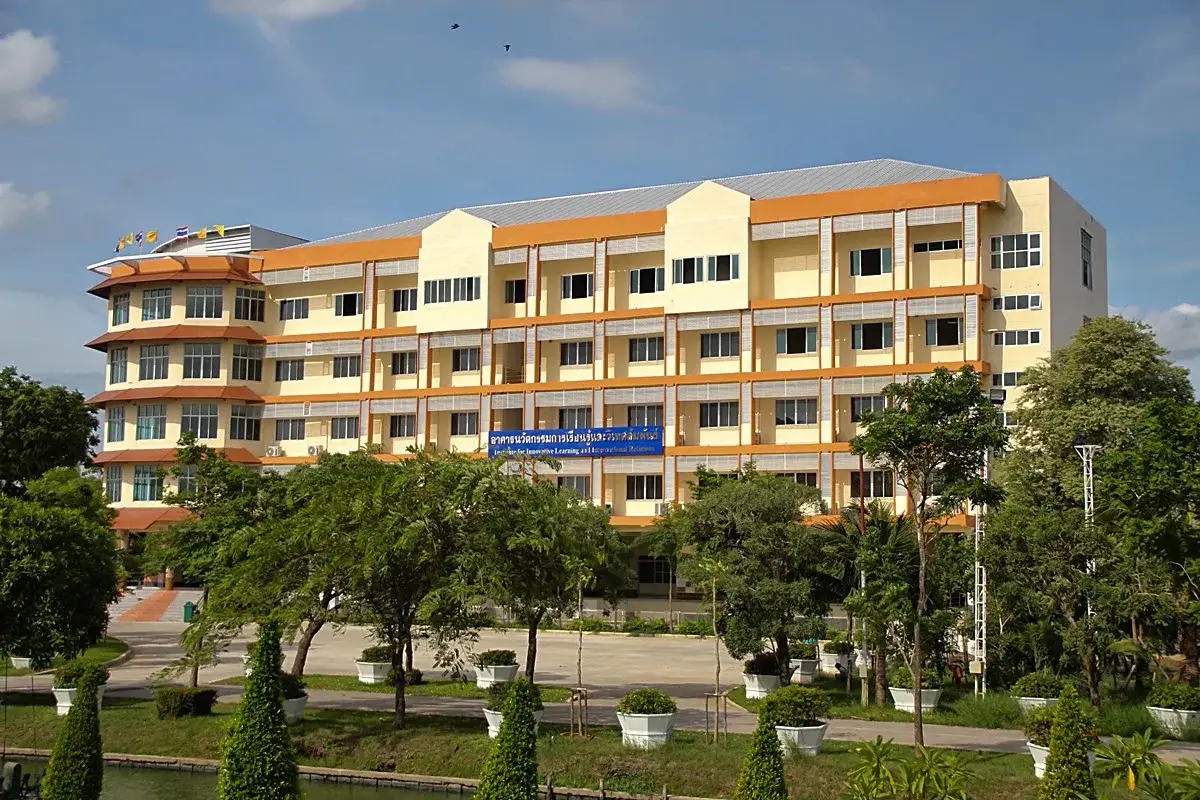
Thonburi University
Open Days: Monday – Sunday (According to the University's Published Contact Hours)
Opening Hours: 8:00 AM – 5:00 PM
Thonburi University (TRU), known in Thai as มหาวิทยาลัยธนบุรี, is a private university located at 248 Soi Phet Kasem 110, Phet Kasem Road, Nong Khang Phlu, Nong Khaem, Bangkok 10160, Thailand. Its educational heritage spans more than half a century, beginning with the establishment of the Muban Khru Industrial and Commercial Technical School on June 5, 1969. The institution later developed into Thonburi Technology College, officially established on March 27, 1998, before attaining university status on January 16, 2007. Today, Thonburi University is associated with engineering, industrial technology management, business administration, accounting, science and technology, postgraduate education, and sports development. Its main campus covers approximately 101 rai of land, and it also has a northern campus in Lamphun Province. Guided by its philosophy of building intellectual capital, developing virtue, and contributing to society, the university embraces the idea of a “University for All,” providing educational opportunities that combine professional competence with ethical and social responsibility.
Thonburi University is situated in western Bangkok along the Phet Kasem Road corridor, an important transportation route connecting Bangkok's Thonburi districts with neighboring Nakhon Pathom and Samut Sakhon provinces. Its surrounding neighborhoods include residential communities, commercial establishments, educational institutions, and traditional Buddhist temples. Nong Khaem also has historical connections with the Khlong Phasi Charoen canal network and the expansion of the city towards the western suburbs. This environment gives the university a different character from institutions located in Bangkok's central business districts.
One of the most important features of the university's history is its connection to a community known as “Khurukham Phatthana,” or the Teachers' Village. This community originated from the cooperation of teachers who wanted to establish homes and educational opportunities in a suburban area. Their efforts combined community development with technical and vocational training, making education more accessible to people living outside the central city.
The founding history of Thonburi University began with the vision of Ajarn Supachai Yaemchuti, an educational pioneer involved in private vocational training in Thailand. At a time when national economic development policies were stimulating industrial expansion, he recognized that Thailand needed more technically trained workers. Existing vocational institutions were not sufficient to meet the growing demand for industrial personnel. He therefore developed the idea of establishing a private technical school that would prepare young people for employment and provide opportunities for further education.
During the early planning stages, Supachai consulted Ajarn Sitthiphon Phlachiwin, who had played an important role in developing public-sector industrial vocational education. Their discussions helped shape an educational approach that brought together industrial skills and commercial knowledge. The concept behind the institution could be summarized as the relationship between production and commerce: technical workers create products, while commercial professionals bring them to the market.
The Muban Khru Industrial and Commercial Technical School officially opened on June 5, 1969, at Khurukham Phatthana, 57/2 Moo 2, Soi Supachai, Phet Kasem Road, an area now associated with Soi Phet Kasem 110. The opening ceremony was presided over by the Supreme Patriarch of Thailand, Somdet Phra Sangharaja Juan Utthayi, from Wat Makut Kasattriyaram. Supachai Yaemchuti served as the school's director, while Ajarn Raeib Yaemchuti was its owner and manager. This event established the educational foundation from which Thonburi University would eventually emerge.
In its earliest years, the school offered vocational certificate programs in mechanical trades, construction, and commerce. These programs were designed for students seeking practical qualifications in industries and businesses. In 1970, the school introduced surveying education, an important development within Thailand's private vocational education sector. Surveying skills were particularly relevant as infrastructure, roads, buildings, and public utilities expanded under national development plans.
In 1975, the school broadened its curriculum by introducing agricultural studies, reflecting the continuing importance of agriculture to Thailand's economy. The combination of technical trades, commerce, and agriculture gave learners additional pathways and helped the institution respond to the different needs of local communities and employers.
The institution adopted the name Muban Khru Technology School in 1979, reflecting its growing emphasis on technical education and the changing technological environment. This marked a further stage in the school's development as it prepared to offer education beyond the basic vocational certificate level.
Beginning in 1981, the school expanded into higher vocational diploma education. Initial departments included automotive technology, surveying, and electrical technology, followed by construction technology, industrial technology, and electronics. These programs created progression opportunities for vocational students and helped prepare technicians and supervisors for Thailand's expanding industrial sector.
Supachai Yaemchuti remained committed to the belief that vocational students should have the opportunity to complete bachelor's degrees. He began planning for the development of a higher education institution, including educational facilities, academic resources, and new buildings. However, he passed away on July 16, 1992, before the university project could be completed, temporarily delaying its implementation.
His educational vision was subsequently carried forward by his family and colleagues. Mae Chi Raeib Yaemchuti played a central role in supporting the project, helping to bring together the resources necessary to establish a private higher education institution. The first phase of development involved approximately 50 rai and 43 square wah of land, with two connected four-story reinforced-concrete buildings providing a combined usable floor area of around 14,100 square meters.
The foundation stone ceremony for the new buildings was conducted with the participation of Somdet Phra Phutthachan Kiao Upaseno of Wat Saket Ratchaworamahawihan, an event of spiritual significance to the project supporters. After completing the necessary buildings and administrative preparations, the organizing committee submitted an application to establish a private higher education institution under the applicable Thai legislation.
On March 27, 1998, Thailand's Ministry of University Affairs granted License No. 2/2541 for the establishment of Thonburi Technology College. Ajarn Naphawan Yaemchuti became the license holder, and Ajarn Bancha Koetmanee served as rector. The establishment was subsequently published in the Royal Gazette, Volume 115, Part 37, on May 7, 1998. The college began admitting and teaching students during the first semester of the 1998 academic year, fulfilling the founder's long-standing ambition to create a university-level educational pathway.
From 1998 onward, Thonburi Technology College continued to develop its academic buildings, laboratories, administration, and facilities. The institution also created the King Taksin the Great Park and expanded the total campus area to approximately 101 rai. These improvements supported academic activities, student life, and the development of sports facilities, preparing the institution for a broader role in higher education.
On January 16, 2007, Thonburi Technology College officially changed its status and name to Thonburi University. This represented a major milestone in the institution's history. January 16 was subsequently designated as the university's annual foundation day, commemorating its transition from a technology college into a university and its continuing mission to provide higher education aligned with Thailand's development needs.
The institution's history therefore contains three important dates. Its vocational education roots began in 1969, its legal establishment as a private higher education institution took place in 1998, and its university status began in 2007. By 2026, the educational tradition originating with the Teachers' Village had reached 57 years, while the university-level institution had existed for 28 years. Understanding these separate milestones is essential for appreciating the university's gradual and sustained development.
Ajarn Supachai Yaemchuti is one of the most important figures in the history of Thonburi University. He initiated the industrial and commercial educational project, helped develop vocational education in the Teachers' Village, and promoted the idea of enabling vocational graduates to continue into university education. His contribution lies in widening educational opportunity, preparing personnel for industrial employment, and linking education to the practical needs of Thailand's economy.
Mae Chi Raeib Yaemchuti played an equally important role in continuing the founder's work. Following Supachai's death, she supported the establishment of the higher education institution and helped ensure that the original plans were carried forward. The combined efforts of the Yaemchuti family, teachers, and administrators made the founding of Thonburi Technology College possible in 1998.
Dr. Bancha Koetmanee has also been an important figure in the university's development, serving as rector from the establishment of Thonburi Technology College and continuing as a university leader in subsequent years. The development of academic programs, educational facilities, and administrative systems reflects the combined efforts of the university's leadership and academic personnel over successive stages of institutional growth.
The philosophy of Thonburi University emphasizes building intellectual capital, developing moral character, and contributing constructively to society. It reflects the belief that education should go beyond professional knowledge and develop responsibility, ethical judgment, and the ability to benefit others. Its vision of becoming a “University for All” places educational opportunity alongside the development of graduates who meet professional standards and can adapt to changing technologies and social conditions.
The name “Thonburi University” is connected to the historical identity of Bangkok's western districts. Thonburi was once a separate province and has a rich history linked with communities along the Chao Phraya River and its canal network. Although the university's present campus is in Nong Khaem, its name expresses a wider association with the heritage and educational development of western Bangkok.
The Faculty of Engineering continues the university's original educational strengths in industrial technology and vocational training. Its published fields include Electrical Engineering, Mechanical Engineering, Industrial Engineering, and Industrial Technology Management. The faculty's educational activities involve mathematics, science, engineering design, experimentation, and the application of technology in industries and organizations.
Electrical Engineering addresses electrical systems, equipment, industrial controls, and the application of electrical power. Mechanical Engineering focuses on machinery, mechanisms, energy systems, and manufacturing technologies. Industrial Engineering deals with production efficiency, planning, resource management, and quality improvement. These fields prepare students for technical work requiring analytical skills, engineering knowledge, and the ability to solve practical problems.
Industrial Technology Management is a particularly relevant discipline for students seeking to combine technical expertise with management capabilities. It relates to production management, quality control, process improvement, and coordination between engineering and administrative teams. The field is also relevant to graduates of higher vocational diploma programs who wish to continue their education at university level.
The Faculty of Business Administration develops professionals in management, marketing, digital business, logistics, and international business operations. The university's published academic information includes Management, Marketing, Business Computing, Logistics Management, International Business Management, and Tourism Business Management. These fields help students understand organizational processes, information analysis, business communication, and decision-making in competitive economic environments.
Management studies focus on planning, organization, leadership, and personnel management. Marketing education explores consumer behavior, sales strategy, marketing communication, and digital tools. Logistics Management is connected to transportation, warehouse operations, purchasing, and supply chain activities, all of which are important to Thailand's manufacturing and commercial sectors.
Business Computing and related digital business studies have become increasingly important as organizations adopt information systems and online services. Programming, databases, digital platforms, and information security can be applied to different commercial environments. International Business Management and Tourism Business Management connect administrative skills with trade, hospitality, service management, and working across cultures.
The Faculty of Accountancy provides education in accounting and financial information systems. Its curriculum develops knowledge of financial reporting, auditing, cost accounting, taxation, and the analysis of organizational financial performance. Accounting is essential to both private enterprises and public organizations because accurate financial information supports management decisions, compliance, and organizational transparency.
Accounting education also emphasizes professional standards, responsibility, and ethical practice. The university publishes information on its Bachelor of Accountancy and Master of Accounting programs. Contemporary accounting education is closely connected with digital information systems, as organizations increasingly use specialized software and analytical tools for financial management.
The Faculty of Science and Technology contributes to education in information technology, digital media, and related digital disciplines. Published fields include Information Technology and Digital Media Technology, while the university's 2026 quality assurance planning also refers to Data Science and Information Technology. These areas are connected to computing, software development, information systems, digital creativity, and the wider digital economy.
Information Technology develops knowledge of programming, computer networks, databases, systems analysis, and application development. Digital Media Technology combines creative design with digital content production, an increasingly important skill set in media industries, marketing communication, and online experiences. In May 2026, the university also publicized admissions activity relating to its Digital Media Technology program.
The Graduate School provides further education for graduates and working professionals who wish to develop advanced academic or professional qualifications. The university publishes information about its Master of Business Administration, Master of Education in Educational Administration, Master of Accounting, and Graduate Diploma in Teaching Profession. These programs support research, organizational leadership, educational administration, and professional development.
The university's quality assurance documentation also identifies the Doctor of Business Administration program. Admission availability, teaching schedules, and conditions for each postgraduate program depend on current university announcements. Prospective students can consult the responsible academic office for information about the specific intake and program requirements.
Thonburi University Northern Campus in Lamphun Province represents an important expansion of educational opportunities beyond Bangkok. Located at 197 Moo 8, Ban Thi Subdistrict, Ban Thi District, Lamphun 51180, the northern campus forms part of the university's wider educational network. Its academic information includes Management, Accounting, and Industrial Technology Management, helping students in northern Thailand access university education closer to their homes.
The northern campus is relevant to the economic environment of Lamphun and neighboring Chiang Mai, where agriculture, services, industrial manufacturing, and regional business activities play significant roles. Management and industrial technology education can contribute to the development of personnel needed by these sectors, while accounting education supports the operations of businesses and local organizations.
Research and innovation are another part of Thonburi University's academic mission. Research and development units support scholarly work and cooperation with external partners. Academic projects often involve the application of engineering, technology, and management knowledge to practical challenges. In July 2026, the university publicized the recognition of a student or research project titled “MES66 Radio-Controlled Firefighting Robot,” associated with a competition involving Thailand's National Research Council.
The firefighting robot project illustrates the integration of mechanical design, electronics, remote controls, and safety-oriented engineering. Developing such a system requires students to combine theoretical understanding with prototype construction, testing, and problem-solving, reflecting the practical educational tradition that has shaped the university since its vocational beginnings.
The university has also developed academic relationships with overseas institutions. In July 2026, university administrators visited Royal Thimphu College, and the institution publicized educational cooperation with a college in Myanmar. International engagement supports the exchange of academic approaches and creates opportunities for cooperation in teaching, research, and professional development.
Quality assurance has also become an important part of the university's institutional development. Its academic planning documents discuss adopting the AUN-QA approach, associated with the ASEAN University Network, for evaluating and improving programs. The university's planned activities involve Management, Marketing, Digital Business Computing, Accounting, and Data Science and Information Technology. Such systems help universities review educational outcomes and improve program quality.
Sports development and athletic achievement distinguish Thonburi University from many institutions with similar vocational and professional backgrounds. The expansion of the campus to support sports facilities forms part of its long-term development strategy. Thonburi Stadium and other athletic venues provide space for training, competition, and student activities. The university has publicized achievements by its students in women's football and has been connected with football development through Thonburi United activities.
Sports play a broader role than competitive achievement alone. Athletic activities promote discipline, physical health, teamwork, and the development of individual talent. The university publishes information about sports scholarships, providing another educational opportunity for students who wish to develop their academic and athletic abilities together.
Important campus facilities include academic buildings, administrative offices, and specialist facilities such as the Yaemchuti Building, the Multipurpose and Graduate School Building, the Innovation Learning and International Relations Building, the library and information services, and the Computer and Information Center. Each contributes to the university's academic, administrative, or student-support activities.
The Yaemchuti Building is particularly significant because its name is associated with the family that played a central role in founding the institution. It also houses the Office of the President. The Innovation Learning and International Relations Building reflects the university's interest in educational development and international connections, while the Multipurpose and Graduate School Building supports events and advanced academic activities.
Library and information services provide resources for students and staff engaged in study and research. The Computer and Information Center supports digital systems used across the institution. The university also maintains online registration services, academic calendars, and e-Learning systems, helping students access information and academic services through technology.
King Taksin the Great Park, within the university grounds, forms part of the landscaped campus environment. The park's name refers to King Taksin the Great, an important historical figure associated with the former Thonburi capital. Its presence connects the university's name with the wider historical memory of western Bangkok, while also providing green space for relaxation and university activities.
Sports venues such as Thonburi Stadium, futsal courts, and badminton courts are important campus resources. They support student training, athletic events, and physical recreation. Attendance at competitions and access to sports facilities are subject to event schedules and university regulations, while access to laboratories and specialist teaching areas may require permission.
University traditions and campus culture are connected with the recognition of the founders, respect for teachers, and the development of relationships between students and academic personnel. January 16 is observed as Thonburi University's foundation day, commemorating the institution's change from Thonburi Technology College to university status in 2007. The date provides an opportunity to reflect on the university's history, achievements, and continuing responsibilities.
Graduation ceremonies are another important part of university life. For graduates of the 2024–2025 academic years, the university announced a rehearsal on February 21, 2026, followed by the graduation ceremony on February 22, 2026. Such occasions recognize academic achievement and mark the transition of graduates into professional and community life.
Thonburi University has also been involved in volunteer initiatives and community development. Its cooperation with the UNITE Thailand network has supported activities involving youth and social service. These experiences are connected to the university's philosophy of developing moral character alongside professional competence, encouraging students to contribute to the wider society.
The university's relationship with the Nong Khaem community reaches back to the Teachers' Village era, when teachers worked together to develop education and community life. The institution has contributed to educational opportunity and the surrounding local economy through demand for restaurants, shops, apartments, transportation, and other services supporting students and university staff.
The university's surrounding area includes Buddhist temples that remain important community institutions. Wat Udom Rangsi, located along the Phet Kasem corridor, is associated with religious ceremonies and public service activities organized with Bangkok's local authorities. The coexistence of educational institutions and temples reflects the continuing importance of education, religion, and community service in the social life of Nong Khaem.
Educational visits and campus exploration may be of interest to secondary-school students, parents, prospective applicants, and organizations studying the development of private higher education in Thailand. Thonburi University offers an example of institutional progression from vocational training to undergraduate and postgraduate education. Educational visits may address the university's history, engineering education, campus facilities, and sports development, subject to arrangements with the institution.
Prospective applicants can access online registration and admission information through the university's official admissions system. Published scholarship categories include the Supachai Scholarship, Raeib Scholarship, Raeibchai Scholarship, sports scholarships, and activity-related scholarships. These opportunities reflect the institution's commitment to supporting learners with different abilities and financial circumstances.
Getting There: Thonburi University is located inside Soi Phet Kasem 110, off Phet Kasem Road in Bangkok's Nong Khaem District. Visitors traveling by private car from central Bangkok can follow Phet Kasem Road through Bang Khae and continue towards Nong Khaem. Travelers arriving from Nakhon Pathom or Samut Sakhon can use connecting roads to access the Phet Kasem corridor. Navigation applications can help identify the university entrance and a suitable route.
Public transport users can take the MRT Blue Line to Lak Song Station and then continue by public bus or taxi towards Soi Phet Kasem 110. Bus route information for the area includes Routes 80, 81, 84, 123, 163, 189, and 547. Passengers should confirm current routes and stops before traveling because Bangkok's bus services and route numbering systems may change.
The university has also publicized shuttle van arrangements for selected student schedules, especially Sunday classes. Advertised travel areas have included Ratchaburi, Nakhon Pathom, Samut Sakhon, Samut Songkhram, and parts of eastern Thailand. Students interested in this service should contact the university directly to confirm whether a particular route is operating during the current academic term.
The university's LINE Official account publishes daily contact hours of 8:00 AM to 5:00 PM, Monday through Sunday. These hours are useful for planning initial inquiries but do not establish uniform access times for every faculty, administrative office, classroom, or specialist facility. Visitors requiring assistance from the Registrar's Office, Graduate School, or academic departments should confirm the relevant department's schedule.
Places of interest around Thonburi University reflect the character of western Bangkok's local communities. They include Wat Udom Rangsi, Wat Nong Khaem, Wat Si Samran Ratsad Bamrung, Wat Thong Niam, and Nong Khaem Community Market. These destinations provide opportunities to experience Buddhist religious traditions, local markets, and everyday neighborhood culture.
Soi Phet Kasem 110 and nearby streets also contain a range of restaurants, cafés, and student-oriented services. Visitors may find Vietnamese food, steak restaurants, barbecue dining, toast and dessert shops, and coffee establishments. Accommodation options in the wider district include budget apartments and hotels, providing practical choices for students, families, and visitors attending university activities.
Thonburi University represents an important example of an educational institution that developed from vocational training into private university education. Its roots extend to 1969, and its academic responsibilities have continued to evolve through 2026. Over the decades, it has expanded its teaching disciplines, developed academic facilities, established a northern campus, and supported sports and community activities. Its significance lies in the combination of professional education, wider educational access, and the continuation of a philosophy centered on intellectual development, moral responsibility, and service to society.
| University Name | Thonburi University (TRU) |
| Institution Type | Private University |
| Location | Nong Khang Phlu, Nong Khaem, Bangkok, Thailand |
| Address | 248 Soi Phet Kasem 110, Phet Kasem Road, Nong Khang Phlu, Nong Khaem, Bangkok 10160, Thailand |
| Educational Origins | Muban Khru Industrial and Commercial Technical School, Opened June 5, 1969 |
| Higher Education Institution Established | March 27, 1998, as Thonburi Technology College |
| University Status Granted | January 16, 2007 |
| Institutional History in 2026 | 57 Years Since the Vocational School's Founding; 28 Years Since the Establishment of the Higher Education College |
| Educational Founder | Ajarn Supachai Yaemchuti |
| Other Key Figures | Mae Chi Raeib Yaemchuti, Ajarn Naphawan Yaemchuti, and Dr. Bancha Koetmanee |
| University President | Dr. Bancha Koetmanee |
| University Philosophy | Building Intellectual Capital, Developing Virtue, and Contributing to Society |
| University Vision | University for All |
| Main Campus Area | Approximately 101 Rai |
| Main Faculties | 1. Faculty of Engineering 2. Faculty of Business Administration 3. Faculty of Accountancy 4. Faculty of Science and Technology |
| Postgraduate Education | Graduate School |
| Northern Campus | 197 Moo 8, Ban Thi, Ban Thi District, Lamphun 51180, Thailand |
| Academic Strengths | Electrical Engineering, Mechanical Engineering, Industrial Engineering, Industrial Technology Management, Marketing, Management, Logistics, Accounting, and Information Technology |
| Sports Development | Athletic Development, Sports Excellence Programs, and Thonburi Stadium |
| Important Campus Facilities | Yaemchuti Building, Multipurpose and Graduate School Building, Innovation Learning and International Relations Building, Library Services, Computer and Information Center, King Taksin the Great Park, and Thonburi Stadium |
| Traditions and Major Events | University Foundation Day on January 16, Graduation Ceremonies, Student Activities, Sports Events, and Community Service Projects |
| Published Open Days | Monday – Sunday (University Contact Channel) |
| Published Opening Hours | 8:00 AM – 5:00 PM (University Contact Channel) |
| Campus Visits | Contact the University in Advance to Arrange Educational Visits and Access to Specialist Facilities |
| Facilities | Teaching Buildings, Laboratories, Library, Online Registration, e-Learning System, Sports Stadium, Futsal and Badminton Courts, and Parking Areas |
| Getting There | By Car via Phet Kasem Road and Soi Phet Kasem 110, or MRT Blue Line to Lak Song Station Followed by Taxi or Local Public Bus |
| Nearby Attractions and Landmarks | 1. Wat Udom Rangsi, Nong Khaem 2. Wat Nong Khaem, Nong Khaem 3. Wat Si Samran Ratsad Bamrung, Nong Khaem 4. Wat Thong Niam, Nong Khaem 5. Nong Khaem Community Market, Phet Kasem 81/1 Area |
| Nearby Restaurants and Cafés | 1. Pho Yokmor Phet Kasem 110 2. Melody Corner, Soi Phet Kasem 110 3. Yang Noey, Phet Kasem 110 4. Pang Aiya, Phet Kasem 110 5. Kase Eye Coffee, Building G, Thonburi University |
| Nearby Accommodation | 1. M Mansion @ Phetkasem 110, Soi Phet Kasem 110 Yaek 7 2. 10 Park Resort, Soi Phet Kasem 108 Yaek 10 3. My Place 77/2, Nong Khaem 4. Studio 41 Salaya–Sai 4, Sam Phran, Nakhon Pathom 5. Aspira Phetkasem, Om Noi, Samut Sakhon |
| University Telephone | +66 2 809 0823 Ext. 233 |
| Office of the President | +66 2 809 0823 Ext. 155 |
| LINE Official | @thonburi |
| Official Website | https://www.thonburi-u.ac.th/ |
| Admissions Website | https://ads.thonburi-u.ac.th/ |
| Current Status | Operating Private University With Admissions Available for the 2026 Academic Year |
Academic Programs and Fields of Study at Thonburi University, Academic Year 2026 (2569)
| Faculty of Engineering | Bachelor's Degree 1. Bachelor of Engineering in Electrical Engineering 2. Bachelor of Engineering in Mechanical Engineering 3. Bachelor of Engineering in Industrial Engineering 4. Bachelor of Technology in Industrial Technology Management |
| Faculty of Business Administration | Bachelor's Degree 1. Bachelor of Business Administration in Management 2. Bachelor of Business Administration in Marketing 3. Bachelor of Business Administration in Business Computing 4. Bachelor of Business Administration in Logistics Management 5. Bachelor of Business Administration in International Business Management 6. Bachelor of Business Administration in Tourism Business Management |
| Faculty of Accountancy | Bachelor's Degree 1. Bachelor of Accountancy in Accounting |
| Faculty of Science and Technology | Bachelor's Degree 1. Bachelor of Science in Information Technology 2. Digital Media Technology 3. Data Science and Information Technology |
| Graduate School | Graduate Diploma 1. Graduate Diploma in Teaching Profession 2. Graduate Diploma in Mobile Application Development Master's Degree 1. Master of Business Administration 2. Master of Education in Educational Administration 3. Master of Accounting |
| Doctoral Education | Doctoral Degree 1. Doctor of Business Administration |
| Thonburi University Northern Campus, Lamphun | Bachelor's Degree Fields 1. Management 2. Accounting 3. Industrial Technology Management |
Frequently Asked Questions (FAQ)
Q: Where is Thonburi University located?
A: Thonburi University is located at 248 Soi Phet Kasem 110, Phet Kasem Road, Nong Khang Phlu, Nong Khaem, Bangkok 10160, Thailand.
Q: Is Thonburi University still operating?
A: Yes. Thonburi University is operating and maintains admissions for the 2026 academic year through its official website.
Q: What are the opening days and hours of Thonburi University?
A: The university's LINE Official account publishes contact hours of Monday through Sunday, from 8:00 AM to 5:00 PM. Individual administrative departments and specialist facilities may follow different schedules.
Q: When was Thonburi University established?
A: Its educational origins date to June 5, 1969, when the Muban Khru technical school opened. Thonburi Technology College was officially established on March 27, 1998, and became Thonburi University on January 16, 2007.
Q: Who founded Thonburi University?
A: Ajarn Supachai Yaemchuti initiated the educational tradition from which the university developed. Mae Chi Raeib Yaemchuti and the Yaemchuti family later continued the project that led to the establishment of the higher education institution.
Q: What faculties does Thonburi University have?
A: The university has four main faculties: Engineering, Business Administration, Accountancy, and Science and Technology. It also has a Graduate School.
Q: Does Thonburi University have another campus?
A: Yes. The Northern Campus is located in Ban Thi District, Lamphun Province, and provides education in fields including Management, Accounting, and Industrial Technology Management.
Q: What is Thonburi University known for?
A: The university is known for its long history of vocational and engineering education, as well as business administration, accounting, information technology, and sports development.
Q: How can I reach Thonburi University by MRT?
A: Take the MRT Blue Line to Lak Song Station and continue by public bus or taxi along Phet Kasem Road to Soi Phet Kasem 110.
Q: Can members of the public visit Thonburi University?
A: Educational visits can be arranged by contacting the university. Entry to classrooms, laboratories, sports facilities, and other specialist areas is subject to university regulations and availability.
Q: How can I contact Thonburi University?
A: Call +66 2 809 0823, extension 233, contact the university's LINE Official account at @thonburi, or visit https://www.thonburi-u.ac.th/.
 Category: ●University
 Group: ●Private University
Last Update : 1 WeekAgo
 Last Update : 1 WeekAgo

 Click to Access the Navigation Map GPS
Thonburi University Map
Recommend

 Art, Culture and Heritage
 Historical Sites and Monuments(3)
 Landmarks and Memorials(23)
 Royal Palace(13)
 Art, Craft Centres, Tradition(35)
 Museums(59)
 Historic Homes and Cities(3)
 Art Gallery(16)
 Educational Places
 Museum for Study(6)
 Library(4)
 Public university(8)
 Autonomous Universities(8)
 Rajamangala University of Technology(6)
 Rajabhat University(6)
Private University(22)
 Places of Worship
 Temple(72)
 Church(2)
 Mosque(67)
 Other Sacred Sites(8)
 Research and Development
 Royal Project(1)
 Suburban Living
 Village, Community(5)
 Local Market(9)
 Floating Market(2)
 Nature and Wildlife
 River, Canal(3)
 Bays and Beaches(1)
 Other natural attractions(1)
 Entertainment and Agricultural
 Zoos and Aquariums(5)
 Animal camps and shows(5)
 Stadium(9)
 Farms, Parks and Ecotourism(20)
 Amusement Park(1)
 Waterpark(4)
 Theater(7)
 Cinema(1)
 Shopping
 Shopping and Night Market(20)
 Department Store(7)
 Spas and Wellness
 Spas and Wellness(1)
 Restaurant
 Michelin Star(5)
 Accommodation
 Hotel(3)
 Call Customer Service in Tourism
 Call Customer Service in Tourism(1)
 Travel Articles, Recipes
 Travel Review, Food Review(43)
 Royal Thai Desserts and Recipes(56)


