
lovethailand home >Central Travel Attractions >Bangkok Travel Attractions >Dusit >Wachira Phayaban > Navamindradhiraj University
TL;DR: Navamindradhiraj University is located at Wachira Phayaban, Dusit District, Bangkok, Thailand, open Monday – Friday (Closed on Saturdays, Sundays, and Public Holidays), hours 08:00 – 16:00 (University Administrative Office Hours).

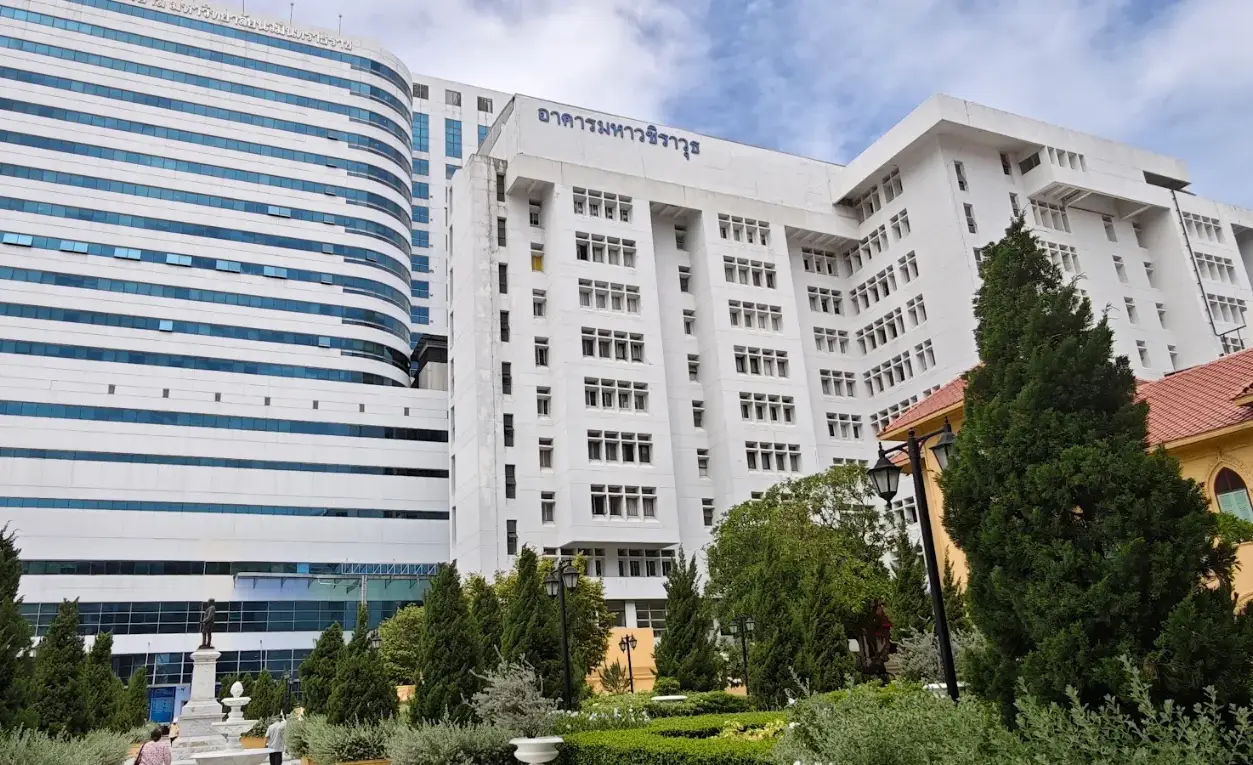
Navamindradhiraj University
Open Days: Monday – Friday (Closed on Saturdays, Sundays, and Public Holidays)
Opening Hours: 08:00 – 16:00 (University Administrative Office Hours)
Navamindradhiraj University (NMU) is a public higher education institution under the supervision of the Bangkok Metropolitan Administration (BMA), located at 3 Thanon Khao, Wachira Phayaban, Dusit, Bangkok 10300, Thailand. The university was officially established on November 13, 2010, under its original name, the University of Bangkok Metropolis. It received the royally bestowed name Navamindradhiraj University, which came into legal effect on June 21, 2013. Recognized as Thailand's first local-government university, NMU specializes in urban medicine, medical and nursing education, health sciences and technology, metropolitan administration, and urban community development. Its heritage extends back to Vajira Hospital, established on January 2, 1912, and the Bangkok municipal nursing school founded on May 20, 1954. In 2026, the university is led by Associate Professor Pongsak Noipayak, M.D., and follows a development vision focused on advancing urban knowledge and improving the quality of life of metropolitan residents. Its mission combines education, scientific research, professional training, innovation, and public services designed to address the distinctive challenges of Bangkok and other growing cities.
Navamindradhiraj University differs from most Thai public universities because it is administered within the institutional framework of Bangkok's local government. The Bangkok Metropolitan Administration is a special form of local government responsible for Thailand's capital, and the university's academic mission is consequently closely linked to public health, municipal management, transportation, community services, and urban living conditions. Its students are encouraged not only to develop professional knowledge but also to understand how their expertise can contribute to the everyday needs of city residents.
The university's principal academic and administrative facilities are concentrated in the Wachira Phayaban area of Dusit District, an established part of inner Bangkok near the Chao Phraya River. The neighborhood is connected by Samsen Road, Ratchawithi Road, Thanon Khao, and surrounding local streets. The university includes medical teaching buildings, nursing facilities, administrative offices, health science classrooms, research spaces, and academic units concerned with metropolitan development. Rather than occupying a single isolated suburban campus, many of its facilities are integrated into the surrounding urban neighborhood.
Understanding the history of Navamindradhiraj University requires examining several institutions that existed long before the university was formally created. Although NMU became a university in 2010, its most important founding institutions have much longer histories. Vajira Hospital dates to the reign of King Vajiravudh, Rama VI, while the roots of Kuakarun Faculty of Nursing lie in nursing education organized by Bangkok's municipal authorities. The university's story therefore connects royal initiatives in healthcare with the gradual development of public health services, medical education, and municipal administration.
One of the earliest and most significant developments was King Vajiravudh's decision to establish a hospital for the people of Bangkok. He used his personal funds to purchase land and existing buildings on Samsen Road, with the original hospital grounds covering approximately 27 rai. Chao Phraya Yommarat, also known as Pan Sukhum, was assigned to oversee the conversion of the property into a medical institution and the preparation of suitable medical equipment and facilities.
On January 2, 1912, King Vajiravudh officially inaugurated the hospital and bestowed the name Vajira Hospital. He donated it as a public institution for the benefit of the Thai people. The founding of Vajira Hospital is an important event in Bangkok's medical history because it represented a commitment to healthcare as a public service. Its purpose was to relieve suffering caused by illness and provide medical care that could help people regain their health and return to everyday life.
During its earliest years, Vajira Hospital operated under public health administrative systems associated with the government and the city's sanitation authorities. On June 1, 1914, parts of Samsen Hospital were incorporated into Vajira Hospital, contributing to the development of its healthcare facilities. The hospital gradually expanded its medical services, number of beds, and professional staff as the population of Bangkok increased and the need for organized healthcare became more substantial.
In 1923, Vajira Hospital developed a more formal governing structure involving a committee responsible for administration and institutional development. Members of the royal family and leading medical figures participated in establishing rules and supporting its operation. This transition helped transform the hospital from a royal public-benefit initiative into a professionally managed institution with a growing role in the healthcare system.
In 1927, the hospital introduced training related to midwifery, recognizing the importance of professional maternal and newborn care. Midwifery education was particularly valuable at a time when Thailand was expanding modern medical practices and addressing shortages of trained health personnel. The development of such training contributed to improvements in the delivery of healthcare in hospitals and surrounding communities.
On December 17, 1937, responsibility for Vajira Hospital was transferred from the Department of Public Health to Bangkok's municipal administration. This change strengthened its relationship with the provision of public services by local government. By 1955, the hospital had become a recognized administrative unit within the municipality, reflecting the increasing role of city authorities in providing medical care to residents.
A major development in nursing education occurred on May 20, 1954, when Bangkok's municipal authorities established the Vajira Nursing, Midwifery and Public Health School. The institution was created to train nurses for hospitals and municipal health centers. It became one of the principal foundations of today's Kuakarun Faculty of Nursing. Its early curriculum combined academic knowledge with practical clinical and midwifery training to meet the increasing demand for professional nurses.
On May 17, 1970, another nursing school began operating at Bangkok Metropolitan Administration General Hospital. The existence of multiple nursing schools reflected the expansion of the municipal healthcare system and the growing requirement for trained personnel. Over time, Bangkok's administrators recognized that combining the institutions could improve the use of resources, teaching facilities, and academic expertise.
On September 30, 1976, the two nursing institutions were consolidated and received the royally bestowed name Kuakarun College of Nursing from King Bhumibol Adulyadej, Rama IX. The college played a significant role in preparing nurses for Bangkok's public healthcare network and later developed an academic affiliation with Mahidol University. Its eventual transition into a university faculty in 2010 created the present Kuakarun Faculty of Nursing.
Bangkok's plans for independent medical education led to another major milestone in 1993. On January 27 of that year, a decision was made to establish Bangkok Metropolitan Medical College. The college was developed under the Bangkok Metropolitan Administration, with academic cooperation involving Mahidol University during its early years. It was intended to prepare physicians while strengthening the professional and academic capabilities of Bangkok's public hospitals.
In 1998, the administration of Bangkok Metropolitan Medical College and Vajira Hospital was reorganized to bring medical education and hospital operations more closely together. The combined institution became known as Bangkok Metropolitan Medical College and Vajira Hospital. This structure supported the integration of undergraduate medical education, clinical training, specialist development, research, and direct patient care.
From the late 1990s onward, the Bangkok Metropolitan Administration considered establishing a university dedicated to the needs of an expanding metropolis. Bangkok was already the country's leading center of economic activity, transportation, public administration, and healthcare, but its urban challenges were increasingly complex. They included population density, traffic management, environmental risks, healthcare inequality, building maintenance, and community development. The proposed university was intended to generate knowledge and train professionals capable of responding to these challenges.
The concept of a metropolitan university was based on the belief that urban development requires specialized academic disciplines and close cooperation with public service organizations. Medical and nursing education provided the initial foundations, while future academic programs would address urban management, local government, public health, safety, transportation, and community services. The city itself would become an important setting for education, research, and professional practice.
On November 13, 2010, the University of Bangkok Metropolis Act B.E. 2553 came into effect, officially establishing the University of Bangkok Metropolis. The new institution became a legal entity and a public university under the supervision of the Bangkok Metropolitan Administration. It was recognized as Thailand's first local-government university, creating a distinctive relationship between higher education and municipal administration.
At the time of its establishment, the university incorporated academic responsibilities, budgets, and resources from Bangkok Metropolitan Medical College and Vajira Hospital, together with Kuakarun College of Nursing. These institutions were reorganized as the Faculty of Medicine Vajira Hospital and Kuakarun Faculty of Nursing. The arrangement allowed two long-established professional education institutions to operate within a common university structure while maintaining their important connections with Bangkok's public healthcare services.
On November 19, 2010, the university established the Office of the University Council and the Office of the President to provide administrative support for the newly created institution. These offices helped coordinate academic development, organizational management, staffing, and institutional resources. Their establishment was especially important because the university had to integrate professional education and healthcare operations within a new administrative framework.
On June 3, 2012, King Bhumibol Adulyadej bestowed the name Navamindradhiraj University, traditionally explained as the university of the great ninth king. The legal change from the University of Bangkok Metropolis to Navamindradhiraj University was announced in the Royal Gazette on June 20, 2013, and took effect on June 21, 2013. The new name commemorated the royal connection to King Rama IX while preserving the university's purpose as a public institution serving Bangkok.
In 2013, the university expanded its academic responsibilities through the development of units specializing in metropolitan development and urban communities. The Metropolitan Development College was established to support education and research on city management, spatial planning, and public administration. Educational responsibilities connected with Bangkok's urban community programs were also incorporated into the university, eventually leading to the development of the Urban Community Development College.
The metropolitan development academic unit originated from the Bangkok Metropolitan Development Institute, established in 2008 to support research and knowledge concerning urban management. On December 27, 2013, its work was developed into an academic unit of Navamindradhiraj University. It subsequently expanded its activities in research, professional training, undergraduate education, and graduate studies relating to urban government and metropolitan management.
The Urban Community Development College developed from Bangkok's earlier efforts to provide accessible education and vocational development for urban residents. Its institutional roots date to community-focused education initiatives established in 2009. The college became part of the university's academic system in 2013 and adopted the name Urban Community Development College in 2017. Its programs address practical city-related fields such as facilities management, rail system maintenance, early childhood education, special education, and professional development.
The Faculty of Science and Health Technology was established to broaden the university's health science education beyond medicine and nursing. It focuses on specialist occupations that support urban healthcare and emergency response. Its undergraduate programs include Emergency Medical Services, Occupational Health and Safety in Healthcare Facilities, Disaster Management, and Medical Equipment and Operating Room Technology. These programs reflect the growing need for technically trained personnel in complex healthcare environments.
In 2026, the university is led by Associate Professor Pongsak Noipayak, M.D., who was royally appointed as president effective February 26, 2026. Its contemporary development direction is expressed through the concept "NMU: The Metropolitan University for Better City & Better Life." The university emphasizes digital transformation, organizational improvement, cooperation with professional and academic partners, and research that can generate meaningful results for urban communities.
Navamindradhiraj University's Four-Year Development Plan for 2026–2029 establishes a vision of leadership in academic disciplines for urban development and the quality of life of city residents. The plan emphasizes academic excellence in urban-related programs, accessible professional and medical services, digital organizational management, cooperation with external networks, and improvements in institutional governance. These priorities reinforce the university's identity as an institution dedicated to solving metropolitan challenges.
The university's emblem features the Hindu deity Indra riding the three-headed elephant Erawan, reflecting the official symbol of the Bangkok Metropolitan Administration. Above the emblem is a Pali phrase, "Vijja Uppatam Settha," expressing the idea that the emergence of wisdom is superior to other forms of achievement. The university's Thai name appears below the central symbol. The emblem represents the relationship among knowledge, public responsibility, and the university's institutional connection with Bangkok.
Dark green is the university's official institutional color, while the Mok Luang tree is its symbolic tree. The tree produces white flowers and contributes a natural element to the university's visual identity. Together, the color and tree help create a shared institutional identity among students, staff, and alumni, reinforcing the university's educational mission and commitment to better urban living.
November 13 is Navamindradhiraj University's foundation anniversary because it marks the date the founding legislation took effect in 2010. January 2 commemorates the establishment of Vajira Hospital, while May 20 is associated with the origins of the nursing education institution that developed into Kuakarun Faculty of Nursing. These dates represent different historical traditions that have become part of the wider university community.
University traditions and student activities include orientation programs, teacher appreciation ceremonies, professional uniform presentations, volunteer projects, student clubs, and commemorative events. Medical and nursing education places particular emphasis on ethics, professional responsibility, compassion, and respect for patients. Such values are reinforced through practical training and activities that encourage students to contribute to society.
In 2026, Kuakarun Faculty of Nursing organized activities that included clinical skills development, nursing and midwifery innovation competitions, emergency nursing training, and student sports events. These programs contribute to professional development, teamwork, and a shared sense of identity. They also demonstrate how nursing education extends beyond lectures to include practical skills, research, innovation, and student engagement.
The Faculty of Medicine Vajira Hospital is among the university's most important academic units. It developed from Vajira Hospital, which has served Bangkok since 1912. Located at 681 Samsen Road, Wachira Phayaban, Dusit, Bangkok 10300, the faculty provides undergraduate medical education, specialist training, research, and public medical services. Its distinctive academic focus is urban medicine and the preparation of healthcare professionals capable of responding to the changing needs of metropolitan populations.
Urban medicine addresses medical and public health challenges that are particularly important in large cities. These include chronic noncommunicable diseases, air pollution, accidents and emergencies, unequal access to healthcare, population aging, and disease management in densely populated communities. Medical students consequently need both clinical knowledge and an understanding of the social and environmental conditions influencing health.
The Doctor of Medicine program at the Faculty of Medicine Vajira Hospital is a six-year professional degree. Its curriculum includes fundamental medical sciences, preclinical education, and supervised clinical training. Students learn diagnosis, patient care, medical decision-making, and interprofessional cooperation while developing an understanding of ethics, safety, and the responsibilities associated with medical practice.
In addition to the medical degree, the faculty offers a Bachelor of Science in Radiological Technology and a Master of Science in Urban Disease Prevention and Control. It also provides specialist medical training through approved residency and postgraduate professional programs. These activities support the development of healthcare personnel across disease prevention, diagnostic technology, clinical care, and advanced medical practice.
Kuakarun Faculty of Nursing is located at 131/5 Thanon Khao, Wachira Phayaban, Dusit, Bangkok 10300. Its mission is to prepare nurses who possess professional knowledge, clinical competence, and the ability to care for diverse populations. The faculty offers the Bachelor of Nursing Science and master's degree education in Adult and Gerontological Nursing, Midwifery, and Community Nurse Practitioner studies. These fields are particularly relevant to healthcare delivery in a densely populated metropolitan area.
The faculty emphasizes clinical training and simulated learning environments. Students develop decision-making skills through nursing laboratories, simulation activities, and virtual reality learning tools. These facilities help future nurses practice communication, patient safety, emergency responses, and cooperation with other healthcare professionals before encountering complex situations during clinical placements.
The Faculty of Science and Health Technology contributes a wider range of technical and professional education to the university. Its undergraduate degrees cover Emergency Medical Services, Occupational Health and Safety in Healthcare Facilities, Disaster Management, and Medical Equipment and Operating Room Technology. Each field is linked to important operational responsibilities within healthcare and metropolitan safety systems.
Emergency Medical Services education prepares students to assess emergencies, provide appropriate early intervention, and cooperate with ambulance and hospital services. Disaster Management addresses planning and response for events such as major accidents, fires, natural disasters, and public health emergencies. Together, these disciplines contribute to the preparedness and resilience of urban communities.
Occupational Health and Safety in Healthcare Facilities examines workplace risks in hospitals and health service environments, including biological, chemical, physical, and organizational hazards. Medical Equipment and Operating Room Technology focuses on the safe use, maintenance, and management of medical technologies. These areas are increasingly important as hospitals rely on complex technical systems and specialized equipment.
The Institute of Metropolitan Development, which developed from the Metropolitan Development College, specializes in urban governance and professional education. Its academic work includes Public Administration in Urban Administration and Management and Communication-related service innovation programs. It also undertakes graduate studies and professional development connected with metropolitan management. The unit operates from facilities associated with Navamindra 1 Building in the Samsen area of Dusit.
The Bachelor of Public Administration in Urban Administration and Management prepares students to understand local government, urban policy, public resource management, and administrative decision-making. The Bachelor of Arts in Service Innovation develops skills connected with service industries, including healthcare service management and aviation business services as study concentrations within the program.
Academic work associated with Urban Community Development College addresses practical occupations and community-focused services. Its program areas include Building and Facilities Resource Management, Rail System Maintenance Technology, Early Childhood Education, Special Education, and Early Childhood Development. These fields respond to metropolitan needs ranging from public transportation and building management to accessible education for children and families.
Facilities Management education examines the operation, maintenance, and efficient use of buildings, including associated technical systems. Rail System Maintenance develops knowledge applicable to urban transit infrastructure and safety. Early Childhood and Special Education support the development of more inclusive educational services for families in cities with diverse social and economic circumstances.
The university's academic programs are linked by a common objective: preparing professionals capable of improving urban life. This applies to doctors treating patients in densely populated neighborhoods, nurses delivering community healthcare, emergency medical personnel responding to accidents, specialists maintaining medical equipment, urban administrators developing public services, and educators supporting children in metropolitan communities.
For the 2026 academic year, the university provides undergraduate and postgraduate programs across healthcare, emergency services, metropolitan administration, community development, and professional services. Most undergraduate programs are four-year degrees, while the Doctor of Medicine takes six years. Admissions depend on the requirements of individual faculties, professional regulations, and the applicable selection arrangements, including TCAS for participating programs. Prospective students should check the official course announcements for admission rounds, available places, qualifications, and teaching locations.
Navamindradhiraj University's research is strongly connected with the real challenges of Bangkok. Important areas include urban medicine, disease prevention and control, nursing care, emergency medicine, occupational safety, disaster preparedness, and metropolitan management. Research in these subjects can support public service improvement, professional practice, and the development of solutions suited to the needs of urban communities.
Medical research at the Faculty of Medicine Vajira Hospital examines complex health problems encountered in urban settings, while research at Kuakarun Faculty of Nursing addresses patient care, aging, midwifery, and community healthcare. The Faculty of Science and Health Technology contributes research and technical knowledge related to healthcare systems and safety. Cooperation among these units supports evidence-based improvements in medical and nursing services.
Research on metropolitan development also examines urban policy, transportation, land use, public services, and residents' quality of life. By combining social science, administration, and technology, researchers can develop recommendations for addressing city problems. The university's metropolitan development units also organize professional training for government officials and administrators involved in managing urban systems.
On September 17, 2026, the university held Research and Innovation Day 2026 to support the presentation and exchange of research and innovation. The event reflected NMU's objective of connecting academic knowledge with metropolitan development and improvements in quality of life. Such activities provide opportunities for researchers from different disciplines to collaborate on issues of public importance.
The university also promotes professional development through its urban excellence learning initiatives, including the NMU Urban Excellence Learning Center. Training programs address contemporary management skills and organizational development. This work extends the university's educational contribution beyond degree students to include professionals who need continuing education for work in government and public service organizations.
Important university landmarks include both modern teaching facilities and historic buildings associated with Vajira Hospital. One of the most distinctive is the Vajiranusorn Building, commonly known as the Yellow Building. It is an important surviving example of historic hospital architecture, featuring Western-influenced design elements associated with Bangkok's earlier period of public healthcare development.
The Vajiranusorn Building is recognizable for its yellow exterior, green shutters, and architectural details that contrast with the modern medical buildings surrounding it. Preserving historic buildings within a working hospital allows future generations to appreciate how Bangkok's healthcare institutions developed over time. Access to parts of the building remains subject to institutional regulations, and visitors interested in its history should contact the responsible department before requesting entry.
The Maha Vajiravudh Building is another historically significant part of the Faculty of Medicine Vajira Hospital complex. Bejaratana Building and Dipangkorn Rasmijoti Building are important facilities associated with modern clinical care, academic training, and hospital services. Their development reflects the transformation of Vajira Hospital from a relatively small historic institution into a major urban teaching hospital.
Kasemsri Building is associated with central university administration, housing functions of the Office of the President and facilities used for meetings and institutional activities. Thiwakorn Wongprawat Building supports educational and administrative work. The combination of these buildings illustrates how NMU has expanded facilities to accommodate both its historic professional education responsibilities and its newer academic missions.
Kuakarun Faculty of Nursing includes the Karunyasabha Building and other teaching facilities equipped for professional nursing education. Meeting rooms, lecture spaces, nursing laboratories, and simulation environments support both theoretical and practical learning. These specialized facilities are essential to the preparation of nurses capable of delivering safe and effective care.
Navamindra 1 and Navamindra 2 Buildings are associated with academic activities relating to metropolitan and community development. They accommodate teaching, meeting, and administrative spaces used by city-oriented academic units. Their locations within the wider Dusit neighborhood reflect the university's use of a distributed urban campus model.
The surrounding district contains several important cultural and historical destinations. Wat Rachathiwat Ratchaworawihan is closely associated with the history of Thai Buddhism and King Mongkut, Rama IV. Wat Thewarat Kunchorn Worawihan is a royal Buddhist temple near the Chao Phraya River. The National Library of Thailand preserves important collections of books and manuscripts, while the Golden Teak Museum offers opportunities to study traditional craftsmanship and religious heritage.
Samsen Road and Thanon Khao are also part of historic riverside Bangkok, where longstanding neighborhoods, local markets, food businesses, and transport connections form part of everyday life. The area's history is closely connected with the Chao Phraya River and the growth of municipal infrastructure. A visit to Navamindradhiraj University can therefore be combined with learning about both the development of public healthcare and the cultural history of Dusit District.
For educational visitors, Navamindradhiraj University provides an opportunity to explore the relationship among medical history, nursing education, and metropolitan governance. The heritage of Vajira Hospital, the transformation of Kuakarun nursing education, and the establishment of Bangkok's own university are particularly important subjects. However, most campus buildings are working educational or clinical facilities, and visitors must follow the access requirements established by each responsible unit.
Visitors interested in conferences, public lectures, professional training, or educational tours should consult announcements from the university and its faculties. Some events require advance registration or operate in specific buildings. Because the Office of the President, Faculty of Medicine Vajira Hospital, Kuakarun Faculty of Nursing, and metropolitan development units have separate entrances and locations, visitors should confirm their destination before traveling.
Getting There to Navamindradhiraj University is possible by public bus, taxi, private car, MRT with onward transportation, and selected river transport connections. The main university address is 3 Thanon Khao, Wachira Phayaban, Dusit, Bangkok 10300. The Faculty of Medicine Vajira Hospital is located at 681 Samsen Road, while Kuakarun Faculty of Nursing is at 131/5 Thanon Khao. Travelers should select the exact academic or administrative building rather than use the university's name alone for navigation.
Travelers using the MRT Blue Line can alight at Sirindhorn Station or Bang Phlat Station and continue by local bus, taxi, or another transport connection. Neither station is immediately outside the university's entrance. From Sirindhorn, travelers can continue through the Krung Thon Bridge and Ratchawithi Road area toward Samsen Road or the specific building they need to visit.
Public buses provide access along Samsen Road and the area surrounding Vajira Hospital. Routes traditionally associated with the district include 3, 16, 32, 49, and 505, together with services operating under Bangkok's revised bus numbering system. Passengers should confirm current routes and boarding points before departure because the city's bus network has undergone operational changes.
River transport is another option for travelers coming from neighborhoods connected to the Chao Phraya River. Nearby piers include Payap Pier and the river transport facilities around Wat Thewarat Kunchorn. Travelers should check which boat services stop at their intended pier and then continue to the university by walking or local transportation. This journey also provides an opportunity to experience the historic role of the river in Bangkok's transportation network.
Visitors driving to the university can approach through Samsen Road, Ratchawithi Road, or Thanon Khao, depending on their destination. Parking and vehicle access should be checked with the relevant faculty or office because the hospital area also serves substantial numbers of patients, relatives, and healthcare personnel. Vehicle entry and parking regulations may differ between academic buildings and clinical service areas.
For university administration, the official main contact number is +66 2 244 3846. The Faculty of Medicine Vajira Hospital can be contacted at +66 2 244 3000, while Kuakarun Faculty of Nursing can be reached at +66 2 241 6500–6509. Administrative offices and hospital departments have different operating schedules, so appointments concerning education or admissions should be distinguished from requests for medical treatment or hospital services.
Navamindradhiraj University occupies an important position in Thai educational, medical, and urban history. Its origins can be traced from Vajira Hospital in 1912 to municipal nursing education in 1954, the establishment of Bangkok Metropolitan Medical College in 1993, and the creation of the University of Bangkok Metropolis in 2010. The adoption of the name Navamindradhiraj University in 2013 brought together these historical traditions under a single institution dedicated to improving the quality of life in urban society.
In 2026, Navamindradhiraj University approaches its 16th anniversary on November 13, while Vajira Hospital has more than 114 years of history. The university continues to develop expertise in urban medicine, health sciences, metropolitan administration, and community development. Its educational programs, research, and public services demonstrate how a university can serve the practical needs of a city while preserving the historical legacy of the institutions from which it developed.
| University Name | Navamindradhiraj University (NMU) |
| Thai Name | มหาวิทยาลัยนวมินทราธิราช |
| University Type | Public University Under the Bangkok Metropolitan Administration; Thailand's First Local-Government University |
| Location | Wachira Phayaban, Dusit District, Bangkok, Thailand |
| Main University Address | 3 Thanon Khao, Wachira Phayaban, Dusit, Bangkok 10300, Thailand |
| Former University Name | University of Bangkok Metropolis |
| University Foundation Date | November 13, 2010 |
| Current Name Effective Date | June 21, 2013 |
| University Anniversary in 2026 | 16th Anniversary on November 13, 2026 |
| Founding Background | Established by the Bangkok Metropolitan Administration to Develop Professionals in Medicine, Nursing, Public Health, Urban Management, and Community Development |
| Important Historical Figures | King Vajiravudh (Rama VI), Founder of Vajira Hospital; King Bhumibol Adulyadej (Rama IX), Who Bestowed the University Name |
| President in 2026 | Associate Professor Pongsak Noipayak, M.D. |
| Institutional Vision | Leadership in Academic Disciplines for Urban Development and the Quality of Life of City Residents |
| Development Concept | NMU: The Metropolitan University for Better City & Better Life |
| Institutional Motto | Vijja Uppatam Settha — The Emergence of Wisdom Is Superior to All Other Attainments |
| University Emblem | Indra Riding Erawan, Based on the Bangkok Metropolitan Administration Emblem, With the University Name and Pali Motto |
| University Color | Dark Green |
| University Tree | Mok Luang |
| Academic Structure | 3 Faculties and Urban and Community Development Academic Units Developed From Two Colleges, Supported by the Office of the University Council and Office of the President |
| Faculties and Academic Units | 1. Faculty of Medicine Vajira Hospital 2. Kuakarun Faculty of Nursing 3. Faculty of Science and Health Technology 4. Institute of Metropolitan Development (Formerly Metropolitan Development College) 5. Urban Community Development College |
| Education Levels | Bachelor's and Master's Degrees, Medical Residency and Specialist Training, and Selected Professional Certificate and Continuing Education Programs |
| Faculty of Medicine Vajira Hospital Address | 681 Samsen Road, Wachira Phayaban, Dusit, Bangkok 10300. Tel. +66 2 244 3000 |
| Kuakarun Faculty of Nursing Address | 131/5 Thanon Khao, Wachira Phayaban, Dusit, Bangkok 10300. Tel. +66 2 241 6500–6509 |
| Metropolitan Development Facilities | Navamindra 1 and Navamindra 2 Buildings and Associated Academic and Administrative Spaces in Dusit District |
| Important Historical Dates | 1. Vajira Hospital Foundation — January 2 2. Origins of Kuakarun Nursing Education — May 20 3. University Foundation — November 13 |
| Important Buildings and Facilities | 1. Vajiranusorn Building (Yellow Building) 2. Maha Vajiravudh Building 3. Bejaratana Building 4. Dipangkorn Rasmijoti Building 5. Kasemsri Building 6. Thiwakorn Wongprawat Building 7. Karunyasabha Building 8. Navamindra 1 Building 9. Navamindra 2 Building 10. Vajira Hospital and Clinical Teaching Facilities |
| Academic Strengths | Urban Medicine, Medical Education, Nursing, Health Science and Technology, Emergency Medical Services, Disaster Management, Urban Administration, and Community Development |
| Major Activities | Foundation Commemorations, Student Orientation, Teacher Appreciation, Professional Skills Training, Volunteer Projects, Nursing Innovation Competitions, and Urban Academic Conferences |
| Visitor Access | Academic Visits, Historic Buildings, Laboratories, Classrooms, and Clinical Areas Are Subject to Permission and Regulations of the Responsible Units |
| Facilities | Classrooms, Conference Rooms, Medical and Nursing Laboratories, Libraries, Food Courts, Student Activity Areas, and Parking Under Institutional Regulations |
| Transportation | MRT Blue Line to Sirindhorn or Bang Phlat With Onward Transport; Public Buses Along Samsen Road; Taxis; Private Cars; and River Transport Connections Through the Dusit Area |
| Nearby Attractions and Learning Destinations | 1. Wat Rachathiwat Ratchaworawihan 2. National Library of Thailand 3. Wat Thewarat Kunchorn Worawihan 4. Golden Teak Museum 5. Wat Benchamabophit Dusitwanaram 6. Parutsakawan Palace and Police Museum |
| Nearby Restaurants | 1. Kinnie Foodcourt, Vajira Hospital 2. Krua Apsorn Samsen, Tel. +66 82 292 0431 3. O.V. Kitchen, Phichai Road, Tel. +66 84 558 4999 4. Milin, Phichai Road, Tel. +66 61 969 9838 5. Baan Knot, Samsen Soi 11, Tel. +66 96 241 5495 |
| Nearby Accommodation | 1. The Siam Hotel, Thanon Khao, Tel. +66 2 206 6999 2. The Raweekanlaya Bangkok, Krung Kasem Road, Tel. +66 2 628 5999 3. Tavee Guesthouse, Si Ayutthaya Soi 14, Tel. +66 2 282 5983 4. Marni House, Dusit, Tel. +66 62 207 6578 5. The Royal River Hotel, Bang Phlat, Tel. +66 2 422 9222 |
| University Administration Telephone | +66 2 244 3846 |
| Faculty of Medicine Vajira Hospital Telephone | +66 2 244 3000 |
| Kuakarun Faculty of Nursing Telephone | +66 2 241 6500–6509 |
| Official Website | https://www.nmu.ac.th/ |
| Faculty of Medicine Website | https://www.vajira.ac.th/ |
| Kuakarun Faculty of Nursing Website | https://kfn.nmu.ac.th/ |
| Current Status | Operating as a Public University Under the Bangkok Metropolitan Administration, Providing Education, Research, Healthcare, and Metropolitan Public Services |
Academic Programs and Fields of Study at Navamindradhiraj University, Academic Year 2026
| Faculty / College / Academic Unit | Degree Programs and Fields of Study |
| Faculty of Medicine Vajira Hospital | Bachelor's and Professional Degrees 1. Doctor of Medicine (Six-Year Program) 2. Bachelor of Science in Radiological Technology Master's Degree 1. Master of Science in Urban Disease Prevention and Control Professional Education and Training 1. Approved Medical Residency and Specialist Training Programs 2. Dental Assistant Certificate (One-Year Program) |
| Kuakarun Faculty of Nursing | Bachelor's Degree 1. Bachelor of Nursing Science Master's Degrees 1. Master of Nursing Science in Adult and Gerontological Nursing 2. Master of Nursing Science in Midwifery 3. Master of Nursing Science in Community Nurse Practitioner Studies Professional Education and Training 1. Practical Nursing Assistant Certificate Program 2. Emergency Nurse Practitioner Specialized Training 3. Continuing Nursing Education and Elderly Care Training |
| Faculty of Science and Health Technology | Bachelor's Degrees 1. Bachelor of Emergency Medical Services 2. Bachelor of Science in Occupational Health and Safety in Healthcare Facilities 3. Bachelor of Science in Disaster Management 4. Bachelor of Science in Medical Equipment and Operating Room Technology |
| Institute of Metropolitan Development / Metropolitan Development College | Bachelor's Degrees 1. Bachelor of Public Administration in Urban Administration and Management 2. Bachelor of Arts in Service Innovation (Healthcare Services and Aviation Business Services as Study Concentrations) Graduate Education 1. Master of Public Administration in Sustainable Metropolitan Development and Management Continuing Education 1. Professional Training in Urban Administration and Metropolitan Executive Development |
| Urban Community Development College | Bachelor's Degrees 1. Bachelor of Education in Early Childhood Education 2. Bachelor of Education in Special Education 3. Bachelor of Arts in Early Childhood Development 4. Bachelor of Management in Building and Facilities Resource Management 5. Bachelor of Technology (Rail System Maintenance and Building Resource Maintenance as Study Concentrations) |
Frequently Asked Questions (FAQ)
Q: Where is Navamindradhiraj University located?
A: The university's main administrative address is 3 Thanon Khao, Wachira Phayaban, Dusit, Bangkok 10300. The Faculty of Medicine Vajira Hospital is located at 681 Samsen Road, while Kuakarun Faculty of Nursing is at 131/5 Thanon Khao.
Q: When was Navamindradhiraj University established?
A: It was officially established on November 13, 2010, under the name University of Bangkok Metropolis and adopted the name Navamindradhiraj University on June 21, 2013. Its medical heritage dates back to Vajira Hospital, founded on January 2, 1912.
Q: Who founded Navamindradhiraj University?
A: The university was established by the Bangkok Metropolitan Administration under the University of Bangkok Metropolis Act B.E. 2553 (2010). It developed from Bangkok's existing medical and nursing education institutions and received its present name from King Bhumibol Adulyadej, Rama IX.
Q: What is Navamindradhiraj University known for?
A: The university specializes in urban medicine, medical and nursing education, health sciences and technology, emergency medical services, urban disease prevention, metropolitan administration, and urban community development.
Q: What faculties and degree programs does Navamindradhiraj University offer?
A: Its principal academic units include the Faculty of Medicine Vajira Hospital, Kuakarun Faculty of Nursing, the Faculty of Science and Health Technology, and academic units for metropolitan and urban community development. Programs include bachelor's and master's degrees as well as specialist professional and continuing education.
Q: Are Navamindradhiraj University and Vajira Hospital the same institution?
A: Vajira Hospital is the teaching hospital associated with the Faculty of Medicine Vajira Hospital, which is part of Navamindradhiraj University. The university also operates nursing, health technology, and urban development academic units in nearby locations.
Q: Can members of the public visit Navamindradhiraj University?
A: Visitors can contact the university and attend activities open to the public. Educational tours, historic buildings, laboratories, classrooms, and hospital clinical areas are subject to access regulations and permission from the responsible departments.
Q: How can I get to Navamindradhiraj University?
A: Take a public bus serving Samsen Road and the Vajira Hospital area, or use the MRT Blue Line to Sirindhorn or Bang Phlat Station and continue by local transport. Taxis, private vehicles, and river transport connections through Dusit District are also available.
 Category: ●University
 Group: ●Autonomous Universities
Last Update : 1 WeekAgo
 Last Update : 1 WeekAgo

 Click to Access the Navigation Map GPS
Navamindradhiraj University Map
Recommend

 Art, Culture and Heritage
 Historical Sites and Monuments(3)
 Landmarks and Memorials(23)
 Royal Palace(13)
 Art, Craft Centres, Tradition(35)
 Museums(59)
 Historic Homes and Cities(3)
 Art Gallery(16)
 Educational Places
 Museum for Study(6)
 Library(4)
 Public university(8)
Autonomous Universities(8)
 Rajamangala University of Technology(6)
 Rajabhat University(6)
 Private University(22)
 Places of Worship
 Temple(72)
 Church(2)
 Mosque(67)
 Other Sacred Sites(8)
 Research and Development
 Royal Project(1)
 Suburban Living
 Village, Community(5)
 Local Market(9)
 Floating Market(2)
 Nature and Wildlife
 River, Canal(3)
 Bays and Beaches(1)
 Other natural attractions(1)
 Entertainment and Agricultural
 Zoos and Aquariums(5)
 Animal camps and shows(5)
 Stadium(9)
 Farms, Parks and Ecotourism(20)
 Amusement Park(1)
 Waterpark(4)
 Theater(7)
 Cinema(1)
 Shopping
 Shopping and Night Market(20)
 Department Store(7)
 Spas and Wellness
 Spas and Wellness(1)
 Restaurant
 Michelin Star(5)
 Accommodation
 Hotel(3)
 Call Customer Service in Tourism
 Call Customer Service in Tourism(1)
 Travel Articles, Recipes
 Travel Review, Food Review(43)
 Royal Thai Desserts and Recipes(56)


