
lovethailand home >Central Travel Attractions >Bangkok Travel Attractions >Dusit >Dusit > Suan Sunandha Rajabhat University
TL;DR: Suan Sunandha Rajabhat University is located at Dusit, Bangkok, Thailand. (SSRU) is a public university in Bangkok, Thailand, distinguished by its teacher education, professional training, research, innovation.
Suan Sunandha Rajabhat University
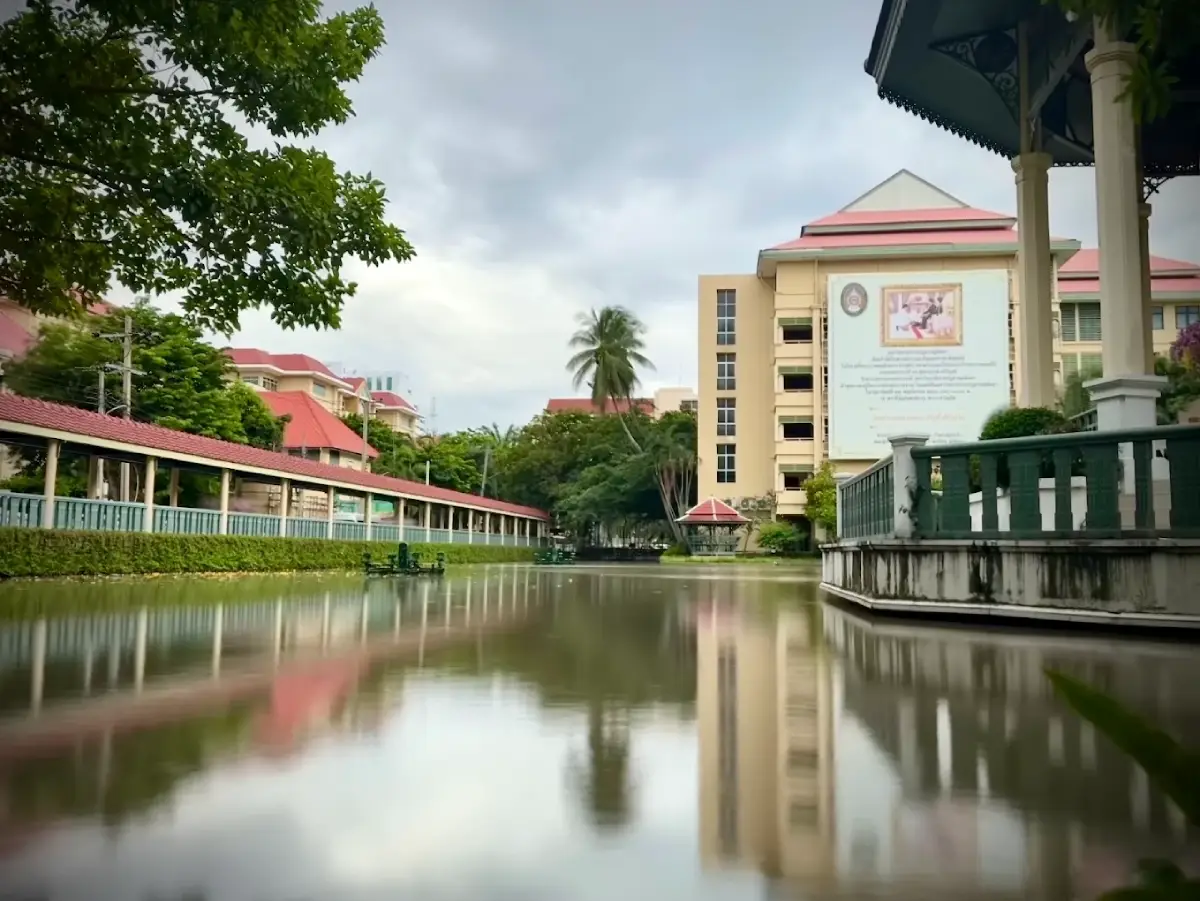
Administrative Open Days: Monday–Friday (Except Public Holidays; Service Hours May Vary by Department)
Sai Suddha Nobhadol Building Museum Open Days: Monday–Friday (Except Public Holidays)
Museum Opening Hours: 09:00–16:00
Suan Sunandha Rajabhat University (SSRU) is a public university in Bangkok, Thailand, distinguished by its teacher education, professional training, research, innovation, and commitment to preserving Thailand's cultural heritage. The university's main campus is located at 1 U Thong Nok Road, Dusit, Bangkok 10300, on part of the former Suan Sunandha Royal Residential Compound within the historic Dusit Palace area. The site's royal history dates back to the reign of King Chulalongkorn (King Rama V), while the educational institution itself began operating as Suan Sunandha College on May 17, 1937. It subsequently became Suan Sunandha Teachers College in 1975, Suan Sunandha Rajabhat Institute in 1995, and Suan Sunandha Rajabhat University on June 15, 2004. In 2026, the institution marked 89 years since the establishment of its original school and 22 years since attaining university status. Associate Professor Dr. Chutikarn Sriviboon served as University President in October 2026. In addition to its wide range of faculties and academic programs, Suan Sunandha Rajabhat University holds considerable historical importance as a former royal residential area. Its heritage includes the Sai Suddha Nobhadol Building Museum, the statue of Queen Sunandha Kumariratana, historic royal residences, and educational resources dedicated to the arts and culture of the Rattanakosin period.
One of the most distinctive characteristics of Suan Sunandha Rajabhat University is the integration of a modern higher education institution with the landscape of a former royal residence. Historic buildings associated with the royal compound remain within the campus, standing alongside contemporary teaching facilities, laboratories, libraries, and administrative offices. Mature trees, green spaces, and architectural elements reflecting the residential environment of royal women contribute to the university's distinctive atmosphere. This combination gives the campus significance not only as an educational institution but also as a place where visitors can explore aspects of Thai social history, architecture, and cultural heritage.
The university is situated in Bangkok's Dusit district, an area that played an important role in the city's development following the expansion of royal palaces and government institutions during the reign of King Rama V. The surrounding road network includes U Thong Nok Road, Samsen Road, Ratchawithi Road, and Nakhon Ratchasima Road. Nearby landmarks include Vajira Hospital, Wat Ratchathiwat Ratchaworawihan, Wat Thewarat Kunchorn Worawihan, and historic sites associated with Dusit Palace. The diversity of the neighborhood creates an environment where students encounter Bangkok's architectural heritage, public institutions, educational establishments, and long-established urban communities.
Before becoming a university, the Suan Sunandha area formed part of the royal residential grounds within Dusit Palace. King Chulalongkorn initiated the development of the garden as a peaceful place for relaxation, with an emphasis on natural beauty and carefully arranged landscapes. A wide variety of flowering plants, fruit trees, and ornamental species were introduced to the area. The king's interest in cultivating valuable and unusual plants contributed to the garden's reputation as both a royal retreat and a botanical landscape connected with the cultural traditions of the Thai court.
The name Suan Sunandha is associated with the term “Sunandha Uthayan,” referring to a celestial garden belonging to Indra in the Tavatimsa Heaven of Buddhist cosmology. It is also connected with Queen Sunandha Kumariratana, a royal consort of King Chulalongkorn. The queen died in a royal boat accident in 1880 while traveling on a royal excursion. Her name became closely associated with the garden and was subsequently preserved as part of the historical and institutional identity of Suan Sunandha Rajabhat University.
During the later years of King Chulalongkorn's reign, plans were developed to construct royal residences within Suan Sunandha for women of the royal household. However, construction had not been completed before the king's death in 1910. The development continued during the reign of King Vajiravudh (King Rama VI), when additional royal residences and supporting buildings were constructed. These facilities accommodated royal consorts, royal mothers, court ladies, and princesses associated with the household of King Rama V, many of whom had previously resided within the Inner Court of the Grand Palace.
The construction of residences within Suan Sunandha transformed the garden into a community of royal women with its own established customs, social organization, and daily routines. The compound contained 32 royal residences, along with buildings for attendants and various supporting facilities. Its architecture reflected a period of transition in Thai building design, when Western architectural influences were increasingly incorporated into domestic buildings while traditional considerations of climate, privacy, and everyday living remained important.
A particularly important historical figure associated with Suan Sunandha was Her Royal Highness Princess Saisavali Bhiromya, Princess Suddhasininat Piyamaharaj Padivaradda, widely known by her title Somdet Phra Wimadather. She resided in the Sai Suddha Nobhadol residence, Building 27, between 1924 and 1929. The princess played a significant role in the preservation and transmission of royal court traditions, including etiquette, handicrafts, household management, and the education of young women living within the royal residential community.
During this period, daughters of noble families and government officials were sometimes given opportunities to receive education and training within royal households. Princess Saisavali Bhiromya consequently established Nibhakarn School within Suan Sunandha to provide instruction in general subjects, etiquette, moral conduct, and handicrafts. The school is historically significant because it operated within the royal compound before the establishment of Suan Sunandha College. It also reflects the role of royal women in promoting education and the development of social and practical skills among young women in early twentieth-century Thailand.
Education at Nibhakarn School was closely connected with the daily life and cultural expectations of the Inner Court. In addition to academic subjects, students were trained in practical skills and appropriate social conduct. The educational environment emphasized discipline, established customs, and the transmission of knowledge from one generation to the next. The school's history therefore provides an important perspective on women's education and the cultural practices of Thailand's royal household.
Following the Siamese Revolution of 1932, significant changes occurred in the administration and use of Suan Sunandha. Members of the royal family who had lived in the compound gradually moved elsewhere, leaving a number of royal residences and associated buildings without their former occupants. Nibhakarn School also ceased operations as the royal residential community underwent substantial social and political changes. Suan Sunandha subsequently entered a transitional period in which its former function as a residential area for royal women was replaced by new public uses.
During the reign of King Ananda Mahidol (King Rama VIII), the regency council and the government considered different proposals for the future use of the Suan Sunandha estate. One proposal involved converting the area into residential accommodation for political officials and government personnel. Ultimately, the government decided that the land should be used for educational purposes. The Ministry of Public Instruction was assigned responsibility for establishing an educational institution, while the historic name Suan Sunandha was retained to preserve the site's identity.
On May 17, 1937, the Ministry of Public Instruction officially opened Suan Sunandha College, initially providing a primary teacher certificate program known in Thai as the Por Por qualification. The institution was established to train teachers and develop qualified educational personnel. This event marked the formal beginning of the institution that would eventually become Suan Sunandha Rajabhat University. It also represented an important transformation of the former royal estate into a place dedicated to education and public service.
The establishment of Suan Sunandha College reflected a period of educational expansion in Thailand. As the government sought to improve access to schooling, demand increased for qualified teachers who could work in schools throughout the country. Teacher-training institutions became essential to the development of the national education system, particularly as primary education expanded beyond major urban centers. Suan Sunandha College contributed to this effort by preparing individuals who would subsequently teach children and young people in different parts of Thailand.
The adaptation of former royal buildings for educational purposes also illustrates a broader transformation in the social role of historical architecture. Buildings originally constructed as residences or supporting facilities for the royal household began serving as classrooms, offices, and educational spaces. As the college developed, additional buildings and facilities were introduced to accommodate growing student numbers, changing curricula, and new administrative requirements.
Between 1937 and 1974, Suan Sunandha College concentrated on teacher education while gradually developing its curricula, administrative organization, and facilities. This period laid the academic foundations for the institution's later expertise in educational studies and practical teacher training. The traditions established during these decades continued to influence the Faculty of Education, which remains one of the university's principal academic units.
In 1975, the institution was elevated to Suan Sunandha Teachers College under the Teachers College Act B.E. 2518 (1975). This change enabled the institution to provide bachelor's degree education in teacher-training disciplines. The transition represented a major improvement in the academic status of the college, supporting more comprehensive preparation in subject knowledge, teaching methodology, educational psychology, and practical classroom experience.
During the teachers college period, Suan Sunandha gradually expanded beyond traditional teacher preparation. Academic programs increasingly incorporated science, humanities, social sciences, and management-related subjects. This development reflected changes occurring across Thailand's teachers college system, as institutions were given broader responsibilities for professional education, community services, and the development of qualified personnel outside the teaching profession.
In 1992, King Bhumibol Adulyadej (King Rama IX) bestowed the name Rajabhat Institute upon institutions operating under the Department of Teacher Training. The royal emblem associated with King Rama IX was also adopted as a shared symbol of the Rajabhat educational network. This development was significant in establishing a common identity among institutions whose missions included higher education, professional development, and contributions to local communities.
Following the enactment of the Rajabhat Institute Act B.E. 2538 (1995), Suan Sunandha Teachers College became Suan Sunandha Rajabhat Institute. Its new status supported a broader range of academic programs and strengthened the institution's role in research, academic services, community development, and cooperation with external organizations. The transition also contributed to the development of administrative structures more closely resembling those of a multidisciplinary university.
Academic support services developed substantially during the Rajabhat Institute period. The history of the university library can be traced to the original school library established in 1937. Over time, the institution improved its collection management, library organization, and academic information services. Between 2000 and 2001, it also developed high-speed computer networking, administrative databases, and web-based learning systems. These initiatives helped establish the digital infrastructure necessary for modern higher education.
On June 15, 2004, Suan Sunandha Rajabhat Institute was elevated to Suan Sunandha Rajabhat University under the Rajabhat University Act B.E. 2547 (2004). The institution became a public university with responsibilities covering higher education, research, local development, and cultural preservation. This change represented another major stage in its transformation from a teacher-training school into a multidisciplinary institution with educational connections extending beyond Bangkok.
Following the establishment of the university, its academic and administrative structure was further developed. Important early units included the Office of the President, Faculty of Education, Faculty of Industrial Technology, Faculty of Humanities and Social Sciences, Faculty of Management Science, Faculty of Science and Technology, Faculty of Fine and Applied Arts, Office of Academic Resources and Information Technology, Research and Development Institute, and Office of Arts and Culture. Additional faculties, colleges, and specialized units were subsequently established or reorganized in response to expanding academic fields and professional requirements.
In 2005, the Sai Suddha Nobhadol royal residence was restored and developed into a museum dedicated to the arts and culture of the Rattanakosin period. This initiative enabled one of the former royal buildings to serve as an educational resource for students, researchers, and members of the public. The preservation project was not limited to protecting an old building; it also sought to maintain knowledge about the lives of royal women, architectural decoration, traditional craftsmanship, and cultural practices once associated with Suan Sunandha.
In 2012, three other historic buildings—Chutharatthanaphon, Athonthipyanawat, and Uean Atchaem Thawan—were renovated for cultural exhibition activities covering music, performing arts, and visual arts. These restoration projects reflected the role of the university's Office of Arts and Culture in returning historic structures to educational use while preserving their architectural significance.
Another important event occurred on November 22, 2020, when Suan Sunandha Rajabhat University received a royal grant of land title deeds for educational development and academic services to society. This event became part of the institution's history of land administration and long-term planning. Physical space remains an essential resource for teaching, research, student activities, and the preservation of the university's historic environment.
In 2026, Suan Sunandha Rajabhat University celebrated 89 years since Suan Sunandha College opened in 1937 and 22 years since receiving university status in 2004. Associate Professor Dr. Chutikarn Sriviboon served as University President. The university continued providing undergraduate and postgraduate education, research, professional development, community services, and cultural activities. It also conducted student admissions for the 2026 academic year and began announcing selected recruitment rounds for the 2027 academic year during the latter part of 2026.
The university's identity is closely associated with the history of Thailand's royal household and the Rajabhat educational system. Its official emblem incorporates elements of the royal insignia associated with King Rama IX and symbolism connected with Queen Sunandha Kumariratana, whose name is preserved in the institution's title. These elements reflect the relationship between royal history, education, and the institutional identity shared by students, faculty members, staff, and alumni.
The official university colors are blue and pink. Blue represents the monarchy and the royal association of the institution, while pink is associated with the birthday color of King Chulalongkorn. Together, the colors express the university's historical connection with the former royal compound and the monarchs who played important roles in the development of the Dusit Palace area.
The university's official flower is the Kaeo Chao Chom flower, commonly known as lignum vitae. Its violet-blue petals and yellow stamens make it a distinctive ornamental plant. The flower has historical associations with King Chulalongkorn, who introduced the species to Thailand following his travels to Java and cultivated it within the Suan Sunandha grounds. Consequently, the flower symbolizes more than natural beauty: it represents the royal garden's botanical heritage and the university's continuing connection to its historical landscape.
A statue of Queen Sunandha Kumariratana stands within the university grounds and serves as an important location for ceremonies of respect and remembrance. Students and staff maintain a strong symbolic connection with the queen as the historical figure associated with the university's name. Certain institutional traditions include paying homage at the statue and recognizing the cultural significance of the former royal residence.
One of the university's distinctive traditions is the ceremony of paying homage and symbolically becoming a child of Queen Sunandha, often described in Thai as the ceremony of “Fak Tua Pen Luk Phra Nang.” It forms part of welcoming new students and strengthening their connection with the university's historical identity. On June 29, 2026, the College of Hospitality Industry Management organized such a ceremony, attended by new students, academic staff, and university administrators. The tradition helps newcomers understand the institution's background while fostering pride in belonging to the Suan Sunandha community.
The College of Logistics and Supply Chain also organized activities honoring Queen Sunandha Kumariratana and welcoming new students on July 7, 2026. These activities emphasized the relationship between students and the university community. They also provided an opportunity for participants to learn about the historical significance of the queen and the institutional symbols associated with her name before beginning their university studies.
The Wai Khru Ceremony is another important educational tradition. It expresses respect and gratitude toward teachers who provide knowledge, guidance, and professional experience. Suan Sunandha Rajabhat University organizes Wai Khru activities through its faculties, colleges, and educational centers. In 2026, the Ranong Education Center announced its annual Wai Khru ceremony for July 23, 2026, at the Kaeo Chao Chom Meeting Room. Such events demonstrate the continued importance of Thai educational customs alongside modern curricula and technology-supported learning.
Another commemorative activity connected with Suan Sunandha's heritage involves religious merit-making ceremonies honoring Queen Sunandha Kumariratana. In 2026, the Office of Arts and Culture publicized a ceremony held on May 31 at Wat Ratchabophit Sathit Maha Simaram to mark the 146th anniversary of the queen's death. Such observances demonstrate the university's ongoing attention to historical remembrance and its relationship with the royal figure whose name forms part of its identity.
The Sai Suddha Nobhadol Building Museum is among the most historically important places within the university. It occupies Building 27, the former residence of Princess Saisavali Bhiromya. The building displays architectural influences from Western residential design combined with features adapted to the tropical climate of Thailand. Its verandas, openings, decorative elements, and spatial arrangement offer insights into the architecture of royal residences during the early twentieth century.
The museum presents exhibitions concerning the lives and cultural traditions of women within the royal household. Its displays include historical objects, decorative arts, household items, and information about the customs associated with royal residences. Visiting the museum helps visitors understand that the former residence functioned not only as living accommodation but also as an environment in which handicrafts, culinary knowledge, etiquette, and other traditions were practiced and transmitted.
The Sai Suddha Nobhadol Building Museum and the Three Arts of Rattanakosin Learning Center are open to visitors according to the schedule published by the Office of Arts and Culture. The published visiting hours are Monday to Friday, 09:00–16:00, excluding public holidays, and admission is free. Visitors must register at the designated reception point before entering. Groups wishing to arrange an educational visit may submit a formal request at least one day in advance. These procedures help maintain appropriate access to historic facilities while enabling educational use by the wider public.
In addition to the Sai Suddha Nobhadol Building Museum, the Chutharatthanaphon, Athonthipyanawat, and Uean Atchaem Thawan buildings are historically important structures adapted for activities and exhibitions related to the arts. Their use as cultural learning spaces creates connections between historic architecture and the study of music, performing arts, and visual arts. These disciplines form an important part of Thailand's cultural heritage and provide opportunities to interpret the artistic traditions of the Rattanakosin period.
The university grounds also contain a Buddhist shrine and Phra Phuttha Sunandakon, a Buddha image associated with the religious and cultural life of the campus community. These places reflect the continuing role of Buddhism in Thai social traditions and contribute to the cultural landscape of a university where historical buildings and contemporary educational facilities exist side by side.
The architectural landscape of Suan Sunandha provides valuable opportunities to study the differences between traditional royal residences and modern academic buildings. Roof forms, construction materials, balconies, windows, decorative details, and relationships between buildings and gardens illustrate how architectural practices evolved during the reigns of Kings Rama V and Rama VI. These features demonstrate the adaptation of Western influences to Thai cultural expectations and environmental conditions.
In academic terms, Suan Sunandha Rajabhat University maintains a diverse institutional structure. Its official university directory identifies seven faculties: the Faculty of Education, Faculty of Science and Technology, Faculty of Humanities and Social Sciences, Faculty of Engineering and Industrial Technology, Faculty of Fine and Applied Arts, Faculty of Management Science, and Faculty of Law. These faculties provide education in a broad range of academic and professional disciplines while contributing to research, innovation, and services benefiting society.
The university also has eight colleges: the College of Nursing and Health, College of Architecture, College of Allied Health Sciences, College of Innovation and Management, College of Logistics and Supply Chain, College of Hospitality Industry Management, College of Communication Arts, and College of Politics and Government. A Graduate School supports postgraduate education and research. This structure allows the university to develop specialized programs corresponding to the needs of different professions and industries.
The Faculty of Education reflects the institution's origins as a teacher-training school. Its academic fields include Early Childhood Education, Thai, English, Mathematics, General Science, Social Studies, and Educational Technology and Computing. Contemporary teacher preparation requires competence in academic subjects, learning psychology, instructional design, practical teaching experience, and the application of educational technology. These elements help prepare future teachers to meet the needs of students with different educational backgrounds and abilities.
The Faculty of Education remains important to the development of Thailand's education system because qualified teachers play a fundamental role in shaping future generations. Integrating educational theory with practical school experience helps graduates prepare for teaching responsibilities in institutions with diverse social, cultural, and technological environments. The university's long experience in teacher education continues to influence its academic identity.
The Faculty of Science and Technology develops expertise in applied sciences and technological disciplines. Its fields include Information Technology, Food Science and Technology, Forensic Science, Environmental Biology, Microbiology, Sports Science and Health, Computer Science and Data Innovation, and Food Innovation. These disciplines contribute to industrial development, public well-being, environmental management, and the digital economy.
Food Science and Microbiology contribute to the development of safe and high-quality food products, while Forensic Science applies scientific methods to the examination of evidence. Computer Science and Data Innovation support information systems, analytical techniques, and technology-based problem-solving. The faculty's diverse disciplines help students apply scientific knowledge in professional environments.
The Faculty of Humanities and Social Sciences contributes expertise in languages, communication, geography, and social development. Its academic fields include Thai, English, Chinese, Japanese, Business English, Geography and Geoinformatics, and Social and Cultural Development Management. Language education supports professional communication in multicultural environments, while social science disciplines encourage a deeper understanding of communities and relationships between people and their surroundings.
Geography and Geoinformatics develop skills in spatial analysis, which can be applied to urban planning, resource management, risk assessment, and environmental studies. Language programs support professional opportunities in international communication, hospitality, trade, and organizations requiring linguistic and cultural expertise.
The Faculty of Engineering and Industrial Technology focuses on engineering, industrial applications, and design. Its academic disciplines include Electrical Technology, Computer Engineering, Robotics Engineering, Engineering Management, Occupational Health and Safety Technology, Real Estate and Facility Resource Management, and Product, Packaging, and Creative Media Design. These fields emphasize the application of technical knowledge to problem-solving, system development, and innovative design.
Robotics and Computer Engineering are increasingly relevant to manufacturing systems and digitally connected organizations. Design and innovation disciplines support the creation of value through products and services. Integrating engineering knowledge with organizational management and creative design can contribute to improved production processes, practical innovations, and more efficient working environments.
The Faculty of Fine and Applied Arts specializes in Painting, Visual Communication Design, Fashion Design, Performing Arts, Music, and Digital Design. Its programs contribute to the development of creative industries while preserving and reinterpreting cultural traditions. Contemporary arts education increasingly involves combining established artistic techniques with digital production, creative entrepreneurship, and new communication platforms.
The faculty's academic identity is particularly interesting because of its location within the historic Suan Sunandha estate. Students can explore relationships between architecture, performing arts, music, and craftsmanship associated with the former royal household. The presence of cultural heritage resources within the campus creates opportunities for art education grounded in historical surroundings.
The Faculty of Management Science provides education in Accounting, Business Economics, Business Administration, Finance and Banking, International Business, Human Resource Management, Entrepreneurship, Marketing, and organizational management. These disciplines are important to public and private sector administration, particularly in competitive business environments where effective planning and data-informed decision-making are essential.
The Faculty of Law focuses on legal education and the development of knowledge relating to justice and legal systems. Its academic work helps students understand legal principles, interpretation, legal reasoning, and professional responsibility. Legal knowledge is relevant not only to careers in the legal profession but also to public administration, private organizations, and businesses operating under regulatory frameworks.
The College of Nursing and Health prepares students for professional nursing and health-related responsibilities. Nursing education combines knowledge of health sciences, clinical practice, professional ethics, and collaboration with other health-care professionals. According to the university's admissions information, educational activities associated with the college are connected with the Samut Songkhram Campus.
The College of Allied Health Sciences provides education in health-related disciplines, including Applied Thai Traditional Medicine, Community Public Health, Health Promotion, Medical and Public Health Services, Medical Science and Herbal Innovation, and Chinese Medicine. These academic fields contribute to health-care development, disease prevention, and professional services. Applicants interested in regulated health professions should verify the study location, admissions requirements, and professional qualifications specified by the relevant program.
The College of Architecture focuses on Architecture and Interior Architecture. These disciplines involve building and spatial design, environmental considerations, functional requirements, and safety. Studying architecture at a university with historic residences also offers valuable opportunities to understand architectural conservation and relationships between old and new built environments.
The College of Innovation and Management provides programs connected with Innovation Management, Digital Marketing, Quality Management, Esports and Game Business, and contemporary entrepreneurship. Some programs use international or bilingual approaches. These fields combine management concepts with creativity and technological applications, responding to emerging forms of business and changing workforce demands.
The College of Logistics and Supply Chain prepares graduates in Logistics Management, Transportation, Supply Chain Management, Maritime Business, Air Cargo Transportation, and Logistics for Online Business. Efficient coordination of transportation, storage, distribution, and information is essential to contemporary commerce. The application of technology to these processes helps businesses reduce costs, improve service quality, and respond effectively to customers' requirements.
The College of Hospitality Industry Management specializes in Hotel and Accommodation Management, Tourism, Aviation Business, and Digital International Business. Some programs are delivered in English or bilingual formats. The college prepares students for professional service environments requiring communication skills, hospitality standards, operational management, and intercultural understanding.
The College of Communication Arts offers education in Journalism, Public Relations, Advertising, Digital Media Production, Film, and Creative Communication. These fields combine storytelling, technology, artistic expression, and management. As digital platforms continue transforming how people receive information, the ability to design and produce effective, responsible content remains important across media-related professions.
The College of Politics and Government provides education in Political Science, Public Administration, Police Administration, and related aspects of governance. Its fields include Politics and Government, International Relations, Local Government, Public Policy, and Public and Private Sector Administration. These disciplines develop an understanding of political systems, public institutions, policy implementation, and organizational management.
The Graduate School supports master's and doctoral education. Academic fields listed in university information include Educational Administration, Business Administration, Forensic Science, Applied Thai Traditional Medicine, Development Administration, Linguistics, Philosophy and Ethics, Public Health, and specializations related to management, innovation, communication, and logistics. In October 2026, the Graduate School continued publishing admissions announcements for selected programs in the second semester of the 2026 academic year.
Suan Sunandha Rajabhat University operates beyond its Bangkok main campus through the Nakhon Pathom Campus in Nakhon Pathom Province and the Samut Songkhram Campus in Samut Songkhram Province. It also maintains educational centers in Ranong and Udon Thani. These locations expand access to higher education and enable the university to cooperate with government agencies, businesses, and local communities in different regions of Thailand.
The Nakhon Pathom Campus plays an important role in accommodating educational activities associated with management, logistics, and other professional programs. The Samut Songkhram Campus is associated with nursing, health-related education, and allied health disciplines. These regional campuses help the university distribute its academic expertise beyond Bangkok and provide professional education connected with the needs of different areas.
The Ranong and Udon Thani education centers are additional components of the university's regional network. Their academic activities are organized according to the responsibilities and programs assigned to each center. Differences in local economies, communities, and educational requirements mean that curriculum planning and academic services must take regional needs into consideration.
Research and Innovation form an important part of Suan Sunandha Rajabhat University's academic mission. The Research and Development Institute supports faculty and student research, academic publications, and research partnerships. Fields such as Education, Science, Technology, Management, Health, and Social Sciences contribute knowledge that can be applied to solving practical problems, developing organizational processes, and improving community well-being.
University research also connects with sustainable development and social responsibility. Environmental issues, health, educational opportunities, and economic development require expertise from different disciplines. Collaboration between academic units and external organizations creates opportunities to develop research outcomes that respond to the needs of communities and institutions.
The Office of Arts and Culture is especially important to the preservation of Suan Sunandha's distinctive identity. Because the university occupies a historic royal residential area, its cultural responsibilities include conserving buildings, developing museum exhibitions, organizing cultural activities, and presenting historical knowledge to students and the public. These activities help explain the relationships between historical places, individuals, and everyday life during the Rattanakosin period.
For people interested in the history of women in the Thai royal court, the development of teacher education, historic architecture, and Rattanakosin culture, Suan Sunandha Rajabhat University is a particularly valuable learning destination. Its heritage can be studied through historic structures, documents, photographs, household objects, and exhibition materials. The presence of these resources allows visitors to connect written historical accounts with the physical places where aspects of that history occurred.
Educational visits should focus on the museum and other areas specifically designated for public access. Classrooms, administrative offices, laboratories, and student facilities are part of an active university and should not be treated as unrestricted tourist attractions. Contacting the Office of Arts and Culture before visiting helps ensure that museum access and any educational activities can be arranged appropriately.
Getting There: Suan Sunandha Rajabhat University's main campus is located at 1 U Thong Nok Road, Dusit, Bangkok 10300. Visitors can travel by private car, taxi, public bus, or a combination of Bangkok's rail and local transportation systems. Public buses serving Samsen Road or Ratchawithi Road provide access to the surrounding neighborhood, from which visitors can continue toward the campus entrance. Travelers using the MRT or BTS systems can connect to buses or taxis according to their starting point. Checking current transport routes before departure is recommended.
Visitors traveling from areas along the Chao Phraya River may also consider passenger boat services to Thewet Pier, followed by local transportation or a walk toward the university. Public transport can be practical in Bangkok's historic districts, where road traffic varies considerably throughout the day. Travelers should allow additional time during weekday rush hours and check the most convenient campus entrance for their intended destination.
It is important to distinguish Suan Sunandha Rajabhat University from Suan Dusit University. They are two separate universities, although both are located in Bangkok's Dusit district and have historical geographical connections with the Suan Sunandha area. Suan Sunandha Rajabhat University is situated on U Thong Nok Road, while Suan Dusit University is located on Nakhon Ratchasima Road. Confirming the correct institution and address before traveling can prevent confusion.
The surrounding Dusit district offers a range of historical and cultural attractions, including Buddhist temples, public institutions, historic buildings, and sites along the Chao Phraya River. These destinations allow visitors to combine a museum visit at Suan Sunandha with broader exploration of Bangkok's history, particularly the expansion of Dusit Palace, the modernization of public administration, and social changes during the late nineteenth and early twentieth centuries.
For prospective students, Suan Sunandha Rajabhat University offers undergraduate programs in Education, Science, Engineering, Languages, Fine Arts, Management, Nursing, Allied Health Sciences, Communication, Logistics, and Political Science, among other disciplines. Postgraduate programs are also available in selected academic fields. Because the university operates across Bangkok and several provincial locations, applicants should confirm the study location, entry requirements, and relevant admissions rounds for their chosen program.
During the latter part of 2026, the university began publishing information about selected admissions rounds for the 2027 academic year, including portfolio-based recruitment and special study programs. The Graduate School also published admissions information for master's and doctoral programs for the second semester of the 2026 academic year. Applicants should distinguish between academic years and recruitment periods when planning their applications.
Suan Sunandha Rajabhat University is therefore significant both as a public university and as a center for preserving Thailand's cultural heritage. The transformation of the former Suan Sunandha royal residential area into Suan Sunandha College in 1937, followed by its development into a university in 2004, reflects important changes in Thai society and education. The institution continues to preserve historic architecture and the memory of individuals associated with the royal compound while expanding higher education, research, and academic services across numerous disciplines. Its distinctive character lies in the continuing relationship between history, culture, and modern education, making Suan Sunandha Rajabhat University an important center of professional learning and historical knowledge in Bangkok.
| University Name | Suan Sunandha Rajabhat University |
| Thai Name | มหาวิทยาลัยราชภัฏสวนสุนันทา |
| Abbreviation | SSRU |
| University Type | Public University in Thailand's Rajabhat University Network |
| Location | Dusit, Bangkok, Thailand |
| Address | 1 U Thong Nok Road, Dusit, Bangkok 10300, Thailand |
| Original Foundation Date | May 17, 1937 |
| University Establishment Date | June 15, 2004 |
| Institutional Age in 2026 | 89 Years Since the Foundation of Suan Sunandha College and 22 Years Since University Establishment |
| Historical Institution Names | 1. Suan Sunandha College (1937) 2. Suan Sunandha Teachers College (1975) 3. Suan Sunandha Rajabhat Institute (1995) 4. Suan Sunandha Rajabhat University (2004–Present) |
| Historical Background | The Main Campus Occupies Part of the Former Suan Sunandha Royal Residential Compound Within the Historic Dusit Palace Area, Originally Developed During the Reign of King Rama V and Expanded During the Reign of King Rama VI |
| Important Historical Figures | 1. King Chulalongkorn (King Rama V) 2. King Vajiravudh (King Rama VI) 3. Queen Sunandha Kumariratana 4. Princess Saisavali Bhiromya, Princess Suddhasininat Piyamaharaj Padivaradda |
| University President, October 2026 | Associate Professor Dr. Chutikarn Sriviboon |
| University Colors | Blue and Pink |
| University Flower | Kaeo Chao Chom (Lignum Vitae) |
| Faculties | 1. Faculty of Education 2. Faculty of Science and Technology 3. Faculty of Humanities and Social Sciences 4. Faculty of Engineering and Industrial Technology 5. Faculty of Fine and Applied Arts 6. Faculty of Management Science 7. Faculty of Law |
| Colleges | 1. College of Nursing and Health 2. College of Architecture 3. College of Allied Health Sciences 4. College of Innovation and Management 5. College of Logistics and Supply Chain 6. College of Hospitality Industry Management 7. College of Communication Arts 8. College of Politics and Government |
| Graduate Education | Graduate School and Postgraduate Programs Offered by University Faculties and Colleges |
| Regional Campuses | 1. Nakhon Pathom Campus, Nakhon Pathom Province 2. Samut Songkhram Campus, Samut Songkhram Province |
| Education Centers | 1. Ranong Education Center 2. Udon Thani Education Center |
| Academic Highlights | Historic University Campus Within a Former Royal Residence, Combining Cultural Heritage Conservation with Education in Teaching, Science, Fine Arts, Business, Engineering, Health Sciences, and Social Sciences |
| Important Campus Landmarks | 1. Sai Suddha Nobhadol Building Museum (Building 27) 2. Chutharatthanaphon Building 3. Athonthipyanawat Building 4. Uean Atchaem Thawan Building 5. Statue of Queen Sunandha Kumariratana 6. Buddhist Shrine and Phra Phuttha Sunandakon 7. Office of Arts and Culture 8. Academic Resources and Library Facilities |
| Traditions and Cultural Activities | Ceremonies Honoring Queen Sunandha Kumariratana, Symbolic New-Student Welcoming Ceremonies, Wai Khru Ceremonies, Historical Commemorations, Arts and Cultural Activities, and Student Development Programs |
| Administrative Open Days | Monday–Friday, Except Public Holidays; Individual Departments May Follow Different Service Schedules |
| Museum Open Days | Monday–Friday, Except Public Holidays |
| Museum Opening Hours | 09:00–16:00 |
| Museum Admission Fee | Free Admission |
| Visitor Information | Visitors Must Register at the Museum Reception Point. Groups Should Submit a Visit Request at Least One Day in Advance. Access to Other Academic and Administrative Areas Is Subject to University Regulations |
| Facilities | Teaching Buildings, Library, Academic Resource Centers, Meeting Rooms, Cafeterias, Restaurants, Cafes, Student Activity Spaces, and Academic Support Offices |
| Getting There | Private Car, Taxi, Public Buses Serving Samsen Road and Ratchawithi Road, or Connecting Transportation from the BTS/MRT System to U Thong Nok Road, Dusit |
| Nearby Attractions | 1. Wat Ratchathiwat Ratchaworawihan 2. Wat Thewarat Kunchorn Worawihan 3. National Library of Thailand 4. Thewet Market 5. Wat Benchamabophit Dusitwanaram 6. Equestrian Statue of King Chulalongkorn |
| Nearby Restaurants and Cafes | 1. Kaeo Chao Chom Restaurant, Within the University Campus 2. MAHASAN CAFE Suan Sunandha, Tel. +66 82 269 1919 3. Meekhwamsook, Suan Sunandha Rajabhat University Branch, Tel. +66 93 793 5544 4. Food Plaza at SSRU, Within the University Campus 5. Sushi Masa, Thewet Branch, Samsen Road, Tel. +66 96 883 8833 |
| Nearby Accommodation | 1. Suan Sunandha Palace Hotel, U Thong Nok Road, Tel. +66 2 243 0574 2. SSIP Boutique Dhevej Bangkok, Phitsanulok Road 3. Shanti Lodge Bangkok, Si Ayutthaya Road 4. Baan Tepa Boutique House, Si Ayutthaya Road 5. The Siam Hotel, Khao Road, Tel. +66 2 206 6999 |
| University Telephone | +66 2 160 1023, +66 2 160 1000 |
| Office of Arts and Culture Telephone | +66 2 160 1216 |
| Admissions Telephone | +66 2 160 1380 |
| University Email | saraban@ssru.ac.th |
| Official University Website | https://ssru.ac.th/ |
| Admissions Website | https://admission.ssru.ac.th/ |
| Office of Arts and Culture Website | https://culture.ssru.ac.th/ |
| Current Status | Operating as a Public University with Active Academic Programs, Student Admissions, and University Activities in 2026 |
Academic Programs and Fields of Study at Suan Sunandha Rajabhat University — Academic Year 2026
| Faculty / College | Academic Programs and Fields of Study |
| Faculty of Education | Bachelor's Degree Programs 1. Bachelor of Education in Thai 2. Bachelor of Education in English 3. Bachelor of Education in Mathematics 4. Bachelor of Education in Early Childhood Education 5. Bachelor of Education in General Science 6. Bachelor of Education in Social Studies 7. Bachelor of Education in Educational Technology and Computing |
| Faculty of Science and Technology | Bachelor's Degree Programs 1. Bachelor of Science in Information Technology 2. Bachelor of Science in Home Economics 3. Bachelor of Science in Food Science and Technology 4. Bachelor of Science in Forensic Science 5. Bachelor of Science in Sports Science and Health 6. Bachelor of Science in Environmental Biology 7. Bachelor of Science in Food Industrial Microbiology and Biotechnology Innovation 8. Bachelor of Science in Science and Innovation — Chemistry, Applied Mathematics, and Physics Tracks 9. Bachelor of Science in Computer Science and Data Innovation — Computer Science and Data Science and Business Statistical Analytics Tracks 10. Bachelor of Science in Environmental Science and Technology 11. Bachelor of Science in Food Innovation and Professional Chef 12. Bachelor of Information Science in Digital Innovation and Content Management — Digital Innovation Management and Digital Content Management Tracks |
| Faculty of Humanities and Social Sciences | Bachelor's Degree Programs 1. Bachelor of Science in Geography and Geoinformatics 2. Bachelor of Arts in Thai 3. Bachelor of Arts in English 4. Bachelor of Arts in Chinese 5. Bachelor of Arts in Japanese 6. Bachelor of Arts in Business English 7. Bachelor of Arts in Social and Cultural Management — Social Development Management and Cultural Management Tracks |
| Faculty of Engineering and Industrial Technology | Bachelor's Degree Programs 1. Bachelor of Science in Occupational Health and Safety Technology 2. Bachelor of Science in Electrical Technology 3. Bachelor of Science in Real Estate and Facility Resource Management 4. Bachelor of Design in Exhibition and Creative Media Design 5. Bachelor of Design in Product, Packaging and Innovation Design 6. Bachelor of Design in Graphic and Multimedia Design 7. Bachelor of Engineering in Computer Engineering 8. Bachelor of Engineering in Robotics Engineering 9. Bachelor of Engineering in Engineering Management 10. Bachelor of Industrial Education in Industrial Arts and Science |
| Faculty of Fine and Applied Arts | Bachelor's Degree Programs 1. Bachelor of Fine Arts in Painting 2. Bachelor of Fine Arts in Visual Communication Design 3. Bachelor of Fine Arts in Fashion and Lifestyle Product Design — Fashion Design and Lifestyle Product Design Tracks 4. Bachelor of Fine Arts in Performing Arts — Thai Classical Dance and Creative Theatre and Entrepreneurship Tracks 5. Bachelor of Fine Arts in Music 6. Bachelor of Fine Arts in Digital Design and Innovation |
| Faculty of Management Science | Bachelor's Degree Programs 1. Bachelor of Accountancy 2. Bachelor of Economics in Business Economics 3. Bachelor of Business Administration in Business Administration — Finance and Banking, International Business, Human Resource Management, Business Entrepreneurship, Service Business Management, and Marketing Tracks 4. Bachelor of Business Administration in Human Capital and Organization Management |
| Faculty of Law | Bachelor's Degree Program 1. Bachelor of Laws |
| College of Nursing and Health | Bachelor's Degree Program 1. Bachelor of Nursing Science in Nursing — Educational Delivery and Admissions Are Associated with the Samut Songkhram Campus |
| College of Architecture | Bachelor's Degree Programs 1. Bachelor of Architecture in Architecture 2. Bachelor of Architecture in Interior Architecture |
| College of Allied Health Sciences | Bachelor's Degree Programs and Fields 1. Bachelor of Applied Thai Traditional Medicine in Applied Thai Traditional Medicine 2. Bachelor of Science in Health and Beauty Sciences 3. Bachelor of Science in Medical and Public Health Secretarial Studies 4. Bachelor of Public Health in Community Public Health 5. Bachelor of Public Health in Public Health and Health Promotion 6. Bachelor of Chinese Medicine in Chinese Medicine (Bilingual Program) 7. Medical and Public Health Services — Listed in the 2026 Admissions Announcements 8. Medical Science and Herbal Innovation — Listed in the 2026 Admissions Announcements |
| College of Innovation and Management | Bachelor's Degree Programs 1. Bachelor of Business Administration in International Business and Innovation Management (International Program) 2. Bachelor of Business Administration in Esports and Game Business Management 3. Bachelor of Business Administration in Trade Management 4. Bachelor of Business Administration in Quality Management Innovation 5. Bachelor of Business Administration in Digital Marketing 6. Bachelor of Business Administration in Sports Management Innovation (Distance Education Program) 7. Bachelor of Business Administration in Management Innovation (Bilingual Program) — Tourism and Hospitality, Esports and Game Business, and Digital Technology Tracks 8. Bachelor of Arts in Security Management Innovation (Distance Education Program) |
| College of Hospitality Industry Management | Bachelor's Degree Programs 1. Bachelor of Arts in Hotel and Accommodation Business Management 2. Bachelor of Arts in Tourism and Hospitality Industry Management 3. Bachelor of Arts in Aviation Business (International Program) 4. Bachelor of Business Administration in Digital International Business (International Program) — International Business and Digital Business Management Tracks 5. Bachelor of Business Administration in Tourism, Hotel and Event Management (Bilingual Program) 6. Bachelor of Education in Mathematics (Bilingual Program) |
| College of Communication Arts | Bachelor's Degree Programs 1. Bachelor of Communication Arts in Communication Arts — Content Creation and Journalism, Public Relations and Strategic Communication, Advertising and Marketing Communication, Digital Media and Streaming Production, and Film and Digital Media Tracks 2. Bachelor of Communication Arts in Film Arts and Creative Media (International Program) |
| College of Logistics and Supply Chain | Bachelor's Degree Programs 1. Bachelor of Business Administration in Logistics Management 2. Bachelor of Business Administration in Business Supply Chain Management — Maritime Business, Transportation Management, and Air Cargo Transportation Management Tracks 3. Bachelor of Business Administration in Logistics Management for Online Business 4. Bachelor of Business Administration in Logistics and Supply Chain Management (Distance Education Program) 5. Bachelor of Business Administration in Logistics Management (International Program) |
| College of Politics and Government | Bachelor's Degree Programs 1. Bachelor of Laws 2. Bachelor of Political Science — Politics and Government and International Relations Tracks 3. Bachelor of Political Science (Distance Education Program) 4. Bachelor of Public Administration in Police Administration 5. Bachelor of Public Administration in Public Administration — Local Government, Public Policy and Public Management, and Public and Private Sector Administration Tracks |
| Graduate School and Postgraduate Programs | Graduate Diploma 1. Graduate Diploma in Teaching Profession Academic Fields Published for Master's and Doctoral Studies 2. Educational Administration 3. Business Administration 4. Forensic Science 5. Applied Thai Traditional Medicine 6. Development Administration 7. Philosophy and Ethics 8. Linguistics 9. Public Health 10. Curriculum and Instruction 11. Performing Arts 12. Visual Communication Design 13. Music 14. Energy and Environmental Management for Sustainable Green Business 15. Creative Design Technology 16. Logistics and Supply Chain Management 17. Innovation and Management 18. Sports Management 19. Human Capital Management Innovation 20. Esports and Entertainment Business Management 21. Application of Artificial Intelligence in Business Administration 22. Politics and Government 23. Public Administration 24. Tourism and Hospitality Management 25. International Business 26. Communication and Communication Arts Programs with Admissions Announcements in 2026 Master's and Doctoral Studies in Linguistics, Master's Studies in Public Administration, and Doctoral Studies in Educational Administration Were Among the Fields Advertised. The Exact Degree Level and Admissions Conditions for Each Program Should Be Confirmed in Its Individual Announcement. |
| Curriculum and Admission Status | The List Is Based on University Curriculum Information and Admissions Announcements Associated with the 2026 Academic Year. Specialization Tracks Are Grouped Within Their Parent Programs Rather Than Counted as Separate Degrees. Some Entries Appear in the University's Curriculum Directory, While Others Have Specific 2026 Admissions Announcements. Applicants Should Verify the Latest Curriculum Version, Degree Level, Study Location, and Recruitment Period with the Responsible Faculty or College. English Program Titles Are Descriptive Translations Where Official English Titles Have Not Been Separately Confirmed. |
Frequently Asked Questions (FAQ)
Q: Where is Suan Sunandha Rajabhat University located?
A: The main campus is located at 1 U Thong Nok Road, Dusit, Bangkok 10300, Thailand. It occupies part of the former Suan Sunandha Royal Residential Compound associated with the historic Dusit Palace area.
Q: When was Suan Sunandha Rajabhat University established?
A: The institution began as Suan Sunandha College on May 17, 1937. It became Suan Sunandha Teachers College in 1975, Suan Sunandha Rajabhat Institute in 1995, and Suan Sunandha Rajabhat University on June 15, 2004.
Q: Who established Suan Sunandha Garden, and where does its name come from?
A: King Chulalongkorn (King Rama V) initiated the development of Suan Sunandha Garden. Its name is associated with Sunandha Uthayan, a celestial garden belonging to Indra, and with Queen Sunandha Kumariratana, whose name became closely connected with the historical site.
Q: What are the opening days and hours of Suan Sunandha Rajabhat University?
A: University administrative offices generally operate Monday to Friday according to their individual service schedules. The Sai Suddha Nobhadol Building Museum is open Monday to Friday, 09:00–16:00, excluding public holidays. Museum admission is free.
Q: What faculties does Suan Sunandha Rajabhat University have?
A: The university directory lists seven faculties: Education, Science and Technology, Humanities and Social Sciences, Engineering and Industrial Technology, Fine and Applied Arts, Management Science, and Law. It also includes eight specialized colleges and a Graduate School.
Q: What is Suan Sunandha Rajabhat University known for?
A: The university is known for teacher education, applied sciences, technology, business, fine arts, hospitality, and cultural heritage conservation. Its most distinctive historical feature is the preservation of buildings associated with the former Suan Sunandha royal residential estate, particularly the Sai Suddha Nobhadol Building Museum.
Q: Can members of the public visit the museum inside Suan Sunandha Rajabhat University?
A: Yes. Visitors can explore the Sai Suddha Nobhadol Building Museum and the Three Arts of Rattanakosin Learning Center without paying an admission fee. Registration is required at the reception point, and group visits should be arranged at least one day in advance. For inquiries, contact the Office of Arts and Culture at +66 2 160 1216.
Q: Are Suan Sunandha Rajabhat University and Suan Dusit University the same institution?
A: No. They are separate universities. Suan Sunandha Rajabhat University is located on U Thong Nok Road and continues to use its Rajabhat University name. Suan Dusit University is located on Nakhon Ratchasima Road and adopted its current name in 2015, having previously been known as Suan Dusit Rajabhat University.
 Category: ●University
 Group: ●Rajabhat University
Last Update : 1 WeekAgo
 Last Update : 1 WeekAgo
 Click to Access the Navigation Map GPS
Suan Sunandha Rajabhat University Map
Recommend

 Art, Culture and Heritage
 Historical Sites and Monuments(3)
 Landmarks and Memorials(23)
 Royal Palace(13)
 Art, Craft Centres, Tradition(35)
 Museums(59)
 Historic Homes and Cities(3)
 Art Gallery(16)
 Educational Places
 Museum for Study(6)
 Library(4)
 Public university(8)
 Autonomous Universities(8)
 Rajamangala University of Technology(6)
Rajabhat University(6)
 Private University(22)
 Places of Worship
 Temple(72)
 Church(2)
 Mosque(67)
 Other Sacred Sites(8)
 Research and Development
 Royal Project(1)
 Suburban Living
 Village, Community(5)
 Local Market(9)
 Floating Market(2)
 Nature and Wildlife
 River, Canal(3)
 Bays and Beaches(1)
 Other natural attractions(1)
 Entertainment and Agricultural
 Zoos and Aquariums(5)
 Animal camps and shows(5)
 Stadium(9)
 Farms, Parks and Ecotourism(20)
 Amusement Park(1)
 Waterpark(4)
 Theater(7)
 Cinema(1)
 Shopping
 Shopping and Night Market(20)
 Department Store(7)
 Spas and Wellness
 Spas and Wellness(1)
 Restaurant
 Michelin Star(5)
 Accommodation
 Hotel(3)
 Call Customer Service in Tourism
 Call Customer Service in Tourism(1)
 Travel Articles, Recipes
 Travel Review, Food Review(43)
 Royal Thai Desserts and Recipes(56)


