
lovethailand home >Central Travel Attractions >Bangkok Travel Attractions >Jatujak >Chan Thara Kasem > Chandrakasem Rajabhat University
TL;DR: Chandrakasem Rajabhat University is located at Chan Kasem, Chatuchak, Bangkok, Thailand, open Monday–Friday (Except Public Holidays), hours 08:30–16:30 (General Administrative Office Hours; Some University Departments.
Chandrakasem Rajabhat University
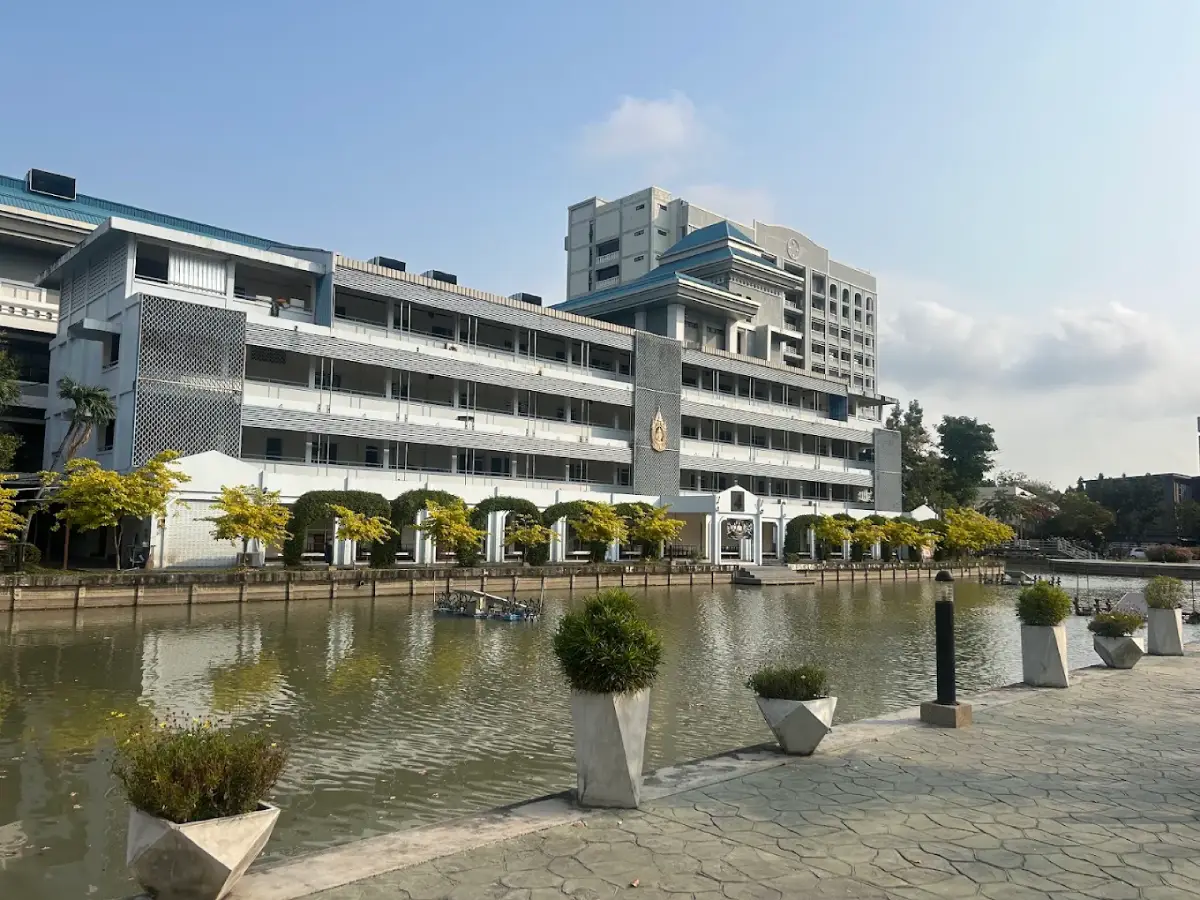
Open Days: Monday–Friday (Except Public Holidays)
Opening Hours: 08:30–16:30 (General Administrative Office Hours; Some University Departments Provide Extended Services)
Academic Promotion and Registration Office Hours During Regular Semesters: Monday, Wednesday, Thursday, and Friday 08:30–16:30; Tuesday 08:30–19:30; Sunday 09:00–15:00
Chandrakasem Rajabhat University (CRU) is a public university in Thailand's Rajabhat university network, located at 39/1 Ratchadaphisek Road, Chan Kasem, Chatuchak, Bangkok 10900, Thailand. The university holds a significant place in Thai educational history because it originated as the country's first secondary teacher-training school. Established on September 9, 1940, the institution began teaching in the 1941 academic year under its first headmaster, Mom Luang Manit Chumsai. It was subsequently elevated to Chandrakasem Teachers College in 1958, Chandrakasem Rajabhat Institute in 1995, and Chandrakasem Rajabhat University on June 15, 2004. Today, the university comprises five principal faculties: Education, Agriculture and Biological Sciences, Science, Management Science, and Humanities and Social Sciences, together with an educational center in Chai Nat Province. Its academic strengths include teacher education, applied science, digital technology, business, agriculture, languages, cultural studies, and local development. Important landmarks include the Chandrakasem Museum, Chan Gate, a campus clock tower, academic buildings, and landscaped green spaces. In 2026, the institution marked its 86th anniversary, reflecting more than eight decades of contributions to professional education and Thai society.
Chandrakasem Rajabhat University is situated in Bangkok's Chatuchak district, an important commercial and transportation area in the northern part of the capital. Ratchadaphisek Road, which runs past the university, is a major urban thoroughfare connecting Chatuchak with Huai Khwang and other parts of Bangkok. Phahonyothin Road and Lat Phrao Road are also accessible from the surrounding neighborhood. The area contains residential communities, office buildings, educational institutions, hospitals, shopping centers, restaurants, and other businesses. This urban setting places the university in close contact with the changing educational, economic, and workforce needs of metropolitan Bangkok.
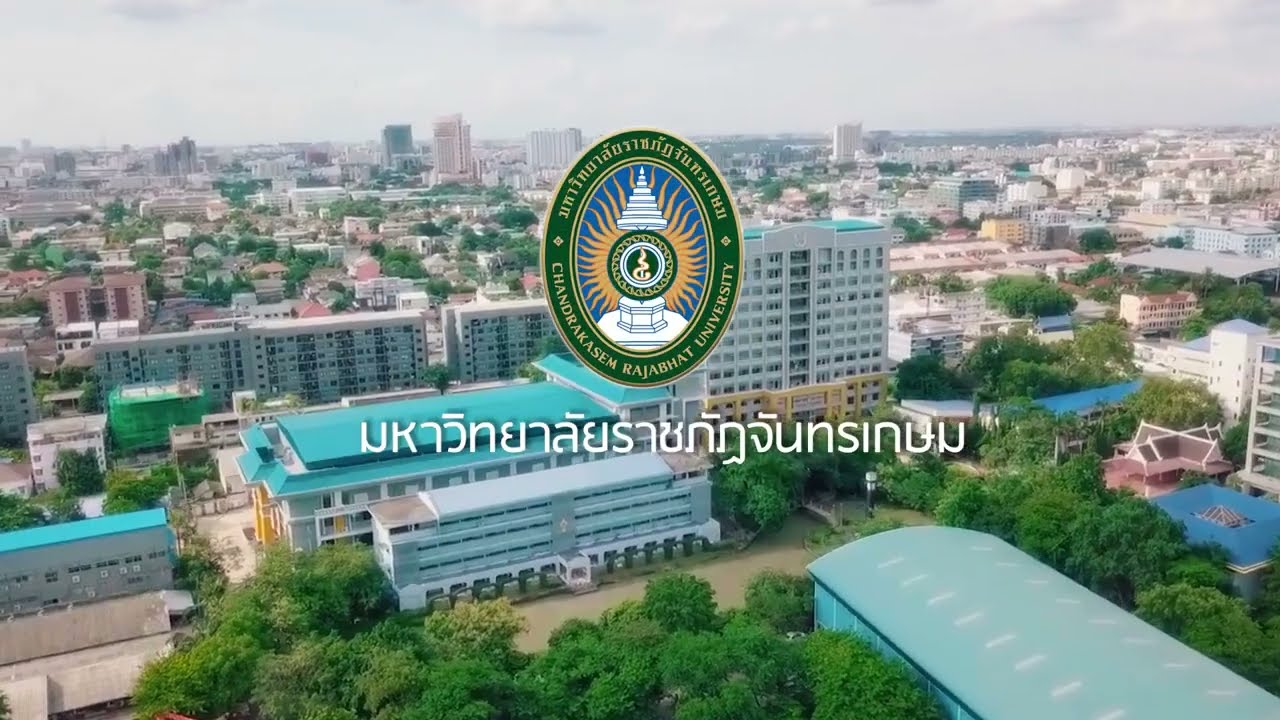
The university's main Bangkok campus covers approximately 89 rai and 88 square wa. Its facilities include academic buildings, administrative offices, a science center, the Office of Academic Resources and Information Technology, auditoriums, sports facilities, student activity spaces, and Chandrakasem Rajabhat University Demonstration School. Teaching and administrative buildings are surrounded by gardens and landscaped spaces, providing a distinctive educational environment despite the campus's location within a densely developed metropolitan district.
The campus also features ponds, walkways, and a clock tower that serves as an important visual landmark. Chan Gate is another familiar symbol of the university, particularly among students and alumni. These places are not merely functional features of the campus. They also represent the collective memories of successive generations who studied and worked at the institution. Several university buildings and facilities carry names associated with important individuals in Chandrakasem's educational history.
The History of Chandrakasem Rajabhat University begins in the years preceding the Second World War, when Thailand was expanding its formal education system and experiencing increasing demand for qualified secondary school teachers. Most teacher-training schools operating at the time primarily prepared teachers for primary education. The establishment of a specialist secondary teacher-training school therefore represented an important development in professional education, creating a pathway for preparing teachers capable of instructing students at higher academic levels.
On September 9, 1940, the Ministry of Education established the Secondary Teacher Training School, recognized as the first institution of its kind in Thailand. Its principal objective was to prepare teachers for the Secondary Teacher Certificate, known in Thai as the Por Mor qualification. Students entered a specialized educational program designed to develop the academic knowledge and professional competence required for secondary teaching. The foundation of this school marked an important stage in the establishment of a more differentiated teacher-training system in Thailand.
The school began classes in the 1941 academic year as a coeducational institution, admitting both male and female students. One of the most important figures associated with its foundation was Mom Luang Manit Chumsai, who served as its first headmaster. His leadership contributed to the early development of the school's academic and administrative structure. Teacher preparation during this period emphasized subject knowledge, professional responsibility, dedication, and the ability to communicate academic material effectively to students.
During its earliest years, the Secondary Teacher Training School did not have permanent teaching buildings of its own. Classes were initially conducted at Phetchaburi Wittayalongkorn Teacher Training School near the King Phet area of Bangkok. The institution subsequently moved to buildings within the Chantharakasem Palace area behind the Ministry of Education. Because of this location, it became widely known by the informal name “Por Mor Lang Krasuang,” meaning the secondary teacher-training school behind the ministry.
This informal name became an important part of the school's institutional memory. It referred both to the Secondary Teacher Certificate program and to the school's location behind the Ministry of Education. The use of buildings within the Chantharakasem Palace area also reflected the practical arrangements necessary during a period when Thailand's teacher-training infrastructure was still developing. Although the institution later moved away from this location, the name Chandrakasem was preserved and continues to identify the university today.
Student admission during the school's early period involved competitive selection of academically capable candidates. The initial examination-based process was subsequently associated with the selection of high-achieving students from different provinces. This approach reflected the importance attached to the academic preparation of secondary school teachers, who required strong subject knowledge and the ability to explain increasingly advanced educational content.
In 1948, Kamon Phaophichit became the institution's second headmaster, followed by Chok Sukhanthawanit as the third headmaster in 1954. Their periods of administration formed part of the continuing development of the teacher-training system, during which schools and educational authorities were responding to growing demand for qualified teachers throughout Thailand.
In 1958, the Ministry of Education elevated the Secondary Teacher Training School to teachers college status. The institution's academic program was also reorganized from the Secondary Teacher Certificate toward the Higher Certificate in Education. It adopted the new name Chandrakasem Teachers College, reflecting its expanded responsibilities and more advanced level of professional teacher preparation.
During the same period, the college moved from its original location to the area around Sangkha Watthana Soi 2, also associated with Lat Phrao Soi 23, in the northern part of Bangkok. The locality was historically part of Lat Yao and subsequently became the Chan Kasem subdistrict of Chatuchak. The new site, covering approximately 89 rai and 88 square wa, remains the university's principal campus today. The relocation provided the space necessary for developing permanent teaching buildings, laboratories, sports facilities, and other educational infrastructure.
The move to the present campus took place during a period of urban expansion in Bangkok. Areas north of the historic city center were gradually becoming more developed as transportation networks, residential communities, and public facilities expanded. Chandrakasem Teachers College became part of this transformation, contributing to the educational infrastructure of an area that would eventually develop into one of Bangkok's major urban districts.
Between 1958 and 1974, Chandrakasem Teachers College continued emphasizing academic preparation and professional competence for teachers. During this period, the institution developed its administrative systems and educational resources to accommodate changing requirements. Prayut Sawatsing, who became headmaster in 1958, was among the important administrators involved in this stage of institutional development.
In 1972, the college entered a period of administrative restructuring in which the position of director became part of its institutional organization. Following the Teachers College Act B.E. 2518 (1975), the title of the chief administrator changed from director to rector. The college's organizational structure was also reorganized to include the Rector's Office and academic divisions such as Education, Humanities and Social Sciences, and Science. These developments provided a clearer framework for academic administration and the expansion of higher education programs.
The changes introduced under the Teachers College Act were important because they supported the transition from certain certificate-level qualifications to bachelor's degree education. This development strengthened the academic status of teachers colleges and contributed to national efforts to raise standards in the teaching profession. Graduates increasingly obtained degree-level qualifications incorporating subject knowledge, educational theory, and professional preparation.
In 1985, Thailand's teachers colleges developed a cooperative structure known as the united college system. Chandrakasem Teachers College became part of the Rattanakosin United Colleges network. Cooperation among institutions supported the sharing of academic resources, curriculum development, and the continuing improvement of professional education as teachers colleges gradually expanded beyond their original teacher-training functions.
The year 1985 also marked the college's 45th anniversary. Associate Professor In Srikun was appointed rector during this period. Institutional development increasingly involved programs for regular students as well as opportunities for employed individuals seeking additional qualifications. These changes reflected the broader movement toward continuing professional education in Thailand.
Associate Professor Thongkhun Hongphan became rector in 1989. On September 9, 1990, Chandrakasem Teachers College marked its 50th anniversary. During that commemorative period, Professor Dr. Khun Banchob Phanthumetha, a scholar associated with Thai language and education, donated a library bearing her name to the college. The contribution reflected the importance of preserving and sharing knowledge in language, scholarship, and Thai culture.
Professor Dr. Khun Banchob Phanthumetha is an important figure in the university's academic history. Her contributions to Thai language studies, linguistics, and comparative language research earned recognition within the scholarly community. Her work reflected expertise in several languages and cultural traditions. Today, Chandrakasem Museum includes an exhibition room devoted to her life and personal possessions, allowing visitors to explore the role of an influential Thai scholar in the institution's intellectual heritage.
In 1991, Chandrakasem Teachers College received a royal award as an outstanding higher education institution selected by the Ministry of Education. The recognition represented an important achievement in the college's history and reflected the development of its educational administration and teaching quality during several decades of operation.
On February 14, 1992, King Bhumibol Adulyadej (King Rama IX) bestowed the name Rajabhat Institute upon teachers colleges throughout Thailand. The term Rajabhat is associated with service to the monarch and the country. Its adoption became a symbol of an educational philosophy emphasizing knowledge, ethical conduct, public responsibility, and the use of professional expertise for the benefit of communities and society.
Following the implementation of the Rajabhat Institute Act B.E. 2538 (1995), Chandrakasem Teachers College became Chandrakasem Rajabhat Institute. Its administrative and academic organization was adjusted to reflect its broader role as an institution of higher education. The new framework enabled the expansion of degree programs beyond teacher training into Business Administration, Science, Technology, Languages, Social Sciences, and Management.
During the mid-1990s, the institution developed additional bachelor's degree programs in fields such as Public Administration, Safety Science, and Industrial Technology. These programs reflected changing workforce needs in both public and private organizations. The expansion also demonstrated the institution's response to increasing demand for graduates with specialized professional knowledge.
Postgraduate education began developing more formally on November 17, 1996, when the Graduate School was established. Academic representatives from different faculties participated in preparations for advanced degree programs and administrative arrangements. This development was important because it created further opportunities for teachers, educational administrators, government personnel, and other professionals to pursue advanced qualifications.
During the late 1990s and early 2000s, Chandrakasem Rajabhat Institute expanded educational opportunities through cooperation with institutions outside its principal campus. Examples included the Chandrakasem–Sahapanich Education Center in Sukhumvit Soi 101 in 1999, the Chandrakasem–Chainat Technical Education Center in 2000, and the Chandrakasem–Min Buri Education Center in 2001. These initiatives reflected the institution's efforts to increase access to education for students in different parts of Bangkok and surrounding provinces.
Educational expansion during this period also supported working adults seeking further study. As economic and social conditions changed, employed individuals increasingly needed opportunities to improve their qualifications and update professional skills. Regional teaching centers and flexible educational arrangements therefore contributed to the development of continuing education and lifelong learning.
On June 15, 2004, Chandrakasem Rajabhat Institute became Chandrakasem Rajabhat University under the Rajabhat University Act B.E. 2547 (2004), published in the Royal Thai Government Gazette on June 14 and effective the following day. The change elevated the institution to public university status and strengthened its responsibilities in higher education, research, academic services, and the preservation of arts and culture.
The university's establishment was accompanied by further administrative and academic development. In 2005, regulations formally identified organizational units including the Faculty of Agriculture and Biological Sciences, Faculty of Humanities and Social Sciences, Faculty of Management Science, Faculty of Science, and Faculty of Education, along with offices and institutes supporting academic administration, research, and student services.
Another important development occurred in 2005, when the university was authorized to use approximately 326 rai and 85 square wa of land in Phraek Si Racha, Sankhaburi District, Chai Nat Province. The land was allocated for the Chandrakasem Rajabhat University–Chai Nat Education Center. This additional educational area strengthened the university's capacity to support regional development, educational opportunities, agriculture-related initiatives, and the application of academic knowledge to community needs.
The Chandrakasem Rajabhat University–Chai Nat Education Center is located in Phraek Si Racha, Sankhaburi District, Chai Nat Province. The university's present contact information identifies the site with academic services for local development under the Research and Development Institute. Its central curriculum website also lists a Bachelor of Public Administration in Public Administration associated with the Chai Nat educational area. The site is therefore important both for the university's educational history and for its continuing regional academic-service mission.
Following 2004, university development increasingly emphasized academic quality, research, and curricula that respond to evolving employment needs. Information technology became more important in teaching, administration, and student services. Electronic registration, academic information systems, and digital library resources contributed to more accessible and flexible learning environments.
In 2023, the university reorganized certain internal academic units. The former College of Alternative Medicine was incorporated into the Faculty of Science as the Traditional Chinese Medicine program, while its associated medical facility became a Traditional Chinese Medicine clinical service unit. This change is important when interpreting current university information because some older webpages still display the College of Alternative Medicine as a separate academic organization.
Graduate education administration also underwent restructuring in 2023. The former Graduate School was reorganized as the Graduate Studies Unit under the Office of Academic Promotion and Registration. Master's and doctoral programs continue through their respective academic faculties and curricula, while the Graduate Studies Unit supports administrative and educational services. This arrangement reflects efforts to align academic management with the university's present organizational responsibilities.
In 2026, Chandrakasem Rajabhat University celebrated 86 years since the founding of the Secondary Teacher Training School on September 9, 1940, and 22 years since its elevation to university status in 2004. Associate Professor Sumalee Chaisuparakul served as University President, having been appointed to the position effective July 28, 2024. The university continued its academic programs, admissions activities, research initiatives, and public services during the 2026 academic year.
The university remains important as a public institution dedicated to regional development and professional education. Its academic mission includes preparing practically skilled graduates, developing competency-based teachers, and creating educational opportunities for communities. This approach is consistent with the broader mission of Thailand's Rajabhat universities, which emphasize applying academic knowledge to local challenges and improving quality of life in both urban and rural areas.
The Origin of the Name Chandrakasem is connected with the former location of the Secondary Teacher Training School within the Chantharakasem Palace area behind the Ministry of Education in Bangkok. The name was preserved when the institution moved to Chatuchak and became Chandrakasem Teachers College in 1958. It subsequently continued through the names Chandrakasem Rajabhat Institute and Chandrakasem Rajabhat University. This continuity has made Chandrakasem an important symbol of the institution's educational heritage and its connections with generations of alumni.
The name should not lead visitors to confuse the university in Bangkok with Chantharakasem National Museum in Phra Nakhon Si Ayutthaya Province. Although their names are similar, they are entirely different institutions in different provinces. The national museum in Ayutthaya occupies a historic royal palace compound, while Chandrakasem Rajabhat University is a public university situated in Bangkok's Chatuchak district.
The Official University Colors are gray and yellow. Gray represents wisdom, while yellow represents virtue. Their meaning reflects the university's commitment to developing academic knowledge alongside ethical conduct, qualities considered important for teachers and other graduates who will assume professional responsibilities in society.
The University Emblem incorporates the royal insignia associated with the Rajabhat university system. Its five principal colors are blue, green, gold, orange, and white. Blue represents the monarchy, green symbolizes nature and the environment, gold reflects the prosperity of wisdom and learning, orange represents the development of local arts and culture, and white symbolizes purity of thought and intellectual integrity.
The University Tree and Flower are Gliricidia sepium, known in Thai as Khae Farang and commonly called quick stick or madre de cacao. This medium-sized tree produces pink to pale-purple flowers with white markings, generally during the cooler part of the year and into early summer. The species has a historical association with the institution because flowering trees were observed during the selection of land for Chandrakasem Teachers College. The blossoms subsequently became symbols of the university and of alumni identity, often associated with the season when students complete their studies.
The university's institutional philosophy is expressed through the Thai statement “Khwam Ru Di, Mi Khunatham, Nam Chumchon Phatthana,” meaning the pursuit of sound knowledge and virtue in the service of community development. The philosophy emphasizes academic competence, ethical responsibility, practical skills, and a commitment to using education for the public good.
Chandrakasem Museum is one of the university's most important heritage and educational resources. Located on the fourth floor of the Educational Innovation Building, it presents exhibitions about the university's history, its administrators and academic personnel, and the development of education in Thailand. Three principal exhibition rooms are dedicated to Mom Luang Manit Chumsai, the university's successive presidents, and Professor Dr. Khun Banchob Phanthumetha.
The Mom Luang Manit Chumsai exhibition explores the historical foundation of Thailand's first secondary teacher-training school. The university leadership exhibition traces changes in administration from the early school through the teachers college and Rajabhat Institute periods to the present university. The exhibition devoted to Professor Dr. Khun Banchob Phanthumetha introduces the scholarly contributions and personal history of an important Thai language researcher.
Published visitor information for Chandrakasem Museum lists free admission on Wednesdays and Fridays, from 10:30 to 15:30. The museum provides opportunities to learn about the institution and the broader development of Thailand's education system. As it operates within an active university, visitors wishing to arrange group tours or educational activities should contact the responsible museum office in advance.
Chan Gate is another recognizable university landmark. Its architectural design incorporates the Chandrakasem name and represents the institution's continuity across several historical periods. For students and alumni, the gate is associated with entering university life, completing studies, and maintaining a connection with the institution after graduation.
The university's clock tower and landscaped pond provide additional visual landmarks. The clock tower serves as a recognizable meeting point, while the surrounding walkways, water features, and gardens contribute to a more relaxed campus environment. These spaces support everyday student life and help integrate natural elements with university buildings.
The campus contains important academic and administrative buildings, including the Office of the President, Maha Chakri Sirindhorn Building, Chandra–Kanchanaphisek Building, Science Center, and general teaching buildings. Manit Chumsai Auditorium is named in connection with the institution's first headmaster. These facilities support teaching, academic meetings, seminars, student programs, and other university activities.
The Office of Academic Resources and Information Technology supports learning through printed and digital information resources. Its library services allow students to conduct independent research beyond classroom instruction, while digital educational systems provide assistance with registration, academic records, and access to learning materials. These resources are important to the development of modern university education.
Sports and recreational facilities include an indoor sports center, football grounds, a swimming pool, and spaces for physical activities. They support exercise, sporting competitions, student recreation, and the development of skills outside formal academic courses. Access to specific facilities is subject to the regulations and arrangements of the responsible university units.
Chandrakasem Rajabhat University Demonstration School is closely connected with the university's teacher-training mission. Demonstration schools provide educational environments that support teaching practice, observation, curriculum development, and the study of student learning. Visits to the school's teaching areas must respect the safety and privacy of its pupils and follow the school's administrative procedures.
Another notable facility is Chandrakasem Park, the university's professional experience and training center. Situated within the campus, it includes accommodation, meeting facilities, and spaces for organized activities. The center illustrates how practical service environments can support professional experience, operational management, and educational events.
University Traditions and Cultural Activities are closely connected with Chandrakasem's origins as a teacher-training institution. Wai Khru ceremonies, in which students express respect and gratitude toward their teachers, form an important part of Thai educational culture. The university has organized teacher-honoring ceremonies and scholarship presentations, including a university-wide event documented for the 2020 academic year. Other cultural and student-development activities help preserve educational traditions while supporting contemporary university life.
During the 2026 academic year, the Dance and Performing Arts program of the Faculty of Humanities and Social Sciences publicized a traditional Wai Khru and Khrop Khru Ceremony for Khon and Thai Theatre, scheduled for August 30, 2026, on the third floor of Academic Building 34. The ceremony is significant within Thai performing arts because the Khrop Khru tradition honors teachers and the transmission of artistic knowledge from one generation to another.
Teacher-honoring ceremonies in Thai performing arts have distinctive cultural elements beyond those of ordinary classroom ceremonies. They may include ritual expressions of respect toward past masters and the teachers responsible for preserving the traditions of Khon and classical theatre. The university's involvement in such activities demonstrates the relationship between higher education and the continuation of Thailand's artistic heritage.
February 14 is Rajabhat Day, commemorating the royal bestowal of the Rajabhat name in 1992. The day is important to Rajabhat universities throughout Thailand because it encourages reflection on their public educational mission and the responsibilities associated with serving communities and the country.
September 9 is the university's foundation anniversary. The occasion provides an opportunity for students, employees, and alumni to remember the establishment of the original teacher-training school and the contributions of educational leaders throughout its history. In September 2026, the Office of Academic Resources and Information Technology organized a special library-service activity connected with the university's 86th anniversary, illustrating how commemorative occasions can be integrated with services for students.
The university has also documented merit-making activities associated with institutional anniversaries, cultural programs, new-student events, sports competitions, and community-service initiatives. Such activities help strengthen relationships among students, faculty members, staff, and alumni while encouraging teamwork and responsibility to society.
The University’s Present Academic Organization comprises five main faculties: the Faculty of Education, Faculty of Agriculture and Biological Sciences, Faculty of Science, Faculty of Management Science, and Faculty of Humanities and Social Sciences. Their curricula include undergraduate and postgraduate programs in teacher preparation, digital technologies, business, agriculture, languages, cultural studies, and specialized professional fields such as Traditional Chinese Medicine.
The Faculty of Education preserves the institution's historical expertise in teacher preparation. Its fields include Early Childhood Education, Physical Education, Digital Technology for Education, and Psychology. The faculty develops knowledge related to educational psychology, instructional design, the use of digital learning resources, student assessment, and the professional competencies required in contemporary educational environments.
Early Childhood Education prepares graduates to support children's physical, emotional, social, and intellectual development. Physical Education promotes health, movement, and learning through physical activities. Digital Technology for Education develops competence in using contemporary educational tools and media. These disciplines help produce educational professionals capable of responding to the changing needs of schools and learners.
The Faculty of Agriculture and Biological Sciences specializes in Agriculture, Food Science and Technology, and related applications of biological knowledge. Contemporary agricultural education emphasizes production technology, responsible resource management, crop quality, and entrepreneurship. The faculty's academic work connects traditional agricultural practices with modern methods and innovations.
The Bachelor of Science in Agriculture aims to develop students' ability to integrate established agricultural practices with modern knowledge and technology. Its professional applications include understanding agricultural inputs, cultivation processes, product management, and consumer needs. Food Science and Technology, meanwhile, addresses food processing, production systems, quality, and safety, all of which are relevant to both local communities and the food industry.
The Faculty of Science contributes to workforce development in scientific and technological fields. Its academic disciplines include Computer Science and Artificial Intelligence, Information Technology and Digital Innovation, Multimedia and Esports, Smart Electronics and Robotics Technology, Manufacturing Engineering and Energy Management, Civil Engineering and Construction Management, Environmental and Safety Management, and Sports and Exercise Science.
This range of programs demonstrates the relevance of applied science to contemporary society. Computer Science and Artificial Intelligence involve software development and information systems, while Robotics and Smart Electronics connect with modern industrial processes. Energy Management, Environmental Studies, and Safety Science prepare graduates to improve operational systems while considering efficiency, sustainability, and social responsibility.
The Faculty of Science also offers a six-year Bachelor of Traditional Chinese Medicine program. This specialized professional degree develops knowledge related to Traditional Chinese Medicine within the applicable educational and professional framework. The university maintains an associated Traditional Chinese Medicine clinical service unit that supports relevant professional activities. Education and clinical services in this field operate within applicable professional and institutional requirements.
The faculty's curriculum directory additionally lists teacher-education programs in General Science, Mathematics, Chemistry, Biology, and Computing. Their purpose is to connect specialist knowledge in science and mathematics with professional teaching methods, preparing graduates to teach these subjects effectively in schools.
The Faculty of Management Science provides academic programs in Business Administration, Accounting, Digital Marketing, Finance, Business Information Systems, Human Resource Management, Tourism, and Communication Arts. Business education combines organizational planning, resource management, financial knowledge, marketing, and communication. The increasing importance of digital technology also requires organizations to apply information systems and analytical tools in everyday operations.
Digital Marketing prepares students to understand consumer behavior and online communication channels. Business Information Systems connects technological knowledge with organizational operations, while Finance and Investment addresses capital management and risk analysis. Human Resource Management focuses on developing employees and managing workplace relationships. Together, these disciplines support the workforce needs of contemporary businesses.
The faculty also offers education related to the Tourism Industry, connecting management knowledge with service operations and visitor experiences. Communication Arts contributes skills in media production, organizational communication, and content development. These subjects are relevant to industries that increasingly depend on creativity, audience understanding, and effective communication.
The Faculty of Humanities and Social Sciences develops expertise in languages, cultural studies, music, performing arts, community development, law, public administration, and related social disciplines. Its curriculum directory includes English, Business Japanese, Aviation Services, Geography and History for Tourism, Community Development, Dance and Performing Arts, Art and Design, and teacher-education programs in Thai, English, Chinese, Social Studies, and Music.
Humanities and Social Sciences provide important knowledge about people, languages, historical contexts, and cultural practices. Geography and History for Tourism links the study of places and historical developments with tourism and heritage interpretation. Community Development and Public Administration are relevant to social planning and public services, while language education supports communication in international and multicultural professional environments.
Dance and Performing Arts play an important role in preserving Thai cultural heritage through academic study and practical training. Students develop performance skills, artistic understanding, and knowledge of cultural practices. Thai and Western Music programs similarly connect music education with teaching, professional performance, and contemporary creative activity.
Postgraduate Education at Chandrakasem Rajabhat University supports advanced professional development for teachers, administrators, researchers, and other specialists. For the first semester of the 2026 academic year, the university published admissions information for special postgraduate programs covering Curriculum and Instruction, Educational Administration, Dance Education, Creative Music Technology, Business Administration, Digital Business Technology, and related academic fields.
Doctoral programs advertised during the 2026 academic year included a Doctor of Philosophy in Creative Music Technology and a Doctor of Education in Curriculum and Instruction. Master's degree fields included Educational Administration, Curriculum and Instruction, Dance Education, Creative Music Technology, Business Administration, and Digital Business Technology. Selected postgraduate programs were organized through special study schedules outside regular working hours or on weekends to accommodate employed students.
Research and Innovation form an important part of the university's mission. The Research and Development Institute supports academic research and the application of knowledge to practical social needs. Research and academic services may draw upon the expertise of different faculties in education, agriculture, food technology, digital systems, organizational management, and community development.
The university's regional development strategy includes strengthening the Chai Nat educational area as a center for knowledge and innovation. It also emphasizes the development of community enterprises involved in agriculture and tourism, including approaches associated with smart farming and locally oriented tourism. These priorities demonstrate how the university's role extends beyond producing graduates in Bangkok to applying academic knowledge for economic and community development in other provinces.
Developing future-ready teachers is another important element of the university's strategy. Teachers increasingly require competence in educational technology, learning design, communication, and approaches that respond to differences among students. Integrating teacher education with practical experience and community activities contributes to improving educational quality and supporting lifelong learning.
Academic Services and Community Relationships form part of the broader Rajabhat university identity. Chandrakasem Rajabhat University maintains connections with the surrounding Chatuchak community and neighboring urban districts through educational activities and the development of professional knowledge. Expertise in business, digital technology, agriculture, and communication can support organizations and entrepreneurs seeking to adapt to changing economic and technological conditions.
Student-development activities encourage leadership, cooperation, and social responsibility. The university's educational environment includes academic events, sports, cultural activities, and community-service opportunities. Participation helps students develop professional attitudes and interpersonal skills in addition to the academic knowledge obtained through their degree programs.
From an educational heritage perspective, Chandrakasem Rajabhat University is particularly interesting because of its origins as Thailand's first secondary teacher-training school. Chandrakasem Museum preserves information about this history and about influential individuals associated with the institution. Visitors interested in teacher education, Thai educational reform, and the contributions of Thai scholars can explore these subjects through the university's heritage resources, subject to the relevant visiting arrangements.
The campus is, however, an active educational institution rather than an unrestricted tourist attraction. Visitors should arrange permission before entering specialist laboratories, classrooms, administrative offices, demonstration school facilities, or restricted areas. Those planning museum visits, academic tours, or group activities should contact the responsible university department in advance.
Getting There: Chandrakasem Rajabhat University is located at 39/1 Ratchadaphisek Road, Chan Kasem, Chatuchak, Bangkok 10900. Visitors can travel by private car, taxi, public bus, or Bangkok's rail transit systems. Those using the BTS Sukhumvit Line can travel to Ratchayothin Station or Phahonyothin 24 Station and continue by connecting transportation. MRT passengers may use Lat Phrao Station on the Blue Line or Yellow Line before taking a local bus, taxi, or motorcycle taxi to the campus.
The university's published transport information identifies several bus routes serving the surrounding area, including routes 126, 136, 178, 179, 191, and 206, together with older air-conditioned service designations such as 136, 185, and 206. Because Bangkok has reorganized some bus routes and route numbers, passengers should check current services before traveling. Using the full university name and address in a navigation application can help identify the correct campus entrance.
Drivers can approach the university along Ratchadaphisek Road, connecting from Phahonyothin Road, Lat Phrao Road, or Vibhavadi Rangsit Road according to their starting location. Traffic near the Ratchayothin and Lat Phrao intersections may become particularly busy during morning and evening commuting periods. Visitors attending scheduled appointments or university events should plan accordingly and confirm parking arrangements with the relevant office.
The surrounding area offers a variety of shopping, entertainment, and recreational destinations. Notable examples include Major Cineplex Ratchayothin, Central Ladprao, Union Mall, Chatuchak Park, Wachirabenchathat Park, and Chatuchak Weekend Market. These places allow visitors to combine university-related activities with leisure and exploration of Bangkok's urban culture. They offer different experiences, ranging from shopping and cinema entertainment to exercise, public gardens, and markets selling a broad variety of goods.
Accommodation near the campus is available in several forms, particularly around Ratchadaphisek Road, Ratchadaphisek Soi 36, and Ratchayothin. Options range from the university's own professional training and accommodation facility to smaller hotels, residences, and serviced apartments. Visitors should consider road access, actual travel distance, and individual accommodation arrangements when selecting a place to stay.
The university operates online admissions services through the Office of Academic Promotion and Registration. During the 2026 academic year, admissions were available through several undergraduate recruitment rounds, including regular study programs and selected special study arrangements. Postgraduate admissions were also advertised for applicants seeking master's and doctoral degrees. Prospective students should confirm the current program title, study location, eligibility requirements, and recruitment period through official university announcements.
From Thailand's first secondary teacher-training school established in 1940 to Chandrakasem Teachers College, Chandrakasem Rajabhat Institute, and the present Chandrakasem Rajabhat University, the institution has developed through several important periods in Thai educational history. Throughout these transformations, it has maintained its commitment to preparing teachers while expanding into agriculture, applied science, digital technology, business, languages, arts, and community-oriented academic services. The significance of Chandrakasem Rajabhat University therefore lies in its contribution to Thai education, the development of graduates with practical professional skills, and the creation of opportunities for communities to benefit from academic knowledge and innovation.
| University Name | Chandrakasem Rajabhat University |
| Thai Name | มหาวิทยาลัยราชภัฏจันทรเกษม |
| Abbreviation | CRU |
| University Type | Public University in Thailand's Rajabhat University Network |
| Location | Chan Kasem, Chatuchak, Bangkok, Thailand |
| Address | 39/1 Ratchadaphisek Road, Chan Kasem, Chatuchak, Bangkok 10900, Thailand |
| Main Campus Area | 89 Rai and 88 Square Wa |
| Chai Nat Education Center Area | 326 Rai and 85 Square Wa, Phraek Si Racha, Sankhaburi, Chai Nat Province |
| Original Foundation Date | September 9, 1940 |
| First Academic Year | 1941 |
| University Establishment Date | June 15, 2004 |
| Institutional Age in 2026 | 86 Years Since the Original Teacher-Training School Was Founded and 22 Years Since University Establishment |
| Historical Institution Names | 1. Secondary Teacher Training School (1940) 2. Chandrakasem Teachers College (1958) 3. Chandrakasem Rajabhat Institute (1995) 4. Chandrakasem Rajabhat University (2004–Present) |
| First Headmaster | Mom Luang Manit Chumsai |
| Important Historical Figures | 1. Mom Luang Manit Chumsai 2. Kamon Phaophichit 3. Chok Sukhanthawanit 4. Prayut Sawatsing 5. Professor Dr. Khun Banchob Phanthumetha 6. Associate Professor In Srikun 7. Associate Professor Thongkhun Hongphan |
| University President, October 2026 | Associate Professor Sumalee Chaisuparakul |
| University Colors | Gray and Yellow |
| Color Symbolism | Gray Represents Wisdom; Yellow Represents Virtue |
| University Tree and Flower | Khae Farang (Gliricidia sepium), Also Known as Quick Stick or Madre de Cacao |
| Institutional Philosophy | Sound Knowledge and Virtue in the Service of Community Development |
| Faculties | 1. Faculty of Education 2. Faculty of Agriculture and Biological Sciences 3. Faculty of Science 4. Faculty of Management Science 5. Faculty of Humanities and Social Sciences |
| Graduate Education Administration | Graduate Studies Unit, Office of Academic Promotion and Registration |
| Regional Education and Academic Service Center | Chandrakasem Rajabhat University–Chai Nat Education Center, Phraek Si Racha, Sankhaburi, Chai Nat Province |
| Academic Strengths | Teacher Education, Agriculture and Food Science, Applied Science, Computer Science and Artificial Intelligence, Digital Technology, Business Administration, Languages, Performing Arts, Music, and Local Development |
| Important Campus Landmarks | 1. Chandrakasem Museum 2. Chan Gate 3. Clock Tower and Campus Pond 4. Maha Chakri Sirindhorn Building 5. Chandra–Kanchanaphisek Building 6. Manit Chumsai Auditorium 7. Science Center 8. Office of Academic Resources and Information Technology 9. Chandrakasem Rajabhat University Demonstration School 10. Chandrakasem Park Professional Training Center |
| Traditions and Important Events | 1. University Foundation Anniversary — September 9 2. Rajabhat Day — February 14 3. Wai Khru Ceremonies 4. Wai Khru and Khrop Khru Ceremonies for Thai Classical Performing Arts 5. New-Student Activities 6. Sports and Community Service Activities |
| General Administrative Open Days | Monday–Friday, Except Public Holidays |
| General Administrative Hours | 08:30–16:30 |
| Registration Office Hours During Regular Semesters | Monday, Wednesday, Thursday, and Friday 08:30–16:30 Tuesday 08:30–19:30 Sunday 09:00–15:00 |
| Chandrakasem Museum Open Days | Wednesday and Friday, According to the Published Visiting Schedule |
| Chandrakasem Museum Opening Hours | 10:30–15:30, According to Published Visitor Information |
| Museum Admission Fee | Free Admission |
| Campus Visits | Museum Visits and Educational Tours Should Be Arranged with the Responsible Office. Access to Classrooms, Laboratories, Clinics, and Demonstration School Facilities Is Subject to University Regulations |
| Facilities | Library, Computer Center, Auditoriums, Cafeterias, Sports Center, Football Grounds, Swimming Pool, Meeting Rooms, and Online Student Services |
| Getting There | BTS Ratchayothin or Phahonyothin 24, MRT Lat Phrao with Connecting Local Transportation, or Private Car and Taxi via Ratchadaphisek Road |
| Nearby Attractions and Recreation | 1. Major Cineplex Ratchayothin 2. Central Ladprao 3. Union Mall 4. Chatuchak Park 5. Wachirabenchathat Park (Railway Park) 6. Chatuchak Weekend Market |
| Nearby Restaurants and Cafes | 1. Double Steak Chandrakasem, Ratchadaphisek Soi 36, Tel. +66 62 529 2924 2. BCC Bangkok Crispy Chicken, Suea Yai Uthit Alley, Tel. +66 81 135 0667 3. B-CAFE' Ratchadaphisek, Ratchadaphisek Road, Tel. +66 61 021 8792 4. The Terrace Coffee & Restaurant, Chandrakasem Park, Tel. +66 95 446 2866 5. Chandrakasem Pad Thai and Oyster Omelette, Suea Yai Uthit Alley |
| Nearby Accommodation | 1. Chandrakasem Park Hotel, Within the University Campus, Tel. +66 2 541 7336 2. J5 Hotel, Ratchadaphisek Soi 36 Yaek 9-15, Tel. +66 97 515 1111 3. SIRI LUX RESIDENCE, Ratchadaphisek Soi 36, Tel. +66 99 185 1111 4. W2 Residence, Ratchadaphisek Soi 36, Tel. +66 91 916 1111 5. JP Residence Ratchada 36, Ratchadaphisek Soi 36, Tel. +66 88 111 8116 |
| University Telephone | +66 2 942 5800, +66 2 942 6800 |
| Chandrakasem Museum Telephone | +66 2 942 5800 or +66 2 942 6800, Extension 9006 |
| University Email | saraban@chandra.ac.th |
| Official University Website | https://www.chandra.ac.th/ |
| Academic Promotion and Registration Website | https://acad.chandra.ac.th/ |
| Current Status | Operating as a Public University with Active Academic Programs, Student Admissions, Research, and Academic Services in 2026 |
Academic Programs and Fields of Study at Chandrakasem Rajabhat University — Academic Year 2026
| Faculty / Educational Center | Academic Programs and Fields of Study |
| Faculty of Education | Bachelor's Degree Programs 1. Bachelor of Education in Early Childhood Education (4 Years) 2. Bachelor of Education in Physical Education (4 Years) 3. Bachelor of Education in Digital Technology for Education (4 Years) 4. Bachelor of Arts in Psychology |
| Faculty of Agriculture and Biological Sciences | Bachelor's Degree Programs 1. Bachelor of Science in Food Science and Technology 2. Bachelor of Science in Agriculture Program Title Found in Earlier Faculty Documents 3. Bachelor of Science in Agricultural Science and Entrepreneurship — An Earlier Curriculum Listing; Not Counted as a Separately Confirmed New-Student Intake for 2026 |
| Faculty of Science | Bachelor's Degree Programs 1. Bachelor of Arts in Culinary Arts and Kitchen Management 2. Bachelor of Arts in Insurance and Risk Management 3. Bachelor of Science in Manufacturing Engineering and Energy Management 4. Bachelor of Science in Civil Engineering and Construction Management 5. Bachelor of Science in Smart Electronics and Robotics Technology 6. Bachelor of Science in Information Technology and Digital Innovation 7. Bachelor of Science in Computer Science and Artificial Intelligence — Revised Curriculum 2026 8. Bachelor of Science in Environmental and Safety Management 9. Bachelor of Science in Sports and Exercise Science 10. Bachelor of Science in Multimedia and Esports 11. Bachelor of Education in General Science (4 Years) 12. Bachelor of Education in Mathematics (4 Years) 13. Bachelor of Education in Chemistry (4 Years) 14. Bachelor of Education in Biology (4 Years) 15. Bachelor of Education in Computer Education (4 Years) 16. Bachelor of Traditional Chinese Medicine (6 Years) Postgraduate Education 17. Master of Science Programs Administered by the Faculty — Applicants Should Consult Current Postgraduate Announcements for the Confirmed Specialization and Admissions Status |
| Faculty of Management Science | Bachelor's Degree Programs 1. Bachelor of Arts in Tourism Industry 2. Bachelor of Business Administration in Digital Marketing 3. Bachelor of Business Administration in Business Information Systems 4. Bachelor of Business Administration in Human Resource Management 5. Bachelor of Business Administration in Finance and Investment 6. Bachelor of Business Administration in Business Management 7. Bachelor of Communication Arts 8. Bachelor of Accountancy |
| Faculty of Humanities and Social Sciences | Bachelor's Degree Programs 1. Bachelor of Arts in Aviation Services 2. Bachelor of Arts in English 3. Bachelor of Arts in Business Japanese 4. Bachelor of Arts in Geography and History for Tourism 5. Bachelor of Arts in Community Development 6. Bachelor of Arts in Dance and Performing Arts 7. Bachelor of Fine Arts in Art and Design — Visual Communication Design and Visual Arts Design Tracks 8. Bachelor of Laws 9. Bachelor of Public Administration in Public Administration 10. Bachelor of Education in English (4 Years) 11. Bachelor of Education in Social Studies (4 Years) 12. Bachelor of Education in Thai (4 Years) 13. Bachelor of Education in Western Music Education (4 Years) 14. Bachelor of Education in Thai Music Education (4 Years) 15. Bachelor of Education in Chinese (4 Years) 16. Bachelor of Music in Western Music |
| Chandrakasem Rajabhat University–Chai Nat Education Center | Program Listed in the University Curriculum Directory 1. Bachelor of Public Administration in Public Administration The Chai Nat Center also supports academic services for local development. The presence of an older program listing does not independently confirm a new-student intake in the 2026 academic year. |
| Graduate Studies — Master's Degree Programs | Fields Advertised for the First Semester of Academic Year 2026 1. Master of Education in Curriculum and Instruction 2. Master of Education in Educational Administration 3. Master of Education in Dance Education 4. Master of Music in Creative Music Technology 5. Master of Business Administration in Business Administration 6. Master of Science in Digital Business Technology 7. Sports and Exercise Science — Appears in the Postgraduate Promotional Information; The Exact Degree Classification Should Be Confirmed in the Program-Specific Announcement |
| Graduate Studies — Doctoral Degree Programs | Fields Advertised for the First Semester of Academic Year 2026 1. Doctor of Philosophy in Creative Music Technology 2. Doctor of Education in Curriculum and Instruction |
| Curriculum and Admissions Status | The Undergraduate Program List Is Based on the University's Published Curriculum Directory, Which May Include Curriculum Versions Still Serving Existing Students. Postgraduate Fields Are Drawn from the Published Recruitment Information for the First Semester of 2026. Program Names and Revised Curriculum Years May Differ Across Academic Documents. Inclusion in the Directory Does Not Automatically Confirm That Every Program Is Accepting New Students in the Same Academic Year. |
Frequently Asked Questions (FAQ)
Q: Where is Chandrakasem Rajabhat University located?
A: The main campus is located at 39/1 Ratchadaphisek Road, Chan Kasem, Chatuchak, Bangkok 10900, Thailand. It covers approximately 89 rai and 88 square wa. The university also maintains an educational and academic-service area in Sankhaburi District, Chai Nat Province.
Q: When was Chandrakasem Rajabhat University founded?
A: The institution was established on September 9, 1940, as Thailand's first secondary teacher-training school. It began teaching in the 1941 academic year and became Chandrakasem Rajabhat University on June 15, 2004.
Q: Who was the institution's first headmaster?
A: Mom Luang Manit Chumsai was the first headmaster of the Secondary Teacher Training School, the original institution from which Chandrakasem Rajabhat University developed.
Q: What are the university's opening days and administrative hours?
A: General administrative offices operate Monday to Friday, 08:30–16:30, excluding public holidays. The Office of Academic Promotion and Registration publishes extended regular-semester service hours until 19:30 on Tuesdays and from 09:00 to 15:00 on Sundays.
Q: What faculties does Chandrakasem Rajabhat University have?
A: The university has five principal faculties: Education, Agriculture and Biological Sciences, Science, Management Science, and Humanities and Social Sciences. Its academic offerings cover several undergraduate and postgraduate disciplines.
Q: What is Chandrakasem Rajabhat University best known for?
A: The university is historically significant as Thailand's first secondary teacher-training school. It is also known for teacher education, applied science, digital technology, agriculture, business, languages, arts, cultural studies, and community development.
Q: Can the public visit Chandrakasem Museum?
A: Chandrakasem Museum is located on the fourth floor of the Educational Innovation Building. Published visitor information lists free admission on Wednesdays and Fridays, from 10:30 to 15:30. Visitors should confirm current arrangements before traveling by calling +66 2 942 5800 or +66 2 942 6800, extension 9006.
Q: How can visitors reach Chandrakasem Rajabhat University by public transportation?
A: Visitors can take the BTS Sukhumvit Line to Ratchayothin or Phahonyothin 24 Station, or use the MRT to Lat Phrao Station, then continue by local bus, taxi, or motorcycle taxi to the university on Ratchadaphisek Road.
 Category: ●University
 Group: ●Rajabhat University
Last Update : 1 WeekAgo
 Last Update : 1 WeekAgo
 Click to Access the Navigation Map GPS
Chandrakasem Rajabhat University Map
Recommend

 Art, Culture and Heritage
 Historical Sites and Monuments(3)
 Landmarks and Memorials(23)
 Royal Palace(13)
 Art, Craft Centres, Tradition(35)
 Museums(59)
 Historic Homes and Cities(3)
 Art Gallery(16)
 Educational Places
 Museum for Study(6)
 Library(4)
 Public university(8)
 Autonomous Universities(8)
 Rajamangala University of Technology(6)
Rajabhat University(6)
 Private University(22)
 Places of Worship
 Temple(72)
 Church(2)
 Mosque(67)
 Other Sacred Sites(8)
 Research and Development
 Royal Project(1)
 Suburban Living
 Village, Community(5)
 Local Market(9)
 Floating Market(2)
 Nature and Wildlife
 River, Canal(3)
 Bays and Beaches(1)
 Other natural attractions(1)
 Entertainment and Agricultural
 Zoos and Aquariums(5)
 Animal camps and shows(5)
 Stadium(9)
 Farms, Parks and Ecotourism(20)
 Amusement Park(1)
 Waterpark(4)
 Theater(7)
 Cinema(1)
 Shopping
 Shopping and Night Market(20)
 Department Store(7)
 Spas and Wellness
 Spas and Wellness(1)
 Restaurant
 Michelin Star(5)
 Accommodation
 Hotel(3)
 Call Customer Service in Tourism
 Call Customer Service in Tourism(1)
 Travel Articles, Recipes
 Travel Review, Food Review(43)
 Royal Thai Desserts and Recipes(56)


