
lovethailand home >Central Travel Attractions >Bangkok Travel Attractions >Sathorn >Thung Maha Mek > Rajamangala University of Technology Krungthep (RM..
TL;DR: Rajamangala University of Technology Krungthep (RMUTK) is located at 2 Nang Linchi Road, Thung Maha Mek, Sathon, Bangkok 10120, Thailand, open Monday–Friday (Except Public Holidays), hours 08:30–16:30 (Administrative Office Hours).
Rajamangala University of Technology Krungthep (RMUTK)
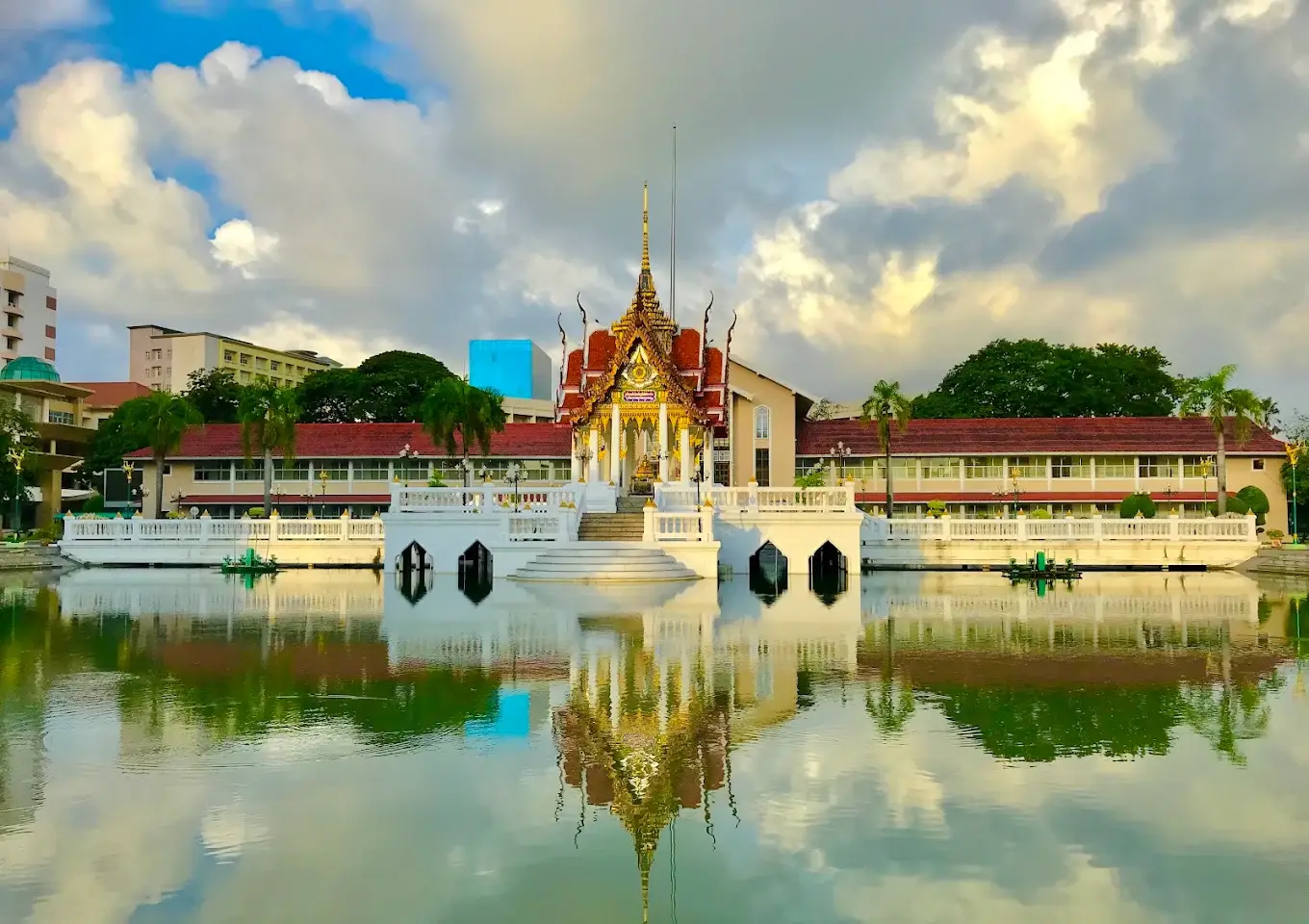
Open Days: Monday–Friday (Except Public Holidays)
Opening Hours: 08:30–16:30 (Administrative Office Hours)
Rajamangala University of Technology Krungthep (RMUTK), known in Thai as Mahawitthayalai Technology Rajamangala Krungthep, is a public university in Bangkok, Thailand, distinguished by its emphasis on applied learning, professional education, science, engineering, business administration, home economics, textile industries, and liberal arts. Its administrative headquarters is located at 2 Nang Linchi Road, Thung Maha Mek, Sathon, Bangkok 10120. The university was officially established on January 18, 2005, under the Rajamangala University of Technology Act B.E. 2548 (2005), through the consolidation of three former campuses of the Rajamangala Institute of Technology: Bangkok Technical Campus, Bophit Phimuk Mahamek Campus, and Phra Nakhon Tai Campus. Each had developed its own educational identity and areas of professional expertise. Today, RMUTK consists of seven faculties and one international college, supported by academic, research, innovation, cultural, and administrative units. Its principal educational mission is to develop practically skilled graduates who can apply their knowledge to professional work, technological development, and the needs of society.
The defining characteristic of Rajamangala University of Technology Krungthep is its integration of academic knowledge with professional practice. This approach reflects the university's origins in Thailand's vocational and technical education system, where students were expected to develop both conceptual understanding and practical competence. Learning activities include laboratory experiments, technical workshops, design projects, applied research, workplace training, and professional problem-solving. Across its academic disciplines, the university seeks to prepare graduates who can transform knowledge into useful outcomes while maintaining ethical standards, creativity, and social responsibility.
RMUTK operates across three principal educational areas in Bangkok: Bangkok Technical, Bophit Phimuk Mahamek, and Phra Nakhon Tai. The Bangkok Technical area accommodates the university's administrative headquarters and several important academic facilities. It is situated in the Sathon district, one of Bangkok's main commercial and business centers, with connections to Nang Linchi Road, Naradhiwas Rajanagarindra Road, Chan Road, and Sathorn Road. The surrounding urban environment creates opportunities for engagement with businesses, service industries, professional organizations, and metropolitan infrastructure.
Although RMUTK became an independent university in 2005, its educational heritage extends much further into Thailand's history. The earliest institutional roots are associated with Phra Nakhon Tai, which developed from Ban Thawai Women's School and the Phra Nakhon Tai Women's Vocational School, founded on May 17, 1931. At that time, vocational education played an increasingly important role in expanding access to occupational skills and creating new educational opportunities, particularly for women.
Education at the former Phra Nakhon Tai institution was closely connected with home economics, food preparation, clothing construction, handicrafts, and other practical disciplines. These fields provided more than domestic skills; they contributed to the development of employable capabilities and economic opportunities. By introducing structured teaching and training, the institution helped transform traditional knowledge and practical craftsmanship into formally organized vocational education.
Another important predecessor was Bangkok Technical Campus, which began teaching on June 5, 1952, and records July 14, 1952, as a significant institutional establishment date. It developed during a period when Thailand was expanding its industrial capacity, infrastructure, and technical workforce. Training in mechanical systems, electrical technology, construction, and industrial processes became increasingly important for preparing workers capable of operating, maintaining, and developing modern equipment and industrial systems.
Bangkok Technical's educational model placed particular emphasis on applying scientific principles through direct practical experience. Students were trained to interpret technical drawings, operate machinery, use specialist tools, inspect components, and understand production systems. These activities built a foundation for practical engineering education and helped establish the professional training traditions that continue to influence the university's present-day Faculty of Engineering and Faculty of Technical Education.
The third major predecessor, Bophit Phimuk Mahamek Campus, was established on December 8, 1976, and began teaching on June 5, 1978. Its development was associated with business, commerce, languages, management, and service industries. As Thailand's economy expanded and international trade became increasingly important, demand grew for graduates trained in accounting, marketing, business administration, foreign languages, and hospitality-related occupations.
These three educational institutions brought different strengths to the university that would eventually emerge. Phra Nakhon Tai contributed expertise in home economics, creative skills, and vocational education for women. Bangkok Technical provided a strong foundation in engineering, industrial technology, and technical training. Bophit Phimuk Mahamek contributed experience in commerce, language education, and service-oriented professions. Their consolidation created an institution with an unusually broad range of professional disciplines connected by a shared emphasis on applied learning.
The most important organizational transformation took place with the Rajamangala University of Technology Act B.E. 2548, published in the Royal Thai Government Gazette on January 18, 2005. The legislation established nine separate Rajamangala universities across Thailand, including Rajamangala University of Technology Krungthep. This change provided the new university with a distinct administrative and legal structure while enabling further development of degree programs, research, academic services, and institutional cooperation.
The creation of RMUTK represented an important development in Thailand's higher education system. It allowed established vocational and technical education traditions to evolve within a university framework without abandoning their practical orientation. The transition also created opportunities to develop higher-level qualifications, strengthen research capabilities, and respond more effectively to changes in industry and society. By combining different professional traditions within a single university, RMUTK developed a multidisciplinary identity that remains evident in its academic structure today.
In 2026, the university marked 21 years since its establishment as Rajamangala University of Technology Krungthep. This date should be distinguished from the much older foundations of its predecessor institutions, particularly Phra Nakhon Tai, whose origins extend to 1931. The university's institutional history therefore includes both its formal establishment in 2005 and the accumulated educational heritage of schools and colleges that preceded it.
The name “Rajamangala” connects the university to the historical Rajamangala Institute of Technology system, which received its royal name and became an important part of Thailand's technical and vocational education development. The designation “Krungthep” refers to Bangkok, where the university's educational areas are located. Together, the name reflects both the institution's technological identity and its relationship with the Thai capital.
The University Emblem follows the shared symbolic tradition of the Rajamangala universities, representing their historical origins and educational identity. RMUTK's official color is green, associated with growth, freshness, peace, and balanced personal development. The symbolism expresses the university's aspiration to provide an environment where students can develop academically, professionally, intellectually, emotionally, and socially.
The university's official tree is the Sathon Tree, whose Thai name closely resembles the name of the Sathon district where the university is located. This tree is valued for its distinctive wood, foliage, and white flowers. As a university symbol, it represents strength, stability, academic development, and consideration for society. Its significance reflects the idea of a university functioning as a lasting source of knowledge and support for its students and surrounding communities.
The university's academic organization consists of seven faculties: the Faculty of Liberal Arts, Faculty of Science and Technology, Faculty of Technical Education, Faculty of Engineering, Faculty of Business Administration, Faculty of Home Economics Technology, and Faculty of Textile Industries. These are joined by the International College. RMUTK also maintains specialist units such as the Institute of Science, Innovation and Culture, the Research and Development Institute, the Office of Academic Resources and Information Technology, and the Office of Academic Promotion and Registration.
The Faculty of Engineering carries forward much of the university's historical expertise in industrial and technical education. Its academic fields include Civil Engineering, Electrical Engineering, Mechanical Engineering, Industrial Engineering, Chemical Engineering, Computer Engineering and Internet of Things Systems, Electronics and Telecommunications Engineering, Survey Engineering, and Automation and Robotics Engineering. These disciplines prepare students to work with physical infrastructure, industrial systems, electronic technologies, and modern engineering processes.
Engineering education involves more than calculations and technical design. Students must learn to analyze problems systematically, assess safety, apply professional standards, evaluate materials and systems, and develop effective solutions. Contemporary engineering work increasingly involves digital technologies, automated machinery, intelligent control systems, data-driven processes, and resource efficiency. The university's engineering disciplines therefore connect traditional technical foundations with emerging industrial requirements.
The Faculty of Technical Education combines technological knowledge with teaching methodology and professional skills development. Its programs encompass areas such as Mechanical Engineering Education, Industrial Engineering Education, Modern Automotive Technology, and Industrial Engineering Technology. Graduates may apply their expertise in vocational institutions, workforce development, industry-related training, and technical organizations. This combination of educational theory and practical technology is particularly relevant to Thailand's continuing need for skilled technical teachers and trainers.
The Faculty of Science and Technology provides education in applied sciences, computing, food-related technology, energy, industrial design, and creative technology. Its areas of study include Chemistry, Computer Science, Information Technology, Food Safety Management, Photography and Film Technology, Digital Printing and Packaging Design, Furniture Technology, and Industrial Product Design. These disciplines connect scientific experimentation with the development of technology, products, and practical solutions for contemporary industries.
The Faculty of Business Administration focuses on professional capabilities in accounting, marketing, finance, management, property valuation, digital business, information systems, and aviation business. Its programs respond to the changing requirements of commercial organizations and service industries. Students develop skills in business analysis, management, technology-supported decision-making, entrepreneurship, and professional communication. Digital transformation has become particularly relevant to these fields as organizations increasingly depend on information systems and innovative business models.
The Faculty of Home Economics Technology maintains a close historical connection with the Phra Nakhon Tai educational tradition. Its fields cover Home Economics, Food and Nutrition, Food Business, Food and Product Development, Food Science and Technology, Clothing and Pattern Technology, Fashion Design, and Home Economics Education. These disciplines combine scientific principles, creativity, craftsmanship, and business knowledge to develop products and services for contemporary consumers.
Food education is particularly important for understanding the relationship between professional training and Thai cultural heritage. Traditional Thai cooking, regional cuisine, desserts, ingredient selection, and food preparation techniques provide valuable foundations for product innovation and food entrepreneurship. By combining this knowledge with food science, nutrition, product development, and quality control, students can transform traditional culinary skills into commercially relevant products while helping preserve Thailand's food culture.
The Faculty of Textile Industries represents another distinctive area of university expertise. Its programs are associated with textile materials, textile production technology, textile and fashion design, fashion entrepreneurship, and textile innovation. The field connects industrial manufacturing with creative design and the development of value-added products. It also provides opportunities to examine how traditional textile knowledge and cultural identity can be integrated with contemporary design and technology.
The Faculty of Liberal Arts plays an important role in language education, tourism, hospitality, and intercultural communication. Its academic programs include English for International Communication, Japanese, Chinese for Communication, Tourism, Hospitality, and Thai Wisdom Product Innovation Design. These fields support the development of professional communication skills and cultural understanding, both of which are essential in international business, tourism, education, and service industries.
The International College extends the university's educational activities into an international context. Its academic profile includes International Business Management, International Tourism and Hospitality Management, and Accounting and Information Technology. The college also lists postgraduate programs in business, educational administration, and related disciplines. Internationally oriented education provides opportunities for students to develop language ability, intercultural competence, and an understanding of global business environments.
Beyond undergraduate education, RMUTK offers postgraduate study in several professional and academic fields. Master's and doctoral programs listed in the university's academic systems include Engineering, Business Administration, Home Economics, Textile Innovation, Technical Education, Management, and other specialist disciplines. Graduate education provides opportunities for deeper theoretical analysis, independent research, and advanced professional development. Applicants should consult the official admissions announcements for the relevant academic year because the existence of a program in an academic catalogue does not necessarily mean that it is accepting new students in every admission cycle.
Workplace training and cooperative education are important components of the university's applied learning approach. Such activities give students opportunities to experience professional responsibilities, workplace procedures, multidisciplinary collaboration, and practical problem-solving. They also help students understand the expectations of employers and develop the communication, organizational, and technical skills needed for their future careers.
Research and Innovation form another central part of the university's mission. The Research and Development Institute was established in 2005 following the university's formation, building on research activities undertaken within the former Rajamangala Institute of Technology system. The institute supports academic research, innovation development, cooperation with external organizations, and the transfer of knowledge into practical applications. These activities help connect university expertise with technological and social needs.
An example of RMUTK's applied research achievements is an interdisciplinary nanotechnology project involving rice bran oil developed by researchers from the Faculty of Science and Technology. The project received a commendation award at the seventh Rajamangala University of Technology Academic Conference, RMUTCON 2026, held from August 31 to September 2, 2026. The research explored the transformation of rice bran oil into innovative nanostructured materials with potential applications in skin-care product development, illustrating how agricultural resources can be combined with advanced scientific knowledge to create higher-value innovations.
Academic quality assurance is another priority for the university. RMUTK has pursued the application of the Education Criteria for Performance Excellence (EdPEx) to institutional and faculty-level management, while adopting the ASEAN University Network Quality Assurance framework (AUN-QA) for program-level evaluation. These systems support the assessment of learning outcomes, academic management, resources, teaching processes, and the continued improvement of educational quality.
Cultural traditions remain an important part of university life despite RMUTK's emphasis on science and technology. Activities such as Wai Khru ceremonies, student welcoming rituals, Buddhist observances, Songkran celebrations, and cultural education programs help maintain connections with Thai heritage. These traditions encourage respect for teachers, appreciation of community relationships, and awareness of the cultural values associated with professional and academic development.
The Wai Khru Ceremony, through which students formally express gratitude and respect to their teachers, is among the university's most significant educational traditions. In 2026, the Faculty of Science and Technology held its Wai Khru ceremony on July 9, while the Faculty of Business Administration organized a teacher-honoring and student-welcoming ceremony on July 16. The Faculty of Liberal Arts held its ceremony on July 23. These occasions brought together students, faculty members, and university representatives to reinforce the values of gratitude, professional responsibility, and mutual respect.
The Faculty of Home Economics Technology also organized a Wai Khru and Bai Sri Su Khwan celebration on July 16, 2026, at Building 11 in the Phra Nakhon Tai area. The event, held under the Thai name “Home Hak, Hap Khwan, Nom Wantha Khru,” included a competition in creating ceremonial flower arrangements and teacher-honoring trays. Such activities demonstrate how students can apply practical craftsmanship, artistic creativity, and traditional Thai cultural knowledge within the university community.
Another significant cultural event was the university's Maha Songkran celebration on April 9, 2026, at the university administration auditorium. Activities included merit-making and traditional water-pouring ceremonies to honor senior members of the university community. The celebration provided opportunities for students and staff to participate in Thai New Year traditions while strengthening relationships across the institution.
For the 2026 academic year, the university also organized student orientation activities under the theme “Rap Nong Khao Ban, Rap Khwan Khao Krung,” welcoming new students into university life. The program introduced important academic services, registration procedures, student organizations, and expectations concerning discipline and responsible conduct. Orientation activities help new students adjust to higher education and build connections with their classmates, teachers, and wider university community.
Several important facilities are located within the Bangkok Technical area, including the University Administration Office, Rajamangala Krungthep Auditorium, teaching buildings, laboratories, and sports facilities. These spaces serve different educational and administrative purposes, ranging from classroom instruction and practical training to conferences, student events, and recreational activities.
One culturally significant facility is Ruen Thai Sathorn, associated with the university's cultural activities and its recognition of Thai architectural heritage. Traditional Thai houses demonstrate how local builders responded to climate, available materials, and everyday patterns of life. Their architectural forms provide valuable opportunities to study traditional construction principles, spatial design, and cultural identity. Visits to university facilities of this nature should be arranged with the responsible office.
The Office of Academic Resources and Information Technology is another important university unit. Established within the university structure in 2006, it developed from the former academic resource center of Bangkok Technical Campus. The office supports access to library resources, educational information systems, academic materials, and independent learning facilities. Its service hours may extend beyond normal administrative working hours during teaching semesters, while different schedules may apply during university breaks.
From an educational heritage perspective, RMUTK provides an interesting case study of the development of vocational and professional education in Bangkok. Its transformation from separate women's vocational, technical, and commercial education institutions into a multidisciplinary university reflects wider changes in Thailand's economy, industrial development, employment opportunities, and higher education system. The university's history can therefore be studied alongside broader developments in engineering education, food culture, textile design, business training, and professional skills.
The university, however, is primarily an active educational institution rather than a public sightseeing attraction. Access to laboratories, workshops, specialist facilities, and certain academic buildings is controlled according to university regulations. Researchers, visitors, educational groups, and anyone wishing to arrange a study tour should contact the appropriate university office before visiting, particularly when specialist equipment or restricted teaching spaces are involved.
Getting There: The principal administrative campus of Rajamangala University of Technology Krungthep is located at 2 Nang Linchi Road, Thung Maha Mek, Sathon, Bangkok 10120. Visitors can reach the area by private car, taxi, and public transportation. One practical option is to take the BTS Skytrain to Chong Nonsi Station and connect to the Bangkok BRT service, alighting at the Technical Krungthep station. Another option is to travel by MRT to Lumphini Station and continue by local transport. Travelers should check current transport operations and confirm which university area they need to visit before beginning their journey.
Several cultural and recreational attractions can be found in the surrounding Sathon area and nearby Bangkok districts. These include Lumphini Park, the King Rama IX 80th Birthday Anniversary Commemorative Park in Sathon, M.R. Kukrit Pramoj's House, Wat Chong Lom, and the Mahanakhon SkyWalk. Together, these places provide opportunities to explore Bangkok's green spaces, traditional architecture, religious heritage, and contemporary urban development. Visitors planning to combine university business with sightseeing should check the operating arrangements of each attraction separately.
Prospective students can obtain admissions information from the university's Office of Academic Promotion and Registration. RMUTK provides recruitment routes for applicants holding upper-secondary qualifications, vocational certificates, and higher vocational certificates, together with admission procedures for selected postgraduate programs. During 2026, the university operated several recruitment rounds under the TCAS and direct admission systems. It also began publishing admissions information for the 2027 academic year before the end of 2026. Applicants should pay attention to the academic year, selection round, entry qualifications, and specific program requirements stated in each announcement.
Rajamangala University of Technology Krungthep remains an important institution in Thailand's development of professional and technological education. Its historical foundations bring together women's vocational training, industrial technology, commerce, and service-related studies. Today, these traditions have developed into university programs covering engineering, applied science, business, languages, food, textiles, design, and tourism. By preserving its practical educational identity while developing research, innovation, and professional opportunities, RMUTK continues to contribute to the preparation of skilled graduates and the advancement of Thai society.
| University Name | Rajamangala University of Technology Krungthep |
| Thai Name | มหาวิทยาลัยเทคโนโลยีราชมงคลกรุงเทพ |
| Abbreviation | RMUTK |
| University Type | Public University Specializing in Professional Education, Science, Technology, and Innovation |
| Administrative Headquarters | Bangkok Technical Area, Sathon District, Bangkok |
| Address | 2 Nang Linchi Road, Thung Maha Mek, Sathon, Bangkok 10120, Thailand |
| University Establishment Date | January 18, 2005 |
| University Age in 2026 | 21 Years |
| Historical Origins | 1. Phra Nakhon Tai: Founded May 17, 1931 2. Bangkok Technical: First Classes June 5, 1952; Institutional Establishment Date July 14, 1952 3. Bophit Phimuk Mahamek: Established December 8, 1976; First Classes June 5, 1978 |
| Establishing Legislation | Rajamangala University of Technology Act B.E. 2548 (2005) |
| University Leadership, October 2026 | Associate Professor Dr. Pichai Chanmanee, Acting President, appointed under University Council Order No. 021/2569, effective August 18, 2026 |
| Educational Areas | 1. Bangkok Technical Area 2. Bophit Phimuk Mahamek Area 3. Phra Nakhon Tai Area |
| Faculties and College | 1. Faculty of Liberal Arts 2. Faculty of Science and Technology 3. Faculty of Technical Education 4. Faculty of Engineering 5. Faculty of Business Administration 6. Faculty of Home Economics Technology 7. Faculty of Textile Industries 8. International College |
| Additional Academic Units | Institute of Science, Innovation and Culture; Research and Development Institute; Office of Academic Resources and Information Technology; Office of Academic Promotion and Registration |
| University Color | Green |
| University Tree | Sathon Tree |
| Academic Strengths | Engineering, Applied Sciences, Technical Education, Business Administration, Home Economics, Textile Industries, Languages, Tourism, Food and Nutrition, and Creative Industries |
| Important University Facilities | University Administration Office, Rajamangala Krungthep Auditorium, Ruen Thai Sathorn, Academic Resources and Information Technology Facilities, Teaching Buildings, and Laboratories |
| Traditions and Events | Wai Khru Ceremonies, Bai Sri Su Khwan Student Welcoming Rituals, Student Orientation, Songkran Celebrations, and Cultural Activities |
| Administrative Open Days | Monday–Friday, Except Public Holidays |
| Administrative Office Hours | 08:30–16:30 |
| Academic Resources Office Service Hours | During Semesters: Monday–Thursday 08:30–18:30 and Friday 08:30–16:30 During Semester Breaks: Monday–Friday 08:30–16:30 Closed on Saturdays, Sundays, and Public Holidays |
| Campus Visits | Administrative inquiries follow official office hours. Visits to laboratories, specialist teaching facilities, and restricted buildings require prior arrangements with the relevant university offices |
| Getting There | Private Car, Taxi, BTS Chong Nonsi with a Connection to BRT Technical Krungthep, or MRT Lumphini followed by Local Transportation |
| Nearby Attractions | 1. King Rama IX 80th Birthday Anniversary Commemorative Park, Sathon 2. M.R. Kukrit Pramoj's House, Suan Phlu 3. Lumphini Park 4. King Power Mahanakhon SkyWalk 5. Wat Chong Lom, Yan Nawa |
| Nearby Restaurants | 1. After Summer, Nang Linchi Road, Tel. +66 63 886 5594 2. Padthai Phromphiram, Nang Linchi, Tel. +66 65 949 9425 3. Mama Made Roti, Nang Linchi Road, Tel. +66 2 678 5619 4. Banthat Thong Fish Ball Noodle, Nang Linchi Soi 6, Tel. +66 2 061 3366 5. Via Emilia Bangkok, Naradhiwas Rajanagarindra Soi 17, Tel. +66 93 138 8373 |
| Nearby Accommodation | 1. Amanta Hotel & Residence Sathorn, Tel. +66 2 126 7111 2. U Sathorn Bangkok, Tel. +66 2 119 4888 3. Norma Hotel Sathorn, Tel. +66 2 286 2366 4. Somerset Park Suanplu Bangkok, Tel. +66 2 679 4444 5. Shama Yen-Akat Bangkok, Tel. +66 2 160 8750 |
| University Telephone | +66 2 287 9600, Extensions 1520–1523 |
| Admissions Telephone | +66 2 287 9625 |
| Contact Email | sarabandocument@mail.rmutk.ac.th |
| Official Website | https://www.rmutk.ac.th/ |
| Admissions Website | https://admission.rmutk.ac.th/ |
| Current Status | Operating as a public university with active academic programs, research, and institutional activities in 2026 |
Academic Programs and Fields of Study at Rajamangala University of Technology Krungthep — Academic Year 2026
| Faculty / College | Academic Programs and Fields of Study |
| Faculty of Liberal Arts | Bachelor's Degree Programs 1. Bachelor of Arts in Tourism 2. Bachelor of Arts in Hospitality 3. Bachelor of Arts in English for International Communication 4. Bachelor of Arts in Japanese 5. Bachelor of Arts in Chinese for Communication 6. Bachelor of Arts in Thai Wisdom Product Innovation Design Master's Degree Program 7. Master of Arts in English for the Service Industry |
| Faculty of Science and Technology | Bachelor's Degree Programs 1. Bachelor of Science in Chemistry 2. Bachelor of Science in Biotechnology for Agro-Industry and Environment 3. Bachelor of Science in Energy Technology for the Environment 4. Bachelor of Science in Food Safety Technology and Management 5. Bachelor of Science in Information Technology 6. Bachelor of Science in Computer Science 7. Bachelor of Science in Health and Beauty Science 8. Bachelor of Technology in Photography and Film Technology 9. Bachelor of Technology in Digital Printing and Packaging Design 10. Bachelor of Technology in Furniture Technology and Design 11. Bachelor of Technology in Digital Media Technology and Mass Communication 12. Bachelor of Technology in Industrial Product Design |
| Faculty of Technical Education | Bachelor's Degree Programs 1. Bachelor of Science in Technical Education, Mechanical Engineering 2. Bachelor of Science in Technical Education, Industrial Engineering 3. Bachelor of Industrial Technology in Modern Automotive Technology 4. Bachelor of Industrial Technology in Computer Engineering Technology 5. Bachelor of Industrial Technology in Modern Industrial Engineering Technology Master's Degree Program 6. Master of Technical Education in Technical Teaching Research and Development |
| Faculty of Engineering | Associate Degree An associate-degree admission route in Survey Engineering (Special Program) appears in university admissions announcements. Bachelor's Degree Programs 1. Bachelor of Engineering in High Precision Manufacturing Engineering 2. Bachelor of Engineering in Computer Engineering and Internet of Things Systems 3. Bachelor of Engineering in Chemical Engineering 4. Bachelor of Engineering in Mechanical Engineering 5. Bachelor of Engineering in Aircraft Maintenance Engineering 6. Bachelor of Engineering in Electrical Engineering 7. Bachelor of Engineering in Civil Engineering 8. Bachelor of Engineering in Survey Engineering 9. Bachelor of Engineering in Automation and Robotics Engineering 10. Bachelor of Engineering in Electronics and Telecommunications Engineering 11. Bachelor of Engineering in Industrial Engineering Master's Degree Programs 12. Master of Engineering in Manufacturing Engineering 13. Master of Engineering in Mechanical Engineering 14. Master of Engineering in Electrical Engineering Doctoral Degree Programs 15. Doctor of Philosophy in Engineering 16. Doctor of Philosophy in Engineering and Technology Management 17. Doctor of Engineering in Mechanical Engineering 18. Doctor of Engineering in Electrical Engineering |
| Faculty of Business Administration | Bachelor's Degree Programs 1. Bachelor of Accountancy 2. Bachelor of Business Administration in Finance and Financial Innovation 3. Bachelor of Business Administration in Modern Business Management 4. Bachelor of Business Administration in Marketing 5. Bachelor of Business Administration in Property Valuation 6. Bachelor of Business Administration in International Business Communication 7. Bachelor of Business Administration in Digital Startup 8. Bachelor of Business Administration in Aviation Business 9. Bachelor of Business Administration in Information Systems Innovation 10. Bachelor of Technology in Information Technology and Digital Business Master's Degree Program 11. Master of Business Administration Doctoral Degree Program 12. Doctor of Business Administration |
| Faculty of Home Economics Technology | Bachelor's Degree Programs 1. Bachelor of Home Economics in Home Economics 2. Bachelor of Home Economics in Clothing and Pattern Technology 3. Bachelor of Home Economics in Food Business 4. Bachelor of Home Economics in Food and Nutrition 5. Bachelor of Technology in Fashion Design 6. Bachelor of Science in Food Science and Technology 7. Bachelor of Science in Food and Product Development 8. Bachelor of Education in Home Economics Education Master's Degree Program 9. Master of Home Economics in Home Economics Doctoral Degree Program 10. Doctor of Philosophy in Home Economics |
| Faculty of Textile Industries | Bachelor's Degree Programs 1. Bachelor of Technology in Textile and Fashion Design 2. Bachelor of Science in Textile Technology 3. Bachelor of Business Administration in Fashion Entrepreneurship Master's Degree Program 4. Master of Science in Textile Innovation |
| International College | Bachelor's Degree Programs 1. Bachelor of Business Administration in International Tourism and Hospitality Management 2. Bachelor of Business Administration in International Business Management 3. Bachelor of Business Administration in Accounting and Information Technology Master's Degree Programs 4. Master of Business Administration 5. Master of Education in Educational Administration 6. Master of Business Administration in Accounting and Information Technology Doctoral Degree Programs 7. Doctor of Philosophy in Business Administration 8. Doctor of Philosophy in Educational Administration 9. Doctor of Philosophy in Human Resource Development and Management |
| Institute of Science, Innovation and Culture | Bachelor's Degree Program 1. Bachelor of Arts in Social Studies and Management Master's Degree Programs 2. Master of Arts in Education and Society 3. Master of Arts in Buddhism in the World 4. Master of Management in Management Science Doctoral Degree Programs 5. Doctor of Philosophy in Buddhism in the World 6. Doctor of Philosophy in Education and Society 7. Doctor of Philosophy in Management Science Graduate Diploma Graduate-diploma program information is also listed in the university's curriculum database. Admissions depend on the applicable program announcement. |
| Program Status and Admissions | The programs above are drawn from the university's published curriculum and academic quality-assurance records. These records do not establish that every program is accepting a new intake in the 2026 academic year. Applicants should consult the official admissions announcements for 2026 or 2027, including each program's entry requirements and recruitment schedule. |
Frequently Asked Questions (FAQ)
Q: Where is Rajamangala University of Technology Krungthep located?
A: The administrative headquarters is located at 2 Nang Linchi Road, Thung Maha Mek, Sathon, Bangkok 10120, Thailand. The university operates three principal educational areas: Bangkok Technical, Bophit Phimuk Mahamek, and Phra Nakhon Tai.
Q: What are the opening days and office hours of Rajamangala University of Technology Krungthep?
A: University administrative offices operate Monday to Friday from 08:30 to 16:30, excluding public holidays. Libraries and certain academic facilities may follow different schedules during semesters and university breaks.
Q: When was Rajamangala University of Technology Krungthep established?
A: The university was established on January 18, 2005, under the Rajamangala University of Technology Act B.E. 2548. Its predecessor institutions have older histories, including Phra Nakhon Tai, which traces its origins to 1931.
Q: How many faculties does Rajamangala University of Technology Krungthep have?
A: RMUTK has seven faculties and one international college, covering liberal arts, science and technology, technical education, engineering, business administration, home economics technology, textile industries, and international education.
Q: What is Rajamangala University of Technology Krungthep known for?
A: The university is recognized for its practical approach to professional education, particularly in engineering, applied sciences, technical education, business administration, home economics, textile technology, languages, and tourism.
Q: What traditions and cultural activities are held at the university?
A: Important activities include Wai Khru teacher-honoring ceremonies, Bai Sri Su Khwan student-welcoming rituals, Thai New Year celebrations, student orientation, and cultural preservation programs. Examples of these activities were documented in 2026.
Q: How can visitors reach RMUTK using public transportation?
A: Visitors traveling to the Bangkok Technical area can take the BTS Skytrain to Chong Nonsi Station and connect to the BRT service at Technical Krungthep Station. Another option is to use MRT Lumphini Station and continue by local transport.
Q: Is Rajamangala University of Technology Krungthep accepting students for the 2027 academic year?
A: Yes. The university began publishing admissions announcements for the 2027 academic year during 2026. Applicants should check the TCAS, direct admission, and other recruitment routes at https://admission.rmutk.ac.th/ or contact the Admissions Office at +66 2 287 9625.
 Category: ●University
 Group: ●Rajamangala University of Technology
Last Update : 1 WeekAgo
 Last Update : 1 WeekAgo
 Click to Access the Navigation Map GPS
Rajamangala University of Technology Krungthep (RMUTK) Map
Recommend

 Art, Culture and Heritage
 Historical Sites and Monuments(3)
 Landmarks and Memorials(23)
 Royal Palace(13)
 Art, Craft Centres, Tradition(35)
 Museums(59)
 Historic Homes and Cities(3)
 Art Gallery(16)
 Educational Places
 Museum for Study(6)
 Library(4)
 Public university(8)
 Autonomous Universities(8)
Rajamangala University of Technology(6)
 Rajabhat University(6)
 Private University(22)
 Places of Worship
 Temple(72)
 Church(2)
 Mosque(67)
 Other Sacred Sites(8)
 Research and Development
 Royal Project(1)
 Suburban Living
 Village, Community(5)
 Local Market(9)
 Floating Market(2)
 Nature and Wildlife
 River, Canal(3)
 Bays and Beaches(1)
 Other natural attractions(1)
 Entertainment and Agricultural
 Zoos and Aquariums(5)
 Animal camps and shows(5)
 Stadium(9)
 Farms, Parks and Ecotourism(20)
 Amusement Park(1)
 Waterpark(4)
 Theater(7)
 Cinema(1)
 Shopping
 Shopping and Night Market(20)
 Department Store(7)
 Spas and Wellness
 Spas and Wellness(1)
 Restaurant
 Michelin Star(5)
 Accommodation
 Hotel(3)
 Call Customer Service in Tourism
 Call Customer Service in Tourism(1)
 Travel Articles, Recipes
 Travel Review, Food Review(43)
 Royal Thai Desserts and Recipes(56)


