
lovethailand home >Central Travel Attractions >Bangkok Travel Attractions >Jatujak >Lat Yao > Kasetsart University (Bangkhen Campus)
TL;DR: Kasetsart University (Bangkhen Campus) is located at Lat Yao, Chatuchak, Bangkok, Thailand, open Monday – Friday (University Administrative Offices, Except Public and, hours 08:30 – 16:30 (Administrative Office Hours, Not General Campus Access Hours).
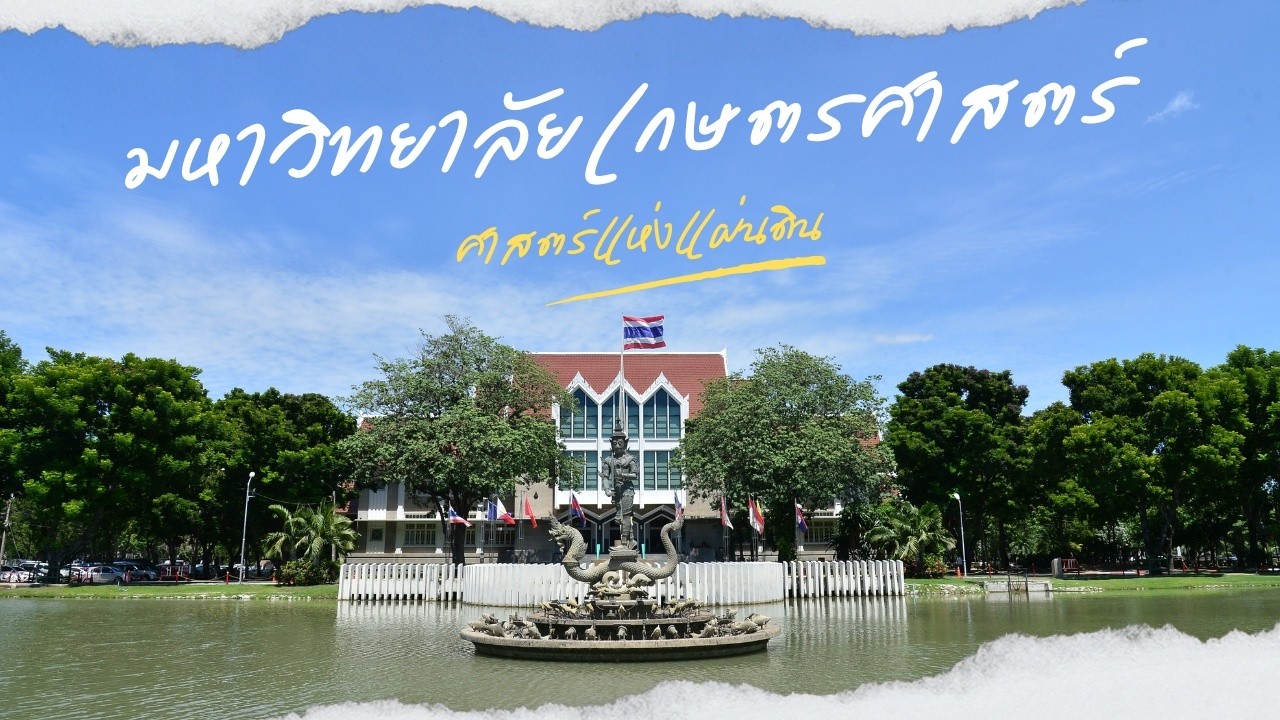
Kasetsart University (Bangkhen Campus)
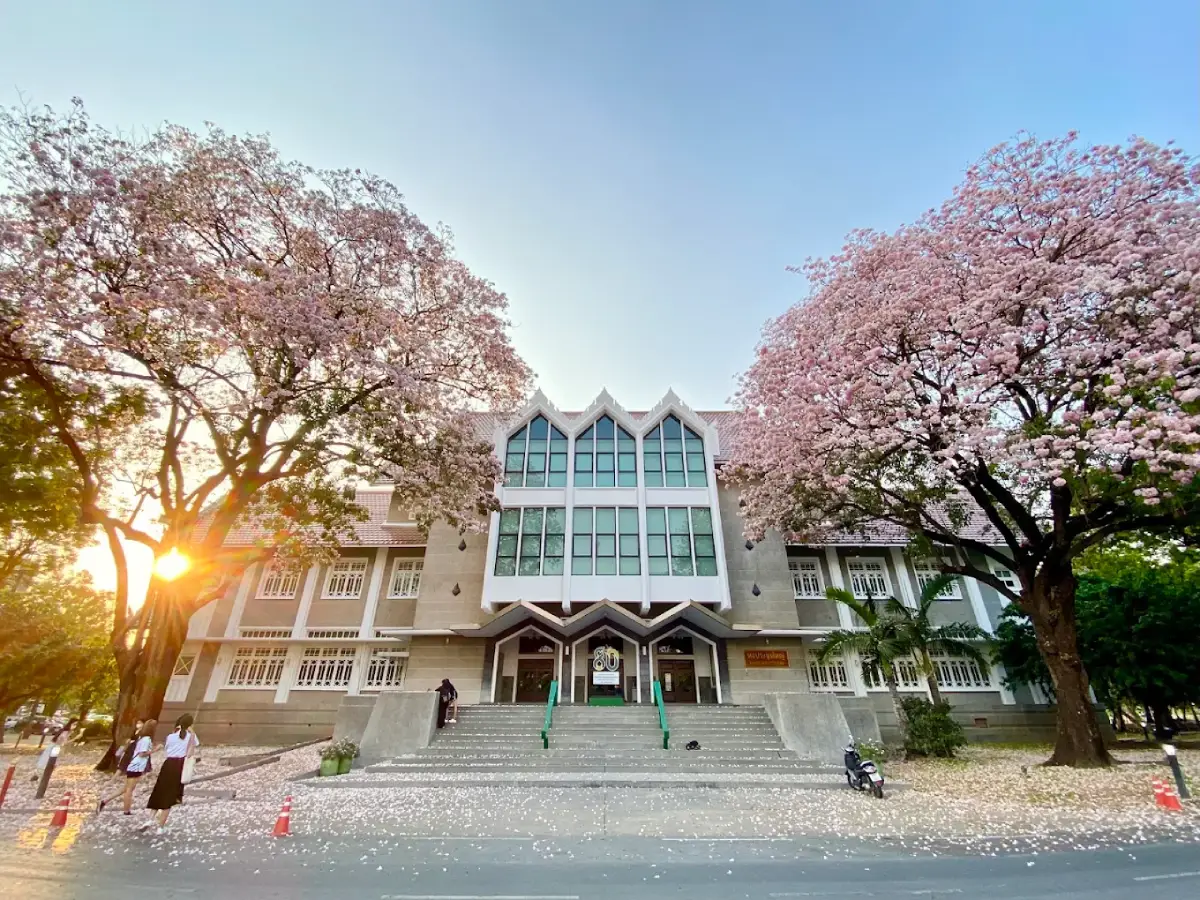
Open Days: Monday – Friday (University Administrative Offices, Except Public and University Holidays)
Opening Hours: 08:30 – 16:30 (Administrative Office Hours, Not General Campus Access Hours)
Kasetsart University, Bangkhen Campus is the main campus and administrative center of Kasetsart University, Thailand's first institution of higher education dedicated to agricultural sciences. Located at 50 Ngamwongwan Road, Lat Yao, Chatuchak, Bangkok 10900, the university was officially established on February 2, 1943, with educational roots extending back to agricultural teacher training in 1917 and the establishment of an agricultural college at Bangkhen in 1939. In 2026, Kasetsart University celebrates its 83rd anniversary. Today, Bangkhen Campus covers approximately 848 rai and serves as a major center of undergraduate and graduate education, advanced research, and innovation across agriculture, science, engineering, economics, social sciences, natural resources, and health sciences. Important campus landmarks include the Three Founding Masters Monument, the Phra Pirun Statue, Kasetsart University Main Auditorium, Chakkraphan Phen Siri Building, Kasetsart University Hall of History, the Museum of Agricultural Culture, and the royal poinciana trees associated with the university's history. The campus is also the venue of the annual Kaset Fair, one of Thailand's well-known agricultural exhibitions and public learning events.
One of the most distinctive features of Kasetsart University's Bangkhen Campus is its spacious green environment in the middle of northern Bangkok. Although the surrounding district has developed into a busy urban area with residential neighborhoods, commercial buildings, and major transport routes, much of the campus retains mature trees, landscaped roads, open spaces, and facilities associated with agricultural education. This environment reflects the university's origins as an institution devoted to understanding plants, animals, land, water, and natural resources.
The campus is bordered by major Bangkok thoroughfares, including Ngamwongwan Road, Phahonyothin Road, and Vibhavadi Rangsit Road. It is accessible through the BTS Sukhumvit Line, the SRT Red Line suburban railway, public buses, taxis, and private vehicles. Within the campus, academic buildings, laboratories, libraries, sports facilities, and student activity areas form an extensive educational environment. Bangkhen is therefore both a center of higher education and a substantial university community connected to Bangkok's Chatuchak district.
The history of Kasetsart University began several decades before its official foundation. In 1917, an agricultural teacher-training school was established to prepare educators with practical knowledge of farming and agricultural production. At that time, agriculture formed the foundation of Thailand's economy and supported the livelihoods of a large proportion of the population. Developing a structured system of agricultural education was therefore closely connected with national economic development, improvements in farming methods, and the need for trained personnel.
Early agricultural education encompassed considerably more than the cultivation of crops. It involved land and water management, plant varieties, pest control, animal husbandry, agricultural production, and the transfer of practical knowledge to farmers. The development of agricultural schools helped create a foundation for scientific experimentation, field-based learning, and extension services, all of which subsequently became important features of Kasetsart University's educational mission.
In 1939, the College of Agriculture was established at Bangkhen through the efforts of three important pioneers: Luang Suwan Vajokkasikit, Phra Chuang Kasetsinlapakan, and Luang Ingasrikasikarn, also associated with the name Insi Chantarasathit. Several other educators and officials also contributed to the college's establishment, including Charat Sunthonsing, Roem Buranarerk, and Kawi Wisuttharom. The college represented a major step toward developing advanced agricultural education in Thailand and laid the institutional foundations for the university that followed.
Bangkhen was particularly suitable for agricultural education because it offered extensive land on the outskirts of Bangkok. Practical instruction in agriculture required fields, experimental plots, livestock areas, agricultural buildings, and spaces for scientific observation. The original landscape provided opportunities for students to combine classroom learning with direct experience of cultivation, production systems, and the management of agricultural resources.
The transformation from an agricultural college into a university took place during the Second World War. The Thai government recognized that improving agricultural production and rural living standards required trained specialists with advanced scientific knowledge. Admiral Sindhu Kamolnavin, then Minister of Agriculture, played an important role in advancing the proposal to establish a university dedicated to agriculture, forestry, fisheries, and cooperatives through the consolidation and development of existing educational institutions.
The Kasetsart University Act B.E. 2486 was promulgated in the Royal Gazette on February 2, 1943. This date became the university's official foundation day. Four faculties formed the initial academic structure: the Faculty of Agriculture, Faculty of Forestry, Faculty of Fisheries, and Faculty of Cooperatives, which later developed into the Faculty of Economics. The university's early academic organization reflected a clear objective to improve agricultural production, rural livelihoods, economic management, and the sustainable use of natural resources.
The establishment of Kasetsart University was the result of contributions from several educators, government officials, and institutional pioneers rather than the work of a single individual. Agricultural teachers and administrators developed the educational foundations, while the Ministry of Agriculture supported the legal and organizational process of creating a university. The institution therefore emerged from a continuous effort to apply scientific knowledge to the practical development of Thailand.
In its earliest period, Kasetsart University maintained educational connections with several locations. A major proportion of teaching and administration was concentrated at Bangkhen, while forestry education was associated with earlier institutions in Phrae Province and agricultural preparatory education was connected with Mae Jo in Chiang Mai Province. These educational links reflected an effort to develop a broader national network of agricultural expertise rather than concentrating all specialized knowledge in Bangkok.
Following the Second World War, Kasetsart University developed alongside Thailand's expanding agricultural economy. The improvement of crop productivity, irrigation, animal breeding, forestry, fisheries, and agricultural processing created demand for increasingly specialized graduates and research. The university contributed through education, scientific investigations, training, and cooperation with government agencies and private enterprises.
As the Thai economy became more diversified, Kasetsart University expanded beyond its original agricultural disciplines. New academic areas included basic sciences, engineering, business administration, humanities, social sciences, education, architecture, environmental sciences, and technology. The expansion allowed the university to address a broader range of national needs while retaining its traditional strengths in agriculture, food, and natural resource management.
Bangkhen Campus played a central role in this transformation because it accommodated numerous faculties, administrative offices, and research facilities. The development from an agricultural teaching site into a modern university is reflected in the mixture of historical buildings, laboratories, research facilities, auditoriums, and newer educational spaces that exist across the campus today.
As agricultural research and teaching required additional space, the university developed Kamphaeng Saen Campus in Nakhon Pathom Province. The larger site supported activities involving experimental agriculture, animal science, crop development, and practical research. Kasetsart University later expanded through Sriracha Campus in Chon Buri Province and Chalermphrakiat Sakon Nakhon Province Campus, improving access to higher education and supporting regional economic and social development.
In addition to its main campuses, the university maintains educational and research operations in other locations, including the Suphan Buri Learning Administration Area and research stations devoted to plants, animals, fisheries, forests, and natural resources. These facilities support field research, technological experimentation, and the transfer of knowledge to farmers and communities throughout Thailand.
In 2015, Kasetsart University became an autonomous public university under the Kasetsart University Act B.E. 2558. The change introduced a revised governance structure intended to provide greater administrative flexibility under the supervision of the University Council. Kasetsart nevertheless remained a public higher education institution with responsibilities in education, research, academic services, and cultural development.
As of October 2026, Kasetsart University is led by Assistant Professor Dr. Kongsak Thiangtham, a veterinarian and the university's 16th rector. His royal appointment took effect on August 8, 2026. The rector oversees university administration and the development of academic programs, research, personnel, and institutional cooperation in accordance with policies established by the University Council.
Three figures are especially important in the foundation history of Kasetsart University: Luang Suwan Vajokkasikit, Phra Chuang Kasetsinlapakan, and Luang Ingasrikasikarn. They are collectively remembered as the Three Founding Masters, or Sam Buraphachan, in recognition of their roles in establishing agricultural education and developing the original College of Agriculture. Their contributions are commemorated through a monument at Bangkhen Campus and ceremonies held during the university's foundation anniversary.
Luang Suwan Vajokkasikit played a major role in the early administration of the College of Agriculture and the establishment of a structured educational program. Phra Chuang Kasetsinlapakan contributed through government agricultural and fisheries administration and institutional development. Luang Ingasrikasikarn, associated with Insi Chantarasathit, was an important figure in agricultural education and the advancement of professional knowledge. Together, their efforts helped establish a foundation for modern agricultural sciences in Thailand.
Admiral Sindhu Kamolnavin was another significant figure in the university's establishment. As Minister of Agriculture, he supported the legislation and organizational restructuring that led to the university's creation. He became the university's first rector in 1943. His role illustrates the close relationship between national agricultural policy and the establishment of specialized higher education during that period.
The name Kasetsart University expresses the institution's original academic mission. The Thai term kasetsart refers to the scientific study of agriculture and related disciplines. Its scope extends beyond crop cultivation to include livestock, fisheries, forests, soils, water, agricultural economics, and technological systems supporting food production. Although the university has grown into a multidisciplinary institution, the name continues to represent its commitment to applying knowledge for public benefit.
Kasetsart University's institutional identity is often expressed through the concept of Knowledge of the Land, which emphasizes developing knowledge for the well-being of the nation. Its student and community values are summarized in four Thai concepts: good conscience, determination, creativity, and unity. These principles reflect a commitment to ethical responsibility, persistence, innovation, and cooperation in education and professional life.
The university's official emblem features Phra Pirun, the Thai representation of the deity associated with rain, seated upon a naga. Rain and water are essential to agricultural production, while naga imagery is traditionally associated with water and fertility in Thai and Southeast Asian cultural traditions. The emblem therefore symbolizes the relationship between natural resources, agricultural abundance, and the university's educational heritage.
Leaf Green is the university's official color, representing vegetation, growth, and the natural environment. The color is widely used in university flags, symbols, and institutional activities. The university's symbolic tree is the copperpod or yellow flame tree, commonly called the Nontri tree in Thai and scientifically known as Peltophorum pterocarpum. Its spreading canopy, green foliage, and clusters of yellow flowers have become important elements of Kasetsart's visual identity.
The Nontri tree has a special place in university history. On November 29, 1963, King Bhumibol Adulyadej visited Kasetsart University and planted nine Nontri trees near the Main Auditorium. He also bestowed the Nontri as the university's symbolic tree and performed music with the university's orchestra during the visit. The occasion remains an important historical memory for generations of students and alumni.
The royal composition Kasetsart is the university's official song. It was bestowed on December 17, 1966, with lyrics written by Prasert Na Nakhon. The song expresses attachment to the university, solidarity among members of its community, the importance of agricultural knowledge, and dedication to the development of Thailand. It remains closely associated with university ceremonies and traditional events.
Kasetsart University's foundation anniversary is commemorated on February 2 each year. Activities traditionally include ceremonies honoring the Three Founding Masters, academic gatherings, and events reflecting the history and achievements of the institution. On February 2, 2026, the university celebrated its 83rd anniversary, with representatives of academic faculties and university offices joining commemorative ceremonies at the Three Founding Masters Monument on Bangkhen Campus.
One of the university's best-known public traditions is the Kaset Fair, a major exhibition celebrating agriculture, food, research, technology, and innovation. The event provides opportunities for farmers, researchers, businesses, and members of the public to meet and exchange knowledge. Activities commonly include agricultural product exhibitions, food and processed-product sales, technological demonstrations, educational workshops, and displays of research applications.
The 2026 Kaset Fair took place from January 30 to February 7, 2026, over nine days and nights at Bangkhen Campus. The event focused on carrying forward royal aspirations through sustainable agricultural practices. It featured agricultural products, food innovation, learning activities, vocational workshops, and public presentations. The fair demonstrated the university's continuing role in connecting academic knowledge with the everyday needs of Thai society.
Kasetsart's educational culture emphasizes the practical application of scientific knowledge. Students in many disciplines gain experience through laboratory work, experimental cultivation, field surveys, professional practice, and community projects. This educational approach reflects the institution's origins in applied agricultural sciences, encouraging learners to connect theories with real production systems, environmental conditions, and social challenges.
Student life also includes orientation activities, alumni gatherings, sports, cultural activities, and programs promoting cooperation among faculties. These events take place according to individual academic calendars and university policies. They contribute to the development of communication, teamwork, responsibility, and community participation alongside formal academic training.
The Three Founding Masters Monument is among the most historically significant landmarks on Bangkhen Campus. It honors the contributions of Luang Suwan Vajokkasikit, Phra Chuang Kasetsinlapakan, and Luang Ingasrikasikarn. The monument is particularly important during university foundation celebrations, when members of the institution gather to commemorate the people who helped create the foundations of agricultural higher education in Thailand.
The Phra Pirun Statue, located in front of the Suwan Vajokkasikit Building, is another important representation of the university's identity. The statue occupies a landscaped setting with a fountain and symbolic architectural elements. In 2004, the university improved its base and surrounding fountain area to enhance the monument's appearance and significance. The statue provides a direct visual connection with the emblem and founding principles of the institution.
Kasetsart University Main Auditorium is an important historical building completed in 1957. It was originally used for royal degree-conferral ceremonies and other major university functions. Its architectural design features an ordered façade and distinctive roof forms associated with mid-twentieth-century Thai institutional architecture. The building has undergone restoration and continues to serve appropriate university functions.
The area surrounding the Main Auditorium also has cultural and landscape significance because of its association with the Nontri trees planted during the royal visit in 1963. At certain times of year, pink trumpet trees, commonly known in Thailand as Chomphu Phanthip, attract attention when their pale pink flowers bloom along university roads and around older buildings. The seasonal display adds a distinctive natural character to the campus and creates opportunities for landscape photography.
Chakkraphan Phen Siri Building, completed in 1985, is a large multipurpose facility accommodating approximately 3,000 people. Originally associated with major sporting activities, it subsequently became an important venue for university ceremonies, academic gatherings, and programs involving large numbers of participants. The building is widely recognized because of its role in major university events and public activities.
The Hexagonal Pavilion is a smaller historical landmark with an interesting connection to fisheries education and early campus life. The original structure was constructed around 1947 by a unit responsible for fisheries experimentation and breeding. It provided facilities for members of the public purchasing fish stock and later became a resting place for the university community. A replacement pavilion was officially opened on February 2, 1999, preserving the historical association of the site.
The 50th Anniversary Information Building is another institutional landmark associated with university administration and information services. The 60th Anniversary Memorial Hall was designed with architectural elements symbolizing the university's founders, personnel, and development. Its triangular base represents the Three Founding Masters, while the hexagonal form relates to the university's 60th anniversary. The structure's upper elements symbolize growth, reflecting the image of crops emerging from fertile land and progressing toward maturity.
Kasetsart University Hall of History was established to commemorate the university's 60th anniversary on February 2, 2003. It preserves and presents the history of the university, including its foundation, the development of faculties, important individuals, and significant events. Historical exhibits and virtual learning resources help visitors understand the institution's changing role in Thai education and society.
The Museum of Agricultural Culture provides opportunities to study traditional farming tools, rural household objects, agricultural heritage, and the relationship between agriculture and everyday life. Its exhibits help connect traditional practices with the gradual development of scientific and technological methods used in modern agriculture. It is particularly relevant to visitors interested in Thai rural history and agricultural education.
The Krung Rattanakosin Natural History Museum, located within the university, supports learning about natural resources and biodiversity. Collections and educational displays relate to living organisms, natural history, and ecological understanding. This type of museum provides a useful connection between forestry education, species identification, conservation, and the scientific study of natural environments.
Insi Chantarasathit Stadium is an important university sports facility featuring a football field and athletics facilities. It supports sporting activities, physical education, and recreation for members of the university community. The stadium reflects the broader role of higher education in developing health, teamwork, social interaction, and physical well-being.
Kasetsart University Library is a major academic resource supporting study and research across numerous disciplines. Its collections include books, journals, scholarly materials, electronic databases, and other research resources. Library services, specialized faculty collections, laboratories, and academic information systems together provide essential support for undergraduate and graduate education. Access conditions and opening schedules for external visitors are governed by the relevant university units.
Academically, Bangkhen Campus has developed into a multidisciplinary educational center while retaining its strong agricultural foundations. It is associated with faculties specializing in agriculture, fisheries, forestry, economics, veterinary medicine, engineering, science, business administration, humanities, social sciences, education, architecture, agro-industry, veterinary technology, environmental sciences, and emerging health sciences, alongside graduate and specialized interdisciplinary colleges.
The Faculty of Agriculture carries forward the university's original mission in agricultural production. Its academic areas include plant science, crop production, horticulture, pest management, agricultural chemistry, home economics, and agricultural systems. Research and education in these fields contribute to improvements in productivity, plant protection, sustainable resource use, agricultural innovation, and the quality of products delivered to consumers.
The Faculty of Fisheries focuses on aquatic resources, aquaculture, fisheries management, and related environmental sciences. Its educational and research activities are relevant to food security, aquatic biodiversity, sustainable fisheries, and the management of natural water systems. Fisheries knowledge is particularly important in a country where freshwater and marine resources have substantial economic and cultural significance.
The Faculty of Forestry plays a major role in education relating to forest ecosystems, natural resource management, and conservation. Its areas of expertise encompass sustainable forest management, biodiversity, community forestry, ecological restoration, and the relationships between forests, climate, and society. Such knowledge has become increasingly important in responding to climate change, habitat degradation, and pressures on natural resources.
The Faculty of Agro-Industry connects agricultural production with food science, biotechnology, product development, packaging, and industrial processing. Its research and academic programs focus on improving the value and quality of agricultural products, reducing losses during production, developing innovative foods, and supporting food safety. These activities contribute to Thailand's position as a major agricultural and food-producing economy.
The Faculty of Economics developed from the original Faculty of Cooperatives. Its fields now include economics, agricultural and resource economics, agribusiness, cooperative economics, and related disciplines. Students learn about markets, economic policy, resource allocation, business decisions, and development issues, allowing economic knowledge to support agricultural and wider national planning.
The Faculties of Engineering and Science support the development of technology and fundamental scientific knowledge. Engineering education addresses machines, structures, agricultural equipment, computer-related systems, and industrial processes. The Faculty of Science provides education in mathematics, physics, statistics, computer science, and biological sciences. Their research supports advances in materials, biotechnology, information systems, energy, and modern production technologies.
The Faculty of Veterinary Medicine and Faculty of Veterinary Technology contribute to animal health, disease diagnosis, veterinary treatment, animal nursing, and livestock welfare. Their expertise supports the care of companion animals and agricultural animals, as well as food safety and the control of diseases that can pass between animals and humans. These disciplines are also connected with the One Health approach, which considers human, animal, and environmental health together.
Kasetsart University has also developed academic units in human health, including the Faculties of Medicine, Nursing, and Pharmacy. Degree curricula in these fields appear in university academic records during the 2024–2026 period. Their development expands opportunities for interdisciplinary education and research connecting biological sciences, animal health, human healthcare, and pharmaceutical knowledge.
The Faculties of Business Administration, Humanities, Social Sciences, and Education contribute expertise in management, accounting, finance, languages, communication, psychology, society, history, and educational development. These academic areas enable scientific and technological knowledge to be connected with human behavior, organizations, economic systems, and wider social needs.
The Faculty of Architecture and Faculty of Environment address building and landscape design, spatial planning, environmental management, and sustainable development. The College of Integrated Science offers programs centered on Knowledge of the Land and sustainability, emphasizing the integration of knowledge from different disciplines to address complex community and social challenges.
Graduate education is an important part of Kasetsart University's academic mission. Master's and doctoral programs support advanced research in agricultural sciences, engineering, biological sciences, economics, management, environmental studies, food technology, education, and natural resource management. Graduate students work with faculty members and research teams on specialized projects, often using laboratory facilities, field stations, and research partnerships.
One of Kasetsart University's greatest research strengths is its emphasis on practical applications. Research fields include plant breeding, precision agriculture, crop protection, food product development, fisheries resource management, forestry conservation, biotechnology, and agricultural materials. These areas support improvements in production systems, commercial innovation, and sustainable resource use.
Specialized university research institutes also contribute to food innovation and technology transfer. The Institute of Food Research and Product Development, for example, works in food research, product development, quality assessment, processing technologies, and related services. Such activities connect university laboratories with food producers, entrepreneurs, and consumers, supporting the transformation of agricultural raw materials into higher-value products.
Kasetsart University's relationship with communities and farmers is maintained through field research, professional training, academic services, and cooperation with public and private organizations. The objective is not only to improve agricultural output but also to strengthen local economic opportunities, food security, environmental responsibility, and the sustainable management of natural resources. Successful knowledge transfer requires an understanding of local conditions, traditional practices, and community priorities.
The growth of Bangkhen Campus has also influenced the surrounding neighborhoods of Chatuchak and northern Bangkok. Restaurants, cafés, bookstores, accommodation, educational services, and small businesses serve students, university staff, and visitors. In return, the university provides employment, research knowledge, cultural activities, and public events that contribute to the wider urban community.
For educational tourism, Bangkhen Campus is particularly interesting to visitors studying the history of Thai agriculture and higher education. The Three Founding Masters Monument, Hall of History, Museum of Agricultural Culture, Phra Pirun Statue, and historic auditorium provide opportunities to understand the development of the institution through actual sites and exhibits. Access to individual buildings and learning spaces remains subject to the regulations of the responsible university departments.
The annual Kaset Fair is another valuable opportunity for public learning. Visitors can explore agricultural technology, food innovation, educational displays, and products developed by farmers and entrepreneurs. The event creates direct connections between university research and practical economic activities while introducing wider audiences to agricultural traditions and contemporary production methods.
Visitors interested in landscape photography and natural surroundings can enjoy the campus's mature trees and landscaped roads. The Nontri tree is especially significant because of its association with the university's identity, while seasonal pink trumpet blossoms provide an attractive visual feature in certain areas. Campus visits should respect academic activities, security measures, and any restrictions on access to particular facilities.
Groups planning academic tours should contact the relevant departments before visiting laboratories, museums, research facilities, libraries, or specialized teaching areas. Each facility may have separate opening hours and access requirements. Regular administrative office hours should not be treated as a guarantee that all buildings or outdoor areas are available to visitors.
Getting There is convenient by Bangkok's BTS Sukhumvit Line. Passengers can alight at Kasetsart University Station and use Exit 1, which connects with the campus entrance on Phahonyothin Road. This option is particularly suitable for travelers coming from central Bangkok and other neighborhoods connected to the elevated railway network.
Visitors using the SRT Red Line suburban railway can get off at Bang Khen Station. Exit 7 provides access toward the Museum of Agricultural Culture entrance, while Exit 8 connects with the Royal Project and Vibhavadi Rangsit entrances. Choosing the correct station exit is important because Bangkhen Campus covers a large area, and walking distances between university buildings can be considerable.
Public buses also serve the roads surrounding the campus, including Phahonyothin Road, Ngamwongwan Road, and Vibhavadi Rangsit Road. Travelers should check current route information and select the entrance closest to their destination, particularly when arriving for examinations, official appointments, or events held in specific campus buildings.
Visitors arriving by private car can approach the university from Ngamwongwan, Phahonyothin, or Vibhavadi Rangsit roads. Entry arrangements and parking rules vary according to campus regulations and special events. During large-scale activities such as the Kaset Fair, internal traffic routes and parking availability may be affected by temporary event-management measures.
Several attractions in the surrounding Chatuchak district can be included in a visit to Kasetsart University. These include the Museum of Contemporary Art Bangkok, Wachirabenchathat Park or Railway Park, Chatuchak Park, the Buddhadasa Indapanno Archives at Suan Mokkh Bangkok, and Chatuchak Weekend Market. Together, they provide opportunities for contemporary art, green-space recreation, Buddhist cultural learning, and local shopping.
Kasetsart University, Bangkhen Campus, remains an important landmark in Thailand's educational history as the birthplace of the country's first agricultural university. During its 83 years of development, the institution has expanded from a specialized agricultural center into a major multidisciplinary university while maintaining extensive research networks and practical engagement with farmers, businesses, and communities.
From the earliest agricultural teacher-training initiatives and the College of Agriculture to the modern institution of 2026, Bangkhen Campus continues to represent the application of knowledge for the improvement of society. Through education, research, innovation, and the preservation of its own historical heritage, Kasetsart University has contributed to Thailand's food security, natural resource management, economic development, and scientific progress. It remains not only a leading agricultural university but also an important center of knowledge whose work continues to influence the future of the country.
| University Name | Kasetsart University, Bangkhen Campus |
| Thai Name | มหาวิทยาลัยเกษตรศาสตร์ วิทยาเขตบางเขน |
| University Type | Autonomous Public University |
| Location | Lat Yao, Chatuchak, Bangkok, Thailand |
| Address | 50 Ngamwongwan Road, Lat Yao, Chatuchak, Bangkok 10900, Thailand |
| Coordinates | 13.847050, 100.571942 |
| Campus Area | 848 Rai |
| Origins of Agricultural Education | 1917, Agricultural Teacher-Training School |
| College of Agriculture at Bangkhen | Established in 1939 |
| University Foundation Date | February 2, 1943 |
| Institutional Age in 2026 | 83 Years Since University Establishment |
| Three Founding Masters | 1. Luang Suwan Vajokkasikit 2. Phra Chuang Kasetsinlapakan 3. Luang Ingasrikasikarn (Insi Chantarasathit) |
| First Rector | Admiral Sindhu Kamolnavin |
| Current Rector | Assistant Professor Dr. Kongsak Thiangtham, Appointed Effective August 8, 2026 |
| University Emblem | Phra Pirun Seated on a Naga |
| University Color | Leaf Green |
| University Tree | Nontri Tree (Peltophorum pterocarpum) |
| University Song | Kasetsart, a Royal Composition |
| Institutional Identity | Knowledge of the Land for the Well-Being of the Nation |
| Institutional Values | Good Conscience, Determination, Creativity, and Unity |
| Historical Significance | Thailand's First Agricultural University and a Leading Center for Agricultural, Food, Scientific, and Natural Resource Education |
| Faculties and Colleges Listed at Bangkhen | Faculty of Agriculture; Faculty of Veterinary Technology; Faculty of Business Administration; Faculty of Fisheries; Faculty of Nursing; Faculty of Medicine; Faculty of Pharmacy; Faculty of Humanities; Faculty of Forestry; Faculty of Science; Faculty of Engineering; Faculty of Education; Faculty of Economics; Faculty of Architecture; Faculty of Interdisciplinary Management and Technology; Faculty of Social Sciences; Faculty of Veterinary Medicine; Faculty of Environment; Faculty of Agro-Industry; Graduate School; College of Integrated Science; and International College |
| University Campuses | 1. Bangkhen, Bangkok 2. Kamphaeng Saen, Nakhon Pathom 3. Sriracha, Chon Buri 4. Chalermphrakiat Sakon Nakhon Province Campus |
| Important Campus Landmarks | 1. Three Founding Masters Monument 2. Phra Pirun Statue 3. Main Auditorium 4. Chakkraphan Phen Siri Building 5. Royal-Planted Nontri Trees 6. Kasetsart University Hall of History 7. Museum of Agricultural Culture 8. Krung Rattanakosin Natural History Museum 9. Hexagonal Pavilion 10. 60th Anniversary Memorial Hall 11. Insi Chantarasathit Stadium 12. Kasetsart University Library |
| Major University Events | University Foundation Anniversary on February 2, Annual Kaset Fair, Academic Events, and Student Activities |
| Kaset Fair 2026 | January 30 – February 7, 2026, at Bangkhen Campus |
| Academic Strengths | Agriculture, Fisheries, Forestry, Veterinary Medicine, Food Technology, Engineering, Science, Economics, Environmental Studies, Business, and Interdisciplinary Research |
| Administrative Office Days | Monday – Friday, Except Public and University Holidays |
| Administrative Office Hours | 08:30 – 16:30 |
| Visitor Access | Campus and Building Access Is Subject to University Rules; Museums, Libraries, Laboratories, and Specialized Facilities Have Separate Access Arrangements |
| Facilities | University Library, Food Courts, Sports Facilities, Health Services, Meeting Halls, Event Spaces, and Parking Subject to University Regulations |
| Getting There | BTS Kasetsart University Station, Exit 1; SRT Red Line Bang Khen Station, Exit 7 or 8; Public Bus; Taxi; and Private Car via Ngamwongwan, Phahonyothin, or Vibhavadi Rangsit Roads |
| Nearby Attractions | 1. Museum of Contemporary Art (MOCA Bangkok) 2. Wachirabenchathat Park (Railway Park) 3. Chatuchak Park 4. Buddhadasa Indapanno Archives (Suan Mokkh Bangkok) 5. Chatuchak Weekend Market |
| Nearby Restaurants | 1. PeeKorn Kaset, Ngamwongwan Soi 54, Tel. +66 91 221 7088 2. Uni-Mensa Kasetsart University, Tel. +66 62 590 6346 3. Yang Noey Kasetsart, Tel. +66 96 076 1719 4. KU Cafeteria 1 (Bar Mai), On Campus 5. Krua Nai Suan, Railway Park, Tel. +66 83 849 7738 |
| Nearby Accommodation | 1. KU Home, On Campus, Tel. +66 64 130 6010 2. Maruay Garden Hotel, Tel. +66 2 561 0510 3. P24@Kaset, Tel. +66 95 536 6215 4. Moonlight Kaset, Tel. +66 81 426 5857 5. Livotel Hotel Kaset Nawamin Bangkok, Tel. +66 95 909 7000 |
| University Telephone | +66 2 942 8200-45 |
| Registrar's Office Telephone | +66 2 118 0100 |
| Official Website | https://www.ku.ac.th/ |
| Current Status | Operating as the Main Educational, Research, and Administrative Campus of Kasetsart University |
Academic Programs and Fields of Study at Kasetsart University, Bangkhen Campus, Academic Year 2026
| Faculty / College | Programs and Fields of Study |
| Faculty of Agriculture | Bachelor's Degree 1. Bachelor of Science in Home Economics 2. Bachelor of Science in Pest Management 3. Bachelor of Science in Agricultural Chemistry 4. Bachelor of Science in Agricultural Systems Technology |
| Faculty of Fisheries | Bachelor's Degree 1. Bachelor of Science in Fisheries Graduate Studies 1. Advanced Studies and Research in Fisheries Science and Aquatic Resources |
| Faculty of Forestry | Bachelor's Degree 1. Bachelor of Science in Forestry Graduate Studies 1. Advanced Studies in Forestry and Forest Resources |
| Faculty of Economics | Bachelor's Degree 1. Bachelor of Economics in Economics 2. Bachelor of Economics in Cooperative Economics 3. Bachelor of Economics in Applied Economics and Agribusiness 4. Bachelor of Arts in Entrepreneurial Economics (International Program) Master's Degree 1. Master of Economics in Business Economics |
| Faculty of Engineering | Bachelor's Degree 1. Bachelor of Engineering in Mechanical Engineering 2. Bachelor of Engineering in Mechanical Engineering (International Program) 3. Bachelor of Engineering in Agricultural Engineering Graduate Studies 1. Advanced Engineering Studies and Research |
| Faculty of Science | Bachelor's Degree 1. Bachelor of Science in Physics 2. Bachelor of Science in Mathematics 3. Bachelor of Science in Statistics 4. Bachelor of Science in Computer Science 5. Bachelor of Science in Biological Science and Technology (International Program) |
| Faculty of Business Administration | Bachelor's Degree 1. Bachelor of Accountancy 2. Bachelor of Business Administration in Finance 3. Bachelor of Business Administration in Management 4. Bachelor of Business Administration (International Program) Graduate Studies 1. Advanced Studies in Business Administration and Management |
| Faculty of Humanities | Bachelor's Degree 1. Bachelor of Arts in Thai 2. Bachelor of Arts in Communicative Thai for Foreigners (International Program) 3. Bachelor of Arts in Business Chinese |
| Faculty of Social Sciences | Bachelor's Degree 1. Bachelor of Arts in History 2. Bachelor of Science in Geography and Geoinformatics Master's Degree 1. Master of Arts in Political Science 2. Master of Arts in Social Administration and Development 3. Master of Science in Industrial and Organizational Psychology 4. Master of Science in Geography and Geoinformatics |
| Faculty of Education | Bachelor's Degree 1. Bachelor of Education in Education (Four-Year Program) 2. Bachelor of Education in Health Education (Four-Year Program) 3. Bachelor of Education in Physical Education (Four-Year Program) Master's Degree 1. Master of Education in Educational Administration 2. Master of Education in Science Education 3. Master of Education in Educational Technology and Communications 4. Master of Education in Home Economics Education |
| Faculty of Architecture | Bachelor's Degree 1. Bachelor of Architecture 2. Bachelor of Landscape Architecture |
| Faculty of Agro-Industry | Bachelor's Degree 1. Bachelor of Science in Biotechnology 2. Bachelor of Science in Packaging Technology Master's Degree 1. Master of Science in Biotechnology 2. Master of Science in Packaging Technology 3. Master of Science in Food Science 4. Master of Science in Product Development and Innovation 5. Master of Science in Agro-Industrial Innovation and Management |
| Faculty of Veterinary Medicine | Professional Degree 1. Doctor of Veterinary Medicine Graduate Studies 1. Advanced Veterinary Medicine Studies and Research |
| Faculty of Veterinary Technology | Bachelor's Degree 1. Bachelor of Science in Veterinary Technology 2. Bachelor of Science in Veterinary Nursing Master's Degree 1. Master of Science in Animal Health Technology Doctoral Degree 1. Doctor of Philosophy in Animal Health Technology |
| Faculty of Environment | Bachelor's Degree 1. Bachelor of Science in Environmental Science and Technology 2. Bachelor of Science in Environmental Management |
| Faculty of Medicine | Professional Degree 1. Doctor of Medicine (2024 Curriculum) |
| Faculty of Nursing | Bachelor's Degree 1. Bachelor of Nursing Science (2025 Curriculum) |
| Faculty of Pharmacy | Professional Degree 1. Doctor of Pharmacy (2026 Curriculum) |
| Faculty of Interdisciplinary Management and Technology | Academic Faculty Listed Within the University's Bangkhen Group, With Educational and Administrative Activities Connected to the Suphan Buri Learning Area |
| College of Integrated Science | Bachelor's Degree 1. Bachelor of Science in Knowledge of the Land for Sustainable Development Master's Degree 1. Master of Science in Integrated Science for Sustainable Development |
| International College | Master's Degree 1. Master of Science in Synthetic Biology |
| Graduate School | Central Administrative and Academic Support Unit for Master's and Doctoral Studies Across Kasetsart University's Faculties and Research Disciplines |
Frequently Asked Questions (FAQ)
Q: Where is Kasetsart University, Bangkhen Campus?
A: The campus is located at 50 Ngamwongwan Road, Lat Yao, Chatuchak, Bangkok 10900, Thailand, with access from Ngamwongwan, Phahonyothin, and Vibhavadi Rangsit roads.
Q: When was Kasetsart University established?
A: Kasetsart University was officially established on February 2, 1943. Its agricultural educational roots extend to 1917, and the university celebrated its 83rd anniversary in 2026.
Q: Who founded Kasetsart University?
A: The university recognizes three major educational pioneers: Luang Suwan Vajokkasikit, Phra Chuang Kasetsinlapakan, and Luang Ingasrikasikarn. Admiral Sindhu Kamolnavin also played an important role in establishing the university and became its first rector.
Q: What are the opening days and hours of Kasetsart University's Bangkhen Campus?
A: University administrative offices generally operate Monday through Friday, from 08:30 to 16:30, except public and university holidays. Access to campus grounds, libraries, museums, and individual buildings is governed by separate university rules.
Q: What faculties are located at Kasetsart University, Bangkhen Campus?
A: Bangkhen is associated with faculties covering agriculture, fisheries, forestry, science, engineering, economics, business, education, humanities, social sciences, veterinary medicine, healthcare, environmental studies, and technology, together with specialized colleges and the Graduate School.
Q: What is Kasetsart University famous for?
A: Kasetsart University is especially renowned for agricultural sciences, food research, fisheries, forestry, veterinary medicine, engineering, science, economics, and natural resource research. It also offers academic programs across numerous other disciplines.
Q: Can members of the public visit Kasetsart University, Bangkhen Campus?
A: Access is subject to university rules and the operating arrangements of individual facilities. Visitors interested in museums, the Hall of History, libraries, laboratories, or group educational tours should contact the responsible department in advance.
Q: How can I reach Kasetsart University, Bangkhen Campus, by train?
A: Take the BTS Sukhumvit Line to Kasetsart University Station and use Exit 1 for the Phahonyothin entrance. Alternatively, take the SRT Red Line to Bang Khen Station and use Exit 7 or 8 for entrances on the Vibhavadi Rangsit side.
 Category: ●University
 Group: ●Public university
Last Update : 1 WeekAgo
 Last Update : 1 WeekAgo
 Click to Access the Navigation Map GPS
Kasetsart University (Bangkhen Campus) Map
Recommend

 Art, Culture and Heritage
 Historical Sites and Monuments(3)
 Landmarks and Memorials(23)
 Royal Palace(13)
 Art, Craft Centres, Tradition(35)
 Museums(59)
 Historic Homes and Cities(3)
 Art Gallery(16)
 Educational Places
 Museum for Study(6)
 Library(4)
Public university(8)
 Autonomous Universities(8)
 Rajamangala University of Technology(6)
 Rajabhat University(6)
 Private University(22)
 Places of Worship
 Temple(72)
 Church(2)
 Mosque(67)
 Other Sacred Sites(8)
 Research and Development
 Royal Project(1)
 Suburban Living
 Village, Community(5)
 Local Market(9)
 Floating Market(2)
 Nature and Wildlife
 River, Canal(3)
 Bays and Beaches(1)
 Other natural attractions(1)
 Entertainment and Agricultural
 Zoos and Aquariums(5)
 Animal camps and shows(5)
 Stadium(9)
 Farms, Parks and Ecotourism(20)
 Amusement Park(1)
 Waterpark(4)
 Theater(7)
 Cinema(1)
 Shopping
 Shopping and Night Market(20)
 Department Store(7)
 Spas and Wellness
 Spas and Wellness(1)
 Restaurant
 Michelin Star(5)
 Accommodation
 Hotel(3)
 Call Customer Service in Tourism
 Call Customer Service in Tourism(1)
 Travel Articles, Recipes
 Travel Review, Food Review(43)
 Royal Thai Desserts and Recipes(56)


