
TL;DR: Attraction Bangkok is located at Bangkok, Thailand, open Daily. Opening Hours: 08:30 – 15:30 for general sightseeing, with ticket sales.
Attraction Bangkok

Attraction Bangkok 50 Best Places to Visit in Bangkok, Thailand: Famous Attractions, Hidden Gems, Temples, Markets and Cultural Experiences Bangkok, the capital of Thailand, is one of the world's most popular travel destinations, offering an extraordinary variety of attractions that combine the charm of its historic neighborhoods with the energy of a modern international metropolis. From magnificent Buddhist temples, royal palaces and historical landmarks to museums, cultural institutions, traditional communities, canal-side markets, street food districts, world-class shopping malls and vibrant nightlife, Bangkok has something to offer every type of traveler. Whether visitors are passionate about history, architecture, art, Thai cuisine, photography, shopping or authentic local lifestyles, the city offers countless opportunities for discovery.
One of Bangkok's greatest attractions is the remarkable contrast between tradition and modernity, with both existing naturally alongside one another. On one street, a centuries-old Buddhist temple may stand beside contemporary commercial buildings, while another part of the city is filled with luxury hotels, international shopping centers and towering skyscrapers that reflect Thailand's economic development. Along the banks of the Chao Phraya River and the city's historic canals, traditional wooden houses, family-run restaurants and riverside communities preserve ways of life that have been closely connected to waterways for generations. These contrasting scenes make Bangkok a city of endless discoveries, even for travelers who have visited many times before.
Bangkok is often described as a city that never sleeps because its streets remain lively from early morning until late at night. In the morning, visitors may see Buddhist monks collecting alms, commuters heading to work, and fresh markets opening their stalls, while major temples and royal attractions begin welcoming visitors. During the afternoon, shopping districts, museums, art galleries and cafés become increasingly active. As evening approaches, the atmosphere changes again, with food streets, night markets and entertainment neighborhoods illuminated by colorful lights and filled with people enjoying the city's many attractions. This constant transformation gives Bangkok a different personality at every hour of the day.
The Chao Phraya River is one of the defining features that distinguishes Bangkok from many other capital cities around the world. Flowing through historic neighborhoods and important commercial districts, the river remains a vital transportation route used by passenger boats, cross-river ferries, sightseeing cruises and other vessels. Along both banks stand royal palaces, ancient temples, traditional communities, hotels, shopping complexes and modern buildings. Travelers can experience Bangkok from a different perspective by taking a boat journey along the Chao Phraya, admiring the architectural landmarks, observing riverside life and enjoying views that reveal the close relationship between the city and its waterways.
Rattanakosin Island forms the historical and cultural heart of Bangkok. It is home to the magnificent Grand Palace and Wat Phra Si Rattana Satsadaram, commonly known as Wat Phra Kaew or the Temple of the Emerald Buddha. The temple enshrines Phra Phuttha Maha Mani Rattana Patimakon, the highly revered Emerald Buddha, one of Thailand's most important sacred images. Nearby stands Wat Phra Chetuphon Wimonmangkhalaram, better known as Wat Pho, which is famous for its enormous Reclining Buddha and its long association with traditional Thai medicine and massage. Across the Chao Phraya River is Wat Arun Ratchawararam, the Temple of Dawn, whose magnificent central prang is decorated with intricate ceramic and porcelain mosaics.
Exploring Rattanakosin Island also allows travelers to discover architecture and urban planning that reflect the history of Bangkok during the early Rattanakosin period. Ratchadamnoen Avenue, the Giant Swing, Wat Suthat Thepwararam, Wat Saket and the Golden Mount, Wat Ratchanatdaram and its Loha Prasat, and Rattanakosin Exhibition Hall are all important landmarks that help explain the development of Thailand's capital from its foundation to the present day. History enthusiasts can follow walking routes through the old city to understand the connections between royal palaces, temples, residential communities, roads and canals that once formed Bangkok's principal transportation network.
Bangkok is divided by the Chao Phraya River into two historically important areas: Phra Nakhon on the eastern bank and Thonburi on the western bank. Both sides have played significant roles in Thai history. Thonburi served as the capital during the reign of King Taksin the Great before King Phutthayotfa Chulalok, King Rama I, established Rattanakosin as the new capital on the eastern bank in 1782. Since then, Bangkok has developed into Thailand's principal center of government, commerce, education, culture, transportation and international affairs.
Bangkok is also famous for its exceptionally long ceremonial name: “Krung Thep Maha Nakhon Amon Rattanakosin Mahinthara Yutthaya Mahadilok Phop Noppharat Ratchathani Burirom Udom Ratchaniwet Mahasathan Amon Phiman Awatan Sathit Sakkathattiya Witsanukam Prasit.” This traditional name reflects beliefs about the sacred nature of the royal capital, the prosperity of the kingdom, and the relationship between the Thai monarchy and religious and cultural traditions inherited from earlier periods.
In broad terms, the ceremonial name describes a magnificent city of angels, the residence of the Emerald Buddha, an unconquerable and prosperous royal capital, a city blessed with nine precious gems, and a place of magnificent royal palaces resembling the heavenly dwelling of divine beings. The name is therefore more than a geographical designation. It expresses the symbolic, spiritual and historical importance of Bangkok as the capital of Thailand.
Bangkok's official motto is “Krung Thep Dut Thep Sang, Mueang Sun Klang Kan Pok Khrong, Wat Wang Ngam Rueang Rong, Mueang Luang Khong Prathet Thai.” Its meaning can be expressed as “Bangkok, a city seemingly created by the gods, the center of government, adorned with magnificent temples and palaces, the capital of Thailand.” The motto highlights the city's royal heritage, architectural beauty, religious landmarks and enduring role as Thailand's administrative center.
Beyond its temples and royal palaces, Bangkok offers an impressive collection of educational attractions and museums covering history, art, science and culture. Rattanakosin Exhibition Hall presents the development of the Rattanakosin period through modern exhibition technology. The Bangkok National Museum houses an extensive collection of historical artifacts and important Thai artworks. Museum Siam introduces visitors to Thai identity and cultural history through interactive exhibitions. The Jim Thompson House Museum showcases traditional Thai wooden architecture and Southeast Asian art collections, while the Bangkok Art and Culture Centre is an important destination for contemporary art and creative activities.
Travelers interested in cultural heritage and traditional communities can explore Bangkok's historic neighborhoods, particularly on the Thonburi side, where canals and riverside settlements remain important parts of local life. The Khlong Bang Luang community is known for the Artist's House, a cultural space offering creative activities and traditional arts. The Kudeejeen community reflects the coexistence of residents from different religious and cultural backgrounds, while the Talat Phlu district preserves a long history of local commerce and traditional food. On the Phra Nakhon side, the Ban Bat community continues the craft of making Buddhist alms bowls by hand. Meanwhile, Talat Noi and Charoen Krung are filled with historic buildings, Chinese shrines, narrow streets and urban artworks that reward exploration on foot.
Another essential part of Bangkok's appeal is its extraordinary food culture. Visitors can discover traditional Thai dishes, regional specialties from across Thailand, Chinese cuisine, international food and innovative contemporary dining experiences. Yaowarat, Bangkok's famous Chinatown, is one of the city's best-known street food destinations, particularly during the evening when the streets become crowded with restaurants, dessert stalls and visitors searching for memorable flavors. Other areas, including Wang Lang, Talat Phlu, Bang Lamphu and the floating markets of Thonburi, are known for traditional dishes and desserts that have been prepared using family recipes passed down through generations. Exploring these neighborhoods offers an opportunity to understand Thai culture through its food.
Yaowarat is also the historical center of Bangkok's Thai-Chinese community. Beyond the restaurants and gold shops that line its streets, the neighborhood contains Chinese shrines, Buddhist temples, traditional markets and old commercial buildings that reveal the long-standing relationship between Chinese settlers and Thai society. Walking through Yaowarat therefore offers much more than a culinary adventure. It is also a journey through the commercial history, religious traditions and cultural heritage of one of Bangkok's most distinctive urban communities.
For travelers who enjoy shopping, Bangkok offers everything from local markets and large weekend bazaars to modern shopping malls and fashion districts. Siam Square is a major center of youth fashion, creativity and contemporary lifestyles. Chatuchak Weekend Market brings together an enormous variety of clothing, handicrafts, plants, home decorations and other products. ICONSIAM and Asiatique The Riverfront combine shopping and dining with attractive views of the Chao Phraya River, allowing visitors to enjoy retail experiences in a memorable riverside setting.
Bangkok also has creative destinations that transform historic buildings, warehouses and former industrial areas into centers of art, design and contemporary culture. ChangChui Creative Park is famous for its retired aircraft and its imaginative reuse of discarded materials. The Jam Factory has transformed former riverside warehouse spaces into a destination associated with design, dining, books and creative activities. The historic Charoen Krung district is home to street art, galleries, cafés and old commercial buildings. Together, these destinations demonstrate Bangkok's evolving identity as a creative city where historical heritage and modern ideas can coexist.
Although Bangkok is a large metropolis characterized by tall buildings and busy streets, it also contains green spaces and natural attractions where visitors can relax. Lumphini Park, one of the city's oldest public parks, offers a peaceful retreat in the heart of the capital. The Metro Forest Learning Center demonstrates ways to restore urban ecosystems and increase green space. The Bangkok Butterfly Garden and Insectarium introduces visitors to butterflies, insects and the natural environment. Numerous other public parks and walking routes provide opportunities for exercise, recreation and an escape from the intensity of urban life.
Bangkok's nightlife has a distinctly different character from its daytime attractions. Khao San Road is internationally famous among backpackers, offering restaurants, budget accommodation, bars and entertainment venues. Sukhumvit Soi 11 is known for its international restaurants and lively nightlife, while Asiatique The Riverfront attracts visitors who prefer evening walks, riverside dining and scenic views of the Chao Phraya. Whether travelers enjoy energetic entertainment districts or relaxing waterfront experiences, Bangkok offers many ways to discover the city after dark.
Another memorable experience is viewing Bangkok from above. Mahanakhon SkyWalk is one of the city's best-known observation attractions, providing sweeping views of its streets, high-rise buildings and the Chao Phraya River. The Golden Mount at Wat Saket offers a contrasting experience, with elevated views over the historic old town and its temple rooftops. Riverside restaurants and scenic viewpoints also provide opportunities to photograph the sunset and the illuminated city skyline after dark.
Getting Around Bangkok is relatively convenient thanks to its extensive range of public transportation services, including the BTS Skytrain, MRT subway and urban rail network, public buses, taxis, Chao Phraya Express Boats, cross-river ferries and passenger boats operating along selected canals. Choosing the most suitable transportation method for each district can reduce travel time and help visitors avoid traffic congestion. Siam, Pathum Wan, Silom and Sukhumvit are particularly convenient for travel by rail, while Rattanakosin Island and riverside attractions are best explored through a combination of MRT services, boats and walking.
First-time visitors to Bangkok are encouraged to begin with the historic old town and Chao Phraya riverside route, where several important landmarks can be explored within a single day. A recommended itinerary begins at the Grand Palace and Wat Phra Kaew, continues to Wat Pho, and then crosses the river by ferry to Wat Arun. Travelers can later explore Tha Maharaj or nearby riverside neighborhoods before ending the evening with a street food experience in Yaowarat. This route provides an excellent introduction to Bangkok's history, architecture, Buddhist culture and culinary traditions.
Travelers interested in art and museums can plan a cultural itinerary around Siam and Pathum Wan. The day might begin at the Bangkok Art and Culture Centre, where visitors can explore contemporary artworks and the building's distinctive interior architecture. From there, the Jim Thompson House Museum offers an introduction to traditional Thai houses, historical artifacts and Thailand's silk heritage. Visitors can then continue to Siam Square and the surrounding shopping complexes for dining, shopping and entertainment.
Those who prefer traditional neighborhoods and canal-side lifestyles can explore Thonburi. A cultural route may include the Artist's House at Khlong Bang Luang, where old wooden houses and community activities preserve the atmosphere of a historic canal settlement, followed by Talat Phlu for traditional food and the Kudeejeen community for its multicultural heritage. Travelers with additional time can visit Taling Chan Floating Market or Khlong Lat Mayom Floating Market to experience local food, traditional commerce and the relaxed character of Bangkok's canal communities.
Bangkok can be visited throughout the year. The cooler season, generally from November to February, usually provides more comfortable conditions for outdoor sightseeing than the hottest months. During the hot season, it is advisable to visit temples and outdoor landmarks in the morning and reserve the afternoon for museums or shopping centers. During the rainy season, travelers should monitor weather forecasts and allow extra time for transportation, especially on itineraries involving extensive walking or boat services.
When visiting Buddhist temples, royal palaces and important religious sites, travelers should dress respectfully and follow each attraction's visitor regulations. The Grand Palace and Wat Phra Kaew have particularly clear dress requirements. Visitors should avoid inappropriate clothing, respect sacred spaces, keep noise to a minimum, refrain from touching historical artifacts or architectural decorations, and observe photography restrictions inside important buildings and religious areas.
To make the most of a Bangkok trip, it is helpful to consider the distance between attractions, the most appropriate time for each activity, and the available public transportation connections. It is generally more practical to explore destinations within the same district rather than repeatedly crossing the city in a single day. Organizing attractions into areas such as Phra Nakhon, Thonburi, Siam and Pathum Wan, Yaowarat and Charoen Krung, or public parks and educational attractions can make sightseeing more efficient and allow visitors to appreciate each destination in greater depth.
The best places to visit in Bangkok are not limited to internationally famous landmarks. They also include historically significant neighborhoods, educational institutions, creative communities, traditional markets and lesser-known places that preserve distinctive aspects of local culture. This diversity allows visitors to discover different dimensions of Bangkok on every journey, making Thailand's capital a destination worth returning to repeatedly.
The following selection introduces Bangkok's most popular attractions and distinctive hidden gems, including important temples, royal palaces, museums, art spaces, historic communities, food markets, shopping destinations and recreational areas. Each destination is presented with its main highlights, address, practical transportation information and GPS coordinates with Google Maps navigation links to help travelers plan a convenient and rewarding visit.
Popular Bangkok Attractions and Hidden Gems Worth Exploring
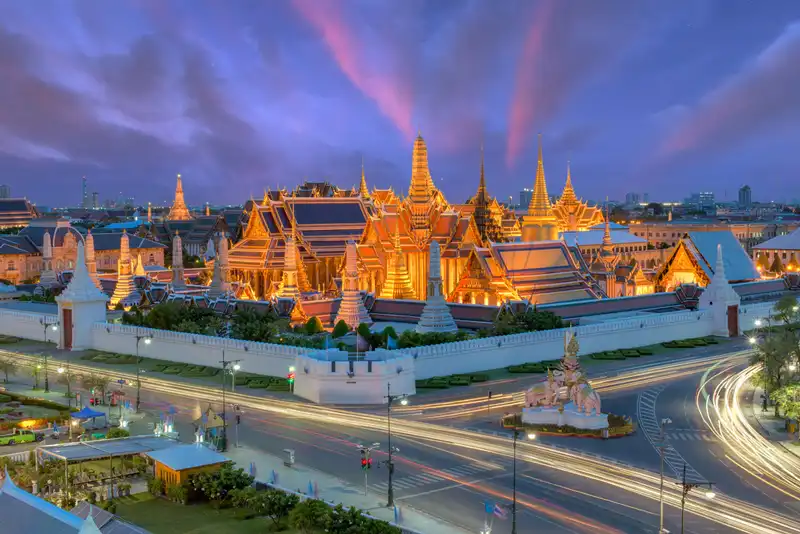
1. Wat Phra Si Rattana Satsadaram (Wat Phra Kaew) is one of Bangkok's most important tourist attractions. Situated within the Grand Palace complex in Phra Borom Maha Ratchawang Subdistrict, Phra Nakhon District, this magnificent royal temple is renowned for its exceptional Thai architecture and its profound significance in the history of Thailand, Buddhism and the monarchy. Both Thai and international visitors come to admire its intricate artistic decorations and pay their respects to Phra Phuttha Maha Mani Rattana Patimakon, commonly known as the Emerald Buddha, one of Thailand's most revered religious images.
Wat Phra Si Rattana Satsadaram was established during the reign of King Phutthayotfa Chulalok, King Rama I, following the foundation of Rattanakosin as Thailand's new capital in 1782. The king commissioned the construction of the temple within the Grand Palace grounds to enshrine the Emerald Buddha and serve as the setting for important royal religious ceremonies. Unlike ordinary Buddhist monasteries, Wat Phra Kaew is a royal temple located within the palace precincts and has no resident community of monks.
The establishment of Wat Phra Kaew was closely connected to the foundation of Rattanakosin as the new royal capital. King Rama I intended the Grand Palace and its royal temple to become the ceremonial and spiritual center of the kingdom, following royal traditions inherited from Ayutthaya. Wat Phra Kaew therefore serves as both a sacred religious site and a symbol of the stability and legitimacy of the capital, reflecting the historical relationship between Buddhism and the Thai monarchy.
The beauty of Wat Phra Kaew reflects the extraordinary craftsmanship of royal artisans during the Rattanakosin period. The ordination hall, or ubosot, features elaborate ornamentation, multi-tiered roofs, colorful glass mosaics and exquisite gilded decorations. Inside, the Emerald Buddha is enshrined on an impressive gilded pedestal. The temple complex also contains Phra Si Rattana Chedi, the Phra Mondop scripture hall, Prasat Phra Thep Bidon or the Royal Pantheon, monumental guardian giants and numerous other architectural masterpieces that demonstrate the sophistication of traditional Thai craftsmanship.
Phra Phuttha Maha Mani Rattana Patimakon, the Emerald Buddha, is a highly revered Buddha image carved from green stone and depicted in the seated meditation posture. It holds exceptional importance in Thai religious history and popular devotion. One of the temple's most significant royal traditions is the ceremonial changing of the Emerald Buddha's seasonal attire, performed three times a year for the hot, rainy and cool seasons. This ceremony illustrates the enduring relationship between the Thai monarchy and Buddhism and remains an important royal religious tradition.
The ubosot housing the Emerald Buddha is the temple's most sacred building. Its traditional Thai architectural design is richly decorated both inside and outside. The base and walls feature intricate ornamental patterns, while the doors and windows display highly refined decorative craftsmanship. The interior includes religious artwork and murals associated with Buddhist beliefs and Thai spiritual traditions. Every architectural detail demonstrates the exceptional skills of royal craftsmen and the special religious status of the temple.
Phra Si Rattana Chedi is another of the temple's most photographed landmarks, distinguished by its magnificent golden form. Nearby, Phra Mondop is an important architectural structure associated with the preservation of Buddhist scriptures and is richly embellished with decorative elements. Prasat Phra Thep Bidon, or the Royal Pantheon, is associated with royal statues of monarchs of the Chakri Dynasty and forms another historically significant part of the Wat Phra Kaew complex.
One of the highlights visitors should not miss is the extensive Ramakien mural painting displayed along the covered galleries surrounding the temple complex. These paintings illustrate important episodes from Thailand's national literary epic, depicting royal palaces, forests, armies, mythological characters and dramatic battle scenes. The murals are remarkable for their intricate details and artistic compositions, and they provide valuable insights into Thai literature, painting, cultural symbolism and historical artistic traditions.
The monumental guardian giants positioned around important entrances are another distinctive feature of Wat Phra Kaew. Their imposing appearances, vibrant colors and elaborate costumes are inspired by characters from the Ramakien. Beyond their decorative beauty, these figures express traditional beliefs concerning supernatural guardians who protect sacred places from harmful forces.
The atmosphere of Wat Phra Kaew combines magnificent royal architecture with the spiritual devotion of worshippers. Visitors wishing to pay their respects to the Emerald Buddha must dress appropriately, avoiding sleeveless shirts, shorts and clothing unsuitable for a sacred royal site. Regulations concerning photography and access to important buildings must also be followed carefully.
Travelers who wish to appreciate the temple's artistic details should allow sufficient time to explore the ubosot, Phra Si Rattana Chedi, Phra Mondop, the mural galleries and the other important buildings. Each area has its own architectural features, historical background and cultural meaning. Exploring without rushing allows visitors to appreciate the craftsmanship and gain a deeper understanding of the temple's significance.
A visit to Wat Phra Kaew can conveniently be combined with the Grand Palace, Wat Pho and Wat Arun within a single day. A popular itinerary begins with the Grand Palace and Wat Phra Kaew in the morning, continues on foot to Wat Pho to see the famous Reclining Buddha, and then crosses the Chao Phraya River by ferry from the Tha Tien area to Wat Arun. This route is one of Bangkok's most popular cultural sightseeing itineraries.
Highlights: Pay respects to the Emerald Buddha, admire the magnificent ubosot, Phra Si Rattana Chedi, Phra Mondop and Royal Pantheon, photograph the giant guardian statues, and explore the Ramakien murals surrounding the temple. Visitors can also learn about the establishment of Rattanakosin and the outstanding craftsmanship of Thailand's royal artistic traditions.
Address: Na Phra Lan Road, Phra Borom Maha Ratchawang Subdistrict, Phra Nakhon District, Bangkok 10200, Thailand.
Open Days: Daily. Opening Hours: 08:30 – 15:30 for general sightseeing, with ticket sales generally available until 15:30. Opening arrangements may change during royal ceremonies.
Admission Fee: Free for Thai citizens with a valid Thai identification card. Foreign visitors: 500 THB per person. The ticket includes admission to designated areas within the Grand Palace complex.
Getting There: Visitors can take a Chao Phraya Express Boat to Tha Chang Pier and walk to the Grand Palace entrance. Another option is to take the MRT Blue Line to Sanam Chai Station and continue on foot or by local transportation. Travelers arriving by private car should check available parking facilities in advance, as Rattanakosin Island has limited parking and can experience heavy traffic. General visitor admission is through the Mani Noppharat Gate according to Grand Palace regulations.
Map (GPS): Latitude 13.75151, Longitude 100.49269 – Google Maps Directions to Wat Phra Kaew

2. Wat Phra Chetuphon Wimonmangkhalaram (Wat Pho) is located on Sanam Chai Road in Phra Borom Maha Ratchawang Subdistrict, Phra Nakhon District, Bangkok, within easy reach of Wat Phra Kaew and the Grand Palace. This historic royal Buddhist temple is one of Thailand's most important centers of religious heritage, traditional art and indigenous knowledge. It is especially famous for housing an enormous Reclining Buddha and for its long association with Thai traditional medicine and massage. First-time visitors to Bangkok frequently include Wat Pho in the same sightseeing itinerary as Wat Phra Kaew and Wat Arun.
Wat Pho predates the establishment of Rattanakosin and was formerly known as Wat Photharam. The temple underwent major restoration during the reign of King Rama I and was subsequently enlarged and developed during the reign of King Nangklao, King Rama III. During this later period, additional religious structures were built and important bodies of knowledge were recorded through inscriptions. These royal restoration projects transformed Wat Pho into one of Bangkok's most significant temples and reflected the Thai monarchy's commitment to preserving Buddhism and making useful knowledge accessible to the public.
Wat Pho's best-known attraction is the giant Reclining Buddha, measuring approximately 46 meters in length and 15 meters in height. The magnificent gilded statue depicts the Buddha reclining and is celebrated for its elegant proportions and detailed artistic features. Particularly remarkable are the soles of the Buddha's feet, decorated with mother-of-pearl inlays illustrating 108 auspicious symbols according to Buddhist tradition. Visitors can walk through the image hall to admire the statue from different perspectives and examine its elaborate decorative details. The Reclining Buddha has made Wat Pho one of Thailand's most internationally recognized religious attractions.
Beyond the Reclining Buddha, Wat Pho is distinguished by its Four Great Chedis, extensive galleries, ordination hall, numerous Buddha images and remarkable architecture combining Thai and Chinese artistic influences. These influences became especially prominent during the reign of King Rama III, when Chinese ceramics, glazed tiles, stone guardian sculptures and decorative patterns were incorporated into Thai temple architecture. Visitors can explore the temple grounds to appreciate different forms of traditional craftsmanship, including sculpture, woodcarving, mural painting and ceramic ornamentation.
The Four Great Chedis, associated with the first four kings of the Chakri Dynasty, are particularly valuable examples of royal religious architecture. Each chedi features distinctive colors and ceramic patterns, symbolizing the historical relationship between Wat Pho and the monarchy during the early Rattanakosin period. The ordination hall and surrounding galleries remain important places for Buddhist worship and contain numerous Buddha images. Together, these structures create an impressive architectural ensemble and allow visitors to experience the atmosphere of a major Thai royal monastery.
Wat Pho is also renowned as a center of knowledge and is frequently described as Thailand's first public university because of the extensive educational inscriptions prepared for the general public. These inscriptions cover subjects such as traditional medicine, literature, history, Buddhist teachings and other disciplines. The temple's inscriptions were inscribed on UNESCO's Memory of the World Register in 2011, recognizing their exceptional value as documentary heritage and their importance in preserving and transmitting traditional Thai knowledge.
The inscriptions at Wat Pho represent an important chapter in the history of Thai education because knowledge from multiple disciplines was made available in a public religious setting. Especially significant are the traditional medical and massage texts, including illustrations of hermit stretching postures known as Rue Si Dat Ton and diagrams associated with the body's traditional energy pathways. Together with written explanations of Thai medical practices, these materials demonstrate how Wat Pho served not only as a place of Buddhist worship but also as a center for preserving and disseminating knowledge of practical value to society.
Wat Pho is also home to a traditional Thai medicine and massage school that plays a major role in preserving the country's therapeutic heritage. Interested visitors can learn about the development and cultural significance of traditional Thai massage and choose from services available during their visit. Exploring Wat Pho therefore offers more than a religious experience; it provides an introduction to traditional Thai knowledge that continues to be practiced and studied today. Thai massage has also attracted international interest among travelers and students who wish to understand this distinctive healing tradition.
The atmosphere of Wat Pho differs from that of many smaller temples because of its expansive grounds and extensive collection of architectural structures. Visitors can move between its chedis, image halls, ordination hall and sculpture courtyards, discovering different historical and artistic features along the way. Allowing enough time to explore these areas is recommended, and respectful clothing should be worn when entering important religious buildings or paying respects to sacred Buddha images.
Photography enthusiasts will find many beautiful subjects at Wat Pho, including Thai-Chinese architectural details, ceramic-covered chedis and historic temple courtyards. The great chedis and surrounding galleries are particularly attractive for their colors, intricate patterns and elegant proportions. Visitors should nevertheless observe the temple's photography regulations and maintain a respectful atmosphere in areas where Buddhist religious activities are taking place.
Highlights: Admire the enormous Reclining Buddha and its mother-of-pearl feet depicting 108 auspicious symbols, explore the Four Great Chedis and Thai-Chinese architecture, discover Chinese stone guardian sculptures and the temple's famous inscriptions, and learn about the internationally recognized heritage of traditional Thai massage.
Address: 2 Sanam Chai Road, Phra Borom Maha Ratchawang Subdistrict, Phra Nakhon District, Bangkok 10200, Thailand.
Open Days: Daily. Opening Hours: 08:00 – 19:30.
Admission Fee: Free admission for Thai citizens. Foreign visitors: 300 THB per person. Children not exceeding 120 centimeters in height can enter free of charge.
Getting There: The most convenient public transportation option is the MRT Blue Line to Sanam Chai Station, Exit 1, followed by a short walk to Wat Pho. Visitors can also use Chao Phraya River boats and ferry services around Tha Tien. The temple is within walking distance of the Grand Palace and Wat Phra Kaew, making it suitable for a one-day Rattanakosin sightseeing itinerary. Travelers arriving by car should check nearby parking arrangements in advance.
Map (GPS): Latitude 13.746508, Longitude 100.493096 – Google Maps Directions to Wat Pho

3. Wat Arun Ratchawararam Ratchaworamahawihan (Wat Arun), commonly known as Wat Chaeng or the Temple of Dawn, stands on the western bank of the Chao Phraya River in Wat Arun Subdistrict, Bangkok Yai District, Bangkok. This ancient Buddhist temple has a history dating back to the Ayutthaya period and is one of the most important cultural landmarks on the Thonburi side of the city. Its magnificent central prang rises above the riverfront, creating one of the most recognizable images of Bangkok and Thailand among international visitors.
Wat Arun has been associated with several important periods in Thai history, particularly the Thonburi era. After King Taksin the Great established Thonburi as the capital, the temple became closely connected with the royal palace complex in the surrounding area. It also served as the temporary home of the Emerald Buddha before the sacred image was transferred to Wat Phra Si Rattana Satsadaram following the establishment of Rattanakosin. These historical connections make Wat Arun an important landmark representing the transition from the Thonburi kingdom to the Rattanakosin capital.
The central prang is Wat Arun's most important architectural feature. Its soaring form reflects Khmer-influenced religious architecture that was further developed into a distinctive Thai artistic style. The central tower is surrounded by smaller prangs and numerous decorative sculptures. Its exterior is covered with pieces of glazed ceramics, porcelain plates and colorful fragments of pottery, carefully arranged into intricate floral patterns and other ornamental designs. These decorations demonstrate the remarkable craftsmanship of Thai artisans and create a unique surface that changes in appearance under different lighting conditions.
The architectural composition of Wat Arun's central prang reflects traditional Buddhist and Hindu cosmological concepts. The main tower and its surrounding structures represent a sacred universe, with figures of celestial beings, guardian giants and mythological animals incorporated into the decorative design. The arrangement of these elements illustrates the combination of religious symbolism and Thai craftsmanship that developed throughout the Rattanakosin period.
Wat Arun presents a different kind of beauty depending on the time of day. In the morning, sunlight illuminates the ceramic decorations, revealing the intricate details of the central prang. During the late afternoon, the warm glow of the setting sun reflects across the Chao Phraya River and highlights the temple's impressive silhouette. The views from the Tha Tien area and other riverside locations on the eastern bank are particularly memorable, making Wat Arun one of Bangkok's most photographed landmarks.
In addition to the main prang, Wat Arun contains an ordination hall, image halls, guardian sculptures and other significant examples of religious architecture from the Rattanakosin period. Visitors can explore the temple grounds to appreciate its buildings and sculptures while learning about its historical connections with the Thonburi kingdom and the establishment of Bangkok as Thailand's modern capital.
Among Wat Arun's most recognizable sculptures are the giant guardians known as the Yak Wat Chaeng, positioned near the entrance to the ordination hall. These impressive figures wear elaborately decorated costumes inspired by mythological characters from the Ramakien, Thailand's national literary epic. The sculptures are admired for their artistic beauty and their symbolic role as guardians protecting a sacred Buddhist site.
The temple's riverside location adds another dimension to the visitor experience. From the grounds of Wat Arun, travelers can observe passenger ferries, sightseeing boats and other vessels passing along the Chao Phraya River. They can also enjoy views of historic buildings and important landmarks on the opposite Phra Nakhon bank. A visit to Wat Arun therefore combines religious architecture, historical interpretation and an opportunity to experience the continuing importance of the river in everyday Bangkok life.
Visitors should dress respectfully and follow the temple's rules when exploring Wat Arun. The area surrounding the central prang contains steep steps and some relatively narrow passages, so care should be taken when walking. Visitors must avoid climbing restricted sections or touching fragile decorative elements in order to help protect the temple's historically valuable architecture.
Wat Arun can easily be combined with visits to Wat Pho and Wat Phra Kaew because a cross-river ferry connects the two sides of the Chao Phraya River. Travelers can begin their sightseeing route in Phra Nakhon before crossing to Thonburi to explore the temple, admire the central prang and enjoy the riverside atmosphere. From there, they can continue to other nearby attractions according to their interests and available time.
Highlights: Admire Wat Arun's magnificent porcelain-decorated central prang, pay respects to the principal Buddha image inside the ordination hall, photograph the famous guardian giants, explore traditional riverside temple architecture, and enjoy one of Bangkok's most iconic views overlooking the Chao Phraya River.
Address: Wang Derm Road, Wat Arun Subdistrict, Bangkok Yai District, Bangkok 10600, Thailand.
Open Days: Daily. Opening Hours: 08:00 – 18:00.
Admission Fee: Free for Thai citizens. Foreign visitors: 200 THB per person.
Getting There: One of the most convenient ways to reach Wat Arun is by taking a cross-river ferry from Tha Tien Pier to Wat Arun Pier, particularly for visitors who have already explored Wat Pho and Wat Phra Kaew. Alternatively, travelers can take the MRT Blue Line to Itsaraphap Station and continue on foot or by local transportation. Those arriving by private car should check parking availability and traffic conditions around the temple before traveling.
Map (GPS): Latitude 13.74382, Longitude 100.48849 – Google Maps Directions to Wat Arun

4. Rattanakosin Exhibition Hall is located on Ratchadamnoen Klang Road in Bowon Niwet Subdistrict, Phra Nakhon District, Bangkok. This cultural and educational attraction presents the history, arts, traditions and development of the Rattanakosin period, beginning with the establishment of Bangkok as Thailand's capital in 1782 and continuing through subsequent periods of national development. By combining historical knowledge with modern exhibition technologies, it transforms subjects normally encountered in history books into engaging and accessible learning experiences.
Rattanakosin Exhibition Hall occupies a historic building on Ratchadamnoen Klang Road, one of Bangkok's most significant avenues. The surrounding neighborhood includes important landmarks such as the Democracy Monument, Wat Ratchanatdaram, Loha Prasat and the Golden Mount. Its location makes the exhibition hall an excellent starting point for visitors who want to understand Bangkok's history before exploring the actual historical sites around Rattanakosin Island. The building has been adapted into a modern learning center while retaining architectural characteristics that complement the atmosphere of the old city.
The main attraction of Rattanakosin Exhibition Hall is its presentation of Rattanakosin history through carefully designed exhibition rooms and interactive displays. The content covers the establishment of the capital, the histories of monarchs of the Chakri Dynasty, traditional performing arts, royal ceremonies, architecture, local communities and the everyday lives of Thai people. The exhibition incorporates immersive four-dimensional media, multi-touch technology, multimedia animation, models and moving images to help visitors feel more connected to the historical events and cultural traditions being presented.
The exhibitions also explore the richness of Thai arts and cultural heritage, including royal palace design, Buddhist temple architecture, decorative arts, traditional clothing, music and forms of entertainment that have been preserved and developed across generations. Visitors can learn about the connections between the royal court and ordinary citizens, as well as the role of the Chao Phraya River, roads and historic communities in the establishment and expansion of Bangkok.
Rattanakosin Exhibition Hall emphasizes experiential learning rather than relying solely on written descriptions. Images, sound effects, moving pictures and interactive activities are used to make the past more understandable and engaging. This approach is particularly suitable for students, families and general travelers because it presents complex aspects of Thai history, arts and cultural traditions in a way that can appeal to visitors of different ages and backgrounds.
Another notable feature is the elevated viewing area on the upper level of the building, which provides views over Ratchadamnoen Road and surrounding architectural landmarks. These include Wat Saket and the Golden Mount, Wat Ratchanatdaram and Loha Prasat, as well as the King Rama III Memorial Plaza. The elevated perspective allows visitors to observe the layout of Bangkok's historic district and understand the geographical relationships between important landmarks in a way that differs from exploring the streets on foot.
Rattanakosin Exhibition Hall is an excellent destination for history enthusiasts, families, students and travelers interested in educational sightseeing. Some exhibition areas can be explored independently, while others operate through scheduled guided sessions. Visitors hoping to experience all sections should allow sufficient time and check the available tour schedules before arriving.
The exhibition hall can also be included in a broader itinerary covering nearby attractions such as Wat Ratchanatdaram, the Golden Mount, the Democracy Monument and the Bang Lamphu neighborhood. One rewarding approach is to begin by learning about the Rattanakosin period inside the exhibition hall, then continue exploring the real historical landmarks introduced in its displays. This makes it especially suitable for a full day of cultural sightseeing in Bangkok's old town.
Highlights: Learn about the history of Rattanakosin since 1782 through immersive four-dimensional multimedia, interactive touch-screen displays and animated presentations. Enjoy elevated views of Ratchadamnoen Road, Loha Prasat, the Golden Mount and other important landmarks in Bangkok's historic district.
Address: 100 Ratchadamnoen Klang Road, Bowon Niwet Subdistrict, Phra Nakhon District, Bangkok 10200, Thailand.
Open Days: Tuesday – Sunday, including public holidays. Closed on Mondays. Opening Hours: 09:00 – 17:00. The first guided session generally begins at 09:30 and the final session at 15:00.
Admission Fee: Thai visitors: 70 THB per person. Foreign visitors: 100 THB per person. Certain visitor groups may qualify for free admission under the venue's conditions.
Getting There: Take the MRT Blue Line to Sam Yot Station, then continue by local bus, taxi or other local transportation to Ratchadamnoen Klang Road. Another option is to take a Khlong Saen Saep passenger boat to Phan Fa Lilat Pier and walk to the exhibition hall. Several public bus routes also operate along Ratchadamnoen Klang Road. Visitors arriving by car should check parking facilities in the surrounding area before traveling.
Map (GPS): Latitude 13.75589, Longitude 100.50383 – Google Maps Directions to Rattanakosin Exhibition Hall

5. Bangkok Art and Culture Centre (BACC), commonly referred to as BACC, is located near Pathum Wan Intersection, opposite MBK Center and close to Siam Discovery. It is one of Bangkok's most important centers for contemporary art exhibitions and cultural activities. The center plays a significant role in promoting creativity, education and artistic dialogue, providing a public space where artists and visitors can exchange ideas and explore different perspectives on art and contemporary society.
Bangkok Art and Culture Centre is a public institution dedicated to making art and culture accessible to a broad audience. Visitors can explore a wide variety of artistic disciplines, including painting, sculpture, photography, installation art, mixed-media projects and contemporary creations by Thai and international artists. Exhibitions rotate according to the center's programs and schedules, so each visit may offer different artworks, themes and creative experiences.
The building is distinguished by its modern architectural design, particularly its spacious central atrium and gently curving walkways that spiral upward through the exhibition levels. This layout connects the various floors and creates an enjoyable experience of moving gradually from one gallery space to another. Different viewpoints emerge as visitors ascend the building, making the architecture itself an important part of the artistic experience.
The principal exhibition galleries are located on Floors 7 – 9, where large-scale contemporary art exhibitions by Thai and international artists are regularly presented. Lower and intermediate floors are used for smaller exhibitions, activities and other cultural programs. The building also contains cafés, bookstores, creative shops and businesses specializing in art and design. These facilities allow visitors to spend several hours exploring the center while enjoying a combination of artistic inspiration and leisure activities.
One of BACC's most valuable characteristics is that it welcomes visitors regardless of their previous knowledge of art. People can discover artists' ideas through exhibition descriptions, observe different uses of color, form and materials, or participate in workshops and discussions when available. Exhibited works often address social issues, cultural traditions, environmental concerns and the changing conditions of contemporary life, encouraging visitors to reflect on the relationships between art and society.
BACC also provides spaces for reading, learning and other creative activities that complement the main exhibitions. Students, young designers and visitors interested in the arts can study exhibition techniques, explore creative processes and discover new artistic approaches. Depending on the schedule, the center also hosts music performances, film screenings, theatrical presentations, discussions and intercultural activities.
Photography enthusiasts will find the building's interior architecture particularly attractive. The curved walkways and central atrium offer interesting views across several levels, producing striking compositions that combine geometric forms and open spaces. However, visitors should follow the photography regulations for each exhibition, as certain artworks may be subject to copyright restrictions or limitations on photography and video recording.
In addition to its galleries, Bangkok Art and Culture Centre includes food and beverage outlets, art shops, handmade accessories, souvenirs and reading spaces. These facilities make it easy to spend several hours at the center without feeling rushed. General admission and access to most exhibitions are free, although certain special events, performances or exhibitions may require separate tickets or participation fees.
BACC can conveniently be combined with visits to nearby attractions such as the Jim Thompson House Museum, Siam Square and the shopping complexes around Pathum Wan Intersection. The area is easily reached by BTS Skytrain and is well suited to walking, making it an excellent choice for travelers interested in Bangkok's arts, contemporary culture and photography without needing a private vehicle.
Highlights: Explore contemporary art exhibitions by Thai and international artists, admire the building's spiral walkways and modern interior design, photograph creative architectural features, learn about different artistic approaches, and browse shops specializing in art, handmade products and design.
Address: 939 Rama I Road, Wang Mai Subdistrict, Pathum Wan District, Bangkok 10330, Thailand.
Open Days: Tuesday – Sunday. Closed on Mondays and designated special holidays. Opening Hours: 10:00 – 20:00.
Admission Fee: General admission is free. Certain special activities, performances and exhibitions may require separate tickets or admission fees.
Getting There: Take the BTS Silom Line to National Stadium Station and use the pedestrian connection toward Bangkok Art and Culture Centre. Visitors can also get off at BTS Siam Station and walk to Pathum Wan Intersection. Several public buses serve Rama I Road and Phaya Thai Road. Travelers arriving by car can use the building's parking facilities according to the applicable parking conditions.
Map (GPS): Latitude 13.74675, Longitude 100.53027 – Google Maps Directions to Bangkok Art and Culture Centre

6. ChangChui Creative Park, also known as ChangChui, is located on Sirindhorn Road in Bang Phlat Subdistrict, Bang Phlat District, Bangkok. It is one of the most distinctive creative attractions on the Thonburi side of the capital, bringing together art, design, restaurants, cafés, exhibition spaces and contemporary cultural activities. With its unconventional atmosphere and imaginative installations, ChangChui has become a popular destination for visitors interested in modern art, creative lifestyles and unusual photography locations.
ChangChui was developed from the vision of Somchai Limsomchai, the founder of the Thai fashion brand FLYNOW, who wanted to transform an unused site into a center of creativity where people could express artistic ideas freely. The project's central philosophy involves giving new value to discarded or seemingly useless materials through design and imagination. By emphasizing individuality, unconventional thinking and creative experimentation, ChangChui offers an experience that differs significantly from conventional shopping malls and tourist attractions.
The most recognizable feature of ChangChui is the enormous retired aircraft positioned prominently within the creative park. Rather than functioning merely as a decorative attraction, the airplane represents the idea of transforming something that has reached the end of its original purpose into a new symbol of imagination and possibility. It reflects the creative use of resources and a design philosophy that challenges traditional expectations. The aircraft has become ChangChui's signature landmark and one of the most popular photography spots in the area.
ChangChui's interior atmosphere is characterized by an industrial art-loft aesthetic, with materials such as reclaimed wood, metal frameworks, corrugated iron and old industrial components incorporated into buildings, shops and artworks. Different corners of the park have their own distinctive personalities, encouraging visitors to explore and discover unusual architectural details. Sculptures, installations and inventive design elements appear throughout the grounds, creating an environment where creativity is part of the surrounding landscape.
The park contains restaurants, cafés, design shops, fashion outlets and spaces for various activities. Visitors can stroll around the grounds, enjoy meals, drink tea or coffee, read books, admire artworks or relax with family and friends. At selected times, the venue hosts markets, temporary retail stalls, exhibitions, live music and other cultural activities that provide opportunities for artists, designers and creative entrepreneurs to present their work to the public.
ChangChui also offers visitors an opportunity to understand the concept of upcycling, which involves transforming discarded materials into products or artworks of greater value. This approach has become increasingly important in contemporary design and sustainable resource management. By incorporating reused materials into buildings, furniture and sculptures, ChangChui functions almost like an open-air exhibition demonstrating how imagination can transform ordinary and unwanted objects into meaningful creative expressions.
Photography enthusiasts will discover a wide variety of attractive locations throughout ChangChui, including the large aircraft, contemporary sculptures, walls constructed with reclaimed materials and unusually designed buildings. These visual features create an atmosphere unlike that of a conventional shopping center. Late afternoon is particularly appealing, when natural light becomes softer and decorative lighting begins to illuminate the park, making it an excellent time for walking, photography and enjoying food during the evening.
The creative park also provides spaces for recreational and artistic activities that may change according to its event schedule. These can include fashion markets, art exhibitions, musical performances and activities for visitors of different ages. Depending on the programs available, travelers may choose to browse design products, admire artworks, take photographs or simply spend time relaxing in the restaurants and cafés scattered throughout the grounds.
For visitors seeking a different perspective on Bangkok, ChangChui illustrates the development of the city's creative economy and contemporary cultural scene. It is particularly suitable for people interested in art, architecture, design and imaginative leisure experiences. Because individual shops, restaurants and activities may follow different operating schedules, visitors should check the latest arrangements before traveling.
Highlights: Photograph the enormous retired aircraft that has become ChangChui's signature landmark, explore sculptures and artworks made from reused materials, stroll through creatively designed spaces, browse fashion and design products, enjoy restaurants and cafés, and experience art-related activities organized throughout the year.
Address: 460/8 Sirindhorn Road, Bang Phlat Subdistrict, Bang Phlat District, Bangkok 10700, Thailand.
Open Days: Monday, Tuesday and Thursday – Sunday. Closed on Wednesdays. Opening Hours: 11:00 – 23:00. The daytime zone generally operates from approximately 11:00 – 21:00, while the evening zone operates from approximately 16:00 – 23:00.
Admission Fee: General admission is free. Food, drinks, products and special activities are charged separately according to the services selected.
Getting There: Visitors can reach ChangChui by private car or taxi via Sirindhorn Road. Those using public transportation can take the MRT Blue Line to Sirindhorn Station and continue by taxi or other local transport. Several public bus routes also operate along Sirindhorn Road, although travelers should check current route information before departure. Parking facilities are available within the project for visitors arriving by private vehicle.
Map (GPS): Latitude 13.78953, Longitude 100.47058 – Google Maps Directions to ChangChui Creative Park

7. PTT Green in the City (Metro Forest Learning Center) is located on Sukhaphiban 2 Road in Dok Mai Subdistrict, Prawet District, Bangkok. This ecological learning destination was developed to increase urban green space and demonstrate the restoration of natural ecosystems within a metropolitan environment. Originally developed from land belonging to PTT Public Company Limited, the site has been transformed into an ecological forest where visitors can learn about nature, environmental conservation and the importance of trees. It stands apart from conventional Bangkok attractions because its primary purpose is to promote understanding of ecological systems and the relationship between cities and the natural environment.
The Metro Forest Learning Center covers approximately 12 rai and was developed under the concept of creating a forest for Bangkok residents. The project applies knowledge gained from PTT's forest restoration initiatives to the challenge of establishing sustainable green areas within cities. Its ecological planting approach is influenced by the principles developed by Professor Dr. Akira Miyawaki, a Japanese botanist internationally recognized for his methods of restoring natural forests. The objective is to encourage the development of a diverse ecosystem resembling the original forest environment of the Bangkok region.
The layout of the Metro Forest Learning Center was designed around a combination of forest, functional and water areas. Approximately 75% of the site is allocated to ecological forest, around 15% to activity and functional spaces, and approximately 10% to water features. Buildings and other structures were designed to blend with the natural environment, incorporating construction materials and techniques intended to reduce environmental impacts. As a result, the project serves both as an urban green space and as a learning destination for environmentally responsible architecture.
One of the center's most distinctive attractions is its elevated Sky Walk, which allows visitors to explore the forest canopy from a perspective different from that available at ground level. The walkway connects important learning areas with an observation tower, providing opportunities to observe the growth of trees and the structure of the developing forest at different heights. This experience helps visitors understand how a relatively small restored forest can develop layers of vegetation and support ecological diversity.
Another major highlight is the approximately 23-meter-high observation tower, which offers broad views across the ecological forest and surrounding green areas. Photography enthusiasts can capture the contrast between the forest canopy and the urban landscape beyond. From this elevated position, visitors can also appreciate how the restoration of a relatively small site can contribute to biodiversity, environmental awareness and the creation of valuable green space within a large city.
The center also includes an educational exhibition building that introduces visitors to the importance of forests, ecological systems, biodiversity and the restoration of degraded land. Exhibitions explain how damaged or underused areas can be transformed into green environments through careful planning and ecological planting. A seed exhibition presents examples of different plant seeds and helps visitors understand the relationships between seeds, soil, water and living organisms that contribute to forest growth and ecological balance.
Another interesting feature is the use of rammed-earth walls and green roofing in the architectural design. These elements help integrate buildings with the natural environment and demonstrate approaches to sustainable construction. The learning center also provides spaces for short films and educational media explaining natural resource conservation and the importance of increasing urban forest coverage. Landscape features, including water areas and a simulated waterfall, contribute to the peaceful atmosphere and make the site suitable for relaxing as well as learning.
The Metro Forest Learning Center is particularly suitable for school groups, students, families and visitors interested in environmental issues. By walking through the forest and exploring the educational displays, visitors can observe ecological restoration directly and develop a greater appreciation of the importance of green spaces in urban environments. It is also an attractive destination for people who want to take a break from the busy city and experience a natural setting without leaving Bangkok.
Visitors should wear clothing and footwear suitable for walking in a natural environment, particularly comfortable shoes with good grip. Care should be taken when using the elevated walkways and observation tower. Everyone is encouraged to follow the center's regulations, avoid damaging plants, refrain from disturbing wildlife and help keep the grounds clean so that the restored forest can continue to serve as an educational resource for future generations.
Highlights: Walk above the ecological forest on the Sky Walk, enjoy views from the approximately 23-meter-high observation tower, discover plant species and urban ecosystems, explore the seed exhibition, observe the rammed-earth architecture and green roof, and learn about ecological forest restoration in Bangkok.
Address: 81 Sukhaphiban 2 Road, Dok Mai Subdistrict, Prawet District, Bangkok 10250, Thailand.
Open Days: Tuesday – Sunday. Closed on Mondays. Opening Hours: 09:00 – 18:00.
Admission Fee: Free admission.
Getting There: The center can be reached by private car or taxi via Sukhaphiban 2 Road, near the eastern Kanchanaphisek Ring Road. Access is available from On Nut – Lat Krabang Road or connecting roads in the King Kaew area, depending on the chosen route. Visitors using public transportation can travel by rail or bus to nearby districts and continue by taxi or other local transportation. It is advisable to check the most convenient route and current parking arrangements before departure.
Map (GPS): Latitude 13.691697, Longitude 100.702236 – Google Maps Directions to Metro Forest Learning Center

8. Yaowarat (Bangkok Chinatown) is centered around Yaowarat Road in Samphanthawong Subdistrict, Samphanthawong District, Bangkok. It is one of the capital's most famous tourist districts and is widely recognized as Bangkok's Chinatown, the historical center of the Thai-Chinese community. The area is distinguished by its traditional shophouses, gold shops, Chinese herbal medicine stores, restaurants, shrines, markets and street food vendors lining both sides of the road. These features give Yaowarat a distinctive cultural character that has developed over generations of commercial and community life.
Yaowarat Road stretches for approximately 1.5 kilometers and connects several important historic commercial neighborhoods. Its gently curving layout is often compared to the body of a dragon, an image that has become part of the district's popular identity. For many travelers, the most memorable scene is the lively evening food street, illuminated by colorful Chinese shop signs and filled with people exploring food stalls and restaurants. This vibrant atmosphere has made Yaowarat a favorite destination for both Thai and international tourists.
The history of Bangkok's Chinese community is closely associated with trade and river transportation during the early Rattanakosin period. Large numbers of Chinese settlers established homes and commercial activities in areas near the Chao Phraya River. As Bangkok expanded, the Sampheng and Yaowarat districts developed into major trading centers containing shops, small factories, warehouses and residential communities. Economic activity was closely connected with the social networks, cultural practices and commercial traditions maintained by Thai-Chinese families.
Yaowarat Road was developed during the reign of King Chulalongkorn, King Rama V, to improve transportation and support commercial growth within Bangkok. Despite the changes brought by urban development, the surrounding neighborhoods have preserved many features of their Chinese heritage. Visitors exploring the smaller lanes can still find historic commercial buildings, traditional shops, Chinese shrines and restaurants operated by families whose businesses have been passed down through several generations.
Yaowarat's most celebrated attraction is its extraordinary street food culture. Visitors can choose from noodles, seafood, roasted duck, crispy pork, fish rice porridge, traditional Chinese dishes, desserts and a wide range of drinks. Some restaurants have operated for decades and continue to prepare distinctive family recipes. A walk through Yaowarat can therefore become a culinary journey through the history of Bangkok's Chinese community, with traditional flavors revealing the cultural connections between food and family heritage.
During the daytime, Yaowarat is busy with gold shops, Chinese herbal medicine businesses, fresh markets, spice merchants and wholesale and retail traders. In the evening, the district gradually transforms into one of Bangkok's most popular dining destinations as food stalls and restaurants begin operating according to their individual schedules. Travelers can sample many different dishes within a relatively compact area, making Yaowarat particularly suitable for food-focused walking tours.
In addition to food, Yaowarat is an important center of Thai-Chinese religious and cultural heritage. The district contains several Chinese temples and shrines, including Wat Mangkon Kamalawat, commonly known as Wat Leng Noei Yi, where worshippers participate in traditional religious ceremonies and make offerings according to Chinese Buddhist beliefs. Historic shrines scattered throughout the neighborhood also preserve the spiritual traditions of the community. Many old shophouses combine Chinese and Western architectural influences, illustrating the commercial prosperity and changing lifestyles of Bangkok in earlier periods.
Yaowarat also hosts important cultural celebrations associated with Bangkok's Thai-Chinese population, especially Chinese New Year and the Vegetarian Festival. During these periods, streets are decorated with lanterns and auspicious symbols, while cultural performances, religious activities and special food offerings create a festive atmosphere. These celebrations reveal another dimension of the district's identity and attract large numbers of visitors who want to experience Chinese cultural traditions in the heart of Bangkok.
Photography enthusiasts will find numerous interesting locations throughout Yaowarat, including the Chinatown Gate at Odeon Circle, neon-lit shop signs, traditional commercial buildings and narrow lanes where everyday community life continues. The district is particularly photogenic after dark, when illuminated signs and busy food stalls create a distinctive urban atmosphere. Visitors should remain alert when taking photographs near the road because of heavy traffic, pedestrians and the large number of vehicles moving through the area.
A walking tour of Yaowarat can easily be combined with visits to nearby attractions such as Sampheng Market, Wat Mangkon Kamalawat, Talat Noi and Charoen Krung Road. Each location has its own historical background and cultural character, allowing visitors to explore commercial heritage, religious traditions and traditional urban life within the same general area. Depending on individual interests, a Yaowarat itinerary can occupy half a day or continue into the evening.
Highlights: Enjoy Bangkok's famous evening street food, explore the historic dragon-shaped Yaowarat Road, discover traditional gold shops and Thai-Chinese restaurants, photograph the Chinatown Gate at Odeon Circle, visit Wat Mangkon Kamalawat, and experience the distinctive atmosphere of one of the world's best-known Chinatown districts.
Address: Yaowarat Road, Samphanthawong Subdistrict and surrounding areas, Samphanthawong District, Bangkok 10100, Thailand.
Open Days: Daily. Opening Hours: Yaowarat Road is a public area accessible throughout the day. Restaurants and shops operate according to their individual schedules, with the district becoming especially lively from the evening into the night.
Admission Fee: There is no admission fee for walking around Yaowarat Road. Food, drinks and products are charged according to individual vendors and businesses.
Getting There: The most convenient option is to take the MRT Blue Line to Wat Mangkon Station and walk into the Yaowarat or Sampheng area. Alternatively, visitors can get off at Hua Lamphong MRT Station and walk toward Odeon Circle and the Chinatown Gate. Public buses also serve Charoen Krung Road and surrounding streets. Those arriving by car should allow extra travel time and check parking availability because traffic around Yaowarat can become particularly heavy during the evening and on weekends.
Map (GPS): Latitude 13.739059, Longitude 100.511951 – Google Maps Directions to Yaowarat Chinatown

9. The Jim Thompson House Museum is located on Kasem San 2 Alley, off Rama I Road in Wang Mai Subdistrict, Pathum Wan District, Bangkok. This internationally recognized museum is renowned for its traditional Thai teak houses and its collection of Southeast Asian artworks and antiquities. It is closely associated with Jim Thompson, the American entrepreneur who played an important role in revitalizing the Thai silk industry and introducing Thai silk to international markets. His achievements earned him the widely recognized title of the “Thai Silk King.”
Jim Thompson, whose full name was James Harrison Wilson Thompson, was an American entrepreneur who became an influential figure in the development of Thailand's silk industry after World War II. Recognizing the beauty and quality of silk woven by Thai craftspeople, he applied his knowledge of design, marketing and international distribution to promote Thai silk overseas. His work contributed significantly to the global reputation of Thai silk and helped bring greater recognition to traditional Thai craftsmanship and the communities involved in textile production.
The museum consists of several traditional teak houses that were brought together and arranged as a connected residential compound. The buildings display the architectural characteristics of traditional Central Thai houses, including elevated floors, steeply pitched roofs and extensive use of timber. The interior design combines traditional Thai architectural elements with practical adaptations for modern living. This thoughtful integration gives the house its distinctive character and has made it an important example of the conservation and appreciation of traditional Thai architecture.
Inside the museum is an extensive collection of artworks and historical objects gathered by Jim Thompson during his lifetime. These include antique Buddha images, ceramics, pottery, carved wooden objects, paintings and other works from different parts of Southeast Asia. The collection reflects Thompson's interest in the region's artistic traditions, historical development and cultural diversity. Visitors can learn about different forms of craftsmanship and historical lifestyles through the valuable objects displayed throughout the house.
The museum's appeal extends beyond its buildings and collections to the landscaped gardens surrounding the houses. Lush plants and carefully arranged greenery create a peaceful environment that contrasts with the busy streets of Pathum Wan outside the compound. Visitors can admire the traditional wooden buildings and garden spaces while learning how domestic architecture and landscape design were combined in historic Thai residences.
The Jim Thompson House Museum also introduces visitors to the importance of Thai silk as a cultural product and traditional craft that has become internationally recognized. Thai silk is admired for its distinctive colors, patterns and weaving techniques. Through developments in design and marketing, Thai silk gained access to overseas markets and became one of Thailand's most recognizable cultural products. The museum provides an opportunity to understand how traditional craftsmanship can be preserved while adapting to changing economic and cultural conditions.
Another aspect of Jim Thompson's life that continues to attract public interest is his mysterious disappearance in Malaysia in 1967. The event became widely known and remains one of the most frequently discussed episodes in his biography. Although many decades have passed, the disappearance continues to form part of the broader story of the businessman whose former residence now preserves his artistic interests and cultural legacy.
Visitors wishing to enter the main traditional Thai house must join a guided tour conducted by museum staff. Tours are available in several languages, including Thai and English, and explain Jim Thompson's life, the architectural characteristics of the buildings and the significance of the art collections. Visitors should follow the museum's regulations, which may include removing shoes before entering the houses, storing large bags and observing restrictions on flash photography or video recording inside the buildings.
The museum complex also contains shops selling Thai silk products and other merchandise, dining facilities and contemporary art-related spaces associated with the Jim Thompson name. These additions allow visitors to combine a cultural museum experience with shopping and leisure activities in a single destination. The museum is particularly appealing to people interested in traditional Thai houses, architecture, design, history, Asian art and Thailand's famous silk heritage.
Because the Jim Thompson House Museum is located close to BTS National Stadium Station and the Bangkok Art and Culture Centre, it can easily be included in an arts and cultural itinerary around Siam and Pathum Wan. Visitors can explore both attractions and continue into the nearby shopping district, making the area suitable for a half-day or full-day excursion using public transportation.
Highlights: Explore historic teak Thai houses and lush tropical gardens, learn about Jim Thompson and his contribution to the international success of Thai silk, admire Southeast Asian artworks, antique Buddha images, ceramics and other valuable collections, and discover the history of one of Thailand's most celebrated traditional textile industries.
Address: 6 Kasem San 2 Alley, Rama I Road, Wang Mai Subdistrict, Pathum Wan District, Bangkok 10330, Thailand.
Open Days: Daily. Opening Hours: 10:00 – 17:00, with the final guided tour generally beginning at 17:00.
Admission Fee: Adults: 250 THB. Visitors aged 10 – 21: 150 THB upon presentation of valid identification or a passport. Children under 10 enter free when accompanied by an adult.
Getting There: Take the BTS Silom Line to National Stadium Station, use Exit 1 and walk into Kasem San 2 Alley to reach the museum. Visitors can also travel by taxi, tuk-tuk or private car along Rama I Road. The museum is within walking distance of the Bangkok Art and Culture Centre, making it convenient to combine both destinations as part of a cultural sightseeing itinerary in the Siam and Pathum Wan area.
Map (GPS): Latitude 13.74923, Longitude 100.52828 – Google Maps Directions to Jim Thompson House Museum

10. Artist's House, Khlong Bang Luang, also known as Baan Silapin, is located in the historic Khlong Bang Luang community in Khuha Sawan Subdistrict, Phasi Charoen District, Bangkok. It is one of Thonburi's most distinctive cultural attractions, combining traditional canal-side life with art, architecture and community heritage. Surrounded by old wooden houses, small shops and a neighborhood whose history is closely connected to the waterways, the Artist's House provides visitors with opportunities to discover local craftsmanship and the charm of a traditional Bangkok canal community that has preserved much of its character despite the city's continuing modernization.
The Khlong Bang Luang community has a long history extending back to the Ayutthaya period. In earlier centuries, the canal played an important role in transportation, commerce and everyday life on the Thonburi side of the river. Many houses were constructed facing the water because boats were the principal means of travel and goods transportation. Although roads have gradually become more important, Khlong Bang Luang continues to preserve traditional wooden houses and aspects of canal-based community life that reveal how residents of Bangkok once lived.
The Artist's House occupies a historic wooden building that has been restored and adapted into a creative cultural space. Its architecture features a traditional Manila-style roof and an L-shaped layout surrounding an old chedi, an important architectural element that connects the building with the history of the community. The restoration has preserved the atmosphere of a traditional wooden canal-side house while introducing areas for art exhibitions and activities that encourage interaction between visitors and local culture.
Inside the Artist's House, visitors can discover artworks from different creative disciplines, including paintings, photography, prints, woodcarvings, jewelry and handmade crafts. Parts of the building are used as gallery spaces, souvenir shops and areas for artistic activities. Travelers can explore the exhibited works, observe examples of local craftsmanship and enjoy the peaceful atmosphere of the historic wooden house, which offers a welcome contrast to Bangkok's modern commercial attractions.
One of the Artist's House's greatest attractions is the close relationship between creative activities and everyday community life. Visitors may have opportunities to participate in drawing, painting and craft workshops according to the programs offered during their visit. These activities are suitable for children, adults and families who want to spend time together in a relaxed environment, especially those interested in art and experiences that differ from conventional shopping center visits.
The Artist's House is also associated with traditional Thai small-puppet performances, known as Hun Lakhon Lek. This distinctive performing art requires several puppeteers to work together to control each puppet, creating expressive movements that appear remarkably lifelike. Small-puppet theater combines traditional music, Thai classical dance, literature and intricate craftsmanship, making it an important part of Thailand's performing arts heritage. Visitors wishing to see a performance should check schedules and reservation conditions directly with the organizers before traveling, as performances may not take place every day.
The atmosphere along Khlong Bang Luang is another major reason for visiting. Traditional wooden houses, waterside restaurants, cafés and the everyday routines of local residents create a setting that preserves the character of an older Bangkok. Visitors can walk along the canal-side paths, observe historic buildings and experience the quiet rhythm of the community. Boats occasionally pass along the waterway, providing scenes that recall the importance of canals in Bangkok's transportation and residential history.
The area surrounding the Artist's House includes souvenir shops, coffee houses and businesses selling local handicrafts. Visitors can enjoy drinks while overlooking the canal or explore small lanes to discover further examples of old wooden architecture and community traditions. These experiences offer an opportunity to appreciate the cultural value of the neighborhood beyond the activities available inside the Artist's House itself.
Khlong Bang Luang is also close to several historic Buddhist temples, including Wat Kamphaeng Bang Chak and Wat Khuha Sawan. These religious sites are important parts of Thonburi's cultural and historical landscape. Travelers who enjoy temples and historic architecture can combine them with a visit to the Artist's House to learn more about the relationship between religious institutions, residential communities and canals in the development of Bangkok's settlements.
The Artist's House has become popular with travelers seeking a quieter and more personal experience of Bangkok, particularly those interested in art, photography and historic neighborhoods. Visiting the location is not simply an opportunity to appreciate creative works. It also supports local cultural activities and the community economy, helping encourage the preservation of traditional wooden houses and canal-side lifestyles for future generations.
Visitors should take care when walking along the canal-side paths, as some sections are narrow and located directly beside the water. It is important to keep the area clean, avoid excessive noise and respect the privacy of local residents. Anyone wishing to photograph people or private homes at close range should ask permission beforehand. These simple practices help preserve the welcoming atmosphere and cultural character of the neighborhood.
Highlights: Admire the historic Manila-style wooden building and old chedi, explore paintings, photography, carved objects and handcrafted artworks, experience traditional life along Khlong Bang Luang, participate in available art workshops, and stroll beside the canal to discover old wooden houses and waterside cafés.
Address: 309/28 Phet Kasem Road, Khuha Sawan Subdistrict, Phasi Charoen District, Bangkok 10160, Thailand.
Open Days: Daily. Opening Hours: Approximately 10:00 – 18:00. Individual activities and parts of the property may follow different schedules.
Admission Fee: General admission to the public areas is free. Workshops, drinks, merchandise and special activities may involve additional charges depending on the services selected.
Getting There: Take the MRT Blue Line to Bang Phai Station, use Exit 4 and continue into Phet Kasem Soi 20 toward the Khlong Bang Luang community. Visitors can walk or use a motorcycle taxi to reach the surrounding area. Another option is to travel by public bus to the vicinity of Bang Phai Hospital and continue by local transportation. Travelers arriving by private car can use Ratchaphruek Road and Phet Kasem Road before parking at a permitted location and walking into the community. Because the Artist's House is situated directly beside the canal, private cars cannot reach its entrance.
Map (GPS): Latitude 13.731285, Longitude 100.463313 – Google Maps Directions to Artist's House, Khlong Bang Luang

11. Khao San Road is located in Talat Yot Subdistrict, Phra Nakhon District, Bangkok. It is an internationally famous tourist street and one of the most popular destinations for travelers visiting Thailand, particularly backpackers who enjoy independent travel. Khao San Road is distinguished by its concentration of accommodations, Thai and international restaurants, souvenir shops, clothing stores, cafés, bars and entertainment venues lining both sides of the street. This combination creates a lively, colorful atmosphere that sets it apart from other neighborhoods in Bangkok.
The history of Khao San Road is closely connected with Bang Lamphu, one of Bangkok's historic trading neighborhoods. In earlier times, the street was an important center for trading rice and other agricultural products. As international travel expanded, the area gradually developed into a popular accommodation district for foreign visitors. Small hotels and guesthouses began opening to accommodate travelers seeking affordable places to stay with convenient access to Bangkok's major historical attractions.
One of Khao San Road's defining features is its international atmosphere, where the everyday character of Bangkok blends with the lifestyles of travelers from around the world. Visitors can find Thai street food vendors beside Western restaurants, jewelry shops, bookstores, massage businesses and fashion outlets. Travelers from many different countries gather here, creating opportunities to meet new people, exchange travel experiences and enjoy one of Bangkok's most cosmopolitan tourist neighborhoods.
During the daytime, Khao San Road has a relatively relaxed atmosphere, making it suitable for exploring small shops, browsing souvenirs or enjoying a meal at a café or local restaurant. Visitors can also walk to nearby Rambuttri Road, where narrow lanes, historic buildings and restaurants provide a quieter setting, particularly when Khao San Road becomes busier in the evening.
As evening approaches, Khao San Road becomes increasingly lively as restaurants, bars and entertainment venues begin welcoming customers. Colorful lights, illuminated signs and live music transform the street into one of Bangkok's best-known nightlife centers. Friday and Saturday evenings are especially popular, when large numbers of visitors arrive to enjoy meals, music and social activities with friends.
Khao San Road is also an important location for celebrations during Thailand's Songkran Festival. Every year, around April 13–15, the area commonly attracts large crowds participating in traditional New Year water celebrations. Special traffic arrangements, pedestrian access regulations and safety measures may be introduced during the festival. The exact program and any road closures depend on announcements issued by the relevant authorities each year.
Several important attractions surround Khao San Road, including Wat Chana Songkhram Ratchaworamahawihan, Phra Sumen Fort, Santichaiprakarn Park, Phra Athit Road and Phra Athit Pier. These places can be combined into a walking itinerary through the historic Bang Lamphu neighborhood. Travelers interested in Bangkok's history can explore the old community and nearby riverside attractions during the morning or afternoon before returning to Khao San Road to experience its nightlife.
Visitors should choose their arrival time according to the experience they prefer. Daytime is generally more suitable for leisurely shopping and exploring the historic neighborhood, while the evening offers the lively atmosphere of music, lights and entertainment. Travelers should take care of their personal belongings, check prices before purchasing goods or services, and remain aware of their surroundings when walking through crowded areas.
Highlights: Experience one of the world's most famous backpacker streets, explore shops and souvenir stalls, enjoy Thai and international cuisine, discover live music and Bangkok nightlife, and visit nearby Rambuttri Road, Wat Chana Songkhram and the historic Bang Lamphu neighborhood.
Address: Khao San Road, Talat Yot Subdistrict, Phra Nakhon District, Bangkok 10200, Thailand.
Open Days: Daily. Opening Hours: The street is accessible throughout the day. Restaurants, bars and entertainment venues are particularly active from the evening until late at night.
Admission Fee: Free access to the street. Food, drinks, shopping and other services are charged according to individual establishments.
Getting There: Visitors can take a Chao Phraya Express Boat to Phra Athit Pier and walk to Khao San Road. Alternatively, take the MRT Blue Line to Sam Yot Station and continue by taxi, local bus or other transportation into the Bang Lamphu area. Several public bus routes operate along Ratchadamnoen Klang Road and Chakrabongse Road. Travelers arriving by private car should check parking availability in advance because the neighborhood can experience heavy traffic and pedestrian restrictions during busy evening periods.
Map (GPS): Latitude 13.75890, Longitude 100.49732 – Google Maps Directions to Khao San Road

12. Ratchada Train Night Market is a well-known night market in Bangkok, located behind Esplanade Ratchadaphisek Shopping Mall in Din Daeng Subdistrict, Din Daeng District. The market brings together street food vendors, fashion shops, vintage merchandise, collectibles and casual dining areas that attract young people, working professionals and international tourists. Its lively evening atmosphere and convenient access by MRT have made it a popular destination for visitors who want to experience Bangkok after dark.
Ratchada Train Night Market originally became popular for its concept of combining retro merchandise with contemporary food and leisure activities. Shops and food stalls were arranged in an open-air setting, with colorful lighting creating a distinctive nighttime atmosphere. The market became particularly famous for photographs taken from elevated viewpoints, showing rows of illuminated market stalls that became one of the recognizable visual symbols of Bangkok's night market culture.
After the original market closed in July 2021 and the surrounding area underwent several changes in the following years, Ratchada Train Night Market returned to its former location behind Esplanade Ratchadaphisek Shopping Mall on March 27, 2026. This reopening brought a familiar name in Bangkok's night market scene back into the city's evening tourism landscape.
The market offers a wide variety of products, including fashion clothing, footwear, bags, accessories, secondhand goods, home decorations, collectibles and vintage merchandise. It is particularly attractive to visitors who enjoy browsing distinctive products and discovering items that may not be available in ordinary shopping centers. Exploring the different stalls provides opportunities to compare styles, find unusual souvenirs and experience Bangkok's informal retail culture.
The food zone is another major attraction, offering Thai dishes, northeastern Thai cuisine, grilled meats, seafood, fried snacks, desserts and a broad selection of drinks. Visitors can purchase food from different vendors and enjoy meals together with friends, experiencing the relaxed and social atmosphere that makes Thai night markets so popular. The variety of food also makes the market suitable for travelers who want to sample different local flavors in a single location.
Some restaurants and beverage stalls feature retro-inspired decorations and casual seating arrangements, providing comfortable places to rest after browsing the market. The atmosphere becomes increasingly lively after dark, when shop lights, food stalls and crowds create an energetic setting. This makes the market appealing to both food enthusiasts and travelers interested in photographing Bangkok's nighttime attractions.
One of the market's main advantages is its proximity to Thailand Cultural Centre MRT Station. Visitors can reach the area conveniently without relying on a private car and combine their visit with shopping at Esplanade Ratchadaphisek or exploring other attractions along Ratchadaphisek Road. The MRT connection makes it a practical option for an evening itinerary.
Travelers planning to visit the market should arrive in the evening, when food stalls and shops begin opening. Some vendors may start operating later than the market's general opening time. Weekends are typically busier, so visitors should allow enough time to explore the stalls and check product prices or menu details before making purchases.
Highlights: Explore the famous Bangkok night market that reopened in 2026, browse fashion, vintage products, collectibles and secondhand merchandise, sample a wide variety of street food, and experience the colorful nightlife atmosphere of the Ratchadaphisek district.
Address: Behind Esplanade Ratchadaphisek Shopping Mall, Ratchadaphisek Road, Din Daeng Subdistrict, Din Daeng District, Bangkok 10400, Thailand.
Open Days: Daily. Opening Hours: 17:00 – 01:00. Operating hours may differ between individual vendors.
Admission Fee: Free admission. Food, drinks and merchandise are charged according to individual vendors.
Getting There: Take the MRT Blue Line to Thailand Cultural Centre Station, use Exit 3 and walk approximately five minutes toward the area behind Esplanade Ratchadaphisek Shopping Mall. Visitors may also travel by taxi or public bus along Ratchadaphisek Road. Those arriving by private car should check parking facilities and the applicable conditions at the shopping mall.
Map (GPS): Latitude 13.76715, Longitude 100.56851 – Google Maps Directions to Ratchada Train Night Market
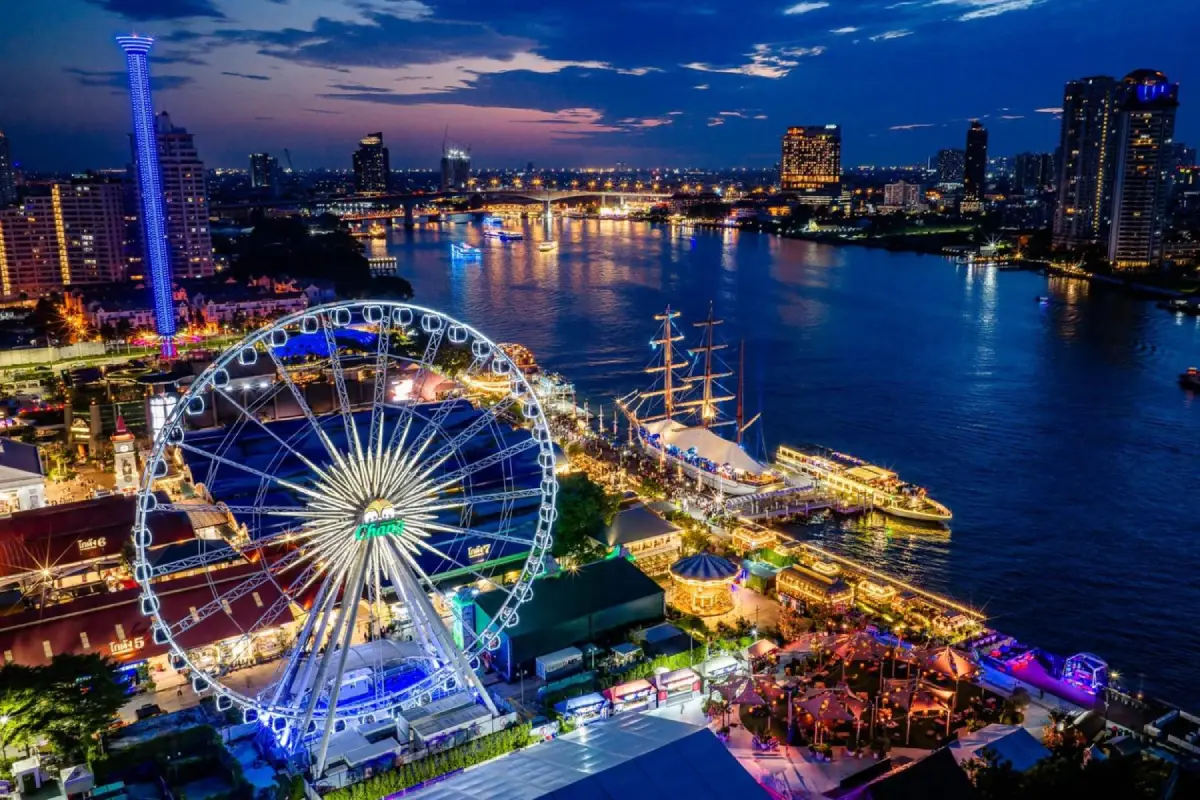
13. Asiatique The Riverfront is located beside the Chao Phraya River on Charoen Krung Road in Wat Phraya Krai Subdistrict, Bang Kho Laem District, Bangkok. This internationally recognized riverside shopping and entertainment destination combines the atmosphere of a historic trading port with restaurants, fashion shops, leisure spaces and contemporary attractions. It is particularly suitable for evening walks, watching the sunset and enjoying meals while admiring views of the Chao Phraya River.
The Asiatique site is closely associated with Bangkok's history of international trade along the Chao Phraya River. In the past, the area contained warehouses and facilities connected with the East Asiatic Company, which played an important role in maritime transportation and international commerce. When the property was redeveloped into a modern tourism destination, the architecture incorporated the appearance of historic warehouses and port facilities. This design approach preserves aspects of the area's commercial heritage while adapting the site for contemporary shopping, dining and leisure activities.
One of Asiatique's most recognizable landmarks is Asiatique Sky, a large Ferris wheel positioned close to the Chao Phraya River. Visitors can enjoy elevated views of the river, surrounding buildings and Bangkok's skyline. The experience is especially attractive around sunset and after dark, when the city lights and illuminated sightseeing boats create a memorable riverside panorama. The Ferris wheel has become one of the most popular attractions for travelers visiting Asiatique.
The shopping areas contain a wide range of outlets selling fashion clothing, jewelry, home decorations, handmade products, souvenirs and items inspired by Thai culture. Pedestrian walkways are designed to resemble a market district surrounded by historic warehouses, encouraging visitors to browse merchandise while appreciating architecture influenced by the site's former role as a trading port.
Restaurants are another major attraction at Asiatique, offering Thai cuisine, international dishes, seafood, cafés and beverage outlets suitable for visitors of different ages. Some restaurants are positioned to provide direct views of the Chao Phraya River, creating an attractive setting for family meals, romantic dinners and gatherings with friends. This makes Asiatique a popular place to relax after spending the day exploring other parts of Bangkok.
The complex also includes spaces for special events, cultural performances and seasonal festivals. Depending on the period, visitors may encounter traditional entertainment, decorative lighting installations or temporary activities. These changing programs mean that Asiatique is more than a conventional shopping center; it is also a recreational destination that can offer different experiences on successive visits.
The riverside promenade is one of Asiatique's most popular features. Visitors can walk beside the Chao Phraya River, watch passenger boats and sightseeing cruises passing by, and enjoy broad views of Bangkok's riverfront architecture. Sunset and evening provide particularly atmospheric conditions, making the promenade a favorite location for photography and leisurely strolls.
Traveling to Asiatique by shuttle boat from Sathorn Pier can be an enjoyable part of the visit. The boat journey allows passengers to experience the Chao Phraya River and view the buildings and communities along both banks before arriving at the complex. Boat schedules and service arrangements may change depending on operating conditions, so visitors should check the available services before traveling.
To make the most of a visit, travelers may prefer arriving in the late afternoon, leaving enough time to browse shops and take photographs before sunset. They can then enjoy a riverside meal or ride the Ferris wheel after dark. Anyone interested in special shows or entertainment activities should check performance schedules and ticket prices in advance.
Highlights: Ride the Asiatique Sky Ferris wheel, stroll beside the Chao Phraya River, photograph warehouse-inspired architecture, shop for fashion and souvenirs, enjoy riverside dining, and discover the colorful atmosphere of Bangkok after dark.
Address: 2194 Charoen Krung Road, Wat Phraya Krai Subdistrict, Bang Kho Laem District, Bangkok 10120, Thailand.
Open Days: Daily. Opening Hours: 11:00 – 00:00. Asiatique Sky generally operates from approximately 16:00 – 00:00.
Admission Fee: General entry is free. Asiatique Sky tickets cost approximately 300 – 600 THB depending on the ticket category. Special performances and activities may require separate admission fees.
Getting There: Take the BTS Silom Line to Saphan Taksin Station, then walk to Sathorn Pier and use the shuttle boat service according to the project's current timetable. Visitors can also travel by taxi, public bus or private car along Charoen Krung Road. Those wishing to arrive by boat should check service schedules before departure.
Map (GPS): Latitude 13.70419, Longitude 100.50277 – Google Maps Directions to Asiatique The Riverfront

14. Bangkok Planetarium is located within the Science Learning Promotion and Development Center on Sukhumvit Road in Phra Khanong Subdistrict, Khlong Toei District, Bangkok. It is a well-known educational attraction that has played an important role in promoting science learning in Thailand, particularly in astronomy and space studies. Visitors can explore the planets, stars, solar system and celestial phenomena through projections inside a large dome theater, along with science exhibitions in the center's various buildings.
Bangkok Planetarium began welcoming visitors in 1964 and has long been an important institution for astronomy education in Thailand. Its founding concept was to enable people to develop scientific understanding through direct experiences rather than textbooks alone. The planetarium consequently became a popular educational destination for families, schools and anyone interested in the mysteries of the universe.
The planetarium's principal feature is its dome theater, which uses projection systems and astronomical equipment to simulate the positions of stars and celestial phenomena in the night sky. Visitors can learn about constellations, the movements of the Sun and Moon, planetary motion and other important astronomical events through narrated presentations and animated visual displays.
Planetarium presentations typically combine introductions to observing the night sky with full-dome films exploring astronomy, space science and the universe. The program changes according to the center's exhibition and presentation schedule, allowing returning visitors to experience different educational subjects over time.
Beyond the dome theater, the center contains science and technology exhibition areas that explore the relationship between scientific principles and everyday life. Subjects include energy, machinery, communication systems and technologies that have contributed to social development. Exhibitions use different educational media and activities to encourage visitors to understand scientific concepts through observation and participation.
Some exhibition buildings also introduce natural history and environmental topics, including biodiversity, marine life and ecosystems. These displays help visitors understand the relationship between humans and the natural environment while emphasizing the importance of conserving resources and protecting ecological systems for future generations.
Another interesting subject area is health science, with exhibitions explaining how the human body works, the importance of physical activity, personal health and lifestyle choices that influence well-being. Scientific learning activities also provide opportunities for children and young people to experiment, explore new ideas and strengthen their ability to think logically and critically.
Bangkok Planetarium is suitable for visitors of many different ages, especially families with children and travelers looking for educational indoor attractions during hot or rainy weather. Anyone wishing to attend a dome presentation should check the current show schedule in advance because seating capacity is limited and some sessions may be reserved for school groups.
Visitors who want to explore the science exhibitions thoroughly should allow at least half a day, depending on the activities and areas available. This provides time to attend a planetarium presentation, when operating, and explore the educational exhibits in the surrounding buildings. A visit can also be combined with Gateway Ekkamai and other attractions in the Sukhumvit district, which is conveniently accessible by BTS Skytrain.
Highlights: Experience full-dome astronomy presentations when available, learn about planets, the solar system, constellations and celestial phenomena, and explore exhibitions covering science, technology, nature, the environment, marine life and human health.
Address: 928 Sukhumvit Road, Phra Khanong Subdistrict, Khlong Toei District, Bangkok 10110, Thailand.
Open Days: Tuesday – Sunday. Closed on Mondays and public holidays. Opening Hours: 09:00 – 16:00, with ticket sales generally ending at 15:00. Planetarium presentations follow the center's current schedule.
Admission Fee: The original listed dome presentation ticket price is 30 THB for children and 50 THB for adults. Exhibition areas and other activities may have different admission conditions.
Getting There: Take the BTS Sukhumvit Line to Ekkamai Station, use Exit 2 and walk to the Science Learning Promotion and Development Center. Visitors can also use public buses traveling along Sukhumvit Road or serving the nearby Ekkamai Eastern Bus Terminal. Travelers arriving by private car should check parking facilities within the center and surrounding area.
Map (GPS): Latitude 13.72095, Longitude 100.58227 – Google Maps Directions to Bangkok Planetarium

15. Lhong 1919 is a historic Thai-Chinese cultural destination on the banks of the Chao Phraya River in Khlong San Subdistrict, Khlong San District, Bangkok. Known for its restored warehouses and traditional Chinese architecture, the site offers an opportunity to explore Bangkok's riverside commercial heritage. Its most important spiritual landmark is the Mazu Shrine, dedicated to the Chinese sea goddess revered by members of the Thai-Chinese community and travelers seeking divine protection.
The history of Lhong 1919 is closely associated with trade between Thailand and China. In earlier times, the site served as a river port and warehouse complex for Chinese merchants transporting goods along the Chao Phraya River. The buildings were constructed and used during a period when water transportation played a vital role in Bangkok's economy. Their original functions illustrate the river's importance as a route connecting merchants, commodities and cultural influences from overseas.
One of Lhong 1919's most distinctive architectural features is the arrangement of traditional Chinese buildings around a central courtyard, following a courtyard-house concept known as siheyuan. The complex includes wooden and brick structures, carved wooden decorations, traditional doors and windows, and ornamental paintings reflecting historical Chinese craftsmanship. Preserving these buildings allows visitors to experience the atmosphere of Bangkok's Chinese trading communities more than a century ago.
The Mazu Shrine forms the spiritual heart of Lhong 1919. It enshrines Mazu, the Chinese goddess traditionally associated with protection during sea voyages and the safety of sailors. Devotion to Mazu is closely linked with the experiences of Chinese merchants and migrants who crossed the sea to settle and trade in Thailand. The shrine therefore represents an important connection between Chinese religious traditions and Bangkok's historical role as an international trading center.
Inside the shrine are examples of Chinese religious craftsmanship, including ceremonial offerings, inscribed plaques, sculptures and decorative motifs with cultural and spiritual meanings. Visitors wishing to pay respects should dress appropriately and follow the shrine's regulations. They should also remain respectful toward worshippers participating in religious ceremonies.
Lhong 1919 was once especially popular as a community-oriented shopping and leisure destination containing restaurants, cafés, retail shops and spaces for artistic activities. However, the use of the property has evolved over time. Its present cultural identity places greater emphasis on heritage preservation, traditional Chinese architecture and worship at the Mazu Shrine. Visitors should therefore not expect every shop and activity from the project's original commercial period to remain available in the same form.
The historic buildings and central courtyard offer distinctive photography opportunities, particularly around the wooden doors, Chinese decorative details, aged walls and areas overlooking the Chao Phraya River. Travelers interested in history and architecture can examine the buildings to learn about the design of traditional commercial compounds used by Chinese communities in Bangkok.
A visit to Lhong 1919 can be combined with nearby attractions in Khlong San, including Wat Thong Thammachat, Wat Thong Nopphakhun and ICONSIAM. These destinations are located within the broader Chao Phraya riverside area. Visitors can continue their journey by car, local transportation or boat services operating along suitable routes.
Lhong 1919 is an important example of adaptive reuse, in which a historic commercial property is given a new function while preserving its architectural and cultural value. Its significance extends beyond the beauty of its old buildings to the history of Chinese merchants, riverside communities and traditional beliefs about sea travel that have connected Thai and Chinese societies for generations.
Highlights: Admire historic Chinese architecture and restored riverside warehouses, pay respects at the Mazu Shrine, learn about trade between Thailand and China, explore the traditional courtyard and carved wooden decorations, and photograph distinctive historic buildings beside the Chao Phraya River.
Address: Chiang Mai Road, Khlong San Subdistrict, Khlong San District, Bangkok 10600, Thailand.
Open Days: According to the current access arrangements for the heritage site and shrine. Opening Hours: Visitor access and activity areas may follow different schedules. Travelers should check the Mazu Shrine's current visiting arrangements before departure.
Getting There: Visitors can travel by private car or taxi via Charoen Nakhon Road and Chiang Mai Road into the Khlong San area. Another option is to use Chao Phraya River passenger boats or cross-river ferry services to a nearby operational pier and continue on foot or by local transportation. Drivers should check available parking facilities before traveling.
Map (GPS): Latitude 13.73429, Longitude 100.50763 – Google Maps Directions to Lhong 1919

16. National Museum Bangkok (Phra Nakhon) is located on Na Phra That Road in Phra Borom Maha Ratchawang Subdistrict, Phra Nakhon District, Bangkok. It is one of Thailand's most important national museums, preserving archaeological artifacts, historic artworks and material evidence that illustrate the development of Thai society from prehistoric times through the Rattanakosin period. The museum occupies the grounds of the former Bowon Sathan Mongkhon Palace, commonly known as the Front Palace, which is itself a historically and architecturally significant site.
The origins of the National Museum Bangkok can be traced to the collection and preservation of antiquities during the reign of King Mongkut, King Rama IV. The museum's development continued during the reign of King Chulalongkorn, King Rama V, and expanded through subsequent periods. Its establishment reflects a growing commitment to conserving Thailand's cultural heritage and enabling the public to study history through authentic objects and historical evidence.
The museum buildings form part of the former Front Palace, which served as a royal residence for the Vice King during the early Rattanakosin period. This historical setting means that visitors can learn about Thailand's royal architectural heritage while exploring the collections displayed inside the palace buildings. The museum is therefore important not only for its artifacts but also for the historic structures that house them.
The museum's exhibitions are organized into several major themes. These include the history of the land and its people, presenting the development of communities and civilizations in the territory of modern Thailand; collections of traditional decorative arts and royal objects; the historical development of Thai art across different periods; and the historic buildings of the Front Palace. Together, these areas provide visitors with an extensive introduction to Thailand's archaeological, artistic and cultural heritage.
The collections contain many types of antiquities and artworks, including ancient Buddha images, ceramics, metal objects, traditional weapons, royal regalia, ceremonial objects, elephant-related royal equipment and artifacts connected with the Thai court. Each object represents a particular historical context and contributes to an understanding of traditional craftsmanship, religious beliefs and daily life in earlier periods of Thai history.
One of the museum's most impressive features is its collection of Buddha images from different historical eras. These objects illustrate the development of Buddhist artistic styles, including Dvaravati, Lopburi, Sukhothai, Ayutthaya and Rattanakosin art. Visitors can compare the facial features, body proportions, postures and ornamental details of the images to understand how Buddhist sculpture evolved across centuries.
In addition to its sculpture collections, the museum preserves outstanding historical buildings, including Phutthaisawan Chapel and other structures associated with the former Front Palace. These buildings reflect the sophistication of royal architecture and artistic traditions during the Rattanakosin period. Visitors interested in photography and architecture can explore the exterior areas open to the public, while observing any restrictions on photography inside exhibition galleries.
The National Museum Bangkok is suitable for students, historians, archaeologists, cultural enthusiasts and general travelers who want to understand Thailand's past through authentic material evidence. Because the grounds include numerous buildings and exhibition galleries, visitors should allow several hours for a thorough visit. Taking time to read exhibition descriptions and examine the objects carefully provides a more meaningful learning experience.
The museum is located close to Sanam Luang, Thammasat University, Tha Phra Chan and the Grand Palace. This convenient location allows visitors to combine a museum visit with other important historical and cultural attractions in Bangkok's old town, creating a rewarding itinerary focused on the heritage of Rattanakosin.
Highlights: Discover important archaeological artifacts and historical artworks, explore Thai history from prehistoric times to the Rattanakosin period, compare Buddha images from different artistic eras, admire royal regalia and ceremonial objects, and explore the historic architecture of the Front Palace, including Phutthaisawan Chapel.
Address: 4 Na Phra That Road, Phra Borom Maha Ratchawang Subdistrict, Phra Nakhon District, Bangkok 10200, Thailand.
Open Days: Wednesday – Sunday. Closed on Mondays and Tuesdays, with possible special opening arrangements on public holidays. Opening Hours: 08:30 – 16:00.
Admission Fee: Thai citizens: 30 THB. Foreign visitors: 240 THB. Certain visitor categories may qualify for admission exemptions under Fine Arts Department regulations.
Getting There: Take a Chao Phraya Express Boat to Tha Phra Chan Pier and walk to the National Museum Bangkok. Public buses also operate around Sanam Luang and Na Phra That Road. Visitors using the MRT Blue Line can get off at Sanam Chai Station and continue by taxi or local transportation toward the Sanam Luang area.
Map (GPS): Latitude 13.75765, Longitude 100.49290 – Google Maps Directions to National Museum Bangkok

17. Baan Bangkhen is located on Phahonyothin Road in Anusawari Subdistrict, Bang Khen District, Bangkok. It is a nostalgic attraction displaying vintage collectibles, recreated buildings, traditional shopfronts and scenes of everyday Thai life from earlier decades. The decorations and objects particularly recall the atmosphere of the 1980s and 1990s, making it a popular destination for visitors who want to revisit childhood memories and take photographs in a retro environment.
Baan Bangkhen was developed as a recreational and educational space where historical objects, recreated shops and distinctive buildings are used to tell stories about everyday life in Thailand's recent past. The concept allows visitors to experience the feeling of traveling back in time to a period when wooden homes, traditional grocery shops, school classrooms and household objects were familiar parts of ordinary life.
One of Baan Bangkhen's main attractions is its extensive collection of vintage objects, including old television sets, radios, landline telephones, cassette players, toys, schoolbooks, stationery and product packaging once commonly seen in Thai households and shops. These objects are more than decorative props. They also illustrate changes in technology, consumer habits and everyday lifestyles over several decades.
The recreated classroom and traditional shops are particularly popular photography locations. Wooden desks, school chairs, historic shop signs and familiar household objects evoke memories of childhood for visitors who grew up during those years. Younger generations can also learn about the items that played important roles in the daily routines of their parents and grandparents, making the experience an opportunity for conversations and shared memories between different age groups.
In addition to its nostalgic exhibitions, Baan Bangkhen includes food and beverage areas decorated in a retro style. Visitors may find Thai dishes, simple meals, desserts and drinks, allowing them to relax and enjoy food in surroundings that differ from modern restaurants and shopping centers.
The site's design incorporates materials and architectural features associated with traditional Thai houses and older commercial buildings, including wood, brick, glass and vintage-style shop signs. These elements create a warm, nostalgic atmosphere and provide a wide variety of attractive photography locations. Visitors can explore the different sections according to their interests.
Baan Bangkhen is suitable for people who enjoy leisurely outings, vintage collections and learning about social history through everyday objects. It is particularly appealing to families who want to explore nostalgic settings together and share stories across generations. Groups of friends interested in retro photography may also enjoy the distinctive decorations and historic atmosphere.
Before visiting, travelers should check the latest operating arrangements for the property and its individual businesses. The site's commercial activities and visitor facilities may change over time, and older information describing continuous 24-hour operation may not accurately reflect the current opening hours of every shop or exhibition area.
Highlights: Explore vintage collectibles from the 1990s and earlier decades, photograph nostalgic buildings and traditional grocery shops, discover a recreated old-fashioned classroom, stroll through retro surroundings, and enjoy food and drinks at businesses operating within the complex.
Address: 104/58 Phahonyothin Road, Anusawari Subdistrict, Bang Khen District, Bangkok 10220, Thailand.
Getting There: Take the BTS Sukhumvit Line to 11th Infantry Regiment Station and continue by taxi or other local transportation to Baan Bangkhen. Visitors can also arrive by private car or taxi along Phahonyothin Road. The attraction is situated opposite the 11th Infantry Regiment area, so drivers should check the appropriate U-turn and entrance routes before traveling.
Map (GPS): Latitude 13.85846, Longitude 100.58594 – Google Maps Directions to Baan Bangkhen

18. Taling Chan Floating Market is located beside Khlong Chak Phra in Khlong Chak Phra Subdistrict, Taling Chan District, Bangkok. It is one of Thonburi's best-known floating markets and an important cultural attraction reflecting traditional canal-side life in the capital. The market features floating dining platforms, stalls selling fresh produce from local growers, traditional products and canal boat excursions that introduce visitors to a quieter side of Bangkok away from its central business and shopping districts.
Taling Chan Floating Market is closely connected with the history of the Taling Chan district, which was once characterized by fruit orchards, vegetable gardens and agricultural communities that relied on canals for transportation and trade. Although Bangkok has expanded into a major metropolis, Taling Chan continues to preserve several historic waterways and communities that reflect the traditional character of Thonburi.
The market's principal feature is the gathering of local vendors and growers who sell food, fruit, vegetables and traditional community products. Shops are located both on land and along floating dining platforms beside the canal. Visitors can walk among the stalls, purchase local dishes and enjoy meals overlooking the water while boats occasionally pass by.
The food area is one of the market's most popular sections, offering a variety of Thai and regional dishes. These include grilled seafood, roasted fish, noodles, cooked-to-order meals, traditional Thai desserts and seasonal fruits. Some dining areas are situated directly above the canal on floating platforms, creating a relaxed waterside setting particularly suitable for families and visitors seeking a more traditional dining experience.
Beyond exploring the market itself, visitors may choose to take boat tours along the canals and through surrounding communities. Some routes pass historic houses, fruit orchards and natural landscapes, while certain excursion programs may connect with nearby destinations such as Khlong Lat Mayom Floating Market and Wat Bang Saphan Floating Market. Boat routes, departure schedules and fares depend on the operators and services available on the day of the visit.
Taling Chan Floating Market also offers handicrafts, traditional household products, ornamental plants and other goods associated with local knowledge and small businesses. These products reflect the district's history as an agricultural and orchard-growing community. Walking through the market therefore provides opportunities not only to shop and relax but also to learn about traditional livelihoods and canal-side commerce.
Photography enthusiasts can capture scenes of floating dining areas, boats, traditional waterside houses and everyday market activities. Morning is often a comfortable time to visit because the weather is generally cooler and more vendors begin opening their stalls. By late morning and midday, the market can become increasingly lively, especially on weekends and public holidays.
Taling Chan Floating Market is suitable for a half-day or full-day excursion. Travelers can combine their visit with Khlong Lat Mayom Floating Market, nearby temples and other historic canal-side communities in Taling Chan. Those interested in boat excursions should check departure times, fares and safety arrangements before purchasing tickets. Families with young children should also take care when using floating platforms, piers and other structures beside the water.
Highlights: Explore a traditional floating market and waterside dining platforms, sample local food and Thai desserts, purchase fresh produce from local growers, browse community handicrafts, and take canal boat excursions through Taling Chan and nearby floating market areas.
Address: In front of Taling Chan District Office, Chak Phra Road, Khlong Chak Phra Subdistrict, Taling Chan District, Bangkok 10170, Thailand.
Open Days: Saturdays, Sundays and public holidays. Opening Hours: 08:00 – 17:00.
Admission Fee: Free admission to the market. Food, products and boat excursions are charged separately according to the services and routes selected.
Getting There: Take the MRT Blue Line to Bang Khun Non Station and continue by Bus 79 or local shared transportation to Taling Chan Floating Market. Visitors can also travel by taxi or private car via Borommaratchachonnani Road into Taling Chan District. Parking availability and weekend traffic conditions should be checked before departure.
Map (GPS): Latitude 13.77641, Longitude 100.45628 – Google Maps Directions to Taling Chan Floating Market

19. Tha Maharaj is a popular riverside community mall located on Maharaj Road in Phra Borom Maha Ratchawang Subdistrict, Phra Nakhon District, Bangkok. Overlooking the Chao Phraya River, it attracts both local residents and travelers because of its convenient location near important historical attractions such as Wat Phra Kaew, the Grand Palace, Sanam Luang and Tha Phra Chan. Its riverside setting makes it a pleasant place to rest, enjoy a meal and take a break during a sightseeing itinerary around Rattanakosin Island.
The Tha Maharaj area has historical significance because of its location beside the Chao Phraya River, once the principal route for transportation and trade in Bangkok. Maharaj Road connects important royal, religious and riverside locations, including palaces, temples and piers. The development of the site as a community mall combines the atmosphere of the historic old town with contemporary urban lifestyles.
Tha Maharaj was designed as a riverside destination where visitors can walk comfortably along the Chao Phraya River. The project includes a waterfront promenade, restaurants, cafés and small retail shops, allowing travelers to admire river views and observe passenger boats passing nearby. Its open layout provides an accessible and relaxing environment for people exploring the surrounding historic district.
One of Tha Maharaj's main attractions is its peaceful riverside atmosphere, especially in the afternoon and early evening when visitors can sit overlooking the Chao Phraya River and watch ferries traveling between Phra Nakhon and Thonburi. Photography enthusiasts can enjoy different perspectives of the river, passenger boats and buildings along both banks.
The complex includes several types of restaurants and beverage outlets, offering Thai cuisine, international dishes, coffee, bakery products and desserts. These facilities make Tha Maharaj a convenient destination for visitors who want to enjoy a meal after exploring Wat Phra Kaew, the Grand Palace or other important attractions in Phra Nakhon.
Tha Maharaj also contains shops selling fashion products, accessories and souvenirs, along with spaces used for creative events at selected times. The layout of the retail areas and shared spaces emphasizes convenient pedestrian access and a welcoming atmosphere for visitors of different ages.
Another advantage of Tha Maharaj is its connection with Bangkok's river transportation network. Visitors can use boat services from Tha Maharaj or nearby piers to reach Wang Lang and other destinations along the Chao Phraya, depending on the routes operating at the time. This allows travelers to plan a riverside sightseeing itinerary without relying entirely on private cars.
For travelers exploring Bangkok in a single day, one possible itinerary begins at Wat Phra Kaew and the Grand Palace, followed by a walk to Tha Maharaj for a meal and riverside views. Visitors can then continue to Tha Phra Chan or cross the river to Wang Lang. This route combines Bangkok's royal and religious history with contemporary riverside life and local commerce.
Highlights: Walk beside the Chao Phraya River, admire passenger boats and historic city views, enjoy riverside restaurants and cafés, browse souvenirs, and connect sightseeing routes to Wat Phra Kaew, Sanam Luang, Tha Phra Chan and Wang Lang.
Address: 1/11 Trok Mahathat, Maharaj Road, Phra Borom Maha Ratchawang Subdistrict, Phra Nakhon District, Bangkok 10200, Thailand.
Open Days: Daily. Opening Hours: Open from 10:00, with individual shops and restaurants following different closing times.
Admission Fee: Free entry to the general public areas. Food, drinks and products are charged according to individual businesses.
Getting There: Take a Chao Phraya Express Boat to Tha Chang Pier and walk to Tha Maharaj. Visitors may also use cross-river ferry services from Wang Lang Pier when operating. Those traveling by MRT can get off at Sanam Chai Station and continue by taxi or other local transport. Private vehicles can access the area via Maharaj Road, but parking arrangements and traffic conditions should be checked in advance.
Map (GPS): Latitude 13.75394, Longitude 100.48882 – Google Maps Directions to Tha Maharaj

20. Wang Lang Market is located around Wang Lang Road and Phran Nok Road in Siriraj Subdistrict, Bangkok Noi District, Bangkok. This popular shopping and food neighborhood on the Thonburi side of the Chao Phraya River lies opposite the Tha Phra Chan area and Thammasat University, close to Siriraj Hospital and Wang Lang Pier. The neighborhood is known for its long-established restaurants, dessert shops, clothing stores and lively street markets, attracting students, working professionals, local residents and travelers throughout the day.
The name Wang Lang, meaning “Rear Palace,” has its origins in the early Rattanakosin period. The area was once associated with a royal residence occupied by the Rear Palace, or Krom Phra Ratchawang Bowon Sathan Phimuk, during the reign of King Rama I. Although the neighborhood has changed considerably as Bangkok developed, the historical name Wang Lang has remained in use and is now widely associated with the surrounding commercial district and market.
Wang Lang has long been important for river transportation because of its proximity to piers connecting Thonburi with the eastern bank of the Chao Phraya River. These connections are particularly useful for people traveling to Siriraj Hospital and nearby residential communities. The busy piers and adjoining market reflect the continuing role of the Chao Phraya as a practical transportation route in everyday Bangkok life.
The principal attraction of the neighborhood is Wang Lang Market, where numerous shops and stalls line the streets and narrow lanes. Merchandise includes clothing, handbags, footwear, accessories and fashion products popular among students and younger shoppers. The market's informal, lively atmosphere makes it a different shopping experience from Bangkok's large modern shopping malls.
Food is another reason Wang Lang has become so popular. Visitors can find traditional Thai desserts, baked goods, sushi, takeaway Japanese food, noodle shops, cooked-to-order dishes and many varieties of street food. Some businesses have operated for generations and are particularly popular with local customers, resulting in queues during busy lunchtime periods.
Alongside its street food stalls, the Wang Lang area also contains cafés and riverside restaurants that provide comfortable places to relax. Some establishments near the river and piers offer views of the Chao Phraya and the opposite Phra Nakhon bank. Visitors can therefore combine shopping and street food with a coffee break overlooking the river during the same outing.
Another important attraction near Wang Lang is Wat Rakhang Khositaram Woramahawihan, a historic Buddhist temple with strong cultural and religious significance. Travelers visiting Wang Lang can conveniently continue to the temple to pay respects to the Buddha images and explore the atmosphere of a traditional riverside religious site.
Exploring Wang Lang is especially appealing to travelers who want to experience everyday Bangkok life in a local market rather than a large tourist-oriented shopping complex. Late morning and early afternoon are particularly lively, as numerous shops and food vendors are operating. Comfortable walking shoes are recommended, and visitors should take care of their belongings because some market lanes are narrow and can become crowded.
Wang Lang can be combined with visits to Tha Phra Chan, Tha Maharaj, Wat Rakhang and other attractions along the Chao Phraya River. Using cross-river ferries as part of the journey allows visitors to experience markets, food, historic landmarks and river transportation on both banks within a single day.
Highlights: Browse Wang Lang Market for fashion products, enjoy street food and traditional desserts, discover popular local eateries, experience the atmosphere around Wang Lang Pier, walk beside the Chao Phraya River, and visit nearby Wat Rakhang Khositaram Woramahawihan.
Address: Wang Lang Road and Phran Nok Road, Siriraj Subdistrict, Bangkok Noi District, Bangkok 10700, Thailand.
Open Days: Daily. Opening Hours: Most market shops generally operate from approximately 08:00 – 18:00. The riverside Wang Lang Pier development is generally open from approximately 07:00 – 21:00. Individual businesses may follow different schedules.
Admission Fee: Free access to the market. Food, drinks and merchandise are charged according to individual vendors.
Getting There: Take a Chao Phraya Express Boat to Phran Nok Pier or Wang Lang Pier. Alternatively, use a cross-river ferry from Tha Phra Chan Pier to Wang Lang Pier, then walk directly into the market. Visitors can also travel by public bus, taxi or private car via Arun Amarin Road or Phran Nok Road. Drivers should check nearby parking facilities because the market district contains narrow streets and busy pedestrian areas.
Map (GPS): Latitude 13.755914, Longitude 100.486208 – Google Maps Directions to Wang Lang Market

21. Museum Siam (Discovery Museum) is located on Sanam Chai Road in Phra Borom Maha Ratchawang Subdistrict, Phra Nakhon District, Bangkok. It is a museum dedicated to presenting Thai history, society and culture through innovative exhibitions that encourage visitor participation. Following the concept of learning through enjoyment, expressed as Play + Learn, Museum Siam offers a different approach to exploring Thai identity. It is suitable for families, students and international travelers who want to understand the many dimensions of Thai culture and the historical influences that have shaped the country.
The building housing Museum Siam originally served as the Ministry of Commerce and was constructed during the early twentieth century. Its architecture features Western influences adapted to Bangkok's historical and urban setting. The building has been carefully conserved and transformed into an exhibition venue while retaining important architectural characteristics, including its overall proportions, windows and decorative details. Visitors can therefore appreciate both the museum's educational content and the historical significance of the building itself.
One of Museum Siam's most important permanent exhibitions is “Decoding Thainess,” which encourages visitors to question and explore what it means to be Thai. The exhibition examines history, language, food, clothing, religious beliefs, traditions and cultural practices that have evolved over time. Rather than simply asking visitors to memorize historical facts, the exhibition encourages observation, comparison and interpretation through creative displays and activities.
The exhibition incorporates multimedia presentations, replicas, games and interactive experiences to explain how Thai identity has developed through continuing cultural exchanges and influences. Visitors learn that many characteristics regarded as distinctly Thai have roots in local knowledge as well as cultural traditions introduced from other societies and subsequently adapted to Thai life. This approach provides a broader understanding of cultural identity as something that changes and develops over generations.
The displays also help visitors understand Bangkok's history and the transformation of urban society, from traditional ways of life to modern economic and cultural development. Many subjects are closely connected with everyday experiences, allowing visitors to compare historical practices with familiar aspects of contemporary Thai society. This makes the learning experience both approachable and relevant.
In addition to its permanent exhibitions, Museum Siam hosts temporary exhibitions, learning activities, workshops and cultural programs organized throughout the year. These changing activities provide new opportunities for discovery and encourage visitors who have previously explored the museum to return for different experiences.
Museum Siam is conveniently situated for a sightseeing itinerary around Rattanakosin Island because it is close to Wat Pho, Pak Khlong Talat Flower Market and the Tha Tien riverside area. Visitors can begin the day at the museum before continuing to nearby historical attractions, or explore Bangkok's old town in the morning and enjoy the indoor exhibitions during the afternoon.
Transportation to Museum Siam is especially convenient because Sanam Chai MRT Station has an exit close to the museum. This makes it an excellent destination for travelers exploring Bangkok without a private vehicle. Visitors who want to study the exhibition content in detail should allow at least one to two hours and check the schedule of special activities before arriving.
Highlights: Explore the “Decoding Thainess” exhibition, learn about Thai history and culture through games, multimedia and interactive displays, admire the preserved architecture of the former Ministry of Commerce building, and participate in creative activities organized by the museum.
Address: 4 Sanam Chai Road, Phra Borom Maha Ratchawang Subdistrict, Phra Nakhon District, Bangkok 10200, Thailand.
Open Days: Tuesday – Sunday. Closed on Mondays. Opening Hours: 10:00 – 18:00.
Admission Fee: Thai and foreign adults: 100 THB. Students aged 15 and above: 50 THB. Children under 15 and senior citizens aged 60 and above are eligible for free admission under the museum's conditions.
Getting There: Take the MRT Blue Line to Sanam Chai Station, use Exit 1 and walk to the museum. Visitors can also travel by passenger boat to the Tha Tien area and continue on foot along Sanam Chai Road. Those arriving by private car should check parking availability and allow extra time for traffic in Bangkok's historic old town.
Map (GPS): Latitude 13.74410, Longitude 100.49410 – Google Maps Directions to Museum Siam

22. ICONSIAM is located beside the Chao Phraya River on Charoen Nakhon Road in Khlong Ton Sai Subdistrict, Khlong San District, Bangkok. It is one of Thailand's largest shopping and lifestyle destinations and an important landmark on the Thonburi side of the river. Combining retail stores, restaurants, cultural attractions and entertainment within one complex, ICONSIAM has become a favorite destination for both Thai residents and international visitors. Its distinctive architecture and spectacular riverside location are major reasons for its popularity.
ICONSIAM officially opened in 2018 and was developed as a major commercial and tourism destination presenting Thai identity in a contemporary setting. The complex includes international fashion brands, restaurants, shops selling Thai products, handicrafts and spaces for special events. Its wide range of facilities accommodates different types of visitors, from travelers interested in shopping to families seeking relaxation and river views.
One of ICONSIAM's most distinctive attractions is SOOKSIAM, an indoor cultural marketplace presenting local identities from different regions of Thailand. The area brings together traditional regional food, Thai desserts, community products, handicrafts and decorations inspired by local markets and lifestyles. Visitors can sample dishes from different parts of the country and discover aspects of Thailand's cultural diversity without leaving Bangkok.
SOOKSIAM incorporates architectural and decorative elements inspired by traditional canal-side communities and Thai markets. Shops are integrated with cultural displays and creative activities, making the area more than an ordinary food court. It also serves as a platform for presenting regional knowledge, local craftsmanship and community products to Thai and international consumers.
For shopping enthusiasts, ICONSIAM offers an extensive selection of fashion, cosmetics, jewelry, electronic products and internationally recognized brands. The complex also includes ICONLUXE, a luxury retail area featuring prestigious labels and carefully designed interiors. These upscale shopping facilities reflect Bangkok's importance as a major commercial center in Southeast Asia.
River Park, the waterfront area of ICONSIAM, is another popular location for walking and photography. Visitors can enjoy views of high-rise buildings, hotels, passenger boats and sightseeing cruises traveling along the Chao Phraya throughout the day. In the evening, the atmosphere changes as sunlight reflects on the river before being replaced by illuminated buildings and activities along the waterfront.
ICONSIAM also presents musical fountain performances featuring water, lighting and sound during selected periods. These shows attract visitors interested in outdoor entertainment along the Chao Phraya River. Seasonal festivals, art events and other special activities are also organized at different times of the year. Travelers interested in a particular performance should consult the complex's current event schedule before visiting.
Visitors can reach ICONSIAM using the Gold Line electric train or boat services connecting riverside piers on the Phra Nakhon side. These transportation options can make the journey itself part of the sightseeing experience, particularly when traveling by boat and enjoying views of Bangkok's riverfront buildings and communities before arriving at the complex.
ICONSIAM is suitable for either a half-day or full-day visit because of its combination of shopping, dining, cultural attractions and riverside relaxation. Travelers can also connect their visit with destinations in Khlong San, Charoen Krung and other parts of the Chao Phraya riverside area. Spending time at the complex in the evening is particularly appealing for visitors who want to enjoy the sunset and Bangkok's illuminated skyline.
Highlights: Discover SOOKSIAM and regional Thai products, shop at international fashion and luxury stores, stroll through River Park beside the Chao Phraya, photograph the opposite Phra Nakhon riverbank, and enjoy seasonal events and musical fountain performances according to the complex's schedule.
Address: 299 Charoen Nakhon Road, Khlong Ton Sai Subdistrict, Khlong San District, Bangkok 10600, Thailand.
Open Days: Daily. Opening Hours: 10:00 – 22:00. Individual shops, restaurants and activities may have different operating hours.
Admission Fee: Free entry to the shopping complex. Food, merchandise and special activities are charged separately.
Getting There: Take the BTS Silom Line to Krung Thon Buri Station, transfer to the Gold Line and get off at Charoen Nakhon Station. Alternatively, take the BTS to Saphan Taksin Station and continue from Sathorn Pier by available boat services. Visitors can also travel by taxi, public bus or private car along Charoen Nakhon Road. Parking facilities are available within the project.
Map (GPS): Latitude 13.72649, Longitude 100.50937 – Google Maps Directions to ICONSIAM

23. Khlong Lat Mayom Floating Market is located near Bang Ramat Road in Bang Ramat Subdistrict, Taling Chan District, Bangkok. It is one of the best-known floating markets on the Thonburi side and a community-based tourism destination that preserves the charm of traditional canal-side life. The market was established through the cooperation of local residents who wanted to create opportunities to sell agricultural produce, traditional food and community products while encouraging the conservation of the canal and its surrounding environment.
Khlong Lat Mayom Floating Market began developing in 2004 through an initiative by residents seeking to revive canal-side traditions and create a commercial space for orchard growers in Taling Chan. Small business owners and local families brought produce from their gardens to sell directly to visitors, creating a community market where relationships between producers and consumers remain central to the experience.
The market is particularly famous for its extensive selection of traditional food, including Thai desserts, classic Thai dishes, grilled seafood, noodles, fried snacks, seasonal fruits and local beverages. Many stalls prepare dishes fresh, filling the walkways with the aromas of cooking and the lively sounds of customers and vendors. This vibrant food culture is one of the main attractions for visitors exploring the market.
Although it is known as a floating market, most vendors operate from stalls on the canal banks and along the market's pedestrian walkways. Boats selling food and other water-based activities remain important features that reflect the local community's relationship with the canal. Visitors can browse the stalls conveniently on foot, and some sections contain shaded dining areas near gardens and waterways.
Another major attraction is the opportunity to take a boat excursion through nearby canals and experience traditional waterfront life. These journeys may pass riverside houses, fruit orchards and green areas on the Thonburi side. Certain routes also connect with agricultural tourism activities and community homes. Boat programs and stopping points vary according to the operator and water conditions on the day of the visit.
Khlong Lat Mayom Floating Market also features stalls selling handicrafts, plants, home decorations and locally produced goods. These products reflect the different occupations and forms of traditional knowledge found in Taling Chan. Visitors can purchase souvenirs directly from local producers while learning about fruit growing, dessert preparation and the use of natural resources in everyday community life.
For families, the market is a suitable destination for introducing children to orchard communities and traditional ways of life. Its variety of food and outdoor activities provides options for different interests. Visitors who prefer a more relaxed experience should arrive in the morning, when temperatures are generally cooler and there is time to explore the stalls before the larger midday crowds arrive.
A visit to Khlong Lat Mayom Floating Market can be combined with Taling Chan Floating Market and important temples on the Thonburi side. Traveling between these locations by car or taxi is generally convenient because the market is some distance from the main urban rail routes. Visitors interested in boat tours should confirm fares, routes and final destinations before boarding.
Highlights: Sample traditional Thai food and desserts, buy fresh fruit from local growers, experience the atmosphere of a canal-side community market, take boat trips past orchards and traditional homes, and support local producers and small businesses.
Address: Bang Ramat Road, Bang Ramat Subdistrict, Taling Chan District, Bangkok 10170, Thailand.
Open Days: Saturdays, Sundays and public holidays as announced by the market. Opening Hours: 08:00 – 17:00.
Admission Fee: Free entry to the market. Food, products and boat excursions are charged according to the services selected.
Getting There: Visitors can travel by private car or taxi via Ratchaphruek Road and Bang Ramat Road. Another option is to take the MRT Blue Line to Bang Wa Station and continue by taxi or other local transportation. Drivers should check designated parking areas and allow additional travel time on weekends and public holidays, when the market attracts many visitors.
Map (GPS): Latitude 13.76108, Longitude 100.41570 – Google Maps Directions to Khlong Lat Mayom Floating Market

24. Mahanakhon SkyWalk is located inside the King Power Mahanakhon building on Naradhiwas Rajanagarindra Road in Si Lom Subdistrict, Bang Rak District, Bangkok. It is one of Thailand's best-known observation attractions, offering visitors spectacular 360-degree panoramic views of the capital. From the tower, travelers can admire the Chao Phraya River, skyscrapers, major roads and important business districts from a remarkable height above the city.
The King Power Mahanakhon building is distinguished by its unusual architectural design, featuring cube-like sections arranged in a ribbon-like pattern that appears to spiral around the skyscraper. This distinctive structure creates a modern and unconventional appearance that differs from other tall buildings in Bangkok. Its architectural identity has made it one of the most recognizable landmarks of the Silom and Sathorn business districts.
A visit to Mahanakhon SkyWalk begins with a high-speed elevator journey toward the tower's observation areas. Animated visuals and modern technology enhance the experience during the ascent. Visitors then enter an indoor observation area with expansive glass walls that reveal Bangkok from a height above most surrounding buildings.
The indoor observation deck is located on the 74th floor, offering panoramic views through tall glass windows. Visitors can identify important buildings, roads and the Chao Phraya River from a perspective very different from sightseeing at street level. The elevated vantage point also provides a clearer understanding of the city's urban layout and the density of buildings within Bangkok's principal commercial districts.
Mahanakhon SkyWalk's most exciting feature is its outdoor observation area on the 78th floor and the transparent glass tray projecting outward from the building at approximately 310 meters above the ground. Visitors can step onto the glass floor in accordance with safety regulations and look directly down toward the streets and buildings below. This thrilling experience is especially attractive to travelers who enjoy heights, unusual viewpoints and dramatic photography.
Another highlight is The Peak, located approximately 314 meters above ground level. From this elevated viewpoint, visitors can enjoy expansive views across Bangkok, particularly on days with clear skies. The panorama includes Silom, Sathorn, the Chao Phraya River and the city spreading in multiple directions.
Late afternoon through sunset is one of the most popular periods to visit because travelers can experience both daytime views and the gradual transformation of Bangkok after dark. As the sunlight changes color above the skyline and city lights begin appearing, the observation deck offers especially memorable scenery. This transition makes Mahanakhon SkyWalk a favorite destination for photographers and couples.
King Power Mahanakhon also features additional attractions and entertainment experiences, which may include digital art and technology-based simulated activities. These experiences can have operating schedules and admission charges separate from the observation deck. Visitors can select activities according to their interests and available budget.
Access to the outdoor observation area depends on weather conditions. Heavy rain, strong winds and thunderstorms may require temporary suspension of outdoor activities. Visitors should follow staff instructions and the safety regulations for the glass floor, and check ticket categories, availability and current prices before traveling.
Highlights: Enjoy 360-degree views of Bangkok from the 74th and 78th floors, walk on the transparent glass tray approximately 310 meters above the ground, photograph the views from The Peak at approximately 314 meters, and admire the sunset over Silom and the Chao Phraya River.
Address: 114 Naradhiwas Rajanagarindra Road, Si Lom Subdistrict, Bang Rak District, Bangkok 10500, Thailand.
Open Days: Daily. Opening Hours: 10:00 – 00:00, with the last admission at 23:00 according to the original listing. Outdoor access depends on weather conditions.
Admission Fee: Mahanakhon SkyWalk tickets are approximately 500 – 1,200 THB depending on visiting time, ticket category and available promotions. Additional attractions may have separate fees.
Getting There: Take the BTS Silom Line to Chong Nonsi Station, use Exit 3 and walk to the King Power Mahanakhon building. Visitors can also travel by taxi or private car along Naradhiwas Rajanagarindra Road. Drivers should check parking arrangements and allow extra time for traffic in the Silom business district.
Map (GPS): Latitude 13.72347, Longitude 100.52838 – Google Maps Directions to Mahanakhon SkyWalk

25. Bang Wa Melon Farm, also known as Bang Wa Melon, is an urban agricultural attraction associated with Bang Chak Subdistrict in Phasi Charoen District, Bangkok. The farm introduces the concept of producing high-quality melons within a city and using limited land efficiently for agricultural purposes. It has previously attracted visitors interested in experiencing small-scale farming and greenhouse cultivation without traveling outside Bangkok.
The distinctive feature of Bang Wa Melon Farm is its application of greenhouse melon-growing techniques to an urban agricultural setting. Careful management of environmental conditions, irrigation, fertilizer and plant development helps produce fruit with consistent quality. These practices offer useful examples for people interested in cultivating high-value crops on relatively small plots of land.
Melons require appropriate care during each stage of growth, particularly in relation to water management, nutrients, pollination and fruit selection. Understanding these processes provides practical agricultural knowledge that can be applied to greenhouse cultivation and other small-scale farming operations.
One cultivation technique previously demonstrated by the farm involves selecting a single primary melon to remain on each plant. This allows the plant to direct more of its resources toward developing the chosen fruit. The cultivation period from seedling to harvest generally takes approximately 70–80 days, depending on the melon variety and growing conditions. The practice illustrates a production approach that prioritizes fruit quality over quantity.
The farm also demonstrates how urban spaces can be used productively through small-scale agriculture and controlled growing systems. Such approaches are particularly relevant in Bangkok, where land availability is limited and efficient resource management is important. The farm therefore represents an example of how agricultural activities can be integrated into an urban environment.
During periods when visitor activities are available, Bang Wa Melon Farm can provide opportunities to learn about selecting melon varieties, cultivating plants, caring for fruit and harvesting produce. Visitors may also be able to ask farm operators about their growing methods. However, tours and educational activities depend on production cycles and the farm's current operating arrangements.
Travelers interested in agricultural tourism in Bangkok can study Bang Wa Melon Farm as an example of urban farming development. Those wishing to visit should contact the operator and confirm that visitors are being accepted before traveling. Because melon cultivation follows specific production cycles, the farm may not be open for general sightseeing every day.
Highlights: Learn about greenhouse melon cultivation, efficient use of limited urban agricultural land, crop management and techniques for producing high-quality melons, with examples of farming practices that can be adapted to small growing areas.
Address: Ratchaphruek Road area, Bang Chak Subdistrict, Phasi Charoen District, Bangkok 10160, Thailand.
Open Days: Visits require prior contact and an appointment with the farm operator.
Getting There: Take the BTS Silom Line or MRT Blue Line to Bang Wa Station, then continue by taxi or other local transportation toward Ratchaphruek Road in Bang Chak Subdistrict. Visitors traveling by private car should request the precise farm entrance location from the operator before departure.

26. The Jam Factory is a creative riverside destination located on Charoen Nakhon Road in Khlong Ton Sai Subdistrict, Khlong San District, Bangkok. The complex was developed by transforming old warehouses into spaces for design, art, books, cafés and restaurants while preserving the industrial atmosphere and architectural characteristics of the original buildings. This combination of historic warehouse architecture and contemporary creative activities gives The Jam Factory a distinctive identity compared with conventional shopping centers and tourist attractions.
The Jam Factory was developed around the concept of revitalizing an older urban property through art and design. The project is associated with the creative work of Duangrit Bunnag, a prominent Thai architect known for contemporary architectural design. Former warehouse buildings were adapted to accommodate cultural activities and creative businesses while retaining important features of their original structures. This approach gives the complex architectural interest while demonstrating the potential of adaptive reuse.
One of the most distinctive characteristics of The Jam Factory is the transformation of simple warehouse buildings into creative spaces. Exposed brick walls, steel structures, open interiors and natural lighting contribute to an industrial atmosphere suitable for contemporary art and modern urban lifestyles. The original architectural elements help preserve the character of the former commercial site while providing a setting for new forms of cultural activity.
The complex has been associated with several recognizable businesses, including Candide Books, the li-bra-ry café and The Never Ending Summer restaurant. These establishments became important parts of the project's public identity. However, individual businesses and their operating schedules may change over time, so visitors planning to use a particular shop or restaurant should confirm its current operating status before traveling.
The Jam Factory's gallery spaces have been used for art exhibitions, photography displays, design presentations and various creative activities. These areas have provided opportunities for artists and art enthusiasts to meet, present works and exchange ideas. The use of former warehouses as galleries creates an atmosphere different from that of conventional modern art museums and highlights the relationship between industrial heritage and contemporary creativity.
The Jam Factory also reflects the transformation of Khlong San into a creative riverside district. Historically connected with trade and industrial activity along the Chao Phraya River, the neighborhood has gradually developed new cultural and commercial functions. Preserving historic buildings while adapting them for creative use contributes both architectural value and a distinctive form of urban regeneration.
Photography enthusiasts can appreciate the old warehouse buildings, open courtyards and understated industrial character of the riverside property. These architectural features make the location suitable for walking, photography and studying how older structures can be integrated with contemporary design and commercial activities.
A visit to The Jam Factory can be combined with ICONSIAM and other attractions in the Khlong San area. Depending on available services, visitors can use the Gold Line electric train or river transportation connections to explore the neighborhood. This makes it possible to combine creative spaces with shopping and riverside sightseeing within a single day.
Highlights: Explore historic warehouses adapted into creative spaces, admire industrial-style architecture, learn about the conservation and reuse of old buildings, and visit bookstores, cafés, restaurants and art exhibitions according to their current operating arrangements.
Address: 41/1–5 Charoen Nakhon Road, Khlong Ton Sai Subdistrict, Khlong San District, Bangkok 10600, Thailand.
Open Days: Individual shops and businesses within the complex may operate on different days. Opening Hours: General retail and gallery hours have commonly been approximately 11:00 – 20:00, with some restaurants operating later into the evening.
Admission Fee: Access to common areas is generally free. Food, drinks, products and special activities are charged separately.
Getting There: Take the BTS Skytrain to Krung Thon Buri Station and transfer to the Gold Line toward the Khlong San area. From there, continue on foot or by local transportation to The Jam Factory. Visitors may also use cross-river ferry services from Si Phraya Pier toward Khlong San, according to available schedules. The site is accessible by private car or taxi via Charoen Nakhon Road.
Map (GPS): Latitude 13.72940, Longitude 100.51053 – Google Maps Directions to The Jam Factory

27. Pickadaily Bangkok is a community shopping complex located on On Nut Road in Suan Luang Subdistrict, Suan Luang District, Bangkok. The project was designed to resemble an old English town, using European-style architectural features and a distinctive English Old Town concept. Its buildings were decorated with forms and colors inspired by traditional European townscapes, making it a recognizable photography destination in the On Nut district during its earlier years of operation.
The design of Pickadaily Bangkok was inspired by Chester, a historic city in England known for its distinctive traditional architecture. Elements such as old-fashioned building facades, arched windows and decorative details were adapted to create a European-style atmosphere within a commercial development in Bangkok.
One of the project's most recognizable features is its collection of English-inspired buildings and a prominent clock tower. These architectural elements allowed visitors to take photographs in surroundings resembling a historic European town without leaving Thailand. The appearance of the buildings distinguished Pickadaily Bangkok from other community malls in the city.
When the project was operating at its fullest capacity, it contained restaurants, cafés, retail shops and recreational areas. Its design emphasized the atmosphere of a pedestrian shopping street and a traditional urban neighborhood, making it suitable for leisurely walks, dining and photography during weekends and holidays.
The development of Pickadaily Bangkok illustrates a trend in Bangkok's retail industry toward creating destinations built around visitor experiences. Architectural design and atmosphere were used as important attractions alongside shopping and commercial services. This approach helped certain community malls become known for their distinctive decorative styles and photography opportunities rather than retail activities alone.
Commercial activity and the operation of businesses within Pickadaily Bangkok have changed since the project's initial opening. Visitors interested in photographing the buildings or clock tower should check the current condition of the property and whether public access is permitted. They should not assume that all the original restaurants, shops and activities are still operating.
The complex remains an interesting example of commercial architecture in Bangkok inspired by historic European townscapes. Travelers interested in retail design and the urban development of the On Nut district can study its building forms and spatial arrangement as examples of experience-focused shopping center architecture.
Highlights: Admire English Old Town-style architecture, the clock tower and decorative designs inspired by Chester, England. Explore the concept of a European-themed community mall, subject to confirmation of current public access.
Address: 2343 On Nut Road, Suan Luang Subdistrict, Suan Luang District, Bangkok 10250, Thailand.
Open Days: Current access to the property and individual shops should be confirmed before visiting.
Getting There: Visitors can travel by private car or taxi along On Nut Road toward Soi On Nut 37–39. Another option is to take the BTS Sukhumvit Line to On Nut Station and continue by taxi or other local transportation. Anyone planning to enter the complex should confirm that the relevant areas remain accessible to the public.
Map (GPS): Latitude 13.71143, Longitude 100.63569 – Google Maps Directions to Pickadaily Bangkok

28. So Heng Tai Mansion, also known as Baan So Heng Tai, is located in the historic Talat Noi neighborhood in Talat Noi Subdistrict, Samphanthawong District, Bangkok. This traditional Chinese mansion is more than 200 years old and is one of the notable surviving examples of historic Chinese residential architecture in the capital. It reflects the heritage of Chinese merchant families who settled in Bangkok during the early Rattanakosin period.
The mansion is associated with the history of the So family, a Thai-Chinese merchant family whose presence in the area reflects the importance of trade, migration and community networks in Bangkok's development. Historic Chinese houses such as So Heng Tai provide valuable evidence of the economic and social position of successful merchant families and their contributions to the growth of riverside trading neighborhoods.
The outstanding architectural feature of So Heng Tai Mansion is its traditional courtyard-house arrangement, with buildings constructed around a central open space according to Chinese residential design principles. The mansion reflects influences from Fujian, or Hokkien, architecture, together with adaptations made to suit Thailand's tropical climate.
Inside the mansion are historic wooden structures and decorative details demonstrating traditional craftsmanship. Columns, beams, doors, windows and ornamental features reflect Chinese architectural techniques and cultural beliefs. The arrangement of rooms and shared spaces also illustrates the importance of extended family life and the tradition of several generations living together within one residential compound.
The central courtyard is an essential element of traditional Chinese residential architecture because it allows natural light and ventilation to reach the surrounding rooms. In more recent times, the courtyard area has been adapted to accommodate a swimming pool used for diving activities. This illustrates how a historic building can acquire contemporary functions while retaining its original architectural structure.
So Heng Tai Mansion is also significant as physical evidence of Bangkok's historic Chinese community in Talat Noi, a neighborhood formerly associated with commercial and industrial activities. Preserving the mansion helps visitors understand the residential environment and family life of Chinese merchants during the early Rattanakosin period.
For travelers, So Heng Tai Mansion is particularly interesting to those who enjoy historic architecture, photography and walking through traditional urban communities. The surrounding Talat Noi neighborhood contains old shophouses, Chinese shrines, long-established restaurants and street art, reflecting the transformation of a historic trading quarter into a contemporary cultural destination.
However, So Heng Tai Mansion is privately owned and remains a property with active uses. Visitors should respect the privacy of the owners, follow any access regulations and avoid entering areas that have not been opened to the public without permission.
Travelers can combine So Heng Tai Mansion with a walking tour of Talat Noi, Song Wat Road, Rong Kueak Shrine and other sites along the Chao Phraya River. Exploring the surrounding lanes on foot provides an opportunity to discover the history and living heritage of Bangkok's Chinese community.
Highlights: Admire a Chinese mansion more than 200 years old, learn about traditional courtyard-house architecture, historic wooden craftsmanship and the heritage of Talat Noi's merchant community, and explore nearby historic buildings and creative riverside neighborhoods.
Address: Soi Wanit 2, Talat Noi Subdistrict, Samphanthawong District, Bangkok 10100, Thailand.
Open Days: Tuesday – Sunday. Closed on Mondays, according to the original listing. Opening Hours: 09:00 – 18:00. Access to certain sections depends on permission from the property owners.
Getting There: Take the MRT Blue Line to Hua Lamphong Station, then walk or continue by local transportation into the Talat Noi neighborhood. Visitors can also travel by public bus or taxi to Charoen Krung Road and walk into Soi Wanit 2. Drivers should use permitted parking areas nearby and continue on foot because many streets and passages within the community are narrow.
Map (GPS): Latitude 13.73362, Longitude 100.51211 – Google Maps Directions to So Heng Tai Mansion

29. Baan Plai Noen Thai Residence, also known as Wang Plai Noen, is a historically and culturally significant residence situated near Rama IV Road in Khlong Toei District, Bangkok. The property is associated with Prince Narisara Nuwattiwong, an important member of the Thai royal family whose contributions to traditional Thai art, architecture, music and design earned him the title “Great Master Craftsman of Siam.”
Baan Plai Noen reflects the artistic achievements and personal life of Prince Narisara Nuwattiwong. The property includes traditional Thai architecture and landscaped gardens that have been preserved as part of Thailand's cultural heritage. The residence is significant both as a former royal home and as a place associated with the creation and development of important works of Thai art.
Prince Narisara Nuwattiwong demonstrated exceptional abilities across several artistic disciplines, particularly painting, sculpture, architecture, music and traditional Thai design. His work contributed significantly to the development of Thai artistic traditions during the Rattanakosin period, and his creative achievements have long been recognized within Thailand's cultural and artistic communities.
The architectural characteristics of Baan Plai Noen reflect the design principles and craftsmanship of Thai builders during the Rattanakosin period. The buildings feature wooden construction details, traditional roof forms, carefully organized interior spaces and design elements that make use of natural light and ventilation. These characteristics demonstrate how traditional Thai architecture was adapted to Bangkok's tropical climate.
The surrounding grounds contain trees and gardens that create a peaceful atmosphere, noticeably different from the busy urban environment outside the property. Visitors interested in architecture and history can study the arrangement of the buildings and their relationship with the landscape to understand aspects of traditional Thai residential design and the lifestyles of high-ranking families in earlier periods.
Baan Plai Noen plays an important role in preserving Thailand's artistic and cultural heritage by connecting the life and achievements of Prince Narisara Nuwattiwong with later generations. It is particularly significant for people interested in Thai art history, royal craftsmanship and the development of traditional architecture during the later Rattanakosin period.
Public access to the residence differs from that of an ordinary museum. The property is traditionally opened for special activities associated with Naris Day, which commemorates the birthday of Prince Narisara Nuwattiwong. General public access is commonly arranged on April 29, while activities on April 28 may be reserved for invited participants. Exact arrangements should be confirmed through the annual announcements issued by the property's caretakers.
Visitors interested in entering the residence should check the details of the annual event before traveling because opening dates and times are restricted and may include special activities. Travelers should not assume that the buildings are open for ordinary sightseeing throughout the year.
Baan Plai Noen is therefore an important destination for people with a serious interest in traditional Thai arts and culture, especially those wishing to learn about the Great Master Craftsman of Siam and see Thai architecture associated with the artistic history of the Rattanakosin period.
Highlights: Learn about Prince Narisara Nuwattiwong, admire traditional Thai residential architecture and historic gardens, explore Thailand's artistic heritage, and attend Naris Day activities according to the annual public opening arrangements.
Address: 1160 Rama IV Road, Khlong Toei District, Bangkok 10110, Thailand.
Open Days: Open to the public only on special occasions associated with Naris Day, generally April 29 each year. Opening Hours: Approximately 09:00 – 17:00, subject to the annual event schedule.
Getting There: Take the MRT Blue Line to Khlong Toei Station, then walk or continue by taxi to the property near Rama IV Road. Visitors can also travel by taxi or private car along Rama IV Road. Before departure, check the event location, available entrance and any special traffic arrangements associated with the public opening day.
Map (GPS): Latitude 13.72091, Longitude 100.55389 – Google Maps Directions to Baan Plai Noen
30. Kudeejeen Historic Community, also known as Kudi Chin or Kadeejeen, is located beside the Chao Phraya River in Wat Kanlaya Subdistrict, Thon Buri District, Bangkok. It is one of the most distinctive historic communities on the Thonburi side because people from different religious and cultural backgrounds have lived together in the area for generations. Thai, Chinese and Thai-Portuguese families have contributed to the neighborhood's diverse religious landmarks, architectural traditions, food and cultural practices, creating a community that reflects the historical connections between different groups of people.
The history of Kudeejeen is closely connected with the Thonburi period. After King Taksin the Great established Thonburi as the capital, areas were allocated for communities of different backgrounds, including foreign groups involved in commerce and the development of the kingdom. Portuguese settlers, whose connections with Siam dated back to the Ayutthaya period, established homes in this neighborhood and passed down elements of their cultural heritage to later generations.
One of the community's most remarkable characteristics is the close proximity of religious landmarks representing different beliefs. These include Santa Cruz Church, a Roman Catholic church; Wat Kalayanamit Woramahawihan, an important Buddhist temple; and Kian Un Keng Shrine, a historic Chinese religious site. Their presence within the same neighborhood demonstrates the religious diversity and longstanding coexistence that have become defining features of Kudeejeen.
Santa Cruz Church is one of Kudeejeen's most recognizable landmarks. Its history extends back to the Thonburi period, while the present church building displays Western architectural influences. Its prominent tower and dome can be seen from the Chao Phraya River, making it a distinctive feature of the riverside landscape. The church remains an important center of worship and religious activities for the local Catholic community.
Another famous aspect of Kudeejeen is Khanom Farang Kudeejeen, a traditional baked cake that reflects the blending of Portuguese culinary influences with Thai ingredients and preparation methods. The cake has a soft texture and is decorated with toppings that vary according to individual family recipes. Its preparation has been passed down through generations, making it one of the community's most recognizable culinary traditions.
Baan Kudichin Museum is an important learning destination presenting the history of the neighborhood and the lifestyles of its Thai-Portuguese residents. The museum displays photographs, household objects, clothing, food-related items and information about the settlement of different families. Located in a restored traditional home, it allows visitors to explore community history through authentic objects and the atmosphere of a historic residential setting.
Walking through Kudeejeen allows visitors to experience narrow lanes, historic houses, traditional bakeries and the everyday atmosphere of a Chao Phraya riverside community. Pedestrian routes connect many of the area's important landmarks, making it possible to explore the neighborhood and photograph historic architecture at a relaxed pace. Visitors should respect the privacy of residents when walking through the community.
Beyond its historical attractions, Kudeejeen is important as a community that continues to preserve urban cultural heritage and collective memories. Religious ceremonies, traditional food and relationships between families who have lived in the area for generations remain important elements of local identity. A visit therefore offers a meaningful cultural learning experience that extends beyond sightseeing alone.
Kudeejeen is particularly suitable for travelers interested in the history of Thonburi, Thai-Portuguese heritage and community walking tours. A visit can be combined with Wat Kalayanamit, Wat Prayurawongsawat Worawihan and other important riverside attractions within a half-day or full-day itinerary.
Highlights: Visit Santa Cruz Church and the community's important religious landmarks, explore historic lanes and riverside houses, taste traditional Khanom Farang Kudeejeen cake, and learn about Thai-Portuguese history at Baan Kudichin Museum.
Address: Kudeejeen Community, Wat Kanlaya Subdistrict, Thon Buri District, Bangkok 10600, Thailand.
Open Days: The residential community can generally be explored daily. Baan Kudichin Museum is listed as open Tuesday – Sunday and closed on Mondays. Opening Hours: Baan Kudichin Museum, 09:30 – 17:30.
Admission Fee: Walking through the community and visiting Baan Kudichin Museum are free according to the original listing. The museum accepts voluntary donations. Food, products and other activities are charged separately.
Getting There: Take the MRT Blue Line to Itsaraphap Station, then walk or continue by local transportation to the Kudeejeen neighborhood. Alternatively, use available cross-river ferry services from the Phra Nakhon side to a pier near Wat Kalayanamit and continue on foot. Visitors arriving by private car should check parking facilities in advance, as the neighborhood's narrow lanes are better suited to walking than driving.
Map (GPS): Reference point near Santa Cruz Church, Latitude 13.73894, Longitude 100.49376 – Google Maps Directions to Kudeejeen Historic Community

31. Chatuchak Weekend Market is located on Kamphaeng Phet 2 Road in Chatuchak Subdistrict, Chatuchak District, Bangkok. It is an internationally famous weekend market and one of Thailand's most important shopping destinations. Thousands of shops are arranged throughout the market's various sections, offering an extraordinary variety of products, including fashion clothing, artworks, books, home decorations, furniture, handicrafts, plants, vintage merchandise and products created by small independent businesses. This remarkable diversity makes Chatuchak a favorite destination among Thai and international travelers who want to shop in the atmosphere of a large traditional market.
Chatuchak Weekend Market developed from the idea of creating a marketplace where members of the public and independent traders could sell goods. After operating at different locations, the market was relocated and gradually developed at its present site in Chatuchak. Over time, it became a major center for products from different regions of Thailand and an important contributor to Bangkok's retail economy. Saturdays and Sundays are particularly lively because most of the market's shopping sections are operating at the same time.
One of the market's greatest attractions is the immense variety of merchandise available throughout its interconnected lanes. Visitors can discover clothing produced by independent designers, leather products, ceramics, vintage collectibles, paintings and distinctive home decorations. Many items reflect the creativity and craftsmanship of Thai entrepreneurs, making Chatuchak an interesting destination for experiencing the connections between traditional trading culture and contemporary design.
The market also contains a plant and gardening section that operates on selected weekdays. This area offers ornamental plants, flowering varieties, uncommon plants, flowerpots and gardening equipment. Other shopping categories operate more extensively during weekends. Travelers should therefore choose the day of their visit according to the particular products they are interested in purchasing.
Besides shopping, Chatuchak Weekend Market offers a wide selection of Thai and international food. Visitors can enjoy cooked-to-order meals, noodles, grilled dishes, traditional Thai desserts, baked goods, fresh fruit and drinks. The market's food stalls and dining areas are convenient places to rest during a shopping excursion. During hot afternoons, visitors should take regular breaks in shaded areas and drink enough water to remain comfortable.
Travelers who want to explore Chatuchak thoroughly should allow at least half a day because the market covers an extensive area divided into numerous interconnected sections. Planning a route around particular categories, such as clothing, art, antiques or home decorations, can make shopping more convenient. Taking photographs of section signs or recognizable landmarks can also help visitors find their way back to shops they wish to revisit.
Chatuchak Weekend Market is close to several important public parks, including Chatuchak Park, Queen Sirikit Park and Wachirabenchathat Park, also known as Rot Fai Park. These nearby green spaces make it possible to combine shopping with outdoor recreation. Nature enthusiasts may enjoy a morning walk in one of the parks before visiting the market to browse merchandise and sample local food later in the day.
First-time visitors should wear comfortable walking shoes and clothing suitable for Bangkok's warm weather, particularly during the hot season. They should also take care of their personal belongings and check prices before purchasing merchandise because the market can become crowded and individual vendors may have different pricing policies, product conditions and warranty arrangements.
Highlights: Browse an enormous weekend market featuring fashion clothing, artworks, vintage merchandise, collectibles, books, handicrafts, plants and home decorations. Sample local street food while experiencing one of Bangkok's most internationally recognized shopping destinations.
Address: Kamphaeng Phet 2 Road, Chatuchak Subdistrict, Chatuchak District, Bangkok 10900, Thailand.
Open Days: Saturday – Sunday for the main market; Wednesday – Thursday for plant and gardening sections; and Friday for selected wholesale trading. Opening Hours: Saturday – Sunday, 09:00 – 18:00; Wednesday – Thursday, 07:00 – 18:00; Friday, 18:00 – 00:00, according to the source schedule.
Admission Fee: Free admission. Food and merchandise are charged according to individual vendors.
Getting There: Take the MRT Blue Line to Kamphaeng Phet Station, which has exits close to the market. Alternatively, take the BTS Sukhumvit Line to Mo Chit Station and walk through the Chatuchak Park area. Public buses, taxis and private cars also serve the district. Travelers arriving by car should allow additional time to find parking during busy weekends.
Map (GPS):Google Maps – Chatuchak Weekend Market

32. Siam Niramit Bangkok was a renowned theater and cultural performance venue formerly located on Thiam Ruam Mit Road in Huai Khwang Subdistrict, Huai Khwang District, Bangkok, near the Thailand Cultural Centre. It was internationally recognized for presenting Thai history, traditions, everyday life and religious beliefs through contemporary theatrical techniques. During its years of operation, Siam Niramit attracted Thai and foreign tourists seeking an entertaining introduction to Thailand's cultural heritage.
Siam Niramit Bangkok opened on October 27, 2005. It was developed as a large-scale theater capable of presenting elaborate performances on an impressive stage, using sophisticated lighting, sound systems and scenery designed to create realistic changes of atmosphere. Its productions received international recognition and played an important role in introducing Thai arts and cultural traditions to visitors from around the world.
The performances explored Thai history, lifestyles in different regions of the country, historical trade between communities and the religious beliefs that have influenced Thai society. Traditional costumes, music, classical dance and theatrical special effects were combined to present these stories in a visually engaging way. The productions were designed to be understandable and enjoyable even for international audiences who had little previous knowledge of Thai history.
One of Siam Niramit's most distinctive features was its large stage and the use of elaborate technical effects to create rivers, boat journeys and natural landscapes during performances. These effects were combined with large groups of performers, sophisticated lighting and carefully designed soundscapes, producing an experience that differed considerably from conventional theater productions.
The complex formerly included a recreated traditional Thai village that introduced visitors to architecture and regional lifestyles from different parts of Thailand. Cultural activities included handicraft demonstrations, traditional performances and Thai food, allowing audiences to experience aspects of Thai heritage before entering the theater for the main show.
However, Siam Niramit Bangkok permanently ceased operations in September 2021 following the severe effects of the COVID-19 pandemic and the disruption to Thailand's tourism industry. It is therefore no longer a functioning Bangkok attraction where visitors can purchase tickets or attend cultural performances.
Despite its closure, Siam Niramit remains significant in the history of Thailand's cultural tourism industry. The project demonstrated how Thai artistic and cultural heritage could be presented through contemporary theatrical production and advanced technology. Its success during its years of operation contributed to international recognition of Thai cultural performances and illustrated the potential of combining traditional arts with modern tourism experiences.
Travelers interested in a similar cultural performance experience may research Siam Niramit Phuket, which is a separate venue operating independently from the former Bangkok theater. Visitors should verify the current operating status of individual venues directly and should not confuse information about the Phuket location with the permanently closed Siam Niramit Bangkok.
Highlights: Discover the history of a former world-class Thai cultural theater known for elaborate performances, large-scale stage scenery and advanced special effects. Siam Niramit Bangkok remains an important example of Thailand's modern cultural tourism development.
Former Address: Thiam Ruam Mit Road, Huai Khwang Subdistrict, Huai Khwang District, Bangkok 10310, Thailand.
Current Status: Permanently closed since September 2021. There are no performances or tickets available for Siam Niramit Bangkok.
Getting There: The former theater site was located near the Thailand Cultural Centre. Its location can be reached by taking the MRT Blue Line to Thailand Cultural Centre Station and continuing by taxi toward Thiam Ruam Mit Road. However, travelers should not visit expecting to attend a performance because the Bangkok theater has permanently closed.

33. Sathorn Unique Tower, also known as the Ghost Tower, is an unfinished high-rise building located near Charoen Krung Road and Saphan Taksin Bridge in Yan Nawa Subdistrict, Sathon District, Bangkok. It has attracted interest from people studying Bangkok's urban history because it represents a property development project severely affected by Thailand's 1997 financial crisis. The abandoned building has become a recognizable part of the city's architectural landscape and is widely associated with stories about the economic downturn and the popular nickname “Ghost Tower.”
Construction of Sathorn Unique Tower began in the early 1990s as part of a high-end residential development planned for Bangkok's expanding commercial districts. The project was designed as a multi-story residential tower featuring architecture considered modern during that period. Its development reflected the growing demand for urban housing and property investment during Thailand's years of rapid economic expansion.
When Thailand experienced the 1997 Asian financial crisis, commonly known in Thailand as the Tom Yum Kung Crisis, numerous property developments were affected by financial difficulties and a sharp slowdown in investment. Sathorn Unique Tower was one of the projects where construction stopped before completion. Its unfinished structure remains standing as physical evidence of the financial crisis and its impact on Bangkok's urban development.
The building rises approximately 47 stories and includes structural elements and exterior features that were partly completed before construction was suspended. However, it was never finished or prepared for normal residential occupation. Its appearance contrasts sharply with the modern commercial and residential developments that have continued to rise around it, highlighting the difference between the economic optimism of the past and the building's present condition.
The nickname “Ghost Tower” is associated with supernatural stories and urban legends that developed around the abandoned building. These narratives have circulated through news reports, online communities and popular culture. Such stories should be understood as folklore and local beliefs rather than as scientifically verified accounts of supernatural activity.
In the past, photographs and videos circulated online showing individuals who had entered the building without authorization. However, Sathorn Unique Tower is private property and is not open to the public. The unfinished structure presents serious safety risks, including unprotected openings, uneven surfaces, construction debris and deteriorated building elements. Entering without permission is both dangerous and an infringement of the property owner's rights.
Travelers interested in seeing the tower should view it only from safe public areas, such as permitted viewpoints along Charoen Krung Road. They should never climb fences, enter restricted areas or attempt to explore the building's interior. Viewing the tower from outside is sufficient to appreciate its distinctive architectural form and understand its relationship with Thailand's economic history.
Sathorn Unique Tower is significant as a symbol of the 1997 financial crisis and a case study illustrating the relationships between property investment, financial systems and national economic conditions. Although it is not an officially accessible tourist attraction, the building remains frequently discussed in the context of Bangkok's urban development and modern history.
Highlights: Observe the distinctive unfinished high-rise from safe public viewpoints and learn how Thailand's 1997 financial crisis affected property development in Bangkok. The interior is not open for sightseeing.
Address: Near Charoen Krung Soi 51, Yan Nawa Subdistrict, Sathon District, Bangkok 10120, Thailand.
Current Status: Closed to public entry. No official admission tickets or public interior tours are offered.
Admission Fee: No official interior admission is available. Viewing the tower from public areas is free.
Getting There: Take the BTS Silom Line to Saphan Taksin Station and continue on foot along Charoen Krung Road to observe the tower from a safe public location. Alternatively, travel by taxi toward Wat Yannawa or Saphan Taksin. Visitors must avoid restricted construction areas and private property where entry is not permitted.

34. Lumphini Park is located between Rama IV Road, Witthayu Road and Ratchadamri Road in Lumphini Subdistrict, Pathum Wan District, Bangkok. It is one of the city's oldest public parks and among the largest green spaces in central Bangkok, covering approximately 360 rai. The park is a popular place for residents and visitors to exercise, walk, relax in natural surroundings or escape the busy streets and commercial buildings of the surrounding business districts.
The history of Lumphini Park dates back to the reign of King Vajiravudh, King Rama VI, when the area was developed as a public park for the people of Bangkok. It opened in 1925 and became an important milestone in the development of the city's public green spaces. Since then, Lumphini Park has remained a major center of urban recreation and an important part of everyday life in the capital.
The park contains large trees, lawns, walking and jogging paths, activity spaces and ponds that create a peaceful atmosphere contrasting with the busy roads and high-rise buildings outside. Visitors can follow the walking routes around the park, enjoy natural scenery and observe the everyday routines of Bangkok residents who come to exercise, socialize or simply relax.
One of Lumphini Park's main attractions is its large pond, an important part of the park's ecosystem. Birds, fish and other aquatic animals can be observed around the water. Visitors may relax beside the pond, admire the reflections of nearby skyscrapers or photograph scenes that combine Bangkok's modern urban skyline with greenery and water.
Lumphini Park is especially popular for exercise during the early morning and evening, when temperatures are generally more comfortable. Visitors can see people jogging, walking briskly, practicing yoga, performing tai chi and participating in group fitness activities. Recreational events and public health programs are also organized in the park at selected times under Bangkok Metropolitan Administration initiatives.
The park also provides resting areas for families and older visitors, along with open spaces suitable for social activities and exercise. The variety of recreational opportunities makes Lumphini Park an important public facility that contributes to the quality of life of Bangkok residents in several ways.
One of the animals visitors may encounter is the Asian water monitor, which lives around ponds and other natural sections of the park. These reptiles are part of Bangkok's urban ecosystem. Visitors should observe them from a safe distance, avoid feeding or touching them and never attempt to disturb the animals. Respecting wildlife helps prevent accidents and supports the ecological balance of the park.
Lumphini Park is also conveniently located near Silom Road, Ratchadamri Road and the Ploenchit district, allowing visitors to continue to nearby restaurants, shopping centers and other urban attractions using the BTS and MRT networks. This makes the park suitable for combining a peaceful outdoor experience with sightseeing in central Bangkok.
Visitors should consider arriving in the morning or evening to avoid the hottest part of the day. Comfortable walking shoes and drinking water are recommended. Everyone should follow the park's regulations, maintain cleanliness and help protect trees, plants and wildlife so that the green space remains pleasant for all users.
Highlights: Walk and exercise in a public park covering approximately 360 rai, admire lakes and nearby high-rise buildings, relax under mature trees, photograph the contrast between nature and Bangkok's skyline, and observe birds and other animals living within the park's urban ecosystem.
Address: 192 Witthayu Road, Lumphini Subdistrict, Pathum Wan District, Bangkok 10330, Thailand.
Open Days: Daily. Opening Hours: 04:30 – 22:00.
Admission Fee: Free admission. Certain activities or services may involve charges according to the relevant operator's conditions.
Getting There: Take the MRT Blue Line to Si Lom Station or Lumphini Station and walk to the most convenient park entrance. Alternatively, take the BTS Silom Line to Sala Daeng Station and continue on foot along Rama IV Road or Silom Road. Visitors arriving by private car should check the availability of permitted parking areas.
Map (GPS):Google Maps – Lumphini Park

35. Bangkok Butterfly Garden and Insectarium is located inside Wachirabenchathat Park, also known as Rot Fai Park, in Chatuchak District, Bangkok. It is an educational nature attraction suitable for visitors interested in butterflies, insects and a wide variety of plants. The garden includes exhibition spaces and a natural environment designed to allow people to observe colorful butterflies in surroundings resembling their natural habitats.
The Bangkok Butterfly Garden and Insectarium covers approximately six rai and contains exhibition sections, insect life-cycle learning areas, botanical gardens and a large dome where butterflies can live and fly freely. The landscaping incorporates host plants for caterpillars and flowering plants that supply nectar, helping provide an environment where butterflies can feed, develop and display their natural behaviors.
The main attraction is a large butterfly dome covering approximately 1,100 square meters and rising about 15 meters high. Inside, trees and flowering plants create suitable conditions for butterflies. Visitors can walk through the enclosure and watch butterflies flying around vegetation or resting on flowers, observing their different colors, wing patterns and physical characteristics.
Educational displays explain the butterfly life cycle, from eggs and caterpillars to pupae and adult butterflies. These exhibits help visitors understand the transformation in body structure and behavior during each stage of development. They also demonstrate the ecological importance of insects, particularly pollinators that play an essential role in plant reproduction.
The garden contains various host plants and flowering species that support butterfly populations. Visitors can observe how caterpillars depend on particular food plants and how adult butterflies obtain nectar. These relationships provide useful examples of ecological interdependence and demonstrate why conserving green spaces is important for the survival of insects and other small organisms.
The Bangkok Butterfly Garden and Insectarium is especially suitable for families with young children and school groups seeking educational activities outside the classroom. Its exhibitions offer opportunities to connect direct observation with scientific learning. Visitors should walk carefully, avoid touching butterflies or damaging plants and keep noise to a minimum to protect the delicate environment within the dome.
The garden is situated within Wachirabenchathat Park, which also provides areas for walking, jogging and cycling. Visitors can therefore combine nature education with recreational activities during the same trip. A popular approach is to explore the butterfly garden before continuing through the surrounding park or renting a bicycle from an available service.
The best conditions for observing butterflies often occur when natural light and temperature are suitable for their activity. During heavy rain or cooler weather, butterflies may move less frequently. Photography enthusiasts should be patient and wait for butterflies to settle on flowers or leaves, capturing photographs without touching or disturbing the insects.
Highlights: Observe colorful butterflies inside a large naturalistic dome, learn about the life cycles of butterflies and other insects, discover the relationships between plants and pollinators, photograph butterflies and flowering gardens, and explore nearby Wachirabenchathat Park.
Address: Inside Wachirabenchathat Park, Kamphaeng Phet 3 Road, Chatuchak District, Bangkok 10900, Thailand.
Open Days: Tuesday – Sunday, including public holidays. Closed on Mondays. Opening Hours: 08:30 – 16:30.
Admission Fee: Free admission.
Getting There: Take the BTS Sukhumvit Line to Mo Chit Station or the MRT Blue Line to Chatuchak Park Station. From there, walk through the park area toward Wachirabenchathat Park and follow signs to the Bangkok Butterfly Garden and Insectarium. Visitors arriving by private car should check parking facilities at Wachirabenchathat Park.

36. Charoen Krung and Bang Rak Historic District is one of Bangkok's most important historical neighborhoods, extending along Charoen Krung Road through Bang Rak District and surrounding areas. The district is known for its historic shophouses, Western-influenced architecture, Chinese shrines, traditional restaurants, street art and creative spaces established through the renovation of older buildings into art galleries, cafés and design shops. These distinctive features have made Charoen Krung a popular destination for travelers interested in history, photography, architecture and contemporary urban culture.
Charoen Krung Road holds a special place in Bangkok's history as the city's first road constructed according to modern road-building principles. Construction began during the reign of King Mongkut, King Rama IV, when Bangkok was expanding its diplomatic and commercial relationships with foreign countries. The road subsequently became an important transportation and trading route linking the Chao Phraya riverside area with the expanding urban districts.
Bang Rak and Charoen Krung have long been home to people from different ethnic and religious backgrounds, including Thai, Chinese, European and other international communities. This multicultural heritage contributed to the development of a varied architectural landscape containing colonial-style buildings, Chinese shophouses, religious institutions and structures influenced by Western design. Many examples of this historic architecture remain visible in parts of the neighborhood.
Today, Charoen Krung is recognized as one of Bangkok's leading creative districts. Art galleries, cafés, bookstores and cultural spaces are scattered throughout its streets and small lanes. Charoen Krung Soi 30 and the nearby Talat Noi neighborhood are particularly known for street art appearing on building walls and selected public spaces. These contemporary artworks give the historic streets a fresh creative character while preserving visible traces of the district's past.
One of the district's most important landmarks is the historic Grand Postal Building in Bang Rak, which now houses the Thailand Creative and Design Center, or TCDC Bangkok. The building is a notable example of historic architecture adapted to support contemporary activities. Its new role as a center for design education and the creative industries demonstrates how important historical properties can continue to serve the public in modern Bangkok.
Travelers can explore the small lanes of Charoen Krung and nearby Talat Noi to discover long-established restaurants, Chinese shrines, century-old shophouses and street murals reflecting the history and character of local communities. Some restaurants and dessert shops continue to prepare dishes using recipes passed down through generations. Walking through the area therefore provides opportunities to experience cultural heritage through both architecture and food.
Charoen Krung is also close to the Chao Phraya River, making it convenient to combine a walking tour of historic neighborhoods with riverside sightseeing. The Si Phraya area and nearby piers provide access to boat services connecting with Khlong San and other destinations along the river, depending on the services operating at the time. This makes it possible to explore several culturally significant neighborhoods within a single day.
Visitors interested in photographing street art and historic buildings should consider exploring in the morning or late afternoon to avoid the strongest heat. It is also important to respect the privacy of local residents and avoid entering private buildings, homes or restricted areas that have not been opened to visitors.
Highlights: Walk along historic Charoen Krung Road, photograph street art and traditional buildings, discover galleries and cafés in Bangkok's creative district, visit the Grand Postal Building and TCDC Bangkok, and enjoy traditional food in historic local communities.
Address: Charoen Krung Road, Bang Rak Subdistrict and surrounding areas, Bang Rak District, Bangkok 10500, Thailand.
Open Days: Public streets and accessible outdoor areas can be explored daily. Opening Hours: Individual attractions, galleries, shops and restaurants follow their own schedules.
Admission Fee: Walking along public streets and viewing outdoor street art is free. Museums, exhibitions, special activities and certain commercial venues may charge separate fees.
Getting There: Take the BTS Silom Line to Saphan Taksin Station, then walk or use local transportation to reach Charoen Krung Road. Alternatively, take the MRT Blue Line to Hua Lamphong Station and continue on foot toward Talat Noi and the northern end of Charoen Krung. Visitors interested in street art around Charoen Krung Soi 30 can travel by taxi or public bus to the Grand Postal Building and begin exploring the surrounding streets from there.

37. Talat Phlu is a historic neighborhood located along Thoet Thai Road in Talat Phlu Subdistrict, Thon Buri District, Bangkok. It is one of Thonburi's best-known destinations for traditional food and local commercial culture. Numerous restaurants, dessert shops and street food stalls are concentrated along its roads and narrow lanes. Many businesses have operated for generations, making Talat Phlu a popular destination among food enthusiasts who want to discover traditional Bangkok flavors.
The history of Talat Phlu is closely associated with the settlement of communities on the Thonburi side and the importance of canal-based commerce in earlier periods. Waterways such as Khlong Bangkok Yai and Khlong Bang Luang served as significant transportation routes, supporting markets and residential communities inhabited by people from different cultural backgrounds. Thai and Chinese residents were particularly influential in shaping the district's commercial activities and food traditions.
The name Talat Phlu is associated with the cultivation and sale of betel leaves, which were once an important agricultural product in the area. As the community developed, the market gradually expanded into a broader commercial district with different kinds of food and merchandise. Although economic activities and everyday lifestyles have changed, the historic name remains a reminder of the neighborhood's agricultural and trading origins.
Talat Phlu is especially famous for its traditional food, including Thai desserts, khanom buang or Thai crispy pancakes, fried radish cakes, steamed chive dumplings, barbecued pork rice, egg noodles and other noodle dishes. Many of these foods reflect Chinese culinary influences adapted to local Thai tastes. Because numerous popular shops are situated close together, visitors can sample several specialties during a relatively short walk.
The atmosphere of Talat Phlu is distinguished by historic shophouses, traditional businesses and the continuing routines of local residents. Visitors may encounter food vendors using charcoal stoves, old-fashioned cooking equipment and techniques passed down through generations. These authentic details contribute to a character quite different from the dining experiences available in modern shopping malls.
Talat Phlu Railway Station is another interesting feature of the neighborhood. It is part of the railway route toward Maha Chai and illustrates the importance of rail transportation to the development of communities on the Thonburi side. The area around the station offers opportunities to observe the atmosphere of the traditional market and photograph historic community architecture. Visitors should exercise caution when near railway tracks and follow all railway safety regulations.
Besides its food attractions, Talat Phlu contains several historic Buddhist temples and religious sites reflecting the coexistence of people from different cultural backgrounds. Visitors can combine a culinary walking tour with cultural sightseeing, exploring nearby temples and traditional buildings according to their individual interests.
The best time to visit Talat Phlu depends on the food businesses travelers wish to experience. Some restaurants operate mainly during the morning and afternoon, while others begin serving customers in the evening. Visitors hoping to try specialties from several shops should check individual opening times in advance and allow enough time to explore the neighborhood's narrow streets and walkways.
Talat Phlu is conveniently accessible by BTS Skytrain on the Silom Line. Visitors can get off at Talat Phlu Station and walk or continue by local transportation toward Thoet Thai Road. The area can also be reached by the railway route toward Maha Chai and by public buses serving Thonburi. These connections make Talat Phlu a convenient addition to sightseeing itineraries focused on canals and traditional communities.
Highlights: Sample famous traditional dishes and desserts, discover long-established restaurants preserving family recipes, photograph historic shophouses and Talat Phlu Railway Station, and experience the everyday atmosphere of a historic Thonburi community.
Address: Thoet Thai Road, Talat Phlu Subdistrict, Thon Buri District, Bangkok 10600, Thailand.
Open Days: Public streets and market areas can generally be explored daily. Opening Hours: Individual shops and restaurants have different schedules, including morning, daytime and evening operations.
Admission Fee: Free access to the public market area. Food and merchandise are charged according to individual vendors.
Getting There: Take the BTS Silom Line to Talat Phlu Station and walk or continue by local transportation toward Thoet Thai Road. Visitors can also use the Wongwian Yai – Maha Chai railway route to Talat Phlu Railway Station, which is close to the historic market. Public buses, taxis and private cars also serve the area. Drivers should check available parking facilities before traveling.
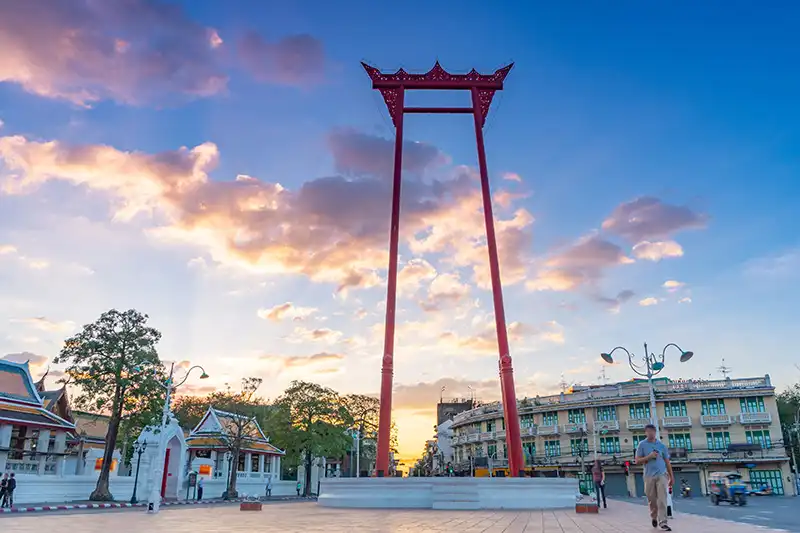
38. Wat Suthat and the Giant Swing are located around Bamrung Mueang Road in the historic Phra Nakhon District of Bangkok. Together they form one of the capital's most important historical, religious and cultural landmarks. The area includes Wat Suthat Thepwararam Ratchaworamahawihan, a first-class royal Buddhist temple, and the large red Giant Swing standing in front of it. Both are widely recognized as iconic symbols of the Rattanakosin period.
Construction of Wat Suthat Thepwararam began during the reign of King Phutthayotfa Chulalok, King Rama I, and continued under King Phutthaloetla Naphalai, King Rama II. The temple was completed during the reign of King Nangklao, King Rama III. Its development across three successive reigns reflects the continuity of royal Buddhist patronage and traditional craftsmanship during the early Rattanakosin period.
The temple's grand image hall enshrines Phra Si Sakyamuni, a large and highly revered bronze Buddha image brought from Sukhothai. The statue is important for both its historical significance and its artistic characteristics, displaying the refined proportions and distinctive beauty of Sukhothai Buddhist sculpture. It remains an important focus of religious devotion among worshippers visiting the temple.
Wat Suthat is distinguished by its large and elegant principal image hall. The interior contains extensive mural paintings and decorative artworks reflecting Buddhist beliefs and traditional Thai craftsmanship during the Rattanakosin period. Visitors can admire the detailed columns, pediments, doors and other architectural features, many of which demonstrate the exceptional technical skills of Thai artisans.
The Giant Swing standing in front of Wat Suthat is a red wooden structure approximately 21 meters high. It was first erected during the reign of King Rama I for the royal Brahmanic ceremonies known as Triyampawai and Tripawai. These ceremonies were associated with Hindu religious traditions and important rituals of the Thai royal court. The dangerous practice of swinging from the structure was eventually discontinued because of the risks involved.
The Giant Swing visible today has undergone restoration and replacement of its wooden structural elements when necessary to preserve its appearance and historical significance. It remains one of Bangkok's most recognizable photography landmarks and illustrates the longstanding coexistence of Buddhist and Brahmanic traditions within Thai cultural history.
The surrounding area contains numerous historic buildings and important cultural sites, including Bangkok City Hall, the Devasathan Brahmin Shrine, Wat Ratchabophit Sathit Maha Simaram and Bamrung Mueang Road. This historic commercial street is known for businesses selling Buddha images and Buddhist ceremonial supplies. Together, these landmarks provide an interesting route for walking through Bangkok's old town.
Photography enthusiasts can capture the Giant Swing from several angles, with morning and late afternoon often providing comfortable temperatures and favorable lighting. Visitors should remain cautious around the surrounding roads, use designated pedestrian crossings and never stand in the middle of traffic to take photographs.
When visiting Wat Suthat, travelers should wear respectful clothing and follow the regulations of the royal temple. Quiet behavior is especially important when entering the principal image hall and ordination hall to pay respects to Buddha images. Visitors should avoid touching historic artifacts or delicate architectural decorations that possess artistic and cultural value.
Highlights: Pay respects to Phra Si Sakyamuni inside the grand image hall, admire Wat Suthat's architecture and mural paintings, photograph the approximately 21-meter-high red Giant Swing, learn about the historic Triyampawai and Tripawai ceremonies, and explore the old-town neighborhood around Bamrung Mueang Road.
Address: 146 Bamrung Mueang Road, Wat Ratchabophit Subdistrict, Phra Nakhon District, Bangkok 10200, Thailand.
Open Days: Daily. Opening Hours: The recommended sightseeing period for the temple is approximately 08:30 – 16:00. The Giant Swing stands in a public area and can be viewed from outside throughout the day.
Admission Fee: Free admission for Thai citizens. Foreign visitors: 100 THB per person according to the original listing. Viewing the Giant Swing from public areas is free.
Getting There: Take the MRT Blue Line to Sam Yot Station, use Exit 3 and walk toward Bamrung Mueang Road and the Giant Swing. Visitors can also use public buses operating near Bamrung Mueang Road and Bangkok City Hall. Those arriving by private car should check parking availability in the surrounding historic district.

39. Siam Square is located along Rama I Road in Pathum Wan Subdistrict, Pathum Wan District, Bangkok. It is a major commercial neighborhood and fashion center that has attracted teenagers, university students, office workers and travelers for generations. Fashion boutiques, restaurants, cafés, cosmetics shops and creative activities are spread throughout its buildings and pedestrian streets, making Siam Square one of Bangkok's most important shopping and lifestyle districts.
Siam Square has a long history as a commercial neighborhood closely connected with Bangkok's urban growth and the development of Thai youth culture. Its transformation began with the establishment of bookstores, fashion shops, cinemas and restaurants, gradually developing into a lively shopping district. Today, Siam Square continues to bring together fashion brands, restaurants and creative businesses that reflect changing interests and trends among younger generations.
One of Siam Square's most distinctive features is its variety of fashion retailers, including Thai brands, independent designer boutiques, jewelry shops, footwear stores, handbag outlets and lifestyle products. New businesses regularly open and adapt their concepts to changing fashion trends. As a result, visitors can discover merchandise that reflects the creativity of Thai entrepreneurs and the evolving character of contemporary fashion.
The district also contains numerous restaurants and cafés offering Thai, Japanese, Korean, Western and other international cuisines, together with desserts and drinks particularly popular among young people. Many businesses create carefully designed interiors and distinctive menus suited to photography and social gatherings, making Siam Square a destination for both shopping and dining.
Parts of Siam Square have been redeveloped into pedestrian-friendly streets and spaces for creative activities. These areas allow people to stroll, take photographs and participate in music performances or promotional events organized at different times. Such activities create a lively atmosphere and reinforce Siam Square's role as a popular meeting place for young people.
Several major shopping complexes surround Siam Square, including Siam Paragon, Siam Center, Siam Discovery and MBK Center. These destinations are connected through sidewalks and sections of elevated pedestrian walkways, allowing travelers to spend an entire day shopping and dining without repeatedly traveling across different parts of Bangkok.
Besides shopping, Siam Square is close to the Bangkok Art and Culture Centre and the Jim Thompson House Museum. These nearby attractions are ideal for travelers who wish to combine contemporary art, traditional Thai culture, shopping and dining within a single itinerary, using the BTS Skytrain as their primary means of transportation.
Photography enthusiasts will find fashion-oriented buildings, pedestrian streets, cafés and contemporary architectural details throughout Siam Square. The afternoon and evening are particularly lively, when most businesses are operating and large numbers of people gather to shop, dine and socialize.
Siam Square continues to reflect the changing character of Thai youth culture. From a historic shopping neighborhood, it has developed into a contemporary center of fashion, food and creative activities. Visiting Siam Square therefore provides more than an opportunity to purchase merchandise; it also offers insights into current trends and everyday urban lifestyles in Bangkok.
Highlights: Shop for fashion and lifestyle products from Thai brands, explore Siam Square's pedestrian streets, enjoy popular restaurants and desserts, photograph contemporary cafés and creative spaces, and walk to Siam Paragon, Siam Center, Siam Discovery and MBK Center.
Address: Rama I Road, Pathum Wan Subdistrict, Pathum Wan District, Bangkok 10330, Thailand.
Open Days: Public streets and accessible areas are open daily. Opening Hours: Most shops and restaurants generally operate from approximately 10:00 – 22:00, although individual schedules differ.
Admission Fee: Free access to Siam Square's public areas. Food, shopping and special activities are charged according to the services selected.
Getting There: Take the BTS Skytrain to Siam Station, the interchange between the Sukhumvit and Silom lines, and use the exits connecting directly to the Siam Square area. Public buses also operate along Rama I Road. Visitors arriving by private car can use parking facilities in nearby shopping complexes, although traffic around Siam is often heavy.
Map (GPS):Google Maps – Siam Square

40. Sukhumvit Soi 11 is located off Sukhumvit Road in Bangkok's lower Sukhumvit area. It is one of the capital's best-known dining and nightlife districts, with international restaurants, bars, live music venues, hotels and entertainment establishments lining the street. The neighborhood attracts Thai residents, international visitors and expatriates living in Bangkok who want to experience the city's vibrant evening atmosphere.
Sukhumvit Soi 11 is situated close to BTS Nana Station in an area that has long been associated with international hotels, restaurants and tourism-related businesses. The expansion of Bangkok's urban rail network and continued growth of the tourism industry have contributed to the district's development as a multicultural center for dining and nightlife.
One of Sukhumvit Soi 11's most appealing features is the range of international restaurants available in the area. Visitors can choose from Thai, Indian, Middle Eastern, European and contemporary fusion cuisine. Some restaurants provide outdoor seating or specially designed environments suitable for casual meals, social gatherings and evenings with friends.
The neighborhood also offers a variety of bars and entertainment venues, ranging from relaxed places to sit and enjoy drinks to live music establishments and clubs featuring DJs and late-night activities. Individual venues offer different musical styles and atmospheres, allowing visitors to select places that suit their interests and preferred forms of entertainment.
Hotels and high-rise buildings in lower Sukhumvit also contain rooftop restaurants and bars where visitors can enjoy elevated views over the surrounding district. These locations are particularly attractive after dark, when the streets and buildings are illuminated. For travelers who enjoy urban skylines and nighttime photography, rooftop venues provide another perspective on this lively part of Bangkok.
Besides its nightlife attractions, Sukhumvit Soi 11 contains cafés, daytime restaurants, convenience stores and services catering to travelers. The area remains active throughout the day, even though the atmosphere is most energetic during the evening. Visitors staying in nearby hotels can also use this district as a convenient base for exploring other parts of Bangkok.
Transportation around Sukhumvit is convenient thanks to the BTS Sukhumvit Line, which connects the neighborhood with Asok, Phrom Phong, Thong Lo, Siam and other urban districts. Travelers can visit Sukhumvit Soi 11 in the evening after spending the day at shopping malls or other attractions and return to the station on foot if the train network is still operating.
Visitors planning a night out should check the opening hours of individual establishments, age restrictions and other entry conditions. They should also arrange their return transportation in advance, especially if they are staying far from Sukhumvit, because the BTS operates within limited service hours and some streets can experience heavy traffic late at night.
Sukhumvit Soi 11 is particularly suitable for travelers interested in international food, urban nightlife and contemporary city culture. Its variety of restaurants and entertainment venues reflects Bangkok's character as an international tourism destination where people from different cultural backgrounds come together.
Highlights: Sample international cuisine, explore bars and live music venues, enjoy city views from rooftop restaurants where available, and experience one of lower Sukhumvit's most popular nightlife neighborhoods.
Address: Sukhumvit Soi 11, off Sukhumvit Road, lower Sukhumvit area, Bangkok 10110, Thailand.
Open Days: The public street is accessible daily. Opening Hours: Restaurants, bars and entertainment venues operate according to individual schedules, with the area becoming especially active from evening until late at night.
Admission Fee: No admission fee for walking along the public street. Restaurants, bars and entertainment venues may have different charges and entry conditions.
Getting There: Take the BTS Sukhumvit Line to Nana Station and walk to the entrance of Sukhumvit Soi 11. Visitors may also travel by taxi or private car along Sukhumvit Road. Anyone exploring the neighborhood at night should check the last BTS service and plan their return journey in advance.

41. The Grand Palace is located on Na Phra Lan Road in Phra Borom Maha Ratchawang Subdistrict, Phra Nakhon District, Bangkok. It is one of Thailand's most important historical landmarks and a magnificent royal architectural complex associated with the establishment of Bangkok as the capital in 1782. The palace has served as a center of royal ceremonies, state administration and important national events, and remains one of the most recognizable symbols of Thailand's royal heritage.
Construction of the Grand Palace began during the reign of King Phutthayotfa Chulalok, King Rama I, following the transfer of the capital from Thonburi to the eastern bank of the Chao Phraya River. The king designated the riverside site as the center of the royal residence and state administration. The palace layout was influenced by royal palace traditions from Ayutthaya, while additional structures were built and modified during subsequent reigns to meet changing ceremonial and administrative requirements.
The Grand Palace complex contains several groups of royal buildings and ceremonial areas, each serving different purposes in the past. These included spaces for royal rituals, reception halls for foreign dignitaries and residential areas used by kings and members of the royal family. Today, designated sections are open to visitors along routes established by the Bureau of the Royal Household, while other areas remain reserved for royal ceremonies and special official functions.
One of the most important architectural groups is the Chakri Maha Prasat Throne Hall, which combines Western architectural design with traditional Thai tiered roofs. The building reflects the development of Thai royal architecture and increased international contact during the reign of King Chulalongkorn, King Rama V. Its distinctive appearance has become one of the most familiar images associated with the Grand Palace.
Dusit Maha Prasat Throne Hall is another outstanding structure, featuring elegant traditional Thai architecture with an elaborately decorated roof and ornamental details demonstrating the craftsmanship of royal artisans during the Rattanakosin period. The building has been associated with important royal ceremonies and provides evidence of the continuing traditions of the Thai royal court.
The Grand Palace grounds also contain Wat Phra Si Rattana Satsadaram, commonly known as Wat Phra Kaew or the Temple of the Emerald Buddha. The temple enshrines the Emerald Buddha, one of Thailand's most revered sacred images. Visitors can learn about the historical relationship between the royal palace and the royal temple through their architectural arrangements and the ceremonial landscape established during the early Rattanakosin period.
Exploring the Grand Palace provides an opportunity to appreciate the sophistication of traditional Thai art, including architectural design, tiered roofs, colored glass mosaics, gilded decorations and intricate ornamental details based on royal artistic traditions. The extraordinary beauty of these structures helps visitors understand the importance of the monarchy and royal craftsmanship in the development of Bangkok's cultural heritage.
Visitors should dress respectfully according to the Bureau of the Royal Household's regulations. Shorts, sleeveless shirts and clothing considered inappropriate for a royal or sacred site should be avoided. Travelers should carry suitable identification when necessary for admission arrangements and follow the instructions of palace staff throughout their visit.
The Grand Palace can conveniently be included in a sightseeing route with Wat Phra Kaew, Wat Pho, Tha Chang and other important landmarks around Sanam Luang. Starting early in the morning is generally recommended, allowing sufficient time to explore the main visitor areas and appreciate the architectural details without rushing.
Highlights: Admire Chakri Maha Prasat Throne Hall, Dusit Maha Prasat Throne Hall and magnificent Rattanakosin royal architecture, learn about the history of the Thai monarchy, and visit Wat Phra Kaew along the designated public sightseeing route.
Address: Na Phra Lan Road, Phra Borom Maha Ratchawang Subdistrict, Phra Nakhon District, Bangkok 10200, Thailand.
Open Days: Open for general sightseeing according to the Bureau of the Royal Household's official calendar. Certain sections or the entire visitor route may close during royal ceremonies. Opening Hours: Generally 08:30 – 15:30 for sightseeing, while some palace areas may remain accessible until 16:30.
Admission Fee: Free for Thai citizens. Foreign visitors: 500 THB per person. Children under 120 centimeters in height may qualify for free admission under the Bureau of the Royal Household's conditions.
Getting There: Take a Chao Phraya Express Boat to Tha Chang Pier and walk to the Grand Palace. Alternatively, take the MRT Blue Line to Sanam Chai Station, then walk or continue by local transportation to Na Phra Lan Road. General visitors normally enter through Mani Noppharat Gate according to palace announcements. Those traveling by private car should check nearby parking availability in advance.
Map (GPS): Latitude 13.75004, Longitude 100.49147 – Google Maps Directions to the Grand Palace

42. Soi Cowboy is a short nightlife street located between Sukhumvit Soi 21, also known as Asok Montri Road, and Sukhumvit Soi 23, near BTS Asok Station and MRT Sukhumvit Station. It is one of Bangkok's best-known adult entertainment districts, recognized for its colorful neon signs and concentration of bars and nightlife establishments. Its location within the busy Asok area also places it close to major hotels, shopping centers, restaurants and public transportation services.
Soi Cowboy became widely known during the 1970s, when the lower Sukhumvit area was expanding as a residential and commercial district serving international residents and visitors. The street gradually developed into a concentration of nightlife establishments and bars. The name Soi Cowboy is associated with a foreign business owner who was known for wearing a cowboy hat, giving the street a memorable nickname that eventually became its established name.
The most recognizable characteristic of Soi Cowboy is its colorful neon lighting, with illuminated signs lining buildings along both sides of the narrow street. The atmosphere becomes particularly distinctive after dark, when the bright lights create a scene unlike Bangkok's ordinary shopping streets. Some travelers visit simply to observe the nightlife atmosphere and photograph the street from public areas.
The surrounding Asok district is one of Bangkok's major urban centers, with hotels, shopping malls, office towers, restaurants and convenient transportation connections. Visitors can reach the area easily using either the BTS Skytrain or MRT, making it possible to explore this part of Sukhumvit without relying on a private car.
Visitors should be aware that most establishments in Soi Cowboy are adult entertainment venues with age restrictions and individual rules, including photography policies that may differ from one business to another. Travelers should respect the privacy of people working at or visiting these establishments and avoid photographing individuals without permission.
When visiting after dark, travelers should take the usual precautions appropriate for busy nightlife districts. These include protecting personal belongings, checking prices and service conditions before entering an establishment, and planning transportation for the return journey, especially when traveling after the BTS and MRT have stopped operating.
Soi Cowboy therefore represents a different aspect of Bangkok's nightlife culture from the city's temples, museums and family-oriented attractions. Travelers can choose to observe its atmosphere from the public street according to their personal interests and preferences, while respecting the surroundings and the people who work or spend time there.
Highlights: Observe the colorful neon signs and the atmosphere of an adult entertainment street in Bangkok's Asok district, while exploring the surrounding lower Sukhumvit area known for international restaurants, hotels and nightlife.
Address: Between Sukhumvit Soi 21 and Sukhumvit Soi 23, Khlong Tan Nuea Subdistrict, Watthana District, Bangkok 10110, Thailand.
Open Days: The public street is accessible daily. Opening Hours: Nightlife establishments generally operate from the evening until late at night, with individual operating schedules.
Admission Fee: Walking along the public street is free. Individual establishments may charge for products, services or admission according to their own conditions.
Getting There: Take the BTS Sukhumvit Line to Asok Station or the MRT Blue Line to Sukhumvit Station, then walk to Soi Cowboy. Visitors arriving by private car should use permitted parking facilities in nearby office buildings or shopping centers because parking along the street and surrounding lanes is limited.
Map (GPS): Latitude 13.73743, Longitude 100.56240 – Google Maps Directions to Soi Cowboy

43. Wat Saket Ratchaworamahawihan and the Golden Mount are located on Chakkraphatdi Phong Road in Ban Bat Subdistrict, Pom Prap Sattru Phai District, Bangkok. The temple is one of the most important Buddhist landmarks near Rattanakosin Island and is particularly famous for the Golden Mount, an artificial hill crowned by a golden chedi. The summit offers panoramic views of Bangkok's historic districts, making it popular with both worshippers and travelers interested in photography and the city's architectural heritage.
Wat Saket has a history dating back to the Ayutthaya period, when it was known as Wat Sakae. The temple underwent major restoration during the reign of King Phutthayotfa Chulalok, King Rama I, who bestowed the name Wat Saket Ratchaworamahawihan. It therefore forms an important part of the development of Buddhism and royal temple construction during the early Rattanakosin period.
Construction of the Golden Mount, also known as Phra Borom Banphot, began during the reign of King Nangklao, King Rama III. The project was inspired by the tradition of constructing monumental chedis associated with the historic city of Ayutthaya. Development continued during subsequent reigns until the structure became one of Bangkok's most recognizable religious monuments and elevated landmarks.
The Golden Mount's most distinctive feature is the stairway leading toward the summit of Phra Borom Banphot, consisting of more than 300 steps. The route is landscaped with trees and resting areas, allowing visitors to ascend gradually while enjoying changing views of the surroundings. At the summit, visitors encounter the golden chedi and an area for paying respects to sacred Buddha relics.
The golden chedi is a major focus of Buddhist devotion because it is associated with the enshrinement of Buddha relics. Wat Saket is therefore an important pilgrimage destination in Bangkok. Worshippers commonly circumambulate the chedi as an expression of respect according to Buddhist tradition, while also appreciating the architecture and religious artwork surrounding the sacred structure.
The summit provides panoramic views across Bangkok, including historic temples, older buildings and surrounding urban districts. Rattanakosin Island, Loha Prasat and important buildings along Ratchadamnoen Road can be seen from the elevated viewpoint. Looking over the capital from the Golden Mount allows visitors to appreciate the relationships between historic settlements and the modern development of the city.
Within the temple grounds are an ordination hall, image halls and other religious buildings with important Buddhist and artistic value. Visitors can explore the designated areas and pay respects to Buddha images while admiring traditional Thai architecture. Respectful clothing and quiet behavior are recommended throughout the temple complex.
One of Wat Saket's most important annual traditions is the festival honoring the Buddha relics, widely known as the Golden Mount Temple Fair. It is held around the Loy Krathong period and includes the traditional wrapping of a red cloth around the Golden Mount, together with religious ceremonies and activities that have been passed down through generations. The festival is one of Bangkok's longstanding temple traditions and reflects the continuing devotion of Buddhist worshippers to the sacred relics.
Morning and late afternoon are generally the most comfortable times to climb the Golden Mount because temperatures are usually lower than during the middle of the day. Visitors with mobility difficulties or health conditions affecting their ability to climb stairs should consider the physical demands of the route, which involves numerous steps and some steep sections.
A visit to the Golden Mount can be combined with nearby attractions including Wat Ratchanatdaram, Loha Prasat, Rattanakosin Exhibition Hall and the Phan Fa Lilat neighborhood. These sites provide opportunities to explore the history, religion and architecture of Rattanakosin within a single day.
Highlights: Climb the Golden Mount to pay respects to Buddha relics, admire the golden chedi and panoramic views of Bangkok, learn about the history of Wat Saket, and experience the Golden Mount Temple Fair around Loy Krathong according to the temple's annual schedule.
Address: 344 Chakkraphatdi Phong Road, Ban Bat Subdistrict, Pom Prap Sattru Phai District, Bangkok 10100, Thailand.
Open Days: Daily. Opening Hours: 07:00 – 19:00 according to the supplied article.
Admission Fee: Free for Thai citizens. Foreign visitors: 100 THB per person for access to the Golden Mount area, according to the supplied article.
Getting There: Take a Khlong Saen Saep passenger boat to Phan Fa Lilat Pier and walk to Wat Saket. Alternatively, take the MRT Blue Line to Sam Yot Station, then walk or continue by local transportation toward Chakkraphatdi Phong Road. Public buses also operate along Lan Luang Road and nearby streets. Visitors arriving by private car should check available parking facilities before traveling.
Map (GPS): Latitude 13.75393, Longitude 100.50667 – Google Maps Directions to Wat Saket and the Golden Mount

44. Wat Benchamabophit Dusitwanaram Ratchaworawihan (Marble Temple) is located in the Dusit district of Bangkok, near Si Ayutthaya Road. This important royal Buddhist temple is internationally famous for its traditional Thai architecture and the extensive use of white marble in the construction and decoration of its ordination hall. The combination of elegant architectural proportions and marble surfaces makes it one of Bangkok's most distinctive and beautiful religious landmarks.
Wat Benchamabophit was significantly developed during the reign of King Chulalongkorn, King Rama V, and was closely associated with the expansion of the royal precincts and the development of Dusit as an important district of Bangkok. The temple's design was carefully planned to combine traditional Thai artistic principles with high-quality construction materials imported from overseas.
The temple's ordination hall was designed by Prince Narisara Nuwattiwong, an important royal artist and architect. Italian marble was used to decorate the building and its surrounding areas, creating a remarkable contrast between the clean white surfaces and the colorful, multi-tiered roof ornaments characteristic of traditional Thai architecture.
Inside the ordination hall is a replica of Phra Phuttha Chinnarat, which serves as the temple's principal Buddha image. The image is admired for its elegant Buddhist artistic style and remains an important focus of devotion among worshippers. Interior decorations and artwork contribute to an atmosphere of calm and religious reverence.
The cloister surrounding the temple is another important feature, containing Buddha images in a variety of artistic styles from different historical periods. Visitors can study the differences in Buddhist sculpture across regions and eras, gaining a deeper understanding of the artistic influences that have shaped Thai religious art.
Wat Benchamabophit's beauty also comes from the balanced arrangement of its marble ordination hall, courtyards and landscaped surroundings. The contrast between white marble, golden decorative details and colorful roof tiles creates an elegant architectural composition. The temple is especially attractive for photography in the morning, when sunlight is less intense and visitor numbers may be lower.
The temple remains an active place of Buddhist worship, where monks and laypeople participate in merit-making activities, religious observances and ceremonies associated with important Buddhist occasions. Visitors should maintain a respectful atmosphere and dress appropriately when entering the temple grounds and religious buildings.
Because the Marble Temple is located in the Dusit area, it can be combined with visits to Dusit Palace, Ananta Samakhom Throne Hall and other important historical landmarks in the district, subject to the areas currently open to the public. Such an itinerary allows travelers to explore the architectural development of Bangkok during the reign of King Rama V.
Highlights: Admire the magnificent white marble ordination hall, pay respects to the Phra Phuttha Chinnarat replica, explore Buddha images representing different artistic traditions in the cloister, and appreciate the architecture designed by Prince Narisara Nuwattiwong.
Address: 69 Rama V Road, Dusit Subdistrict, Dusit District, Bangkok 10300, Thailand.
Open Days: Daily. Opening Hours: 08:00 – 18:00 according to the supplied article.
Admission Fee: Free admission for Thai citizens. Foreign visitors: 100 THB per person according to the supplied article.
Getting There: Visitors can travel by taxi or public buses serving Si Ayutthaya Road and Rama V Road. Another option is to take the MRT Blue Line to Bang Pho Station and continue by taxi or other local transportation to the Dusit district. Those arriving by private car should check the temple's available parking facilities and traffic conditions in the surrounding streets.
Map (GPS): Latitude 13.76664, Longitude 100.51474 – Google Maps Directions to Wat Benchamabophit

45. Victory Monument is located at the center of the Victory Monument traffic circle in Thanon Phaya Thai Subdistrict, Ratchathewi District, Bangkok. It is an important national memorial commemorating those who died during the Franco-Thai conflict and is also one of the capital's busiest transportation hubs. The monument remains a recognizable historical landmark surrounded by extensive public transportation connections, commercial buildings and restaurants.
Victory Monument was built during the government of Field Marshal Plaek Phibunsongkhram to honor soldiers, police officers and civilians who lost their lives during the Franco-Thai War of 1940–1941. It was officially inaugurated in 1942 and became an important memorial associated with Thailand's political and military history during the Second World War period.
The monument consists of five tall bayonet-shaped structures extending upward toward the sky. These elements symbolize courage and sacrifice by those who served the country. Sculptures around the monument's base represent different branches of the armed forces and civilians associated with the historical events it commemorates.
Victory Monument is notable for its modern architectural and sculptural style, reflecting Western artistic influences during the first half of the twentieth century. Its tall and relatively simple form creates a powerful visual impression and reinforces its commemorative function as a monument to an important episode in Thai history.
The surrounding district has developed into one of Bangkok's major transportation centers. Victory Monument BTS Station, public bus stops and numerous connecting transport routes provide access to many parts of the city. Large numbers of commuters travel through this area throughout the day, contributing to its constantly busy atmosphere.
Beyond its transportation role, Victory Monument is also a popular shopping and food neighborhood. Boat noodle restaurants, cooked-to-order food shops, dessert vendors and other businesses are concentrated along the streets around the traffic circle. Visitors can sample local dishes and observe everyday urban life while exploring the surrounding area.
Travelers interested in history can view Victory Monument from the surrounding pedestrian walkways and elevated skywalks, which provide perspectives of the memorial and its relationship with the busy streets around it. Visitors should avoid crossing the traffic circle at undesignated locations because of heavy vehicle movements and the risks associated with the surrounding road network.
Victory Monument is also a convenient starting point for travel to other Bangkok attractions, including Santiphap Park, the Phaya Thai district and destinations along the BTS network. Its many transportation connections make it useful as an interchange point for sightseeing itineraries across the capital.
Highlights: Learn about the history of the Franco-Thai War memorial, admire the monument's symbolic sculptures and architecture, photograph the landmark from elevated pedestrian walkways, and experience the busy transportation hub and popular local restaurants around the traffic circle.
Address: Victory Monument Traffic Circle, Thanon Phaya Thai Subdistrict, Ratchathewi District, Bangkok 10400, Thailand.
Open Days: The monument can be viewed from public areas daily. Opening Hours: Exterior viewing is possible throughout the day, subject to traffic management and public access restrictions.
Admission Fee: Free viewing from public areas.
Getting There: Take the BTS Sukhumvit Line to Victory Monument Station and use the elevated pedestrian walkways connecting to the surrounding traffic circle. Numerous public bus routes also stop in the area. Visitors arriving by private car should use permitted parking facilities in nearby buildings or shopping centers and continue on foot to an appropriate viewpoint.
Map (GPS): Latitude 13.76491, Longitude 100.53834 – Google Maps Directions to Victory Monument

46. Erawan Shrine (Thao Maha Phrom Shrine) is located at Ratchaprasong Intersection on Ratchadamri Road in Lumphini Subdistrict, Pathum Wan District, Bangkok. It is an internationally renowned sacred site attracting large numbers of Thai worshippers and international visitors. Many people visit to pay respects to Phra Phrom, the Thai representation of Brahma, and seek blessings associated with career opportunities, financial prosperity, success and personal well-being according to traditional beliefs.
The Erawan Shrine was established in 1956 in connection with the construction of the original Erawan Hotel at Ratchaprasong Intersection. The shrine was created to provide spiritual protection and auspiciousness according to Brahmanic and Hindu beliefs. Over time, it became widely revered by members of the public and developed into one of the most important spiritual landmarks in Bangkok's Ratchaprasong district.
The central image depicts Phra Phrom with four faces looking in the four cardinal directions, symbolizing awareness and care extending toward all directions according to traditional religious interpretations. Worshippers commonly move around the shrine to pay respects to all four faces, presenting flowers, incense, candles and other offerings according to their beliefs and the shrine's established regulations.
One of the Erawan Shrine's most distinctive characteristics is its location within one of Bangkok's busiest commercial and tourism districts. Luxury hotels, large shopping centers and elevated pedestrian walkways surround the shrine, while the BTS Skytrain provides convenient access. Despite its urban setting, the shrine remains an important center of devotion and receives worshippers continuously from morning until evening.
Another distinctive tradition associated with the shrine is the performance of Thai classical dance as an offering of thanksgiving. Some worshippers commission dancers to perform after receiving what they believe to be blessings or the fulfillment of prayers. These performances combine traditional Thai dance and music with religious offering practices that have become an important part of the shrine's cultural identity.
The Erawan Shrine attracts visitors from many countries, particularly across Asia, where stories of devotion and spiritual experiences have contributed to its international reputation. As a result, the shrine plays an important role in Bangkok's religious and cultural tourism, bringing together people from different backgrounds who wish to observe or participate in its traditional worship practices.
Visitors should dress respectfully and follow instructions provided by shrine staff. Special care should be taken when arranging offerings, lighting incense or candles, and using designated worship areas. Because the shrine is often crowded, maintaining calm and observing the established arrangements helps ensure that everyone can worship and move through the site safely.
The Erawan Shrine can easily be included in a shopping and sightseeing itinerary around Ratchaprasong. CentralWorld, Gaysorn Village and the Siam district are all within convenient reach, with Chit Lom BTS Station serving as an important transportation connection.
Highlights: Pay respects to the four-faced Phra Phrom image, observe traditional Thai dance offerings, and experience the distinctive atmosphere of a famous sacred shrine in the center of Bangkok's Ratchaprasong shopping district.
Address: Ratchaprasong Intersection, Ratchadamri Road, Lumphini Subdistrict, Pathum Wan District, Bangkok 10330, Thailand.
Open Days: Daily. Opening Hours: 06:00 – 22:00.
Admission Fee: Free admission for worship. Offerings and traditional dance performances involve separate charges according to the services selected.
Getting There: Take the BTS Sukhumvit Line to Chit Lom Station and follow the elevated pedestrian walkway toward Ratchaprasong Intersection. Public buses and taxis also serve Ratchadamri Road. Visitors arriving by private car can use parking facilities at nearby shopping centers before walking to the shrine.
Map (GPS): Latitude 13.74430, Longitude 100.53970 – Google Maps Directions to Erawan Shrine

47. Ban Bat Community is located along Boriphat Road in Ban Bat Subdistrict, Pom Prap Sattru Phai District, Bangkok. This historic community is renowned for the traditional handcrafting of Buddhist monks' alms bowls, an important form of Thai craftsmanship passed down through generations. Ban Bat is one of the few remaining places where visitors can observe this specialized traditional craft in the middle of Bangkok's changing urban landscape.
The history of Ban Bat is associated with the settlement of skilled artisans during the early Rattanakosin period. Craftspeople established workshops producing alms bowls for Buddhist temples and worshippers in Bangkok. The occupation has considerable religious significance because the alms bowl is one of the essential personal requisites used by Buddhist monks.
Ban Bat is distinguished by its traditional handmade production process, which requires several stages of skilled metalworking. Craftspeople cut metal sheets into separate components, shape the pieces, join them together, hammer the bowl into its final form and polish the surface until it is smooth and even. Each step requires experience, precision and considerable patience to produce a bowl that is strong, balanced and suitable for religious use.
Traditional handmade alms bowls differ from mass-produced alternatives because the craftsperson must use physical effort and specialized techniques to shape and finish the metal carefully. The rhythmic sound of hammers striking metal is one of the most recognizable features of Ban Bat and reflects a craft tradition that has formed part of the community's identity for many generations.
The making of Buddhist alms bowls is also closely connected with religious beliefs and the devotion of the artisans themselves. Monks use these bowls in their daily routines, particularly when collecting alms and receiving food offerings from laypeople. As a result, the craft has cultural and spiritual significance extending beyond the production of an ordinary household object.
Today, some families in Ban Bat continue to preserve traditional alms-bowl craftsmanship. Visitors may have opportunities to observe the production process and speak with local artisans when workshops are operating and the craftspeople are available. Some households also sell handmade alms bowls and other craft products, providing visitors with an opportunity to support the community's traditional occupation directly.
Walking through Ban Bat allows travelers to experience local craftsmanship at close range. However, visitors should respect the privacy of residents and artisans, avoid entering workspaces without permission and ask before taking close-up photographs of people or production activities.
Ban Bat is located close to Wat Saket and the Golden Mount, making it suitable for a combined cultural itinerary. Travelers can explore the community's traditional workshops before continuing to Wat Saket to pay respects to Buddha relics and enjoy elevated views of Bangkok. Morning to early afternoon is often suitable for a visit because local craftspeople may be working during these hours.
A visit to Ban Bat therefore provides an opportunity to learn about a traditional Thai craft that faces challenges from changing technology and contemporary economic conditions. Supporting local artisans and appreciating their skills can contribute to the continued preservation of handmade Buddhist alms-bowl production for future generations.
Highlights: Watch traditional handmade Buddhist alms-bowl production, learn about metalworking, hammering and assembly techniques, meet artisans in a historic Bangkok community, and purchase handmade bowls or other craft products to support local knowledge and craftsmanship.
Address: Soi Ban Bat, Boriphat Road, Ban Bat Subdistrict, Pom Prap Sattru Phai District, Bangkok 10100, Thailand.
Open Days: The community can generally be visited daily, while workshop demonstrations depend on each household's working schedule. Opening Hours: Approximately 11:00 – 15:00 is a suitable period for observing traditional bowl-making activities.
Admission Fee: Free access to the community. Special activities and purchases of handmade products are charged separately.
Getting There: Take the MRT Blue Line to Sam Yot Station and walk along Bamrung Mueang Road and Boriphat Road toward Ban Bat. Alternatively, take a Khlong Saen Saep passenger boat to Phan Fa Lilat Pier and continue on foot. Visitors arriving by private car should use permitted parking facilities nearby before walking into the community because many of its lanes are narrow.
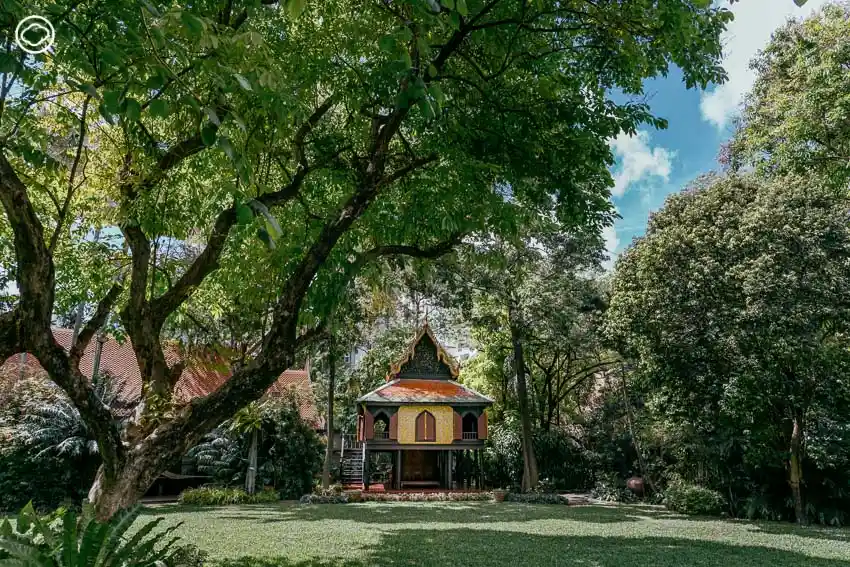
48. Suan Pakkad Palace Museum is located on Si Ayutthaya Road in Thanon Phaya Thai Subdistrict, Ratchathewi District, Bangkok. It is a museum known for its traditional Thai wooden architecture and important collections of historical and artistic objects. The property includes landscaped gardens and several preserved traditional Thai houses that have played an educational role in introducing visitors to Thailand's cultural and architectural heritage.
The history of Suan Pakkad Palace is closely associated with Prince Chumbhotbongs Paribatra and Mom Rajawongse Pantip Paribatra, who were interested in collecting artworks and preserving cultural heritage. Their collections and the historic property were subsequently developed into a museum to provide opportunities for the public to study significant works of art and objects with historical value.
The principal architectural attraction of the museum is its group of traditional Thai houses arranged harmoniously within landscaped gardens. The buildings display characteristics of Central Thai residential architecture, including raised floors, pitched roofs and wooden construction. Their arrangement allows visitors to study traditional Thai housing design and understand how domestic architecture was adapted to local climate conditions.
The museum has previously displayed a variety of important artifacts, including ancient Buddha images, ceramics, jewelry, carved artworks and objects from archaeological sites in Thailand. These collections illustrate the development of artistic traditions and religious beliefs across different historical periods.
Another important feature is the Lacquer Pavilion, known in Thai as Ho Khian, a historic building containing elaborate paintings and decorative craftsmanship. The pavilion is an important example of the preservation of traditional Thai architecture and artistic heritage. Visitors interested in historical wooden buildings can study its architectural features and craftsmanship through information about the museum and its collections.
The gardens of Suan Pakkad Palace contain mature trees and landscaped green areas, creating a peaceful environment contrasting with the busy streets and high-rise buildings of the surrounding Ratchathewi district. The relationship between the gardens and traditional Thai houses gives the property a distinctive architectural atmosphere and demonstrates the integration of nature with traditional residential design.
Suan Pakkad Palace Museum has played an important role in the history of cultural heritage conservation in Thailand. It is an example of how privately owned art collections and historic properties can be preserved and made accessible for educational purposes, allowing visitors to learn about traditional Thai houses, antiquities and historical craftsmanship.
However, Suan Pakkad Palace Museum is currently closed for renovation according to the museum's published announcement, and a confirmed reopening date has not been established in the supplied information. Travelers should therefore not assume that the museum exhibitions and traditional houses are available for ordinary sightseeing.
Visitors interested in traditional Thai architecture and historical artifacts can consider other cultural destinations offering related experiences, such as the Jim Thompson House Museum or the National Museum Bangkok. Both institutions preserve important aspects of Thai artistic and historical heritage.
Highlights: Learn about the history of the traditional Thai houses and important art collections of Suan Pakkad Palace, explore the characteristics of Central Thai residential architecture, discover the significance of the Lacquer Pavilion and appreciate the cultural heritage preserved by the museum.
Address: 352–354 Si Ayutthaya Road, Thanon Phaya Thai Subdistrict, Ratchathewi District, Bangkok 10400, Thailand.
Current Status: Closed for renovation according to the museum's published announcement. A confirmed reopening date has not been established in the supplied information.
Getting There: Take the BTS Sukhumvit Line or Airport Rail Link to Phaya Thai Station and walk along Si Ayutthaya Road. Travelers should check the museum's reopening announcement before making a visit because the property remains listed as closed for renovation.
Map (GPS): Latitude 13.75674, Longitude 100.53429 – Google Maps Directions to Suan Pakkad Palace Museum

49. Bang Khun Phrom Palace is located on Samsen Road in Wat Sam Phraya Subdistrict, Phra Nakhon District, Bangkok. This historic royal palace is renowned for its elegant Western-influenced architecture and its close relationship with the history of the Thai monarchy and the Bank of Thailand. The buildings reflect the changing architectural tastes of Bangkok during the reign of King Chulalongkorn, King Rama V.
Bang Khun Phrom Palace was built during the reign of King Rama V as a royal residence associated with members of the royal family. Its architecture reflects Western artistic influences that became increasingly popular among the Thai royal court during this period. The palace therefore provides evidence of the growth of international cultural exchange and Bangkok's architectural transformation during the early twentieth century.
The principal mansion is distinguished by elegant European architecture and highly refined decorative features. Its windows, arched entrances, balconies and exterior ornamentation reflect the sophisticated design associated with royal residences of that period. These features have made Bang Khun Phrom Palace one of Bangkok's most admired historic buildings.
In addition to the main mansion, the palace grounds include the Somdet Mansion, another important building associated with Queen Sukhumala Marasri. This residence illustrates the relationship between Western-influenced architecture and the lifestyles of members of the Thai royal family during the reign of King Rama V.
Bang Khun Phrom Palace has also played an important role in the history of the Bank of Thailand because the property was formerly used for central banking operations. In subsequent years, the surrounding area was further developed, including the establishment of the Bank of Thailand Learning Center. This educational institution introduces visitors to economic history, finance, the development of currency and the role of the central bank in Thailand's economic system.
Today, Bang Khun Phrom Palace offers public visits through scheduled guided tours requiring advance reservations through the Bank of Thailand's booking system. Visitors can learn about the history of the buildings and the palace's royal heritage through tours conducted on designated days and at specific times. Group sizes are limited to support the preservation of the historic buildings and their architectural details.
Travelers interested in economics and finance can combine a guided tour of Bang Khun Phrom Palace with a visit to the Bank of Thailand Museum and Learning Center. Its exhibitions and educational resources introduce the history of currency and the development of Thailand's financial system. These experiences are suitable for students, families and visitors interested in the country's economic history.
Visitors planning to enter Bang Khun Phrom Palace should complete their reservations through the Bank of Thailand's official system and arrive at the registration point before the scheduled tour. They should also follow regulations concerning photography, dress and access to restricted areas in order to help protect the historic property.
Highlights: Admire the Main Mansion and Somdet Mansion, study Western-influenced royal architecture from the reign of King Rama V, learn about the palace's history and its relationship with the Bank of Thailand, and visit the financial history exhibitions at the Bank of Thailand Learning Center.
Address: Samsen Road, Wat Sam Phraya Subdistrict, Phra Nakhon District, Bangkok 10200, Thailand.
Open Days: Saturday and Sunday, with advance reservations required. Tour Times: 11:00, 13:30 and 15:00. Each tour lasts approximately one hour and accommodates up to 40 visitors, according to the supplied article.
Admission Fee: Free admission with advance reservations through the Bank of Thailand's booking system. Reservations are generally available seven days before the intended visit, according to the supplied article.
Getting There: Visitors can travel by taxi or public bus along Samsen Road and the Rama VIII Bridge area. Another option is to use available Chao Phraya River passenger boat services to a nearby pier and continue by local transportation to the Bank of Thailand Learning Center. Those arriving by private car should check the center's parking facilities and the applicable regulations for their reserved visiting day.
Map (GPS): Latitude 13.76702, Longitude 100.49641 – Google Maps Directions to Bang Khun Phrom Palace

50. Royal Thai Air Force Museum (National Aviation Museum) is located on Phahonyothin Road in Sanam Bin Subdistrict, Don Mueang District, Bangkok. It is an important educational destination dedicated to the history of the Royal Thai Air Force and the development of military aviation in Thailand. The museum preserves a collection of historic aircraft, aviation equipment and related objects, allowing visitors to study the technological development of flight and the changing roles of aircraft in the country's history.
The Royal Thai Air Force Museum was established in 1952 to collect and preserve aircraft, military equipment and important historical objects associated with the Royal Thai Air Force. Its purpose was to create an educational resource for military personnel, students and members of the public. Over time, the museum expanded its exhibition areas and acquired additional aircraft representing different periods in the development of Thai aviation.
The museum's main attraction is its collection of aircraft displayed both indoors and outdoors. These include several categories, such as fighter aircraft, training planes, transport aircraft and other planes that played significant roles in Royal Thai Air Force operations. The displays allow visitors to compare aircraft designs and technologies from different historical periods at close range.
One historically significant aircraft is the Curtiss Hawk III, an early fighter plane that once served with the Royal Thai Air Force. It is particularly interesting to aviation historians because very few examples of this aircraft type survive worldwide. Its preservation provides an important opportunity to study the technology and design of fighter aircraft from an earlier era.
The museum also preserves other aircraft illustrating the technological development of the Royal Thai Air Force, including jet fighters associated with the Cold War period and military aircraft used in more recent times. Visitors can examine differences in aircraft shapes, propulsion systems and engineering design, gaining an understanding of how aviation technology has developed through scientific and industrial progress.
Beyond aircraft, the museum displays aviation equipment, pilot uniforms, communications devices, documents and photographs associated with the history of the Royal Thai Air Force. These objects help visitors understand the work of pilots and military personnel, along with the role of military aviation in national security and Thailand's broader development.
The Royal Thai Air Force Museum is a suitable destination for families, particularly children and young people interested in aircraft, engineering and aviation science. Seeing full-sized aircraft at close range makes it possible to learn about aircraft structures, the principles of flight and aviation technology through direct observation. These experiences can encourage interest in science, technology and engineering.
Photography enthusiasts will find a wide variety of aircraft with distinctive designs, from older propeller-driven planes to jet fighters. Visitors can photograph the aircraft and their technical features in designated areas while following the museum's regulations concerning touching exhibits and entering restricted display spaces.
Schools and organized groups may contact the museum to arrange educational visits or request guided activities according to the museum's conditions. Such programs can be useful for students and groups interested in aviation history. General visitors can explore the museum during operating hours without paying an admission fee.
The museum is conveniently accessible using the BTS Sukhumvit Line extension, with a station named Royal Thai Air Force Museum located near the site. This makes it a practical destination for a half-day or full-day educational excursion, particularly for travelers interested in aircraft technology and the history of military aviation in Thailand.
Highlights: Explore historic Royal Thai Air Force aircraft, admire the rare Curtiss Hawk III fighter, compare jet fighters and other aviation technology, discover pilot equipment and uniforms, and learn about the history and development of military aviation in Thailand.
Address: 171 Phahonyothin Road, Sanam Bin Subdistrict, Don Mueang District, Bangkok 10210, Thailand.
Open Days: Tuesday – Sunday. Closed on Mondays and public holidays. Opening Hours: 09:00 – 15:30.
Admission Fee: Free admission for general visitors. Organized groups should contact the museum in advance to arrange educational visits or guided activities.
Getting There: Take the BTS Sukhumvit Line to Royal Thai Air Force Museum Station and walk to the museum entrance. Visitors can also travel by taxi or public buses operating along Phahonyothin Road near the Royal Thai Air Force area. Those arriving by private car should check the museum's parking facilities and follow instructions provided by staff.
Map (GPS): Latitude 13.92059, Longitude 100.62171 – Google Maps Directions to Royal Thai Air Force Museum
| Destination | Bangkok, Thailand |
| Location | Bangkok, Thailand |
| Main Characteristics | Thailand's capital combines historic landmarks, Buddhist temples, royal palaces, museums, traditional communities, markets, restaurants, shopping centers and vibrant nightlife destinations. |
| Historical Significance | Rattanakosin was established as Thailand's capital in 1782 during the reign of King Phutthayotfa Chulalok, King Rama I. Bangkok subsequently developed into the country's principal center of government, commerce, education and culture. |
| Major Highlights | The Grand Palace, Wat Phra Kaew, Wat Pho, Wat Arun, Chao Phraya River, Yaowarat, Chatuchak Weekend Market, Siam Square, ICONSIAM and Mahanakhon SkyWalk. |
| Important Temples and Religious Sites | 1. Wat Phra Si Rattana Satsadaram (Wat Phra Kaew) 2. Wat Phra Chetuphon Wimonmangkhalaram (Wat Pho) 3. Wat Arun Ratchawararam Ratchaworamahawihan 4. Wat Suthat Thepwararam and the Giant Swing 5. Wat Saket Ratchaworamahawihan (Golden Mount) 6. Wat Benchamabophit Dusitwanaram Ratchaworawihan |
| Palaces and Historical Landmarks | 1. The Grand Palace 2. Bang Khun Phrom Palace 3. Suan Pakkad Palace Museum 4. So Heng Tai Mansion 5. Baan Plai Noen Thai Residence 6. Victory Monument |
| Museums and Learning Centers | 1. National Museum Bangkok (Phra Nakhon) 2. Museum Siam 3. Rattanakosin Exhibition Hall 4. Bangkok Art and Culture Centre (BACC) 5. Jim Thompson House Museum 6. Bangkok Planetarium 7. Royal Thai Air Force Museum (National Aviation Museum) |
| Historic Communities and Cultural Districts | 1. Kudeejeen Historic Community 2. Artist's House, Khlong Bang Luang 3. Ban Bat Community 4. Charoen Krung and Bang Rak Historic District 5. Yaowarat (Bangkok Chinatown) 6. Talat Phlu 7. Wang Lang Market District |
| Markets and Shopping Destinations | 1. Chatuchak Weekend Market 2. Taling Chan Floating Market 3. Khlong Lat Mayom Floating Market 4. Ratchada Train Night Market 5. Siam Square 6. ICONSIAM 7. Asiatique The Riverfront 8. Tha Maharaj |
| Art and Creative Destinations | 1. ChangChui Creative Park 2. The Jam Factory 3. Bangkok Art and Culture Centre (BACC) 4. Artist's House, Khlong Bang Luang 5. Charoen Krung Creative District |
| Public Parks and Natural Attractions | 1. Lumphini Park 2. PTT Green in the City (Metro Forest Learning Center) 3. Bangkok Butterfly Garden and Insectarium 4. Public recreational areas and riverside promenades along the Chao Phraya River |
| Popular Nightlife Destinations | 1. Khao San Road 2. Yaowarat (Bangkok Chinatown) 3. Sukhumvit Soi 11 4. Asiatique The Riverfront 5. Ratchada Train Night Market 6. Soi Cowboy |
| Bangkok Viewpoints | 1. Mahanakhon SkyWalk 2. Golden Mount at Wat Saket 3. Chao Phraya River viewpoints 4. Bridges and public waterfront areas along the Chao Phraya River |
| Popular Food Districts | 1. Yaowarat – Chinese cuisine and street food 2. Talat Phlu – Traditional Thai dishes and desserts 3. Wang Lang – Street food and local restaurants 4. Bang Lamphu – Traditional Thai food and long-established restaurants 5. Khlong Lat Mayom Floating Market – Thai cuisine and local specialties 6. Taling Chan Floating Market – Canal-side dining and local food |
| Recommended Areas to Stay | 1. Sukhumvit – Ideal for travelers who want convenient BTS connections, restaurants and lifestyle attractions 2. Siam and Pathum Wan – Ideal for shopping enthusiasts and visitors who prefer central Bangkok 3. Silom and Sathorn – Suitable for leisure travelers and business visitors seeking convenient transportation 4. Chao Phraya Riverside – Ideal for travelers who want relaxing accommodations and scenic river views 5. Khao San Road and Bang Lamphu – Suitable for budget travelers and visitors interested in Bangkok's historic old town |
| Transportation | Travelers can get around Bangkok using the BTS Skytrain, MRT subway, Airport Rail Link, public buses, taxis, Chao Phraya Express Boats, cross-river ferries and passenger boats operating along selected canals. Choosing transportation according to the location of each attraction helps reduce travel time and avoid heavy traffic. |
| Best Time to Visit | Bangkok can be visited throughout the year. November to February generally offers more comfortable weather than the hot season. Mornings are especially suitable for temples, royal palaces and historic neighborhoods, while evenings are ideal for night markets and food streets. |
| Recommended Trip Duration | 1. One day – Explore the historic old town and selected major landmarks 2. Two to three days – Visit temples, museums, traditional communities and shopping districts 3. Four to five days – Explore several districts across Bangkok at a more relaxed pace |
| Visitor Etiquette and Travel Advice | Dress respectfully when visiting temples and royal palaces, follow each attraction's regulations, take care of personal belongings, and check opening days, visiting hours and admission fees before traveling. |
Frequently Asked Questions (FAQ)
Q: What are the most popular places to visit in Bangkok?
A: Bangkok offers a wide variety of popular attractions, including the Grand Palace, Wat Phra Kaew, Wat Pho, Wat Arun, Yaowarat Chinatown, Chatuchak Weekend Market, Siam Square, ICONSIAM, Asiatique The Riverfront, Mahanakhon SkyWalk and Lumphini Park. These destinations are suitable for travelers interested in history, culture, food, shopping and relaxation.
Q: What are the best places to visit in Bangkok in one day?
A: If you only have one day in Bangkok, exploring Rattanakosin Island and the Chao Phraya riverside is an excellent choice. Start at the Grand Palace and Wat Phra Kaew, continue to Wat Pho, then take a cross-river ferry to Wat Arun. Finish your day by exploring Yaowarat Chinatown and enjoying its famous street food. This itinerary combines Bangkok's history, culture and culinary traditions in a single day.
Q: What are the best Bangkok attractions for families and children?
A: Family-friendly attractions in Bangkok include Bangkok Planetarium, the Royal Thai Air Force Museum, Museum Siam, Lumphini Park, Bangkok Butterfly Garden and Insectarium, and the Metro Forest Learning Center. Each destination offers different educational or recreational experiences covering science, history, nature and the environment.
Q: What are the best free places to visit in Bangkok?
A: Popular places where visitors can generally explore public areas without purchasing an admission ticket include Lumphini Park, Yaowarat, Khao San Road, Siam Square, Charoen Krung Historic District, Kudeejeen Community, Chatuchak Weekend Market and the Royal Thai Air Force Museum. Certain activities, shops, special exhibitions or services may involve additional charges.
Q: Where are the best places to visit in Bangkok at night?
A: Popular nighttime destinations include Yaowarat Chinatown, Khao San Road, Asiatique The Riverfront, Ratchada Train Night Market and Sukhumvit Soi 11. Yaowarat is ideal for street food, Khao San Road appeals to visitors who enjoy a lively atmosphere, while Asiatique is suitable for riverside walks, dining and enjoying views of the Chao Phraya River.
Q: How can tourists explore Bangkok using the BTS Skytrain and MRT?
A: Travelers can use the BTS Skytrain to reach Siam, Saphan Taksin, Silom and Sukhumvit. The MRT is convenient for destinations around Wat Mangkon, Sanam Chai, Sam Yot and Chatuchak. For the Grand Palace, Wat Pho and Wat Arun, visitors can combine travel via MRT Sanam Chai Station with walking and cross-river ferry services. Passenger boats are also useful for exploring attractions along the Chao Phraya River.
Q: What is the best time of year to visit Bangkok?
A: Bangkok can be visited throughout the year, but November to February generally offers more comfortable weather for exploring temples, historic districts and outdoor attractions because temperatures are usually lower than during the hot season. During the rainy season, visitors may prefer museums, art galleries, shopping centers and other indoor attractions. Checking the weather forecast before traveling is recommended.
Q: Where should first-time visitors stay in Bangkok?
A: First-time visitors can choose accommodations according to their interests and preferred travel style. Siam and Pathum Wan are ideal for shopping and convenient rail connections. Sukhumvit offers numerous restaurants, hotels and lifestyle facilities. Silom and Sathorn provide convenient transportation and access to commercial districts. Chao Phraya Riverside and Bang Lamphu are particularly appealing to travelers interested in history, important temples and the atmosphere of Bangkok's historic old town.
 Category: ●Travel Articles, Recipes
 Group: ●Travel Review, Food Review
Last Update : 20 HourAgo
 Last Update : 20 HourAgo
Recommend

 Art, Culture and Heritage
 Historical Sites and Monuments(3)
 Landmarks and Memorials(23)
 Royal Palace(13)
 Art, Craft Centres, Tradition(35)
 Museums(59)
 Historic Homes and Cities(3)
 Art Gallery(16)
 Educational Places
 Museum for Study(6)
 Library(4)
 Places of Worship
 Temple(72)
 Church(2)
 Mosque(67)
 Other Sacred Sites(8)
 Research and Development
 Royal Project(1)
 Suburban Living
 Village, Community(5)
 Local Market(9)
 Floating Market(2)
 Nature and Wildlife
 River, Canal(3)
 Bays and Beaches(1)
 Other natural attractions(1)
 Entertainment and Agricultural
 Zoos and Aquariums(5)
 Animal camps and shows(5)
 Stadium(9)
 Farms, Parks and Ecotourism(20)
 Amusement Park(1)
 Waterpark(4)
 Theater(7)
 Cinema(1)
 Shopping
 Shopping and Night Market(20)
 Department Store(7)
 Spas and Wellness
 Spas and Wellness(1)
 Restaurant
 Michelin Star(5)
 Accommodation
 Hotel(3)
 Call Customer Service in Tourism
 Call Customer Service in Tourism(1)
Travel Review, Food Review(42)
 Royal Thai Desserts and Recipes(56)


